ArcBest deploys Nvidia’s AI technology on its autonomous forklifts

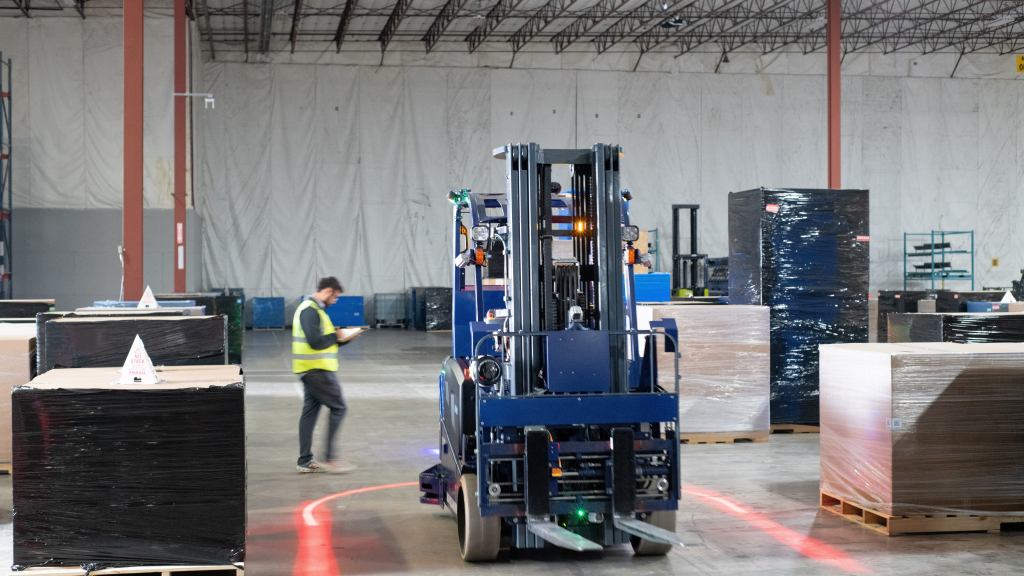
ArcBest Vaux Smart Autonomy forklift at terminal

Transportation and logistics provider ArcBest said it is using technology from Nvidia to “bridge the gap” in human-robot interactions during freight handling.

ArcBest (NASDAQ: ARCB) said the use of semiconductor engineer Nvidia’s (NASDAQ: NVDA) Isaac Perceptor provides enhanced safety and efficiency when handling materials on a warehouse floor. The AI technology provides exact depth perception and improved 3D occupancy mapping as it captures more than 16.5 million 3D points per camera every second.

The robots can now “better recognize objects, track human motion and make informed decisions that guide its path, for safer, more flexible and more efficient operations,” a news release said.

The technology is being used with ArcBest’s autonomous stack, Vaux Smart Autonomy, which includes the recent rollout of autonomous forklifts and reach trucks. It replaces 3D lidar sensors, which are less effective and more costly.

“Today’s material handling environment can be incredibly complex, with variability in the facility and products,” said Michael Newcity, chief innovation officer at ArcBest and president of ArcBest Technologies. “Our shift from 3D LiDAR sensors to visual AI technology is part of our continual progress and another step towards addressing these challenges.”

He said no other robotics company is using the technology in the logistics industry.

“This collaboration with NVIDIA enhances our AI and technology capabilities, which helps us better serve our customers and drive the global supply chain forward,” said Judy McReynolds, chairman, president and CEO at ArcBest.

The announcement came Monday at Nvidia’s weeklong AI conference in San Jose, California.

More FreightWaves articles by Todd Maiden

How end-to-end visibility can mitigate effects of supply chain disruptions

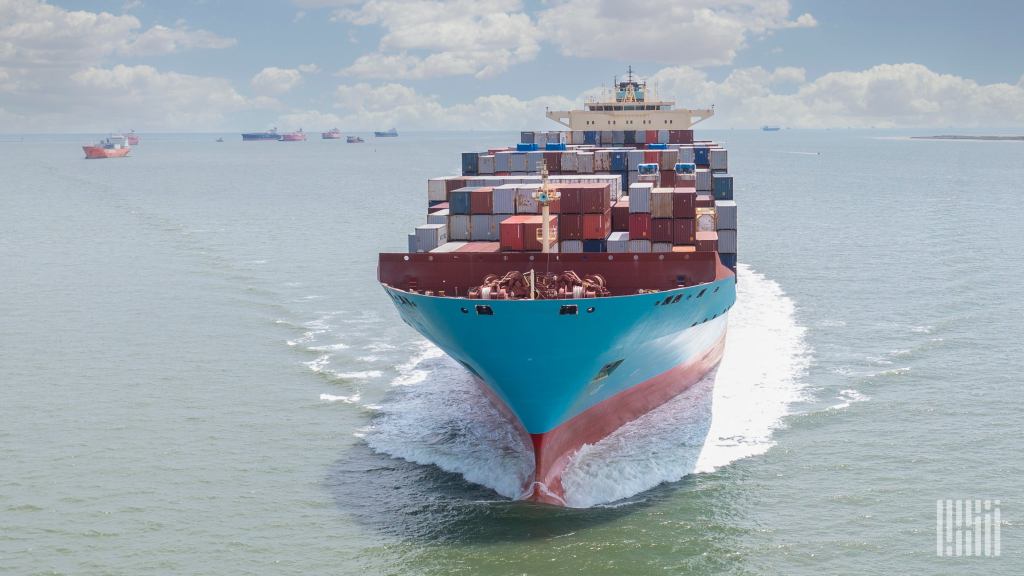
A loaded container ship nearing a port

Companies across the globe have been impacted by a myriad of major supply chain disruptions. This is especially true for companies navigating the lingering Suez Canal and Panama Canal issues.

Shippers that have historically utilized the Suez Canal have had to extend their routes, bypassing the canal and sailing around the Cape of Good Hope in order to avoid getting caught in attacks due to unrest in the Middle East. This shift has added significant time to the average voyage.

“Approximately 14 days of sailing time is being added to shipments that normally move from the Suez to the East Coast, making the process itself more expensive,” said Chris Jones, executive vice president of industry and services at Descartes. “Because shipments take longer to complete, companies are experiencing greater lead-time variability.”

Companies that normally move cargo through the Panama Canal continue to face drought conditions. Over the past couple of years, the wet season has not been able to replenish the lakes that feed the Panama Canal lock. These conditions have required the canal to cut back on the number of ships that can pass through it by one-third on any given day, leading to bottlenecks and delays.

At the same time, U.S. container import volumes are increasing year over year, exacerbating the situation at both canals. 

“February 2024 U.S. container import volumes decreased 6% from January 2024 to 2,137,724 twenty-foot equivalent units (TEUs). Versus February 2023, TEU volume was higher by 23.3%, and up 19.5% from pre-pandemic February 2019,” according to the most recent Descartes Global Shipping report.

February’s 23% year-over-year jump is likely elevated by both the positioning of Chinese New Year in 2024 versus 2023, as well as the fact that 2024 is a leap year. To account for this elevation, Descartes analyzed TEU volume for the first 15 days in February of both years. That data analysis showed a 13.3% jump. While lower, this increase is still significant.

Longer routes and bottlenecks are expected to have a larger ripple effect on the supply chain as a whole as volumes continue to tick up and disruptions show no sign of abating.

Naturally, shippers are looking for ways to move their products effectively while mitigating the impacts of these disruptions. To do that, they will need to employ an end-to-end shipment visibility solution. The right visibility solutions allow companies to keep an eye on what is happening in real time while simultaneously visualizing future solutions.

“End-to-end visibility is critical when lead times get extended,” said Mike Hane, director of product marketing, transportation management at Descartes. “Knowing the exact progress of a shipment allows companies to make more informed and better decisions about how they serve their customers and manage extended inventory. Improved visibility also helps you avoid incurring additional logistics costs like demurrage and detention.”

In addition to cutting unnecessary downtime, end-to-end visibility enables companies to revisit their shipping processes — from shifting inventory strategies to exploring alternate suppliers. In the long term, this level of visibility also helps companies weigh the pros and cons of more permanent changes like nearshoring.

Embracing alternative routes — sailing to the West Coast and then loading goods onto a truck or train, for example — as well as alternative suppliers is one of the most effective ways shippers can make their supply chains more nimble in the immediate future. Doing this, however, requires top-notch visibility and guidance.

“Alternate trade lanes are a big deal, and we have solutions to identify suppliers moving through alternative trade lanes,” Jones said. “While this could mean more cost on the front end, it could also mean greater availability. As we all painfully learned during the pandemic, if you don’t have the product, you can’t sell it.”

In the final analysis, shippers are most concerned with servicing their customers. Technologies like visibility tools provide the best — and often only — path toward that goal in 2024. For those hesitant to deploy visibility solutions, now is the time to stop waiting.

“We don’t think this is going to end anytime soon,” Hane said. “There will always be disruptions. Visibility helps pinpoint the things you can control, reducing the impact of disruptions to operations. Furthermore, as companies analyze their supply chains, understanding and including risk into strategies is going to be a bigger part of the equation.”
Click here to learn more about Descartes.

Vertical farm to provide fresh herbs to retailers in Texas, Oklahoma

Texas-based vertical indoor farm Eden Green Technology announced Tuesday it has launched an herb program, aiming to supply fresh greenhouse herbs to retailers in Texas and Oklahoma.

Founded in 2017, Eden Green operates two 100,000-square-foot greenhouses in Cleburne, just outside the Dallas-Fort Worth metroplex. The company has been supplying greenhouse-grown romaine and butterhead lettuce to more than 400 stores in the region.

CEO Eddy Badrina said Eden Green Technology decided to launch the herb program because of demand from customers.

“We heard from our customers in both food service and retail through our distributor Robinson Fresh that while there is a steady demand for leafy greens, there is a larger demand for herbs because of the inconsistencies that they saw within their supply chain,” Badrina told FreightWaves.

Eden Green will grow more than 10 herb varieties, including basil, cilantro, chives, dill, mint, oregano, parsley, rosemary, sage and thyme. Badrina said Eden Green is the first controlled-environment agriculture (CEA) firm to grow, package and ship a full suite of major herbs from a single facility.

“Our herb program is about nine months in the making of really testing out just how expensive our herb offering could be before we rolled this out,” Badrina said. 

Eden Green will produce 350,000 to 400,000 pounds of fresh herbs a year from one of its two greenhouses. The other greenhouse is used to grow, package and ship leafy greens, such as romaine and butterhead lettuce.

 Eden Green Technology will grow, package and ship more than 10 herb varieties, including rosemary. (Photo: Eden Green Technology)

“The reason we’re growing a full suite of herbs is because most large food service and retail companies don’t want just one herb; you have to sell the whole suite,” Badrina said. “It’s a testament to our technology and our team that we were able to roll this out.”

Eden Green will provide herbs to some of the largest retailers and food service companies in the U.S. through its distributor, Robinson Fresh. One of Eden Green’s customers is Walmart, which operates a distribution center near the firm’s two vertical greenhouses.

Eden Green can grow herbs from seeds and harvest them within about 35 days. The company will be able to deliver herbs from farm to shelf within 48 hours.

Badrina said the herbs logistics chain for most food service and retail companies is pieced together from suppliers all over the U.S.

“Some herbs you can grow locally but really not in mass. Other herbs grow really well down in the southeast U.S.,” Badrina said. “Basil in particular is a hard one, because it’s a tropical plant, and I would say 99% of basil right now in the United States that we’re eating is sourced from either Hawaii or Central and South America.”

Eden Green is building two additional 100,000-square-foot greenhouses in Cleburne to increase its capacity and allow the company to supply more fresh produce to customers.

“The two more greenhouses being built are right on schedule for the second quarter of [2025],” Badrina said.

More articles by Noi Mahoney

Container shipments from China to Mexico skyrocketed in January

Location, cost drive international firms south of the border

Texas court sides with Union Pacific over 1872 jobs pact with town

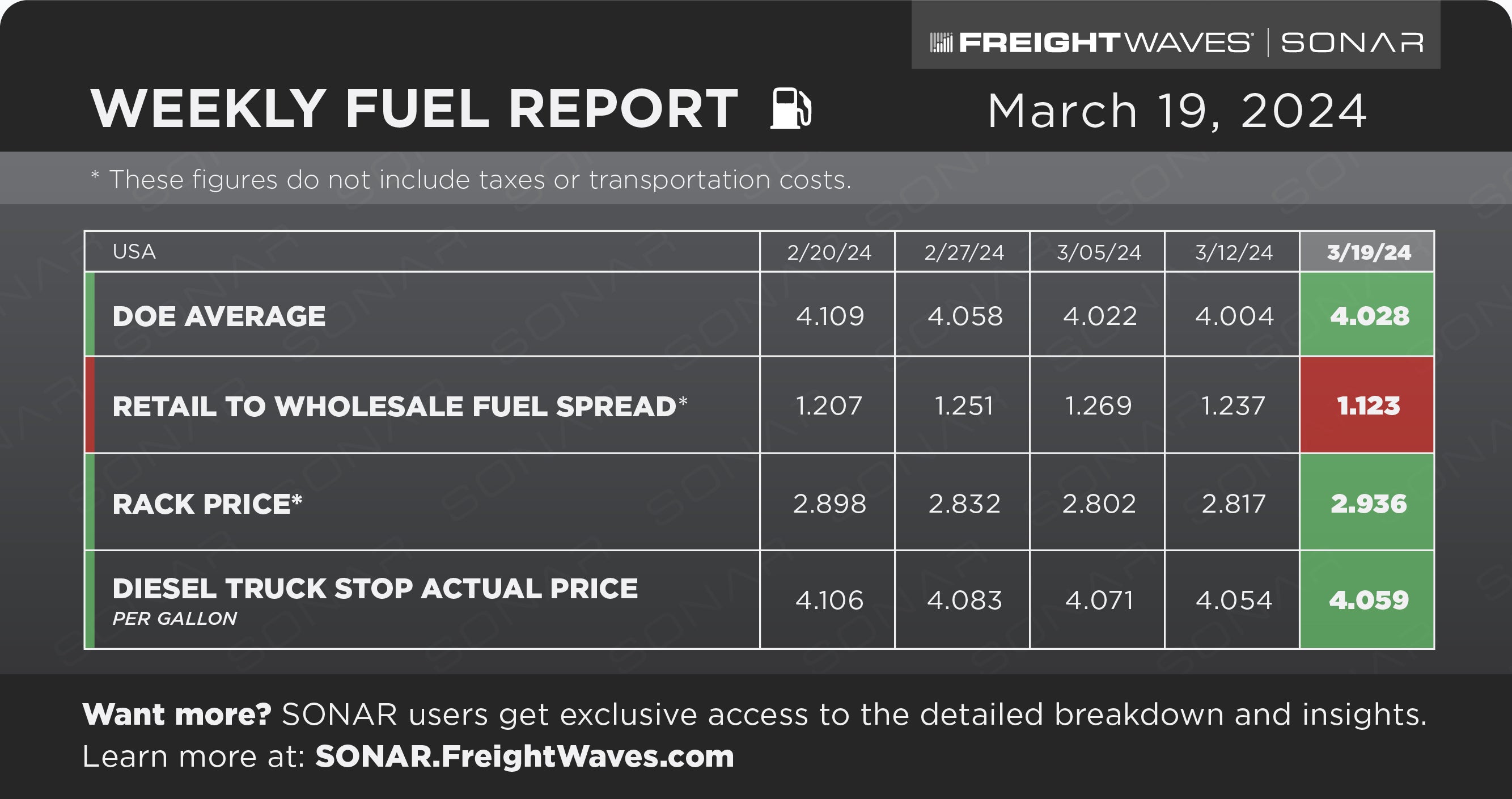
Weekly Fuel Report: March 19, 2024


Learn more at SONAR.FreightWaves.com

Trimac acquires bulk hauler Feldspar Trucking

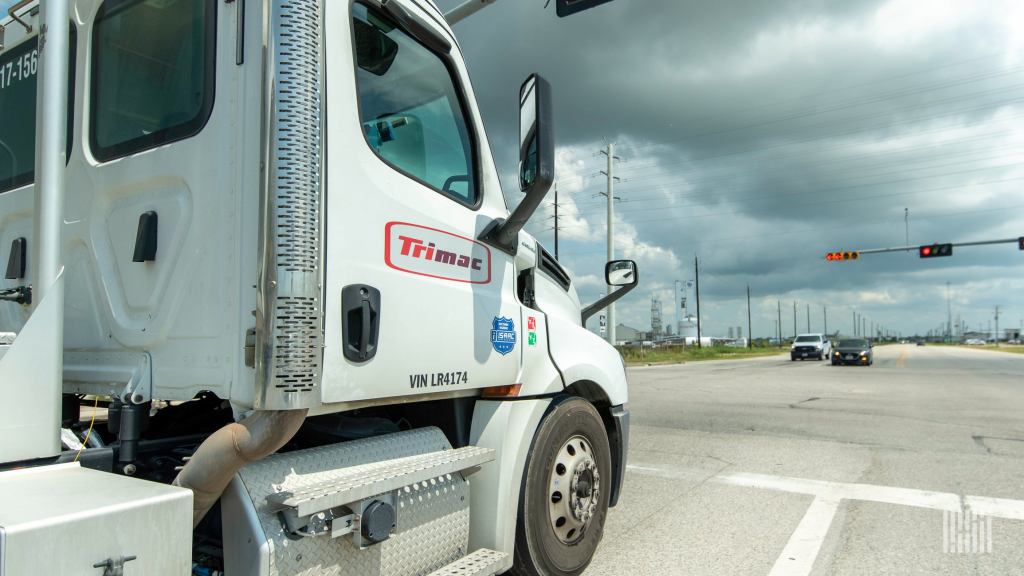
A white Trimac daycab at a stoplight

Canadian bulk hauler Trimac announced it has acquired North Carolina-based carrier Feldspar Trucking.

Feldspar Trucking hauls bulk materials used in the production of glass and ceramics, such as sand, clay and feldspar. The 57-year-old North Carolina carrier has 60 company drivers and is listed with 61 power units by the Federal Motor Carrier Safety Administration.

The company also uses third-party carriers to haul freight for customers.

“Together and with the help of Feldspar’s leaders, we’re poised to enhance our bulk transportation services even further, supporting our customers and communities with unparalleled excellence,” said Matt Faure, Trimac president and CEO.

In addition to expanding Trimac’s geographic footprint, the deal supports Trimac’s efforts to serve the mining industries.

“This partnership not only ensures the continued growth and success of Feldspar Trucking but also opens doors to new opportunities and expanded horizons for our team and clients alike,” said Jim Norris of Feldspar Trucking.

Trimac operates more than 100 locations in the U.S. and Canada.

The deal closed on Monday.

More FreightWaves articles by Todd Maiden

Produce and ship: How Shared Truckload streamlines transportation efforts

The logistics industry has undergone a technological revolution in recent years, leading to a whirlwind of innovation and modernization. The freight industry’s options for shipping goods on pallets, however, have remained largely unchanged for the past several decades. 

Historically, companies have had two shipping options: less-than-truckload or truckload. Both tend to require some level of sacrifice from the shipper. 

When moving goods via LTL, shippers accept that unpredictable fees and frequent damages are par for the course. With truckload shipping, companies often have to choose between paying for empty space or delaying shipments until they have enough pallets to fill the truck.

Flock Freight exists to give shippers a third, more adaptable option. 

“These limited options keep shippers in cycles of feast or famine which should no longer be the case,” Founder and CEO of Flock Freight Oren Zaslansky said. “We finally have an alternative — Shared Truckload — that offers quality, efficient service like never before. By pooling freight with Shared Truckload, you only pay for the space you need. Goods stay safe and terminal-free, driven in one truck by one driver all the way to their destination.”

FlockDirect uses real-time data to pool freight for multiple customers. The solution effectively dismantles the physical hub-and-spoke constraints that have defined the supply chain for more than a century. In its place, Flock created a modern, digital platform that gives customers access to the same truckload-level service regardless of how many pallets they need to ship.

“The technology Flock Freight has developed and patented with machine learning pools freight at a larger scale for multiple customers,” Zaslansky said. “Our proprietary algorithms find and fill the empty spaces in trucks, putting freight on the most efficient routes. Shared Truckload technology offers a new level of flexibility and efficiency that is changing the way we move goods. Now is the time to take advantage of it.”

In a rapidly changing industry, flexibility is more important than ever. The innovative technology that fuels FlockDirect enables the solution to instantly adapt to changing locations and shipment sizes. This provides users with the ability to ship worry-free, whenever and wherever they want.

Flock envisions a world without traditional shipping constraints, where customers can produce and ship goods as needed. In order to make this dream a reality, the company has developed solutions – including FlockDirect – specifically designed to eliminate bottlenecks by keeping inventory moving. 

“If you want to maximize your profitability, don’t pay to ship air and don’t ship through a terminal or warehouse,” Zaslansky said. “Produce and ship direct point-to-point whenever possible.” 

When shippers take advantage of Shared Truckload, they effectively capture the benefits of LTL and truckload shipping while mitigating the risks associated with both methods. 

“If you’re shipping with less-than-truckload, you don’t need to keep sacrificing your margins to damages, delays and loss,” Zaslansky said. “If you’re shipping truckload, you don’t need to keep paying for the unused space on those trucks.” 

Click here to learn more about FlockDirect and Shared Truckload.

Port of New Orleans’ container-on-barge service has record year

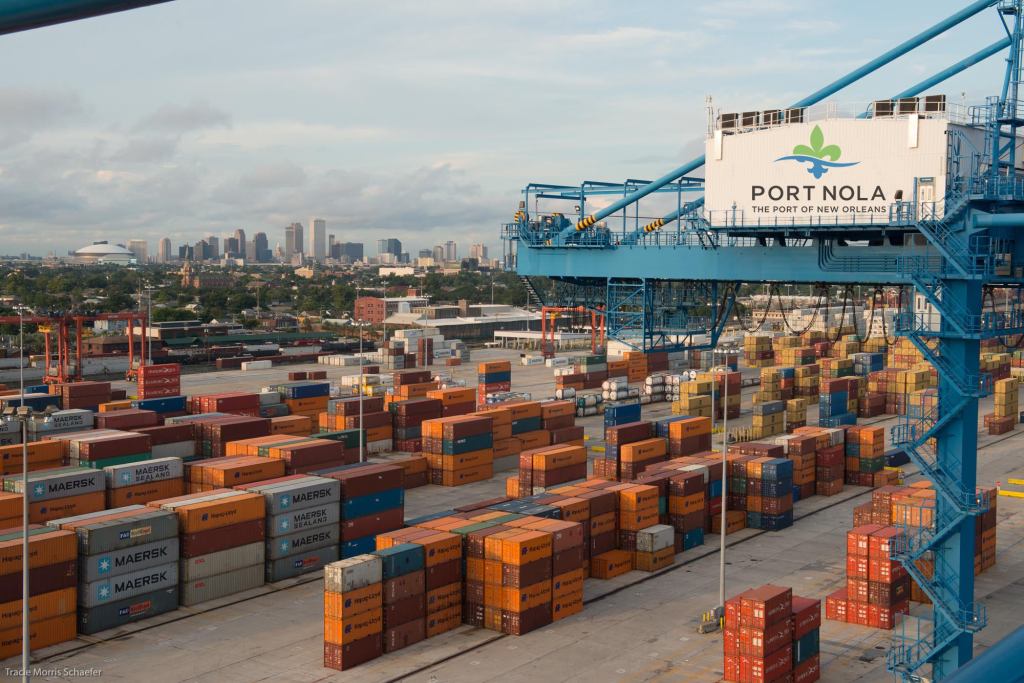
In 2023, the Port of New Orleans (Port NOLA) recorded 20,500 container moves through its container-on-barge service, the most since the program began in 2016.

This service — a collaboration with the Port of Greater Baton Rouge and Ingram Marine Group — forms the largest network of its kind in the U.S. It offers an alternative to road transport, transporting cargo to inland destinations via barges on the Mississippi River. It aims to cut back on some of the emissions associated with traditional cargo movement methods.

The initiative led to a reduction of nearly 2.9 million pounds of carbon dioxide emissions and conserved over 130,000 gallons of diesel fuel in 2023, the port estimated. Since its inception, the service has achieved a cumulative CO2 emissions reduction exceeding 22.9 million pounds. That’s roughly equivalent to the amount of CO2 that some 478,000 mature trees can absorb in a year.

“We are poised to expand this service even further in the coming years,” said Port NOLA President and CEO Brandy Christian in a release.

Economic, operational and environmental impacts

The increased use of Port NOLA’s container-on-barge service for transporting cargo could necessitate some recalibrating within the trucking industry, particularly impacting the demand for intermodal truck transport.

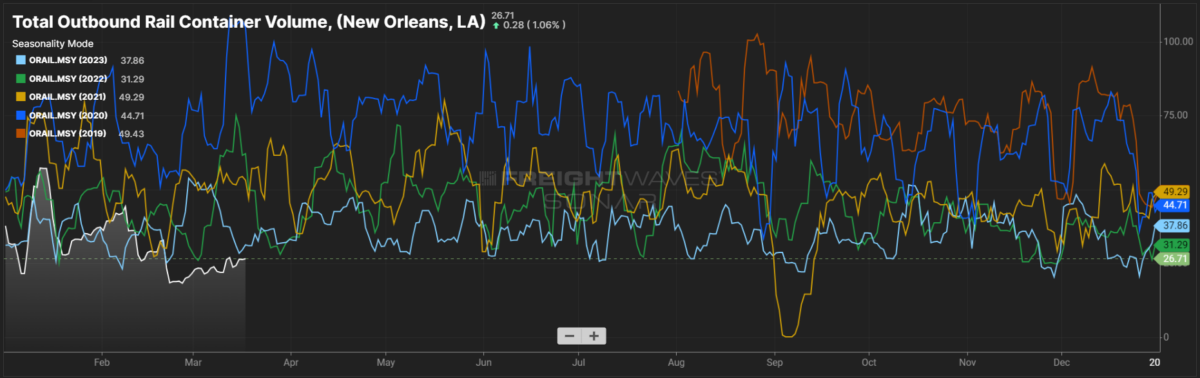
The premise that water-based transport’s efficiency could diminish the need for short-haul trucking between New Orleans and inland ports invites a closer examination, especially considering the current low levels of the Total Outbound Rail Container Volume index for New Orleans. This index reflects a downward trend over the past five years.

Source: FreightWaves SONAR, Total Outbound Rail Container Volume Index (New Orleans), seasonal.

Trucking companies faced with reduced short-haul opportunities may find themselves needing to diversify their service offerings. However, this assumes a zero-sum scenario in which gains in one sector inherently lead to losses in another, overlooking potential areas of growth or adaptation in the trucking industry. For instance, while the demand for certain types of trucking services may decline, there could be an increased need for others, such as long-haul trucking or specialized transport services that cannot be accommodated by barge.

Moreover, the emphasis on the efficiency of water-based transport raises questions about the scalability and sustainability of such solutions. While barges offer a lower-emission alternative to road transport, their impact on the overall logistics ecosystem, including flexibility, access to certain areas and the speed of delivery, remains a critical consideration.

Looking beyond 2023

As Port NOLA looks to the future, its plans to expand the container-on-barge service invite scrutiny alongside optimism. The proposal to explore new routes and form partnerships aimed at improving the logistics network’s efficiency and sustainability presents an innovative vision. 

“These recordbreaking numbers for our container-on-barge service are a direct result of our collective effort to create a stronger and more resilient supply chain,” said Jay Hardman, executive director of the Port of Greater Baton Rouge.

The Louisiana International Terminal (LIT), currently in the planning and permitting stages, is expected to further contribute to the port’s container handling capacity. The terminal is planned to include modern green technologies like shore power and an electrified equipment fleet to reduce emissions from docked vessels.

Financial support exceeding $300 million from federal grants, alongside significant private and state investments, highlights the broader interest in enhancing the Gulf region’s shipping infrastructure. The development of LIT, construction of which is to start in 2025 with the opening of its first berth expected in 2028, is part of efforts to increase the port’s capacity and sustainability.

However, the success of such expansions depends on a delicate balance among economic viability, environmental impact and logistical feasibility. Integrating more inland and potentially international routes to decrease reliance on road transport raises questions about the scale of infrastructure development required, potential regulatory hurdles and the readiness of markets to adapt to these changes.

And in any event, more conventional services make up the lion’s share of the port’s overall container throughput for now. The 20,500 TEUs moved by the service in 2023 represent a small portion of the port’s overall container throughput. Port NOLA, the only deepwater container port in Louisiana, has an annual capacity of 1 million twenty-foot equivalent units and is equipped with nine gantry cranes capable of handling vessels up to 10,000 TEUs. The port continues to attract new services and ocean carriers, including all three major carrier alliances — 2M, Ocean Alliance and THE Alliance. It offers direct container services to Asia and South America.

It’s likely the container-on-barge throughput will remain a small slice of total activity at the port. But results have been positive, and there’s almost always a strong argument for adding modal choice.

Benchmark diesel price up slightly but futures are surging

The benchmark diesel price used for most fuel surcharges rose a relatively small amount Monday even as the futures price for ultra low sulfur diesel continued to climb sharply.

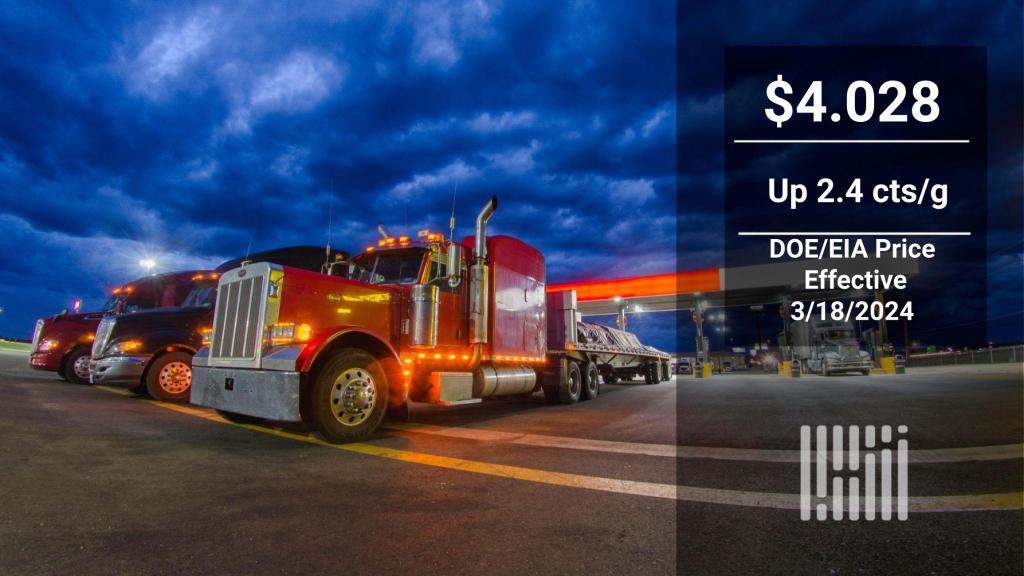
The average retail diesel price published by the Department of Energy/Energy Information Administration rose 2.4 cents a gallon to $4.028. The increase came after three consecutive weeks of decreases, and those three weeks followed a week of no change. 

A year ago, the price was $4.185 a gallon.

Retail prices always lag increases and decreases in futures and wholesale prices. That was driven home sharply this week, as the 2.4-cent increase in the diesel benchmark was published on a day when the price of ultra low sulfur diesel price on the CME commodity exchange rose to record a four-day increase of 17.17 cents a gallon. On Monday, ULSD rose 6.12 cents a gallon to $2.7882.

Markets for ULSD and gasoline have been leading the way in the overall increase in oil markets. The 3:2:1 spread, a basic indicator of refining margins, has been soaring. The 3:2:1 is obtained by subtracting the price of three barrels of West Texas Intermediate crude on CME from the price of two barrels of RBOB, an unfinished gasoline product on CME that serves as the proxy for gasoline, and one barrel of ULSD, after the price is converted to a per-barrel basis. As the 3:2:1 goes higher, it is a sign that refined products are moving higher at a faster rate than crude, or that crude is falling faster than refined products.

Much of the increase in 3:2:1 has been created by the switch in RBOB gasoline prices to an April delivery month from March. That occurred March 1. When the switch is made each year, the specification for gasoline in the U.S. rises to a tighter environmental standard for a gasoline specification known as Reid Vapor Pressure.

That switchover often causes prices to rise as the RBOB contract goes from March to April. But this year, the gain was more than 30 cents a gallon, an enormous increase compared to recent years, where it was often just a few cents.

The 3:2:1 closed out March at about $23.83 a barrel. When April RBOB became the prompt month, it shot up to more than $31 a barrel. It has climbed in recent days to close Monday at about $33.50.

Buyers of products like diesel, who are the ones who feel the brunt of the refinery spreads rising as evidenced in the 3:2:1 increase, may be getting some relief soon. The Whiting, Indiana, refinery of BP, which has been down or restricted since February due to a power outage, is back online. At 435,000 barrels a day, the refinery is one of the largest in the U.S.

A report from Reuters also should give some optimism to fuel buyers. The news outlet reported that data shows hedge funds have cut back on buying petroleum products, including diesel. “Previous bullishness about distillates has ebbed, with the combined position in U.S. diesel and European gas oil down to 55 million barrels (46th percentile) from 87 million (72nd percentile) five weeks earlier,” Reuters reported.

But in a surprise development, sanctions against Russian energy exports, which had proved to be increasingly toothless, are hitting supplies out of that country, according to a report from Bloomberg.

The report quoted Russian state oil tanker company PJSC Sovcomflot as saying that “US sanctions are putting pressure on its operations, the latest sign that the measures are complicating the delivery of the nation’s petroleum.”

There are individual tankers that are sanctioned by the U.S. Department of the Treasury. “Traders in Asia, by far the largest recipients of Russian crude, said the measures are making it harder and more expensive to find suitable ships for the trade,” Bloomberg reported.

Russia also is playing a role in higher prices as the target of stepped-up attacks on its infrastructure by Ukraine. Ukraine attacks on Russian refineries have added $2 to $3 per barrel in a risk premium, according to Vandana Hari, founder of oil market analysis provider Vanda Insights.

More articles by John Kingston

Key analysis sees Red Sea shipping diversions starting to boost oil demand

Further appeals to block AB5 from California trucking seen as a long shot

California gets another pot of money for ZEVs courtesy of Volkswagen

Carriers installing solar panels to reduce costs, extend battery life

A GP Transco tractor with a solar panel on a highway

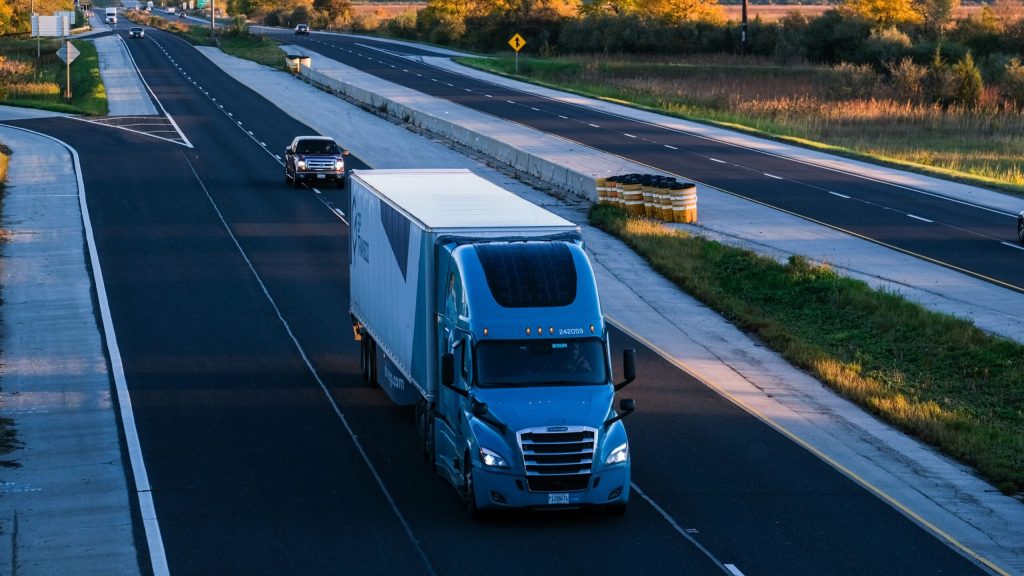
Rising costs on nearly every line of a carrier’s income statement have compressed truckload margins, forcing fleets to come up with ways to protect profits. The use of solar energy to power tractor cabs is one such solution. The improvement in solar panel technology in the past couple of years has led to increased adoption from carriers.

The flexible panels weigh less than 20 pounds and have an adhesive allowing them to be attached to the roof of a truck, where they capture the sun’s energy. The energy is stored in the battery bank of a cab’s electric power unit (EPU), significantly reducing fuel costs by minimizing time spent idling. The panels can power everything inside a sleeper cab throughout the night or keep drivers cool while they endure long waits at delivery docks.

Dry van carrier GP Transco is looking to install solar panels on its entire fleet of roughly 600 trucks after recently testing the technology on 10 trucks over a six-month period, Brett Wilkie, the company’s vice president of maintenance and safety, told FreightWaves. There’s a custom-fit panel design for Freightliner’s Cascadia, and the Joliet, Illinois-based carrier is installing the panels on more than 200 of those models this year.

Wilkie said the company could also use the panels on the day cabs it has operating in a hub-and-spoke configuration, where some trucks might sit idle for days, to keep the batteries fully charged.

The bigger draws on a truck’s battery system come from the use of the in-cab heating and cooling system as well as the use of small appliances and electronics like refrigerators, microwaves and televisions. However, there is always some draw on batteries as advanced telematics, smart sensors and cameras on newer trucks are continuously working.

“The very, very many modules that are on trucks now are always drawing at a parasitic level,” said Wilkie.

Trucks without the panels usually auto start twice a night for two hours at a time to refresh an EPU’s battery system. Wilkie said GP Transco has been able to cut that four-hour engine time down to one hour, and sometimes less.

He said the technology will save the company roughly $1,700 per tractor per year. The math assumes an average diesel price of $4 per gallon and annual mileage of 110,000 miles per truck. That’s approximately the cost to install one unit when buying them in bulk.

The math doesn’t include the benefit from longer battery life as parasitic drain is eliminated. Jump-starts of dead batteries, which can be very costly in remote locations, are also removed.

Further, a reduction in “ghost mileage,” or the hours when the engine is running but the wheels aren’t turning, extends the life of the engine and the alternator. The solar units also qualify for mileage and carbon emissions credits in some states, Venkatesan Murali, founder and chief technology officer at panel-maker MerlinSolar, told FreightWaves.

Murali said the return on investment on the devices is less than a year, which is significant in an industry that works on “tight margins.”

The peel-and-stick panels have numerous applications, including uses in space and in war zones. However, they’re likely most visible to civilians on commercial trucks, delivery vans, city buses and RVs.

“Fundamentally, we had to engineer the product to be able to take this on because we were working with the U.S. Army, we had to ruggedize and we had to be fail-safe,” Murali said of the panels that are used on military vehicles, drones and gensets. “Despite all these really difficult applications … including taking bullets from Isis and from the Taliban, the devices continued to work.”

But he said transportation presents unique challenges like road debris, tree branches, constant vibration and extreme temperatures.

“We realized very quickly that trucking, commercial transportation is probably the toughest place to deploy solar panels.”

In addition to the battlefield, the panels have been tested in multiple climates — hot zones in Phoenix, extreme cold in Minnesota, overcast conditions in Seattle and muggy conditions in the Southeast.

An earlier version of these panels would stop working if part of the surface area were damaged. However, more recent iterations have redundant technology with which only the affected portion of the panel stops working, reducing just a segment of the panel’s total capacity.

MerlinSolar warranties the panels to the life of the asset they are applied to.

GP Transco installs the panels and wiring on its trucks in-house. It takes about two hours to complete the process.

The carrier replaces its tractors every 3 ½ to four years and expects the panels to still be functional “well beyond” that time frame. That means the units will modestly increase the value of its equipment when sold in the secondary market. Also, the company will avoid replacing any of the eight batteries in an EPU system (approximately $300 each) during its ownership.

Murali said the panels triple the average 18-month lifetime of the EPU batteries. He noted that some drivers have reported being able to get through their entire 34-hour reset period without idling once.  

Solar panels provide a big power yield when attached to the much larger surface of a trailer. There they are often used to charge reefer batteries. A single reefer battery (about $500) lasts approximately 18 months, but Murali knows of one that’s being powered by panels from MerlinSolar that is 8 ½ years old.

Solar panels are also helping to alleviate range anxiety on electric commercial trucks as propulsion batteries no longer have to augment the batteries powering air conditioning, telematics and other auxiliary functions. This allows the stated range of a propulsion battery to be fully realized.

Panels are being used to directly power liftgates on delivery trucks and to cool the cargo area in step vans used for parcel delivery.

Murali highlighted an example of harvesting electrons on a straight truck to power in-hub wheel motors, allowing the diesel vehicle to essentially convert to electric at low speeds. This generated an increase in average miles per gallon from 14 to 24.7.

He said solar panels won’t ever become a single source of propulsion for large trucks; they likely max out at golf carts.

More FreightWaves articles by Todd Maiden

The Logistics of Nearshoring: Navigating U.S.-Mexico Border Complexities

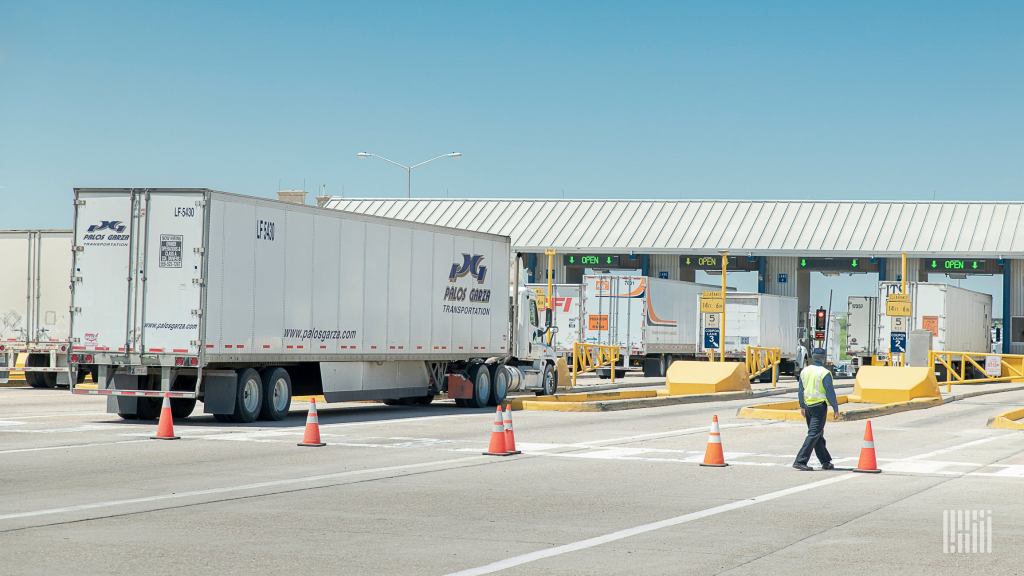
The supply chain ripples caused by pandemic bottlenecks are being felt along the U.S.-Mexico border as nearshoring intensifies. Cross-border logistics continues to gain attention as large multinational corporations move their operations to Mexican border regions, creating additional demand for warehousing space, manufacturing facilities, transportation capacity and providers to manage shipments.

While creating warehouses and manufacturing centers is a straightforward process, finding and managing Mexican transportation capacity to service these locations is limited by visibility for available carriers and, if you find willing carriers, the inability to track their progress. Mexican trucking regulations do not require drivers to have ELDs. Drivers instead use either paper logs or a digital logbook to comply with hours-of-service regulations.

Compared to a U.S.-based carrier that can utilize third-party tracking or directly provide ELD telematics and location data to all parties, contacting Mexican carriers is often a low-tech affair. 

“We look at this really deeply also with our product and engineering teams. There’s some providers in the U.S. that are getting a little better at Mexico … but the consensus is it’s not very good at the border and especially on the Mexican side. Visibility is really a challenge for most shippers. At Nuvocargo, we’re able to provide end-to-end visibility with a full-time monitoring team,  through integrations with GPS providers, and by partnering with select carriers,” said Deepak Chhugani, founder and CEO of Nuvocargo.

Chhugani notes that for sending messages to drivers and carriers, social media messaging apps like WhatsApp remain a fixture for most Latin American emerging markets, with tracking updates and load communication routed through those apps.

“You typically have WhatsApp groups with your carriers, with 3PLs, with some of the border service providers. We’ve built technology integrating with the key players in the ecosystem so you can streamline, centralize, and measure those communications.”

Danny Gordon, head of account management at Nuvocargo, said, “You have to have relationships with those carriers. It’s a very specialized network, and it’s especially important to be an expert on the compliance side, sourcing carriers with the best safety measures that adhere to Customs-Trade Partnership Against Terrorism (CTPAT) regulations.” Gordon notes in Mexico there is no large carrier loadboard or repository where brokers can start dialing a list of hundreds of carriers to source for a load.

He adds: “The last thing you can do when you’re doing Mexico is find one truck carrier you’ve never talked to or met and trust them to take that business. That’s a recipe for disaster. It takes a lot of work to develop a specialized network of trustworthy, high-service-level carriers.”

To tackle these operational and visibility challenges, Nuvocargo is pairing technology with singular expertise in this trade lane to disrupt the status quo. Gordon explains that many legacy providers approach the cross-border market like they would a traditional U.S. market where cold calling and brute force carrier discovery can create market share. Operating at a higher level requires additional considerations, like the documents required, the languages required for a specific facility to book appointments, or even routing considerations within Mexico that take into account infrastructure and safety requirements.

For Chhugani, Nuvocargo’s in-house technology addresses a major blind spot in traditional transportation management systems, which are not designed to handle the added business logic that cross-border operations require. He noted that added complexity comes from the additional variables, like whether it’s a northbound or a southbound shipment, how many legs the shipment has, whether there is a drop at the border or final destination, and whether the paperwork is prepared or a shipper or customs broker needs to provide additional documents before reaching customs at the border.

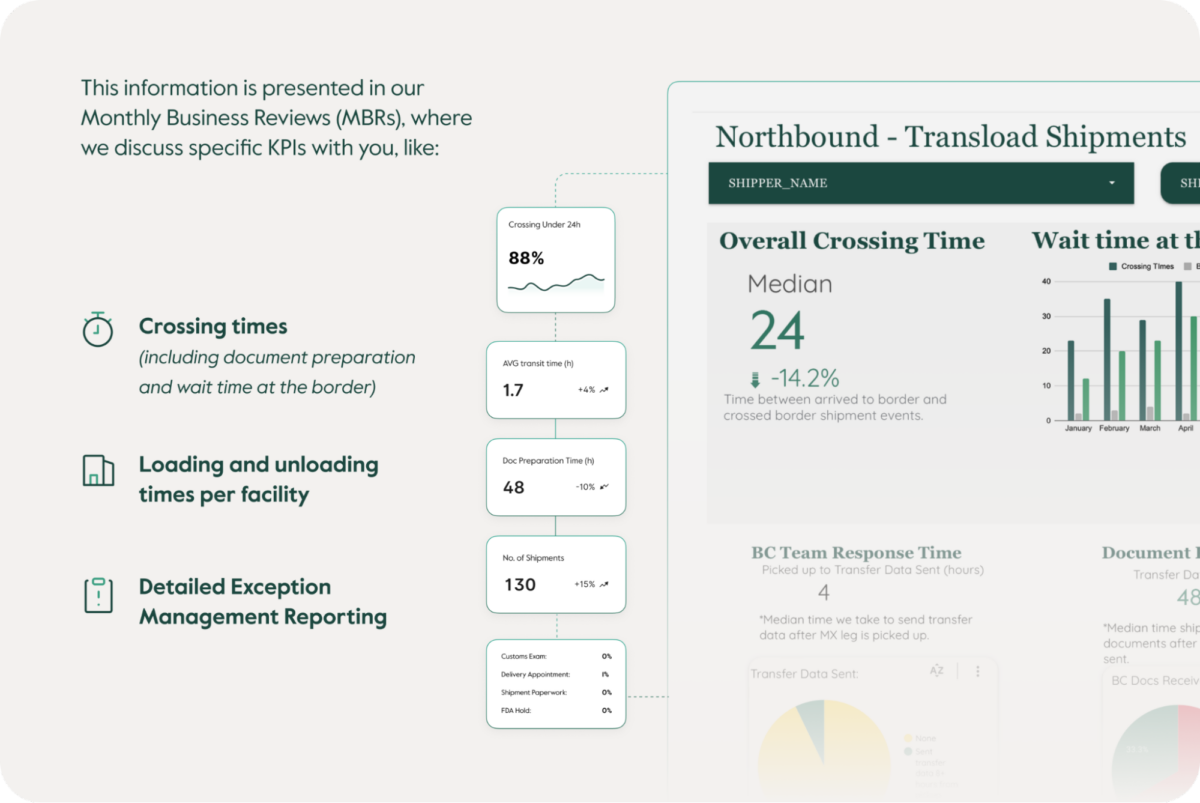
(Image: Nuvocargo)

For Nuvocargo, the focus on in-house technology is paying off by reducing border crossing times. The company notes a 66% faster document turnaround time and 33% faster border crossings when Nuvocargo handles freight and customs. For the carriers that haul the cross-border, Nuvocargo reported a 43% faster approval process for on-time payments. Nuvocargo has been partnering successfully with US shippers to enter and expand into the Mexican market, seeing very strong momentum. The company now handles all cross-border logistics for a growing number of U.S. shippers.

As nearshoring efforts intensify, the number of trucks that cross the U.S.-Mexico border each day is expected to soar from the current total of nearly 35,000 in the coming years. For shippers and logistics providers, this growth is upending expectations for service and visibility and requires a tailored approach compared to the current opaque process that plagues cross-border freight. 

To learn more, visit www.nuvocargo.com