Illinois trucking company with 171 drivers files for bankruptcy
An Illinois trucking company with 183 trucks and 171 drivers recently filed for Chapter 11 bankruptcy protection.
Founded in June 2010, Nationwide Cargo Inc. of East Dundee, Illinois, hauls general freight, fresh produce and meat, according to the Federal Motor Carrier Safety Administration’s SAFER website.
The petition, filed in the U.S. District Court for the Northern District of Illinois on Wednesday, lists Hristo Angelov as the president of Nationwide Cargo.
No reason was given as to why the carrier filed for bankruptcy protection, but it seeks to reorganize, according to the petition.
Nationwide Cargo lists its assets as between $1 million and $10 million and its liabilities as between $10 million and $50 million. The petition lists the number of creditors as up to 49 but states that funds will not be available for unsecured creditors once it pays administrative fees.
Angelov’s attorney, David D. Leibowitz, did not respond to FreightWaves’ request for comment as of publication.
Nationwide Cargo’s trucks had been inspected 185 times and 48 had been placed out of service in a 24-month period, resulting in a nearly 26% out-of-service rate. This is higher than the industry’s national average of around 22.3%, according to FMCSA.
The trucking company’s drivers had been inspected 457 times over the same 24-month period, with 18 drivers being placed out of service, resulting in a nearly 4% out-of-service rate. This is lower than the national average of around 6.7%, according to FMCSA.
In the past two years, the company’s trucks had been involved in 12 injury crashes and 18 tow-aways.
The carrier’s gross revenues from Jan. 1 until its bankruptcy filing date are nearly $9.3 million. Its petition states the company made around $40 million in 2023 and nearly $34 million in ’22.
According to the petition, Nationwide Cargo’s shareholders Angelov, Peter Trendafilov and Peter Panteleymenov each took a shareholder draw of $10,000 in December.
The petition states that a payment of $200,000 was made in December to Five Star Garage, also located in East Dundee. According to the Illinois secretary of state’s business entity search, Five Star Garage is owned by Angelov.
The trucking company is involved in three pending lawsuits in Tennessee, Illinois and Arizona.
The three largest creditors with secured claims listed in the petition are Equify Financial LLC of Fort Worth, Texas, owed more than $3.5 million; Commercial Credit Group Inc. of Naperville, Illinois, owed nearly $1.8 million; and Continental Bank N.A. of Salt Lake City, owed nearly $676,000.
A creditors meeting hasn’t been scheduled yet.
Do you have a news tip to share? Send me an email or message me @cage writer on X, formerly known as Twitter. Your name will not be used without your permission.
Truckers in British Columbia who hit overpasses may get 18 months in prison
Truck drivers in British Columbia involved in collisions with overpasses could pay up to a $100,000 fine and spend 18 months in prison under changes the province’s Ministry of Transportation and Infrastructure has proposed to the Commercial Transport Act.
The stiffer penalties were introduced Tuesday in response to 35 instances since late 2021 of overheight commercial vehicles striking bridges and overpasses.
“With these new penalties, we are taking the strongest action possible to keep our roads safe and to keep people, goods and services moving,” Rob Fleming, British Columbia’s minister of transportation and infrastructure, said in a news release. “This also sends a message to commercial truck drivers that they are responsible for the safe transportation of goods and services on our roads, and a lax attitude toward safety will not be tolerated.”
One of the latest incidents occurred Jan. 15 when a driver for International Machine Transport Inc. transporting a wrapped helicopter struck a highway sign at an overpass about 9 miles from downtown Vancouver. The carrier was issued an immediate suspension of its 20-vehicle fleet.
Infrastructure crashes pose a significant safety risk, causing millions of dollars in highway repairs, as well as lengthy roadway closures and supply chain disruptions, British Columbia authorities said.
“Imposing stricter penalties for carriers supports road safety and helps protect infrastructure, and ultimately enhances safety for everyone on our roads,” Dave Earle, president and CEO of the BC Trucking Association, said in a statement.
The proposed stricter penalties are the latest in a recent series of steps by the ministry. They include creating a carrier-suspension policy that provides escalating consequences for companies that commit repeat offenses, as well as the possible loss of safety certificates and carriers being prohibited from continuing to operate.
Fines were recently raised to the highest amount allowed under the current law for overheight vehicles, from $100 to $500, according to a news release. A new requirement was also put in place (effective June 1, 2024) for in-cab warning devices to alert dump-style vehicle operators when the dump box is raised.
In addition, speed-limiting devices were recently mandated by provincial authorities, preventing heavy commercial vehicles from traveling more than 65 mph on British Columbia highways.
On Feb. 15, authorities canceled the license of Chohan Freight Forwarders. Drivers for the British Columbia-based carrier have been involved in six collisions with overpasses since 2021.
“In the interest of safety, a formal cancellation notice was issued to Chohan Freight Forwarders Ltd. for its operations in British Columbia,” Fleming said in a statement. “This is the most severe action that can be taken against a company with multiple infractions, and it sends a clear message to operators that infrastructure crashes around our province need to stop.”
Georgia invests $6M in Port of Brunswick improvement project
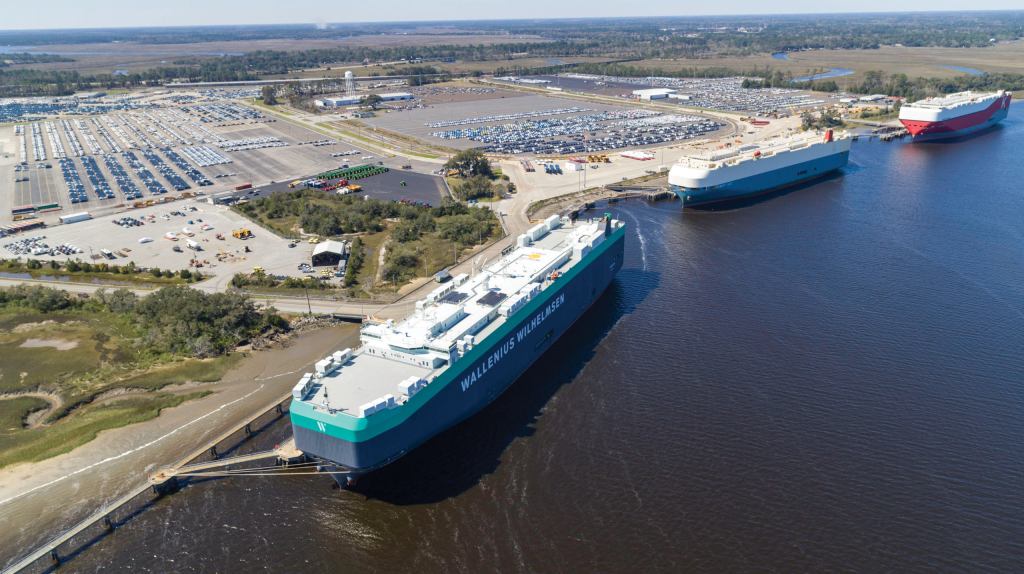
Georgia lawmakers have allocated slightly over $6 million for Port of Brunswick harbor improvements after the U.S. Army Corps of Engineers recommended upgrades.
Gov. Brian Kemp signed the funding into law on Feb. 29 as part of the state’s midyear budget adjustment. The funding comes after the Army Corps of Engineers recommended a bend widener, expansion of the turning basin and an expanded meeting area at St. Simons Sound. The port is one of the nation’s largest auto import facilities.
The Port of Brunswick in 2023 handled a record 775,565 units of autos and machinery, an increase of 15.6% over the previous year. Georgia Ports Authority CEO Griff Lynch said Brunswick was “poised to become the nation’s busiest gateway for roll-on/roll-off cargo.”
“An improved channel will better accommodate growing business demand, and perfectly complements the terminal improvements we’re making in Brunswick,” Lynch said about the improvements.
The project’s cost is expected to be about $17.45 million, with $11.35 million in federal funding. The GPA and the Corps of Engineers will later sign an agreement for the project outlining state and federal responsibilities.
“I’m especially pleased this budget included record funding for infrastructure projects like the Brunswick Harbor, which plays a vital role in Georgia’s thriving economy,” Kemp said.
The GPA is investing more than $260 million in Brunswick’s infrastructure, including:
350,000 square feet of on-dock warehousing.
100,000 square feet of warehousing at Colonel’s Island.
80 additional acres for roll-on/roll-off storage.
The GPA said this investment “will make Colonel’s Island the premier ro/ro facility in the U.S.” The upgrades will offer vehicle manufacturers more flexibility with storage during seasonal cycles. Motor carriers are the largest users of the port.
The GPA has committed to investing more than $4 billion in improvements to enhance its ports over the next decade, Lynch said.
Yellow asks court to toss claims it failed to give layoff notifications
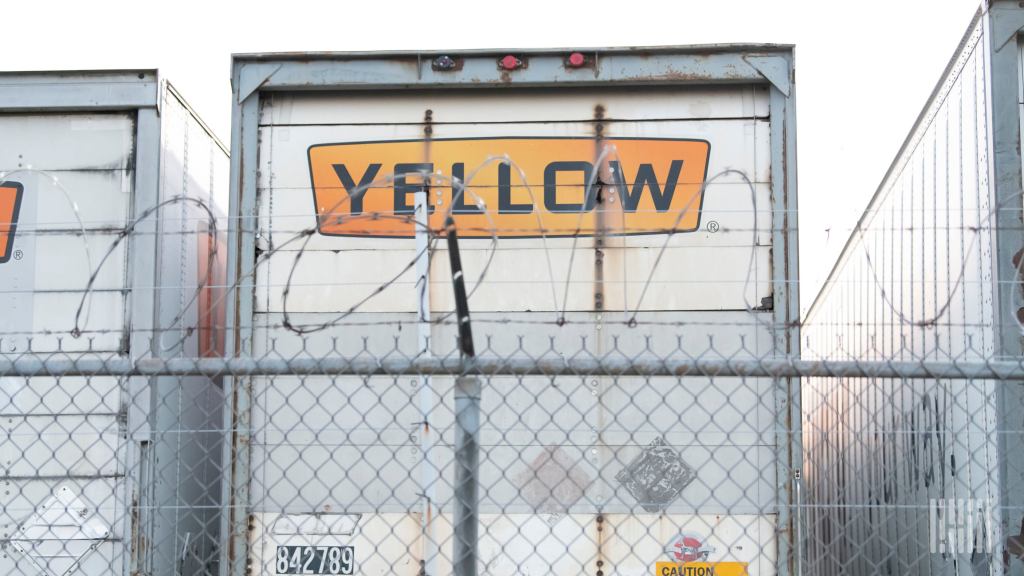
Yellow’s Tuesday filing in a Delaware bankruptcy court said claims stemming from its failure to provide 60-day notices to employees ahead of mass layoffs should be thrown out, or at least materially reduced.
Counsel for the company said WARN Act requirements don’t apply as the defunct less-than-truckload carrier’s shutdown was abrupt and the result of the Teamsters union’s refusal to allow a second round of operational changes that were integral to its survival.
The turnaround plan dubbed One Yellow included consolidating its four LTL operating companies, closing redundant terminals and making some drivers work freight on the docks, among other changes. Yellow began pursuing the changes in 2022 and announced in June of last year that it would be out of cash in weeks if the Teamsters didn’t acquiesce. The union contended it had given enough in the past in the form of wage and benefits concessions and that it wasn’t going to keep bailing the company out.
Yellow (OTC: YELLQ) believes the WARN Act doesn’t apply as its closing was unforeseen. It said even in its final days it planned to keep running the business and had a private equity investor lined up to provide it needed capital. It said the union’s denial of the second round of operational changes, and the issuance of a strike notice over missed benefits payments, led to a rapid deterioration in its business.
The strike notice “scared off Yellow’s customers, leading to the sudden, unexpected collapse of Yellow in a matter of days,” the filing stated.
The carrier’s daily shipments declined from 44,550 on July 12 last year to 32,500 on July 19, two days after the strike notice. Shipments fell to 10,450 on July 21 and were nearly zero by July 26. Yellow ceased operations on July 30.
The company said it didn’t have time to plan for mass layoffs and the issuance of WARN Act notices was “neither feasible nor required.” It claims protection from the notification requirement due to the sudden decline in business and argued the requirement’s “faltering company exception” applies as it was still seeking business from customers and capital from investors in its last days. The notices would have scared off both, the filing said.
Of the roughly 1,300 claims referenced in filings, some were made on behalf of employees by pension or health and welfare funds, which “lack standing” to bring the claims, Yellow asserted. Also, some employees released the company from the claims in exchange for severance. A separate filing showed approximately $244 million in claims related to WARN Act violations but noted that many were duplicate claims filed by both employees and their unions or union-related funds.
“The reality is that the Debtors shut down their businesses on an extremely short time frame as the result of completely irrational behavior from the [Teamsters] that neither the Debtors nor any other rational employer would have expected or planned for. No WARN act [provision] provides for liability under these circumstances,” the filing said.
Yellow said it was ready for a hard fight with the union and that “give-and-take” often led to operational changes in the past.
“Based on this historical record, Yellow understood that the [union] would drive a hard bargain but never drive the Company to the brink of failure, which would risk losing 22,000 unionized jobs,” the filing read.
Yellow’s objection asked the court to grant the order with an April 4 deadline for claimants to respond and a hearing date of April 11.
Discovery will continue in Yellow’s $137M suit against Teamsters
A U.S. District Court in Kansas said discovery in Yellow’s $137 million breach-of-contract lawsuit against the Teamsters will continue. The union argued to stay the costly advanced stages of discovery for a case that may ultimately be thrown out. A separate motion from the Teamsters has called on the court to dismiss the case.
An order denying the stay showed that the union had produced less than 1% of its total expected document production. Unsurprisingly, the filing showed Yellow had “substantially completed their document production by the March 1 deadline.”
QuikQ leverages technology to fight fraud at the pump
Fuel fraud is a growing problem impacting the bottom line for fleets of all sizes. But Vice President of Sales Rich Taute at QuikQ, says RFID technology and multifactor authentication are expanding the way fleets can proactively combat these fraudulent transactions.
Taute began his career back in 1995 running truck stops then moved on to selling fuel directly to fleets that used fuel discount programs. He then spent 10 years at EFS managing fuel payments before becoming a vice president of national accounts.
He explains that QuikQ’s payment platform runs on a QuikQ rail that connects directly with the truck stop and authorizes the transaction between fleet and truck stop via a credit line or direct bill. A payment rail is the infrastructure that moves money from one party to another. It can be in the form of ACH, or wire transfers, or it can be initiated by RFID technology or fuel cards, which QuikQ specializes in. QuikQ’s RFID technology begins with a sticker slightly larger than a credit card that is applied on the inside of a tractor’s windshield. The RFID technology QuikQ uses is currently deployed at Love’s and TA/Petro locations.
For Taute, the added security of RFID technology remains unparalleled when combating fuel fraud and card skimming. Fuel fraud is significantly impacting carriers, he adds, noting the average fraudulent transaction can be $650 to $1,000. Fraud remains prevalent but is often an underreported risk. Taute recently conducted a LinkedIn poll in which 17% of respondents said they had experienced fuel fraud, 33% were not aware of fraud but hadn’t experienced it, and 50% of respondents had no idea fuel fraud was out there. This turns fuel fraud into an issue where “So for most fleets, it’s not a problem until it’s a problem, and [that’s] really what the marketplace is all about right now.”
For carriers that are victims of fraud, finding a resolution can be difficult. Unlike a consumer fraud transaction, a carrier’s commercial fraud transactions are not guaranteed to be credited.
For truck stops and fueling locations that do not have the RFID receivers installed, QuikQ also offers a traditional fuel card that includes additional security features. One of those features, Secure Swipe, a multifactor authentication for the driver to approve before the transaction is preauthorized.
One example of QuikQ’s SecureSwipe multifactor authentication is when drivers arrive to fuel their tractors. When the driver swipes their fuel card, they instantly receive a text message asking them to confirm the location where the card was swiped with a simple yes or no. If the driver replies Yes, the transaction proceeds.. If the response is no, the transaction is automatically declined. For drivers who accidentally decline a transaction, all it takes is a call to their carrier to confirm and reactivate the transaction. Another security feature QuikQ utilizes is the “One-Hour Rule.” This limits transactions to one per hour at ANY QuikQ merchant, not just the location of the initial transaction.
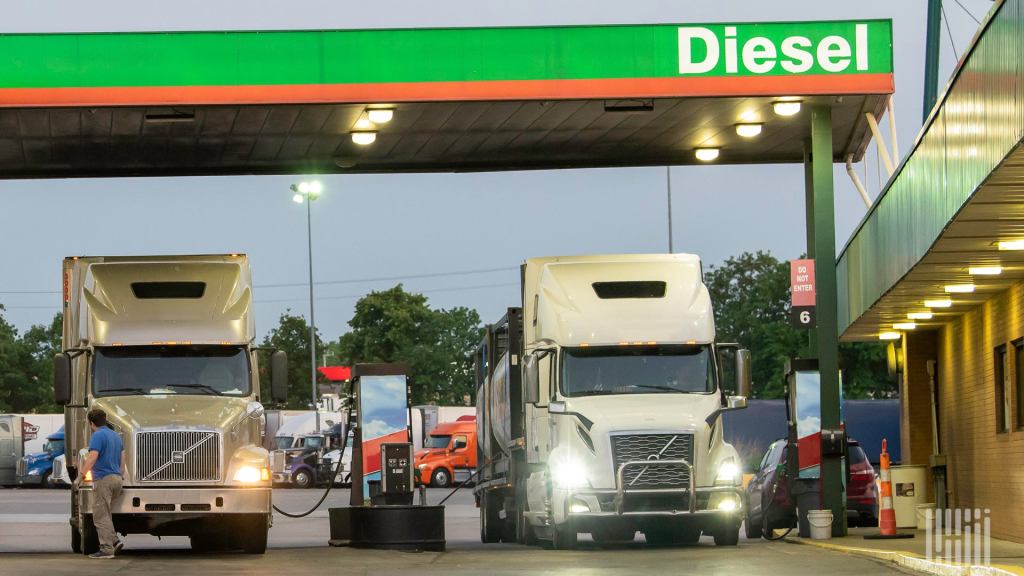
When using RFID technology, location matters and truck fuel and reefer fuel authorizations are tied into the location of the RFID antenna and tag. Once a tractor moves away from the pump, the RFID tag disengages, and the pump will automatically turn off. Taute says location-based RFID fuel authorization helps prevent a common form of fuel fraud, splash fueling. This is when a driver activates the pump with their fuel card, but actually pulls their truck forward, and sells fuel for cash, to the driver behind them. RFID technology prevents this because the pump and transaction automatically end after the driver pulls forward and out of range of the receiver.
Relationships with trusted payment providers matter for fleets and fuel providers attempting to combat fraud. Taute notes a challenge for small fleets and owner-operators is getting quick access to a live staff member, with many customers not even knowing who their representative is or how to quickly get in contact when fraud occurs.
For large nationwide truckload fleets, “You [have] the Batphone to everyone you need in a company.” Smaller fleets and owner-operators are not so lucky. Taute adds, “However, we’ve talked to some carriers that have hundreds of trucks and they complain about not having a relationship with their billing card company when it comes to dealing with fraud.” Allowing fleets of all sizes quick access to a representative when issues arise and avoiding the byzantine call queue wait is a major advantage for QuikQ.
Locus Robotics launches business intelligence tool LocusHub
Autonomous mobile robots (AMRs) provider Locus Robotics on Wednesday launched its business intelligence tool LocusHub, enabling customers to leverage reporting tools and data insights to make recommendations to fleets of AMRs.
The new solution will be available through its LocusOne platform, launched last year at the industry tradeshow ProMat.
LocusBot Origin. (Photo: Locus Robotics)
LocusOne coordinates the company’s AMRs, known as LocusBots, which consist of two lines of robots: Locus Origin for high-volume fulfillment and Locus Vector for high-productivity material handling. The system integrates with warehouse management systems and provides over-the-air updates for continuous learning and improvement of the AMRs’ functionality.
LocusHub will serve as the AMRs’ operations management solution, providing real-time reporting on the AMRs’ performance toward optimization performance metrics set by customers. The management tool will enable warehouse managers to set AMRs’ workflow routing, use machine learning to forecast staffing needs and order volumes, identify workflow bottlenecks, and set permission-based access and parameters for staff based on their role specifications.
LocusBot Vector (Photo: Locus Robotics)
“LocusHub provides a framework to visualize data, predict future requirements, and receive AI-guided recommendations before issues even occur. … LocusHub’s extensible architecture is designed to allow the integration of new business intelligence modules over time. We have an exciting roadmap to incorporate simulation capabilities and other advanced predictive guidance to empower the intelligent warehouse of the future,” said Rick Faulk, chief executive officer of Locus Robotics, in the release.
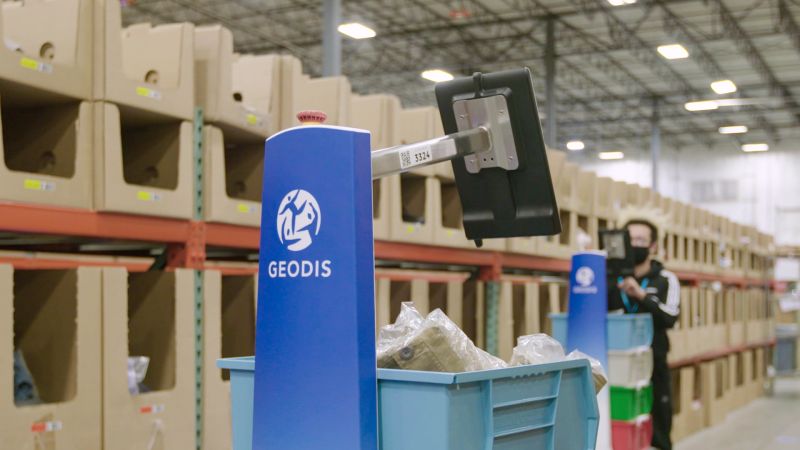
The company first showcased the solution at supply chain tradeshow MODEX, where it also announced on Monday an extended partnership with global logistics solutions provider Geodis to bring its AMRs to Geodis customers in Latin America. Geodis’ first site in Cuautitlan Izcalli, Mexico, will operate the bots in a three-story warehouse while using the LocusHub and LocusOne technology. Geodis says it plans to deploy up to 1,000 LocusBots globally over the next 24 months.
“Locus allows us to unlock significant productivity improvements while also creating an engaging work environment for our teammates,” explained Kevin Stock, executive vice president of engineering at Geodis in the Americas.
Port of Huntsville handles record intermodal rail volume in 2023
Intermodal traffic continues to expand at the Port of Huntsville in north Alabama.
The port recorded 27,597 container rail lifts at its intermodal center in 2023, a 24% year-over-year increase compared to 2022.
“The key is our customer base is really expanding,” Butch Roberts, CEO of the Port of Huntsville, told FreightWaves. “We have Mazda and Toyota right here in our community; they’re becoming big players. What we’re happy about is that the growth is diverse, it’s different folks adding to it. We’re just continuing to grow.”
The Port of Huntsville is a multimodal inland port served by air, rail and truck. The port is on 7,000 acres and comprises four operating entities: Huntsville International Airport, along with its International Intermodal Center, Jetplex Industrial Park and Huntsville International Spaceport.
The Jetplex Industrial Park houses more than 70 companies from a variety of industries, including automotive suppliers, electronics, aviation/aerospace, and warehouse or distribution centers.
Huntsville International Airport serves eight major cargo airlines, including DSV, Kerry Logistics, FedEx, UPS and Qatar Airways.
While rail lifts were up last year, cargo freight by weight was down about 18% year over year to 115 million pounds in 2023.
“Since COVID, we’ve been down, the whole industry is changing,” Roberts said. “We’re up already for January and February. We’re exceeding last year’s numbers.”
For 2024, rail lifts at the port’s intermodal center are off to a good start. The port recorded 2,569 rail lifts in January, a 6% year-over-year increase compared to the same period in 2023.
The port’s intermodal rail terminal is served by Norfolk Southern, with dedicated stack train service to and from both East and West Coast ports.
The intermodal center is equipped with two 45-ton overhead gantry cranes and includes more than 436,000 square feet of air cargo space and distribution facilities, with 35,000 square feet of cold storage.
The port is centered among several automotive manufacturers in the southeastern U.S., including Volkswagen, Toyota, Nissan, General Motors and BMW, that can be reached by truck within a few hours.
“We have fairly traditional rail-type products here, consumer products. On the export side, we have everything from beverage products, cotton, lumber, all kinds of automotive parts on the import side,” said Barbie Peek, the port’s chief business development officer. “We also see textile products, retail products, building materials — all these are supporting manufacturers in the region.”
One of the port’s goals for this year is expanding the size of the depot service at its intermodal container yard.
“We have a large cargo operation here in Huntsville. We have a 4,000-acre industrial park here,” Roberts said. “It’s all about development and industrial growth through the benefits of transportation, as an inland port located in a small community that serves as an alternative hub for operations for our customers. Our whole goal is for our customer base to make money. They wouldn’t come here if they weren’t making money.”
Union Pacific CEO defends safety practices without mentioning key critic
Jim Vena’s opening remarks Wednesday at the J.P. Morgan 2024 Industrials Conference could easily be seen as a rebuttal to one man: Amit Bose, the chairman of the Federal Railroad Administration.
Bose wrote a letter to the Union Pacific (NYSE: UNP) CEO Feb. 29, responding to reports of extensive furloughs at the Class 1 railroad that serves the Western half of the U.S. “The [FRA] has previously communicated our concerns to UP regarding the potential risks of reducing staffing levels in critical departments such as mechanical operations,” Bose wrote. “Despite FRA’s warnings and recommendations, and at a time when Class I freights should be prioritizing ways to improve a decade-long record of stagnant safety performance, it is disappointing to see that UP is actively disregarding the federal government’s concerns.”
Vena shot back a day later, saying Bose’s letter made an “inaccurate correlation between natural workforce fluctuations and safety.” “Your letter … combines different types of workers and paints an incorrect and incomplete picture of the natural role workforce fluctuations play in operating a railroad year-round,” Vena wrote.
Given that the back-and-forth took place less than three weeks ago, it wasn’t hard to hear in Vena’s presentation a public response to Bose’s safety concerns without mentioning Bose by name.
The opening slide Vena showed at the J.P. Morgan conference cited statistics about UP’s recent safety record: no work-related deaths in 2023, a 15% year-over-year reduction in serious injuries, a 28% drop in derailments in the past 10 years and a 26% improvement in derailments since precision railroading — the efficiency-driven management system that has been blamed by critics for a variety of railroad ills — was implemented in 2019.
“Union Pacific as well as the entire industry has made significant progress over the years,” Vena told conference attendees. The railroad ended 2023 “with good momentum,” he said, citing last year’s zero deaths.
“But we understand we still have work to do, especially to reach our goal of industry leadership,” Vena added.
He cited an initiative at UP to identify the primary causes of injuries, saying the company had found six key “choices that individuals make each day” that cause an outsize percentage of injuries. He did not name the six but said they are called “Go Home Safe” choices within the railroad, “and we rolled out new policies and training to all employees to prevent these potentially life-threatening behaviors.”
“The key message is that the right priority has been placed on the safety of our network,” Vena said.
Bose’s criticism was not the first directed at Vena by a federal official. In November, at the RailTrends conference in New York, Surface Transportation Board Chairman Martin Oberman also criticized Vena by alleging he was favoring shareholder returns over safety.
Observers of the rail system in the U.S. recently have been noting improvements in service and incremental gains in market share after years of standing still and hearing endless criticism of performance.
Vena said in response to questions from Brian Ossenbeck, a senior analyst at J.P. Morgan and the investment bank’s lead transportation analyst, that internal performance metrics at Union Pacific had largely ignored customer satisfaction. The previous metric measured “success against our trip plan that we had built,” Vena said during his roughly half-hour presentation.
Measuring customer satisfaction
“The standard was driven by what we needed to do,” he said, but it could never get to 100% satisfaction because “it wasn’t reflective of what the customer wanted.” It also could easily be manipulated, he said, noting that the number of hours needed to get a train out of the yard and on to the Union Pacific system could just be extended in the plan, making compliance easier.
The old system has been replaced by the Service Performance Index (SPI). In a letter to customers last month, Kenny Rocker, the company’s executive vice president for marketing and sales, spelled out the measurements built into SPI.
For manifest and intermodal service, Rocker said the comparison will be between the service a customer is receiving now and “the best monthly network performance over the last three years.”
For a unit train hauling one type of good or a lineup of an identical type of cars, the measurement will be on a monthly basis to determine how well those trains are “achieving their demand and cycle times on a monthly basis.”
“What SPI is, it measured what we’ve sold our customers,” Vena said at the conference. The measurement is at a “high level,” he said, and it ultimately is “a consolidation of everything, but in fact we have specific measures and specific [key performance indicators.]”
Vena did not specifically address the furloughs that Bose referred to in his letter. But he did talk about the company’s current workforce, as did CFO Jennifer Hamann, who also addressed the conference.
Union Pacific is in the midst of implementing the terms of the landmark agreement it made with its engineers last year, which provided for a schedule of 11 days on call and four days off.
Hamann said as the implementation proceeds, “right now you’re seeing us carry a few extra employees.” Along with healthy volumes on the railroad, “we want to maintain a buffer,” she said. “We want to be ready to serve our customers and provide them the service they need, and we’ve got to have a little bit of slack in the system to deal with that.”
Capacity can be added
Vena said that slack extends to locomotives. About 500 Union Pacific locomotives are “ready to go” if there were demand for more service, while access to an additional 1,000 would take “a little bit of work” to secure. “We have as many units parked that some of the other smaller Class 1s have operating,” Vena said. “We don’t have an asset problem. Our infrastructure is in place to be able to move and increase business if we have to.”
While an uptick in service might require some investment in capital, “overall the railroad was built to handle more traffic than we have today,” Vena said.
Recent performance numbers do speak to a railroad serving more customers. The company’s fourth-quarter earnings release reported that quarterly volume was up 3.5% from the fourth quarter of 2022, and the operating ratio improved to 60.9% from 61%.
For the full year, OR improved to 60.1% from 62.3% for all of 2022. Volume was up anywhere from 3% to 4% for the full year, depending on product category.
Power struggle within FedEx pilots union upsets contract talks
In a surprise maneuver last week, a rebel group of FedEx Express pilots forced union leadership to break off contract negotiations by requesting that federal authorities release the parties from mediation before the company could even respond to its latest counteroffer.
The petition to the National Mediation Board (NMB) went against advice from Air Line Pilots Association staff and the union’s governing body at FedEx’s airline, exposing the extent of union infighting that has continued since a tentative labor contract was voted down last summer.
The division has undermined the union’s negotiating credibility at a delicate moment, with growing prospects the opposition faction could move to oust the union’s current leadership.
“A holy war is about to happen in our union and the crew force. Only thing that happens in a holy war is a high body count,” said one poster on an online pilot forum.
At a special meeting of the FedEx Master Executive Council (MEC) on March 4, eight of 14 representatives used parliamentary tactics to narrowly push through a resolution demanding ALPA’s president ask the NMB to declare an impasse and offer binding arbitration to the parties. Motions to bypass original agenda items were advanced without prior notice or written material to review. The events were described in meeting memos and correspondence from union negotiators to rank-and-file pilots obtained by FreightWaves.
The representatives had requested the meeting ostensibly for the purpose of getting a briefing on talks with management. That never happened.
On Friday, ALPA announced it had formally requested to be released from mediation — a prerequisite for eventually securing the legal right to go on strike.
Union officials said the rebel group hid its true intentions until the last moment. One district council leader characterized the actions as an “ambush.”
The board representatives made the power play even as the MEC waited for FedEx (NYSE: FDX) to respond to its most recent contract proposal. The maneuver also prevented attendees from hearing an update from the federal mediator about company plans and expectations for the next negotiating session that would have helped shape the union’s decision-making on its agenda items, according to the internal bulletins.
“I expect the new majority’s next move will be to recall myself and the other officers,” said Capt. Billy Wilson, chairman of the FedEx Master Executive Council. “After this change, they have suggested that committee chairs will be removed as well. It appears control and power are goal number one, and a new tentative agreement is a goal for further down the road. Unfortunately, this will be to the detriment of the pilots they represent.
“Every day that goes by, we are losing money, and the company is saving money. That is why my number one goal has been to move us toward a highly ratifiable tentative agreement as soon as possible,” he wrote in a letter.
FedEx pilots in July rejected a tentative contract agreement worth $3.8 billion that would have raised pay by up to 30% over 4.5 years. Opponents complained about weaker job protections, back pay, alternative pension options and that pay increases were below those achieved by pilots at American, Delta, United and other airlines.
Mediated bargaining sessions resumed in early December, when ALPA presented its contract terms. The next session was scheduled for March 18, when union negotiators were to receive the company’s position on pay, retirement and parameters for when flights can be outsourced. That session and another one have now been canceled.
Wilson said that ALPA anticipated a serious response from FedEx on March 18 because the mediator had placed significant pressure on both sides to make progress toward a deal. Documents show that the biggest movement since the summer’s failed agreement was on pay and the scope of third-party outsourcing. Union negotiators agreed to drop some demands for changes in work-life balance in exchange for more money.
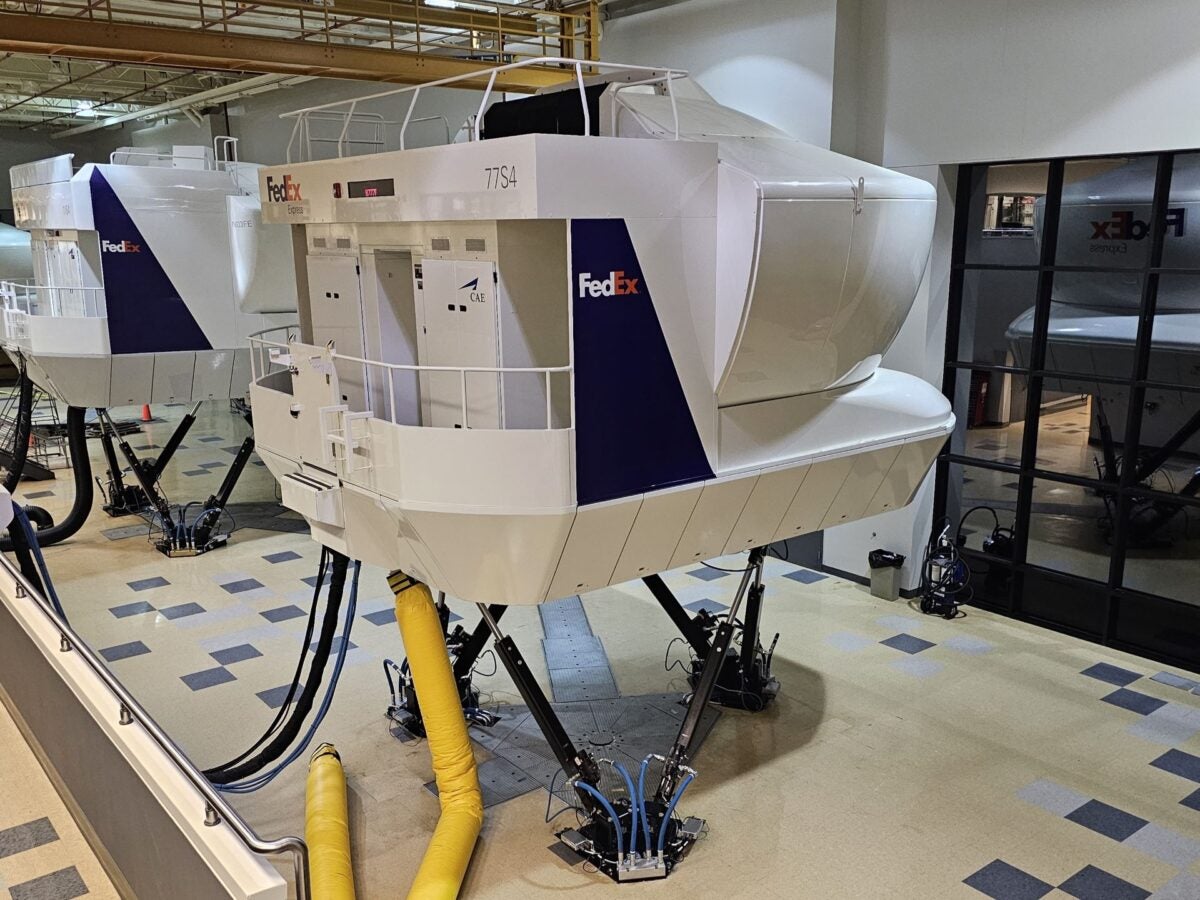
A full flight simulator at FedEx headquarters in Memphis, Tennessee, helps train pilots on Boeing jets. (Photo: Eric Kulisch/FreightWaves)
“This short-sighted course of action will ensure that we never know what the company was actually going to provide,” complained Patrick O’Dell, the secretary/treasurer of Council 22.
Wilson said the hard-line faction harmed pilots by circumventing the process, adding he was prepared to recommend breaking out of mediation if FedEx presented unfavorable terms next week.
“As pilots, we always gather all the information available and make informed decisions. They made a premature decision without all of the facts. This is like initiating a go-around before you start the approach because you are basing your decision on [pre-recorded airport information] from an hour ago rather than getting the current weather,” said Wilson.
FedEx officials say discord within the union has made it difficult to make progress on a contract, despite their best efforts.
Since December, ALPA has repeatedly added new agenda items to its proposals, said Pat DiMento, vice president of flight operations and training, in a Monday letter to FedEx crew members reviewed by FreightWaves.
“It appears that the ALPA negotiating committee is severely constrained at the bargaining table and that directives to the committee to include additional items, concepts and costs are aimed at impeding the process rather than allowing the parties to reach an agreement,” wrote DiMento. “In the meantime, the company has continuously bargained in good faith and has also moved in our pilots’ direction with every offer and in almost every area of importance identified by ALPA.”
Disunity among FedEx pilots has grown in recent years. A 57% majority killed the tentative contract last summer, and some pilots wanted to recall the negotiating committee. Many were upset with ALPA for being too accommodating toward FedEx, including in a 2015 contract they say eroded schedule flexibility and other quality-of-life issues.
Chatter on pilot forums suggests continued disillusionment with ALPA, especially on its ability to prevent FedEx from gradually giving more routes to third-party carriers. The new guard lost faith in Capt. Pat May, the chairman of ALPA’s FedEx negotiating committee, after he delivered what they consider a substandard labor agreement last summer and didn’t resign, as promised, when it was shot down. They believe management is stringing the pilots along because not having an updated contract saves FedEx a huge amount of money, according to several pilot.
“We went two years negotiating this contract and very little happened” when the talks were supposed to follow an expedited track, said one captain in a text message.
Many veteran pilots complain a loud minority, with unrealistic goals, is using social media to stir division and delay constructive dialogue with FedEx. They say, for example, code sharing is a reality in the airline industry and that it makes sense to outsource business on routes with limited demand. Younger pilots argue senior pilots previously voted to give away protections and benefits they enjoyed when they had less tenure.
Another pilot, who goes by the online handle Anthrax, said Wilson should be recalled and that May “failed us miserably the first time around.” He said Wilson is stirring up fear, arguing that talks are at a dead end and that it’s time for a change even if the path ahead is uncertain.
But the likelihood of a recall seems low for the moment because May told members several weeks ago that the negotiating committee will be replaced if a tentative agreement isn’t reached by the end of April.
Wilson said the hard-line faction’s action only served to raise questions in the NMB’s mind about the stability of the union and its ability to conduct negotiations under the Railway Labor Act.
Options for dispute resolution
Collective bargaining for airlines is governed under the Railway Labor Act, which is much more restrictive than general labor law. Under federal rules designed to prevent work interruptions in critical interstate commerce, workers are prohibited from striking and companies from locking out workers until a lengthy series of bargaining steps, including federal mediation, are completed. The federal mediator has the power to hold the parties in mediation indefinitely.
(Photo: Eric Kulisch/FreightWaves)
The next step is for the NMB to decide that additional mediation efforts would not be productive and offer the parties an opportunity to arbitrate the dispute before a special panel.
If either side declines the arbitration, both parties enter a 30-day “cooling-off” period, after which the parties can engage in self-help — a strike by the union or a lockout by management. But the U.S. president could create an emergency board at that point to investigate the labor dispute and issue a report within 30 days, stringing out the process further. That is followed by another 30-day period to consider the board’s recommendations and reach an agreement. If no agreement is reached at the end of the second cooling-off period, the parties may take action.
Arbitration in the airline industry almost never happens. The NMB last week denied a release to cargo pilots at Air Transport International, also represented by ALPA. In fact, the NMB has only allowed one airline bargaining process (Spirit Airlines) in more than 20 years to go to arbitration.
Meanwhile, the contract talks are taking place against a backdrop of falling volumes that has accelerated a streamlining effort across the Express air network, leaving the airline with hundreds more pilots than it needs. The company’s strategy includes segregating parcel and heavy freight shipments so they don’t fly together and slow down sort centers, as well as using more ground transportation, temporarily idling some freighters and retiring older aircraft.
DiMento said it would be inappropriate for the NMB to end mediated negotiations.
“It is our view that political agendas within FedEx ALPA are currently frustrating efforts to make these negotiations productive. Regardless, we have been and will remain ready to bargain in good faith in the hopes of reaching an agreement that benefits everyone,” he told flight crews.
When to DNU brokers and carriers; why flatbed is king; reverse logistics – WTT
On Episode 693 of WHAT THE TRUCK?!?, Dooner is talking to Ship Happens’ Jennifer Morris about putting a carrier in do-not-use status. When is it OK to pull carriers and brokers from your network? Morris advises.
Fillogic CEO Bill Thayer tells us why omnichannel is dead, shares how holiday returns went, updates us on the state of reverse logistics and tells us why 2024 is the year of partnerships.
FreightWaves’ Thomas Wasson is crunching the numbers in SONAR to tell us about what the market is looking like right now. Is flatbed really king?
Plus, Easterflation; a new toilet paper crisis; a fiery rate the strap work; and what to do when your spouse damages your car.