Cargojet navigates tariff turbulence, maintains revenue growth 

A blue-tailed Cargojet aircraft takes off from a runway with mountains in the background.

Cargojet’s core transportation revenue from a domestic Canada overnight network, dedicated contract carriage and charter flights increased 7% year over year in the second quarter amid a rise in U.S.-fueled trade barriers, but management said it is cautiously optimistic it can maintain volumes in the near-to-medium term despite global trade uncertainty. 

Transport revenue came in at $148.7 million, with a 14% increase in domestic revenue and 22% growth in charter revenues outpacing a 9.6% decline from aircraft-as-a-service contracts, according to results published Wednesday night. The bundled lease business was down 15% in the first quarter. Cargojet (TSX: CJT) said revenue from its domestic network, which co-loads freight from multiple customers in 16 cities, benefitted from e-commerce and B2B growth, as well as rate escalators in customer contracts. 

Reflecting the economic uncertainty from trade tensions with the United States, domestic revenues were down 2.4% from the first quarter. The decline in revenue from leased aircraft with crews was largely due to lower shipment volumes from Europe amid U.S. tariff threats of up to 50%, but trans-atlantic business constitutes a small portion of overall revenue, the airline said.

Adjusted earnings before interest, taxes, depreciation and amortization was $58.3 million, up 1.4% compared to the same quarter the previous year. Management said its adjusted profit margin of 34% was the result of strong operating efficiencies and cost management as flight hours declined 10%. Cargojet posted a smaller net loss of $2.3 million as it used cash to invest in more freighter aircraft.

Analysts called the results solid considering the turbulent macroeconomic environment.

“I’m not expecting that this is going to be a huge, huge bumper season. It’s a season of adjustments,” Executive Chairman Ajay Virmani told analysts.

The company separately announced a long-term extension of its flying contract with DHL Express. Virmani said it made sense to renew the strategic partnership two years early by lowering the share price DHL needs to pay to exercise a stock buy and that motivates DHL to give Cargojet more business so it can reach the revenue target for executing its warrants. The replacement warrants were on the growth side, indicating DHL intends to grow volume and put Cargojet first in line for new business, he explained.

“During tough economic times, consumers often substitute a product with a lower cost item, but we expect the volumes to remain resilient. Our Q2 results clearly demonstrate that such behavior is playing out and that e-commerce is still strong and has a long runway of growth ahead of it in Canada. That said, we did see some weakness in our European ACMI (aircraft, crew, maintenance, and insurance) routes after Liberation Day, but we remain optimistic that after the EU-U.S trade deal and our new DHL agreement, air cargo flows will reemerge in the coming quarters,” said co-CEO Jamie Porteous on Thursday’s earnings conference call.

Cargo airlines, including Cargojet, might see a spike in parcel volumes this month as shippers rush to beat the United States’ Aug. 29 date for ending the de minimis exemption for all nations, which allowed small-dollar shipments to enter the country with no need to pay duties and minimal paperwork, Virmani said.

Cargojet said it recently took advantage of market conditions to buy three converted Boeing 767-300s and one factory-built 767-300, the latter of which is scheduled to join the operational fleet this quarter. 

Cargojet now operates 43 Boeing 767 and 757 freighter aircraft after adding two used 767-300 passenger aircraft this year that were modified to carry cargo containers. A third 767-300 aircraft remains under conversion and is expected to be delivered in the fourth quarter. 

The company said it will sell two older 767-300 aircraft during the third quarter to improve cash flow and its debt leverage ratio. It will also return an older 767-200 to its lessor in the first quarter of 2026. 

During the call, management announced that Gord Johnston, who has served as executive president, strategic partnerships, since early 2024, has been promoted to chief commercial officer. The new role will streamline sales processes and generate new revenues by improving capacity utilization in key lanes, including backhaul lanes, by leveraging spot market opportunities and interline relationships with other airlines, co-CEO Pauline Dhillon said.

In June, Cargojet hired Aaron McKay, who previously worked at Canadian passenger airline WestJet, as chief financial officer. He replaced Scott Calver, who departed in March. 

Click here for more FreightWaves/American Shipper stories by Eric Kulisch.

Write to Eric Kulisch at ekulisch@freightwaves.com.

DHL moves early to renew Cargojet contract until 2033

New US de minimis policy could trim DHL profit by 3%

Rise in China e-commerce traffic lifts Cargojet to record revenue

How Improper Driver Files Are Triggering Surprise Audits

If you’re running a trucking business, especially as a small fleet owner or solo carrier, you need to understand this clearly: the fastest way to trigger a compliance audit from the FMCSA is to have incomplete or improperly maintained driver qualification files. It doesn’t matter if your trucks are running on time or if your loads are delivered perfectly. If your driver files are a mess, you’ve got a target on your back—and that target could cost you everything. This article walks you through the specific issues that trigger audits, breaks down the exact requirements for compliant driver files, and gives you an execution-ready process to keep your operation clean, legal, and protected.

The Real Risk of Missing Paperwork

Let’s clear something up: the FMCSA isn’t auditing you because your truck is old, your trailer has a scratch, or your logo is faded. They’re auditing you because something in your documentation—usually your driver files—raised a red flag. That red flag might be a failed roadside inspection, a crash report, or even a single missing piece of information when you were onboarded as a new entrant.

Here’s what most small carriers get wrong:

  • They assume the driver file is just a job application and a copy of a CDL.
  • They don’t update files regularly when licenses are renewed or medical cards expire.
  • They treat compliance like a one-time setup, not a living process.

That mindset is how good carriers get blindsided. You think you’re good until an audit notice shows up. And by then, it’s already too late.

What the FMCSA Looks For

Driver Qualification Files (DQFs) are not optional. The FMCSA has very specific guidelines about what must be in every driver’s file. If even one of these components is missing or out of date, you could face a fine, conditional rating, or worse. Here’s what your DQF must include:

  1. Driver’s Application for Employment
  2. Motor Vehicle Record (MVR) from each state the driver held a license in the past 3 years
  3. Road Test Certificate or equivalent
  4. Medical Examiner’s Certificate and verification of National Registry
  5. Annual MVR Review
  6. Annual Certificate of Violations
  7. Record of Safety Performance History from previous employers (past 3 years)
  8. Drug and Alcohol Testing Records (for CDL drivers)

Every single one of these documents must be accurate, current, and accessible.

Top Compliance Violations That Trigger Audits

Here’s where most small carriers slip up:

  • Expired medical cards
  • Missing annual reviews
  • Incomplete safety performance verifications
  • Missing drug and alcohol records
  • Failure to update files when a driver changes states or gets a new license

You may think these are small errors—but they’re not. The FMCSA has a zero-tolerance stance on missing documentation. And once they find one issue, they’ll dig deeper. A single missing MVR could snowball into a full-blown compliance review.

How Driver File Mistakes Multiply Risk

Let’s say you get pulled for a roadside inspection and the officer flags your driver for a missing medical certificate. That report gets logged into FMCSA’s system. Now your company gets flagged for a potential compliance review. Then they find that your driver hasn’t had an annual MVR review. Then they see you don’t have drug testing documentation on file. Now you’re in violation of multiple federal rules, not just one.

What started as one missing document turns into a full audit. And every violation you rack up increases your chances of being downgraded to a Conditional safety rating—which will destroy your chances of landing better freight, higher-paying lanes, or favorable insurance.

Building a Bulletproof Driver File System

You don’t need to overcomplicate this. But you do need a system. The most dangerous thing you can do is try to “remember” to update files. Compliance isn’t memory-based—it’s process-based. Here’s a system you can start using today:

Step 1: Create a Standard Driver File Checklist

Every time you onboard a driver—whether it’s your first or your fifteenth—use the same checklist. It should include:

  • Application for Employment
  • MVRs from all states in the past 3 years
  • Medical Card and verification
  • Road Test Certificate or CDL equivalent
  • Safety Performance History (3 years)
  • Drug and Alcohol Records
  • Certificate of Violations (annually)
  • Annual MVR Review

Post this checklist in your office. Save it to your onboarding folder. Make it a non-negotiable part of hiring.

Step 2: Set Recurring Reminders for Expiring Documents

Don’t wait for expiration dates to sneak up on you. Use Google Calendar, Trello, or a compliance management tool to set reminders 60, 30, and 7 days before any critical document expires.

Key dates to track:

  • Medical Examiner’s Certificates
  • CDL Expiration
  • Annual MVR Reviews
  • Annual Violation Certifications

Step 3: Conduct Internal File Audits Every Quarter

Every 3 months, block off an hour to review all active driver files. Check for:

  • Missing documents
  • Expired certificates
  • Incomplete verifications

This is the step most small fleets skip—and it’s the reason they get burned. Don’t assume your files are fine. Audit them like the FMCSA would.

Step 4: Store Files Securely and Accessibly

You need to be able to produce any document within 48 hours of an audit notice. That means:

  • Digital backups of all driver files (PDFs or scanned copies)
  • Organized folder structure by driver name and year
  • Secure cloud storage with restricted access

Avoid storing files only on one laptop or in a single office drawer. Redundancy matters here.

Highlighter Moments: Compliance Execution You Can Act On

  • Build a standardized driver file checklist today—don’t wait until your next hire.
  • Create automated reminders for document expirations. Manual tracking leads to failure.
  • Schedule quarterly internal audits to catch errors before the FMCSA does.
  • Digitize and back up all compliance files. Don’t let a hard drive crash ruin your records.

What to Do If You Find Gaps in Your Driver Files

Don’t panic—but don’t delay either. The moment you discover a missing or outdated document, address it immediately. Here’s what to do:

  1. Gather the Missing Information: Reach out to the driver, prior employers, or your medical examiner.
  2. Document Your Correction: Keep notes on what was missing, when you fixed it, and how you verified the update.
  3. Review All Other Files: If one file had an issue, others probably do too. Audit everything.
  4. Reinforce Your System: Add steps or reminders to prevent the same mistake from happening again.

Final Word

Your trucks can run clean. Your loads can be delivered on time. Your drivers can do everything right on the road. But if your back office—especially your driver qualification files—is out of order, it won’t matter. Compliance is the foundation that keeps your business legal, insurable, and operational.

You can’t afford to treat driver files as an afterthought. Every piece of paperwork is a line of defense against audits, fines, and lost revenue. Small fleet owners don’t have the luxury of missing details. The carriers that survive are the ones that build systems, follow them consistently, and treat compliance like a core part of the business—not a burden.

Take this seriously now, and you’ll avoid getting blindsided later. Set up your system. Run your checks. Keep your files clean. That’s how you stay in the game.

Grain, automotive keep U.S. rail traffic ahead of 2024

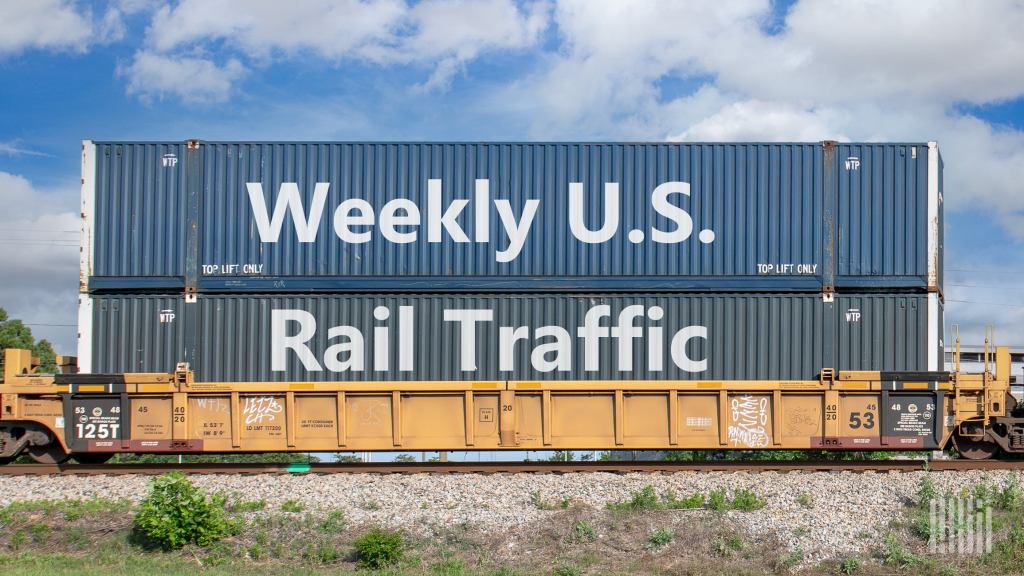
According to Association of American Railroads statistics, rail traffic for the week ending Aug. 2, 2025, was 513,529 carloads and intermodal units, a 2.9% increase over the same week a year earlier. That figure included 233,805 carloads, up 6.4%, and 279,724 containers and trailers, up 0.2%.

While all categories except petroleum saw gains, the only double-digit increases were grain, 25.7%, and motor vehicles and parts, 10.2%.    

Through 31 weeks of 2025, traffic totalled 16,162,611 carloads and intermodal units, a 3.8% increase over the same period in 2024. The 31-week figure includes 6,828,409 carloads, up 2.8%, and 8,334,202 intermodal units, up 4.7%.

The most recent data from the Intermodal Association of North America showed mixed results, as BNSF, CSX (NASDAQ: CSX) and Union Pacific (NYSE: UNP) saw weekly improvements, while Mexico’s GMXT (OTC: GMXTF) and Norfolk Southern (NYSE: NSC) were below previous-year levels. 

Intermodal is sure to be affected by new U.S. tariffs that were imposed Thursday on scores of countries, with levies ranging from 15% to as much as 50% for Brazil, after that country was hit with an additional 40% Wednesday. The U.S. has come to trade agreements with a number of countries, including China, but hit key trade partners with higher tariffs including India, 25%, Taiwan,  20%, Thailand, 19%, and Vietnam, 20%.

“I continue to believe that the balance of the year will be challenging, with more downside risk than upside for intermodal,” said consultant Lawrence Gross.

North American volume for the week ending Aug. 2, from nine reporting U.S., Canadian, and Mexican railroads, was 700,660 carloads and intermodal units, up 3.6% over the corresponding week in 2024. The 337,571 carloads was a 4.5% increase, while the 363,089 intermodal units, up 2.7%.

For the year to date, North American volume is 20,943,417 carloads and intermodal units, a 2.9% increase over the first 31 weeks of 2024. That includes 5,035,654 carloads and intermodal units in Canada, a gain of 1.6%, and 745,152 carloads and intermodal units in Mexico, a decline of 5.1%.

Subscribe to FreightWaves’ Rail e-newsletter and get the latest insights on rail freight right in your inbox.

Related coverage:

Planned US-Mexico rail route advances with environmental report
Infrastructure fund pays $1B to acquire largest US regional railroad

Efficiencies, demand aid Freightcar America earnings

Rail merger will bring ‘dismal service,’ ‘high rates’, says shippers group

First look: some small signs of improvement sequentially and year-on-year at RXO

Revenue figures for RXO (NYSE: RXO) were stronger on a year-on-year basis, but the acquisition of Coyote Logistics from UPS did not take place until the third quarter of last year, making the comparison less than perfect. 

Revenue was $1.41 billion compared to $930 million a year ago. Sequentially, when the comparison is on an equal basis reflecting the Coyote business, revenue at RXO was down slightly from $1.43 billion in the first quarter. 

More significant of RXO’s financial position on a year-on-year basis was the company’s gross margin of 17.8% in the second quarter, compared to 19% a year earlier. The second quarter gross margin in 2025 was identical to that of 2025’s first quarter.

RXO said its brokerage volume growth was up 1% year-over year. Full truckload volume was down 12% year-on-year. But the company’s less than truckload volume took a big jump of 45% compared to the second quarter of 2024.

The truck brokerage margin at RXO was improved sequentially at 14.4%, compared to 13.3% in the first quarter. But it was down from 14.7% a year earlier. 

RXO in both the second quarter of 2024 and 2025 was essentially a breakeven company on an operating basis. The net loss on a GAAP basis was $9 million in 2025’s second quarter and $7 million a year earlier. 

Adjusted net income in the quarter, a non-GAAP measure, was a positive $7 million, compared to adjusted net income of $4 million in the second quarter of 2024.

The breakeven operating income in 2Q 2025 was an improvement over the $30 million operating loss posted in the first quarter. The net loss per share was minus 5 cents in the second quarter of 2025, minus 6 cents a year earlier and minus 18 cents in the first quarter of 2024. 

Adjusted EBITDA in the second quarter was $38 million, rising from $28 million in the second quarter of 2024. That line item was $22 million in the first quarter. 

In the prepared statement released with the earnings, RXO CEO Drew Wilkerson said the company “executed well in the second quarter despite the prolonged soft freight market.” Besides citing the growth in brokerage volume, he said the company’s Last Mile has “continued its impressive run of year-over-year growth, achieving 17% stop growth.”

“We’re focused on growing profitably, and we’re realizing the benefits of our increased scale,” he said in the statement. “That scale, combined with our cutting-edge technology, is driving productivity improvements.”

More articles by John Kingston

Averitt pay increase could be a sign of some acceleration in driver wages

At C.H. Robinson, improved profitability, productivity and a lot fewer workers

Each driver’s payout in Lytx Illinois biometrics case will be between about $650 and $850

Planned US-Mexico rail route advances with environmental report

The Surface Transportation Board’s Office of Environmental Analysis has issued its final Environmental Impact Statement for the Green Eagle Railroad, a 1.3-mile line that would be part of a new 19-mile rail route and bridge connecting Eagle Pass, Texas, and Piedras Negas, Mexico.

The Green Eagle Railroad would be part of a secure corridor for BNSF and Union Pacific (NYSE: UNP) traffic, including a new double-track bridge across the Rio Grande.

The report addresses two route alternatives, the Southern and Northern rail alternatives, and recommends mitigation action in three areas: Sound barriers on bridges to address noise; archaeological surveys and monitoring of construction sites to address possible archaeological deposits; and measures to protect potential threatened or endangered species and migratory birds.

A preliminary report had been released in March. The final report was developed after a comment period that included 104 written or verbal submissions from 92 commenters; the final report says none of those comments “required additional analysis or substantive changes to the text of the draft EIS.”

The 150-page final document is available here, with 709 pages of appendices available here. The matter now goes to the STB for a final decision.

Subscribe to FreightWaves’ Rail e-newsletter and get the latest insights on rail freight right in your inbox.

Related coverage:
Infrastructure fund pays $1B to acquire largest US regional railroad

Efficiencies, demand aid Freightcar America earnings

Rail merger will bring ‘dismal service,’ ‘high rates’, says shippers group

UP-NS merger puts intermodal giants on the wrong side of the map

DHL moves early to renew Cargojet contract until 2033

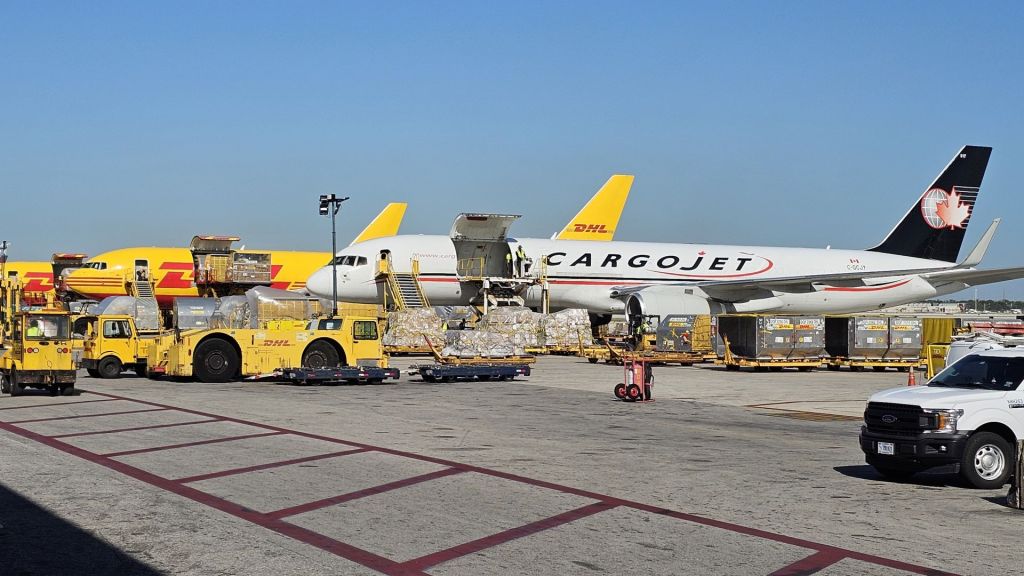
Yellow DHL cargo aircraft rest beside a blue-white Cargojet freighter at an airport, with tugs on the ground.

Canadian airline Cargojet has extended its long-term transport agreement with integrated carrier DHL Express until March 31, 2033, and reduced DHL’s potential ownership stake in the company from 9.5% to 6.6% in exchange for renewing the deal two years before it expired, the companies announced Wednesday.

The revised freight services contract is projected to deliver $2.3 billion in revenue for Cargojet. DHL has the right to extend the agreement two times for two-year terms, potentially stretching the deal until March 2037.

In early July, Cargojet extended its contract with Amazon for four years. The contract now runs until March 31, 2029. 

Cargojet began flying in DHL’s express package network in 2005. It now provides bundled lease packages that include aircraft, crews and mechanics to fly freight; crew and maintenance in cases where DHL provides its own freighter aircraft; and charter service for short-term capacity needs. Cargojet has a fleet of more than 40 Boeing 767 and 757 freighters. Some of DHL’s volume moves in Cargojet’s domestic Canadian overnight network in which capacity is shared by various customers. 

Cargojet’s current contract with DHL was signed in March 2022 and was scheduled to run five years. The companies cemented their partnership with the issuance of warrants giving DHL 9.5% of Cargojet shares after a seven-year vesting period. 

Cargojet operates five to six flights per day from its hub near Toronto to DHL’s hub at Cincinnati/Northern Kentucky International Airport (CVG), and supports DHL’s express network with daily flights between CVG and Mexico, South America and the Caribbean.

Cargojet Executive Chairman Ajay Virmani told analysts during an earning’s presentation the following day that the refreshed partnership agreement benefits both sides by reducing ownership dilution for Cargojet and reducing the number of warrants DHL needs to buy to secure a minority investment, while also lowering the strike price from CA$150.

“The contractually different is that the warrants that we have now reissued, which are a lot less, the strike price is different. And the most importantly, the revenue associated with warrants that they have been delivered is more geared towards growth than maintaining the business. So the interest aligned from that, that they’re interested in growing with us based on our performance, our flexibility, our willingness to do more than anybody else. And we wanted to make sure that we refreshed the agreement two years early,” he said. “We could have lived with an outdated agreement that did not motivate the customer or us to do anything different. So a two-year earlier renewal refreshes the whole agreement, the commercial terms, adds the minimum block hours, adds the minimum number of planes and certainly rejuvenates the whole partnership.”

Under the expanded partnership, DHL will continue to guarantee a minimum amount of paid flight hours per month and give Cargojet preference to fly additional routes as it adjusts its global network to meet shipping demand. Cargojet will also terminate the warrants to acquire more than 1.6 million voting shares and instead issue warrants giving DHL the right to acquire 1 million shares at a price of $67.90 per share over a period of eight years, with vesting tied to DHL delivering up to $3.2 billion in business volume during the period. 

(Updated on Aug. 7, 2025, at 12 p.m.)

Click here for more FreightWaves/American Shipper stories by Eric Kulisch.

Write to Eric Kulisch at ekulisch@freightwaves.com.

New US de minimis policy could trim DHL profit by 3%

Rise in China e-commerce traffic lifts Cargojet to record revenue
In brief comments, Trimble CEO introduces new product for matching capacity with shippers

Quarterly earnings at the Transport & Logistics (T&L) segment of Trimble Inc. for the second quarter were the first for a full quarter since it closed the sale of its telematics division in February.

But while that complex divestiture was impacting some of its financial numbers, the earnings report also gave Trimble (NASDAQ: TRMB) an opportunity to signal a new upcoming offering from the T&L segment, Freight Marketplace. 

On the earnings call with analysts, Trimble CEO Rob Painter mentioned Freight Marketplace briefly, saying the company was “accelerating our rollout in the U.S.” There was no other mention of it during the call or in the company’s earnings release.

Freight Marketplace, Painter said, “enables real time capacity sourcing for shippers, carriers and brokers.”

On the website dedicated to Freight Marketplace, Trimble described the product as one that “empowers shippers and carriers to seamlessly connect, negotiate, and succeed with a global network.”

“Combining the functions of a procurement solution with the dynamics of a marketplace to enable real-time capacity sourcing and collaboration,” the company said about Freight Marketplace on the website. “Expand your network, gain higher win rates, and optimize your ability to unlock unprecedented growth with our digital freight marketplace.”

It isn’t a load board

If that sounds something like a load board, a spokeswoman for Trimble said that was not the case.

A load board, the spokeswoman said in an email to FreightWaves, has as a drawback that “shippers and carriers do not necessarily know who they’re dealing with, and have to manage through volatile freight rates & negotiations, capacity constraints, carrier reliability issues, etc.”

The capabilities of Freight Marketplace, she added, include “AI-enabled carrier verifications of documents and certifications to reduce time and risk; ability to find trusted partners with detailed service offerings, verified information, and specified expertise; (and) fair and competitive bidding transparency for better RFQ, mini bid or spot request outcomes.”

Freight Marketplace was made possible through the Trimble acquisition in 2023 of Transporeon,  which at the time was Europe-based. Freight Marketplace is built on the Transporeon platform.

The rollout of the product is in “early adoption,” the spokeswoman said.  “There will be more news on Freight Marketplace coming very soon.”

As to the earnings report, figuring out how well Trimble’s T&L group did in the second quarter requires something other than an apples-to-apples comparison, given Trimble’s sale earlier this year of its telematics business that included its ELD product offering.

On the surface, the T&L group, which is a major provider of transportation management systems, saw a large drop in revenue in the second quarter of 2025 compared to 2024. But that would be expected, given its sale of the telematics business, known formally as Trimble Mobility, to venture capital-backed Platform Science. The sale closed in February.

That deal was not a cash transaction. Instead, Trimble took back a 32.5% stake in Platform Science.

Revenue at T&L fell to $132.7 million from $191.8 million a year earlier. Operating income declined to $28.6 million from $35.9 million. 

Telematics divestiture may be positive for margins

But in one regard, the sale may have made the T&L segment more profitable. Operating margin at the T&L segment in the second quarter of 2025 was 21.6%. A year ago, with the now-sold telematics business still in the segment, the margin was 18.7%.

For the first half of 2025, the operating margin was 19.6%, compared to 18.7% in the first half of 2024. 

In the company’s revised–and improved–forecast for the rest of the year, Trimble said the T&L segment is projected to have 8% organic revenue growth and 8% annual recurring revenue growth, the latter being an improvement on first quarter numbers. It also said its current margins were impacted by stranded costs from the divestiture of Mobility. 

Surging stock price

Trimble’s stock has been on a roll for many months. The stock rose $1.43 Wednesday to $84.13, an increase of 1.73%. That marks a 12-month increase of 63.3%, a 3-month increase of 32.9, and a one-month increase of 6.7%, according to Barchart.

The relatively small increase in the Trimble stock price Wednesday came despite a stronger forecast for the rest of the year. Trimble’s updated outlook is to generate revenue for the company as a whole of between $3.48 and $3.56 billion this year, with non-GAAP earnings per share between $2.90 and $3.06. Its earlier forecast was revenue of $3.37 to $3.47 billion and non-GAAP earnings of between $2.76 and $2.98.

T&L is the smallest of the three segments. Its AECO segment had revenue in the quarter of $350.3 million, and its Field Systems segment brought in $392.7 million. AECO is derived from Architects, Engineers, Construction and Owners, the target audience. 

Field Services primarily sells its products to the surveying industry as well as construction activities related to that. The AECO segment primarily serves customers working in architecture, engineering, construction, design, asset management, operations, and maintenance.

More articles by John Kingston

Averitt pay increase could be a sign of some acceleration in driver wages

At C.H. Robinson, improved profitability, productivity and a lot fewer workers

Each driver’s payout in Lytx Illinois biometrics case will be between about $650 and $850

Waabi introduces mixed reality testing system for autonomous truck safety

Waabi autonomous truck

Waabi, an autonomous trucking technology leader, has introduced a new mixed reality testing (MRT) system that transforms the way autonomous vehicles are tested. The technology works by blending physical test environments with sophisticated virtual scenarios.

In an interview with FreightWaves, Raquel Urtasun, founder and CEO of Waabi, recently talked about how this technology creates virtual scenarios for autonomous trucks operating on physical test tracks.

“In the industry, we often talk about driving in the physical world as one type of testing, and we also discuss simulation, where we run scenarios in the cloud at scale,” said Urtasun. “But one aspect that’s discussed less is how safety testing is really done today, and that’s where mixed reality comes in.”

Traditional safety testing for vehicles has remained largely unchanged for a century. Testing teams bring vehicles to closed tracks and conduct a limited number of scripted scenarios that require complex coordination similar to movie stunts. A downside to this approach is that it yields minimal test diversity, offers poor repeatability and avoids truly dangerous scenarios to prevent damage to test vehicles. It’s also expensive.

Waabi’s MRT system overcomes these limitations by intercepting sensor data from the physical world and blending it with simulation. This creates an environment where autonomous trucks can safely encounter virtually unlimited dangerous situations without physical risk.

“Imagine putting goggles on a self-driving vehicle so it sees things that aren’t there but reacts to them,” Urtasun explained. “Suddenly, you can expose the system to unavoidable accidents and scenarios impossible to stage safely in the real world.”

In a blog post, Waabi adds that the technology enables instantaneous creation of complex scenarios including traffic jams, dangerous driving behaviors and unpredictable pedestrian movements.

The secret sauce is the use of generative AI and neural simulations rather than traditional physics-based simulation to achieve the required level of realism. This allows Waabi to create thousands of tests as vehicles drive continuously on a test track, generating precise performance metrics automatically.

This technology has significantly accelerated Waabi’s development process as the company reached feature-complete status earlier this year. Waabi’s autonomous system now has all capabilities needed to operate without a human driver. Only Waabi and Aurora have reached this milestone in long-haul trucking.

These developments come as Waabi announced back in February a strategic partnership with Volvo Autonomous Solutions to jointly develop and deploy autonomous trucks. To date, Toronto-based Waabi has raised a total of $280 million, with its most recent round, a $200 million Series B back in 2024, including participation from strategic investors Nvidia, Volvo Group Venture Capital, Porsche Automobil Holding SE, Scania Invest and Ingka Investments, among others.

Fresh Del Monte and CMA CGM shift to containerized produce to improve quality

Fresh Del Monte Produce Inc. and the CMA CGM Group have unveiled a strategic shift in the transport of bananas and pineapples from the Philippines to Northeast Asia by adopting containerized shipping, a move intended to enhance cold‐chain logistics and raise quality standards for perishable exports. The partnership marks a departure from traditional breakbulk methods that have typically been used in these routes.

Under the new arrangement, the two companies are deploying full refrigerated containers on two key shipping corridors. The JP8 route now delivers produce directly from Davao to Japan’s major ports, Tokyo, Yokohama, Kobe, and Moji, while the BMX service provides a stable weekly connection to Busan in South Korea. These routes are operated through CNC, CMA CGM’s intra‑Asia short sea specialist. 

Historically, bananas and pineapples destined for Japan and Korea were loaded and unloaded multiple times aboard breakbulk vessels, exposing them to temperature fluctuations and handling stress. This method has been associated with increased spoilage rates and inconsistent fruit quality. The new containerized model places produce inside climate‑controlled units that function as mobile cold‑rooms throughout transit, minimizing handling, sustaining consistent temperatures, and reducing waste.

Raul Saca, Senior Vice‑President of Global Logistics at Fresh Del Monte, said in a news release, “Customer satisfaction starts long before the fruit reaches the shelf—it begins with how we move it. By transitioning to dedicated container vessels, we’re not only improving cold chain reliability and minimizing damage but also creating a more agile, scalable logistics model that better serves our retail partners across Asia.”

Incorporated into the new shipping system are CMA CGM’s CLIMACTIVE controlled‑atmosphere containers and smart container technologies. These systems slow down ripening, preserve nutritional content, and enable real‑time monitoring of conditions during transit, offering extended visibility over the cold chain.

 Bo Wegener, Chief Executive Officer of CMA CGM Asia Pacific, added that the collaboration reflects both firms’ shared, “This partnership with Fresh Del Monte reflects our shared commitment to innovation, sustainability, and customer satisfaction. In addition to benefits from containerization, CMA CGM’s expertise in fruits and fresh produce logistics offers improved solutions that add value to both producers and consumers.”

Beyond quality improvements, the containerized approach delivers environmental advantages. Its greater operational efficiency lowers carbon emissions by minimizing unnecessary handling and streamlining logistics. CMA CGM has pledged to reach net‑zero carbon by 2050, while Fresh Del Monte is committed to science‑based emissions reduction targets.

Maersk warns US against unilateral shipping rules

Maersk Evora

WASHINGTON — A unilateral strategy to prevent foreign ship owners and operators from undercutting America’s trade interests could backfire if US regulators decide to take that approach, shipping giant Maersk warns.

In comments filed in response to the Federal Maritime Commission’s flag registry investigation, Maersk (MAERSKb.CO) recognized the need to crack down on flag states with weak regulations and enforcement measures that can be exploited by vessel owners and operators to undermine fair competition.

But FMC’s effort to raise standards for so-called flags of convenience – registries with relatively little regulatory oversight – could be potentially harmful for the industry, according to Maersk, if the agency were to create its own enforcement regime, such as a national list of “approved” or “unapproved” flag registries.

“International shipping is inherently a cross-border global industry, and only international rules can secure a level playing field,” the company told the agency.

“A situation whereby countries or regional entities start to develop their own lists of approved or banned flags would in our opinion lead to potential situations where certain regions may weaponize national flag lists, also against U.S. interests. This would inevitably lead to more inefficient and more costly global trade patterns.”

Maersk acknowledged that some flag states lack the ability or political will to rigorously enforce standards. It pointed out, however, that existing oversight by the International Maritime Organisation and other international agreements provide a framework for improvement.

“Only by reinforcing the existing international regime can we maintain a level competitive playing field while safeguarding the safety of seafarers, the environment, and the integrity of global trade.”

Global Financial Integrity (GFI), a Washington, DC-based research group specializing in trade-based financial crime, believes the FMC should take the opposite approach. It recommends that the agency establish its own regulations to address the issue.

“GFI believes that [FMC] efforts to influence responsible flagging laws outside the United States will be ineffective,” wrote GFI President and CEO Tom Cardamone, in comments to the agency. “Rather, the United States should take measures … to inoculate against harmful practices most associated with [flags of convenience] ships.”

To support that strategy, Cardamone cited research GFI conducted in 2022 on seizures made by U.S. Customs and Border Protection (CBP) of goods taken from foreign vessels. Between 2018 and 2021, in instances where CBP publicly disclosed the name of the ship, more than half of the cases revealed that the ship was flying a flag of convenience, GFI’s research found.

“Given that about 30 percent of commercial vessels globally fly flags of convenience, we see the higher incidence of [flag of convenience] ships related to CBP seizures as significant,” Cardamone stated.

Based on this data and reports linking flag of convenience ships with a higher likelihood of operating unsafe and non-compliant vessels, GFI recommended, among other things, that FMC, CBP, and the U.S. Coast Guard deem ships flying flags of convenience as “having an inherent increased risk to the United States,” and that the FMC implement regulations that require mandatory safety inspections for all such ships.

Click for more FreightWaves articles by John Gallagher.