Trans-Pacific shippers’ turn to pause as box rates end slide

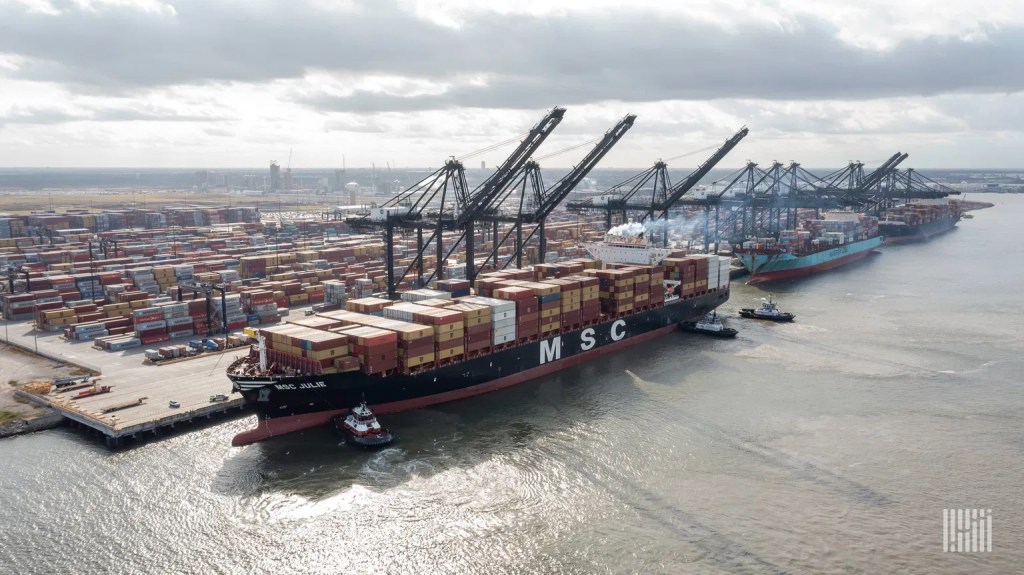
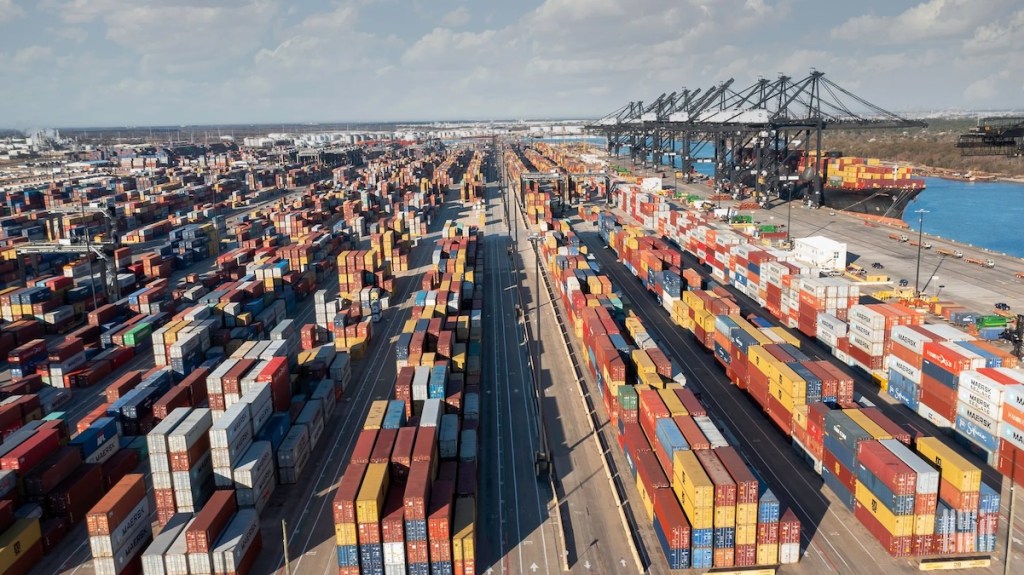
While trans-Pacific shippers fatigued from the Great Tariff War step back, the market has seen a pause in plunging container rates just as the peak season is supposed to be getting underway. 

Spot rates on various trade routes have seen dramatic shifts, said analyst Xeneta in a market update, reflecting broader industry challenges and responses.

Market average spot rates for container shipping on July 18 for the Far East to U.S. West Coast route stood at $2,313 per forty foot equivalent unit (FEU), while the rate to the U.S. East Coast is higher at $4,314 per FEU.

A deeper dive shows that West Coast prices have seen no change as of mid-July, halting a steep decline amounting to 28% over the first few days of this month. The U.S. East Coast rates have similarly seen a decline, dropping 7% since July 14, and a 26% fall since the end of June. Overall, the drop to the West Coast stands at 58% since peaking on June 1, whereas the rates into the East Coast decreased by 35% over the same timeframe.

These dynamics suggest shifts in trading priorities and logistical strategies. The notable variance between trading routes — the gap between the West and East Coast lanes — has inflated to $2,000, nearly double that on June 1, which was $1,155. This enlarged gap spotlights the pronounced economic adjustments facing these trades.

“Sentiment has turned and rates are falling despite the higher U.S.-China tariffs still being on hold, and the deadline for the rest of the world extended into August,” said Emily Stausboll, Xeneta’s senior shipping analyst, in a note. “Shippers can’t frontload forever, no matter what happens with the tariffs, so the longer term direction for rates was always going to be downward.”

Capacity reduction by carriers on trans-Pacific trades has somewhat mitigated weakening rates on U.S.-bound routes, yet carriers are fighting an uphill battle to stabilize rates further by year’s end.

The figures for Far East to North Europe and Mediterranean routes are $3,410 and $3,853 per FEU, respectively. Interestingly, the North Europe to U.S. East Coast route records a much lower average rate of $2,011 per FEU.

In contrast, the Far East to North Europe trade has experienced an 18% surge in spot rates since June and a 78% increase from late May. This rise is strongly tied to ongoing congestion at North European ports, driven by a spate of new high-capacity additions earlier this year, combined with labor disruptions and logistical hurdles like low water levels in the Rhine river. However, the Far East to Mediterranean trade diverges from this path, instead mirroring the downtrend mirrored in American markets.

“This is an ebb and flow of capacity across global supply chains as carriers seek out the higher rates, but by adding this capacity they risk ruining the party for themselves on the more profitable trades,” said Stausboll.

Find more articles by Stuart Chirls here.

Related coverage:

“It all unraveled quickly”: Family-owned business laments tariff and trade chaos

Drewry: Ocean rates fall for fifth straight week

Port of Oakland containers off 10% as ‘recalibration’ hits ocean supply chain
China could block sale of port terminals: Report 

Trump reaches trade deals with Japan, Indonesia, the Philippines

President Donald Trump and Japanese Prime Minister Shigeru Ishiba said on Tuesday that they have agreed to a trade deal that will include a 15% tariff on all U.S. imports from Japan. 

As part of the trade agreement, Japan will invest $550 billion into the U.S. and will open its economy to American automotive goods and rice. 

“Perhaps most importantly, Japan will open their Country to Trade including Cars and Trucks, Rice and certain other Agricultural Products, and other things,” Trump posted on Truth Social.

Japan is the fifth-largest U.S. trading partner in goods, according to U.S. Census Bureau. Two-way trade between Japan and the U.S. was $227.34 billion in 2024, with Japan running a trade surplus of nearly $70 billion.

Ishiba said the deal will benefit both countries.

“I believe this will contribute to Japan and the United States working together to create jobs and promote high-quality manufacturing, thereby fulfilling various roles on the global stage moving forward,” Ishiba told reporters in Tokyo, according to The Japan Times.

The 15% tax on imported Japanese goods is a reduction from the 25% rate that Trump said he would impose in a recent letter to Ishiba that would start Aug. 1.

The new agreement is good for Japanese auto giants like Toyota, Honda and Nissan, which previously had a 27.5% levy on cars and pickup trucks exported to the U.S.

The Trump administration still has a 25% tariff on imports from factories and suppliers in Canada and Mexico, excluding goods that fall under the United States-Mexico-Canada Agreement.

The Trump administration said Aug. 1 is the deadline for the U.S. and its trade partners to make deals to avoid various tariff rates that Trump announced in dozens of letters sent in recent weeks.

Trump also reached trade agreements with the Philippines and Indonesia on Tuesday.

The U.S. will reduce its tariff rate on goods from the Philippines to 19%, without paying import taxes for what it sells there. The previous duty rate on products from the Philippines was 20%.

The Philippines is the 33rd ranked U.S. trading partner in 2024, with two-way trade totaling around $23.5 billion in 2024.

Key imports from the Philippines are semiconductor devices and computers, auto parts, electric machinery, textiles and garments, wheat and animal feeds, coconut oil, and information technology/business process outsourcing services, according to Philippine authorities.

The White House also announced a trade deal on Tuesday with Indonesia, which includes a 19% tariff on all imported goods from the island nation. Trump officials said Indonesia will not charge tariffs on U.S. imported goods.

U.S. trade with Indonesia totaled $38.3 billion in 2024. Key U.S. imports from Indonesia include electrical machinery, solar panels, palm oil, leather shoes and cocoa butter.

SeaCube Cold Solutions partners with The Wonderful Company to expand cold chain footprint in California

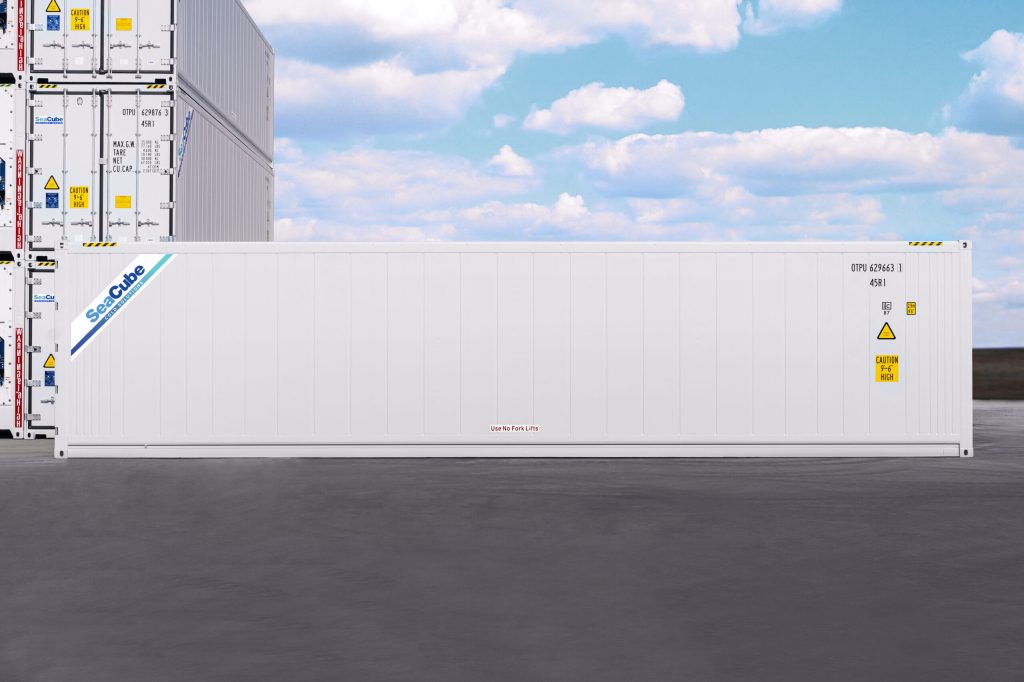
SeaCube Cold Solutions is strengthening its presence in the U.S. Southwest with the announcement of a new partnership with The Wonderful Company. Under this agreement, SeaCube’s refrigerated container operations will establish a primary depot in Shafter, California, located at The Wonderful Company’s logistics center.

The Shafter facility will serve as the central California hub for SeaCube’s cold chain services, providing both storage and maintenance and repair for its refrigerated containers. Positioned within California’s Central Valley, one of the most important agricultural regions in the country, the depot offers critical proximity to key food producers and distributors.

“Partnering with The Wonderful Company at the Shafter depot marks a significant step in strengthening our presence in a key logistics corridor,” said James Armstrong, Senior Vice President of SeaCube Cold Solutions. “We’re excited to launch operations at the Shafter, California depot, where we are establishing a significant refrigerated container presence to support not only California’s Central Valley but also a 250-mile radius. This location strategically extends our reach across the West Coast, including Arizona and Nevada.”

SeaCube Cold Solutions is an affiliate of SeaCube Container Leasing, a company with more than three decades of experience in refrigerated equipment. That legacy translates into both operational reliability and a deep understanding of cold chain logistics, elements that are becoming increasingly critical as temperature-sensitive supply chains grow in complexity. With the addition of the Shafter depot, SeaCube now claims full coverage across the Southwest region, an important milestone as demand for flexible, on-demand reefer storage continues to rise.

Unlike traditional fixed cold storage infrastructure, SeaCube’s portable reefer containers provide scalable cold storage capacity where and when it’s needed, particularly valuable in agricultural regions like the Central Valley, where volumes can swing dramatically depending on the season. The Shafter facility is designed to accommodate those fluctuations, offering customers a way to expand or contract their storage footprint without the commitment of brick-and-mortar solutions.

“SeaCube’s portable cold storage solution offers tremendous flexibility during seasonal market fluctuations. We are pleased to have their support and involvement in the Wonderful Logistics Center,” said Sepehr Matinifar, Vice President of Logistics Services at The Wonderful Company.

The depot also benefits from its location within a less congested logistics park, allowing for more efficient truck flows and easier access to major West Coast markets. In addition to serving the agricultural heartland of California, Shafter offers a convenient base to reach the densely populated Los Angeles basin as well as neighboring states like Arizona and Nevada. SeaCube is currently the only refrigerated container operation at the Shafter site, giving it a first-mover advantage in what could become a critical logistics hub for the region’s cold chain.

As food logistics and temperature-controlled shipping continue to evolve, the partnership between SeaCube Cold Solutions and The Wonderful Company represents a forward-looking investment in infrastructure, flexibility, and regional connectivity. 

Union Pacific, BLET agree to interim pay raise

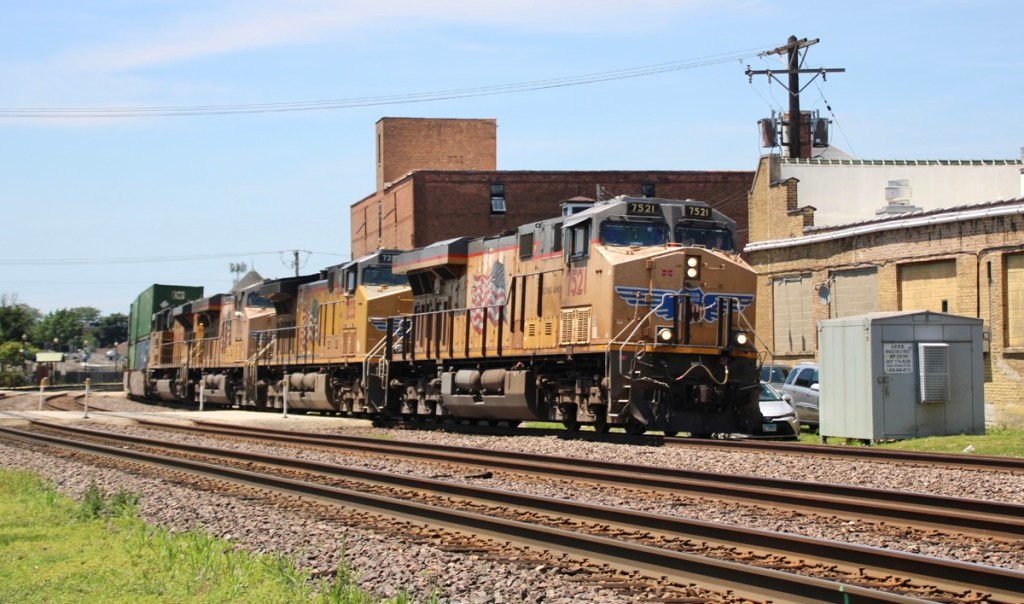
Union Pacific has agreed to an interim pay raise for 6,000 members of the Brotherhood of Locomotive Engineers and Trainmen while full contract talks continue.

The Brotherhood of Locomotive Engineers and Trainmen and Union Pacific (NYSE: UNP) have reached tentative agreement on an interim 3% raise for union members while bargaining for a full contract continues.

The union said in a press release that if ratified, the interim agreement would be effective Sept. 1 and provide a raise to approximately 6,000 BLET members. It would eventually be replaced by wage increases agreed to in the final contract settlement, and would not figure in any retroactive pay agreement that might  be included as part of a final deal.

Ballots for the interim agreement are being distributed by mail and are due by Friday, Aug. 8.

Subscribe to FreightWaves’ Rail e-newsletter and get the latest insights on rail freight right in your inbox.

Related coverage:

Analysis: What a Union Pacific – Norfolk Southern merger would look like

BNSF aims to grow carload traffic with rail service upgrades

Report: Goldman Sachs advising BNSF on potential merger

Analysis: UP-NS rail merger spotlights individual legacies in a legacy business

Analysis: What a Union Pacific – Norfolk Southern merger would look like

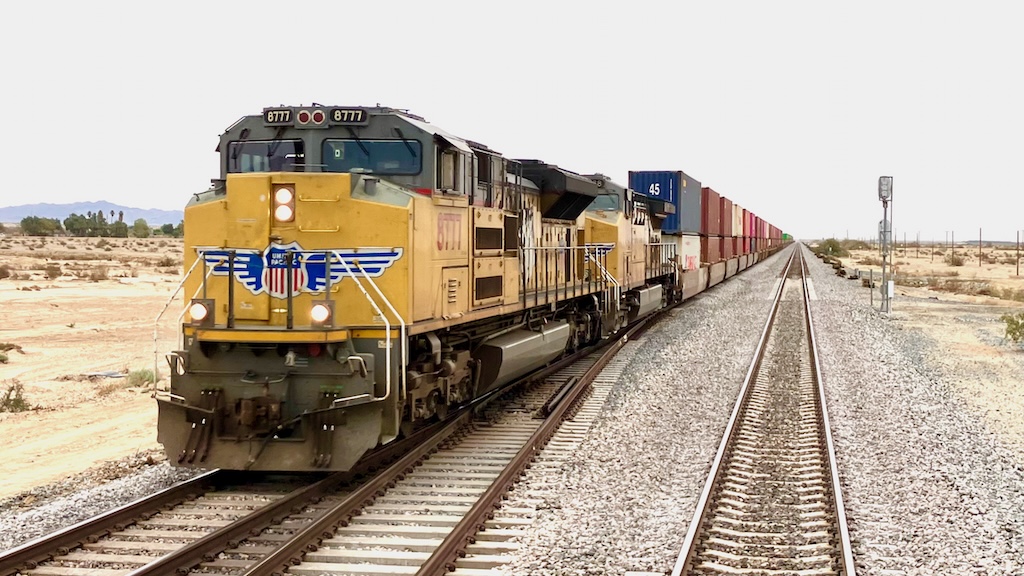
The proposed merger between Union Pacific (UP) and Norfolk Southern (NS) would fundamentally reshape the U.S. railroad landscape, creating a single-line transcontinental network poised to redefine freight transportation. If successful, the deal would blend the strengths of both carriers—UP’s western U.S. dominance and NS’s eastern operations—facilitating seamless coast-to-coast service. Such integration holds significant potential for railroad customers, including retailers, manufacturers, and suppliers who rely heavily on rail for the distribution of goods, raw materials, and manufactured products.

For shippers, the combined UP-NS network offers both opportunities and challenges. The most immediate advantage would be enhanced operational efficiency. By eliminating interchanges at major hubs like Chicago, Memphis, and New Orleans—a common bottleneck in the current system—shippers can expect reduced transit times and potentially lower costs. A streamlined process improves reliability and agility in the supply chain, which is particularly beneficial for time-sensitive industries such as retail and manufacturing. Norfolk Southern customers would get direct access to Mexico; Union Pacific customers could ship straight from southern California through to New York City.

However, concerns always exist regarding reduced competition. A merger of this magnitude could reduce the number of Class I railroads from six to five, potentially driving up rates due to decreased competition, as highlighted by industry critics. Because Union Pacific and Norfolk Southern serve two different, non-overlapping regions of the United States, it’s hard to see how the industry would lose significant competitiveness. Past mergers have shown mixed results; while some efficiencies were gained, others led to service disruptions and price hikes due to reduced market competition.

The merged entity would oversee one of the densest rail networks in North America, with particular increases in traffic expected along high-volume transcontinental routes. Key lanes would likely include intermodal-heavy corridors connecting West Coast ports like Los Angeles to Eastern destinations via hubs such as Chicago and New York. These lanes are crucial, not just for general freight and merchandise, but also for specialized commodities like chemicals and bulk goods, including grain and coal.

The densest lanes are projected to emerge post-merger, similar to historical precedents where traffic density increased with reduced route overlaps. This will likely lead to intensified usage of corridors such as the Overland Route and the Crescent Corridor, capitalizing on directional running and route optimization for heightened efficiency.

The merger of Union Pacific (UP) and Norfolk Southern (NS) would predominantly lean towards intermodal traffic, accounting for approximately 53% of the combined network’s total volume. This strong emphasis on intermodal reflects the strategic advantage of tapping into the efficient transcontinental routes, facilitating the flow of containers from key West Coast ports to Eastern markets. UP’s substantial container traffic, combined with NS’s intermodal leverage, emphasizes this projection. Bulk commodities, such as coal and grain, would comprise about 15.6% of the volume, with UP deriving notable coal volumes from its access to the Powder River Basin. Merchandise freight, which includes chemicals, motor vehicles, petroleum products, and other goods, would constitute the remaining 31.6%. NS moves significant volume in petroleum products and automotive parts, including finished vehicles, contributing to this segment.

Growth within this combined entity would largely be driven by enhanced intermodal capabilities. The ability to provide consistent, reliable service across a single integrated network is expected to attract shippers seeking to streamline operations and cut costs. Additionally, potential increases in chemical and merchandise shipments could be facilitated by seamless transitions across strategic points, particularly in high-density lanes connecting major economic hubs.

Despite the promising synergies, the merger will undergo significant scrutiny. Regulatory bodies like the Surface Transportation Board (STB) will assess the merger’s implications on competition, particularly in regions where the two companies previously competed. Past industry consolidations suggest that any approval process will be lengthy and contentious, with stakeholders from various sectors voicing concerns over potential rate increases and decreased service options.

A merger between Union Pacific and Norfolk Southern has the potential to transform the U.S. freight landscape by creating the first coast-to-coast single-line railroad. While it should generate efficiencies and increased network density, especially along key transcontinental routes, it also raises questions about competitive dynamics and regulatory hurdles. Shippers stand to benefit from faster, more reliable service—though these advantages must be weighed against the risks of reduced competition and potential integration challenges.

Northern Air Cargo abandons big freighter aircraft, cuts staff

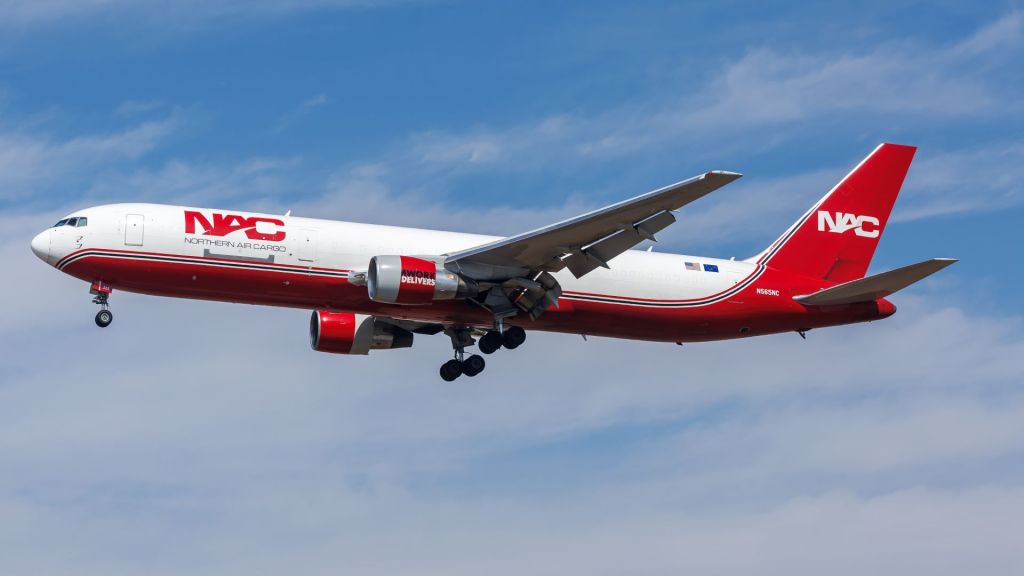
Red-and-white Northern Air Cargo Boeing 767 aircraft approaches airport for landing.

Northern Air Cargo, an Alaska-based freighter operator with ties to Hawaii, is winding down long-haul flight operations with Boeing 767 freighters, as well as operations in Miami and Honolulu, to concentrate on more profitable routes in both states and shoring up shaky finances. 

Northern Air Cargo in June pulled out of the Caribbean/Latin America market, where it operated 767-300 converted freighters for logistics provider StratAir. Both companies are owned by Seattle-based Saltchuk Resources, a diversified freight transportation, logistics and energy distribution conglomerate. 

The airline will end all 767 flying in October when it closes a daily service between Los Angeles and Honolulu, April Spurlock, Saltchuk’s director of marketing and communications, told FreightWaves.

“Saltchuk Aviation is concentrating on our core cargo operations in Alaska and Hawaii. This change is part of a broader effort to streamline operations and focus on the services where we are strongest, ensuring long‑term stability and growth across our core businesses,” Spurlock said in an email message.

Northern Air Cargo released 30 employees in Miami, according to a notice filed with the Florida Department of Commerce. It also furloughed more than 40 pilots, according to a pilot on an online chat board and a local media outlet. 

“The decision to exit the 767 program did require us to restructure parts of our operation, including difficult reductions in teams that supported those aircraft. We’ve worked hard to support those employees through the transition, while continuing to focus on the services and routes where we remain strong,” Spurlock said. She declined to provide specifics on the number of employees impacted by the moves.

Northern is returning the four B767 cargo jets it operated to NAS Aircraft Leasing Co., another Saltchuk subsidiary, which will determine what to do with them, she said.

One of the 767s was delivered last week to the Roswell International Air Center in New Mexico, a large desert storage facility for unutilized aircraft, according to database Flightradar24. 

Aviation trade publication Cargo Facts first reported that Northern Air was abandoning widebody freighters.

The news comes as growth in global air cargo demand slowed to about 3% in the first half from double digit growth last year. North American airlines have experienced large volume contractions on international routes, as the industry feels the impact of falling consumer confidence and shifting Trump administration tariff wars that have caused retailers and manufacturers to rethink import strategies until there is more cost certainty. But Northern Air Cargo’s business is mostly affected by local market conditions and tough competition.

The airline’s transported cargo tonnage fell 24% in the 12 months ending in April and revenue ton miles, a measure of an airline’s pricing power, dropped 38% year over year. It served 20 local cargo markets — seven fewer than in April 2024, according to data on file with the Transportation Department’s Bureau of Transportation Statistics. In the 12 months ending in April 2024, Northern Air Cargo lost $30 million. The company hasn’t filed more financial reports with the agency, as required by law, since September because of turnover and training challenges in an administrative position, according to BTS.

StratAir, a freight forwarder that internally contracted Northern Air Cargo to fly shipments out of Miami to islands in the Caribbean and southern locations like Lima, Peru, will now focus on providing import/export services from its warehouse near Miami International Airport, said Spurlock. It also provides airport ground handling services for cargo operators at San Juan International Airport in Puerto Rico. 

Miami International Airport has several other all-cargo carriers serving the Caribbean, Central America and Latin America, including Global Crossing Airlines, 21 Air, Amerijet and IBC Airways.

FreightWaves previously reported that two Boeing 767-300 passenger aircraft received early last year were immediately placed in storage because of slow business. NAS Aircraft Leasing purchased the used passenger jets and had them converted to a main-deck cargo configuration. Spurlock said the aircraft were never flown by Northern Air. NAS eventually leased them to GeoSky Airlines, a freighter operator based in the country of Georgia.

In June 2024, Aloha Air Cargo shut down an underperforming triangle route between Honolulu, Seattle and Los Angeles, operated under a charter agreement with Northern Air Cargo. Earlier this year, Aloha Air launched daily service between Los Angeles International Airport and Honolulu with a wet-leased Northern Air freighter, but will terminate the service in October. 

Northern Air Cargo will continue to fly narrowbody freighters. It currently operates a Boeing 737-800 hauling packages for DHL Express between Reno, Nevada; Phoenix; and Los Angeles. Two Boeing 737-400s provide inter-island service in Hawaii under the Aloha Air Cargo brand. NAC also operates two 737-400s from Anchorage to communities around Alaska. 

Aloha Air Cargo operates on its own five Boeing 737-300 converted freighters, according to Flightradar24.

Click here for more FreightWaves/American Shipper stories by Eric Kulisch.

Write to Eric Kulisch at ekulisch@freightwaves.com.

Cargo airline sends new Boeing 767 freighters directly to storage

Aloha Air Cargo to cease Los Angeles-Honolulu freighter service

As merger talk heats up, deep bench will advise rail regulator

While investors and railroads are reportedly exploring what would likely touch off the final round of Class I mergers, the regulatory chief who will help decide the issue has put together a deep bench of rail, shipper, and policy executives to help evaluate prospective deals as well as manage reforms at the agency.

Also, a source familiar with the board’s plans said, in recent months, the agency has prioritized strengthening its data and economic expertise, including through contracts and staffing.

The temporary expert hires as of May include Sharon Clark, who most recently retired as senior vice president regulatory affairs & compliance for Perdue AgriBusiness (. Clark worked at Perdue for 25 years, and has four decades of expertise in agricultural rail shipping, including with The Andersons (NASDAQ: ANDE) and Cargill . Clark also worked for trade groups in various capacities for the National Grain and Feed Association, National Grain Car Council, National Oilseed Processors Association Transportation Committee, North America Freight Car Association, and the National Freight Transportation Association.

Former BNSF and CN (NYSE: CN) executive Rob Reilly also joined the STB in May. Reilly has more than 30 years in rail operations, most recently as executive vice president-president and chief operating officer at Canadian National, where he improved safety records along with multiple service and efficiency marks. First at the Atchison, Topeka and Santa Fe Co. and then BNSF, Reilly ascended to vice president of operations for the southern transcon route reporting to longtime CEO Matt Rose. 

Consultant Chris Bertram held senior positions in the U.S. House of Representatives, Senate, and the Executive Branch in transportation policy and finance. The FAST Act, the longest surface transportation bill in 17 years, was enacted during his term as House Transportation & Infrastructure staff director, along with reauthorization of the STB and Amtrak, and he also served as chief financial officer for the Department of Transportation.

Looking ahead, the board, which issues approximately 400 decisions each year, will have complex tasks ahead.

The STB’s tougher merger rules established in 2001 have never been tested; the Canadian Pacific (NYSE: CP)-Kansas City Southern tie-up was granted a waiver because of the latter’s extensive operations in Mexico. 

As it is currently constituted, the board counts four members evenly split along party lines. Expectations are that a fifth member could be recommended in 2026 but no candidates have been publicly identified, and any approval timeline is uncertain. 

There has been no official confirmation of reports of merger discussions between Union Pacific (NYSE: UNP) and Norfolk Southern (NYSE: NSC) , or BNSF and CSX (NASDAQ: CSX); BNSF owner Warren Buffet on Tuesday denied his company had engaged Goldman Sachs to explore opportunities. 

But there is already speculation that eventually two mergers, each with extensive evaluations with lengthy timelines — may move along the adjudication process on concurrent tracks.

Subscribe to FreightWaves’ Rail e-newsletter and get the latest insights on rail freight right in your inbox.

Find more articles by Stuart Chirls here.

Related coverage:

BNSF aims to grow carload traffic with rail service upgrades

Report: Goldman Sachs advising BNSF on potential merger

Analysis: UP-NS rail merger spotlights individual legacies in a legacy business

Union Pacific, Norfolk Southern in merger talks: WSJ

ATA proposes ditching gas tax for vehicle registration fee

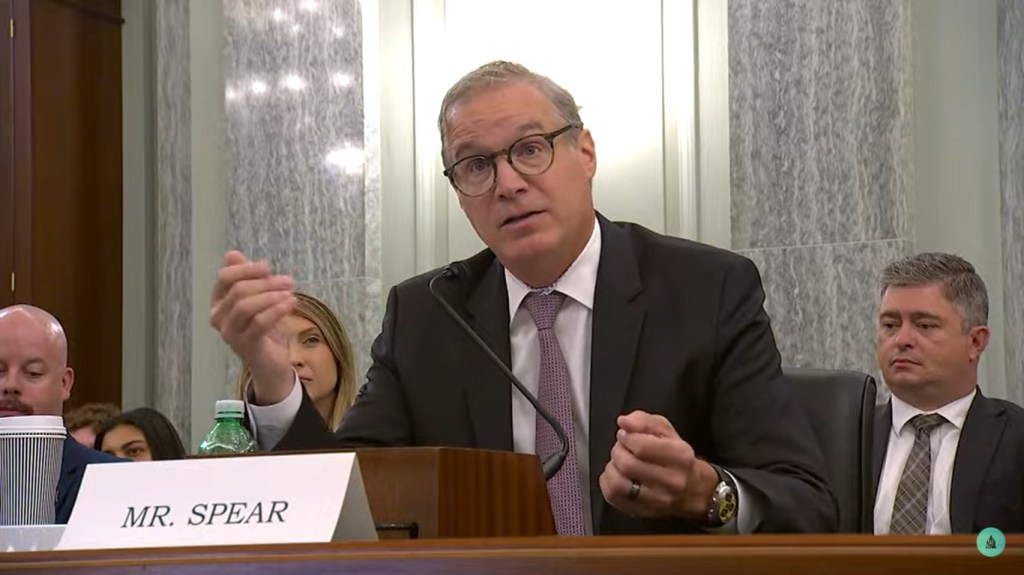
ATA President Chris Spear

WASHINGTON — As Congress begins work on the next highway bill set to go into effect next year, the American Trucking Associations said it’s ready to transition from a gas tax to an annual vehicle registration fee to help pay for maintaining and improving roads and bridges.

“We’re looking seriously at advocating for a registration fee that applies to everybody – trucks, cars, electric vehicles,” ATA President Chris Spear told the lawmakers at a Senate Commerce Committee subcommittee hearing on Tuesday.

“You already register your vehicle at the state [motor vehicle agencies], you simply pay for what you normally would pay in fuel costs at the pump. You get rid of the gas tax, the tire tax, and put it in a registration fee.”

Spear said the cost of the annual fee could be roughly $200 to $250 for cars, with payments spread out over the course of the year. “It would be more for the trucking industry, but that’s fine, we’re willing to do that,” he said. “It would capture everyone, and it’s fair.”

OOIDA’s Pugh testifying on Tuesday. Credit: U.S. Senate

Speaking on behalf of small carriers and owner operators, Lewie Pugh, executive vice president of the Owner-Operator Independent Drivers Association, told the subcommittee that while he supports a registration fee to capture electric vehicles – which do not pay fuel taxes to pay for infrastructure – OOIDA is not yet ready to abandon fuel taxes.

“I think we need the intestinal fortitude to raise the gas tax, because it hasn’t been raised” since 1993, he said. “You pay it at the pump, and it works. Why create something new, other than having electric vehicles pay an additional registration fee.”

Congress has for years been making up for gas-tax shortfalls in the Highway Trust Fund (HTF) by transferring money from the Treasury Department’s general fund. But with the HTF estimated to be depleted by 2028, lawmakers are considering alternative payment options by the trucking industry to keep it viable, including weight-based user fees.

Debating automation, drug testing

While there was agreement at the hearing on how to address some issues lawmakers want to see tackled in the next highway bill such English proficiency requirements, commercial driver license fraud and expanding truck parking, there was less agreement on a path forward for autonomous vehicles.

Asked by U.S. Sen. Ted Cruz, R, Texas, about an AV framework to be included in the legislation, Spear and Teamsters President Sean O’Brien sparred over whether automation would kill jobs are create them.

“This is always portrayed as a threat to jobs, but there are 65 ports in this country and not one ranks in the top 50 in the world for efficiency and productivity,” Spear said.

“To grow the economy we’re going to need both jobs and autonomy. We’re going to need technologies to get throughput in and out of those ports and on our roads. You’re going to need both those hard-working union jobs and technology to assist them.”

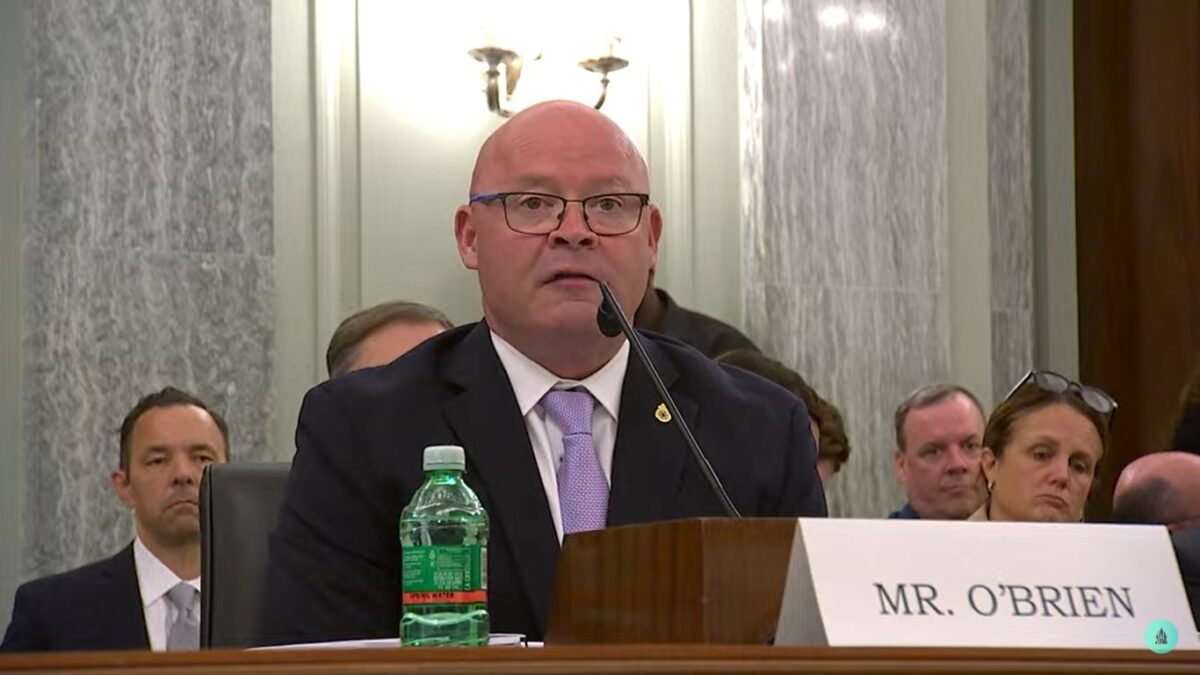
Teamsters’ Sean O’Brien testifying on Tuesday. (Credit: U.S. Senate)

O’Brien insisted that human drivers remain in truck cabs no matter the level of automation. “I’m all for efficiencies – there are efficiencies built into [the labor agreement with port workers]. But there are also job protections in that agreement as a result of implementing new technology. So a priority would be that upon implementation, you protect and create new jobs.”

ATA would also like to see a hair testing requirement for the trucking industry included in the next reauthorization as well – a hard “no” for OOIDA.

“We support post-crash testing for sure, but not hair testing,” Pugh said. “We don’t feel there’s enough data to support it.”

Driver shortage?

A driver shortage debate played out at the hearing as well, with Spear pointing out that driver pay “does not go up 19% during a freight recession unless there is a shortage of qualified drivers.”

But Sen. Ed Markey, D, Mass., contended that millions of people holding CDLs are competing for about 900,000 long-haul trucking jobs.

“In fact 90% of truck drivers leave their job after a year. This high level of turnover suggests the issue might not be whether there are enough drivers, but whether existing drivers are getting enough out of the job.”

O’Brien added that the small number of unionized carriers had closer to a 10-15% turnover rate. “That means people are happy with their wages and benefits. When you have a race to the bottom, and people keep leaving the industry after a year – there’s a breakdown somewhere.”

Click for more FreightWaves articles by John Gallagher.

Marten sells intermodal unit to Hub Group, which grows its refrigerated footprint

Marten Transport has sold its intermodal operations to Hub Group after more than two years of the division consistently reporting operating ratios in excess of 100%.

The two companies both issued prepared statements on the transaction, with the sales price reported at $51.8 million. 

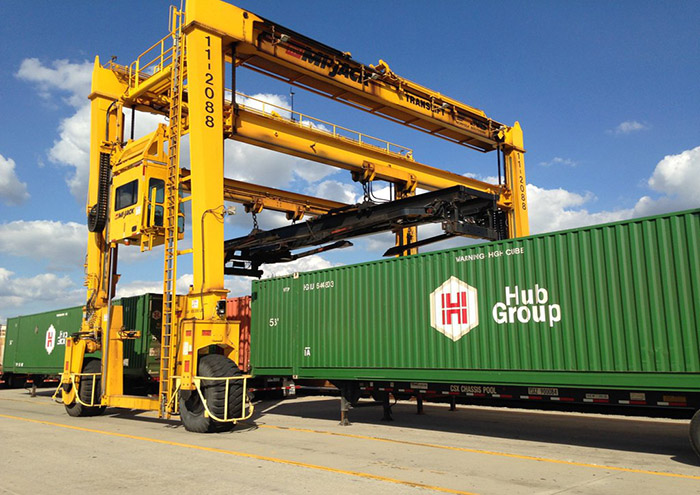
Hub Group’s statement celebrated the acquisition as significantly increasing its position in the market for refrigerated intermodal containers. The primary assets in the sale are for more than 1,200 refrigerated containers, along with contracts to serve what Hub Group said was a group of more than 100 shippers. 

In the statement, Hub Group president and CEO Phil Yeager said the acquisition would more than double the size of his company’s temperature-controlled container fleet. In Hub Group’s 10-K filing from February, it said it had 900 refrigerated 53-foot containers. As a point of comparison, it also said it had 50,000 dry containers.

The Marten (NASDAQ: MRTN) intermodal group has been suffering with poor financial performance for several years. It had not recorded an operating ratio less than 100% since the first quarter of 2023. In the last five quarters, its operating losses ranged from $684,000 to $3.92 million. Its revenue in the second quarter of this year was $10 million. In the fourth quarter of 2023, it was $15.6 million and had declined every quarter since then.

Marten said the intermodal group had trailing twelve months revenue of $51.5 million in the 12 months ended June 30, which means the unit sold for approximately 1X revenue.

Marten’s second quarter earnings showed a company that was smaller by several measures. In its prepared statement announcing the sale, the company appeared to be suggesting that the sale of the intermodal group to Hub Group was part of that strategy.

““We have worked to bring clarity and focus to our integrated business strategy, and this transaction is a reflection of that process,” executive chairman Randolph Marten said in the statement. “We look forward to investing in and positioning our core operations to capitalize on profitable organic growth opportunities.”  

In a presentation deck released in conjunction with the announcement, Hub Group (NASDAQ: HUBG) said its total refrigerated volume in 2024 was $47 million, up from $42.1 million in 2023. For the six months of 2025, it was $26.4 million.

Hub Group also said it expected the acquisition to be immediately accretive.

The presentation made two other points about the existing Hub Group refrigerated activities: refrigerated intermodal pricing and margin per load are higher than non temperature-controlled assets; and Hub Group’s full refrigerated fleet is now in service.

The stock prices of both companies  have had a challenging 12 months. Hub Group is down 23.4% in the last year. Marten is down 26.7%. Both companies Tuesday were higher by a moderate amount.

More articles by John Kingston

Oregon ties itself closer to California’s Advanced Clean Trucks rule, even though it may have no future

Yet another broker liability case, this time in the Fifth Circuit, adds to the growing mix 

Much happened at Triumph Financial during the quarter; USPS dispute settled

Gulf Coast ports record mixed freight movements in June

Port Houston saw a dip in container movements in June, while crude oil exports rose at the Port of Corpus Christi.

Port Houston sees 2% decline in container volume

Port Houston saw decreased container volumes in June, recording a 2% year-over-year decline to 331,864 twenty-foot equivalent units.

The port handled 169,665 TEUs in container exports during the month, a 3% year-over-year decrease. Imports in June fell 2% year-over-year to 162,199 TEUs.

Resin exports continue to drive demand at Port Houston’s container terminals, which hold a 60% market share for resin commodities, according to a news release.

Total cargo volumes at Port Houston are up 3% at 2.17 million TEUs, compared to the same period in 2024. Total revenue tonnage was up 9% year over year in June at 5.4 million tons.

“While the downward trend monthly continued in June, loaded TEUs are up 1% versus last June, and total TEUs are up 3% for the year,” Ryan Mariacher, chief port operations officer, said during a monthly commission meeting on Tuesday. “Export loads have really carried the way for us in recent weeks, up 16% for the month. For the container terminals, we’re up to 14 blank sailings.”

Imports of steel declined 32% year-over-year in June to 290,775 tons. Steel exports were up 22% at 3,925 tons for the month.

General export tonnage was up 22% year over year in June at 1.3 million tons. Total export tonnage increased 16% to 3 million tons.

General import cargo increased 35% year over year in June to 668,504 tons. Total import tonnage was flat year over year at 2.4 million tons.

Loaded import containers were down 9% year over year in June at 139,453 TEUs. Empty imports were up 103% at 22,746 TEUs.

Loaded exports were up 16% year over year at 133,040 TEUs, while empty exports were down 38% at 36,625 TEUs.

Ship calls for June were down 11% year over year at 644 vessels. Barges calling Port Houston increased 8% year over year to 342.

Charlie Jenkins, CEO at Port Houston, said they are already seeing more cargo movements in July.

“July has been very strong and year to date we’re doing well, better than most ports in the country,” Jenkins said.

Port of Corpus Christi posts gains during June

The Port of Corpus Christi moved 17.2 million tons of total cargo in June, a 3.6% year-over-year increase from the same month in 2024.

The port handled 10.62 million tons of crude oil during the month, a 9% year-over-year decrease.

While crude oil movements were down in June, the port handled 65.2 million tons during the first half of the year, a 3.8% increase over the same period last year. 

During the first half of the year, shipments of liquified natural gas increased around 10.8% to 8.5 million tons. Additional increases during the first half of the year occurred in commodities such as dry bulk, breakbulk and other bulk liquids, according to a news release.

The Port of Corpus Christi’s customers also moved a record 51.1 million tons of commodities through the Corpus Christi Ship Channel during the second quarter. 

The Port of Corpus Christi had 206 ship calls in June, a 9% year-over-year increase from 2024. The port recorded 427 barge calls during the month, an 5.6% year-over-year decline compared to the same year-ago period.