Running on Ice: New partnerships come to the cold chain

Compass Group Equity Partners, a St. Louis-based private equity firm, is paternering with Illuminate Group to grow the Tampa-based cold chain company. The partnership is expected to accelerate several growth initiatives including expanding staffing, expanding testing capacities to enhance product development,  and an ERP implementation featuring customer-facing inventory management systems. 

“It was clear from our first conversation with Illuminate that they have a unique value proposition in the cold chain industry,” said Maureen Dwyer, vice president at Compass Group. “Illuminate is a trusted provider that demonstrates quality, reliability and savings for their customers through their industry expertise and proprietary products.”

The joint venture arrives at a time when industries across the board, from healthcare to grocery delivery, are facing growing demand for precise, sustainable cold chain solutions. “We are excited to have found a partner that shares our vision for Illuminate’s growth and aligns with our company culture,” said Founder Jean-Pierre Emond.

To get the full edition of Running on Ice straight to your Inbox, subscribe to the newsletter.

At a conference of mostly green investors, AlFleet pushes marriage of AI and trucking

Portland, Maine—The presence of AIFleet founder and CEO Marc El Khoury at a showcase of entrepreneurs and startups here, sponsored by payments provider and freight tech investor WEX, seemed slightly out of place.

At a Chatham House rules presentation by officials from those startups, the focus tended to be on zero emission vehicles and other green technologies. And here was El Khoury talking about trucks that for the foreseeable future are running almost totally on diesel.

But the AIFleet presentation—the contents of which can not be published—put El Khoury on the cutting edge of transportation occupied by other presenters, as he discussed his roughly 200-fleet truckload carrier whose future success is contingent on harnessing AI in its operations. Hence its name.

AIFleet raised $16 million last September in a Series B fundraising to bring its total investment up to about $50 million. In an interview with FreightWaves following his presentation at WEX, El Khoury–whose past positions in the trucking sector include being chief strategy officer at truckload carrier U.S. Xpress, now part of Knight Swift (NYSE: KNX)–demurred on whether his presence at the WEX showcase could be viewed as a sign the company was seeking additional funding.

“We’re always interested in finding the right partners,” El Khoury said about the possibility of taking on new investment.

While the broad cross section of companies at the WEX conference were in applications where government policies and funding of the energy transition may end up as a determining factor of success versus failure, El Khoury’s company, despite its high tech long-range plan, more immediately must confront the same weak truckload market that even the smallest fleet is facing.

Growth in its fleet size

AIFleet is now a 200-vehicle company, up from about 150 vehicles a year ago, El Khoury said. The money raised in September was not used to buy assets like trucks, which El Khoury said are leased vehicles. (However, the drivers are not leasing their vehicles to the company, he said; they are all drivers that receive a W-2 statement from the company at tax time.)

“Historically, we never used the equity capital we raised to acquire equipment,” El Khoury said. “Where we use the equity capital is to continue building our operations.” A recent focus with the company’s financial backing has been to boost its sales operations, he added. “And there is quite a bit of additional capital that we could use right now.”

But the heart of the AIFleet business plan is to use AI to increase fleet productivity. “We’re investing heavily in generative AI and finding an amazing return on investment by just essentially utilizing the increasing productivity of our office employees, but also in optimization,” El Khoury said.

Making operations more efficient in the office is not going to change a fleet’s operations radically. That needs to happen on the road. And according to El Khoury, “we are finding more and more through the data amazing opportunities to get even more loaded miles per truck than we did today. That’s typically where we’ve invested the capital that we raised.”

El Khoury said he believes AIFleet is the only trucking company of its kind that has such a strong focus on bringing AI into its operations. That doesn’t mean it’s the only company in the trucking and logistics sector like that; C.H. Robinson (NASDAQ: CHRW) has touted its recent financial turnaround to the use of AI in its operations.

Why 3PLs and not fleets?

That led El Khoury to note that venture capital money seeking an outlet in logistics has gone heavily toward 3PLs like Convoy (now out of business) or Uber Freight (NYSE: UBER). “And we were always surprised, because the inefficiency is not really on the broker side,” he said. “The inefficiency is really on the carrier side.”

A brokerage can be “the most efficient in the world,” El Khoury said, “but the freight still needs to be moved on assets, and the inefficiency in the assets is what we are focusing on.”

“A broker can not optimize a truck,” he added. “The best you can do is maybe reduce empty miles.”

To make AI work in route planning and driver scheduling, El Khoury said there needs to be more data inputs on factors such as drivers’ available hours of service, whether a load is spot or contract, the need for home time and so on. “These are not optimization problems that a broker can work on,” El Khoury said. “This is only something a carrier can work on, and that is our focus.”

Asked for a specific example, El Khoury said AIFleet’s AI tools “can optimize 200 trucks and assign them loads for the next week with no human intervention.” The outcome, he said, maximizes the use of the asset—the truck—and the driver within regular hours of service restrictions and the goal of getting drivers home after no more than a week on the road.

With more than 200 trucks in the fleet, El Khoury made a declaration: “This is not a proof of concept anymore. This is an actual fleet running almost entirely autonomously from an operational standpoint.”

He added he knows of no other truckload carriers with a similar model. While there are software developers selling AI solutions into the trucking sector, El Khoury said they run into the problem of knowing where to sell their offering.

“Which department are you selling to?” he said. “Planning, dispatch, order acceptance. Those departments exist because they’re building workflows around the human.

He said the AIFleet approach is “to start with the question, how should a trucking company run? You then end up with a very different operating model.”

Some of the other current features of AIFleet, according to El Khoury: 

  • It’s running about 50-50 on spot versus contract business
  • The company it wants to have a base book of business that is 75% contract
  • If it has a niche, it’s in moving paper products
  • AIFleet’s current model would have limited success in LTL which has a different set of inefficiencies than truckload
  • Drivers get paid by the mile but also have a guarantee in their pay levels
  • AIFleet’s increase to about 200 trucks from 150 in the past year was tempered by the fact that “we’re just being mindful of growth right now in this market,” El Khoury said.

More articles by John Kingston

Earlier TQL victory on broker liability overturned by Sixth Circuit; SCOTUS next?

Another broker liability case knocks at Supreme Court door, this one involving C.H. Robinson 

As E2open prepares to be acquired, slightly higher financial numbers seen as a success

Australia Post rolls out parcel-only post offices

Front view of an Australia Post Parcel office, with red signage.

Australia Post has introduced a modernized post office format designed to make sending, collecting and returning parcels faster and more convenient, as well as its cheapest delivery option in the parcel category. 

The new stores, called Australia Post Parcels, are dedicated to parcels and facilitating quick customer exchanges with added flexibility through 24/7 self-serve options and secure 24/7 parcel lockers, the national mail system announced last month.

Australia Post has already opened two of the next-generation post offices, with two more locations scheduled to open soon.

“The number one reason a customer visits the post office is to collect a parcel, so we’re making it easier and quicker to collect and send parcels at a time that suits them. With Aussies shopping more online than ever before, we’re evolving our network to keep pace with how our customers are using postal services,” said Josh Bannister, executive general manager retail, brand and marketing, in a news release.

More than 9.8 million households in Australia shopped online last year, according to Australia Post research. Postal services are expanding e-commerce services in response to the rise in direct-to-consumer digital sales. Parcel business fueled a 2.1% rise in revenues last year for global postal operators, the International Post Corp. reported Thursday.

Australia Post Parcels combines in-person assistance with self-service options such as parcel lockers. Many locations will also feature a special 24/7 self-service zone, accessible via a one-time entry code generated in the Australia Post app. The option allows customers to enter the space outside normal business hours and send parcels when it suits them. 

Customers can collect or return online purchases around-the-clock. Trial sites also feature 24/7 accessible vending machines stocked with packaging, stamps and other mailing essentials.

The next-generation format is designed to be flexible and scalable, with some featuring a smaller physical footprint along with an efficient back office arrangement to manage increased parcel volume.

Australia Post said it conducted extensive customer surveys and behavioral research to ensure the new format meets customer needs, while also providing capacity for future network growth. 

Australia Post’s new parcel post offices are equipped with parcel lockers, giving customers more flexibility in picking up or dropping off packages. (Photo: Australia Post)

Pilot locations were carefully selected based on parcel data, local sending and receiving patterns, as well as proximity to other nearby post offices, where full-service offerings remain available.

Meanwhile, Australia Post last week began offering its lowest price delivery option for parcels – the Extra Small parcel – aimed at helping small businesses cut costs and compete more effectively in a hyper competitive e-commerce market.

Available online and in post offices across the country, the Extra Small parcel caters to lightweight items like accessories and cosmetics. Pricing starts at $3.82 for business accounts and goes up to $6.37 for regular service and $8.33 for express delivery.

Australia Post said it is responding to customer demand for more affordable shipping options, especially from micro sellers.

Protections from dog attacks

In related news, mail carriers are applauding new legislation passed by the government of South Australia that significantly increases penalties for dog owners whose pets cause serious injury or public harm. Under the new law, dog owners could face fines of up to $32,800 if their dog attacks a person after being labeled a dangerous dog. Australia Post said that more than 44 mail carriers – posties in the local lingo – are subjected to dog-related attacks and harassment per week. The growing frequency of parcel deliveries has led to almost 40% of dog encounters taking place on a customer’s property.

To help reduce the risk to mail carriers, Australia Post said it is providing citronella spray to all delivery personnel by the end of July. The water-based, non-harmful spray will serve as a last-resort safety tool in the event of an imminent dog attack. The deterrent temporarily distracts the dog, giving the mail carrier extra time to move to safety and call the owner for help.


Click here for more FreightWaves/American Shipper stories by Eric Kulisch.

RELATED READING:

Parcels drive 2% global revenue gain for postal operators

Polish parcel powerhouse InPost buys Spanish delivery provider 

US ranks low among international postal services on financial flexibility

Schneider National touts enhanced cross-border intermodal speeds

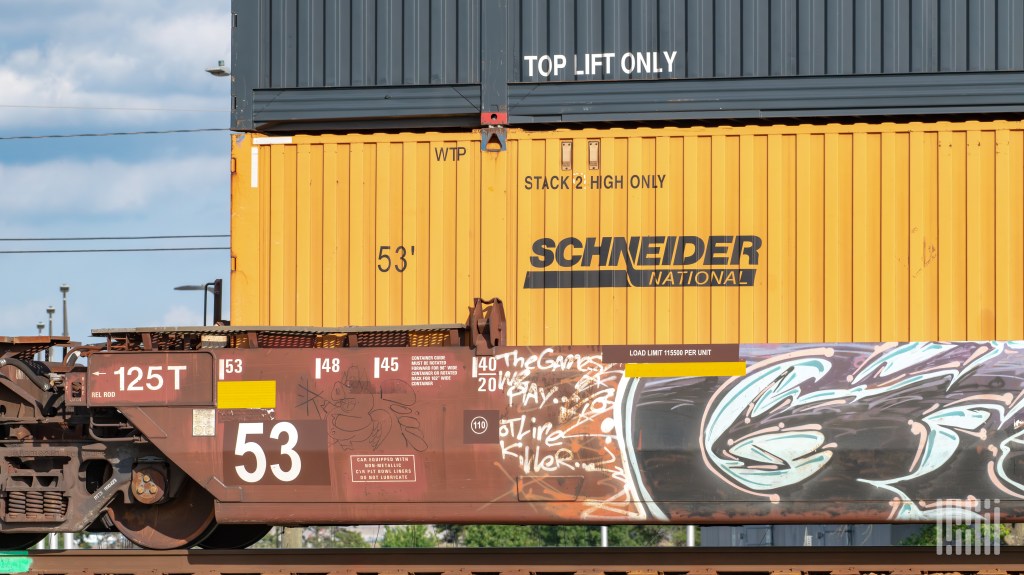
An orange Schneider intermodal container on a well car

Schneider National said Friday that its shift to Canadian Pacific Kansas City’s rail line for cross-border intermodal service is yielding significant results. The multimodal transportation provider said its Mexico-to-Chicago lane is now running three days ahead of the industry average of seven days.

Green Bay, Wisconsin-based Schneider (NYSE: SNDR) is the only carrier providing a single-rail intermodal offering in and out of Mexico. Schneider’s service on the CPKC line offers daily scheduled departures with up to a 12% reduction in transit times.

“Our cross-border objective isn’t just to move goods — it’s to move them smarter, faster and more securely,” said Michael Baumgardt, Schneider’s senior vice president of intermodal, in a news release. “Decreasing shipping time by even a few days matters to our customers because the faster products can get on the shelves, the faster those items can land in the hands of consumers.”

Schneider announced in April 2023 that it would be a strategic intermodal carrier on the newly merged CPKC (NYSE: CP) line. The deal was part of Schneider’s long-term goal of doubling the size of its intermodal unit by 2030.

The segment generated more than $1 billion in revenue last year, delivering nearly 420,000 loads. Schneider said its cross-border service grew twice as fast as Mexico’s cross-border intermodal market, which was up 17% last year.

The company also credits CPKC’s completion of a second rail bridge over the Rio Grande River at Laredo, Texas with doubling rail capacity. High-speed imaging at the crossing allows trains to be inspected while in motion. Because stops are not required on the steel-wheel service, the company has achieved a 99.98% cross-border security rate.

Schneider recently launched a direct intermodal service connecting Mexico and Texas to the Southeast U.S.

“Our strategic collaboration with Schneider has delivered new transportation solutions made possible through the unrivaled reach of the CPKC network,” said Jonathan Wahba, CPKC’s senior vice president of bulk and intermodal. “Our team proudly provides secure, reliable truck-competitive services to Schneider that continue to outperform expectations in the market.”

Schneider will report second-quarter financial results on July 31.

More FreightWaves articles by Todd Maiden:

Best Truck Route App Options for Drivers

Ceva Logistics truck on the highway

Let’s be blunt: cruising the highways without a reliable truck route app is like navigating blindly. You can hope your Garmin sorts it out—or you can use a tool purpose-built to keep you on the right roads, avoid OTR no-go zones, and land you at the dock on time. In this article, we’ll break down the best apps for a truck driver’s needs—built for safety, compliance, and dollar-per-mile logic—all in my no-nonsense, actionable style.

Why You Need a Truck-Specific App

Most navigation apps were made for passenger cars. They’ll happily route you down a 10-foot clearance underpass or a weight-restricted bridge—and the result is more than a missed turn. It’s a blown tarp, a traffic ticket, or worse.

Truck route apps take your rig’s size, weight, and cargo into account—and layer on traffic, weigh station alerts, and preferred truck stops. That’s how you avoid surprises, streamline hauls, and protect your margins.

What Makes a Great Truck Route App?

Before we dig into names, here’s what separates a truck-specific app worth using from one that’s just a waste of screen space:

  1. Build-for-truck routing – Routes that account for height, weight, length, and hazmat.
  2. Real-time truck stop and fuel station data – Including diesel prices and parking availability.
  3. Traffic and weather overlays – It’s more than GPS—it’s real-time situational awareness.
  4. Weigh station alerts – Live info on closures, inspections, bypasses.
  5. Hands-free, easy UI – Voice direction, big buttons, and minimal tap steps while driving.

If your app doesn’t match at least four of these, toss it and get serious.

The Best Options on the Market

Trucker Path

  • Why it stands out: Longtime favorite among owner-operators—for good reason. Excellent database of truck stops, rest areas, and parking availability.
  • Pros: Free tier, parking availability tracker, trip planning tools.
  • Cons: Car routing defaults sneak in if you’re not paying close attention; ads in the free version.
  • My take: Great starting point—trustworthy, widely used, and constantly updated by drivers themselves.

Rand McNally TND App

  • Why it stands out: Mobile version of the real-deal Rand McNally systems. Truck-safe routing, offline map support.
  • Pros: Reliable truck-specific routing, first-time-use tuning options, no surprises on route.
  • Cons: Requires premium subscription, less intuitive UI than consumer apps.
  • My take: Worth every penny if you prefer Rand’s ecosystem and want offline reliability without mystery detours.

Google Maps + Rig Filters

  • Why it stands out: Simple interface with a free price tag—now with routing filters for trucks.
  • Pros: Familiar UI, real-time traffic, satellite view, multimodal routing.
  • Cons: Lacks weigh station alerts, parking availability data, and full restrictions info in many regions.
  • My take: Good backup. Works well once you know your route has minimal restrictions. Don’t rely on it exclusively.

Samsara Driver App

  • Why it stands out: Integrated with Samsara fleet management—offers smart routing with real-time fleet and vehicle data.
  • Pros: Live optimization, pre-trip checks, available via company integration.
  • Cons: Only if your carrier subscribes to Samsara. Not intended for freelance owner-ops.
  • My take: If your fleet already uses Samsara, this app brings operational visibility and formatting continuity to the cab.

Waze + Custom Hazmat Layer

  • Why it stands out: The crowdsourced legend. Fastest routes—but only if you’re willing to customize your route notifications and offline shortcuts.
  • Pros: Real-time crowd-based traffic, voice directions, hazard alerts.
  • Cons: Not built for trucks. Must set preferences manually, and it trusts the community data, not DOT maps.
  • My take: A powerful tool— but use with care. Useful for traffic insights, but never let it override your hard stops.

How to Choose—Based on Your Driving Style

  • Carrier/Company driver? Match your fleet’s platform. Consistency beats scattered tech.
  • Owner-Operator on regular lanes? Pick Trucker Path or Rand McNally based on budget and whether offline maps matter.
  • Occasional runs through urban zones? Keep Google Maps on deck as a traffic fallback.
  • Fuel stops and parking are mission-critical? Go Trucker Path. Its parking and diesel data is unmatched.
  • Tech-savvy enough to tweak? Waze + truck filters give speed, notification customization, and powerful rerouting.

How to Use These Tools Like a Pro

  1. Pre-trip plan: Plug in your endpoints, confirm you’re on a rugged truck-safe route. Don’t rely on default options.
  2. Layer your apps: Have primary, backup, and traffic tools enabled. If Trucker Path says the road is closed, double-check in Google Maps or Waze.
  3. Practice reroutes: You’re not pulling off for a passenger detour—you’re rolling truck-first. Make sure alternate routes respect your clearance and weight.
  4. Log weigh stations: Even if automated, use these apps to plan time and avoid the panic at a gate.
  5. Review given lanes with dispatch: Route anomalies cost dollars. Share questionable turns, tolls, and slow zones so your dispatcher can flag their lanes next time.

Final Word

The best route app is the one you treat as a tool instead of a toy. Use it consistently, cross-check it, and account for truck-specific rules—not just the fastest mile. Whether it’s Trucker Path, Rand McNally, or a combo of tools, commit to real-world use and routine updates.

Because in trucking, every missed turn, hidden bridge, or unplanned stop hits more than time—it hits your bottom line. Get smart, stay sharp, and let your tools work for your business—not the other way around.

FAQs

How do truck route apps ensure I avoid low bridges, weight limits, and other truck-specific restrictions?

The best truck route apps allow drivers to input their vehicle’s specific dimensions (height, weight, length) and even hazmat classifications. The app then uses this information, combined with extensive databases of road restrictions, to generate routes that avoid low bridges, weight-restricted roads, sharp turns, and other areas unsuitable for commercial vehicles. Many also provide audible and visual warnings if a driver deviates onto a restricted road.

Do these truck route apps provide real-time information on traffic, road conditions, and truck parking availability?

Yes, a key advantage of top truck route apps is their ability to provide real-time data. Many integrate with traffic networks (like DOT 511), user-generated reports, and other sources to offer live traffic updates, alerts for accidents, construction, and road closures. Additionally, popular apps often feature community-driven updates on truck stop availability, real-time parking spot occupancy (often marked as full, some, or empty), and current fuel prices, helping drivers plan efficiently.

Are these truck route apps suitable for all types of commercial drivers, or are they geared towards specific segments (e.g., long-haul vs. local)?

While many truck route apps are highly beneficial for long-haul drivers due to their extensive network coverage and features like multi-stop trip planning and HOS compliance tools, they are also valuable for local and regional drivers. Features like real-time traffic updates, hazardous material routing, and the ability to customize routes for specific vehicle types make them adaptable for various commercial driving needs, helping all truckers navigate safely and efficiently.

Legislation seeks to add hair drug tests to FMCSA’s database

Truck and hair sample

WASHINGTON — New legislation introduced on Thursday would require FMCSA to accept positive hair drug test results into the agency’s Drug and Alcohol Clearinghouse.

Sponsored by U.S. Rep. Rick Crawford, R-Ark., the bill, if passed, would be a major win for trucking companies that have already been using hair testing to screen drivers within their ranks but contend that they have been unable to have full knowledge of habitual drug users when making inquiries into the clearinghouse during the hiring process.

The Trucking Alliance, whose members include J.B. Hunt Transport (NASDAQ: JBHT) and Knight-Swift Transportation (NYSE: KNX), petitioned FMCSA directly in 2022 seeking an exemption to allow positive results using hair to test for drugs — taken from random testing and pre-employment screening of drivers — to be uploaded into the clearinghouse.

“Current FMCSA regulations prevent KNX from sharing positive hair test results with inquiring motor carriers and/or reporting to the Clearinghouse,” Knight-Swift told FMCSA. 

“This allows any person who fails a hair drug test at one company to immediately apply for and gain truck driving employment at another company. If FMCSA does not grant this exemption, individuals who apply for truck driving jobs can circumvent KNX’ efforts to make the industry safer, by allowing that individual to work for other trucking companies with less strict drug testing procedures.”

But Robin Hutcheson, FMCSA’s administrator at the time, argued that FMCSA lacked the authority to amend the rules, contending that the agency had to follow mandatory guidelines from the Department of Health and Human Services. Those guidelines, however, have been held up in the review process at the Office of Management and Budget.

“By ignoring the requirement that FMCSA follow the HHS mandatory guidelines for hair testing … the applicant effectively argues that this provision be read in isolation,” Hutcheson stated in denying the petition. “This approach disregards an accepted standard of statutory construction, which provides that statutory text must be construed as a whole.”

The Owner-Operator Independent Drivers Association, representing small-business truckers, has so far opposed federal hair testing mandates, asserting that they can be discriminatory.

“Many individuals have never driven under the influence of any drugs or alcohol, but because a hair test may show traces of a drug like marijuana for weeks, it makes them an ‘abuser’ and greatly inhibits their ability to earn a living. This is unjust,” OOIDA President Todd Spencer stated in comments to the Trucking Alliance’s 2022 petition.

“Just because a small percentage of trucking companies opt to screen their drivers using hair testing does not mean the process should be used for the entire industry. Companies that must resort to these measures to compensate for excessive turnover rates may find hair testing appropriate; however, that does not mean their methods, which are not standardized, should be implemented.”

Crawford introduced similar legislation in 2015 – which was cosponsored by Transportation Secretary Sean Duffy, a Republican representative from Wisconsin at the time – but the bill died in committee.

Click for more FreightWaves articles by John Gallagher.

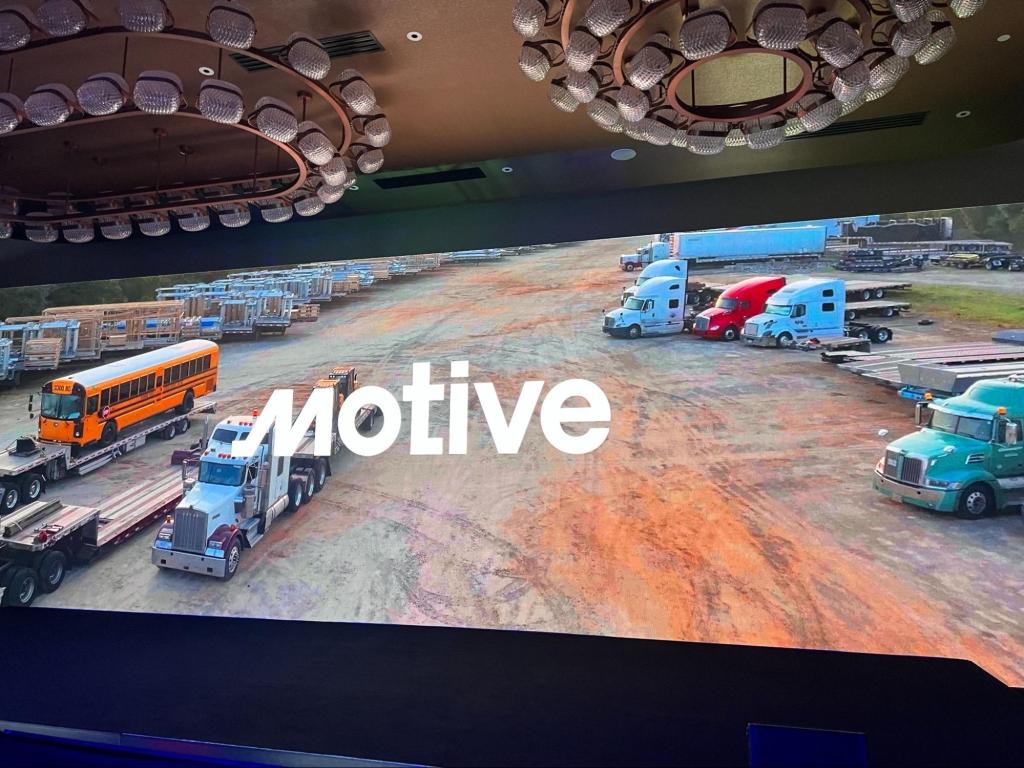
Motive releases new AI-powered positive driving model to reward good driving

Technology and telematics provider Motive recently announced the release of Positive Driving, a new AI model that automatically identifies good driving behaviors. Some of the positive driving behaviors being recognized include quickly reacting to obstacles to avoid collisions or creating a safe following distance when cut off by another vehicle.

The tech is part of a larger trend by fleets to incorporate more positive driver coaching. In the past, most driver coaching was negative feedback, as the technology at the time forced fleets to be reactive, either from a customer complaint, an accident, a speeding event or being pulled over. With developments in cheaper hardware, better computing power and greater data bandwidth, positive behaviors are able to be identified and celebrated.

Motive notes that with the new AI-powered recognition, fleets saw a 64% decline in safety incidents and 43% lower turnover.

“Rewarding exceptional driving performance is more than a nice-to-have—it’s a strategic lever,” said Karol Smith, director of transport safety at Estes Forwarding Worldwide, in the release. “One of our drivers avoided what could have been a really bad accident when a truck made an illegal U-turn right in front of him. Motive Positive Driving gave us instant visibility into his quick thinking, and we were able to praise him for his defensive driving.”

Another benefit goes beyond recognition to rewards. Fleets are now using safety scoreboards and adding employee incentives, which can range from gift cards and safety bonuses to company merch, depending on the company.

An inside look at the Thomas Built school bus factory

(Photo: Thomas Wasson/FreightWaves)

During my travels this week, I had the opportunity to tour the Thomas Built school bus factory in High Point, North Carolina. I normally report on heavy-duty Class 8 trucking but could not pass up the chance to report on specialized heavy-duty vehicles. I also happen to share the first name Thomas with the company, but unfortunately no relation to the Thomas family who built the company.

The school bus market is an interesting one. School districts have two budgets, one for things like teacher wages and another for capital expenditures like buildings or, in this case, school buses. Unlike a large trucking fleet that trades in its tractors in three- to four-year intervals, school buses last much longer, between 10 to 15 years.

When touring the plant, I learned that it takes roughly a day and a half from start to finish to construct a school bus. Additionally, the color of the roof and hood matters depending on the climate. A white-colored roof is more favored by southern school districts, due to its ability to lower temperatures by up to 9 degrees Fahrenheit. For school districts up north in colder climates, they may use darker matte or black tops for the inverse, taking less time to heat up. Unfortunately for school-age kids, air conditioning remains a luxury, with many school district budgets constrained and focused on no-frills features.

Thomas Built Buses also showcased its electric school bus, which I was able to drive around the lot next to the plant. School buses are a great test case for EV capabilities, with the average mileage driven by a bus during a shift being less than 80 miles. Additionally, despite the smaller 250-kilowatt-hour battery, there are only two shifts needed, one to pick up kids and the other to drop them off. This allows for opportunity charging in between the rush.

An average school bus that is a Type C, the one with a long hood, can cost between $135,000 and $165,000. An EV bus can cost three times as much, but there are still incentives to help districts afford them.

Finally, there are three major bus brands in the U.S., and each has a different shade of yellow. Thomas uses 3M paint for its signature color. The color yellow, I was told, was not federally mandated but based on an agreement in the 1930s that the buses should be yellow.

You’re halfway there! To read the rest of the Loaded and Rolling newsletter, subscribe below. It’ll be delivered to your inbox every Thursday at 2pm eastern.

Most recent episode

Trump will charge 35% tariff on Canadian imports starting Aug. 1.

President Donald Trump plans to impose a 35% tariff on the majority of imports from Canada starting next month, an increase to the 25% levy the president first announced in February.

Trump said the 35% tariff, which go into effect Aug. 1, is necessary because of fentanyl being smuggled into the U.S. through Canada.

“As you will recall, the United States imposed tariffs on Canada to deal with our nation’s fentanyl crisis, which is caused, in part, by Canada’s failure to stop the drugs from pouring into our country. Instead of working with the United States, Canada retaliated with its own Tariffs,” Trump wrote on Truth Social.

“If Canada works with me to stop the flow of Fentanyl, we will, perhaps, consider an adjustment to this letter. These Tariffs may be modified, upward or downward, depending on our relationship with your Country.”

A White House official told the Wall Street Journal that imported goods covered by the United States-Mexico-Canada Agreement were expected to remain exempt, and 10% tariffs on energy and fertilizer were also not set to change.

In fiscal year 2024, U.S. Customs and Border Protection seized 43 pounds of fentanyl at the Canadian border, compared with roughly 21,100 pounds seized at the Mexican border. 

The Canadian Border Services Agency seized nearly 18,300 pounds of drugs, including 1.2 pounds of fentanyl, entering Canada from the U.S. in 2024, CBC reported.

Mark Carney, Prime Minister of Canada, said his administration is working to reach a new trade deal with the U.S. before the Aug. 1 deadline.

“Throughout the current trade negotiations with the United States, the Canadian government has steadfastly defended our workers and businesses. We will continue to do so as we work towards the revised deadline of August 1,” Carney wrote on social media platform X

“Canada has made vital progress to stop the scourge of fentanyl in North America. We are committed to continuing to work with the United States to save lives and protect communities in both our countries.”

Canada is the second largest trade partner of the U.S. at $57 billion in two-way commerce during May, according to data from the Census Bureau.

Over the past several days, the Trump administration has sent a flurry of letters to dozens of U.S. trade partners informing them that higher import tariffs could kick in if no new trade agreements are reached by Aug. 1.

Trump said he is also placing a 50% tariff on imports of copper starting in August, and is considering a 200% tariff on imported pharmaceutical products later this year.

As E2open prepares to be acquired, slightly higher financial numbers seen as a success

What if they gave an earnings call and nobody came?

That was the odd situation that occurred Thursday on what is likely to be the final quarterly earnings call of supply chain software provider E2open, which has agreed to be acquired by Australia’s WiseTech Global.  

With the company’s publicly-traded stock set to disappear when the transaction closes–which is projected to be by the end of the year–the price of E2open (NYSE: ETWO) shares have been stuck just below the transaction price of $3.30 since the deal was announced in late May. 

Analysts stay away

With management stating up front it was not going to hold an open question and answer session on the earnings call, analysts who might have attended the likely swan song chose to stay away. A transcript of the call showed none having checked in.

And with the sale price of the stock set, there was no market reaction to the company’s announcement of earnings for fiscal 2026’s first quarter ended May 31.

E2open’s stock had fallen as low as $1.75 on April 4, several weeks before the WiseTechnology acquisition was announced. It had rebounded to about $2.55 the day before the deal was disclosed. 

E2open will end its time as a publicly-traded company just about five years after going public through a Special Purpose Acquisition Company (SPAC). The initial value of the company in the SPAC was $2.57 billion. Even after the boost in the stock price from the WiseTech acquisition, its market capitalization is now near $1.1 billion. In June 2021, its stock briefly exceeded $14 per share. 

Past problems led to CEO dismissal

The company’s woes led to the dismissal of CEO Michael Farlekas in October 2023. He was replaced on an interim basis by software executive Andrew Appel, who then became permanent CEO in February 2024.

Company earnings announced Thursday in conjunction with the earnings call showed that despite numerous pledges by management to turn around a sluggish performance, E2open in the quarter turned in financial numbers that weren’t that much different than in the corresponding quarter a year ago.

Mostly flat numbers

GAAP subscription revenue for the quarter was $132.9 million, which was up just 1.1% from the corresponding quarter a year earlier. However, the company said the revenue was above the high end of earlier guidance it had provided, which was $129 million to $132 million.

Total GAAP revenue was $152.6 million, up just 1% from a year earlier. GAAP gross profit was up 1.3% from a year ago, but non-GAAP gross profit at $102.4 million was down 0.2% from 2024’s fiscal first quarter.

The GAAP gross margin of 48.2% was barely higher than the 48.1% number from a year earlier. 

There was improvement in several measures of profitability. The GAAP net loss for the quarter was $15.5 million, compared to a net loss of $42.8 million a year earlier. Adjusted EBITDA of $52.2 million was up 3% from a year earlier. The adjusted EBITDA margin of 24.3% was 60 basis points better than in the corresponding quarter 12 months ago.

On  the earnings call, Appel accentuated several positives. The year-over-year growth in subscription revenue was the first since the middle of fiscal 2024. That comparison, he said, is “direct evidence of the progress we have made.”

“We have succeeded in stabilizing our business and putting it back on a growth trajectory,” the CEO said.

Client retention has “significantly improved,” Appel said. The company’s software offerings as well as its methods for delivering them to market have undergone “notable enhancements,” he added.

On the call, CFO Marj Armstrong said the subscription revenue growth was “driven by progress on retention and bookings in the second half of FY ’25, which has continued in early FY ’26.”

“Driven by continued investment in R&D, we have launched exciting new products such as supply network discovery, released generative AI-driven tools to augment our industry-leading transportation management and global trade solutions and are on track for additional product announcements in the coming months,” Appel said.

Appel noted that the core activity at WiseTech has been in international freight forwarding, “and the breakthrough success they have achieved in those areas is well known throughout the industry.”

“By combining with E2open, WiseTech will extend its traditional focus to include our company’s broad supply chain suite of planning, channel and supply applications. and also add highly complementary capabilities in adjacent areas of domestic logistics, carrier integration and global trade,” Appel said.

More articles by John Kingston

Earlier TQL victory on broker liability overturned by Sixth Circuit; SCOTUS next?

Another broker liability case knocks at Supreme Court door, this one involving C.H. Robinson 

XPO rating cut by S&P, agency cites continuing weak freight market

What value does an LSP get from p44?

(The views expressed here are solely those of the author and do not necessarily represent the views of FreightWaves or its affiliates.)

Shippers don’t partner with LSPs just to move freight—they rely on them to orchestrate complex, responsive, and cost-efficient networks on their behalf. Whether managing global air freight for pharmaceutical companies, regional FTL capacity for just-in-time fulfillment, or final-mile delivery, LSPs must tailor each network to the shipper’s unique needs—and ensure it adapts in real time. For clarity in this article, LSP is an umbrella term covering 3PLs, freight brokers, freight forwarders (FFWs), 4PLs—any party that both plans and executes freight on behalf of shippers.

LSPs manage thousands, if not hundreds of thousands, of unique carrier networks. To meet shipper expectations—and maintain margin—LSPs need cutting-edge, integrated technology that:

  • Orchestrates real-time decisions across multiple networks
  • Maintains data consistency across carrier, shipper, and internal systems
  • Scales efficiently across clients, geographies, and transport modes

That’s the value that Movement, project44’s Decision Intelligence Platform brings to LSPs.

Why Platforms Elevate, Not Eliminate

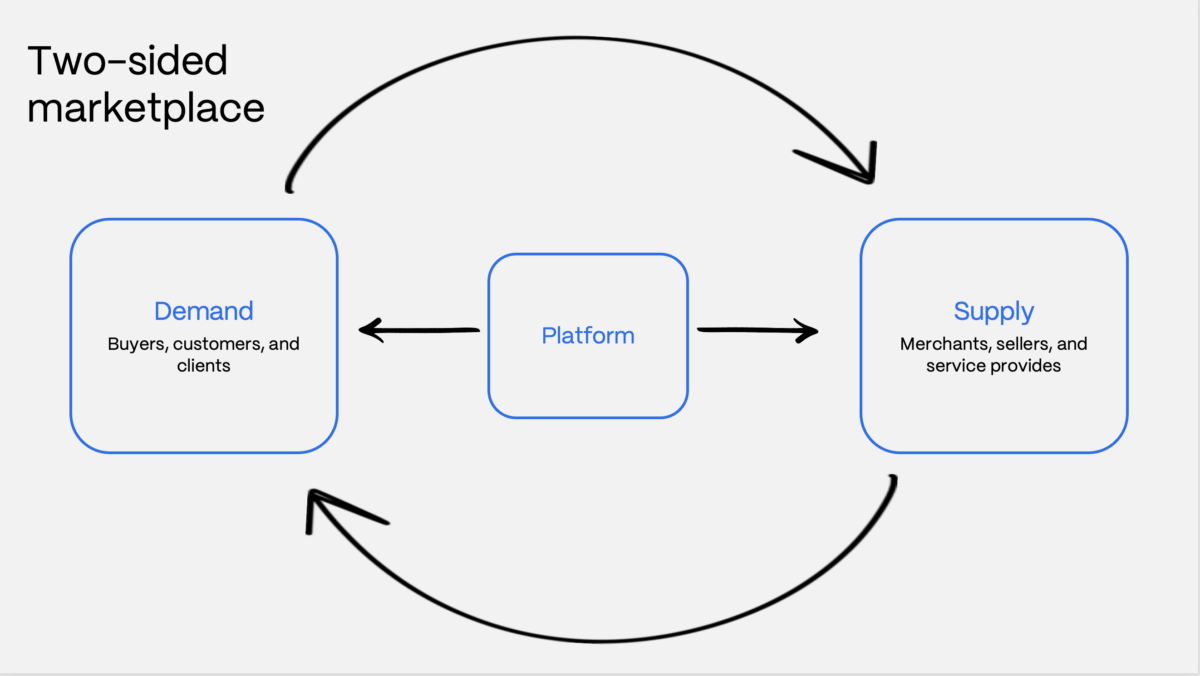
Before delving into Movement, it’s essential to understand the power of a two-sided marketplace. One side brings demand (buyers of a service), the other brings supply (providers of that service), and a platform orchestrates value between them. More activity on either side makes the network more useful for everyone, creating a compounding value effect.

Figure 1 | Generic two-sided platform: value compounds as demand and supply engage through a central hub

In a rapidly evolving market, the role of technology platforms is often misconstrued. Rather than diminishing the critical expertise of logistics professionals, the most impactful platforms amplify existing capabilities and foster deeper collaboration. Our approach epitomizes this: enabling LSPs to perform at their best is central to its mission—and key to building connected, end-to-end global supply chains. Movement acts as an accelerator, integrating LSPs more deeply into the flow of critical decision intelligence and making them even more indispensable.

The LSP’s dual identity

Enabling LSPs to perform at their best is central to our mission—and key to building connected, end-to-end global supply chains. LSPs play a unique dual role in the ecosystem, and Movement is specifically designed to support both sides seamlessly.

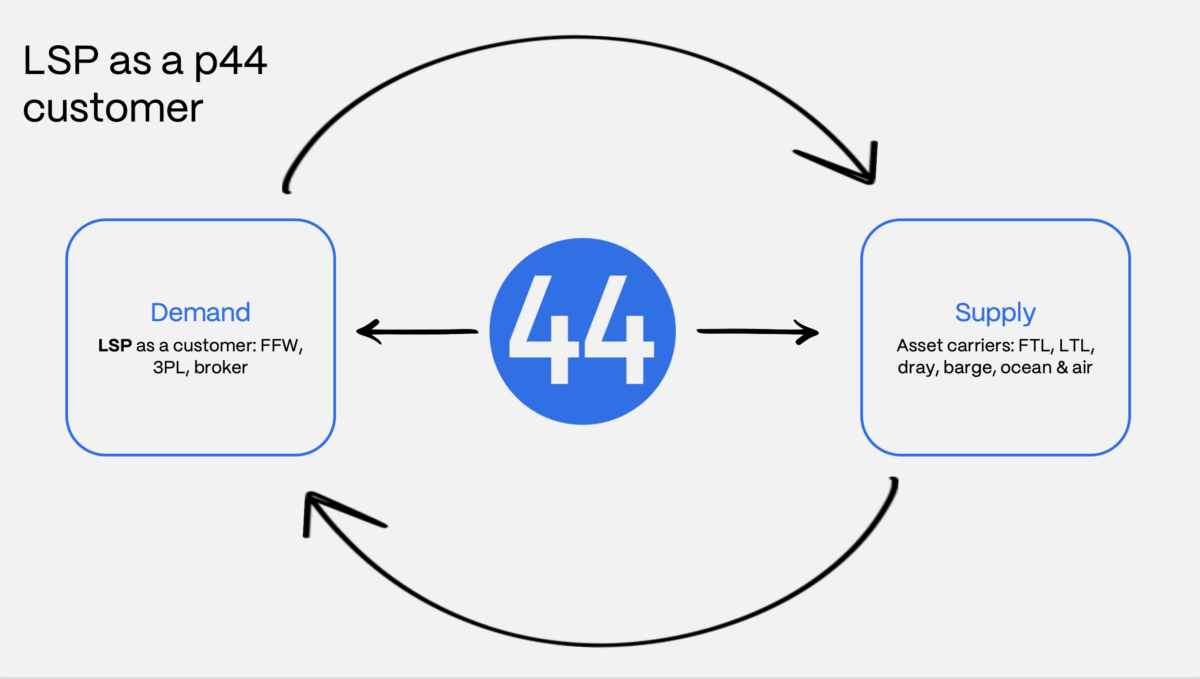
When LSPs leverage Movement to manage client freight (the demand side) they gain a significant competitive edge:

  • RTTVP a single view of every load across all modes, complete with predictive ETAs and data-quality scores.
  • AI-assisted exception handling – alerts and recommended actions so teams reroute or re-book.
  • Carrier scorecards – live on-time, dwell, and cost metrics that steer freight to the best performers.
  • Intelligent TMS – Automated rating & tending that removes bias and optimizes carrier decision making.
  • Unified collaboration – shippers, LSP ops, and carriers collaborate in a single platform, minimizing the need for phone calls and emails. 
  • Performance analytics – analytics across performance, procurement, emissions and more that turn transparency into a competitive edge.
  • Subcontractor accountability: Gain access to Movement for free to easily track, compare, and audit subcontractor performance to uphold service standards and identify top-performing partners.
  • AI agent workforce: Executing behind the scenes, resolving data issues, and filling in gaps where standard integration methods fall short. 
  • Scalable Infrastructure: Expand or contract your network without reinvesting in tech. Movement scales with your business, eliminating onboarding friction and IT lift.
Figure 2 | LSP on the demand side—leveraging Movement, project44’s Decision Intelligence Platform

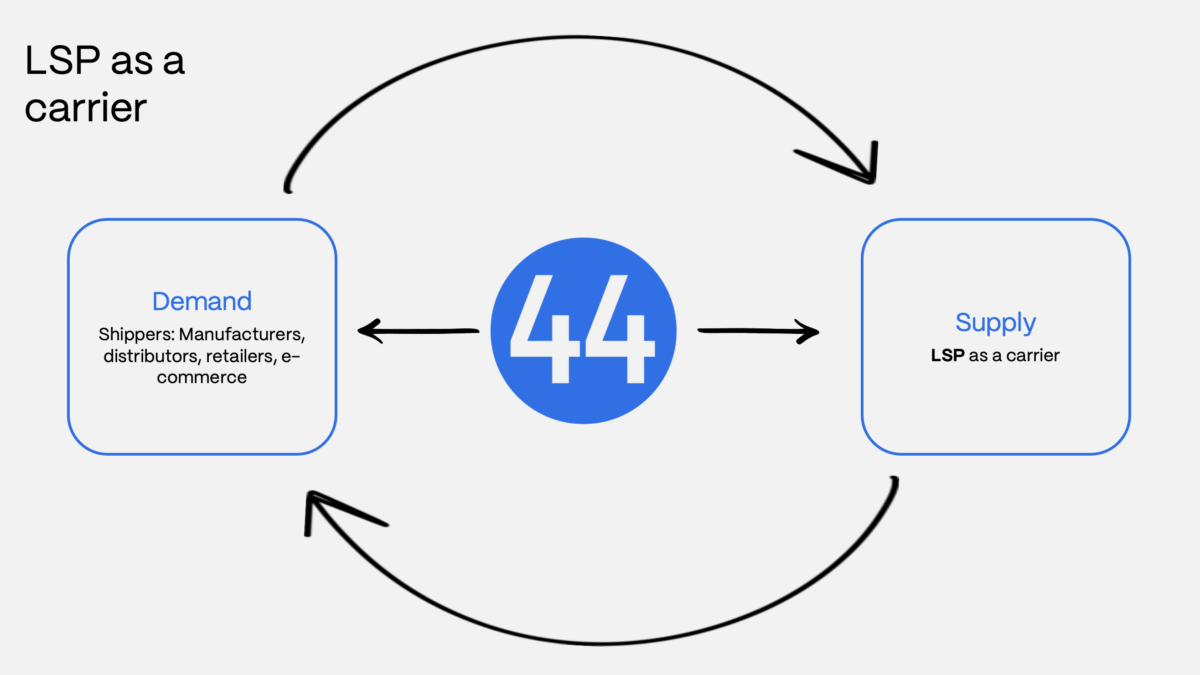
Conversely, when LSPs utilize Movement as a carrier (the supply side), whether operating a fleet or managing subcontracted carriers, they gain powerful operational and commercial advantages—at no cost:

  • SLA & Compliance Reporting: Access real-time reporting to show performance against customer SLAs—critical for ensuring payment and maintaining service commitments.
  • Built-In Trust: Shippers can access live updates and documents through shared portals and APIs. Everyone sees the same truth, which builds confidence and accelerates resolution.
  • Embedded Competitive Intelligence: Benchmark your network against peers on data quality, responsiveness, and delivery accuracy—turning visibility into a competitive edge.
  • More Freight, Less Overhead: project44 handles Level 1 and Level 2 support for basic visibility inquiries, allowing your team to focus on higher-value tasks.
  • Scalable Infrastructure: Expand or contract your network without reinvesting in tech. Movement scales with your business, eliminating onboarding friction and IT lift.
Figure 3 | LSP on the supply side—delivering clean signals and flawless execution.

This dual role is powerful but inherently complex. Managing this complexity manually or through fragmented systems leads to inconsistent data and service, rising operational costs, duplicated workflows, and missed context.

Movement solves this by unifying both views of the shipment into a single record. Whether you’re managing a load on behalf of a customer or overseeing execution as a carrier, the experience is consistent—ETAs, documents, updates, and statuses are all synchronized across roles. Critically, Movement’s internal and external collaboration tools support communication on both sides of the transaction, enabling faster resolution, shared context, and aligned action across LSP teams and partners.

The result: streamlined workflows, complete context, and a shared source of truth, reducing overhead while increasing speed, accuracy, and trust.

From Signals to Outcomes: Impact Across the Supply Chain

LSPs are already proving the transformative power of clean carrier data meeting Decision Intelligence:

  • CEVA Logistics — moves >1 million FTL loads/year through Movement, cutting “where’s-my-load?” calls 60 % and converting early alerts into lower-cost, lower-carbon commitments. CEVA Logistics, Global Head of Ocean Freight says, “Data is like gold in the shipping industry, and project44 will help us mine the value for our customers.” 
  • Efret — Europe’s fast-growing road-freight specialist used automated tracking and side-switching to triple team efficiency and handle 5X more peak-season loads with zero extra head-count. “The less time our operators spend hunting for a load, the more time they gain to work on another.” — Alex Paterson, Business Development
  • DB Schenker unifies land, air, and ocean; ML-driven ETAs run ≈ 91% accurate, achieving >90% data compliance, and halving manual status calls. “The days when 3PLs did everything on their own systems are over—speed to market now demands we leverage the best tech available.” — Jochen Thewes, CEO
  • Worldwide Express — full-lifecycle LTL digitization. Project44 powers WWEX’s rating → dispatch → tracking → eBOL flow in one platform. Every pick-up now auto-generates an NMFTA-compliant eBOL, pushing real-time status to carriers and customers. Executive VP & CRO Mike Grayson says the change “improves the efficiency of our day-to-day operations so we can provide a better service to our customers.”
  • DSV designates project44 its preferred visibility provider; side-switching plus 94% EU telematics coverage slashes touches per load and scales growth without extra headcount. “With project44 we’re achieving real-time visibility across the entire DSV fleet for the benefit of our customers.” — Simon H. Galsgaard, EVP

These results aren’t outliers—they’re the consistent outcome when dual-role workflows converge in a single platform. The freight market is dynamic, and project44’s success is deeply intertwined with the buy-in and participation of LSPs. The platform strives to build products that deliver tangible value back to its partners.

We are honored and privileged to work with the best LSPs in the world. project44 could not be successful without their buy-in and participation, and in turn, we strive to build products that give back to our partners. Our pledge is to stand shoulder-to-shoulder with every forwarder and 3PL ready to turn data into decisive action. On behalf of the entire project44 leadership team, thank you for helping us build the first Decision Intelligent Platform and for keeping the world moving.