Layoffs hit Amazon Fresh, Kroger, UNFI and other food companies

A surge of closures and layoffs has hit workers and companies tied to food production, distribution and retail across the U.S.

Since the beginning of May, there have been over 1,513 job cuts announced, according to media reports and Worker Adjustment and Retraining Notification (WARN) Act notices.

Among the companies facing layoffs are Amazon Fresh, The Kroger Co., Del Monte Foods Inc., Conagra Brands Inc., United Natural Foods Inc., Bakery Barn LLC, Randalls and Albertsons.

United Natural Foods Inc. 

Wholesale distributor United Natural Foods Inc. (UNFI) plans to close a distribution center in Schnecksville, Pennsylvania, eliminating 716 jobs, according to a WARN notice.

The closure of the UNFI warehouse is the result of a split with client Key Food Stores Co-op Inc., according to filings with the Securities and Exchange Commission.

“The agreement will terminate on or around Sept. 20, and Key Food’s conventional products business in the Northeast will transition to another wholesaler,” UNFI said. “[UNFI] believes this is a positive outcome for both parties. The agreement allows [UNFI] to exit an unprofitable relationship.”

The layoffs will be finalized by the end of October. 

Matawan, New Jersey-based Key Food Stores is a cooperative of independently owned and operated grocery stores throughout the Northeastern part of the U.S. The company has around 448 locations.

UNFI (Nasdaq: UNFI) is a Providence, Rhode Island–based natural and organic food company. The company is one of Whole Foods Market’s main suppliers. 

Albertsons

Albertsons Cos. Inc., which includes Safeway, has laid off 275 employees from its corporate workforce in Phoenix.

The employees affected by the layoffs were mostly in administrative jobs, Albertsons told the Phoenix Business Journal.

It was at least the second round of staff cuts made this year by Albertsons. In February, Albertsons laid off 156 Safeway corporate employees in Pleasanton, California, according to WARN notices.

Albertsons also plans to close a grocery store in Portland, Oregon, by July 1. The location employs 87 workers, according to a WARN notice filed with the state.

Albertsons Cos. Inc. is based in Boise, Idaho. The company, which includes Albertsons, Safeway, and Vons stores, has over 2,200 locations in 34 states and 285,000 employees. 

Amazon Fresh

E-commerce giant Amazon (Nasdaq: AMZN) has closed an Amazon Fresh grocery store in the Seattle area, resulting in 125 job cuts. Amazon officials said the store closed on Sunday.

The Amazon Fresh store was located in the Seattle suburb of Federal Way.

“Certain store locations work better than others, and after an assessment of our offering we’ve decided to close our Amazon Fresh store in Federal Way,” Amazon spokesperson Griffin Buch told the Seattle Times.

Randalls

Randalls is closing a grocery store in the Houston area and laying off 102 workers, according to a WARN notice filed with the state.

The layoffs will be finalized by Aug. 16. 

“In such a competitive environment, our company must sometimes make the tough decision to close an underperforming store so that we can reinvest in our remaining stores in the marketplace,” Christy Lara, Albertsons Cos. public relations director for Texas and Louisiana, told the Houston Chronicle

Randalls is a subsidiary of Albertsons Cos.

Bakery Barn LLC

Protein bar and snack maker Bakery Barn LLC is closing a factory in Pleasant Hills, Pennsylvania, and laying off 82 employees, according to the Pittsburgh Post-Gazette

The closure is scheduled to be finalized by Aug. 1. The company cited “changing business needs.”

Bakery Barn LLC was acquired by New York-based 1440 Foods in November, according to a news release.

Conagra Brands Inc.

Chicago-based Conagra Brand plans to close a food production facility in Fennville, Michigan, laying off 75 employees. The layoffs will be finalized by Aug. 29.

“Conagra has made the difficult decision to discontinue its production operations and close its facility to improve efficiencies and effectiveness within its supply chain network,” the company said in a WARN notice.

Conagra Brands (NYSE: CAG) is a consumer packaged goods company that makes and sells products such as Slim Jim, Duke’s and Orville Redenbacher. 

Conagra has 42 production and distribution facilities in the U.S., Canada and Mexico. The company employs over 18,600 workers.

Del Monte Foods Inc.

Del Monte Foods Inc. (NYSE: FDP) is closing a fruit processing facility and two warehouses in Yakima, Washington, and laying off 51 full-time workers and 448 seasonal employees.

Company officials said the closure of the facilities are meant to align the business with consumer demand. The layoffs are scheduled to begin on Aug. 8.

Walnut Creek, California-based Del Monte Foods has production and distribution locations across the U.S. and Mexico. 

The Kroger Co.

Officials for The Kroger Co. said they plan to close more than 60 stores across the U.S. by the end of 2026.

The news was part of Kroger’s first-quarter earnings report released on Friday. 

“In the first quarter, Kroger recognized an impairment charge of $100 million related to the planned closing of approximately 60 stores over the next 18 months,” the company said in a statement. “As a result of these store closures, Kroger expects a modest financial benefit.”

Kroger has not released a public list of the 60 stores slated for closure or how many employees will be laid off. The company said it will offer roles in other stores to all associates currently employed at affected stores.

The Kroger Co. (NYSE: KR) is headquartered in Cincinnati, Ohio. It operates more than 2,700 stores under a variety of banner names. 

Kroger employs over 400,000 associates across the country, according to Macrotrends and Stock Analysis.


US maritime chief Sola steps down

Less than six months after being appointed by President Trump, Federal Maritime Commission chairman Louis Sola said he is stepping down.

Sola, who was originally appointed to the international shipping regulator by Trump in 2018, announced he was leaving at the end of a holdover period from his 2018 five-year appointment in a letter posted Tuesday to the agency’s website.

“Serving our nation in this capacity has been the honor of a lifetime,” Sola wrote. “I have had the privilege of helping safeguard the integrity of the U.S. maritime industry, bringing greater transparency to port operations, and overseeing a supply chain that moves more than $5 trillion in goods annually.

“I am sincerely grateful for the trust [President Trump] placed in me and for his steadfast commitment to the America First agenda.”

Sola’s departure comes at an historic inflection point as the Trump administration deploys an array of measures designed to elevate American shipping and shipbuilding. Those measures include controversial port fees and other charges aimed at blunting China’s maritime dominance.

Sola’s original term was five years and expired in 2023, but included two years of “carryover” in the event he wasn’t re-nominated, and that carryover period expires on June 30.

“It was always planned this way,” Sola told FreightWaves. “No surprises.”

After Sola’s departure, the five-member agency will comprise Democrats Dan Maffei and Max Vekich, and Republican Rebecca Dye, with two vacancies. It is not known who would be appointed as the next chairman.

Sola, an Indiana native and Army veteran, worked in military intelligence and later built a successful mega-yacht brokerage business in Florida. Sola in 2016 mounted an unsuccessful campaign to win a seat in Congress, a controversial election that saw both he and Democratic candidate Frederica Wilson removed from the ballot.

President Joe Biden re-nominated Sola to the agency in 2024.

As chairman, Sola led an FMC investigation into flags of convenience, the sometimes-sketchy commercial vessel registries, which resulted in the de-flagging of 140 sanctioned vessels. 

— with reporting by John Gallagher in Washington

This article was updated June 24 to include details of Sola’s term limits, and comments from the chairman.

Find more articles by Stuart Chirls here.

Related coverage:

Maersk stops Haifa service prior to Iran missile attacks

Tanker rates surge, Maersk still sailing through Strait of Hormuz

Solar to power half of Port Newark box terminal’s energy needs

New Freightos index: Israel-Iran conflict yet to hit shipping

Amazon fast-delivery expansion to reach 4,000 rural communities in 2025

Two-tone blue Amazon Prime delivery van in front of a house, with driver delivering to doorstep.

Amazon said Tuesday it will expand Same-Day and Next-Day service to 4,000 smaller towns, cities and rural communities by the end of the year as it begins following through on an April 30 commitment to invest $4 billion in its rural delivery network.

Amazon (NASDAQ: AMZN) previously said the capital expenditures will pay for more than 200 delivery stations, tripling the size of the rural delivery network and cutting delivery times in half for Prime members in less populated areas. The expansion announced on Tuesday represents an initial phase of the delivery station-buildout along with steps to use existing facilities for Same-Day and Next-Day service, according to the company. More specifically, it is changing existing rural delivery hubs into hybrid stations that serve multiple functions, including inventory storage and package preparation. The hybrid approach allows Amazon to position products closer to customer households and reduce transportation distances.

In addition to increasing delivery speed through improved use of logistics and technology, Amazon is also increasing the types of essential items available to Prime members for expedited delivery. So far this year the number of items delivered the same or next day in the U.S. increased over 30% compared to the same period last year, according to the company.

Amazon said rural customers will benefit from its delivery service because they live farther from brick-and-mortar retailers, have fewer product and brand choices, and face limited delivery options when shopping online.

“Everybody loves fast delivery. So, whether you live in Monmouth, Iowa or in downtown Los Angeles, now you’re going to have the same fantastic Amazon customer experience: the ability to get the wide variety of items you need to keep your household running every day, delivered the same or next day,” said Doug Herrington, CEO of Worldwide Amazon Stores, in a news release.

The delivery expansion is especially beneficial for customers that don’t want to wait two days for essential groceries and household goods, such as paper towels or diapers.

In the first quarter, Amazon’s fast delivery helped drive its everyday essentials selection to grow more than twice as fast as all other categories in the U.S. Amazon is one of the largest grocers in the U.S., with over $100 billion in gross sales, even when sales from Whole Foods Market and Amazon Fresh are excluded.

Amazon said it already offers free Same-Day and Next-Day delivery to more than 1,000 smaller localities. Customers in those areas shop Amazon’s online store more frequently and purchase household essentials and meaningfully higher rates. Of the top 50 repurchased items for Same-Day delivery in these areas, more than 90% are everyday essentials.

The retail-logistics giant said it is using advanced machine learning algorithms to predict which items will resonate with local Prime members and stocking a mix of the most-popular and frequently purchased items like wireless headphones, coffee pods, crackers, paper towels, and diapers, and products curated to fit local preferences like wild bird food in Dubuque, Iowa, travel backpacks in Findlay, Ohio, and after sun body butter in Sharptown, Maryland.

Some analysts say Amazon’s deeper delivery penetration of rural areas is part of its competition with Walmart, which has an extensive store footprint and online presence. 

Click here for more FreightWaves/American Shipper stories by Eric Kulisch.

UPS to eliminate 20K jobs as Amazon decoupling accelerates

Analyst: Amazon’s $4B rural delivery investment aimed at slowing Walmart

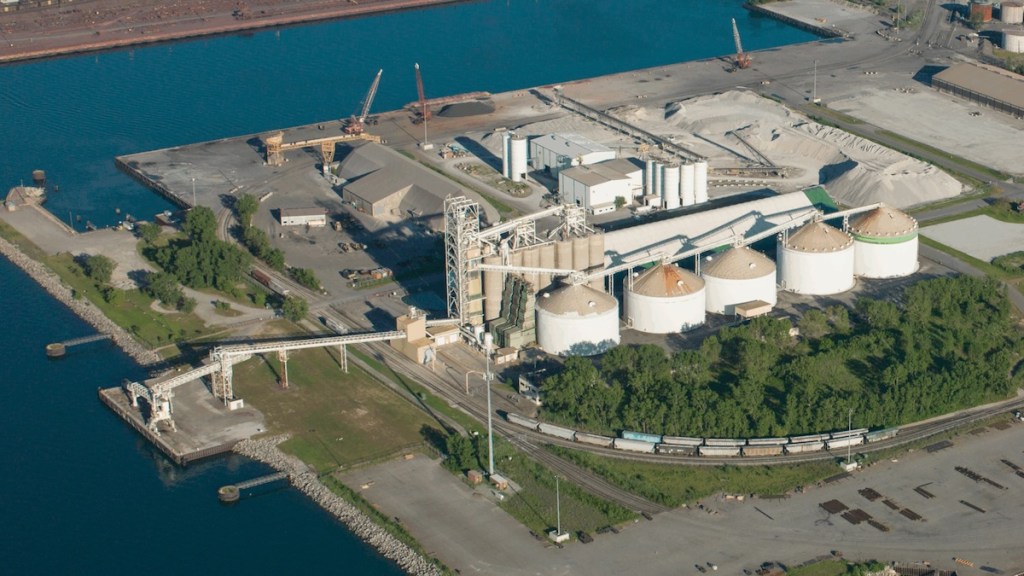
Indiana port taps Louis Dreyfus to restart grain terminal

Indiana’s state ports agency is looking to one of the world’s largest agri-businesses to revitalize its grain exports.

Ports of Indiana has selected Louis Dreyfus Company (LDC) to operate the grain export facility at its Lake Michigan port.

Considered one of the world’s “big four” global agri-commodities companies, privately-held LDC reported net sales of $50.6 billion in 2024. Over the years, the Burns Harbor grain terminal has enabled exports of more than 500 million bushels of corn and soybeans between opening in 1979 and closing in 2023.

“We’re very pleased to partner with LDC to revitalize one of the most important agricultural shipping facilities in the state,” said Ports of Indiana Chief Executive Jody Peacock, in the release. “Combining LDC’s extensive resources with one of the most robust grain export facilities on the Great Lakes provides critical access to global markets for regional farmers. This is one of only a few places in the Midwest where you can load 1 million bushels of corn onto an ocean vessel for export while simultaneously unloading an 85-car unit train and hundreds of semi-trucks from local farmers.”

Dreyfus operates the largest U.S. soybean crushing and biodiesel plant in Claypool, Ind.

“LDC is excited to join forces with Ports of Indiana, whose commitment to growing the midwestern economy is aligned with our own, long-standing growth journey in the state,” said Gordon Russell, LDC’s U.S. Head of Grains & Oilseeds, also in the release. “Burns Harbor is well-positioned at the southern shore of Lake Michigan, with access to multiple regional grain markets. The port will be a strategic asset for LDC to expand market access for regional farmers and serve customers in North America and abroad.”

The port’s grain operation includes storage capacity for 7.2 million bushels of grain, 200 railcars and 20 barges.

In 2024, the Port of South Louisiana was the largest inland hub for ag traffic, handling more than 50% of all U.S. grain exports. That total included 40 million tons of soybeans.

Northern Indiana hosts the largest U.S. port with access to the Great Lakes, St. Lawrence Seaway and U.S. inland rivers. It also provides multimodal connections to 16 railroads in the greater Chicago market.

Regional Rail operates the port’s Burns Harbor Railroad, connecting to the national rail network via Norfolk Southern. 

The Burns Harbor terminal has capacity to load up to 90,000 bushels per hour into an ocean or lake vessel, and unload 30,000 bushels per hour from a unit train.

Dreyfus expects to begin operating the terminal in early 2026.

Subscribe to FreightWaves’ Rail e-newsletter and get the latest insights on rail freight right in your inbox.

Find more articles by Stuart Chirls here.

Related coverage:

CPKC says service is on the mend in former KCS territory

Feds set $10M to study health effects of East Palestine rail disaster

Intermodal weaker as US rail traffic declines

Watco rail gets $600M in new private equity

The first tropical storm of the 2025 hurricane season is here

In the early hours of Tuesday morning, the National Hurricane Center announced the formation of Tropical Storm Andrea, the first named storm of the 2025 Atlantic hurricane season. Located in the central Atlantic, Andrea emerged after capitalizing on a fleeting window of favorable atmospheric conditions. Forecasters note that the storm is currently situated approximately 2,000 miles away from Florida, moving northeast at speeds between 15 and 20 mph. Despite its formation, Andrea poses no threat to any land areas and is expected to dissipate quickly due to adverse environmental conditions.

Andrea’s development aligns with climatological expectations, as historical data indicates that June 20th typically marks the start of named storms in the Atlantic basin. However, according to meteorologists, Andrea’s existence will likely be brief. The storm is projected to encounter high wind shear—a disruptive force for such systems—which will dismantle its structure within a short span of time. Additionally, Andrea is moving toward cooler ocean temperatures, away from the warm Gulf Stream currents that usually sustain stronger storm systems.

The 2025 Atlantic hurricane season, running from June 1 to November 30, is forecasted to be more active than usual. The National Oceanic and Atmospheric Administration (NOAA) has predicted a 60% chance of an above-normal hurricane season. Factors contributing to this outlook include continued ENSO-neutral conditions, warmer-than-average ocean temperatures, and a forecast for weaker wind shear, contributing to the potentially high level of activity in the Atlantic.

NOAA anticipates a total of 13 to 19 named storms, with 6 to 10 expected to strengthen into hurricanes. Of these, 3 to 5 may become major hurricanes, defined as Category 3 or higher. This outlook is bolstered by the potential influence of the West African Monsoon, which is known to generate tropical waves that can evolve into powerful Atlantic storms.

(Current sea surface temperatures in the Gulf of America and the tropical Atlantic exceed 27 degrees Celsius, a critical threshold for supporting cyclone formation. Image: NOAA)

Although Tropical Storm Andrea will not impact coastal regions, NOAA’s seasonal forecast serves as a critical reminder of the potential dangers posed by future storms. The agency continues to improve its forecasting capabilities, aiming to provide communities with more advanced warnings to mitigate the impacts of these natural phenomena. This year, NOAA’s upgrades include enhanced forecasting models and extended advisory lead times, allowing up to 72 hours of preparation before tropical cyclone impacts are felt on land.

Meteorologist Jim Dickey highlighted that while the Atlantic appears generally subdued with only scattered tropical waves emerging off the African coast, the conditions remain ripe for development in the coming months. He emphasized that the slow start to the hurricane season does not predict its conclusion, as historically, the most active part of the season unfolds in the late summer months. According to historical records analyzed by Dickey, seasons that started after July 1st still averaged 11 named storms, including six hurricanes and three major hurricanes.

The meteorological community warns that despite a calm beginning, residents along the U.S. Gulf and Atlantic coasts should remain vigilant. Preparedness ahead of peak hurricane season is key, as past events underscore the potential for far-reaching impacts, not only from the winds and storm surges but also from significant inland flooding.

As Andrea embarks on its probable short-lived journey across the Atlantic, it underscores the unpredictable nature of tropical systems. With advanced forecasting tools and proactive communication strategies at their disposal, NOAA and its partners remain committed to safeguarding lives and property through timely and accurate forecasts. With the above-average forecasted activity, officials continue to urge preparedness across vulnerable communities, emphasizing that planning and readiness are crucial steps in facing the challenges of an active hurricane season.

As the season progresses, meteorologists will be keeping a close eye on the evolving patterns and conditions that could signal the development of new systems. For now, the Atlantic basin’s first storm serves as a seasonal benchmark and a prelude to the potentially turbulent months that lie ahead.

Benchmark diesel price now at its highest level in almost a year after big jump

The benchmark price used for most fuel surcharges has hit its highest level in almost a year, just as oil prices in futures and physical markets are pushing against conventional wisdom by making a major retreat from their recent high levels. 

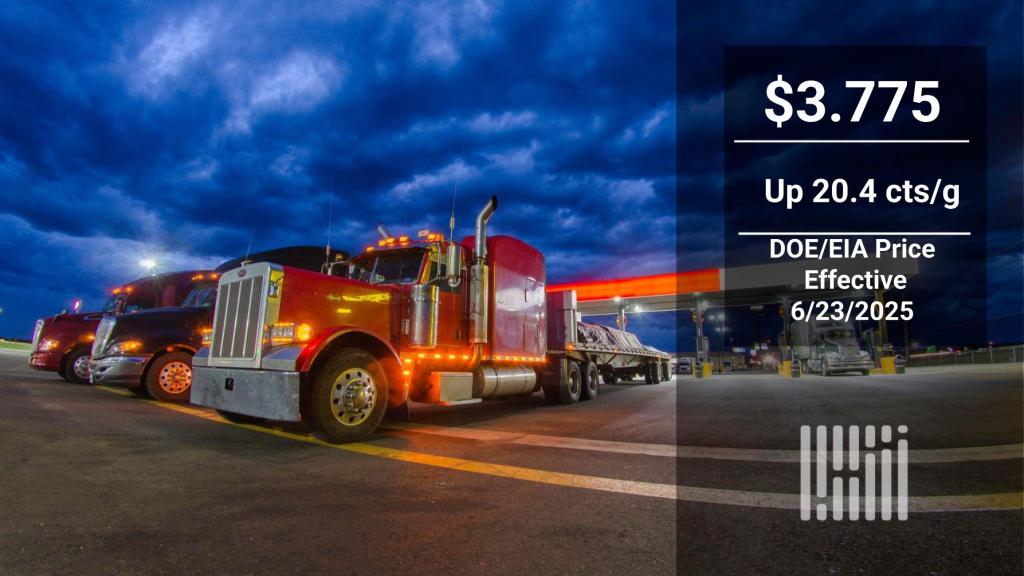
The Department of Energy/Energy Information Administration average weekly retail price soared 20.4 cents/gallon Monday, announced Tuesday, to $3.775/g. The price is now at its highest level since July 22, 2024, when it was $3.779/g. It’s the biggest one-week increase since February 12, 2024, when it rose 21 cts/g.

Retail prices as measured both by the weekly DOE/EIA price and other sources of information on what is going on at the pump levels all point to higher levels being paid by diesel consumers.

For example, the American Automobile Association posts a daily national average diesel (and gasoline) price. That AAA average a week ago was $3.567/gallon. On Tuesday, the organization posted it at $3.705/g.

Tuesday’s posting of the DOE/EIA price, effective Monday, comes after a wild two days of trading in futures markets. 

Proving the adage of “buy the rumor, sell the fact,” oil prices in general and ultra low sulfur diesel (ULSD) on the CME commodity exchange in particular climbed in the days leading up to the start of hostilities between Israel and Iran. 

The ULSD settlement rose from $2.0701/g on June 4 to sit at $2.1887/g on June 13, Monday of last week. It then rose sharply over the next four days to settle Friday at $2.5418/g, after Israel and Iran had started firing missiles and drones at each other but before the U.S. entered the war with its dropping of bombs and other ordnance over the weekend.

But given that there was no immediate sign that the battles with bombs and missiles had led to any shutdown in supply, ULSD fell 17.87 cts/g Monday to settle at $2.3631/g. But that did not capture the full sweep of the decline. ULSD in trading that began Sunday night East Coast time had risen to $2.74/g, so that the decline to the Monday settlement was about 38 cts/g.

And it kept going Tuesday, again with no sign of an interruption of Iranian oil supplies. At approximately 8:35 a.m. Eastern time, ULSD was down 10.12 cts/g to $2.2619/g, a decline of about 4.3%.

There is always a lag in retail markets. The lag is such that retail prices do not need to ultimately capture all prior increases or decreases in wholesale prices if markets reverse themselves. 

But wholesale prices do track futures prices closely, and there are retailers in the last few days who paid high prices to obtain fuel for sale in their retail operations. While they will be loath to cut their prices, there will be other retailers who will see the recent sudden declines as an opportunity to grab market share. 

Since the prospect of military action between Iran and Israel arose in recent weeks, the concern in oil markets was always that there might be a shutdown of the Strait of Hormuz. It is the narrow waterway that is the gateway to the Persian Gulf, and the route that about 20 million barrels/day of oil exports take to get oil to world markets.

The Iranian Parliament voted, in the wake of the U.S. bombing of its nuclear facilities, to shut the Strait. (The waterway is not international waters. It is controlled in part by Iran, and in part by Oman).

But with the country’s senior leaders taking no steps to enforce that Monday and into Tuesday, the fears of such a move, which could be catastrophic to oil prices, has mostly disappeared from markets. And that is what is being seen in the ULSD futures price that between the late Sunday intra-day high to the early Tuesday price has fallen about 50 cts/b. 

More articles by John Kingston

SCOTUS decision on California Clean Cars waiver could have benefit to trucking later 

Independent terminal operator Outpost adds four new facilities, targets more growth

Onstage in Chicago, CHRW talks tech and staffing; RXO sees language order hitting capacity

Do We Really Have a Driver Shortage?

driver shortage

For years, the industry has volleyed back and forth over whether we’re truly in the midst of a driver shortage. The ATA says yes, owner-operators and freight economists say no, and in between, recruiters, fleet owners, and drivers themselves are stuck trying to make sense of it all while dealing with a system that feels broken no matter what side you’re on.

But what if the truth isn’t on either end of the spectrum? What if we’re not facing a driver shortage… or a surplus… but a crisis of mismatch?

This isn’t a labor problem. It’s a communication problem, and it’s time we stop shouting past each other and start unpacking what we’re really seeing.

The Case for “Yes, There’s a Driver Shortage”

Let’s be fair. There are real indicators that make the shortage narrative feel legitimate:

Even more nuanced: many fleets are struggling to recruit drivers—especially if their trucks are older, all manual, or lack creature comforts today’s younger workers expect.

Want a fast way to scare off a 26-year-old CDL grad? Hand them the keys to a 10-speed and a sleeper with no inverter.

Now add in regional expectations. A reefer fleet based in Laredo may need bilingual drivers willing to cross the border. A flatbed operation in the Dakotas needs people willing to chain up, tarp, and fight the elements. Finding drivers who match the profile of the job is getting harder—no matter how many CDL holders exist on paper.

So, is it a shortage? In these cases, it might as well be.

The Case for “No, There’s Not a Driver Shortage”

Let’s flip it. The “shortage” narrative collapses under closer inspection when you look at the data:

  • Over 400,000 CDLs are issued annually in the U.S.
  • FMCSA records show 1.7 million active CDL holders—far more than the number of seats needing filling.
  • Independent owner-operators are growing in number, not shrinking.
  • During the 2021–2022 freight boom, there was no shortage of drivers—only a shortage of freight discipline.

In fact, SONAR’s data shows that during that boom capacity ballooned. The issue wasn’t that we didn’t have drivers—it was that we had too many untethered drivers running on their own authority, chasing high rates, and not prepared for the cyclical nature of the business. They weren’t gone. They just didn’t want to work for you.

And there’s the heart of the argument: many companies don’t have a driver shortage. They have a recruiting problem, a culture problem, or an equipment mismatch problem.

Want to test this? Talk to a small carrier running late-model automatics, paying premium pay weekly, offering home weekends, and dispatching intelligently. Ask if they’re short on drivers.

You might not like the answer.

Let’s Talk About Pay—Because Everyone Else Does

If there’s one thing both sides of the driver shortage debate bring up—it’s money.

On the “yes, there’s a shortage” side, the argument is simple:

“If we paid more, we’d attract more drivers.”

On the “no, there’s no shortage” side, you hear this:

“Rates were through the roof in 2021 and we still couldn’t keep drivers. So it’s not about money.”

Both sound right. Both miss the point.

Let’s break it down.

Wages Are Higher Than Ever—But So Are the Expectations

Driver wages have gone up. But so has everything else:

  • Truck prices
  • Insurance premiums
  • Maintenance costs
  • Inflation-adjusted household expenses

So while gross pay looks impressive, net value hasn’t kept pace. Drivers are smart. They know what their time is worth—and more importantly, they know when they’re being used.

A $1,900 weekly gross doesn’t mean much when you’re sleeping in your cab 5 nights a week, spending $30 a day on fast food, and stuck at docks with no detention.

Spot Market Illusion: Pay Isn’t Just a Number—It’s a Feeling

During the 2021–2022 freight boom, spot rates climbed so high that company jobs couldn’t compete. You had some drivers making $2,000–$2,500 a week on their own. They felt in control. They felt rewarded.

Then came the collapse.

Rates dropped. Fuel didn’t. Brokers squeezed harder. Suddenly, those same drivers couldn’t gross $4,000 a week. Now they’re hunting for freight, chasing payments, and wondering if going independent was a mistake.

But here’s the twist: many of them still don’t want to come back to company driving.

Why? Because it’s not just about what you’re paid—it’s about who controls your time.
It’s about how you’re spoken to.
It’s about whether you’re treated like a partner or a pawn.

A driver will take less money for more dignity and less chaos. And right now, most fleets don’t offer either.

So is pay the issue? Or is it just the easiest excuse to avoid talking about culture, control, and respect?

Pay Isn’t the Problem—It’s the Proxy

Let’s challenge both sides again:

  • If you believe higher pay solves the shortage, explain why fleets offering $100,000/year salaries still have open trucks.
  • If you believe there’s no shortage because “drivers just don’t want to work,” explain why your ad for a $0.60 CPM job with no home time got zero responses.

Here’s the real question:

Are you paying drivers more for their skills—or just more for their silence?

Because the second they feel strong enough to walk—they do.

Final Thought on Pay

Trucking doesn’t just need better pay. It needs better alignment between compensation, expectations, and quality of life.

Throwing more cents per mile at drivers while treating them like line items won’t fix the problem.

But neither will pretending that money was never part of the equation.

Drivers leave when the math doesn’t work or the respect disappears.
And too often—it’s both.

So What’s the Real Problem?

The question isn’t “do we have enough drivers?”

It’s “do we have the right drivers, in the right seats, under the right business models?”

And here’s where both camps get uncomfortable.

  • A company with 50 manual day cabs and no recruiting funnel will scream shortage—while ignoring that they’ve done nothing to make themselves appealing to the modern workforce.
  • A freight economist will scream “no shortage!” while ignoring that many carriers with highly specialized equipment (tanks, end dumps, heavy haul and livestock trailers) are pulling from a shallow, aging pool with no backfill.

Meanwhile, regulators keep layering on rules that increase barriers to entry—while the industry fails to evolve the job itself.

This isn’t a shortage. It’s a mismatch in expectations, incentives, and evolution.

Turnover Isn’t Shortage—But It Isn’t Nothing

Let’s talk about turnover.

Some argue it invalidates the shortage argument. If there are so many drivers, why can’t companies keep them?

But that’s only half the picture. Turnover does mean there are enough drivers available—but also that companies are struggling to retain and respect them. You can’t call it a shortage if you’re bleeding out the back door every 90 days.

At the same time, turnover indicates churn, not abundance. A revolving door still creates a vacuum. It slows onboarding. It kills training ROI. And it creates the illusion of scarcity—even when CDL holders are everywhere.

So turnover doesn’t prove a shortage. But it explains why the perception won’t die.

Company Driver ≠ Capacity ≠ Owner-Operator

Here’s the most misunderstood part: driver supply isn’t the same as usable capacity.

A driver with their own authority and a 389 Peterbilt is not a 1:1 replacement for a fleet company driver. They have different goals, different cost structures, and different thresholds for what they’ll accept.

And yet, they get lumped together in stats. Which skews the conversation.

We assume all “drivers” are available to be “employed,” but that’s not true. A growing share of the industry has redefined what participation looks like. They’re lease operators. They’re dispatch-only authorities. They’re day cab independents working load boards like it’s DoorDash.

They’re in the system—but they’re not in your system.

Maybe We Don’t Have a Shortage—We Have a Rejection

Let’s really go there.

What if the problem isn’t that trucking doesn’t have enough people?

What if the problem is that more and more people don’t want to deal with what trucking has become?

What if the issue isn’t supply?

What if it’s refusal?

Drivers who can earn $2,000/week on their own terms are unlikely to come back to a company job that micromanages their ELD and offers $0.56 a mile. And younger workers—who value flexibility, lifestyle, and dignity—don’t want to live in a sleeper and pee in a bottle to keep on schedule.

This isn’t a crisis of numbers. It’s a crisis of trust, design, and value.

So Do We Have a Driver Shortage or Not?

Yes.
And no.
It depends who you ask.
And more importantly—it depends how well you’ve adapted.

If your fleet runs well-spec’d automatics, has a driver-centric culture, pays reliably, and respects work-life balance—you might have a waiting list.

If your fleet is built on the old model, hasn’t modernized, and treats drivers like robots—you probably can’t fill trucks to save your life.

There is no universal truth about the driver shortage.

But there is a universal question every fleet should be asking:

Would you want to drive for your company?

Because until the answer is yes—we’ll keep blaming the drivers, when the real shortage might just be leadership.

Samsara: locking down cargo with connected IoT

In the post-COVID era marked by escalating freight theft and continued supply chain disruptions, Samsara stands out in fraud prevention, earning industry recognition for winning the 2025 FreightWaves Fraud Fighter Award.

“The industry is experiencing rising theft of valuable cargo, from food and beverage to electronics,” Ben Calderon, CTO Hardware & Operations at Samsara, pointed out. “This issue is heightened by supply chain volatility, compelling fleets to prioritize efficiency, ultimately creating vulnerabilities that opportunistic thieves exploit.”

As Calderon explained, there is an alarming increase in fuel and equipment theft, crucial for field operations. In fact, equipment theft alone imposes nearly a billion-dollar loss on the U.S. construction industry every year, with between 11,000 to 18,000 thefts occurring annually.

Samsara addresses these threats with a comprehensive strategy that begins with real-time visibility to eliminate blind spots. “Fraud prevention starts by eliminating blind spots with real-time visibility,” Calderon wrote. This visibility is augmented with automated responses for anomalies, driver alerts, and vehicle immobilizations, ensuring any arising issues are promptly managed.

The arsenal of protective measures includes route and geofence monitoring, unexpected cargo door opening detection, and robust driver authentication options, such as the Samsara Driver app, ID Card reader, or Driver ID Token.

When theft is detected, Samsara’s systems react swiftly. “A configurable alert system enables customers to be alerted in real-time of any abnormal activities,” Calderon describes. With the feature of auto-immobilization, Samsara can immediately halt asset movement if radio jamming is detected.

For asset recovery, Samsara offers Asset Tags and Asset Gateways. These tools, easy to install and equipped with long-lasting batteries, provide continuous protection thanks to their connectivity redundancy across LTE and Samsara’s gateway network.

Calderon identifies artificial intelligence as instrumental in evolving fraud prevention. “With the increased real-time threat visibility also comes the need to automate security monitoring through AI,” he highlights. By incorporating AI and machine learning, Samsara assists customers in automating the detection of suspicious behaviors and analyzing extensive datasets to identify fraud patterns.

The Samsara Asset Tag is a groundbreaking innovation in this field. Unlike traditional systems such as QR codes and RFID tags, which are burdened by high costs and limited coverage, Samsara’s use of Bluetooth technology and a vast network creates a reliable, efficiently integrated solution within their cloud-based platform. This integration provides a comprehensive view of an organization’s equipment and allows for robust theft deterrence, inventory management simplification, and overall efficiency enhancement.

A notable success story is DeSilva Gates, a construction company in the Bay Area. They faced substantial challenges in managing their high-value fleet of over 350 pieces of equipment worth $200 million. By utilizing Samsara’s Asset Tags, they fortified their asset protection and enhanced tracking for smaller, previously neglected equipment, resulting in thwarted thefts and increased operational efficiency.

Key achievements from this implementation include improved tracking for both large and small assets, elevated asset recovery prospects, effective theft deterrence, and enhanced inventory management through near real-time location data.

Calderon offers actionable advice for organizations wanting to strengthen their fraud prevention efforts: “Organizations must first identify their blind spots and then leverage the latest technology and AI to bolster their security measures.” He emphasizes, “Real-time monitoring and having an end-to-end view of assets are crucial for proactively addressing vulnerabilities.”

For training purposes, Calderon suggests a transformative approach: “The industry needs to flip the script on how it trains employees on fraud prevention. Amplifying access to data visibility tools empowers employees to identify and report suspicious activities with greater efficiency.” Using data and video resources further assists in cultivating a strong security culture within organizations.

Through these innovative fraud prevention solutions, Samsara not only leads the industry but also reshapes the approach to combating freight fraud with technology-driven, effective strategies.

Prepare for a hot, tight July 4th freight market

Trucking carriers operating in the spot market should see a nice payday if they choose loads carefully in the lead-up to the July 4th holiday, based on SONAR freight market data, while freight brokers need to stay in touch with their customers to protect their margins against potentially surging spot rates.

The U.S. truckload market is currently navigating a complex landscape marked by economic uncertainty and fluctuating demand, as indicated by recent trends in tender rejections and spot rates. These indexes, crucial in assessing the health of the freight sector, reveal a nuanced picture of both opportunity and potential peril for various stakeholders within the industry.

Over the past two years, the truckload market has seen a gradual but significant exit of capacity. This contraction can be largely attributed to adverse business conditions that have persisted since the post-pandemic peak. According to FMCSA data, from June 2020 to October 2022, the number of active truckload operating authorities surged by approximately 48%, but they have since declined by about 12%. This downsizing reflects a correction mode in response to overinflated capacity during the pandemic boom, which is still being unwound.

The Outbound Tender Rejection INdex, a measure of the percentage of loads rejected by carriers, has become increasingly volatile, indicating sensitivity to changes in market balance and economic signals. Recent data shows that tender rejection rates have risen above 6% since mid-May, a period coinciding with broader underwhelming demand conditions. This increase suggests tightening capacity and stressed networks, as carriers find themselves more empowered to decline freight in the face of proliferating and lucrative options.

Los Angeles tender rejections currently stand at 2.85%, a small bump following a relative drought of containerized imports amid stiff competition from intermodal rail. At this point, any significant tightening in LA will have implications for the national freight market. Meanwhile, Dallas has seen its OTRI rise more significantly, now standing at 6.8%, up from lower figures earlier in the month. The increase in Dallas is particularly illustrative of regional pressures, which are likely tied to specific industry sectors experiencing localized freight demand rises. These changes highlight the broader trend of rising rejection rates in major freight hubs, suggesting a growing equilibrium between supply and demand that could lead to varying conditions for carriers and brokers alike.

(The national average Outbound Tender Rejection Index [in white] has risen to 6%, and the National Truckload Index, a fuel-inclusive spot rate, has risen to $2.27 per mile).

At the same time, the National Truckload Index (NTI), a national average spot rate, has spiked and receded over the past month and is now at $2.27 per mile. These swings are driven by not only seasonal factors but also wider economic challenges, including inflation and rising costs. This fluctuation in spot rates presents a two-sided challenge: while carriers profit from increased rates, brokers must deftly manage these changes to ensure profitability and maintain a competitive edge.

As the industry approaches the July 4th holiday, historically a peak period for the trucking sector, the increase in tender rejections and spot rates signals a potential boon for trucking carriers. The ability to capture higher rates could bolster their balance sheets after months of challenging conditions. However, this uptick also signals a potential risk for freight brokers, who must work swiftly with their customers to renegotiate contract rates to preserve their margins.

The market’s current state indicates that while there is promise for carriers, the same conditions pose challenges for brokers. The increased rates, if not faced with corresponding contract rate adjustments, will compress broker margins, highlighting the importance of proactive communication and strategic contract management with shippers.

How Fred Smith built FedEx into the world’s largest cargo airline

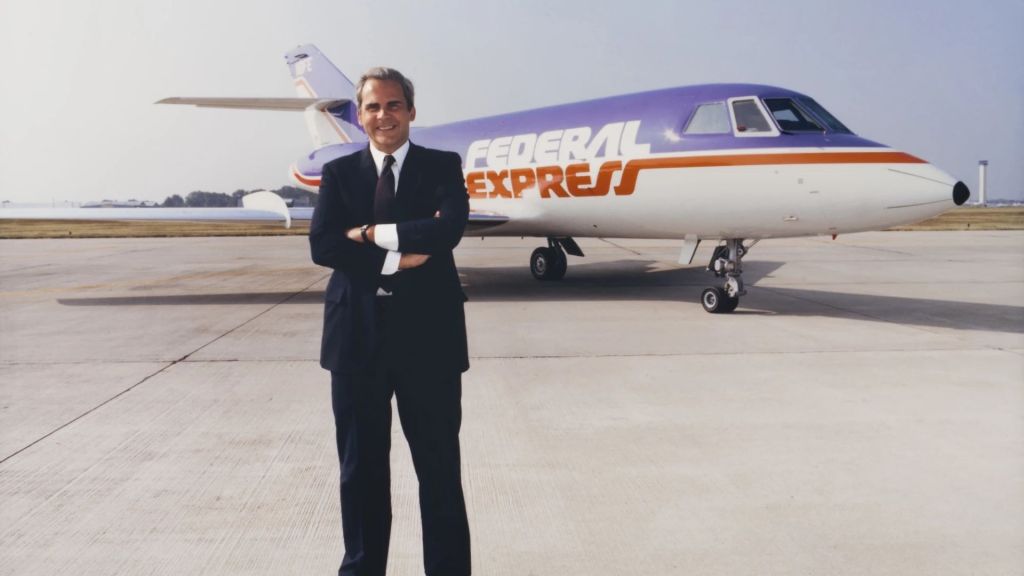
The FedEx founder, Fred Smith, stands in front of an original Federal Express jet from the 1970s.

The rise of FedEx Corp. from a startup express carrier with a few aircraft to the largest air cargo airline in the world and facilitator of global commerce is one of the remarkable stories in American business history. Fred Smith, who founded and led the company as CEO for nearly 50 years, died Saturday at the age of 80.

Former employees said he was a hands-on executive with an uncanny eye for making aircraft deals. 

“He wasn’t afraid to roll up his sleeves and get down in the details of things. Sometimes he would just leap over the chain of command to talk to the people he wanted to talk to. And he was famous for coming down, when the company was small, and watching the sort operation and talking to people,”  said Steve Fortune, who heads his own aircraft investment consulting firm and worked in the 1980s as a FedEx analyst. “He had an incredible memory, an incredible memory for names, for people and things.”

FedEx currently has 710 aircraft, including nearly 400 planes it operates on trunk routes and 310 turboprop regional aircraft operated by contractors that feed FedEx hubs with shipments from smaller cities. The mainline fleet consists of Boeing 757s (large narrowbody freighter), Airbus A300-600 (small widebody jet), Boeing 767 (medium widebody), and large MD-11s and Boeing 777s. FedEx carries more cargo traffic than any other carrier, according to the International Air Transport Association.

On its first night of service in 1973, FedEx Express delivered 186 packages from Memphis, Tennessee, to 25 cities with 14 Dassault Falcon business jets. Ron Anderson, who was vice president of aircraft acquisitions and sales at FedEx from 1974 to 1991 and is part-owner of Alpha Aviation Partners, provided a history of Smith’s fleet strategy on the Time on Wing podcast in 2023

“Fred Smith knows more about the aircraft market than anyone in the world today,” Anderson said at the time. 

Smith made one of last public appearances last month at the International Society of Transport Aircraft Trading freighter forum in Miami. 

In the early days, the FedEx offices at Memphis airport resembled quonset huts, the company was losing $1 million a month, and there were only 400 employees. 

Today, the company employs more than 500,000 people around the world, connects more  than 220 countries and territories, and moves nearly $2 trillion in goods annually and more than 17 million shipments per day.

Smith acquired the Dassault Falcon aircraft from Pan Am Airlines, which was the U.S. distributor of the French-made aircraft and ordered many for its new executive jet business. By the early 1970s, Pan Am changed its mind and began selling off the twin-engine planes. Smith initially bought 23 Falcons parked in the desert, but had to first convince American businessman and TransWorldAirlines (TWA) director Lester Crown to guarantee a loan to buy the planes and have them modified with a large cargo door, according to Anderson’s telling. 

“The next year the value of the planes doubled with demand for corporate airplanes and no inventory, so the equity in those 23 planes helped start FedEx. We were opening three stations per week, which required someone to go negotiate an operating agreement with an airport and find a facility. So two of us flew around on a Piper Aero going to different airports,” he said.

Smith began looking for a plane to replace the Falcon and ordered 25 CL600s from Canadair in 1976. But when Congress deregulated the aviation industry and allowed planes with more than 7,5000 pounds of capacity, Smith lost interest in the CL600s and moved to get the Boeing 727. FedEx agreed to buy five of CL600s, but eventually sold four of them and made the fifth a corporate jet for the company’s executive team. 

FedEx bought six Boeing 727-100s from United Airlines and two from LAN Chile in South America, followed by deals with United for seven additional aircraft and with Eastern Airlines for 14 aircraft, Anderson told the “Time on Wing” hosts.

“The economics were huge for us. The bigger an aircraft the lower the cost per pound. The yields with the Falcons carrying 6,000 pounds were fine, we made money. But the amount of money we could make with the larger airplane was exponential to us,” he said.

Fred Smith was one of the most influential business leaders in Washington, helping to push through aviation and trucking industry reforms and advocating for free trade. (Photo: FedEx)

FedEx soon began to get competition. In the mid-1970s, Emery Air Freight, an airfreight forwarder, began leasing its own cargo planes for domestic freight transport. In 1984, UPS launched its own airline to augment its ground parcel delivery service.  

Smith and his executives wanted a bigger plane to support shipping demand on key routes and opted for the DC-10 over the Boeing 747-200.

“Fred’s concern was if you could fill the 747 the economics worked, but if you didn’t fill it the economics would kill you compared to the DC-10,” said Anderson.

Continental Airlines bought eight DC-10-10s with freight doors so it could be eligible to participate in the military’s Civil Reserve Air Fleet, but never used the planes as freighters. FedEx moved in and negotiated to buy four of the planes and put them on domestic routes, the former FedEx executive said.

Fed Ex then bought 11 DC-10-30s. 

“The problem was the plane had an elevator to move the galleys up and down. In order to turn them into a full freighter you had to remove those galleys. I negotiated a deal with Transamerica while [Smith] was golfing at Pebble Beach. They got a supplemental type certificate [from the FAA] to remove the elevator and within three months we had those planes in the fleet” FedEx ended up buying eight more DC-10-30s from World Airways. 

“There’s no aircraft we didn’t look at as a potential freighter,” Anderson said. 

When FedEx bought Flying Tiger Line in 1988 it had about a dozen DC-8s. Flying Tigers had a tight relationship with UPS, which also operated the DC-8, so FedEx sold six of the aircraft to UPS and the rest to other operators.

By 1980, FedEx had sold 30 of the 32 remaining Dassault Falcons in the fleet. With little initial interest, FedEx painted one plane camouflage, hung fake missiles on it to resemble a Dassault fighter jet, reinstalled the passenger interior and took it to the Paris Air Show. It sold 10 aircraft at the show, including to the Portuguese and Venezuelan air forces. Later, Flight Refueling in Bournemouth, England, took 10 Falcons and converted them into target-towing vehicles for use in training fighter pilots. 

Many of the Falcons are still flying, according to Anderson. One, named after Smith’s daughter Wendy, went to the Smithsonian Museum. Another plane, named after second daughter Lauren, was supposed to be donated to the FedEx museum in Memphis.

“But we had sold it, but I couldn’t tell Fred Smith that. So we re-registered one of the unsold planes as that one,” Anderson recalled. 

In 1982, Anderson helped Smith set up Federal Express Aviation Services. They hired a group of software engineers to create a database for compiling data on aircraft trading activity. The unit published monthly data about the global airfleet and listings of available aircraft, which gave FedEx a leg up on deals. It also sold the data to other parties. 

Smith wanted to know more about the aircraft they were purchasing, so Anderson hired Fortune and an assistant to create a database on aircraft trading activity. The unit was called Federal Express Aviation Services. Fortune managed the data project, which included time-consuming retrieval of aircraft bill of sales from microfiche files at the Federal Aviation Administration and purchasing transaction data from a small Swedish company with spotters around the world. The team gradually built a list of all commercial aircraft in the world and their transaction history.  

The data gave FedEx a leg up on deals, according to Anderson and Fortune. FedEx published some of the data in book form for external sales. FedEx eventually determined the unit wasn’t core to its business and sold it. The database was subsequently bought by Aviation Week, Fortune said. 

Anderson left FedEx to start an aircraft brokerage business called Intrepid Aviation. Smith invested in the company with the idea that the company would buy passenger planes that would make good candidates for freighter conversion at a later time. Anderson said he eventually bought out Smith to avoid potential conflicts of interest.

In 1989, FedEx purchased cargo airline Flying Tigers.

The fax idea that failed

As with any successful entrepreneur, Smith experienced failures along with the great success. In 1984, FedEx launched Zapmail, which used fax machines to expedite the delivery of documents at a time when telex machines were in fashion and fax machines weren’t ubiquitous yet. FedEx heavily invested in fax machines from NEC Corp. in Japan with the idea that people would deliver a document to a FedEx office for transmission to a FedEx office in another city where the recipient would pick it up. For high-volume users FedEx also installed Zapmailer fax machines on the premises.    

The FedEx strategy was driven by an expectation that customers would pay a premium to have their documents delivered in hours instead of overnight, according to news accounts. FedEx officials also believed that by migrating document traffic from trucks and aircraft, they could significantly reduce transportation costs and then officer discounted services to increase volumes and margins.  

“Needless to say, it was not a big success,” Fortune said, as companies and individuals bought fax machines of their own as the cost came down. 

Click here for more FreightWaves/American Shipper stories by Eric Kulisch.

RELATED READING:

FedEx names new chairman to replace founder Fred Smith

Fred Smith, FedEx founder and parcel industry pioneer, dies at 80