




Effectuating change to improve shareholder returns is the key tenet of investor activism. Ancora Alternatives has recently carved out a niche in the transportation industry, executing a string of board shakeups, C-suite overhauls and reworks of failed capital allocation strategies.
The firm has undertaken several high-profile engagements in the space in recent years. The list of companies includes third-party logistics provider C.H. Robinson (NASDAQ: CHRW), expedited trucker Forward Air (NASDAQ: FWRD) and both Eastern Class I railroads — CSX (NASDAQ: CSX) and Norfolk Southern (NYSE: NSC). Its most recent cooperation agreement was inked last month with temperature-controlled warehouse operator Americold (NASDAQ: COLD).
“It’s about finding businesses that in our view are good businesses that have very good bones, that probably at some point in time were great companies and great stocks, but they’ve fallen on harder times for whatever reasons,” Conor Sweeney, director and portfolio manager at Ancora Alternatives, told FreightWaves in an interview.
Ancora Alternatives is the shareholder activism arm of diversified wealth manager Ancora Holdings Group, which has roughly $11 billion in assets under management. The firm’s activist roots stretch back to 2014, when Jim Chadwick joined as president.
The group looks for opportunities across “old economy” sectors like the industrials complex. A clear view on valuation, an understanding of the cycle, the potential for margin and cash flow sustainability, and a pathway to improvement are some of the factors considered before it engages with a company. Those requirements align well with manufacturing, packaging, chemicals and transportation companies.
Forward Air (2021 & 2025): Ancora twice led efforts to reshape Forward Air’s board.
It was able to alter five board seats and push the chief financial officer to leave in 2021 as part of an effort to steer the company’s focus back toward its core airport-to-airport, less-than-truckload network. Ancora claimed Forward’s sagging valuation at the time was directly tied to its investments in other modes and services, which Ancora said had a dilutive effect.
The firm was again successful in 2025, ousting three “unfit legacy directors,” including the chairman, following the fallout from the controversial acquisition of Omni Logistics. The acquisition — which circumvented a shareholder vote — diluted equity holders, spooked customers and left Forward with a heavy debt burden. Forward Air is continuing to explore strategic alternatives, including a potential sale of the company, due to Ancora’s efforts.
Sweeney said the firm has developed an “information advantage” in transportation. It has built an extensive network of industry experts, potential board directors and management candidates that it can lean on when undertaking a campaign.
“That’s a big differentiating factor for us where we have a lot of confidence that we can bring the right people to certain situations that are going to drive the outcomes that we desire and what we believe all shareholders desire,” Sweeney said.
These individuals frequently consist of former executives and directors of the target company, as well as previous leaders from its competitors. People with “very real experience with the company and with the industry.” Andy Clarke, former chief financial officer at both Forward Air and C.H. Robinson, has been instrumental in some of Ancora’s engagements.
“It’s just always finding the right person, who is helping us with the thesis on a company, because it increases the quality of our analysis significantly,” Sweeney said. “[It] increases the probability of success as we engage with the company, and ultimately, if you ever have to go to a proxy fight, engaging with the rest of the stakeholders.”
C.H. Robinson (2022): Ancora reached a cooperation agreement with C.H. Robinson in 2022. The deal included two board seats, the formation of a capital allocation and planning committee, and eventually the departure of its CEO Bob Biesterfeld. Under new leadership, the company has implemented cost controls, a new incentive structure and other margin-improving initiatives.
Ancora seeks out high-quality businesses that are in a rut. It is prepared to engage when issues — such as mismanagement, insufficient cost controls, inefficient capital deployment, or a need to divest noncore or underperforming assets — are deemed solvable.
“There are a lot of different ways for value to be unlocked, and each one of these situations has their own specific recipe for what we think has been the problem and what we think is the ultimate successful outcome,” Sweeney said. “And we need to go and get the right people who have the skill sets in order to make that happen.”
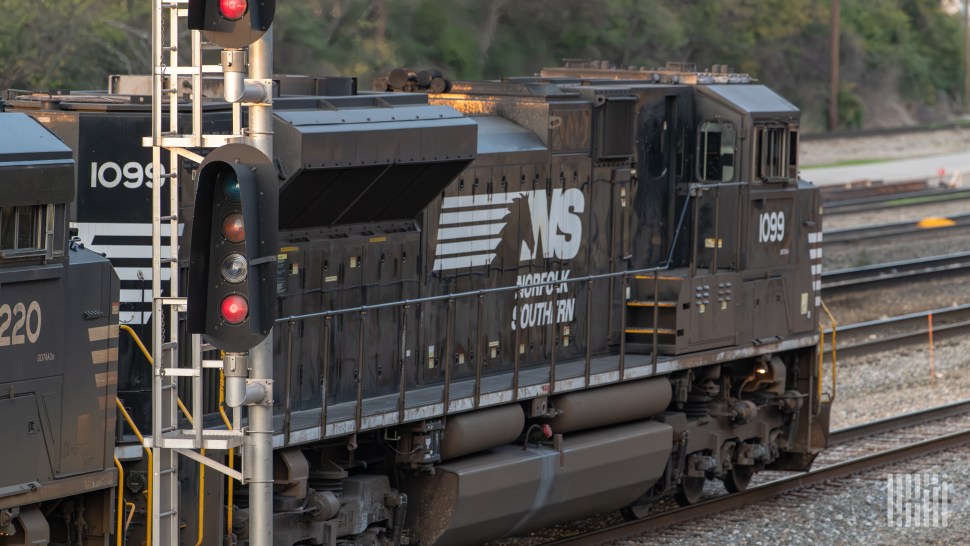
Norfolk Southern (2024): Citing share price underperformance from poor service metrics, deteriorating profitability and the 2023 East Palestine, Ohio train derailment, Ancora led a campaign securing it three seats at Norfolk Southern’s 2024 annual meeting, effectively removing the board chair and two board committee heads. Ancora’s engagement also led to the removal of CEO Alan Shaw after an internal investigation revealed an inappropriate relationship with the company’s chief legal officer, Nabanita Nag.
Later that year, Ancora reached a deal with Norfolk Southern, giving it a fourth director on the board.
Norfolk Southern’s board, including the Ancora-picked directors, unanimously supported the $85 billion merger with Union Pacific (NYSE: UNP) announced last year.
CSX (2025): Ancora led an effort last year pressuring CSX into removing CEO Joe Hinrichs, characterizing his time in the role as a “value-destructive tenure.” It also called on the company to explore transcontinental service through M&A.
BNSF parent Berkshire Hathaway (NYSE: BRK-B) has said it’s not interested in merging with another rail, but the shakeup has pushed the railroads closer together. The two announced new intermodal service partnerships last year.
Sweeney said the transports are materially under-owned. Most institutional investors don’t want to live with the extreme cyclicality, especially in the highly-fragmented truckload market, that’s inherent in the space. That leaves a void of active ownership and creates “an opportunity where there are less eyes on these names.”
He said Ancora usually acquires an equity stake from as little as 0.5% up to 10%. He prefers to remain under the 5% threshold to avoid filing requirements with the Securities and Exchange Commission. The lack of disclosure allows for maximum flexibility and keeps the firm’s activity from impacting the way the stock trades.
“I don’t need to be a 7% or 8% shareholder of a company to effectuate change, particularly as we’ve been able to have success driving really positive outcomes.”
Sweeney avoids companies where passive index funds hold significant ownership of the equity, as those funds tend to be “very, very pro-company, pro-management.” He pointed to Ancora’s proposed seven-member change-of-control slate at Norfolk Southern as an example. Even though the proxy advisory firms recommended the majority of Ancora’s slate, only one of its candidates received a single vote from the three largest passive holders.
Americold (2025): A December cooperation agreement with Americold gave Ancora two board seats and forced the company to establish a finance committee. The committee will review the company’s portfolio and make recommendations for potential sales or divestitures.
Looking out across the transportation and logistics sector, Sweeney still sees “opportunities that seem really interesting.”
“It’s always about … the timing, the right situation, because our goal at the end of the day, it’s not activism, right? It’s to drive returns for our investors. Activism is the tool we use in order to do that.”
Brokerage Compliance Symposium
The day before F3. Every compliance issue you face - fraud exposure, carrier liability, FMCSA rules, cargo theft, insurance gaps - navigated by attorneys and operators defining best practices in a changing industry.
F3 Awards Dinner
The night before F3. FreightTech100 companies honored. FreightTech 25 and Shipper of Choice winners revealed live. Cocktail reception into dinner and live music - 300 industry leaders in one purpose-built room.
F3: Future of Freight Festival
Industry-defining keynotes, rapid-fire technology demos, and industry leaders networking in experiences across Chattanooga - plus the inaugural F3 Awards Dinner featuring the FreightTech and Shipper of Choice reveals.
The day before F3. Every compliance issue you face - fraud exposure, carrier liability, FMCSA rules, cargo theft, insurance gaps - navigated by attorneys and operators defining best practices in a changing industry.
The Signal at Chattanooga Choo Choo • Chattanooga, TN Register NowThe night before F3. FreightTech100 companies honored. FreightTech 25 and Shipper of Choice winners revealed live. Cocktail reception into dinner and live music - 300 industry leaders in one purpose-built room.
The Signal at Chattanooga Choo Choo • Chattanooga, TN Register NowIndustry-defining keynotes, rapid-fire technology demos, and industry leaders networking in experiences across Chattanooga - plus the inaugural F3 Awards Dinner featuring the FreightTech and Shipper of Choice reveals.
The Signal at Chattanooga Choo Choo • Chattanooga, TN Register Now