Commodities outrun intermodal in latest rail freight data
Commodity rail freight is powering ahead of year-ago levels while intermodal traffic limps along in the latest industry data.
Railroads continue to play a significant role in North America’s economic infrastructure. According to the U.S. Department of Transportation Federal Railroad Administration, the U.S. rail freight network covers almost 140,000 route miles and is generally considered the largest, safest, and most cost-efficient freight system in the world. In addition, says the FRA, the almost $80 billion rail freight industry creates more than 167,000 jobs across the country.
In essence, rail freight companies charge businesses to carry cargo across their network of rails. Their rates are overseen by the Surface Transportation Board, a federal agency that regulates financial aspects of surface transportation. Major railroads in North America include Union Pacific Railroad, BNSF Railway, CSX, Norfolk Southern, Canadian Pacific Kansas City and Canadian National Railway.
Keep up with the latest news, trends and reports concerning rail freight transport here!
Commodity rail freight is powering ahead of year-ago levels while intermodal traffic limps along in the latest industry data.
Shippers want federal regulators to disclose confidential terms under which Union Pacific could walk away from its proposed merger with Norfolk Southern.
Norfolk Southern’s Mark George says the acquisition of the railroad by Union Pacific will speed up the movement of freight and spur unprecedented growth across the U.S. rail network.
A rival CEO warned the proposed merger of Union Pacific and Norfolk Southern, if approved, would give the transcontinental behemoth a commanding 50% share of all U.S. rail freight.
A dormant short line rail route in southern South Carolina will see its first train traffic in more than a dozen years.
Norfolk Southern has been formally granted control of a Virginia port railroad by federal regulators.
Commodity rail freight continued to improve from a year ago despite weaker intermodal that dragged down overall traffic.
Analysis by the Association of American Railroads revealed that March marked a significant turning point for U.S. freight rail volumes.
A Maryland bill requiring two-person train crews could soon be on the desk of Gov. Wes Moore.
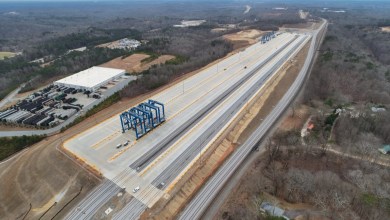
A key on-dock rail hub at the busiest U.S. port has effectively doubled the terminal’s capacity.
Truck transportation jobs reported by BLS are now less than they were at the end of 2017.
Norfolk Southern customer Mercedes-Benz is investing $4 billion in its Tuscaloosa County, Alabama plant by 2030.
Norfolk Southern and Jaguar Transport Holdings are partnering on a multi-pronged deal to grow rail-served and transload customers in metro Atlanta.
Freight on U.S. railroads was flat in the latest week data, as intermodal barely edged ahead of commodities shipments.
The U.S. freight car industry joined America’s 250th anniversary celebration, rolling out boxcars specially decorated to mark the semiquincentennial.
A Union Pacific executive disputed claims by Canadian National that it intentionally understated traffic it would take from rival railroads in its merger application with Norfolk Southern.
Autonomous railcar builder Intramotev announced that it has signed a commercial agreement with another major shortline railroad operator.
Freight on U.S. railroads stayed narrowly ahead of year-ago levels as chemicals and grain led carload improvement in the latest week.
In Maine, a rail services company is making plans to restart freight services on dormant lines.
Union Pacific CEO Jim Vena said his railroad will have capacity to manage growth from the proposed merger with Norfolk Southern, since UP has slashed the number of trains it operates on its system by 24% since 2019.