New Georgia inland port poised to take 26,000 truckloads off the road
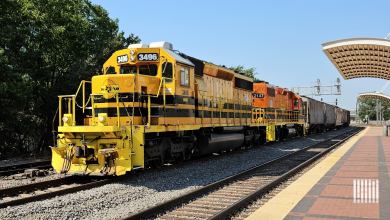
The Georgia Ports Authority has opened a new inland port it claims will convert 26,000 truckloads of freight to rail each year.
Railroads continue to play a significant role in North America’s economic infrastructure. According to the U.S. Department of Transportation Federal Railroad Administration, the U.S. rail freight network covers almost 140,000 route miles and is generally considered the largest, safest, and most cost-efficient freight system in the world. In addition, says the FRA, the almost $80 billion rail freight industry creates more than 167,000 jobs across the country.
In essence, rail freight companies charge businesses to carry cargo across their network of rails. Their rates are overseen by the Surface Transportation Board, a federal agency that regulates financial aspects of surface transportation. Major railroads in North America include Union Pacific Railroad, BNSF Railway, CSX, Norfolk Southern, Canadian Pacific Kansas City and Canadian National Railway.
Keep up with the latest news, trends and reports concerning rail freight transport here!
The Georgia Ports Authority has opened a new inland port it claims will convert 26,000 truckloads of freight to rail each year.
Amazon has opened its logistics network to outside businesses, a move analysts believe could increase intermodal volume while disrupting major industry players.
Developers break ground on a new Baltimore container terminal they hope will spur a sea change in mid-Atlantic intermodal transportation.
Union Pacific could walk away from its proposed merger with Norfolk Southern if federal regulators impose onerous conditions for approval.
BNSF Railway saw first-quarter profits strengthen on higher freight volume and more efficient operations.
The North American rail industry is at a crossroads due to reshoring and tech growth. This symposium provides a forum to align strategy, policy, and execution for the future.
Union Pacific and Norfolk Southern say their updated merger filing to create the first transcontinental railroad makes an even stronger case for increased growth, lower shipper costs, and a more robust U.S. supply chain.
As Union Pacific and Norfolk Southern prepare to file an updated merger application with regulators, rival railroads have launched a coalition aimed at stopping the proposed transcontinental tie-up.
Canadian National said profits declined even as total freight moving across its network improved.
The American Short Line and Regional Railroad Association has appointed Justin Broyles of R.J. Corman as the new chairman of its board of directors.
Wabtec reported a rise in first-quarter earnings, fueled by robust sales growth in both its freight and transit divisions compared to the previous year.
Alameda Belt Line, co-owned by Union Pacific and BNSF, will negotiate for the contract to provide switching services to the Port of Los Angeles-Long Beach.
Freight infrastructure group’s board adds new member, re-elects four to board.
Union Pacific delivered record operating income and revenue despite weaker international intermodal and automotive shipments that hurt overall freight volumes.
Norfolk Southern said first-quarter earnings were slightly lower as winter weather woes and higher fuel prices hurt freight volumes.
Union Pacific reported first quarter income improved from a year ago as improved pricing and higher fuel surcharge revenue offset a narrow decline in carload freight.
First-quarter earnings surged at CSX on higher revenue and lower operating costs.
Intermodal freight rebounded in the latest weekly rail data to narrow the gap with year-ago volumes.
CSX has significantly reduced operations at its major Chicago-area terminal, and shifted most switching work to other carriers.
More than $2 billion in federal grants that have become a vital component of short line and regional railroad operations are now available.