Trump nominates trucking official to head FMCSA
Derek Barrs, a member of the American Trucking Associations’ Law Enforcement Advisory Board, has been nominated to lead the Federal Motor Carrier Safety Administration.
The Arkansas House of Representatives and Senate are debating two bills to enact harsher punishments against truck drivers who are in the U.S. illegally and obtain or use CDLs.
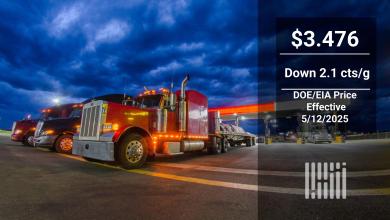
The benchmark diesel price used for most fuel surcharges rose for the first time in three weeks.
B99 biodiesel is now or will soon be available at select Pilot travel centers.
Fleet maintenance has evolved beyond the old-school break-fix mentality. While preventive maintenance is a step up from waiting for breakdowns, predictive maintenance, powered by telematics and AI diagnostics, is the new gold standard. By using real-time data to forecast failures before they happen, fleets can drastically cut repair costs, improve safety, and reduce costly downtime.
Technology-driven platforms like Motive and Fleetio enable fleets to automate diagnostics, optimize maintenance schedules, and track performance metrics in real time. In an industry where compliance, efficiency, and cost control are everything, predictive maintenance is a necessity.
Fuel is one of the largest expenses for trucking fleets, making conservation strategies essential for long-term profitability. By leveraging technology such as fleet fuel cards, AI-powered route optimization, and real-time driver monitoring, fleets can reduce waste, improve efficiency, and prevent fuel fraud. Implementing preventative maintenance, minimizing idling, and optimizing routes are key to ensuring every gallon is used effectively. With fluctuating diesel prices and tightening margins, adopting a data-driven fuel management approach is necessary for survival in today’s trucking industry.
The FMCSA is eliminating MC numbers by October 1, 2025, requiring all motor carriers, brokers, and freight forwarders to operate under a single USDOT number. This change aims to streamline registration, reduce fraud, and improve compliance tracking. While the transition simplifies carrier identification, it raises new challenges for brokers, shippers, and industry professionals accustomed to MC-based vetting. With potential impacts on contracts, insurance, and fraud prevention, fleets must prepare now to ensure a smooth transition. Here’s what the trucking industry needs to know before the deadline arrives.
The Biden administration’s expansion of the H-2B visa program nearly doubled the number of available permits for foreign truck drivers in 2025, aiming to ease labor shortages in the industry. However, with Donald Trump returning to the White House, the future of this visa expansion is unclear. Trump’s past immigration policies prioritized American workers and restricted foreign labor programs, signaling potential rollbacks. Trucking companies that rely on these visas must prepare for possible changes, including tighter restrictions or a complete reversal of the expansion. Here’s what fleets need to know as immigration policy shifts under the new administration.
CVSA enforcement blitzes like International Roadcheck, Operation Safe Driver Week, and Brake Safety Week can make or break a fleet’s compliance record. Failing an inspection means out-of-service violations, increased ISS scores, and higher insurance costs. The key to staying ahead? Proactive fleet technology. AI-powered dashcams, electronic DVIRs, predictive maintenance systems, and compliance automation help fleets avoid costly violations. With FMCSA safety ratings on the line, adopting these tools ensures that fleets remain inspection-ready year-round because trucking compliance isn’t seasonal.
The diesel price used for most fuel surcharges declined for the third week in a row.
Steel, lumber, auto parts – key commodities from Canada are caught in the crossfire. As tariffs hit, expect higher costs, fewer loads and unpredictable freight rates.
Environmental Protection Agency Administrator Lee Zeldin said the agency will reconsider the Model Year 2027 and Later Light-Duty and Medium-Duty Vehicles regulation and Greenhouse Gas Emissions Standards for Heavy-Duty Vehicles.
The benchmark diesel price used for most fuel surcharges is near its lowest level for 2025.
Is Your Truck Blending In or Standing Out? Plus, A Hard Look at the Market and Roadcheck Countdown I was working with a client recently, helping them close a deal with a shipper. The shipper hit them with a simple question: “Do you offer driver assist?” Without hesitation, my client — who runs six reefers […]
MATS is less than a month away, visit The Playbook at booth 38248.
The freight market has been all over the place for small carriers, and right now, there’s a feeling that something’s about to give. The big question is whether this shift is going to work in your favor or just keep the squeeze on spot market rates a little longer. Truckload demand (the need for your […]
Market Update: Spot Rates Still Dropping — Where Can You Find the Money? If you’ve been feeling like rates just aren’t moving in the right direction, you’re not alone. This map breaks down spot rate changes over the past four days, and the message is clear: Most outbound lanes across the country are still seeing […]
Updates to the CVSA Out-of-Service criteria have been released, set to take effect April 1.
The Beneficial Ownership Information (BOI) reporting requirement has become another regulatory headache for trucking fleets, adding complexity to an already compliance-heavy industry. While designed to combat financial crimes, the Corporate Transparency Act’s BOI mandate has been met with legal challenges, leaving businesses uncertain about their obligations. Despite ongoing court battles, FinCEN continues to push forward with enforcement, meaning most trucking companies structured as LLCs, S-Corps, or partnerships must file ownership details or face significant penalties. With deadlines approaching and regulatory uncertainty persisting, trucking fleets must stay informed, prepare their filings, and avoid compliance missteps.
Nikola’s bankruptcy is a reality check for the push toward zero-emission freight. Once hailed as the Tesla of trucking, Nikola’s failure highlights the immense challenges of replacing diesel with electric and hydrogen-powered alternatives. While policymakers and environmental advocates push for green energy solutions, the trucking industry remains bound by the need for reliability, infrastructure, and economic viability. With limited charging and hydrogen refueling networks, high costs, and performance struggles, Nikola’s downfall reinforces a hard truth, diesel isn’t going anywhere anytime soon.