ArcBest, LTL industry short on volume

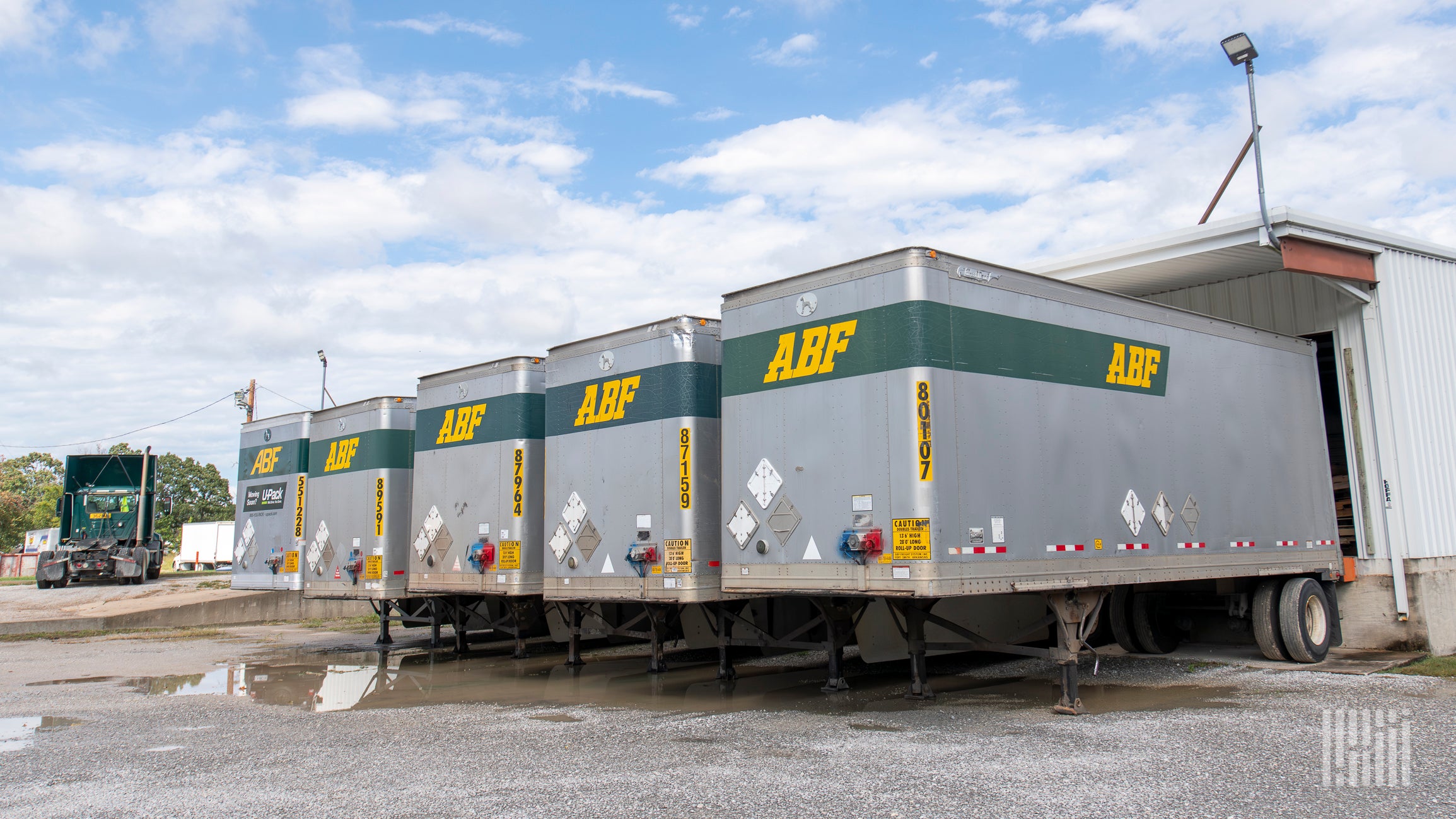
ABF pup trailers at a small LTL temrinal

Financial results across the less-than-truckload industry remain constrained as the industrial economy enters the third year of a downturn. ArcBest has been working to improve profitability by revamping its freight mix and focusing on efficiency and cost-cutting initiatives, but at some point, it needs more volume to bear fruit.

The Fort Smith, Arkansas-based transportation and logistics provider reported fourth-quarter adjusted earnings per share of $1.33 on Friday, 28 cents better than the consensus estimate but $1.14 lower year over year.

The adjusted result excluded 9 cents net in one-offs like acquisition-related expenses, costs from technology pilot programs, equipment write-downs, and a lower-than-expected earnout at truck broker MoLo, which was acquired in 2021.

Industrial sluggishness weighs on shipments, tonnage

ArcBest’s (NASDAQ: ARCB) asset-based unit, which includes results from less-than-truckload subsidiary ABF Freight, reported revenue of $656 million, a 7.6% y/y decline. Tonnage per day was down 7.3%, slightly offset by a 0.6% increase in revenue per hundredweight, or yield.

Weight per shipment was down 6.3%, which drove the increase in the yield metric. Netting out the change in weight resulted in a roughly 6% decline in yield. However, without the impact of lower fuel surcharges, yield was up by a mid-single-digit percentage.

Contractual price increases averaged 4.5% in the quarter, slightly lower than in recent periods. The average increase for full-year 2024 was 4.9%, a top-five result over the past 20 years. Management said the market continues to price rationally and that it expects yield (inclusive of fuel) to remain positive y/y going forward.

SONAR: Longhaul LTL Monthly Rate per Ton Mile, Class 50-65 Index. Less-than-truckload monthly indices are based on the median rate per ton mile for four National Motor Freight Classification groupings and five different mileage bands. To learn more about SONAR, click here.
SONAR: Shorthaul LTL Monthly Rate per Ton Mile, Class 50-65 Index. To learn more about SONAR, click here.

Higher interest rates and a soft industrial backdrop have negatively impacted demand for heavier shipments. Fewer movements of large household goods and some market share loss to the truckload industry (mostly shipment sizes from 7,500 to 20,000 pounds) have been headwinds to LTL carrier revenue and margins. The fourth quarter of 2024 also had a tough comparison to the prior-year period, which benefited from a temporary revenue bump due to a cyberattack at a competitor.

The declines tapered on a sequential comparison in the fourth quarter, but January 2025 tonnage per day was down 11% y/y on a negative-18% comp in January 2024 (down nearly 30% on a two-year-stacked comp). Yield was up 8% y/y in January but flat when accounting for an 8% decline in weight per shipment. The result was a 4% y/y decline in revenue during the month.

ArcBest said winter storms in January resulted in its highest rate of terminal closures since 2014.

The tonnage comps are easier in the first half of the year, but the carrier needs help from the industrial complex.

Table: ArcBest’s key performance indicators

The asset-based segment recorded a 92% adjusted operating ratio (operating expenses expressed as a percentage of revenue), which was 430 basis points worse y/y but 100 bps better than management’s sequential guidance.

Salaries, wages and benefits expenses increased 230 bps y/y as a percentage of revenue. The bulk of the increase was tied to a 2.7% annual wages and benefits increase (implemented July 1) for union employees. Insurance expenses were up 150 bps y/y.

A full-year adjusted OR of 91.2% (80 bps worse y/y) triggered a 1% annual bonus for union workers. Union pension costs account for approximately 600 bps of the unit’s OR composition.

The company has realized $12 million in annual cost savings from training and compliance initiatives and will be using AI and machine learning tools to further improve employee productivity across the network. It’s also further implementing demand forecasting and route optimization initiatives.

The unit normally sees a 4% sequential decline in revenue from the fourth to the seasonally weakest first quarter every year, implying a 6% y/y decline. Management is hopeful to outperform that change rate even with the weather overhang. The segment is expected to see 350 to 400 bps of sequential OR deterioration, which is the norm. That implies a roughly 95.8% OR, 380 bps worse y/y.

The asset-light unit, which includes truck brokerage, reported a $5.9 million operating loss in the quarter. This was the sixth straight operating loss for the unit.

Revenue of $375 million was 9% lower y/y as loads dipped 2% and revenue per load fell 7%. The decline was partly blamed on weather and an effort to scrub less profitable loads from the brokerage network. A mix shift favoring managed transportation has been a drag on revenue per load because of the smaller shipment sizes.

Asset-light revenue per day was down 6% y/y in January as shipments and revenue per shipment were both off 3%. The unit is expected to record an operating loss of $4 million to $6 million in the first quarter.

ArcBest forecast 2025 net capex of $225 million to $275 million with $130 million to $140 million slated for equipment and $60 million to $80 million for real estate projects.

Shares of ARCB were down 0.4% at 1:34 p.m. EST on Friday compared to the S&P 500, which was up 0.1%.
More FreightWaves articles by Todd Maiden:

Freight Essentials urges industry to speak up in WWEX legal fight

Freight Essentials is pushing back against WWEX Group’s effort to maintain redactions in the third amended petition to Freight Essentials’ lawsuit against WWEX.

WWEX and its affiliates, Worldwide Express, GlobalTranz and Unishippers, filed a motion on Dec. 17 to maintain the redactions and seal the unredacted version.

The defendants argue that certain details in the lawsuit contain sensitive business information that, if disclosed, could harm their competitive position, but Freight Essentials, a logistics firm, says the industry might think otherwise.

“GlobalTranz, Worldwide Express and WWEX exploited consumers and partners, pocketing millions in ill-gotten gains. In a blatant attempt to prevent public scrutiny, they want to keep key details of their dishonest business activities hidden – I’m going to fight this and encourage others to join in opposing this motion,” said Dylan Admire, founder and CEO of Freight Essentials, said in a news release Thursday.

This motion follows Freight Essentials’ federal lawsuit, filed in the Northern District of Texas, accusing WWEX Group and its affiliates of a hidden fee scheme involving fuel costs and cargo insurance.

The lawsuit alleges that GlobalTranz misrepresented transportation costs, depriving business development companies of their rightful commission payments while allegedly inflating WWEX’s bottom line with undisclosed fees.

Additionally, Freight Essentials claims it was retaliated against for uncovering the scheme when its contract was terminated without proper notice.

WWEX Group’s latest legal move focuses on Texas Rule of Civil Procedure 76a, which allows courts to seal court records if a party can prove that disclosure would cause serious harm and that no alternative method exists to protect the information.

The motion cites over 20 paragraphs and multiple footnotes in the third amended petition that purportedly contain trade secrets and commercially sensitive data, including business plans, consultant growth strategies, key partnerships, revenue and margin data, details of GlobalTranz’s parcel program, and alleged privileged attorney-client communications.

The defendants argue that keeping these details under seal does not harm the public interest, as the core allegations of Freight Essentials’ complaint remain available in the unredacted portions of the lawsuit.

If the court grants their request, the unredacted version of the petition will remain sealed. If denied, the public could gain further insight into WWEX’s internal business dealings and the specifics of the alleged hidden fee scheme.

In the Thursday release, Freight Essentials urged industry parties that opposed the redaction to file a Motion to Intervene with the 44th Judicial District Court of Dallas County or attend the court hearing in person to express their concerns on Feb. 7 at 11:00 a.m. CST.

“They claim that their interest in sealing these records outweighs the public’s right to access them. The defendants’ actions violated public trust and had a direct impact on consumers and partners. If the defendants have done nothing wrong, why do they want to sweep these court records under the rug? Sealing these records would set a dangerous precedent, allowing corporations to conceal fraudulent and anti-competitive conduct that affects countless people,” said Rogge Dunn, legal counsel for Freight Essentials, in a recent release of the motion.

FreightWaves has reached out to WWEX Group for comment.


Omnitracs, Platform Science IP lawsuit may have reached the end of the road

Project44, MyCarrier trade courtroom claims of contract violation, poor service

Logistics workers charged with importing $200M in fake goods via LA, Long Beach ports

Training and technology can mitigate fraud risk

Truck on road with fraud paint

Fraud, theft and scam tactics have been an incredibly worrying topic of discussion across the freight industry over the past year, and the issues are only growing as technology continues to become more sophisticated.

Although Truckstop has been tracking reports of fraud across its entire customer base for 30 years, Lisa Haubenstock, vice president of product, risk and compliance solutions, says incidents of fraud have risen to unprecedented levels in the past few years. 

“From the point of view of a load board, fraud is not necessarily all that different from other industries, but we do have some additional areas of vulnerability,” Haubenstock said.

That trend, she says, has been driven by a handful of factors, including vulnerabilities inherent to trucking.

“This industry is unique in that we have to fight the fraud battle on multiple fronts,” Haubenstock said. “Cyberattacks, straight theft, double brokering and other tactics, combined with technological advancements in an industry that wasn’t built to be tech-first, have created a compounding effect, making it ripe for bad actors to come and exploit every vulnerability.” 

Many brokerages and other freight companies are not prepared to handle this level of fraud, according to Haubenstock. “We see all the behavioral patterns and how it’s escalated recently, and that’s because many companies are operating with an outdated framework,” she said. “That’s helped create a lot of the environment that we’ve been working to protect the entire industry from.”

A load board service like Truckstop isn’t necessarily that different from any other kind of business, which means the same tactics that apply elsewhere will also apply in freight. However, many freight companies, said Haubenstock, have not caught up with today’s security needs.

“We’ve observed that a lot of companies simply haven’t done infosec training,” Haubenstock said. “The number one reason we see fraud occurring is because of compromised accounts and credentials. One person being susceptible to a phishing attempt or using the same credentials across multiple platforms can open up an avenue to the entire company.”

If one tool or account gets compromised, a bad actor can potentially find a way to access entire systems and impersonate an employee, leading to potentially devastating losses.

“The biggest priority is to do due diligence and get regular training for your entire employee base,” Haubenstock said. “Pair that with intentional risk policy. Know your risk threshold so you have standards for trade-offs between carrier sales and risk and compliance. There will always be trade-offs and risk, so make the right trade-offs for the right reasons.”

For brokerages in particular, relation-based business operations mean that all partners and clients also need to be on board. “At the end of the day, brokers and carrier sales reps can really leverage their relationships with carriers to make sure that partners across the industry go through that same level of education and training,” Haubenstock said. 

Carriers tend to be less tech-savvy and might require encouragement and help to understand how to protect their accounts.

“If you can get all carriers to go through the same level of training that you do, everyone will be a lot safer,” Haubenstock said. “Make it really clear how to detect whether an email or correspondence is legitimate.

“Before we even implement any technological solutions, this kind of foundational training is needed so we can at least all understand the basic vulnerabilities,” Haubenstock said.

According to Haubenstock, even simple, old scams are unfortunately effective. These may include a spoofed text or email asking for an address so a delivery can be completed. Many people still fall for these types of scams. Otherwise they wouldn’t continue to occur.

“Scams can be more complex, too, now, so we always have to update our training,” Haubenstock said. “For instance, we see fake QR codes, and some people will trust scanning QR codes more. That’s a new vector.”

Freight companies must carefully consider the profile of people in various parts of the industry, many of whom are not prepared for these types of attacks.

“The good news about simple scams is that relatively simple training goes a long way to combat fraud,” Haubenstock said.

Most fraud is only successful due to human behavior and mistakes made due to individual goals, needs and biases. “A salesperson is going to have naturally conflicting goals with a risk and compliance department, so a lack of across-the-board training and procedure can lead to exploitable gaps in security,” Haubenstock said. 

“If you have to book an emergency load on a Friday, you might be inclined to use a more risky carrier, and that might not be aligned with risk policies,” Haubenstock said. “That’s where technology can be layered on top of risk policies to help secure the operation. It can help automate, enforce workflow and streamline processes so that you’re booking more loads faster and with a higher degree of confidence.

“You can look at a larger view and examine the kinds of characteristics that you don’t want to work with, and then you can map out trends to recognize risk,” Haubenstock said. 

Operational workflow automations can escalate those decisions to another department for more review, so technological enhancement comes into play by streamlining issues that can be easy to overlook as an individual.

“Bad actors are technically more literate and faster than the population at large,” Haubenstock said. “You really have to fight fire with fire and think about the strategic technology partners you work with.”

Truckstop has access to billions of data points across its entire ecosystem. Given that many brokers don’t have the data and time to aggregate and process the trends, Truckstop has leveraged that data into a carrier-vetting product called Risk Factors to serve the industry and get visibility on these issues.

Risk Factors delivers the latest, most comprehensive insights on VoIP, VIN and IP address behavior and IP risk detection using Truckstop’s behavioral pattern recognition.

“Fraudulent behavior will continue to adapt quickly,” Haubenstock said. “It’s really important for us to have a comprehensive view so we can proactively prevent loss based on patterns.” 

Click here to learn more about Truckstop.

Trump: Tariffs start Saturday; scaling truck parking; AI agents answer the call | WHAT THE TRUCK?!?

On episode 798 of WHAT THE TRUCK?!? Dooner is joined by the special guest co-host Reed Loustalot from Truck Parking Club.

They’re covering headlines about Trump’s 25% tariffs on Mexico and Canada that start on Saturday; and the best fleets to drive for in ‘25.

We’ll also find out how Truck Parking Club has massively scaled available truck parking for drivers through great business acumen…and viral TikTok videos. Plus, we’ll talk about our big plans together for the Mid-America Truck Trucking Show.

David Bell built Lean Solutions Group, now he’s making AI agents who are answering the call at CloneOps. We’ll find out all about what’s good in the supply chain AI landscape.

Freight Essentials Dylan Admire shares the latest on his lawsuit against WWEX Group. 

Catch new shows live at noon EDT Mondays, Wednesdays and Fridays on FreightWaves LinkedIn, Facebook, X or YouTube, or on demand by looking up WHAT THE TRUCK?!? on your favorite podcast player and at 5 p.m. Eastern on SiriusXM’s Road Dog Trucking Channel 146.

Watch on YouTube

Check out the WTT merch store

Visit our sponsor

Subscribe to the WTT newsletter

Apple Podcasts

Spotify

More FreightWaves Podcasts

IANA: Intermodal saw turnaround in 2024

Intermodal freight volumes saw a significant turnaround in 2024, up 8.5%, according to a year-end report from the Intermodal Association of North America (IANA), rebounding from a 5.9% decline a year ago.

The growth signifies a revitalized economy and evolving international trade dynamics, the trade group said, and highlights the resilience and adaptability of the intermodal sector in the face of economic fluctuations and logistical challenges.

International container flows spur growth

A major driver was the 13.9% surge in international container movements, from a decline of 8.4% in 2023. This upswing is primarily attributed to a 13% increase in containerized imports into the United States, suggesting heightened demand for foreign goods and a potential shift in consumer preferences and supply chain strategies. 

Domestic container shipments increased 5.4%, further bolstering overall intermodal volume in a robust domestic market.

Trailer originations show signs of recovery

While trailer originations continued to decline, the 16.1% drop in 2024 was less severe than the 23.7% and 23.8% plunges in 2023 and 2022, respectively. This indicates a potential stabilization in this segment, driven by increased efficiency in trucking operations, a shift toward containerized freight and changing consumer demand. Total tractor-trailer loadings showed a modest 0.8% gain from a year ago, tempered by a 3.4% decrease in short-haul volume, suggesting a possible shift toward long-haul and intermodal transportation.

The report also highlighted regional disparities in intermodal freight activity. Nine out of 10 regions experienced increased originations in 2024, with the Southwest leading on a 19.1% rise, followed by Mexico at 18.9%. This suggests a geographical shift in trade patterns and economic activity, on changes in manufacturing and distribution networks, infrastructure investments, and regional economic development.

Joni Casey, outgoing president and CEO of IANA, expressed optimism about the future, saying in a release, “The intermodal freight industry demonstrated resilience and adaptability in 2024, overcoming various challenges such as supply chain disruptions, labor shortages, and rising fuel costs. We anticipate continued growth in 2025, driven by sustained economic recovery, evolving consumer demands, and ongoing advancements in technology and infrastructure.”

The report cited several factors contributing to robust intermodal growth in 2024:

  • Economic rebound: The overall economic recovery, fueled by increased consumer spending, business investment and government stimulus, played a pivotal role in boosting freight demand across various sectors.
  • E-commerce boom: The continued expansion of e-commerce, accelerated by the pandemic and changing consumer habits, showed the need for efficient, flexible and cost-effective transportation solutions provided by intermodal services.
  • Supply chain disruptions: Ongoing disruptions, including port congestion, container shortages and geopolitical tensions, prompted shippers to seek alternative transportation modes and diversify their supply chains, further driving intermodal adoption.
  • Environmental concerns: Corporate sustainability initiatives helped incentivize the shift toward intermodal freight, with lower carbon emissions and reduced environmental impact compared to trucking.
  • Technological advancements: Digital platforms for tracking and tracing shipments, automation in intermodal terminals, and data analytics for optimizing operations enhanced the efficiency, visibility and reliability of intermodal freight, making it a more attractive option for shippers.

Challenges and opportunities

Despite the positive outlook, intermodal faces ongoing challenges:

  • Driver shortage: IANA said a persistent shortage of truck drivers, particularly for drayage operations, poses a challenge for intermodal efficiency and could lead to increased costs and delays.
  • Infrastructure investment: The need for continued investment in infrastructure, including rail networks, intermodal terminals and port facilities, remains crucial to support future growth and accommodate increasing volumes.
  • Technological advancements: While technology presents opportunities, it also poses challenges, as the industry needs to keep pace with rapid developments and invest in digital transformation to remain competitive.

Find more articles by Stuart Chirls here.

Related coverage:

What shippers should know about ocean carrier alliance changes in 2025

Texas Gulf Coast ports see year-over-year gains in freight volumes

Asia-US ocean rates trend lower but Trump tariff threats shadow trade

Running on Ice: New cold storage facilities and a new take on sundaes

Blue Truck on a sheet of ice over a blue background and Running on Ice Logo

All thawed out

(Photo: Jim Allen/FreightWaves)

Vertical Cold Storage has made a play for expansion at the Port of Savannah with the purchase of a distribution center 9 miles from the port. The facility in Georgia is 350,000 square feet and has 40 dock doors and over 35,000 pallet positions. The 12-year-old facility can blast-freeze up to 40 loads a day and has an extended dock designed to support high volumes of imports and exports.

Flavio Batista, chief commercial officer of Georgia Ports, said in a news release: “Georgia Ports is delighted to welcome Vertical Cold Storage to the greater Savannah area and know they will be very successful. We will work to ensure that Vertical Cold Storage and its customers see all the benefits of doing business in Southeast Georgia, including a highly skilled workforce and an efficient intermodal network.”

The Port of Savannah imports 46% of the country’s poultry and 5% of grocery items. Not only that, it has seen significant growth over the past year. Should 2025 follow 2024’s style, more development might be needed at the Port of Savannah. 

Temperature checks 

(Photo: Jim Allen/FreightWaves) 

A new type of cold storage facility is opening at Port Saint John in New Brunswick, Canada. Americold Realty Trust is developing its first import-export cold storage facility in that country. It’s a new type because in addition to the import-export cold storage, the company is also working closely with the maritime expertise of DP World and the rail solutions of Canadian Pacific Kansas City. The facility will have about 22,000 pallet positions in Port Saint John.

George Chappelle, CEO of Americold, said in a news release, “Developing a state-of-the-art facility in Port Saint John marks an exciting step forward for Americold as the Company expands into a strategically compelling geography serving high-volume international routes, providing unparalleled opportunities for integration with our premier partners in DP World and CPKC.”

Recent developments and upgrades at the port made this a reality and helped cement its position as Atlantic Canada’s largest port by volume and one of the fastest-growing east coast ports in North America. 

Food and drug

(Photo: Ben & Jerry’s)

The ice cream section at the grocery store is about to get a little bigger. Ice cream champion Ben & Jerry’s has debuted the ice cream sundae. The new sundaes are mostly ice cream and topped with whipped topping and more chunks of treats.

The sundaes have been released in four flavors to start: Cookie Vermont-ster Sundae, Dulce-Delish Sundae, Choco-lotta Cheesecake Sundae and Turtle Sundae. The sundaes will start rolling out across the country over the next few weeks. The decision to bring this to the masses came after huge success in Europe.

Flavor Guru Natalia Butler said in a news release, “I like to think of each Sundae as a textural treasure hunt, starting with that thick and creamy ice cream that you already know and love, nestled below a layer of rich whipped topping and covered in the perfect balance of the most decadent swirls and chunks you have ever met. Our Flavor Gurus built the perfect Sundae so our fans can enjoy at home, and … it delivers.”

Cold chain lanes

SONAR Tickers: ROTVI.DAL, ROTRI.DAL 

This week’s market under a microscope is Dallas. Dallas is seeing a spike in reefer outbound tender volumes. Capacity is beginning to loosen as reefer outbound tender rejections fall and reefer outbound tender volumes rise faster than rejections. Compared to historic volumes, reefer outbound tender volumes are following the same trend: that is, a spike in volumes before the end of January. The volume itself is lower than that of last year but significantly elevated compared to 2023. 

Historical pricing data for Dallas might not be the most accurate, but looking at 2024 would be a good place to start and work downward to achieve an ideal spot rate. Shippers should take advantage of the loose capacity now and work quickly to secure pricing and wrap up bids as fast as possible before a market disruption throws everything out of balance. 

Is SONAR for you? Check it out with a demo!

Shelf life

Polar Leasing Expands Operations with Strategic Texas Distribution Facility

Freezer Challenge promotes energy efficiency in university labs

Cold Chain Market in Europe to grow by USD 76.8 Billion (2024-2028), driven by RFID adoption in logistics, report with market evolution powered by AI

IPO Surge: How Lineage Inc. Dominated the Market in 2024

Wanna chat in the cooler? Shoot me an email with comments, questions or story ideas at moconnell@freightwaves.com.

See you on the internet.

Mary

If this newsletter was forwarded to you, you must be pretty chill. Join the coolest community in freight and subscribe for more at freightwaves.com/subscribe.

How MVR monitoring makes corrective action training more effective

For carriers, being informed about driver behavior – especially violations and licensing changes – is the first step to creating a safer and more cost-effective fleet. 

Unfortunately, not all carriers are as informed as they could be, often following the bare minimum requirements of going a year between motor vehicle records (MVR) reviews. This leaves significant time for costly issues to go undetected.

The Federal Motor Carrier Safety Regulations require motor carriers to review all of their drivers’ MVRs on at least an annual basis. Carriers hoping to create a culture of safety and safeguard their businesses against potential litigation should go above and beyond this regulatory requirement.

By establishing an ongoing MVR monitoring program, carriers can protect themselves from risky actions like unknowingly dispatching a driver without a valid license.

“There are a few different pathways carriers can take to establish an MVR monitoring program” said Jill Schultz, senior transportation safety editor at J. J. Keller & Associates Inc. “They could simply schedule reviews themselves, sign up for a pull/push program if offered by their state driver licensing agency or work with a third-party provider that offers monitoring services.” 

Regardless of the path a carrier takes, the benefits of implementing an MVR monitoring program – and the risks of not doing so – are significant. 

For carriers that are not keeping a close eye on drivers’ records, the consequences of dispatching an unlicensed driver can be costly and widespread.

What could happen if a carrier uses a driver without a valid license?

  • Fines and penalties for both the motor carrier and driver.
  • Driver being placed out of service during an inspection or traffic stop.
  • Downgrade of the carrier’s Compliance, Safety, Accountability (CSA) score.
  • Litigation as the result of an accident/incident.

Beyond ensuring that drivers are properly licensed, utilizing an MVR monitoring program enables carriers to identify issues before they lead to an accident, or even a license revocation.

If risky driving behaviors are revealed during the monitoring process, carriers can implement corrective action training (CAT) to address them before they become more severe – and more costly.

What is CAT?

  • A brief, targeted training session (no more than 10 minutes in duration).
  • Focused on an individual driver in response to a violation, accident or complaint.
  • Focused on a specific problem area.
  • Instruction should occur as soon as possible following the incident that triggered the need for training.

The goal of CAT

  • Address and correct a minor issue, problem or bad habit when it first occurs ― before it escalates into something major that could lead to an accident and/or violation.
  • Lets driver know that the motor carrier is serious about safety and compliance.

Monitoring after CAT

Once CAT is completed, the driver should continue to be monitored to:

  • Verify that CAT is effective.
  • Reinforce to the driver that safety is a priority.
  • Provide proof that there is a change in behavior.

“When establishing a CAT program, carriers should define their processes, procedures and consequences from the beginning,” Schultz added. “This includes determining what scenarios warrant driver completion of CAT and establishing a process for notifying the driver that CAT is required.”

The implementation process should also include clearly defining the consequences for drivers who do not complete CAT or repeat the same violation after completion. These consequences must align with any state labor laws or contracts/agreements with employees.

Michael’s story: An example of how to use MVR monitoring and CAT

Every year, as one of several year-end tasks, Michael pulls and reviews each driver’s motor vehicle record. Typically, this is a relatively easy process – send requests to the state driver licensing agencies, review the MVRs returned, document that each MVR has been reviewed, and then place the MVR and review documentation in each driver’s qualification file.

This year, there is something different that Michael didn’t expect. He found traffic violations on the MVRs of three drivers. Now what?

Michael could consider this a rare occurrence, place the paperwork in the DQ files and ignore the issue. Or he could take action to address these violations with the drivers in an effort to prevent further offenses or issues.

How Michael addresses this issue could be the difference when it comes to preventing future violations, incidents and accidents. And in turn, it could prevent increases in insurance premiums and potential litigation.

First, to avoid surprises, Michael should be monitoring driver records on a more frequent basis and have a policy that requires drivers to report driving violations when they occur. Then, when violations happen or are discovered, Michael should provide corrective action training.

Once training is completed, the driver should continue to be monitored to verify that CAT is working. This lets the driver know the company is serious and provides proof that there is a change in behavior. This could prove vital if the driver is involved in a related accident or incident later on.

The goal is to keep drivers safe and compliant as efficiently and effectively as possible.

A third-party provider, such as the J. J. Keller Encompass Fleet Management System, which includes both on-demand and ongoing MVR monitoring, is one such solution that makes this possible. 

According to Schultz, “By identifying risky behaviors today, you can help prevent crashes tomorrow.”

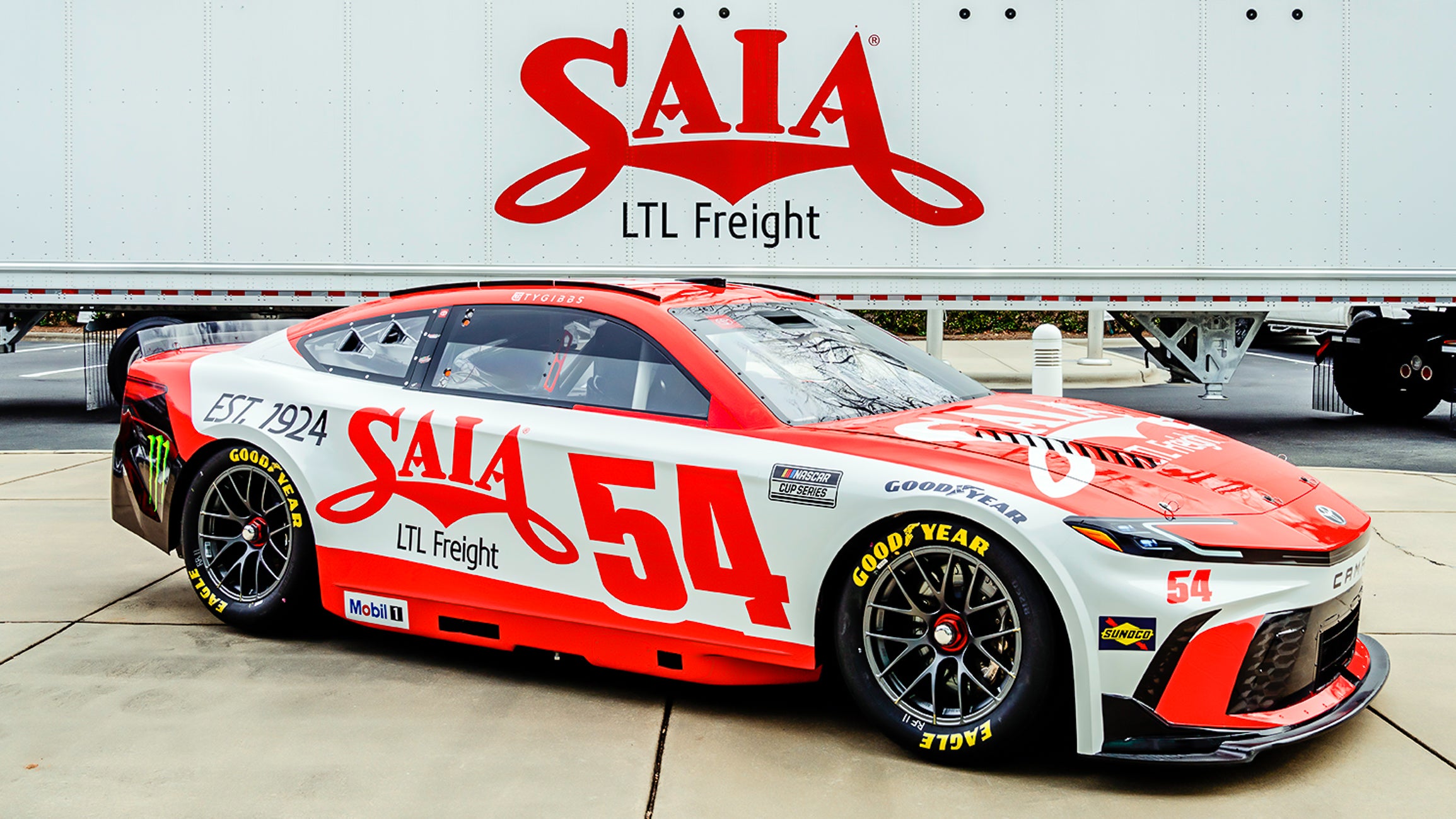
Saia starts its engines: LTL carrier will sponsor a leading NASCAR team

There will be a big Saia logo traveling at a high rate of speed before thousands soon, but it won’t be delivering any freight.

The less-than-truckload carrier has signed on to be the primary sponsor of seven NASCAR Cup races this season. The deal with Joe Gibbs Racing will place the Saia (NASDAQ: SAIA) logo as the most prominent signage on the car driven by Gibbs’ grandson, Ty Gibbs. Joe Gibbs is the legendary football coach who led the then-Washington Redskins (now Commanders) to three Super Bowl victories in the late ’80s and early ’90s.

Ray Ramu, executive vice president and chief customer officer at Saia LTL Freight, said the sponsorship is almost an exclamation point to a process that by 2024 had transformed Saia from a 12-state LTL carrier when he joined 27 years ago to one that now has facilities in all the Lower 48 states. 

The initial Southern footprint has the company well known in those areas, Ramu said. But Johns Creek, Georgia-based Saia is seeking greater exposure in the rest of the country.

“It’s really a branding opportunity for us to get people more familiar with who we are as a company,” Ramu said in an interview with FreightWaves.

But it isn’t just to market Saia as a supplier of freight services to existing or potential customers, he said. 

First, there’s an internal benefit, Ramu said: “We have a lot of drivers that like NASCAR. And a lot of our customers are into NASCAR as well.”

The NASCAR tie is positive for that reason, Ramu said. “But it’s really about introducing people to the brand side,” he added.

While there will be a Saia brand presence on every NASCAR Cup race starting this season, Saia will be the primary sponsor at seven events, with its logo taking up most of the side of the car.

Those races and their dates will be at Atlanta Motor Speedway on Feb. 23; Talladega Superspeedway in Alabama on April 27; Texas Motor Speedway a week later on May 4; the NASCAR All-Star Race at North Wilkesboro Speedway in North Carolina on May 18; Sonoma Raceway in California on July 13; Indianapolis Motor Speedway on July 27; and Las Vegas Motor Speedway on Oct. 12.

Ty Gibbs’ car carries the number 54.

Ramu said those markets are where the company “has a pretty good presence.” But the Indianapolis race, which is reasonably close to Chicago, puts the Saia logo in a region “where we have an incredible number of facilities.

“So the opportunity to continue to win share – getting people comfortable with the name, who we are, what we do as an organization – this is one of the key reasons we made the investment,” Ramu said.

Saia is not disclosing the size of the investment with Joe Gibbs Racing. Negotiations to close the deal didn’t take long, Ramu said, lasting only 2 1/2 to three months.

Saia approached Joe Gibbs Racing about the sponsorship, Ramu said. It was part of a broader marketing plan in which Saia was looking at a corporate sponsorship in several different platforms, mostly sports, “and we vetted them out. We felt like this gave us the broadest reach over an extended period of time.”

The Saia executive ticked off the various benefits that the carrier sees from the relationship, beyond just brand marketing.

Tie-ins with other members of the group of sponsors backing Joe Gibbs Racing may be possible; SiriusXM radio is one example.

Hospitality at NASCAR races for existing or potential Saia customers is also a benefit of  the relationship, Ramu noted.

But in addition, there’s a “culture play,” as he called it, for the internal workings at Saia.

“When you have employees who get to see their company’s car out on the track, it’s their logo, the same one that’s on the tractor they drive or the trailer they’re loading off the platform every night. It becomes kind of a symbol of, ‘Look, that’s my car,’” he said. 

The Cup series is the premier division of NASCAR, featuring races such as the Daytona 500, which kicks off the season Feb. 16. The NASCAR “minor league” is the Xfinity Series, which Saia is not sponsoring. Joe Gibbs teams have won four Daytona 500 races, considered the most prestigious in the NASCAR series.

More articles by John Kingston

Love’s in California: Gauging impact of Advanced Clean Fleets rule demise

Western Express prevails at federal appeals level in ‘wall of water’ case ATA saw as important

Drivers settle class action with Lytx over in-cab surveillance, data gathering

CN profits dip after fourth-quarter port and weather disruptions

MONTREAL — Canadian National experienced a series of shocks to the system last year, and the fourth quarter was no exception: Profits and revenue declined as disruptive port work stoppages and a cold snap put a lid on traffic volumes.

“Now, 2024 was clearly not what we expected and certainly not what we planned,” CEO Tracy Robinson told investors and analysts on the railway’s earnings call Thursday. “We are happy to have it behind us. We experienced a number of one-off challenges that had some outsized impacts on our results.”

Among them: Robinson says the Canadian government turned a “normal labor dispute” between CN and the Teamsters Canada Rail Conference into three months of uncertainty over the summer, which prompted shippers to divert U.S.-bound cargo away from Canadian ports and CN’s international intermodal trains. There was a brief work stoppage that shut down CN’s Canadian network in August, followed in the fall by labor disputes that closed ports in British Columbia and Quebec.

“Long story short, we were resourced for more volumes than we handled and we didn’t deliver growth to the bottom line. We’re not happy with that,” Robinson says.

But she says CN was resilient and finished the year with the railway’s second-best safety performance. “The team’s agility in managing through the year was solid. Execution was very strong. Our operation recovered from each shock quickly and effectively,” Robinson said.

Said Derek Taylor, chief field operating officer: “It was a hell of a dynamic year with lots of things thrown at this railway, which proved the resiliency of this network and this team.”

The fourth quarter, Taylor says, was a tale of two halves.

“During the first half of the quarter, we had ideal operating conditions in terms of weather. The team handled strong demand very efficiently. We kept pace with customer orders and did not have any backlogs,” he said. “Unfortunately, we began November with two weeks of port labor disruptions both on the west coast affecting Vancouver and Prince Rupert as well as in eastern Canada at Montreal. This was impactful to our intermodal network due to the staging of trains and balancing of equipment, but the rest of the railway continued to run well. Now during the second half of the quarter, just as we started to see volumes ramp up after the port labor stoppage, we started a long stretch of really cold weather across much of the western region.”

The 28 days of extreme cold in western Canada forced CN to restrict train lengths, which reduced capacity, slowed the network and led to traffic backlogs in the railway’s busiest region. Operations have since recovered, Taylor says, and CN is fluid and current with freight demand.

CN expects growth to resume this year, despite uncertainty surrounding the Trump administration’s threat to impose 25% tariffs on goods imported from Canada and Mexico, and Canada’s plans for retaliatory tariffs.

“Now clearly we can’t predict how this will unfold, but we can control how we respond and how we partner with customers to adjust. And we’ve considered a full range of options and have a plan for various scenarios,” Robinson said.

CN’s 2025 outlook is built on a forecast of modest economic growth and includes a low-to-mid-single-digit increase in revenue ton-miles – with more than half the growth driven by CN-specific growth projects and a third of it reliant on a return to normal international intermodal volumes through Canadian ports. CN also projects earnings growth of 10% to 15% this year.

The railway plans to spend $3.4 billion on capital programs. “Later this year we’re looking forward to completing two additional sections of double track on the Edson Sub west of Edmonton, increasing capacity by 25% through this critical link supporting our growth to the West Coast,” said Patrick Whitehead, chief network operating officer.

To date, CN has received 160 modernized locomotives as part of its ongoing DC-to-AC conversion program. “This enhances fleet reliability, fuel efficiency and improves availability with fewer failures,” Whitehead said, noting that two AC units equal the pulling power of three DC locomotives.

For the fourth quarter, volume was down 3% when measured by revenue ton-miles, CN’s preferred metric, or 5% on the basis of carloads and containers. For the year, CN’s RTMs increased 1%, while carloads and containers were down 1%.

Fourth-quarter operating income declined 10%, to CA$1.6 billion ($1.1 billion), as revenue declined 3%, to $4.3 billion. Earnings per share, adjusted for the impact of one-time items, decreased 10%, to $1.82. The operating ratio increased 3.3 points, to 62.6%.

For the full year, operating income fell 5%, to $6.2 billion, as revenue increased 1%, to $17 billion. Adjusted earnings per share decreased by 2%. CN’s operating ratio increased 2.6 points, to 63.4%.

First look: ArcBest Q4 earnings

A white ArcBest trailer being pulled on a highway

Transportation and logistics provider ArcBest (NASDAQ: ARCB) reported fourth-quarter adjusted earnings per share of $1.33 on Friday, 28 cents better than the consensus estimate but $1.14 lower year over year.

The adjusted result excluded 9 cents per share in items considered one-offs, like expenses tied to past acquisitions, costs from technology pilot programs, equipment and software write-downs, and a reduction in the expected earnout at truck broker MoLo, which was acquired three years ago.

“Throughout 2024, we made significant progress on controlling costs, improving productivity, and enhancing our service quality,” ArcBest Chairman and CEO Judy McReynolds said in a Friday news release.

Click for full story – “ArcBest, LTL industry short on volume”

ArcBest’s asset-based segment, which includes results from its less-than-truckload subsidiary ABF Freight, reported a 7.6% y/y decline in revenue to $656 million as tonnage per day was down 7.3% and revenue per hundredweight, or yield, was up 0.6% (up by a mid-single-digit percentage excluding fuel surcharges). A 6.3% decline in weight per shipment drove the increase in the yield metric.

Price increases on contracts that renewed in the quarter were 4.5% higher on average.

The unit recorded a 92% adjusted operating ratio (inverse of operating margin), 430 basis points worse y/y but approximately 100 bps better than management’s guidance. Cost and productivity initiatives were credited with stemming some of the demand weakness in the industrial sector.  

Click for full story – “ArcBest, LTL industry short on volume”

Table: ArcBest’s key performance indicators

A separate filing with the Securities and Exchange Commission on Friday showed asset-based revenue per day was down 4% y/y in January as tonnage per day declined 11%, which was partially offset by an 8% increase in yield. However, weight per shipment was down 8%, again driving the yield increase.

The asset-light unit, which includes truck brokerage operations, reported a sixth consecutive adjusted operating loss ($5.9 million). A 2.1% decline in loads and weak pricing in the truckload brokerage market were to blame. The unit is expected to record an operating loss of $4 million to $6 million in the first quarter.

Shares of ARCB were up 3.6% before the market opened Friday.

ArcBest will host a conference call at 9:30 a.m. EST on Friday to discuss fourth-quarter results.

More FreightWaves articles by Todd Maiden: