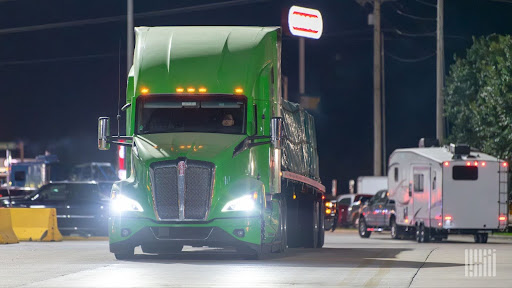
What Is the Best Front and Rear Dash Cam with Night Vision for Trucking?

When you’re out running loads in the dead of night, your dash cam doesn’t get to sleep. It’s still working. Still recording. Still protecting your business. And if you’re relying on a camera that can’t see clearly after sunset, you’ve got a weak link in your operation.

Accidents don’t check the clock. Most incidents—whether it’s a sideswipe on a dim backroad or a rear-end in a dark parking lot—happen outside of perfect lighting. That’s where night vision becomes non-negotiable. And if you’re serious about running your business like a business, a dual dash cam with true low-light clarity isn’t optional—it’s essential.

Why Night Vision Isn’t Just a Nice-to-Have

Let’s talk real-world. Truckers drive more nighttime miles than just about anyone else on the road. Early-morning pickups. Late-night deliveries. Cross-country hauls with windows full of stars instead of sunlight.

You need a dash cam setup that doesn’t just work in the daytime. You need one that captures plate numbers under streetlights, picks up movement in dark lots, and shows enough detail to prove what happened—clearly.

Because let’s be honest: grainy footage won’t hold up in court. And “I think that’s the car” isn’t enough when it’s your CDL or insurance on the line.

Top Features to Look For in a Front and Rear Night Vision Dash Cam

Ignore the marketing. Focus on specs that actually translate to performance:

  • Infrared (IR) Night Vision or STARVIS Sensors: These technologies capture more light and detail in low-light conditions without blowing out the image.
  • 1080p or Higher Resolution (Front and Rear): Clarity matters, front and back.
  • Wide Dynamic Range (WDR): Balances bright headlights and dark shadows in the same frame.
  • Wide-Angle Lenses (140°+): You need full-lane coverage to catch sideswipes and blind spot moves.
  • G-Sensor & Emergency Lock: Automatically saves footage if a collision is detected.
  • Loop Recording: Keeps the memory card cycling so you don’t lose new footage.
  • GPS Integration (Optional): Adds location and speed data to your recordings.

In trucking, every detail counts. That means your camera’s low-light performance could be the deciding factor in whether you win or lose a claim.

Top Picks: Best Front and Rear Dash Cams with Night Vision for Truckers

We filtered out the toys. These are workhorse models that hold up under pressure—and in the dark.

1. Vantrue N4 Pro Triple Channel Dash Cam

  • 4K front camera + 1080p rear and interior
  • Sony STARVIS 2 sensor for top-tier night vision
  • Infrared night mode on interior cam
  • Supercapacitor (not battery) for heat resistance
  • GPS and motion detection

Why it works: This one’s built for pros. You get three angles of protection—front, rear, and inside. Ideal for team drivers or anyone who sleeps in their cab. Footage is crisp even in pitch-black conditions.

2. Thinkware U1000 + Rear Cam Bundle

  • 4K UHD front + 2K QHD rear
  • Super night vision 2.0 with Sony sensors
  • Built-in Wi-Fi, GPS, and cloud connectivity
  • Parking surveillance mode
  • Optional radar module for motion alerts

Why it works: If you’re running high-value freight or want the highest video quality possible, this setup is tough to beat. Great for fleet trucks with overnight downtime in yards or rest stops.

3. Blueskysea B4K Dual Dash Cam

  • 4K front + 1080p rear
  • Sony IMX415 STARVIS sensor
  • Super night vision with WDR
  • Touchscreen display
  • Compact, easy install

Why it works: Mid-range price, pro-level night footage. If you’re an owner-op building out your truck with gear that performs without draining your pockets, this is a smart choice.

Hardwire or Plug-and-Play? Let’s Clear That Up

Most cameras come with a 12V plug, but if you want full parking mode protection or a cleaner install, hardwiring is the way to go. That setup ensures your cam runs even when the truck is off (without draining the battery if wired correctly).

If you’re a fleet owner, this also prevents tampering or accidental unplugging. Install it once, lock it in, and forget it. Your cam will be working while the truck rests.

Storage Tip: Don’t Trust Cheap SD Cards

Use a name-brand, high-endurance microSD card (128GB or higher). Night footage takes up more space due to higher contrast and exposure. The last thing you want is for your proof to be sitting on a corrupted card.

Final Word

There’s no such thing as “off the clock” when you’re a trucking business owner. The dash cam you choose needs to work when visibility is low, stress is high, and no one else is watching.

A good front and rear dash cam with night vision is more than just a gadget—it’s your insurance policy. It keeps your version of the story intact when things go sideways. It protects your license, your truck, and your name.

Don’t wait for a close call to invest in visibility. Choose a system that sees what you see—even in the dark—and let the footage do the talking when it matters most.

FAQS

1. What key features should I look for in a dash cam for trucking, especially for night vision? When choosing a dash cam for trucking, prioritize models with high video resolution (1080p or 4K), a wide dynamic range (WDR) or high dynamic range (HDR) for improved low-light performance, and infrared (IR) LEDs for enhanced night vision in the cabin. A wide-angle lens for both front and rear cameras is also crucial for comprehensive coverage.

2. Why is a front and rear dash cam setup important for truckers? A dual front and rear dash cam setup provides comprehensive coverage of the road ahead and behind your truck. This is vital for capturing evidence in various scenarios, from rear-end collisions to incidents involving trailers, and can also help deter theft or vandalism when parked.

3. Are there any specific considerations for installing dash cams in a truck compared to a regular car? Trucks often have larger cabins and different power supply configurations. Consider longer cable lengths for routing to the rear camera, robust mounting solutions to withstand vibrations, and ensure the dash cam can handle the potentially wider temperature fluctuations experienced in a truck’s interior. Some truckers also prefer models with GPS logging to track routes and speeds.
Schneider National delays stance on railroad merger until more details emerge

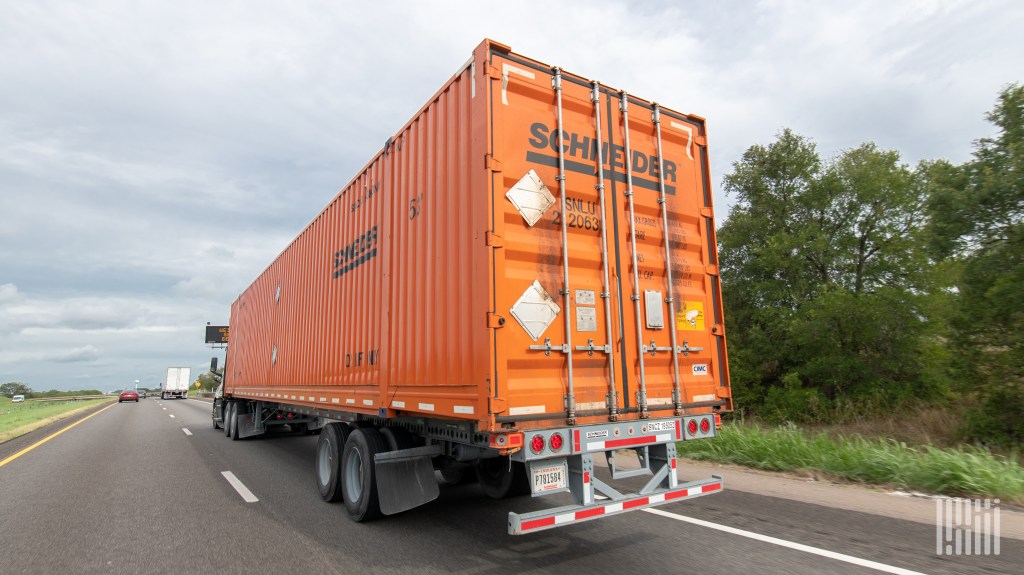
An orange Schneider intermodal container being pulled on a highway

Management from Schneider National said Thursday it is still contemplating how a Union Pacific–Norfolk Southern merger could impact its $1 billion-plus intermodal offering.

Schneider moved from the BNSF Railway (NYSE: BRK.B) to the UP for Western rail service in 2023. The same year, it inked a deal for North-South service with the CPKC (NYSE: CP).

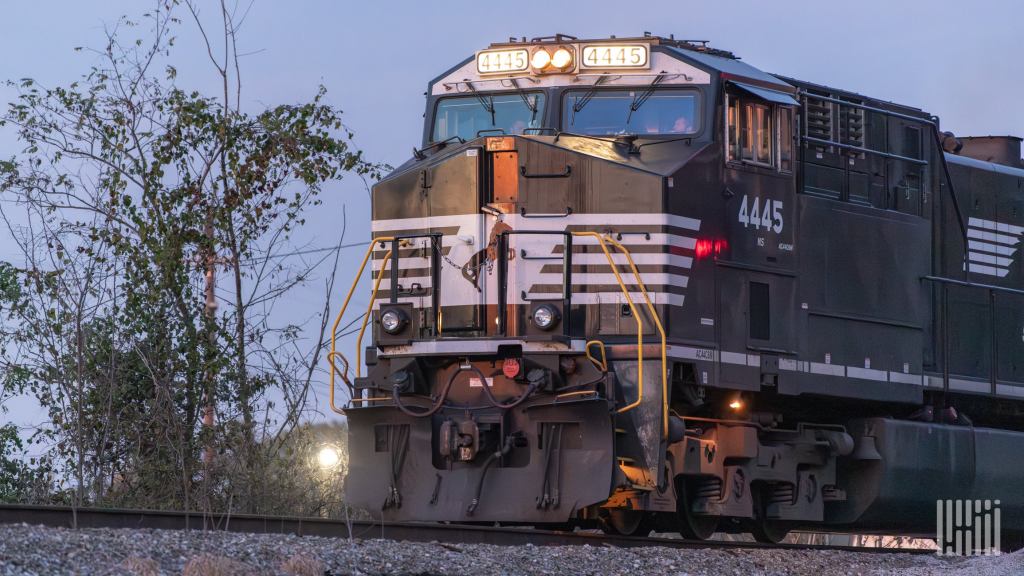
UP’s (NYSE: UNP) $85 billion bid for Norfolk Southern (NYSE: NSC) would create a transcontinental railroad, likely redrawing North America’s intermodal trade lanes. But not all parties potentially impacted by the deal are ready to pick sides yet.

“We’re pro-competition and we’re pro-customer, and to the degree that any of this helps us achieve those, then that’s kind of where we’ll come down,” Schneider President and CEO Mark Rourke told analysts on a Thursday call. “We don’t have enough information at this time to take an official position.”

Schneider (NYSE: SNDR) reported second-quarter adjusted earnings per share of 21 cents on Thursday before the market opened. The result was 1 cent ahead of analysts’ expectations and level with the year-ago quarter. Consolidated revenue of $1.42 billion was 8% higher y/y and slightly ahead of consensus.

(The adjusted EPS number excluded 1 cent per share in acquisition-related amortization expenses.)

The company trimmed the top end of its full-year 2025 EPS guidance by 5 cents to a new range of 75 cents to 95 cents. The new guide bracketed the consensus estimate of 84 cents at the time of the print. Schneider generated EPS of 69 cents last year.

(Schneider’s initial 2025 outlook contemplated EPS of 90 cents to $1.20).

Table: Schneider’s key performance indicators

Q2 produces modest improvements

Revenue in the company’s truckload segment increased 15% y/y to $622 million as average trucks in service stepped 15% higher and revenue per truck per week was up slightly. The y/y revenue increase was driven by the December acquisition of Cowan Systems.

The dedicated fleet saw no change in revenue per truck per week while the one-way fleet reported a 1% increase in the metric. Combined, the TL unit again saw low- to mid-single-digit rate increases in the quarter.

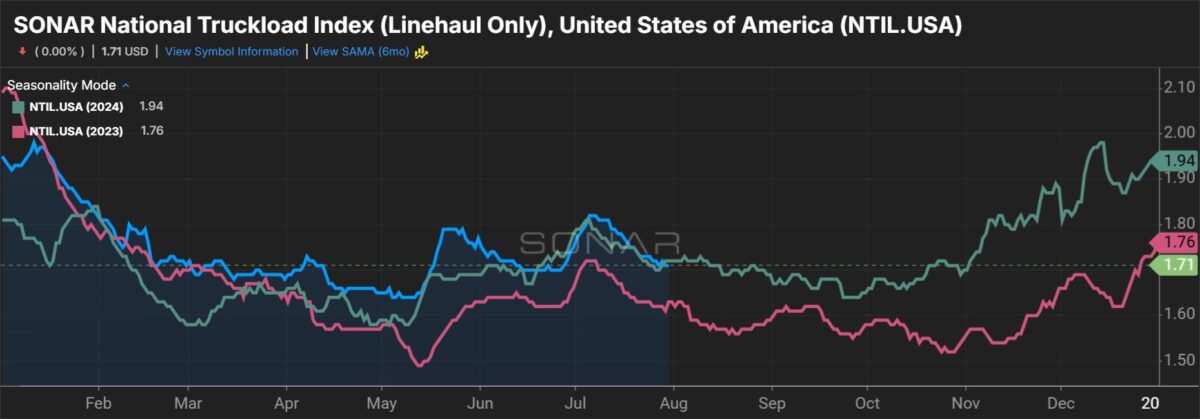
SONAR: National Truckload Index (linehaul only – NTIL) for 2025 (blue shaded area), 2024 (green line) and 2023 (pink line). The NTIL is based on an average of booked spot dry van loads from 250,000 lanes. The NTIL is a seven-day moving average of linehaul spot rates excluding fuel. Spot rates are flat on a y/y comparison. To learn more about SONAR, click here.

The TL unit’s operating ratio improved 70 basis points y/y to 93.6%. Utilization improvement initiatives and an enterprise-wide cost reduction program totaling $40 million helped drive the result. Also, a modest increase in gains on equipment sales was a tailwind in the period.

Intermodal revenue increased 5% y/y to $265 million. Loads were up by a similar percentage while revenue per load was flat. The company is roughly 75% through its bid season and rates accompanying volume awards have largely been flat. However, peak season surcharges have already been implemented (roughly six to eight weeks early) at most of its large accounts.

The segment reported a 93.9% OR, which was 30 bps better y/y. Average turns per container improved 6% y/y.

Schneider’s logistics segment saw a 7% y/y revenue increase to $340 million. Both lower volumes and yields partially offset the increase from the Cowan acquisition. The unit reported a 97.7% OR, 120 bps worse y/y.

Cowan’s brokerage business will be rolled under the Schneider Logistics banner in October.

Shares of SNDR were off 0.4% at 12:14 p.m. EDT on Thursday compared to the S&P 500, which was up 0.6%.

More FreightWaves articles by Todd Maiden:

Activist investor may target CSX, citing slumping financial performance

Ancora Holdings, the activist investor that waged a proxy battle for control of a beleaguered Norfolk Southern in 2024, now may have CSX in its crosshairs.

“We’ve been a growing shareholder in CSX (NASDAQ: CSX) and I think that company finds itself at the crossroads … of whether it wants to find a merger partner or whether it’s going to have to go retool management,” Ancora Alternatives President James Chadwick said Wednesday in an interview with CNBC.

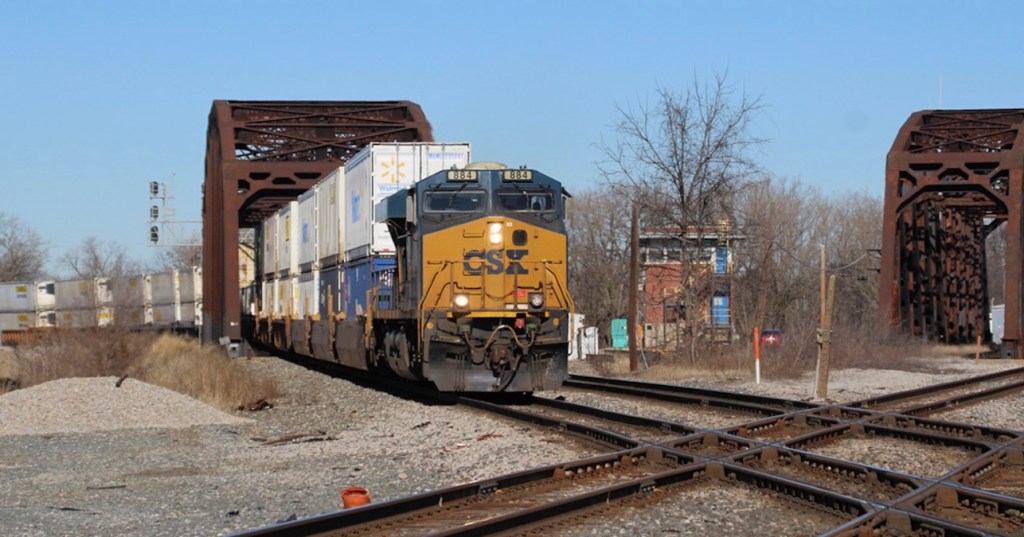
Chadwick said that the railroad’s operational and financial performance has slipped under Joe Hinrichs, who became chief executive in September 2022. Prior to his tenure, Chadwick noted, CSX had a sub-60% operating ratio. Today CSX’s 64.1% operating ratio trails the other four publicly traded Class I railroads.

The operating ratio increased 3.2 points year-over-year in the second quarter as unfavorable changes in traffic mix drove a revenue decline, while costs rose amid congestion and detours related to a pair of construction-related main line outages.

The second-quarter earnings, however, beat Wall Street expectations by about 5%. And the railroad recovered much faster than expected from congestion related to a string of harsh weather events and the Feb. 1 closure of the Howard Street Tunnel in Baltimore for a long-awaited clearance project. The railroad also is rebuilding its Blue Ridge Subdivision, which was heavily damaged by Hurricane Helene in late 2024 and is not expected to reopen until this fall.

Former CSX Chief Operating Officer Jamie Boychuk, who was Ancora’s candidate to replace Norfolk Southern’s operations chief during the proxy contest, has been advising the Cleveland-based investor about CSX, Chadwick said.

Hinrichs tapped retired Canadian National Chief Operating Officer Mike Cory to replace Boychuk in September 2023.

When asked if Ancora would agitate for management change at CSX, Chadwick said, “That will be up to CSX ultimately. Whatever actions they make from here will dictate what we do.”

CSX declined to comment today.

Ancora has been pleased with Norfolk Southern’s performance and is buying additional NS stock, Chadwick said. He praised the railroad’s leadership, strategy, improved safety metrics, and strong board. “Now they’re running a PSR railroad, which they weren’t before, and you can see it manifested in their improving OR and improving results,” Chadwick says, referring to the lower-cost Precision Scheduled Railroading operating model.

Ancora failed to wrest control of Norfolk Southern (NYSE: NSC) and oust CEO Alan Shaw, but three of its board candidates did win election to the railroad’s board. And in November 2024 the railroad and activist investor reached a settlement agreement.

Ancora supports the proposed Union Pacific-Norfolk Southern merger, Chadwick told CNBC.

Subscribe to FreightWaves’ Rail e-newsletter and get the latest insights on rail freight right in your inbox.

Related coverage:

While shippers cite merger concerns, rival railroad looks instead to ‘collaborations’

CEOs say Union Pacific-Norfolk Southern merger will reverse rail freight decline

Shippers line up against railroad mergers

Union Pacific and Norfolk Southern reach $85 billion merger deal

US and Mexico agree to 90-day extension to land trade deal

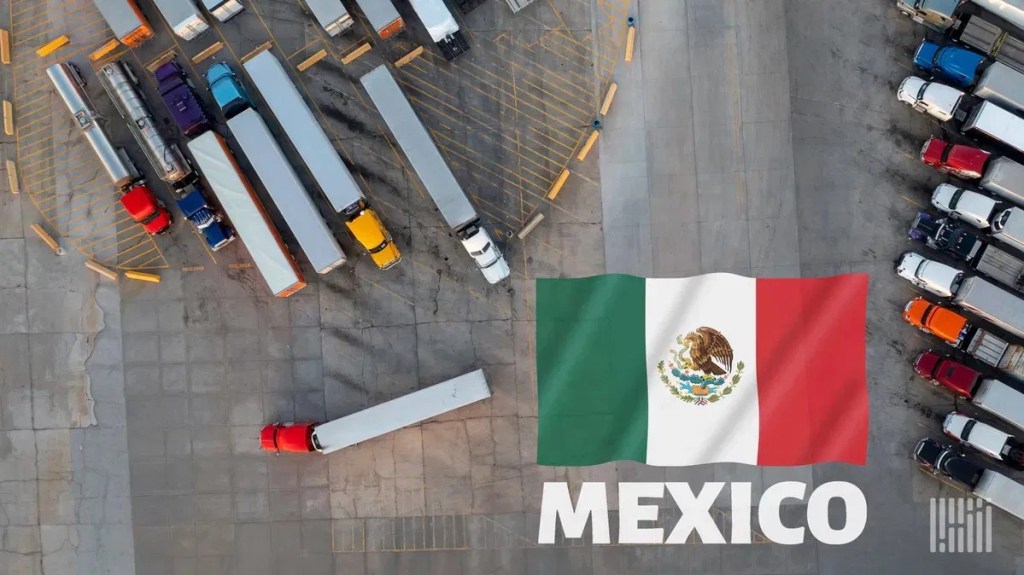
President Donald Trump said on Thursday he had agreed with Mexican President Claudia Sheinbaum to extend an existing trade deal with Mexico for 90 days while negotiations continue for a long term agreement.

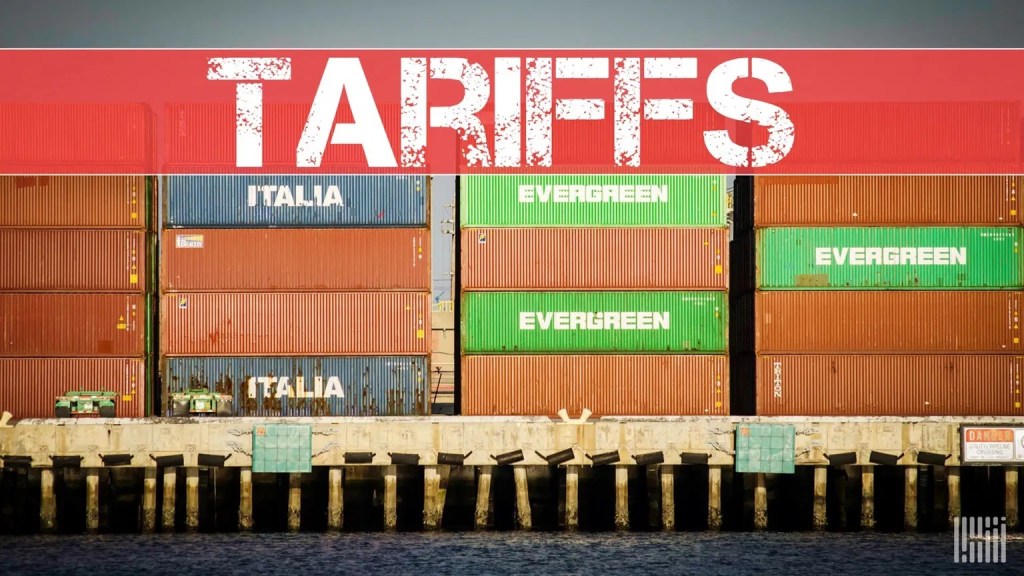
The 90-day extension means a 25% tariff rate will stay in place for Mexico instead of a 30% levy that would have started Friday as part of the Trump administration’s global “reciprocal” tariff policy.

“The complexities of a Deal with Mexico are somewhat different than other Nations because of both the problems, and assets, of the Border,” Trump wrote on Truth Social.

Mexico is currently the top U.S. trade partner, with two-way trade totaling $74.5 billion in May, according to Census Bureau data. In 2024, U.S.-Mexico trade reached a record breaking $840 billion.

Sheinbaum said they will continue to work with the Trump administration on a trade agreement.

“We had a very good call with the President of the United States, Donald Trump,” Sheinbaum wrote on Facebook. “We avoided the tariff hike announced for tomorrow and achieved 90 days to build a long-term agreement from dialogue.”

Brother of NFL, Army hero Pat Tillman charged with post office arson

The charred remains of a post office and a vehicle after they were intentionally set on fire.

Federal prosecutors on Wednesday charged the brother of late NFL star and Army Ranger Patrick Tillman with fire destruction of a U.S. post office in San Jose, California. 

According to the criminal complaint, Richard Tilman, 44, set fire to the Almaden Valley U.S. Post Office on Crown Boulevard in the early hours of July 20. Tillman is alleged to have placed instalogs throughout his vehicle, doused them with lighter fluid, backed the vehicle into the post office’s lobby, got out and lit the vehicle on fire with a match. 

Tillman then allegedly began spray painting the words “Viva La Me” on the outside of the building, but didn’t finish the graffiti because the heat from the fire was too intense. 

San Francisco Bay area media reported that Tillman is the youngest brother of Patrick Tillman, who played for the NFL’s Arizona Cardinals and enlisted in the Army after the 9/11 attacks in 2001. He was killed fighting in Afghanistan. 

The Almaden Valley post office was partially destroyed by the fire, according to the federal authorities.

Tillman told law enforcement officers that he set the fire to make a statement to the U.S. government and that he livestreamed the event on YouTube using his phone. 

Tillman is currently in federal custody.  He is next scheduled to appear in district court on Aug. 6, 2025, for a status conference before U.S. Magistrate Judge Nathanael Cousins.    

If convicted, Tillman faces a minimum of five years in prison and a maximum sentence of 20 years in prison for malicious destruction of government property. 

The San Francisco Chronicle recently wrote about Tillman’s mental health problems and examples of a downward spiral. 

Click here for more FreightWaves/American Shipper stories by Eric Kulisch.

Write to Eric Kulisch at ekulisch@freightwaves.com.

Large union, US Postal Service finalize 3-year contract

Activist investor to reap handsome return in Union Pacific – Norfolk Southern merger

Activist investor to reap handsome return in Union Pacific – Norfolk Southern merger

One of the key beneficiaries of the proposed Union Pacific – Norfolk Southern merger is a largely under-the-radar activist investor who’s been shaking up underperforming transportation companies, one after another: C.H. Robinson, Forward Air, and Norfolk Southern.

Ancora Holdings, an activist investor known for its hands-on approach, has recently played a pivotal role in reshaping the trajectory of Norfolk Southern Corp. (NYSE: NSC). This involvement has been marked by a series of strategic maneuvers that culminated in significant changes within the railroad company’s management and its impending merger with Union Pacific, a move set to redefine the landscape of North American rail transport.

Ancora’s engagement with Norfolk Southern shareholders began in early 2024 when the investor mounted an aggressive campaign to enhance the company’s operational efficiency and financial performance. Discontented with the existing management and cost structure under CEO Alan Shaw, Ancora sought to push for better strategic outcomes. Despite initial resistance, Ancora’s persistence paid off, resulting in Shaw’s removal following an internal investigation into his inappropriate relationship with the company’s chief legal officer, Nabanita C. Nag. This series of events underscored Ancora’s influence, which was further solidified as they secured three seats on Norfolk Southern’s board of directors, providing a platform to advocate for deeper structural changes.

Amidst these boardroom shake-ups, Ancora maintained a keen focus on Norfolk Southern’s financials. The investor’s likely entry point can be traced back to when Norfolk Southern’s stock was trading predominantly between $220 and $260 per share earlier in 2024. This estimated cost basis would position Ancora well to reap substantial returns through strategic initiatives aimed at revitalizing the company’s performance and shareholder value.

The proposed merger with Union Pacific, valued at $85 billion, is set to create the first U.S. coast-to-coast freight operator, merging Union Pacific’s extensive western network with Norfolk Southern’s sprawling eastern connections. This merger has garnered unanimous support from the board, including the three members installed by Ancora, highlighting the investor’s endorsement of the strategic alignment and future prospects of the combined entity. With Union Pacific agreeing to purchase Norfolk Southern at $320 per share, Ancora stands to achieve a significant return on investment. Assuming an average cost basis in the range of $220 to $240 based on when Ancora built its position in the name, Ancora could potentially realize a return of 33% to 45%, depending on its precise cost basis.

Ancora’s intervention in Norfolk Southern comes at a crucial juncture for the transportation industry, which has been grappling with fluctuating freight volumes and rising operational costs. In particular, a soft trucking market has put persistent downward pressure on intermodal rates, and Norfolk Southern has the most exposure to intermodal of any Class I railroad. The broader sector has seen lackluster stock performance, reflecting a challenging market environment.

Perhaps most importantly, Wall Street has been waiting to see what the next chapter of the railroad industry, after the industry-wide adoption of versions of Hunter Harrison’s precision scheduled railroading, and the subsequent plunge operating ratios took into the 60s. After a decade of efficiency gains and deep cost cuts, what would come next? Within this context, Ancora’s Norfolk Southern trade highlights the role activist investors play in catalyzing change within companies, not only to unlock shareholder value but also to compel management to pursue operational excellence and strategic growth.

Ancora’s investment in Norfolk Southern is emblematic of a wider trend where activists seek to instigate corporate transformations, particularly in industries where traditional business models are under pressure. By intervening in Norfolk Southern and endorsing its merger with Union Pacific, Ancora aims to position the company favorably amidst the evolving economic landscape, ensuring robust returns for its investors while contributing to the consolidation and rationalization of North America’s rail network.

Trump announces trade deal with South Korea, imports face 15% tariff

President Donald Trump said on Wednesday the U.S. has reached a “full and complete trade deal” with South Korea that includes a 15% tariff on imports from the Asian nation.

As part of the agreement, U.S. exports to South Korea will not face duties. South Korea will buy $100 billion in U.S. energy products and invest $350 billion into the U.S. shipbuilding sector, as well as production of semiconductors, secondary batteries and biotech products.

“I am pleased to announce that the United States of America has agreed to a Full and Complete Trade Deal with the Republic of Korea. The Deal is that South Korea will give to the United States $350 Billion Dollars for Investments owned and controlled by the United States, and selected by myself, as President,” Trump wrote on Truth Social.

The agreement between South Korea and the U.S. averts a steeper 25% import duty rate that would have started Friday, according to a letter Trump sent to Seoul on July 7.

South Korean President Lee Jae Myung, who took office June 4, said the trade deal will put his country on equal footing with other U.S. trade partners.

“Through this negotiations, the [South Korean] government has eliminated the uncertainties in the export environment and made it possible to compete on equal or superior conditions with major countries by adjusting the U.S. customs duties to lower or at the same level than the major anti-U.S. export competitors,” Lee wrote on Facebook Thursday. 

“This agreement is the result of America’s understanding of manufacturing rebuilding and our willingness to expand our companies’ competitiveness in the American market.”

South Korea is the eighth largest trading partner of the U.S., with two-way trade totaling an estimated $197.1 billion in 2024, according to the Office of the U.S. Trade Representative.  

Exports from South Korea to the U.S. include cars and auto parts, semiconductors and electronics. U.S. exports to South Korea include oil and gas and industrial machinery.

South Korean automakers that export cars to the U.S. include the Hyundai Motor Group, and its affiliates Kia and Genesis. The country is also home to some of the world’s largest shipbuilders, including HD Hyundai Heavy Industries Co., Hanwha Ocean Co. and Samsung Heavy Industries Co.

With less than a day to go until the White House’s Friday tariff deadline, the trade policy landscape remains uncertain. 

Trump said that he will not extend Friday’s deadline for his “reciprocal” tariffs on dozens of countries that do business with the U.S., including top trading partners Mexico, Canada and China.

The White House has so far announced framework deals with the European Union, the United Kingdom, Japan, Vietnam, Indonesia and the Philippines.

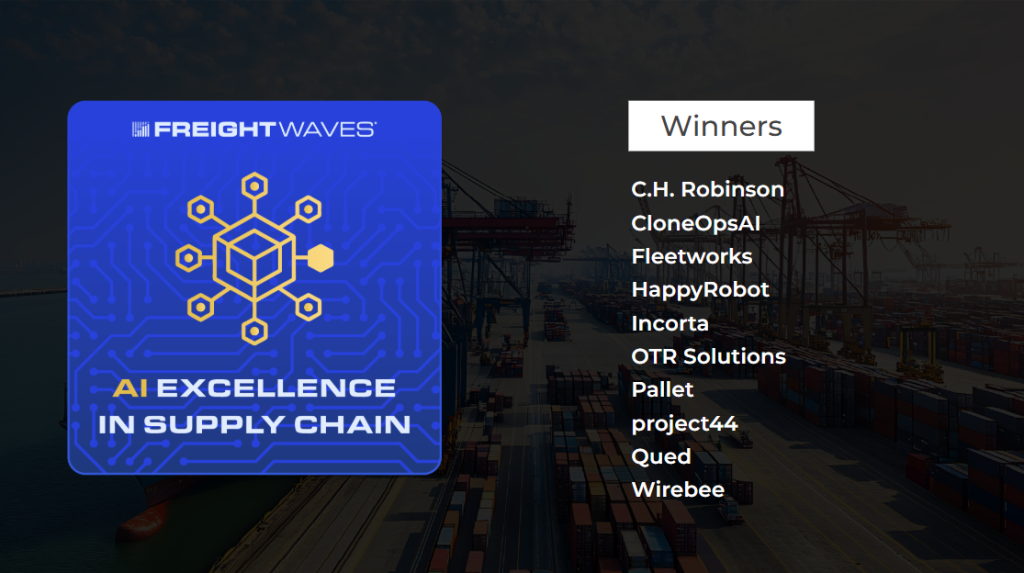
FreightWaves announces winners of 2025 AI Excellence in Supply Chain Awards

FreightWaves unveiled the winners of its inaugural AI Excellence in Supply Chain Awards during a special ceremony on stage at the International Spy Museum in Washington, DC, as part of the FreightWaves AI in Supply Chain Symposium. The awards recognize innovative companies leveraging artificial intelligence to revolutionize supply chain, transportation, and logistics operations. This year’s honorees—Pallet, CloneOps.ai, Qued, Incorta, HappyRobot, project44, Fleetworks, C.H. Robinson, OTR Solutions, and Wirebee—demonstrated groundbreaking AI applications that enhance efficiency, reduce costs, and drive resilience across the industry.

Pallet earned recognition for CoPallet, an AI workforce that automates high-volume, manual workflows in supply chains, such as quoting, load building, rate negotiation, and portal updates. Integrated directly into existing TMS, WMS, or ERP systems, CoPallet executes tasks end-to-end with guaranteed outputs, combining AI with human oversight to boost throughput by up to 10x and cut staffing costs by 50–70%. This innovation allows logistics teams to focus on customer relationships, improving margins and service delivery without disrupting operations.

CloneOps.ai was honored for its conversational AI platform tailored for logistics, automating communications across phone, email, and text for brokerages, 3PLs, and carriers. Key features include AI agents for vetting carriers, confirming appointments, and collecting PODs, with real-time integrations into TMS/WMS/CRM systems and voice ID for security. By handling up to 70% of inbound calls and reducing carrier vetting time by 95%, CloneOps.ai minimizes fraud exposure, enhances response times, and scales operations efficiently.

Qued received the award for its AI-powered appointment scheduling platform, which automates carrier and warehouse communications to eliminate manual back-and-forth. Integrating with existing TMS and carrier systems, Qued’s AI predicts optimal slots based on real-time data like ETAs and facility capacity, reducing no-shows by 90% and increasing on-time performance by 25%. This streamlines dock operations, cuts detention fees, and boosts overall supply chain velocity.

Incorta was recognized for its platform that delivers live, detailed operational data from complex systems like Oracle and SAP directly to AI models and decision-makers, bypassing traditional ETL processes. With features like Direct Data Mapping and a GenAI layer called Nexus for natural language queries and dashboard generation, Incorta enables real-time AI-driven insights, reducing ERP data load times by 60% and excess inventory by over 10%, fostering faster forecasting and disruption planning.

HappyRobot was awarded for its AI solution that automates inbound carrier phone calls and booking tasks for freight brokers, handling 40–90% of routine interactions like load availability checks and status updates. With real-time fraud detection, TMS integrations, and smart routing for escalations, HappyRobot blocks 20-40% of unqualified carriers and answers 100% of calls, reducing fraud risk and enabling brokers to scale without operational burnout.

project44 took home honors for AI Disruption Navigator, an AI-powered tool that monitors over 8 billion data sources and analyzes 100,000+ news posts hourly to provide personalized, real-time disruption insights for shipments. Integrated into the Movement platform, it maps risks across 120+ categories, reducing disruption-related costs by 40% and saving logistics managers 8-10 hours weekly, enabling proactive planning and enhanced resilience.

Fleetworks was celebrated for its AI agent that acts as an always-on carrier rep for brokers, sourcing capacity from over 5,000 trucks by communicating across voice, email, and chat channels. By vetting drivers for fraud using AI-powered photo and voice verification, Fleetworks reduces procurement costs by 1% and boosts booking velocity by 10%, managing carrier relationships at scale to keep freight moving reliably.

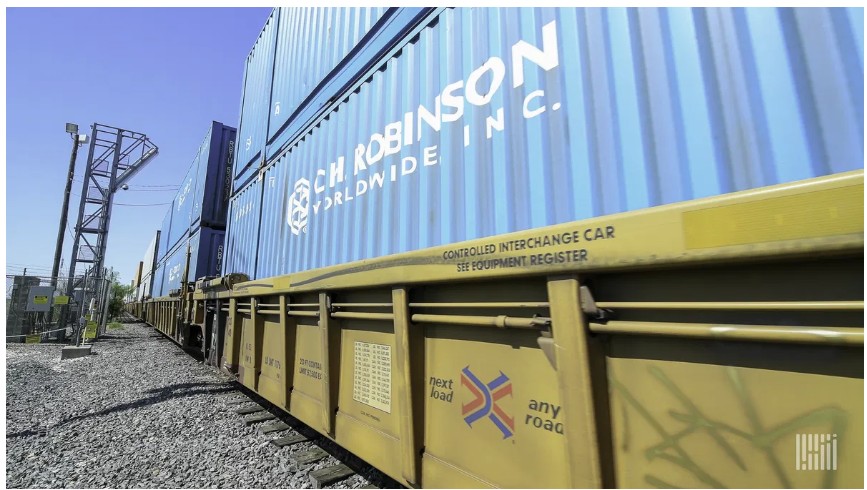
C.H. Robinson was recognized for its fleet of over 30 generative AI agents that automate shipping tasks like quoting, order processing, and appointment scheduling across truckload and LTL freight. Built on proprietary large-language models and integrated into workflows, these agents have performed 3 million+ tasks, boosting productivity by 30% and automating 75% of LTL orders, delivering faster speed-to-market and greater efficiency for global supply chains.

OTR Solutions earned accolades for OTRintelligence, an AI audit engine that automates invoice validation, fraud detection, and payment processing for carriers and brokers. Trained on millions of real freight invoices, it approves over 80% of invoices in seconds, reduces fraud incidents, and cuts write-offs from 4% to under 1%, enabling 24/7 instant funding and transforming freight finance for uninterrupted cash flow.
Wirebee was honored for its AI voice agents that automate 40–90% of inbound carrier calls for freight brokers, managing tasks like credential verification and fraud flagging in real time. Integrated with TMS and load boards, Wirebee detects spoofed calls, blocks unqualified carriers, and routes complex issues to humans, ensuring 100% call coverage and reducing response times to enhance load coverage and broker efficiency.

At C.H. Robinson, improved profitability, productivity and a lot fewer workers

With a set of earnings in hand that drew praise from analysts, the second quarter financial report of C.H. Robinson highlighted another ongoing feature at the giant 3PL: the continuing drop in the number of people who work there. 

It was the company’s performance that drew congratulations and praise from analysts on its earnings call Wednesday. That support was followed through in early trading Thursday, with C.H. Robinson (NASDAQ: CHRW) up 7.55% to $105.02 at approximately 8:15 a.m. EDT.

With C.H. Robinson executives repeatedly using the word “productivity” during its earnings call with analysts Wednesday, and with productivity at brokerages generally measured on some sort of measure of loads per employee, it brought into focus just how big the drop in employment at the company has been.

The third quarter of 2023 marks the first full quarter after Dave Bozeman became CEO of C.H. Robinson. In that quarter, according to company data, there were 15,577 employees total at the company. Of that, 6,278 were in the North American Surface Transportation (NAST) segment, which includes the company’s truck brokerage activities.

In the just-completed second quarter, the average headcount for the company as a whole was 12,858, down 17.4% from the third quarter of 2023. At NAST, the drop was a smaller percentage, down 15.8%, which is a decline in employment to 5,283 from 6,278.

During that time, revenues at C.H. Robinson and in NAST were largely flat, owing to still-weak  freight markets. That is the definition of productivity increases: getting done the same amount of work or more with fewer inputs, including labor. 

And the trend is likely to continue. For example, in discussing the company’s guidance for the rest of the year, Damon Lee, the company’s CFO, said C.H. Robinson was reducing its guidance for personnel expenses by about $75 million on both the top and bottom end of its prior range of $1.375 billion to $1.475 billion.  

“This reflects our disciplined approach to managing our cost structure and our ability to drive efficiency while positioning the organization for long-term growth, while remaining committed to further decoupling of head count from volume,” Lee said. 

Those changes might not need layoffs to be accomplished, based on Lee’s further comment: “With low to mid-teen turnover rates, we are well positioned to manage headcount, primarily through natural attrition, if needed.”

But beyond that, the question was raised by an analyst on the earnings call: how much lower can you go? 

Michael Castagnetto, who is the president of NAST, answered with the consistent message that C.H. Robinson executives have not wavered from since Bozeman took over. “We’re going to get more productive every day, every week, every month,” Castagnetto said.

And while some of that could come with further reductions in head count, Castangetto also discussed AI, specifically agentic AI, as a driver as well. Bozeman and others on the call cited numerous instances of productivity improvements brought on by AI that are allowing that reduction in headcount, including using AI to rapidly classify LTL freight under the new categorization regime in that sector implemented by the National Motor Freight Trucking Association.

In ultimately responding to the question of “how low can you go?,” Castagnetto replied: “I don’t believe I would buy the idea that there’s a limit.” But he added: “I think there’s a ton of unknown.” 

Lee echoed that idea. “We really don’t see any future of a plateau and productivity for us,” he said. “Our operating model is going to drive us to incremental evergreen productivity.”

From the outsider’s perspective, Jason Seidl of TD Cowen summed up the earnings and the headcount by saying that the margins at NAST “quickly (moved) closer toward long term targets as tech initiatives continue to enable CHRW to do more with less.”

At NAST, gross profits rose to $423.2 million from $419.7 million, a 3% gain. Other numbers at NAST showed improvement. The operating margin of 38% was better sequentially and year-on-year, and also, according to Seidl, beat forecasts. 

Market share gains

C.H. Robinson’s internal measurement showed the company gained market share during the quarter. According to the company, truckload volume per business day was up about 4.5% while LTL volume per business day rose 2.5%, numbers that exceeded the volume levels reported in the monthly Cass Index.

Deutsche Bank analyst Richa Harnain noted that the 1% growth in NAST volumes exceeded not only the Cass index but also the volumes reported by the brokerage units of J.B. Hunt (NASDAQ: JBHT) and Knight Swift (NASDAQ: KNX)

Tech keeping capacity alive?

With C.H. Robinson’s executives boasting of their own technology, an analyst asked them whether technology in general might be prolonging a market with excess capacity that was referred to several times as a continuing headwind.

Castagnetto agreed there had been “a democratization of freight brokerage tech over the last couple of years and there are plenty of folks offering capabilities out to smaller brokers.”

He took the opportunity to tout C.H. Robinson’s own technology. “We believe that there is a clear differentiation between what we do in the marketplace and our competition, whether that competition or assets, large brokers or small brokers,” Castagnetto said. 

But then he took issue with the thesis: “I’m not sure I would agree maybe with your sentiment on (tech) being a driver of keeping capacity in the marketplace.” 

“I would acknowledge the democratization of freight brokerage tech, but we believe our tech stack, combined with our people, is a clear differentiator for us in the marketplace” Castagnetto added. 

Other issues raised in the earnings call:

–With a freight market down for so long, brokerages run the risk of an upturn that leaves them facing higher spot rates to secure capacity against lower-priced contracts to move a customer’s freight. 

Arun Rajan, chief strategy and innovation officer, said C.H. Robinson believes the technology changes it has made can carry it through that period when rates rise, or in broker parlance, “inflect.”

“Through…rigor, we’ve also improved our ability to manage the short-term gross margin compression that typically comes with a spot rate inflection, such that we are confident in our ability to shorten the time and reduce the impact of any margin compression compared to historical spot rate inflections,” Rajan said. “Over a 12-month time frame, we expect a stronger demand and/or reduction of excess capacity that leads to a spot rate inflection to outweigh any short-term margin compression that may occur. In this regard, we believe our outperformance will continue as spot rates inflect.”

–It doesn’t sound like acquisitions are high on the list of priorities at C.H. Robinson, though Lee said “we’re kicking the tires on inorganic opportunities I would say every week.”

C.H. Robinson is an investment-grade credit, but just by two notches. The company remains a dividend aristocrat, having reached that vaunted level just a few years ago by having increased its dividend payout at least 25 consecutive years. Along with keeping that investment grade rating, “maintaining and growing our dividend are top priorities,” Lee said, without noting the reality that an acquisition gone wrong can often be damaging to a company’s debt rating. 

And besides, as Lee said, “the organic opportunities we have internally certainly are attractive.”

The door isn’t closed to an acquisition, Lee said. “We’re not going to make a mistake on M&A,” he said. If the company does a deal, “it will be the right acquisition, and when it is the right acquisition, we’ll pull the trigger.”

More articles by John Kingston

Averitt pay increase could be a sign of some acceleration in driver wages

Sequential numbers at diversified trucking operator TFI International may mark a turnaround

Ryder’s used vehicle numbers show a bullish corner: tractor sales

Octup raises $12 million in seed funding to modernize 3PL operations

Octup, a real-time AI operations platform for third-party logistics providers (3PLs), announced it has closed a $12 million seed round co-led by Shine Capital and JAL Ventures, with participation from Stone Capital, Tal Ventures and HCS Capital. 

The Tel Aviv-based company will use the funding to scale as it looks to modernize how 3PLs manage operations in an increasingly data-driven environment.

Octup estimates the third-party logistics industry is projected to reach approximately $1.877 trillion by 2030, growing at a compound annual growth rate of 10.5%. This expansion is driven by surging e-commerce demand and evolving consumer expectations for faster delivery, creating both opportunities and challenges for providers still relying on manual spreadsheets and human data input.

“3PLs are the backbone of e-commerce, and they deserve better software,” said Alon Partuk, CEO and founder of Octup, in the release. “We’re building the platform that helps them operate smarter, move faster, and deliver more value to their clients. This funding is a major step forward in that mission.”

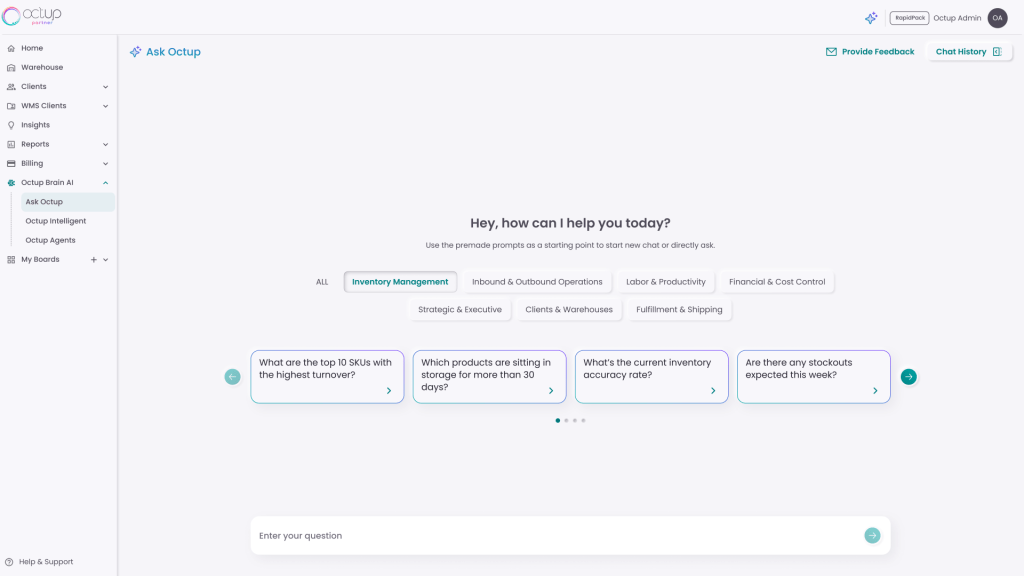
Octup’s platform works by integrating directly with WMS, ERP, orders and shipping systems to create a unified operational data source. The system provides real-time analytics for warehouse operations, including automated billing, labor tracking and SLA management, while also offering client-facing portals with full visibility and self-service reporting capabilities.

The company also announced the appointment of Dror Feldheim, co-founder of unicorn Trax, as chairman of the board to guide Octup through its next growth phase. While at Trax, Feldheim helped the company develop computer vision solutions for retailers.

“Octup is building a real-time OS for logistics, and the market is hungry for it,” said Mo Koyfman, general partner at Shine Capital. “Their team has deep domain experience and the product-led DNA to lead this transformation.”

With this funding, Octup plans to triple its current headcount of approximately 30 employees and accelerate AI-powered forecasting and exception management development. The company also plans to expand its North American market presence from its global hubs in Tel Aviv, Toronto and Austin.