Dr. Squatch’s soap supply chain; tariff deal deadline delay; capacity crunch? | WHAT THE TRUCK?!?

On episode 858 of WHAT THE TRUCK?!? Dooner is talking to the teams at Dr. Squatch and ShipMonk to learn how they’re cleaning up in the soap business. How does manly soap go from source to sold? We’ll find out from Dr. Squatch’s Andrew Sutton and Jason Welsh and ShipMonk’s Kevin Sides.

Ordinary Times’ Andrew Donaldson doesn’t just write about trade; he used to move it himself. We’ll learn about the logistics of delivering bathtubs in West Virginia and examine Trump’s tariff trade deal delay. We’ll dive into what’s happening now and what may occur on August 1.

Plus, the first Red Sea attack of 2025; who’s getting $5 million to haul the space shuttle; smuggling in flatbed trailers; a Jurassic Park Rebirth review; and more.


Catch new shows live at noon EDT Mondays, Wednesdays and Fridays on FreightWaves
LinkedIn, Facebook, X or YouTube, or on demand by looking up WHAT THE TRUCK?!? on your favorite podcast player and at 6 p.m. Eastern on SiriusXM’s Road Dog Trucking Channel 146.

Watch on YouTube

Check out the WTT merch store

Visit our sponsor

Subscribe to the WTT newsletter

Apple Podcasts

Spotify

More FreightWaves Podcasts

How to Exit the Day-to-Day Without Losing Control of Your Fleet

If you’re the one still booking loads at midnight, chasing down PODs on your lunch break, and jumping under a truck on Saturday morning—this one’s for you.

Every small fleet owner hits the same wall: you built the company, you know every lane, every customer, every truck. And now that it’s growing, you’re afraid to let go. So you don’t.

You keep doing everything. Dispatching. Billing. Driver check-ins. Broker calls. You are the business—and that’s exactly why it’s stuck.

Let’s be real. You cannot scale a company that revolves around you. You’ll burn out. You’ll start making mistakes. And eventually, your team will stop growing because you’ve become the bottleneck.

But here’s the truth no one says out loud: stepping back doesn’t mean stepping away.

You can exit the day-to-day and still lead from the front. You can remove yourself from the weeds without losing control. And in this article, I’m going to show you exactly how.

Step 1 – Get Clear on What “Exiting the Day-to-Day” Really Means

Before we get tactical, let’s get something straight.

Exiting the day-to-day doesn’t mean you vanish. It means you stop doing tasks that someone else can do, so you can focus on what only you should do: strategy, growth, leadership, and vision.

Think about it like this:

  • Owner-Operator mindset: “If I don’t do it, it won’t get done.”
  • Fleet Owner mindset: “If I keep doing everything, I’m holding the business back.”

You’re not just a driver or a dispatcher anymore. You’re a CEO. Act like it.

Step 2 – Identify the Core Functions You Need to Delegate

Here’s the four-part framework I use with every fleet I coach:

  1. Dispatch and Load Planning
  2. Driver Communication and Support
  3. Billing and Admin
  4. Customer and Broker Relationships

Each of these functions is a seat in your business. Right now, you’re probably sitting in all of them. The first step to stepping out is getting them documented.

For each function, answer this:

  • What tasks are done daily?
  • What tools or systems are used?
  • What does a successful day look like?

This becomes your delegation roadmap. Don’t just say “I need help.” Know what you need help with and how it should be done.

Step 3 – Build SOPs That Anyone Can Follow

This is where most small fleet owners fail. They try to hire help without a playbook. That’s like putting a rookie driver in a truck with no GPS and saying, “Figure it out.”

You need Standard Operating Procedures (SOPs) for everything you want to delegate.

Example: Dispatch SOP

  • Load board checks begin at 6:30 AM
  • Prioritize direct shipper freight first
  • Use the RPM goal chart for lane selection
  • All loads must be booked with written rate cons
  • Dispatch calls drivers by 8 AM with daily plan
  • Update TMS after each booking

That’s how you remove guesswork. That’s how you get consistency without being in the room.

Document it once. Train on it. Then let it run.

Step 4 – Build the Right Team for the Seats You’re Leaving

You can’t scale with random help. You need the right person in the right seat.

Let’s be clear: this doesn’t mean you need to hire 10 people.

Here’s how most successful small fleets structure their first hires:

  1. Dispatcher or Operations Assistant
    • Manages day-to-day booking
    • Communicates with drivers
    • Handles TMS updates and broker paperwork
  2. Admin or Virtual Assistant
    • Manages invoicing, billing, paperwork, back-office tasks
    • Tracks aging reports and follows up on unpaid invoices
  3. Shop or Maintenance Coordinator (optional as you grow)
    • Oversees truck PM schedules and repair logistics

Hire for strengths, not convenience. If they’re organized, coachable, and communicate well—you can train them. But don’t shortcut this. One bad hire can set you back six months.

Step 5 – Set a Weekly Rhythm and Leadership Checkpoints

This is the glue that holds it together.

Once you delegate, don’t disappear. Replace daily micromanagement with a weekly rhythm.

Here’s the cadence we recommend:

  • Monday Morning Meeting:
    • Review last week’s KPIs
    • Set revenue and load goals
    • Identify any truck or driver challenges
    • Confirm shipper priorities for the week
  • Wednesday Check-In:
    • Quick 15-minute call or message to pulse check ops
    • Review load board vs. direct freight ratio
    • Monitor performance gaps midweek
  • Friday Debrief:
    • What went well, what didn’t
    • Recap revenue per truck
    • Confirm billing and paperwork are complete

Bonus Tip: Have your dispatcher or ops lead send you a daily “5@5” — 5 bullet points by 5 PM summarizing the day. That’s how you stay informed without being in the way.

Step 6 – Keep a Firm Grip on Your Numbers

Stepping out of the day-to-day doesn’t mean stepping away from the data.

Here are the non-negotiable numbers you should review every single week:

  • Revenue per truck
  • Cost per mile
  • Load count by source (direct vs. spot)
  • Deadhead %
  • On-time delivery %
  • Fuel cost trends
  • Weekly profit margin

Don’t let a smooth week fool you. Always verify. Your business isn’t just the movement of freight—it’s the movement of money.

Set aside time every Friday afternoon to review your numbers. That’s how CEOs lead with clarity, not emotion.

Step 7 – Shift Your Role From Operator to Visionary

Once you’ve stepped out of the weeds, here’s where your focus should go:

  • Building direct customer relationships
  • Developing a strategic growth plan
  • Negotiating insurance and vendor costs
  • Investing in driver retention programs
  • Analyzing lane data and network efficiency
  • Improving your back office systems

You are no longer just running a fleet. You’re building an organization. That requires vision. That requires clarity. And that requires leadership—not constant hands-on intervention.

Final Word

If your business falls apart when you stop answering the phone for a day, it’s not a business—it’s a job with trucks.

Exiting the day-to-day doesn’t mean you care less. It means you’re stepping into the role your company needs from you: the leader. The one who sees around corners. The one who scales the vision.

So stop wearing every hat. Start training people. Build systems. Set rhythms. Stay connected through data—not through chaos.

You didn’t start this company to be its only employee forever. You started it to grow, to lead, and to build something that lasts.

Now act like it.

Structure creates freedom. Delegation builds scale. Leadership sustains it.

How to Calculate Your Cost Per Hour Not Just Per Mile

Everyone in trucking talks about cost per mile. And yes, it matters. But if that’s the only metric you’re tracking, you’re missing a major part of the profitability picture. Because time—not just distance—is what really determines if you’re winning or bleeding in this business.

Cost per hour gives you a real-world, down-to-the-minute view of how productive your operation actually is. It’s how you measure delays, detention, traffic, breakdowns, and inefficient routing in terms that hit your bottom line. You can’t fix what you can’t measure. And too many small carriers are watching the clock but not calculating its cost.

Let’s break it all the way down—what cost per hour is, why it matters more than most think, and how to calculate it the right way so you can make better dispatch decisions and price your service like a real business, not a rolling guess.

Why Cost Per Mile Isn’t Enough

Look at two carriers:

  • Carrier A runs 2,400 miles/week at $2.25 per mile. Sounds good, right?
  • Carrier B runs 1,600 miles/week at $2.85 per mile.

Now factor in time:

  • Carrier A took 70 hours to run those miles—lots of wait time, traffic, slow delivery windows.
  • Carrier B only took 45 hours—tight scheduling, fewer delays, better planning.

Who made more money per hour? Who used their time more efficiently? Who paid less overtime or wore out their drivers less?

This is the level of understanding that separates a hustling operator from a true business owner. And it starts with calculating your cost per hour.

What Is the Cost Per Hour?

It’s exactly what it sounds like: what it costs you to operate each truck per hour—regardless of whether the wheels are turning or not. And just like cost per mile, it includes:

  • Fixed costs (truck payment, insurance, permits, etc.)
  • Variable costs (fuel, maintenance, driver pay, tolls, etc.)

But the difference is in the denominator. Instead of dividing those costs by miles, you divide them by engine hours, or total time spent operating.

This includes:

  • Driving hours
  • Loading/unloading time
  • Detention time
  • Traffic delays
  • Any time that truck is on duty and costing you money

How to Calculate Your Cost Per Hour

Let’s build this out with a real example using round numbers.

Step 1: Total Your Weekly Truck Costs

For one truck:

  • Truck payment: $800/week
  • Insurance: $250/week
  • Maintenance/reserves: $150/week
  • Fuel: $1,200/week
  • Driver pay: $1,500/week
  • Tolls, ELD, miscellaneous: $100/week

Total = $4,000 per week

Step 2: Log Actual Operating Hours

Say the truck was active 60 hours that week:

  • 40 hours driving
  • 10 hours loading/unloading
  • 10 hours waiting/detention

These are all “on-duty” hours—meaning the truck and driver were working and costs were accruing.

Step 3: Divide Total Costs by Total Hours

$4,000 ÷ 60 hours = $66.67 per hour

That’s your true cost per hour to run that truck. So if a broker or shipper books you for a load that’s going to tie up your truck for 8 hours and only pays $400?

That’s $50/hour. You’re already $16.67/hour in the hole.

When to Use Cost Per Hour

Here’s when this number becomes a decision-maker:

1. Detention Rate Justification

If your cost per hour is $66.67 and a customer only wants to pay $30/hour after the first two hours, you’ve got hard math to back up your counter.

“Mr. Shipper, every hour my truck is tied up is costing me $66.67. I can’t afford to sit for less than $75/hour. That’s our standard detention rate.”

It’s not emotional—it’s business.

2. Load Selection

You’re staring at two loads:

  • Load A: 300 miles, pays $2.25/mile, but requires 2 stops and heavy city traffic
  • Load B: 250 miles, pays $2.00/mile, but is drop and hook, rural highway

Don’t just look at revenue. Estimate hours:

  • Load A: 10 total hours = $675 revenue ÷ 10 = $67.50/hour
  • Load B: 6 total hours = $500 ÷ 6 = $83.33/hour

You just made more per hour on the lower-paying load. And your truck’s back sooner, ready to run again.

3. Driver Pay and Productivity Coaching

If your drivers are paid hourly or salaried, knowing cost per hour helps you coach them better:

“Last week you averaged 72 hours on duty. Our cost per hour is $66.67. That means your route last Tuesday, where you sat at the receiver for 5 hours, ate $333 in cost. Let’s talk about how to tighten up that route.”

4. Rate Negotiation With Direct Shippers

When negotiating with a direct shipper, you can say:

“We don’t just look at miles. We look at the total time to service your freight. That includes appointment windows, wait times, and dock time. For us to provide top-tier, consistent service, our hourly cost to operate is $66.67. That’s the baseline we build from.”

It positions you as professional and prepared—not just another trucker with a hand out.

Tools to Make It Easier

You don’t need to overcomplicate this. A few simple tools can make it easy:

  • TMS or ELD time tracking – log hours on each load
  • Weekly cost reports – QuickBooks, spreadsheet, or TMS-based
  • Google Sheets calculator – build a simple model to plug in hours and costs weekly

What matters most is consistency. Calculate it every week, just like you do miles. Then use it to guide every pricing and dispatch decision.

What You Might Discover

  • That “good paying” load that ties up your truck for 12 hours might actually be dragging your average down
  • You may be undercharging for short-haul loads when you factor in traffic and dwell
  • Your best driver might be your most efficient—not just the one with the most miles
  • Weekend loads that pay a little more per mile might not be worth burning 18 hours of driver time

Final Word

The most dangerous number in your business is the one you’re not tracking. And in trucking, that number is often your cost per hour. Because time—not just miles—is your real currency.

Start tracking it weekly. Use it in every load decision. Teach it to your team. When you understand how much your business costs per hour to run, you stop guessing and start leading.

You’ll stop saying yes to loads that keep your wheels turning but burn your profit to the ground.

And that’s when you finally move from truck driver… to business owner.

Trump announces 25% tariffs on goods from Japan, South Korea 

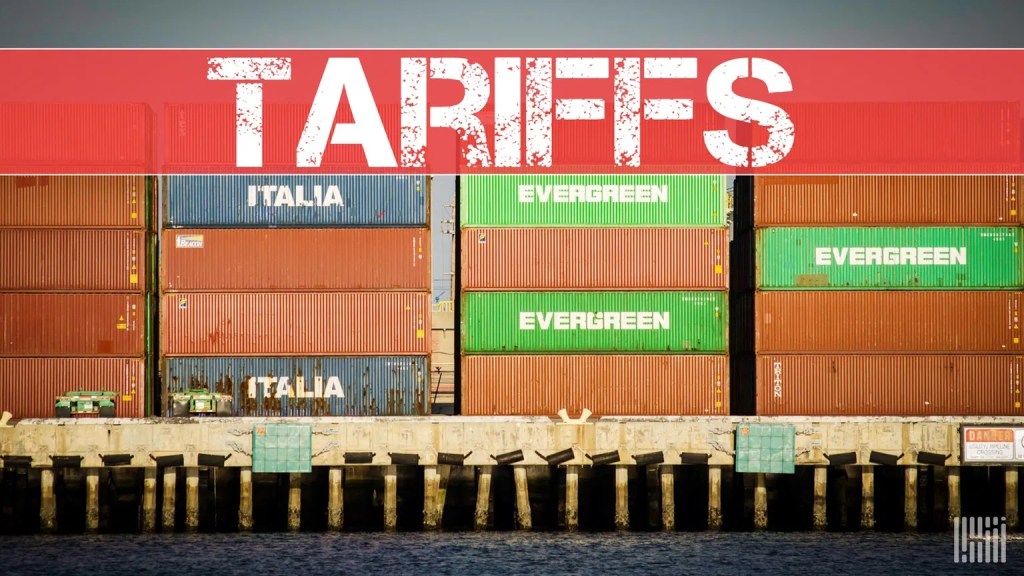
Japan and South Korea were informed that goods from their countries exported to the U.S. would face a 25% import tax beginning Aug. 1, President Donald Trump said Monday on Truth Social.

The Trump administration has begun sending letters to more than 90 U.S. trade partners that higher tariffs could kick in by August. Trump’s 90-day pause on the April 2 “reciprocal” tariffs was set to end Wednesday. 

“We invite you to participate in the extraordinary Economy of the United States, the Number One Market in the World, by far,” Trump wrote to leaders in Japan and South Korea. “Please understand this 25% number is far less than what is needed to eliminate the Trade Deficit disparity we have with your Country.”

Trump said both countries had the option of no tariffs should they choose to “build or manufacture product within the United States.”

“As you are aware, there will be no Tariff if Korea [or Japan], or companies within your Country, decide to build or manufacture product within the United States and, in fact, we will do everything possible to get approvals quickly, professionally, and routinely – in other words, in a matter of weeks,” Trump wrote.

Trump’s initial global reciprocal tariffs unveiled on April 2 ranged from 10% to 49%, including 49% on Cambodia, 25% on South Korea, 24% on Japan, 32% on Taiwan and 26% on India.

The Trump administration’s broad “reciprocal” tariff plan also included a baseline 10% duty rate on almost all goods, as well as 25% tariffs on certain imported vehicles and auto parts.

Trump on Aug. 9 paused the reciprocal tariffs on imports for 90 days, but kept a 10% baseline import tax in place for almost all U.S. trading partners.

Treasury Secretary Scott Bessent said Monday on CNBC’s “Squawk Box” that there could be several trade announcements soon, but did not specify which U.S. trading partners would be involved.

“We are going to have several announcements in the next 48 hours and I think what President Trump is concerned about is the quality of the deals, not the quantity,” Bessent said. “As you can imagine … when [Trump] said that there’s a chance that countries could boomerang back to their April 2 reciprocal tariff levels, we’ve had a lot of people change their tune in terms of negotiations. My mailbox was full last night with a lot of new offers, a lot of new proposals, so it’s going to be a busy couple of days.”

The Trump administration has recently announced trade deals with the United Kingdom, China and Vietnam.

Trump on Sunday also threatened countries which side with the policies of the BRICS alliance that they will be hit with an extra 10% tariff.

BRICS is an international organization aimed at economic cooperation and increasing the global influence of its members. The organization includes Brazil, Russia, India, China, South Africa, Egypt, Ethiopia, Indonesia, Iran and the United Arab Emirates.

“Any country aligning themselves with the Anti-American policies of BRICS, will be charged an ADDITIONAL 10% tariff. There will be no exceptions to this policy,” Trump wrote on Truth Social.

Members of BRICS — who are attending a two-day summit in Rio De Janeiro — released a joint statement on Saturday criticizing U.S. tariff policies.

“We voice serious concerns about the rise of unilateral tariff and non-tariff measures which distort trade and are inconsistent with World Trade Organization rules,” BRICS said in its statement.

When everything is freight fraud, nothing is

(The views expressed here are solely those of the author and do not necessarily represent the views of FreightWaves or its affiliates.)

“BE AFRAID OF FREIGHT FRAUD!”

 It’s no surprise when another freight fraud headline lands in our inbox, shows up on LinkedIn, or makes its way into a conversation. 

Freight fraud is a trending topic, but ask what it means, and most answers stop at “stolen freight.” The term has been stretched so far and used so vaguely that it no longer points to anything specific. 

Language shapes how we see problems and how seriously we take them. When a word or phrase gets used too often, too broadly, or too loosely, it begins to lose its meaning. Linguists call this semantic bleaching. It’s the phenomenon that turned the word “literally” into “kind of,” and made “love” something we say about a phone case or a cup of coffee. 

This is precisely what the freight industry has done to “freight fraud.” We’ve used the term so often, in so many contexts, that it no longer means anything. It is a catch-all for every type of criminal or deceptive activity. Everything from double-brokering and identity theft to fake pickups, forged certificates of insurance, and compromised email accounts.

What began as a real warning is now just another buzzword, repeated so often it’s lost all impact. Urgent, dangerous issues have been reduced to marketing campaigns. We’ve boiled deeply rooted problems into soundbites, hashtags, and oversimplified solutions.

The danger? When everything is “freight fraud,” nothing is. 

Without clear definitions, we chase our tails, mislabel threats, and solve nothing. Everyone talks about stolen freight, but the real danger keeps rolling—fraudulent carriers running for cheap rates, cutting corners, and never intending to play by the rules.

In the rush to spotlight stolen loads, we’ve overlooked the bigger problem: bad carriers hiding in plain sight. These aren’t one-time thieves, and in many cases, they’re not thieves at all. They’re repeat offenders who built fraud into their business model. They steal identities, ignore safety regulations, operate under misrepresented authority, and restart the same operation under a new name, again and again.

Freight fraud isn’t one problem with one fix. If it were, one of the dozens of vetting tools on the market would’ve already solved it. Freight fraud is a system built on distinct, traceable, and often preventable tactics. But we’ve buried those tactics in vetting tools with green checks and red Xs, mistaking box-checking for credibility.

If we want to fix this, we must start calling things by their names. This isn’t theory; these aren’t isolated events. These are the go-to methods fraudulent carriers use to stay in business, dodge accountability, and move freight they should never touch.


Using Facebook to Buy Authorities & Hide The Past

Fraudulent carriers buy existing USDOT numbers, often through Facebook groups or online forums, and change the contact information to assume the identity. They operate under that authority without completing proper registration, usually to hide violations and revoked authority from their other USDOTs. 

Yes, buying an entire business entity can be legal. But in these cases, the speed, anonymity, and lack of regulatory compliance suggest that most of these deals are not legitimate.

By taking over an older USDOT number, the purchasers appear more established than they are. That “age” helps them bypass basic vetting filters, like minimum time in operation.

This practice violates FMCSA rules. USDOT numbers are tied to a specific business name and tax ID. A change in ownership requires the new owner to apply for a new USDOT number, not simply swap identities.

Chameleon Carriers

These carriers cycle through USDOT numbers to dodge audits, erase their history, bypass vetting tools, and keep hauling freight. “Chameleon” and “ghost” carriers hide behind layers of LLCs and fake names, making it nearly impossible to trace who’s actually behind the wheel.

On load boards and vetting platforms, they look clean. They check all the boxes. Good authority age, a few violations; everything is in order. But behind the scenes, drivers are swapping placards and taping up a different USDOT from the folder in the cab. 

The illusion of legitimacy hides serious risks, and regulators, brokers, and shippers struggle to keep up.

Stolen Load Board Credentials

Fraudulent carriers steal login credentials from legitimate carriers, usually through phishing or weak passwords, and post fake capacity using their USDOT number. Brokers see a valid USDOT number and assign the load, not realizing they’re certainly not dealing with who they think they are. 

We want to automate everything, but automation makes this so much worse. If the carrier profile checks all the boxes, the system automatically tenders the load to the carrier. No questions asked. No human review required. No idea who is on the other end.

Compromised Email Accounts

Fraudulent carriers gain access to a legitimate carrier’s email account and assume the identity. Same domain, same signature, and same USDOT number. They communicate directly with brokers and shippers to book loads. Everything looks normal. But it’s not the real carrier behind the screen. 

Manipulated Documents 

Fraudulent carriers forge shipment documents to get paid. They alter piece counts, forge signatures, or create fake proof of delivery, often submitting the paperwork before anyone notices the load is missing or the order is incomplete.

Double-brokering

Double-brokering is the act of accepting a load and handing it off to another carrier, without the shipper’s or broker’s knowledge or consent. It introduces significant risk, hides the actual carrier, and complicates accountability when things go wrong.

Fraudulent carriers use double-brokering to mask ineligibility, move loads under someone else’s identity, or siphon profit from both ends.

Telling shippers and brokers to “vet your carriers carefully” is like handing out umbrellas in a hurricane. It sounds helpful, but it completely misses the real threat. 

That advice won’t stop a truck carrying a binder full of USDOT numbers, ready to slap on a new one at the next truck stop. Frankly, this kind of guidance is dangerous. 

Not all freight fraud is the same. A forged POD isn’t a phishing attack. A driver without a CDL isn’t a fake email. Changing an address on a Facebook-purchased USDOT number isn’t the same as an owner/operator moving homes. But today, we lump them all together under one vague label: “freight fraud.” 

Until we expose the specific criminal behaviors, we can’t address their root causes. Vague cries like, “PLEASE STOP FREIGHT FRAUD!” won’t push regulators to act. 

Let’s be clear: until the USDOT registration and update process is cleaned up, no one is truly being proactive. We’re all reacting to a system that has operated with minimal enforcement, allowing fraud to thrive for years. The flashy claims about “proactive approaches” and “next-gen vetting” mean very little when the foundation itself is flawed.

This article isn’t offering solutions. It’s a call for honesty. We need to stop hiding behind buzzwords and start naming the problems. This means genuine conversations, better enforcement, and education grounded in reality, not just compliance checklists.

All that said, there’s hope. The recent conversation between Timothy Dooner and Secretary Sean Duffy, and the executive order “Enforcing Commonsense Rules of the Road for America’s Truck Drivers,” signals that the right people are finally paying attention. If we stay focused on the real problems, not just the marketing language around them, we can start to turn the corner. 

Change won’t happen overnight, but it can happen.

It starts here, by calling suspicious behavior what it really is, by naming the tactics, not just the outcome. It means sharing what we know, educating others, and refusing to rely on vague advice or a single source of truth for vetting and compliance. It means helping each other keep the good carriers in and stop giving freight to the ones who never belonged on the road.

Cold storage provider Lineage announces expansion in Canada

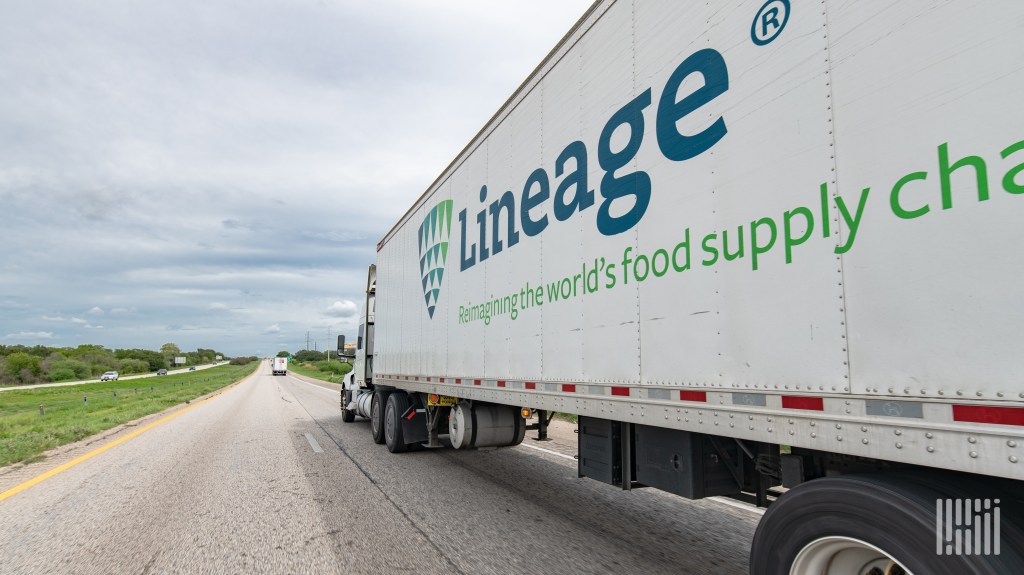
A Lineage trailer on a highway

Temperature-controlled warehouse operator Lineage Inc. announced that recent acquisitions and expansion projects in Canada will expand its network by 13 million cubic feet and more than 68,000 pallet positions.

The company said Monday that it has acquired three cold storage facilities in Quebec, Canada. The new warehouses are located near Montreal and increase its Canadian footprint to more than 30 locations.

Novi, Michigan-based Lineage (NASDAQ: LINE) also announced expansion projects at three existing locations in Canada, including the addition of 1,500 blast-freezing pallet positions at a Calgary location.

The upgrades are expected to be completed by the middle of next year.

“Canada plays a vital role for food logistics in North America and globally,” said Matt Cramer, President of North America East at Lineage, in a news release. “Our facilities are strategically situated near vital infrastructure that keeps goods moving – whether that’s down the road, across the border or beyond.”

Lineage manages more than 485 facilities with 3.1 billion cubic feet of space across North America, Europe and the Asia-Pacific region. It also provides freight forwarding, customs brokerage, drayage and truck transportation.

The company closed on the acquisition of Bellingham Cold Storage and its three warehouses in April.

More FreightWaves articles by Todd Maiden:

DHL’s German postal unit aims to increase use of parcel lockers

A woman removes a package from a yellow parcel locker.

The German post and parcel division of DHL Group said Monday it has launched a one-year trial with several online retailers to make it easier for consumers to have goods delivered to one of its parcel lockers.

Shoppers who order from participating businesses, such as Mosaik Tree GmbH (organic food and bone broth) and do-it-yourself home-and-garden store FarbenFux.de, now can direct orders to a DHL Packstation without pre-registering for the service. 

Sending shipments, such as returns, to the machines is already possible without registration. However, if private customers wish to receive shipments directly at the Packstation, they must register at dhl.de, fill our forms and activate their device in the Post & DHL app. They then receive a unique postal number, which they can use to have packages sent to the Packstation when checking out in the online shop. These steps are omitted if customers order from participating online retailers during the pilot phase. 

Customers simply enter the address of the desired Packstation when checking out in the online store. Once the DHL delivery driver has placed the shipment in the machine, they will receive a code via email that they can use to collect the shipment. The code can be scanned directly at the Packstation machine.  

“We want to remove further hurdles to inspire even more customers to use the Packstation,” said Benjamin Rasch, DHL Parcel’s head of marketing and product management, in a news release.

Vending machines are becoming increasingly popular for receiving and sending parcels because they can be used around the clock and are located in central public locations such as supermarkets, train stations, company premises, and residential areas. In addition to providing customers added flexibility, parcel lockers can also reduce costs for couriers by making deliveries to a single point instead of multiple households. DHL Parcel says millions of Germans regularly use more than 15,500 Packstations nationwide to receive parcels. 

If the trial is successful in driving increased use of Packstations, DHL Parcel said it will consider registration-free use a permanent feature of its delivery service.

Click here for more FreightWaves/American Shipper stories by Eric Kulisch.

DHL Express Canada resumes service after workers ratify labor deal

DHL acquires US e-commerce logistics business IDS Fulfillment

SONAR Enhances Oracle’s OTM Integration and Launches Shipper Consortium for Unmatched Supply Chain Benchmarking

SONAR is proud to announce significant upgrades to its integration with Oracle Transportation Management (OTM), bringing real-time freight market intelligence directly into OTM workflows through a partnership with Redwood Connect. Just in time for the OTM Sig conference, this enhanced integration also introduces SCORE, SONAR’s exclusive shipper consortium, enabling actionable benchmarking insights and accelerated return on investment.

Seamless Integration for Smarter, Faster Decisions

Powered by Redwood Connect’s Integration playbook, SONAR’s OTM integration solves persistent shipper challenges such as outdated benchmarks and lack of timely visibility. Oracle OTM cloud customers now have embedded access to SONAR’s high-frequency market insights, including:

  • TRAC Spot Rates: real-time, IOSCO/SOC2 compliant benchmarks
  • Contract Rates: invoice-derived cost benchmarks
  • Tender Rejection & Volume Indexes: forward-looking market direction signals
  • Lane Capacity Scores: intelligent insights for lane level negotiations

With over $200B in annual freight spend and 1,000+ unique market inputs, SONAR delivers near real-time freight trends, with <24-hour data freshness.

Introducing SCORE: Collaborative Benchmarking, Redefined

A key feature enhancement includes one-click data contribution from OTM into SCORE, made available via Redwood Connect. SCORE offers the most accurate, confidential, and tailored benchmarking platform in freight, with benefits including:

  • Tailored Insights: benchmark your performance against true peers with granular insights
  • Collective Intelligence: anonymized data sharing drives smarter industry-wide practices
  • Negotiation Strength: validate procurement strategies and reduce negotiation cycles
  • Multimodal Benchmarking: truckload, LTL, intermodal, drayage, air and ocean- by lane, mode and commodity.

Currently, 14 shippers have joined SCORE, representing $9B in transportation insights, with 34 more in legal reviewing totaling over $100B in potential contributions.

Join us at OTM Sig

The enhanced SONAR and OTM integration, transforms benchmarking from a backward-looking report into a proactive strategic tool. Visit the SONAR team at OTM Sig, at booth G9, to learn how to activate this integration and join the future of freight intelligence.

About SONAR

SONAR is the leading high-frequency freight market analytics platform, delivering actionable insights across all transportation modes. Trusted by industry leaders, SONAR empowers organizations to navigate market volatility, optimize transportation strategies, and drive measurable savings.

About RedwoodConnect

RedwoodConnect™ is the integration platform that powers logistics execution and supply chain technology orchestration. Any protocol. Any format. Any system. It’ll become the foundation of the digital transformation you’re looking for.

Italy shipbuilder appoints new US chief

Fincantieri Marine Group (FMG), the U.S. subsidiary of Europe’s largest shipbuilder, announced a significant leadership change, appointing George A. Moutafis as its new chief executive officer, effective July 1.

The transition comes at a strategic time for Fincantieri (OTC: FNCNF), headquartered in Trieste, as it follows a number of builders deepening their commitment to the U.S. shipbuilding sector amid a broader national focus on enhancing naval capabilities.

Moutafis has more than 25 years of experience including leadership roles at Beretta USA Corp., Fincantieri said in a release. Moutafis has previously contributed to the company’s strategies, particularly in innovation and execution of U.S. Navy platforms, showcasing his expertise in defense and naval manufacturing.

This leadership change arrives at a pivotal moment as the Trump administration signals renewed strategic emphasis on bolstering domestic naval capabilities. 

“George Moutafis’s leadership will ensure that FMG remains at the forefront of innovation and efficiency in the U.S. shipbuilding industry,” said Pierroberto Folgiero, Fincantieri’s chief executive and general manager.

Fincantieri has maintained a robust presence in the United States for over 15 years, investing more than $800 million in its shipbuilding operations. A significant portion of this investment has been directed towards enhancing the Marinette shipyard in Wisconsin, establishing a solid industrial footprint with four shipyards and a workforce of approximately 3,000 people.

Marinette plans to focus on icebreaker ships, Bloomberg reported, as Washington eyes new trade routes through melting Arctic ice and bolsters defenses against Russia.

South Korea’s Hanwha Shipping (042660.KS), HD Hyundai (267250.KS) and Chantier Davie Canada Inc. either own or are in talks to buy U.S. shipyard assets.

Find more articles by Stuart Chirls here.

Related coverage:

Crowley adds new U.S. Northeast ocean service with Central America

Merchant vessel attacked in Red Sea

US container import tariffs averaging 21%, says Maersk

China trade outlook improves, container rates — not so much

Crowley adds new U.S. Northeast ocean service with Central America

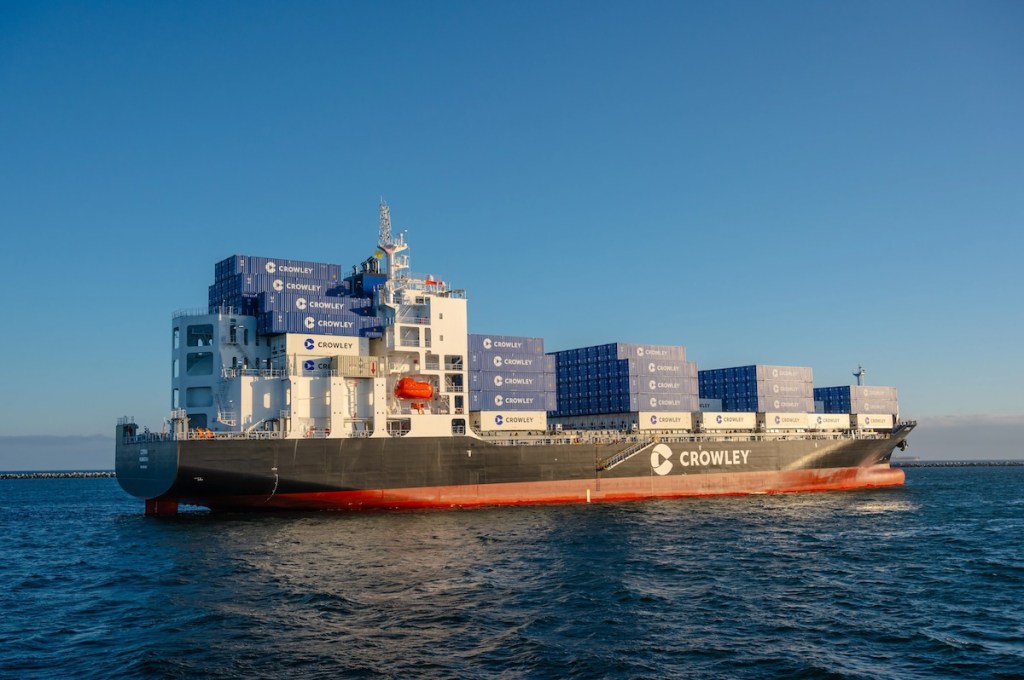
Crowley announced the launch of its first-ever shipping route connecting the U.S. Northeast with Central America.

This expansion of ocean shipping services marks a significant step for Crowley, the U.S.-flag operator, as it taps into the burgeoning market between the Port of Philadelphia’s Gloucester Marine Terminal and key ports in Guatemala and Honduras.

By deploying its advanced Avance class vessels, Jacksonville-based  Crowley promises five-day transits, ensuring the most timely deliveries of diverse goods, ranging from food and apparel to industrial products and consumer goods. Non-stop service via Crowley’s state-of-the-art LNG-powered vessels translates directly into reduced inventory idle time and lower supply chain costs for businesses.

“This means less inventory idle time, lower supply chain costs, and longer shelf life for critical products like fresh produce,” said Reinier van Delden, vice president of commercial operations at Crowley Logistics, in a release.

The inaugural voyage was scheduled to sail July 3 from Central America to Gloucester City, New Jersey, and will be operated in partnership with Gloucester Terminals LLC, a Holt Logistics Corp. client.

The new transport corridor creates more streamlined pathways for the Northeast Atlantic business owners to engage with international markets. 

“Marine service is an important pillar of Philadelphia’s economy,” said Christian Holt, a sales representative for Gloucester and Holt, in the release, emphasizing the role this route will play in fostering economic growth and creating jobs within the Philadelphia-South Jersey communities.

The new route fortifies Crowley’s long-standing operations in the Northeast Atlantic, providing regular container services to regions including Puerto Rico, the Eastern Caribbean, and the Virgin Islands.

Find more articles by Stuart Chirls here.

Related coverage:

Merchant vessel attacked in Red Sea

US container import tariffs averaging 21%, says Maersk

China trade outlook improves, container rates — not so much

Why 44% fewer cancelled sailings could be [blanking] bad news for SoCal trucking