ELP and non-domiciled CDL audit impact on brokers; another deadly wreck | WHAT THE TRUCK?!?

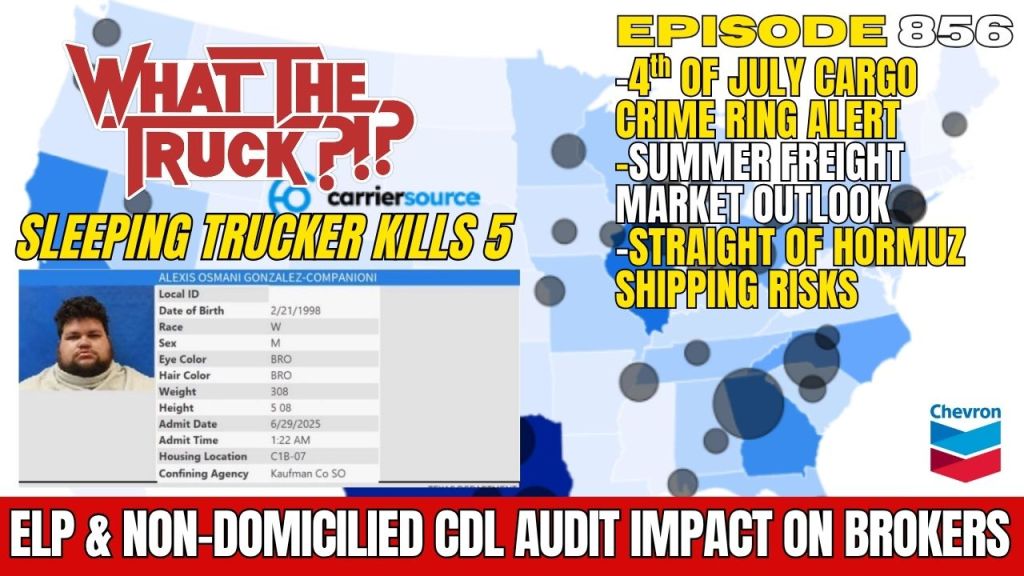
On episode 856 of WHAT THE TRUCK?!? Dooner discusses another tragic weekend truck accident. On Saturday, Alexis Osmani Gonzalez-Companioni reportedly fell asleep behind the wheel of his semi-truck, causing a crash that killed five people in Texas.

Following Secretary Duffy’s appearance on last Friday’s show, where he discussed English Language Proficiency (ELP) enforcement and a nationwide non-domiciled CDL audit, CarrierSources’ Kevin Hill joins to share how freight brokers and shippers are reacting to these regulations. He’ll also reveal what shipper search activity indicates about summer freight market demand.

Global turmoil could reshape shipping markets. Focal Point founder and CEO Anders Lillevik examines manufacturing and shipping risks stemming from conflict around the Strait of Hormuz.

Plus, GenLogs warns of a load board-based cargo theft ring targeting freight over the 4th of July holiday, and more.

Catch new shows live at noon EDT Mondays, Wednesdays and Fridays on FreightWaves LinkedIn, Facebook, X or YouTube, or on demand by looking up WHAT THE TRUCK?!? on your favorite podcast player and at 6 p.m. Eastern on SiriusXM’s Road Dog Trucking Channel 146.

Watch on YouTube

Check out the WTT merch store

Visit our sponsor

Subscribe to the WTT newsletter

Apple Podcasts

Spotify

More FreightWaves Podcasts

Rail could boost exports in new Port of LA pact

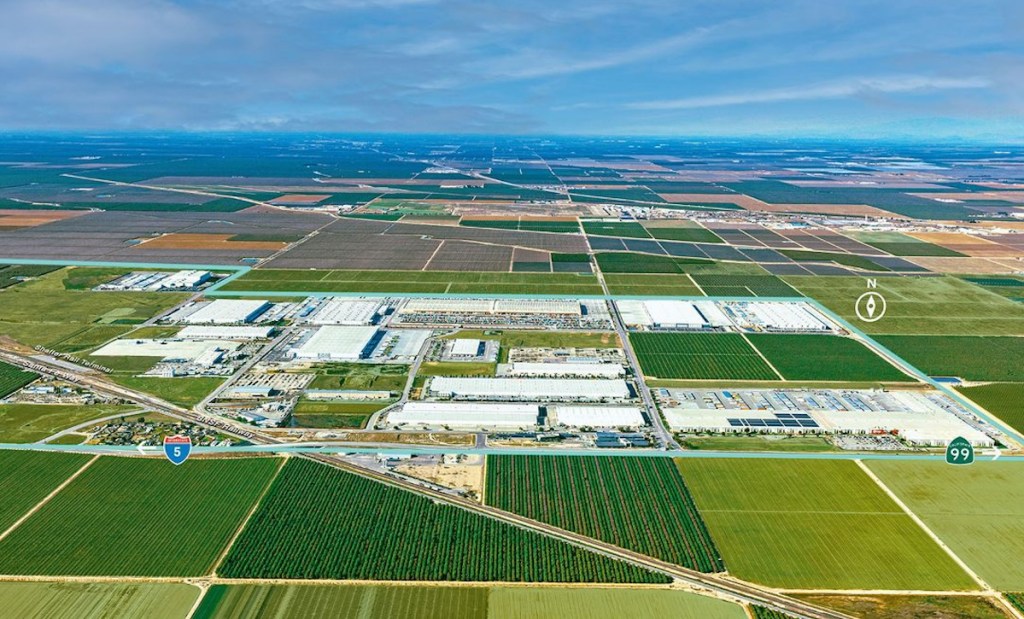
The Port of Los Angeles has signed a Memorandum of Agreement to generate more export traffic for the port from California’s Central Valley through an agreement with the city of Shafter and the developer of a logistics hub there.

Central to the agreement is the Wonderful Logistics Center, a 3,400-acre development in Shafter, Calif. — 18 miles west-northwest of Bakersfield on the BNSF main line — owned by the Wonderful Co. The logistics hub and container depot already serves companies including Amazon (NASDAQ: AMZN), Ross (NASDAQ: ROST), Target (NYSE: TGT), and Walmart (NYSE: WMT). An international rail terminal is scheduled to open in 2026.

“Both The Wonderful Co. and the City of Shafter have a well-planned vision for creating jobs and promoting economic growth in the Central Valley, and the Port of Los Angeles stands ready to help,” Port of Los Angeles Executive Director Gene Seroka said in a release. “This agreement represents our commitment to support faster and more efficient service to and from the Central Valley right to our terminals and to markets across the world.”

The agreement calls for a pledge to develop two-way domestic and international traffic through the logistics center and the port; exporter outreach in the Central Valley; efforts to develop mutually beneficial business opportunities; and share best practices on workforce training and development. The agreement supports the port’s effort to position the surplus of empty containers at its terminals and position them for agricultural exporters.

“Our partnership with the Port of Los Angeles marks a significant evolution in the supply chain, enhancing cargo velocity and enabling California’s farmers to become more competitive and agile in the global marketplace,” said Sepehr Matinifar, vice president of logistics for the Wonderful Co.

Subscribe to FreightWaves’ Rail e-newsletter and get the latest insights on rail freight right in your inbox.

Related coverage:

Bill aims to level playing field for railroad workers

New partners connect rail camera network with telematics visibility

Indiana port taps Louis Dreyfus to restart grain terminal

House panel wrangles on rail safety technology

US maritime chief ‘not a big fan’ of ocean carriers’ ‘approach’ as agency reviews antitrust immunity

The Federal Maritime Commission (FMC) said it has initiated a review of an agreement with the World Shipping Council (WSC), to determine whether signatory ocean carriers are still covered by limited antitrust immunity.

The June 26 filing said that the agency “aims to assess whether the activities undertaken by the WSC under this agreement align with the FMC’s jurisdiction as outlined in the Shipping Act. The central question is whether the cooperative working arrangement claimed by WSC is legitimately within the Commission’s purview, or if it falls outside the boundaries set by federal regulations.”

The WSC, which represents approximately 90% of global liner vessel services, was granted limited antitrust immunity under an agreement with the FMC in 2020. This agreement allows member carriers to engage in various trade association activities such as exchanging information, discussing policies, and formulating common industry positions. However, the Commission has raised concerns about whether these activities extend beyond the scope of cooperation intended to be regulated under the Shipping Act.

“I am not a big fan of the WSC and their approach. I have been very vocal on that always,” FMC Chariman Louis Sola, whose is exiting the agency today, told FreightWaves. “Rather than work with us on the rule-making Congress tasked us to do in the OSRA (Ocean Shipping Reform Act of 2022), they sue us in federal court.”

Sola was referring to the WSC in April filing a petition for review with the U.S. Court of Appeals for the District of Columbia Circuit seeking to have the FMC correct an internal contradiction in its new rule on detention and demurrage. 
Members of the WSC include U.S.-flag carriers Matson and Crowley, as well as Maersk (OTC: AMKBY) of Denmark, Switzerland’s MSC, CMA CGM of France, Zim (NYSE: ZIM) of Israel, the ONE alliance of Japan-based lines, Taiwan’s Yang Ming (2609.TW) and Evergreen (2603.TW), and Cosco and OOCL of China.

Key to this jurisdictional inquiry is whether the activities detailed in the WSC agreement can be classified as a “cooperative working arrangement” under the parameters of the Shipping Act. According to the Commission’s guidelines, such arrangements are intended to regulate specific operations of ocean common carriers, typically involving direct shipping activities. The agreement under scrutiny fails to clearly align with these regulatory expectations, particularly because it involves discussions and lobbying rather than direct marine transportation operations.

“When these agreements are properly filed with the FMC, they receive limited antitrust immunity,” said maritime attorney Lauren Beagen, in a LinkedIn post. “That means conduct that might otherwise be considered monopolistic is permitted only within the boundaries of the Shipping Act and FMC oversight.

“But if an agreement’s purpose or activities fall outside the FMC’s regulatory scope? That limited immunity could be challenged … and revoked. And without it, those activities might not be allowed to continue.”

This could lead to legal challenges against WSC by competitors or customers, potentially altering the competitive dynamics in the ocean transportation industry. Furthermore, a decision against the WSC could set a precedent for reevaluating similar agreements filed with the FMC, tightening the regulatory environment surrounding cooperative arrangements.

Conversely, if the FMC concludes that the agreement is within its jurisdiction, it may signal a broader interpretation of “cooperative working arrangements,” potentially inviting other trade associations to seek similar status. This could stimulate more collaborative efforts among carriers to address industry-wide challenges while remaining under the protective umbrella of antitrust immunity.

“As a global trade association, the World Shipping Council takes its regulatory compliance responsibilities very seriously,” WSC Chief Executive Joe Kramek told FreightWaves, in an email. “Under the U.S. Shipping Act, ocean carriers are required to file agreements with the Federal Maritime Commission when they engage in cooperative working arrangements. In accordance with this legal obligation and with the encouragement of the FMC, five years ago WSC filed its Shipping Act agreement which has since been on file with FMC. 

“We look forward to fully responding to the FMC’s order.”

This article was updated June 30 to add a statement from FMC Chairman Louis Sola and the World Shipping Council.

Find more articles by Stuart Chirls here.

Related coverage:

Drewry: No “lasting impact” from tariff break as ocean rates fall again

With Mideast shipping on high alert, Maersk re-opens Israel port
Maersk unveils new AI platform to simplify customs tasks

New Mideast tensions fail to boost trans-Pacific container rates

Policy from the Cab: How DOT’s Pro-Trucker Package Puts Drivers First

For the first time in recent memory, truck drivers are seeing Washington’s focus shift away from association boardrooms and beltway think tanks and toward the people behind the wheel. The Department of Transportation’s newly announced Pro-Trucker Package, spearheaded by Secretary Sean Duffy, is being hailed by many as a meaningful reset of how policy is made in this industry. More importantly, it introduces structural reforms to FMCSA’s DataQs system, truck parking, driver flexibility, and red tape, all in the name of making trucking fairer, safer, and less burdensome for the people actually doing the job.

In a rare move, Duffy bypassed the usual rounds of staged press conferences and instead went straight to the freight community, joining host Timothy Dooner on What the Truck?! to break it down. This was a signal that this administration wants more direct feedback from the cab, not just from the conference room.

A Due Process Overhaul and The DataQs Reforms

One of the most consequential changes in the new package lies within the FMCSA’s DataQs system, a platform that most drivers and fleets know as their primary recourse for correcting inaccurate data. A violation wrongly issued on the roadside doesn’t just bruise egos, it affects SMS scores, CAB reports, insurance premiums, and roadside inspection frequency. For years, drivers and safety professionals have been frustrated by the opaque, slow, and often biased way states have handled DataQs challenges.

Under the new proposal, which ties compliance to state Motor Carrier Safety Assistance Program MCSAP grant funding, FMCSA is instituting a three-level review structure that introduces both accountability and impartiality into the process.

The first level, Initial Review, must now be opened by the state within seven days and resolved within 21 days. If a requestor fails to provide additional information when asked, the system will close the case. However, if reopened, it will return to the original level of review, rather than automatically escalating. Crucially, the officer or inspector who issued the citation cannot be the sole decision-maker when denying a correction. Every denied challenge must now include a written rationale, list of evidence reviewed, and directions for appeal.

The second tier, Reconsideration Review, brings in an entirely separate evaluator or review panel. States must respond again within 21 days, and a legal review is encouraged where applicable. This tier adds an important buffer between enforcement personnel and the final decision, giving drivers a genuine chance at a fair second look.

Finally, the Final Review must be conducted by a senior official or panel removed from the initial chain of command. With a 30-day window for resolution, this level creates the kind of impartial oversight that many in the industry have long demanded. Still, the burden of proof remains on the requester, who must present new facts or clear legal grounds to challenge previous determinations.

For drivers and safety consultants alike, this is not just regulatory paperwork it’s a due process reboot. As one commenter put it, “This is our day in court.” And now, the court is more transparent and more accountable.

The Parking Problem Gets Real Funding

Another long-standing issue finally sees real federal attention: truck parking. While private companies like Truck Parking Club do what they can, effective government involvement is always welcome. With only one parking spot for every 11 trucks, drivers regularly burn 30 to 60 minutes of valuable driving time circling for a safe place to park and shut down. From fatigue to HOS violations to predatory towing, parking scarcity has quietly driven up exposure and stress across the industry.

The new package commits over $275 million in federal funding for truck parking infrastructure, including a significant $180 million investment in Florida to build 917 new spaces along the I-4 corridor in Volusia, Seminole, and Osceola counties. The USDOT has also issued a memorandum reinforcing that truck parking is a national safety priority under Jason’s Law and affirming that federal-aid highway programs can and should support parking infrastructure.

Unlike past lip service, these funds are tied to shovel-ready projects, not bureaucratic limbo. This means we may finally see concrete poured instead of promises made.

Slashing the Red Tape That Traps Good Carriers

Regulatory bloat has been another slow bleed on the industry. From duplicate paperwork to conflicting federal and state standards, the cost of compliance has increased while safety outcomes remain stagnant.

The FMCSA is now proposing to eliminate over 1,800 words from the federal regulations, with estimates projecting millions of dollars in annual savings for fleets and operators. This isn’t deregulation for deregulation’s sake; it’s about cutting rules that result in thousands of unnecessary violations with no tangible safety benefit. One example: removing outdated paperwork mandates that don’t account for modern telematics systems already tracking the same data.

In tandem with that, the agency reaffirmed that it will not extend the ELD mandate to pre-2000 trucks, thereby protecting legacy operators and small business truckers from the cost of retrofitting outdated vehicles with modern technology.

A Pause on Speed Limiters and a Focus on Flexibility

The hot-button policy walking off the stage is the proposed speed limiter mandate. Citing inadequate safety justification and serious operational concerns, FMCSA and NHTSA are jointly withdrawing the proposal. Critics of speed limiters have long warned of unsafe speed differentials, especially on rural interstates where traffic flow exceeds artificial caps. The withdrawal gives professional drivers more autonomy and acknowledges the reality that they are better equipped to handle their rigs than any algorithm.

Additionally, FMCSA is rolling out two new pilot programs aimed at flexible hours-of-service regulation. These include:

  • A flexible sleeper berth split program, allowing 6/4 and 5/5 rest splits;
  • A pause clock option, which would let drivers stop the 14-hour on-duty window for 30 minutes to 3 hours to account for delays, traffic, or rest needs.

Both programs aim to gather real-world data on whether flexibility improves rest quality and operational efficiency, a goal that many drivers have called for since the current 14-hour rule was introduced.

Modernizing the Systems Behind the Wheel

It’s not just policy getting updated, it’s the platforms drivers use to interact with FMCSA.

A refreshed Driver Resources portal is now live, featuring mobile-optimized layouts and enhanced navigation for both truck and bus operators. The National Consumer Complaint Database is being rebuilt on a modern platform with faster response times and expanded categories, including property brokers. Expect the first wave of changes to go live by fall.

As already outlined, the DataQs system itself is gaining long-needed transparency features, including response timelines, decision documentation, and more explicit guidance on appeals.

A Government Finally Listening to the Frontline

At the heart of this shift is perspective. Duffy’s decision to skip the D.C. talking circuit and speak directly to drivers on air, on record, sends a message: this administration is looking to the people doing the job, not just regulating it.

It mirrors a broader trend we’re seeing across agencies, from Pete Hegseth’s leadership in defense to DOT’s outreach in transportation. A policy built without frontline input is a policy built to fail and this time, it seems like someone’s listening.

Eyes on the Road Ahead

There’s still work to do. Truck drivers remain exempt from the Fair Labor Standards Act, meaning they’re not eligible for guaranteed overtime. While the No Tax on Overtime Act makes headlines, drivers are once again excluded. The GOT Truckers Act was reintroduced and it could change that, but it needs momentum.

One part of the regulatory conversation that’s likely to ruffle feathers among drivers is CVSA’s renewed push for mandatory Universal Electronic Vehicle Identifier (UEVI) also known as “trackers on truckers” in the next highway bill. Tucked into their legislative wishlist is a proposal to require universal electronic vehicle identifiers on all new commercial motor vehicles. The idea? Allow roadside enforcement to wirelessly ping and identify vehicles in real time to determine risk and compliance, without ever pulling a truck over. While CVSA frames the move as a leap in enforcement efficiency, many in the driver community see it differently: as a privacy overreach wrapped in a safety narrative. This isn’t a new fight. The FMCSA considered similar mandates in 2010 and again in 2022, but overwhelming opposition from truckers and OOIDA led the agency to shelve the rule. Now, with CVSA attempting to sidestep public comment by appealing directly to Congress, drivers are once again raising concerns about constant surveillance, erosion of due process, and unchecked data collection. There’s no argument that unsafe carriers need to be held accountable but the question remains: At what cost to the rights of safe, compliant drivers?

Let’s not ignore the bigger elephant in the cab, there is still no national minimum training standard for earning a CDL under the Entry Level Driver Training program (ELDT). In too many cases, drivers are being licensed with as little as a single day of instruction, raising serious questions about safety, litigation exposure, and the long-term health of the profession. Essentially, the regulation for ELDT omitted minimum training time requirements and prioritized subjective proficiency for training. The regulation instead relies on state laws for the training duration. Most states have no minimum training requirements. The only real time requirement is to have a Commercial Learner Permit (CLP) for 14 days. 

If we want a safer industry, we can’t just modernize systems we have to raise the bar for those coming into the industry. 

The Pro-Trucker Package isn’t perfect but it’s progress. From DataQs to parking to pilot programs, we’re seeing the kinds of reforms that move the needle for drivers, fleets, and everyone sharing the road.

For once, we have an administration that appears willing to put the people affected by policy reforms in the driver’s seat to help shape those policies. Let’s make sure it stays that way.

First legal steps taken, this time by WSTA, to untangle the legal knot of the Clean Truck Partnership

The fate of the Clean Truck Partnership (CTP), the 2023 grand bargain between California and the nation’s engine manufacturers, has been a subject of debate with the end of the federal government’s waiver that served as a catalyst for the deal. 

And now direct action has been taken against it. The Western States Trucking Association (WSTA) has petitioned the California Office of Administrative Law to determine whether the CTP was properly reached under California law.

Sean Edgar, the environmental policy & media advisor at WSTA, described the CTP in an interview with FreightWaves as “an unholy alliance between original equipment manufacturers and the California Air Resources Board (CARB) that is resulting in tremendous chaos and distress for the trucking industry.”

The WSTA has filed multiple lawsuits in different venues over the years regarding the regulation of transportation fuels and emissions. Driving this particular action targeting the CTP, Edgar said, is the organization’s belief that “it is pretty apparent that CARB has completed disrespect for federal law,” citing the Congressional action under the Congressional Review Act (and subsequently signed by President Trump) that targeted a key California regulation–the Omnibus NOx rule–that is key to the CTP. 

Beyond the WSTA action, whether the CTP could survive given the changed regulatory landscape has become a significant question among trucking regulatory observers in the last six months, starting with the decision by CARB to withdraw its request for a waiver from the Environmental Protection Agency (EPA) that would allow the implementation of the state’s Advanced Clean Fleets (ACF) rule. 

The Congressional Action followed, later signed by President Trump, that revoked waivers granted by the Biden administration’s EPA allowing the implementation of California’s Advanced Clean Trucks (ACT) rule and the Omnibus nitrogen oxide (NOx) rules. The ACT required OEMs to sell a growing percentage of zero emission trucks into the state on the way to a diesel-free fleet in the 2040’s. The NOx rule required a reduction starting in 2027 of emissions of that pollutant from heavy-duty engines. 

The CTP was a deal reached in July 2023 among CARB, several truck manufacturers and the OEM’s trade association, the Engine Manufacturers Association. Under the CTP, CARB agreed to align its proposed rules on NOx emissions with federal standards, thereby putting off a more stringent state deadline until 2027. 

It also saw CARB agree to a moratorium on any new regulations for at least three years’ implementation and four years’ lead time, and the truck manufacturers and EMA agreed they would meet the CARB standards “regardless of any attempts by other entities to challenge California’s authority.”

The conundrum then in the wake of the last few months of regulatory upheaval is that the ACT and the ACF were to work together, with the ACF laying out requirements on what fleets needed to buy and the ACT pushing OEMs to make those zero emission vehicles. Separately, the Omnibus NOx rule was going to clean up the diesel engines that were to be sold, and with the engine manufacturers onboard via the CTP, the road to cleaner engines appeared to be well-paved.

But then the ACF waiver request was withdrawn, effectively killing the core of the program, which raised the question whether the OEMs could find buyers for the ZEVs they were required to sell in the state. Waivers for the ACT and the NOx rule were killed by the Congressional action under the CRA, and the court battle to have that overturned would take some time to have impact if it is ultimately successful.

Gotta stick to the deal?

And adding to the uncertainty, the CTP contains that problematic requirement, considering the events of the past weeks, that all parties proceed regardless of those outside attempts to push back against California’s action. 

The filing by the WSTA is the first concrete step taken by a CTP foe since those regulatory shifts took place. 

In a brief statement, a CARB spokeswoman said the agency can not comment on the WSTA petition to OAL. But she added, “CARB believes there’s been no change to the Clean Truck Partnership.”

Edgar said under state procedures, the Office of Administrative Law (which is under the state’s executive branch) has 60 days to respond to the petition filed by WSTA. After that response, Edgar said, his organization will decide what steps to take next.

He added the agency is not seen as a rubberstamp for all regulatory actions. Edgar cited a rejection by OAL earlier this year of some changes in California’s Low Carbon Fuel Standard. Revised LCFS standards will be going into effect July 1. The LCFS is a credit-based program designed to incentivize the use of lower carbon transportation fuels, such as renewable diesel.

No news from Nebraska

There is another legal action against the CTP: a suit filed in November by the state of Nebraska, the trade groups Energy Marketers of America and Renewable Fuels Nebraska against the EMA and the diesel manufacturers that signed the CTP: Navistar, Paccar and Volvo North America.

A look at the docket in that case reveals that little has happened with it since it was filed. The parties were all just given 90-day extensions on various filing deadlines in the case, which is in the state district court for Lincoln County, Nebraska. 

In a formal statement on the action it took, the WSTA said CARB did not comply with the state’s Administrative Procedures Act (APA) in entering into a private agreement with the OEMs and the EMA “to adhere to selling only zero emission trucks to California (despite federal action to block the rule) and not inviting public comment to the agreement (a cornerstone to the APA).”

WSTA said the “net effect” of those actions “is a result termed ‘underground regulation,’ which is precisely what the APA is intended to avoid.”

The association does not represent over the road trucking companies in California; that’s the province of the California Trucking Association. The bulk of its membership represents fleets of various types of work trucks, such as dump trucks and water trucks. 

According to the WSTA, former CARB deputy executive officer Craig Segall has said the CTP is “legally binding” despite the various blows to the regulations underpinning the CTP, possibly a reference to a statement Segall made in this article.

They shook hands

Segall also issued a statement last week through a representative about the CTP’s legal status. He was one of the negotiators who put together the deal. 

“The companies shook hands with California on a workable path forward,” Segall said in the statement. “Will they now stand behind their commitments as others attack them? Or will they stay silent during this attack? My hope is that they will stand up for the electric future they claim to support.”

An email to the EMA had not been responded to by publication time. 

An observer of the trucking regulatory scene described the engine manufacturers as “stuck between a rock and a hard place” over the CTP that it signed following the demise of the NOx waiver, the existence of which presumably was one of the reasons the organization came to the table. 

More articles by John Kingston

State of Freight Takeaways: English language rule for truckers takes effect, early impacts emerging

SCOTUS decision on California Clean Cars waiver could have benefit to trucking later

Werner triumphs at Texas Supreme Court in nine-figure nuclear verdict case

The 4 Types of Load Boards – When and How to Use Each

Load boards are one of the most misunderstood tools in trucking. Too many carriers treat them like their main source of business instead of what they really are—a tactical tool to bridge the gap, not build the whole strategy. If you rely on the wrong load board or use the right one the wrong way, you’ll end up running cheap freight, chasing rates, and burning out your equipment.

But when you understand the different types of boards—and when to use each—you get leverage. You stop chasing freight and start positioning your trucks for profit, consistency, and long-term growth.

Let’s break down the four types of load boards every small fleet owner needs to know, and how to use each one like a pro.

1. Public Load Boards – The Open Market

These are the boards everyone knows:

  • DAT One
  • Truckstop
  • 123Loadboard
  • Trucker Path

These boards are open to everyone—brokers, carriers,etc. That means they’re flooded with posts every day.

When to Use Them:

  • You’re new and building relationships
  • You need a backhaul to avoid deadhead
  • You’re testing a new lane or region

How to Use Them Right:

  • Don’t just look at rate per mile—filter by broker credit score, days to pay, and equipment type
  • Use the lane rate averages and broker history tools inside Truckstop to negotiate
  • Post your truck early in the day (before 7:30am) with clear preferences

Red Flag:

If 99% of your freight is coming from public load boards, you need to look to diversify, quickly. Use them to fill gaps, not run your operation.

2. Private or Invite-Only Load Boards – Broker-Controlled Access

Some larger brokers have private portals or controlled-access load boards. These are only available to vetted, onboarded carriers, and often feature better-paying or dedicated lanes.

Examples:

  • C.H. Robinson Navisphere
  • TQL Carrier Dashboard
  • JB Hunt 360
  • Echo Drive

When to Use Them:

  • You’ve already onboarded with the broker
  • You want consistent volume from the same shipper lanes
  • You’re looking to scale from transactional to repeat business

How to Use Them Right:

  • Set up lane alerts inside the portals
  • Use the board to monitor volume trends before you call a rep
  • Combine board activity with a weekly check-in call to your carrier rep

Pro Tip:

Always negotiate off the board. Just because it’s posted at $1,500 doesn’t mean that’s the final number. Send your bid through the portal, then follow up with a call.

3. Niche or Specialized Load Boards – For Specialized Freight

If you haul cars, hazmat, heavy equipment, reefer LTL, or oversize, general boards won’t cut it. Niche boards give you tighter networks and more tailored freight.

Examples:

When to Use Them:

  • You’re operating in a specialized equipment market
  • You want to avoid competing with 100 dry van carriers for the same load

How to Use Them Right:

  • Make sure your credentials and insurance are up to date in the system
  • Monitor early week and end-of-week activity—specialty freight has tighter windows
  • Build shipper relationships directly from these boards (many post directly)

Tactical Note:

Use niche boards to build outbound anchor loads that you can match with general board backhauls.

4. Direct Shipper Load Boards or Co-Ops – Relationship-Driven Boards

Some regional shippers or associations operate their own boards or co-ops. These aren’t public and often require registration, proof of insurance, and a track record.

Examples:

  • Regional food co-ops
  • Private manufacturing boards
  • Agriculture or produce boards

When to Use Them:

  • You’ve built a niche in a specific region or industry
  • You want less competition and higher margins

How to Use Them Right:

  • Be responsive—these boards are about relationships, not just bookings
  • Offer flexibility—smaller shippers often need after-hours pickups or weekend drops
  • Track your performance—on-time delivery, communication, clean equipment

Extra Edge:

These boards are often underutilized. Ask your local chamber of commerce, industry trade groups, or regional distributors if they use or recommend any private freight boards.

How to Layer Load Boards into a Smart Dispatch Strategy

The best fleets don’t rely on one type—they layer them based on their weekly goals:

  • Use public boards for backfills and market testing
  • Use private boards for consistency and lane development
  • Use niche boards for high-margin outbound loads
  • Use direct boards to reduce broker dependency

Your weekly game plan might look like this:

  • Monday-Wednesday: Book outbound from a niche board or private broker portal
  • Wednesday-Thursday: Secure backhaul via public board
  • Thursday-Friday: Post trucks early and negotiate reloads for Monday

Stay proactive. Don’t wait for freight to come to you. Use your board mix to stay in control.

Final Word

Load boards aren’t bad—but they’re not all built the same. The smartest small carriers use them like tools in a box, not a crutch. Know when to log on, know when to pick up the phone, and know when to walk away from a rate that doesn’t make sense.

Understand the four types. Use each one for what it’s good at. Build your freight plan around strategy, not desperation.

Because when you control your freight sources, you control your revenue—and no one load board should ever have that much power over your operation.

Borderlands Mexico: Winner in global tariff war could be Mexico, report says

Borderlands is a weekly rundown of developments in the world of United States-Mexico cross-border trucking and trade. This week: Winner in global tariff war could be Mexico, report says; DutyFreeZone.com secures distribution rights for Corona beer; and Korean auto supplier opens factory in Mexico.

Winner in global tariff war could be Mexico, report says

Mexico could reap the benefits of President Donald Trump’s global tariff war and is poised to continue profiting from the growing trend of nearshoring.

While the average U.S. tariff rate rose to as high as 28% on countries around the world after Trump’s “Liberation Day” import tax announcement on April 2, most goods from Mexico to the U.S. qualify for tariff-free treatment under the United States-Mexico-Canada Agreement.

The USMCA “positions Mexico as a reliable alternative for companies seeking to reduce exposure to trade friction and long lead times from overseas markets,” according to Uber Freight’s 2025 Q2 Market Update.

“Nearshoring .. might slow down a little bit, but it is not going away,” Jose Guerrero, Uber Freight’s director of U.S. customs, told FreightWaves in an interview. “As a matter of fact, there’s a lot of Chinese investment in Mexico that’s happening. Our sales teams are really engaged with those companies.”

Nearshoring involves relocating business operations, particularly manufacturing and production, from countries around the globe to Mexico, which is geographically closer to the U.S.

The shift in supply chain strategy aims to benefit from Mexico’s trade agreement with the U.S. and other nations, along with the country’s lower labor costs and streamlined supply chains across North American markets.

Tariffs on goods imported from China to the U.S. vary significantly depending on the product, with rates ranging from 0% to 145%, according to the Peterson Institute for International Economics. The average tariff rate on Chinese exports to the US is currently around 51.1%,

Mexico was the top trading partner of the U.S. in April, with two-way commerce totaling $69.7 billion, a 4% year-over-year decline compared to April 2024.

Canada ranked No. 2 in trade at $56.6 billion in April. China ranked third at $33.6 billion, followed by Germany at $20.5 billion and Japan at $20.4 billion.

“Mexico and Canada are the biggest trading partners with the U.S., and with some of the changes that have transpired over the last couple of months … Those companies that are really taking advantage of the whole USMCA program have really not stopped, trade never stops,” Guerrero said.

“The volume continues to be there. I think customers are starting to realize that maybe this might be the new norm. There are some customers who are a little hesitant because obviously tariffs can impact bottom lines. But at the end of the day, they have orders to fulfill, and consumers are still buying, so the demand is still there.”

Guerrero said customers have been seeking solutions to lessen the impact of import tariffs on supply chains.

“What our customers are saying is that they’re trying to be smarter … “How can I mitigate my risk or mitigate my tariff outlay or duty outlays,” Guerrero said. “They’re not looking to avoid it, because avoidance is never a way. Tariffs are put in place, and they’re going to be in place until legislation changes it.”

Shippers are closely examining their entire supply chain in search of cost-saving opportunities, according to Guerrero.

“More customers are starting to ask the right questions,” Guerrero explained. “‘Where are my components made? Where are they sourced from? How does that affect my overall costs—or even the duties I pay on certain goods?’”

Guerrero’s top advice for shippers is to “know your data, stay current on regulations and costs change daily. And most importantly, talk to your customs brokers and service providers. We have the insights and updates you need to stay ahead.”

DutyFreeZone.com secures distribution rights for Corona beer

Laredo, Texas-based DutyFreeZone.com recently signed an exclusive distribution agreement with Corona beer. 

The strategic alliance grants DutyFreeZone.com the right to distribute Corona across select duty-free zones, emerging markets and special international territories, according to a news release.

As part of the agreement, DutyFreeZone.com will handle the importation, warehousing, and distribution of Corona products — including bottles, cans and multi-packs — across its network of authorized retailers, hospitality operators, and wholesalers in international markets

Founded in 1998, DutyFreeZone.com is an online marketplace that allows customers to purchase duty-free products from thousands of vendors worldwide. The company operates logistics centers in Panama, Curaçao, Mexico and the U.S. 

Corona beer is owned by AB InBev. Constellation Brands holds the exclusive rights to import, market, and sell Corona in the U.S.

Korean auto supplier opens factory in Mexico

Korean automotive company SL MEX announced the completion of a $45 million production plant in Villa de Reyes, Mexico, according to Cluster Industrial.

The 150,695-square-foot factory will produce automotive headlamp modules for global clients such as BMW, General Motors, Hyundai and Kia. The facility currently employs 385 workers.

Villa de Reyes is a municipality in the Mexican state of San Luis Potosi in central Mexico.

SL MEX is the Mexico-based subsidiary of SL Corp., a global automotive supplier based in Daegu, South Korea. The company was founded in 1954 and has 12 factories around the world. SL Corp. employs more than 12,000 workers.

Trucking market stalls in first half of 2025, despite tumultuous trade environment

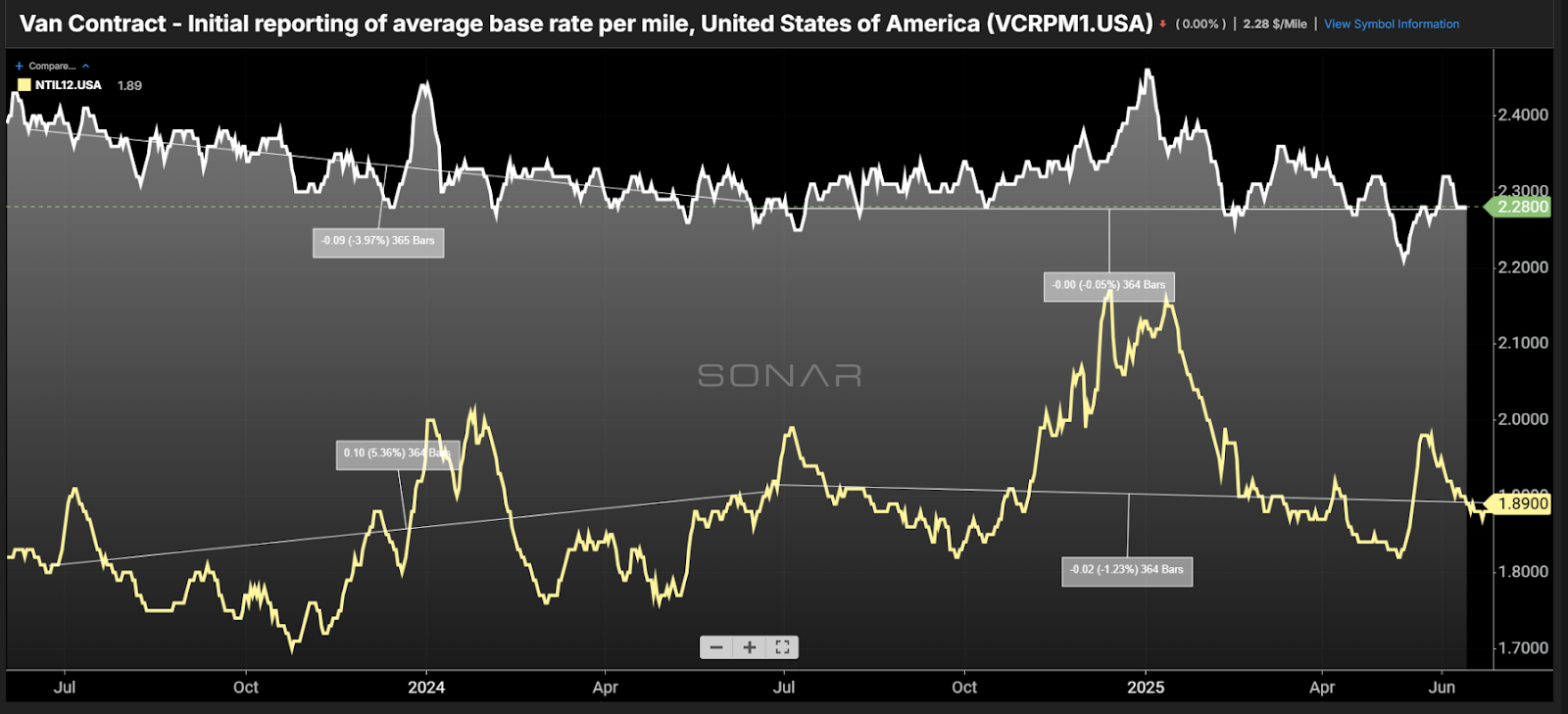
Chart of the Week:  Van Contract initial report of average base rate per mile, National Truckload Index (less estimated fuel costs above $1.20/gal) – USA SONARVCRPM1.USA, NTIL12.USA

Contract rates for dry van truckload shipments (VCRPM1) are nearly unchanged from this point in 2024, despite the disruptive forces that rocked supply chains earlier this year. Spot rates (NTIL12), which appeared to be accelerating their rise at the end of 2024, are ending the first half of 2025 slightly below year-ago levels. Both rate indices suggest a trucking market that has stalled in its recovery. What are the takeaways from the first half, and what should we watch for in transportation markets over the next six months?

Freight recession gets an extension

After what looked like a straightforward path toward a much stronger freight market in 2025, transportation service providers are closing out the first half of the year in no better position than they were 12 months ago. While the trade war has played a role, it is not the sole driver of stagnation.

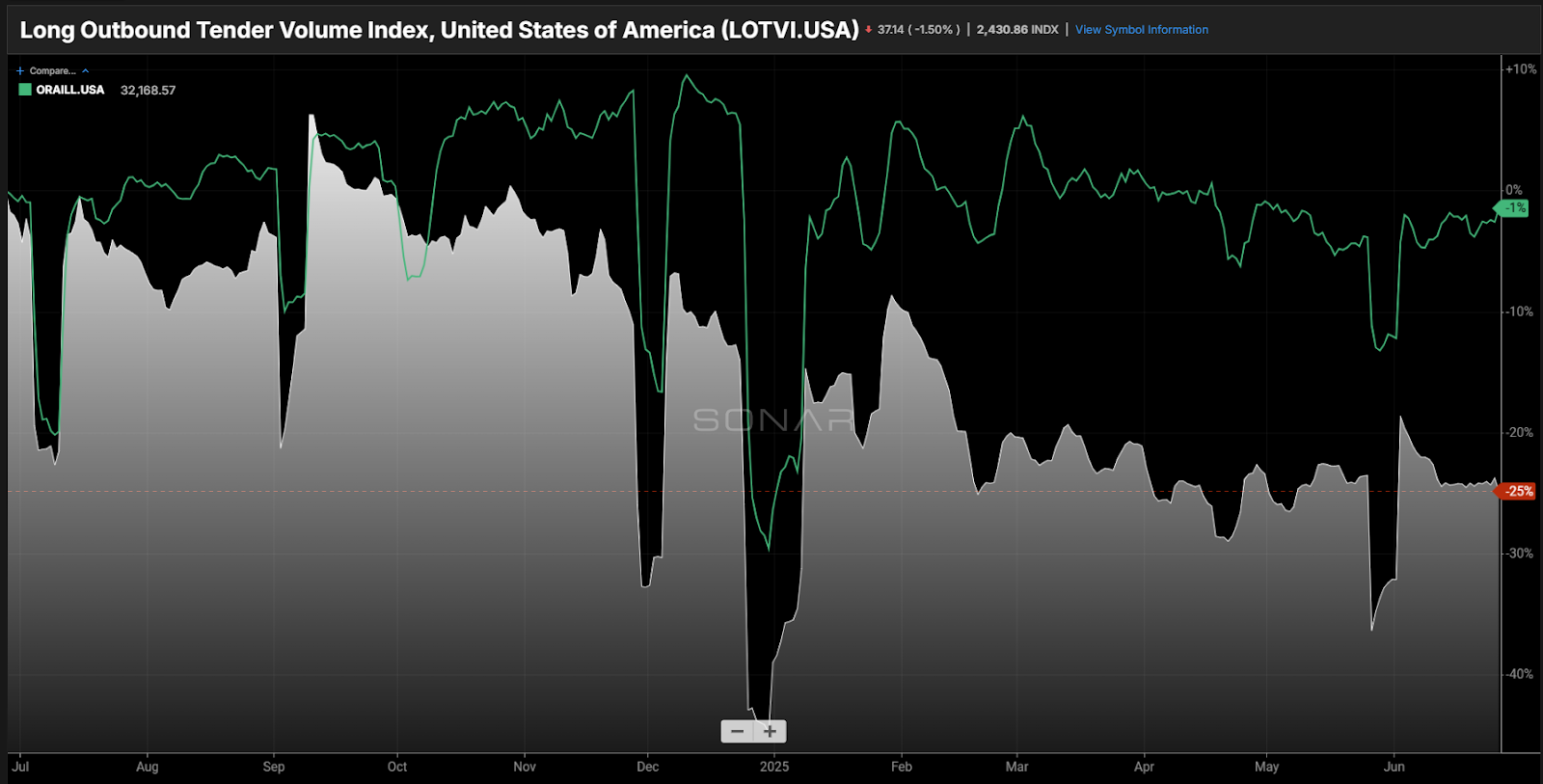
Intermodal began reclaiming market share from truckload, which it had lost during the pandemic, early last summer. Long-haul truckload demand (LOTVI) has collapsed—down 25% year-over-year—as shippers have increasingly opted for slower but cheaper transcontinental shipping. Intermodal capacity has expanded significantly since 2020, and it is far easier to add containers into service. This dynamic is arguably the most significant and unforeseen development in the recent multi-year surface transportation downcycle.

Shippers have also extended their order lead times to account for the unstable maritime sector, as attacks on vessels in the Red Sea have made ocean shipping less reliable. These longer lead times have given shippers more flexibility to move goods once they arrive in the U.S.

Warehousing capacity has tightened and costs have risen as a result of this pull-forward strategy. In this environment, intermodal’s slower transit becomes an advantage, effectively serving as rolling storage. Trucking has increasingly become a short-haul delivery mechanism—the only option for that final leg of freight movement.

Erratic trade policy messaging and implementation have further prolonged and exacerbated these trends, keeping truckload demand depressed and surface transportation rates subdued. 

Economic stagnation

So far, we’ve focused on the direct impacts of geopolitical tensions and trade policy on supply chains. But at the end of the American economy is the consumer. Companies can stockpile all the goods they want, but if no one is buying them, it doesn’t matter.

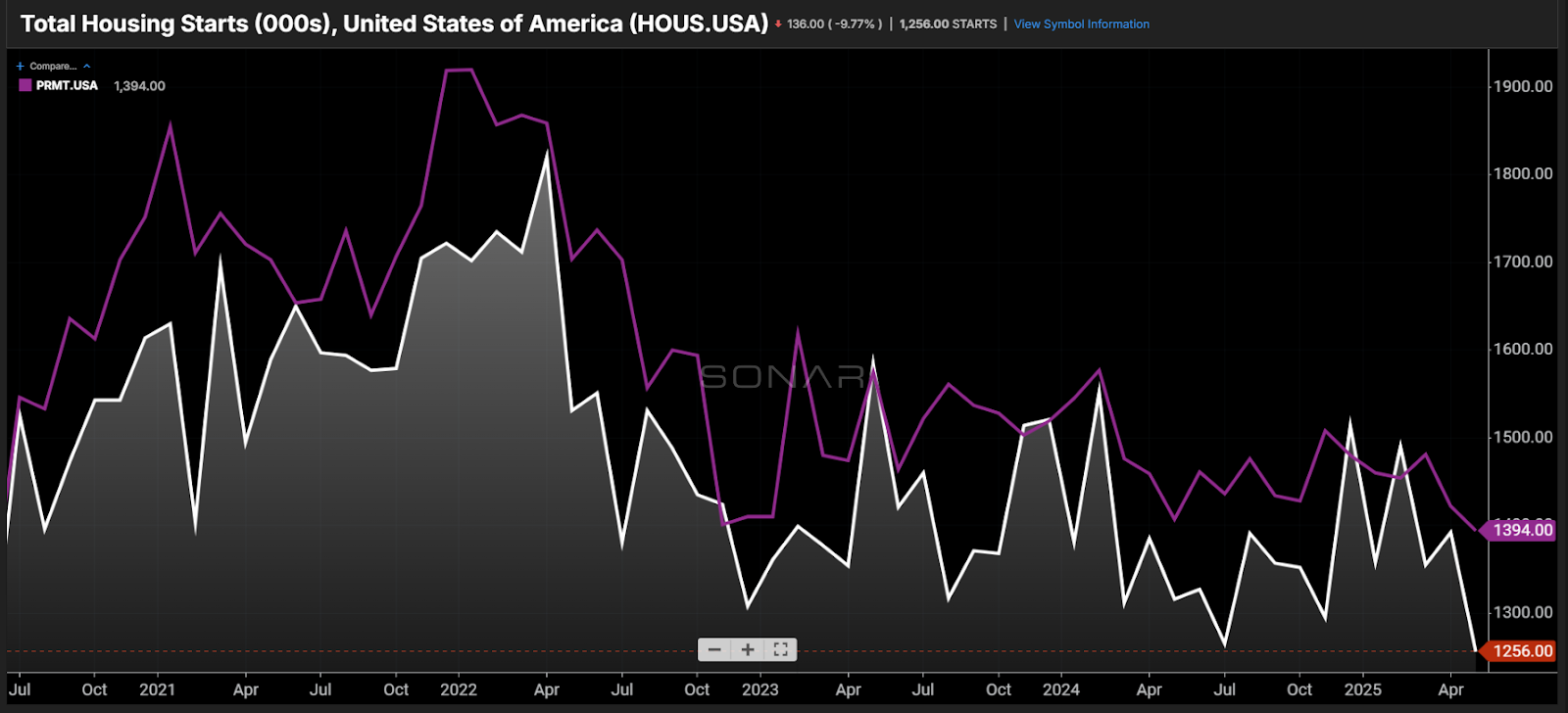
The housing market has remained muted. This segment drives a significant share of consumption—not only through construction but also indirectly as people move and purchase furniture and appliances.

Relatively high interest rates and sluggish hiring are largely to blame. Thirty-year mortgage rates were near 3% just a few years ago but have hovered just below 7% in recent months. While a 7% mortgage is not historically high, it is substantially higher than what many homeowners locked in previously, discouraging moves. Housing prices have also not been immune to the historic inflation of recent years, compounding the impact of rising rates.

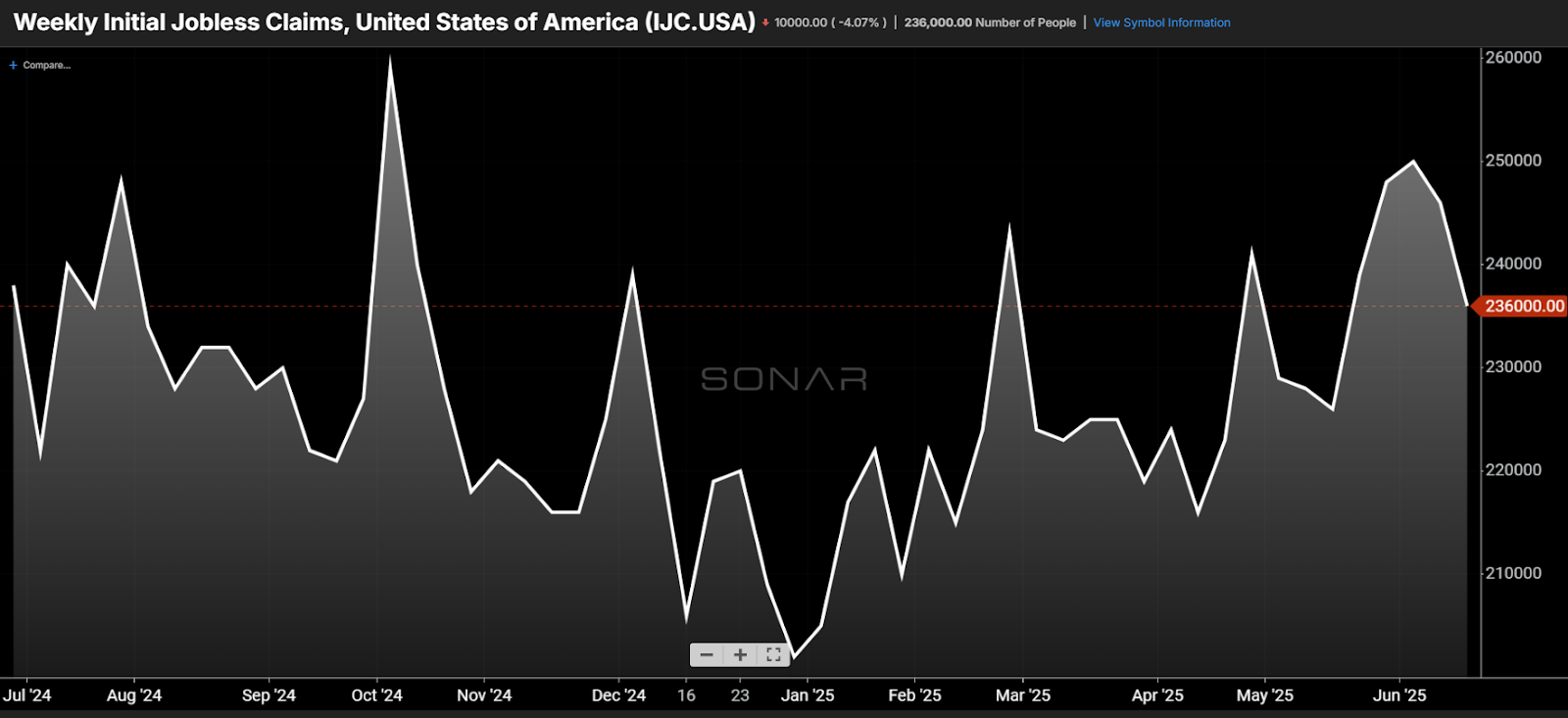
The job market is weakening, though not at a historic pace. Jobless claims have edged higher since January, and companies have slowed hiring. While the unemployment rate hasn’t moved significantly, the deterioration trend is well established.

Most economic headlines have centered on the collapse in consumer and business confidence indices. The University of Michigan’s Index of Consumer Sentiment fell from 74 in December to 60.7 in June, up slightly from May’s low of 52.2.

Sentiment indices don’t always track directly with activity, but when consumers and businesses feel uncertain, they tend to pull back, slowing the economy—and freight volumes—further.

What’s next? 

It is nearly impossible to predict what will happen with policy or geopolitical developments. But a few things are certain. The most important factor for transportation service providers is that capacity continues to exit the market, and new barriers to entry are emerging.

While demand erosion has delayed a significant rebound in trucking, it hasn’t changed the fact that capacity is steadily shrinking. Intermodal will continue to keep overall rates in check as long as urgency remains low.

The transportation market has always needed a catalyst to flip, and these catalysts are often unpredictable. Still, the likelihood of a sharp shift continues to rise. While some dismiss this narrative as tired, the underlying math hasn’t changed.

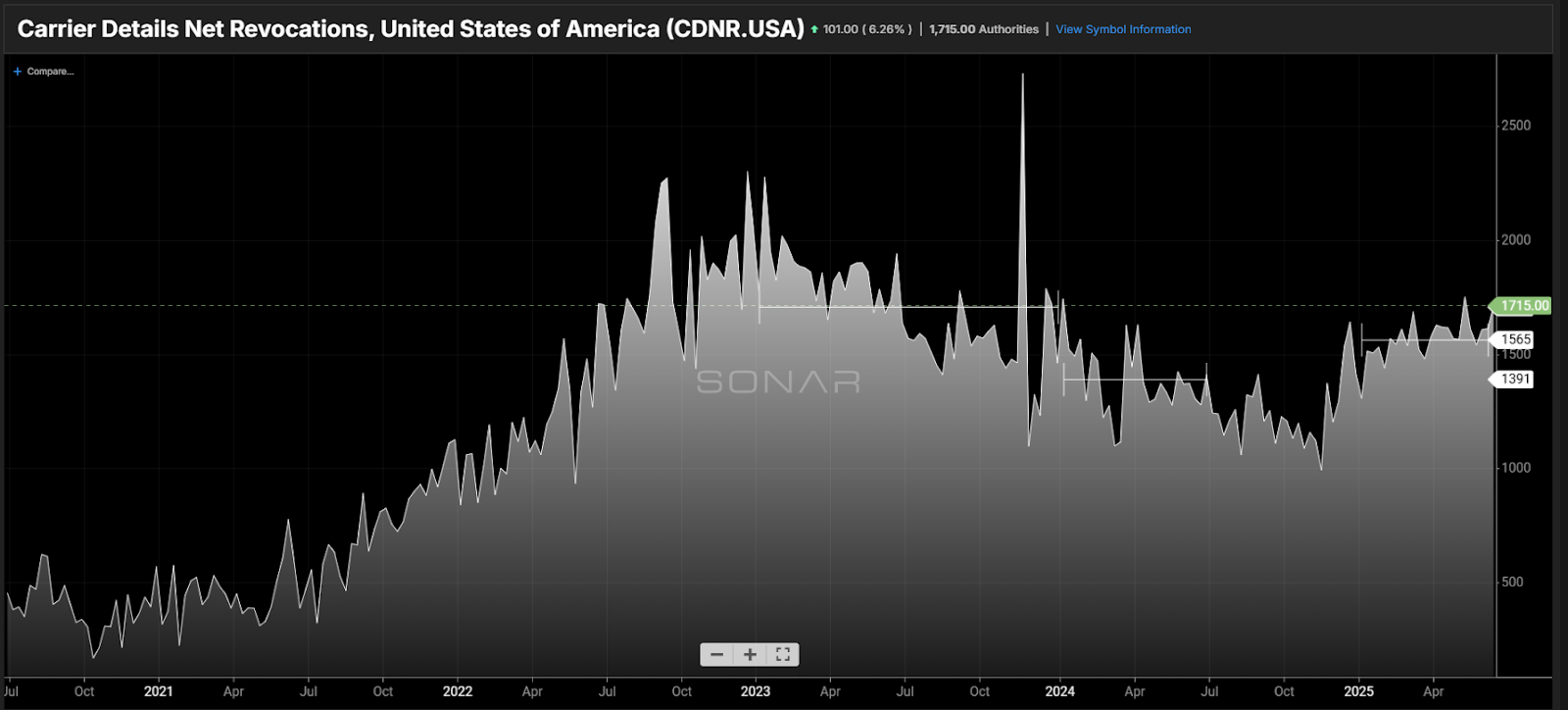
If any economic clarity emerges or a stimulating event occurs in the second half of 2025, the shift could be sudden and significant. After more than three years of unwinding excess capacity, the market is increasingly vulnerable. Language requirement enforcement and increased vetting from government agencies will at bare minimum make it harder to get a CDL. Net revocations of trucking operating authorities are still averaging well above last year’s levels, signaling that conditions remain unfavorable but are inching closer to an inflection point.

About the Chart of the Week

The FreightWaves Chart of the Week is a chart selection from SONAR that provides an interesting data point to describe the state of the freight markets. A chart is chosen from thousands of potential charts on SONAR to help participants visualize the freight market in real time. Each week a Market Expert will post a chart, along with commentary, live on the front page. After that, the Chart of the Week will be archived on FreightWaves.com for future reference.

SONAR aggregates data from hundreds of sources, presenting the data in charts and maps and providing commentary on what freight market experts want to know about the industry in real time.

The FreightWaves data science and product teams are releasing new datasets each week and enhancing the client experience.

To request a SONAR demo, click here.

DHL Express Canada reinstates service after workers ratify labor deal

A yellow DHL delivery van with red lettering parked on a street.

DHL Express has restored all services in Canada and will resume full operations Monday after union workers represented by Unifor ratified a new four-year contract, the company announced Saturday.

Approval of the collective bargaining agreement ends a strike/lockout that lasted nearly three weeks and forced the company to halt parcel deliveries on June 20. Unifor said the agreement, which covers more than 2,100 truck and van drivers, warehouse pickers and clerical workers, was ratified by 72% of the membership.

Negotiators for both parties reached a tentative contract agreement on Wednesday.

“DHL Express Canada has worked diligently and in good faith with Unifor’s bargaining committee to reach a fair deal and ensure a prompt return to service. . . We are excited to resume our operations and welcome back all our team members. Together, we’ll prioritize delivering the highest quality service to our customers,” DHL Express Canada said in a statement. 

The new contract features a 15.75% increase in wages throughout the life of the contract, a new payment structure for independent drivers, pension increases for hourly workers and a new pension for owner-operators, according to Unifor. The labor agreement also increases short-and-long term disability payments, provides a new mental health benefit, increases severance and wage adjustments, and provides greater worker protection from artificial intelligence and automation. 

The union credited a new federal ban on use of replacement workers with helping to resolve the negotiating standoff. DHL Express initially hired replacement workers to maintain operations, but suspended deliveries when the legislation took effect June 20. Companies that violate the law could be subject to a $74,000 penalty per day. 

During bargaining, DHL had proposed a 15% wage increase over five years while Unifor sought a 22% increase for hourly workers. 

“This is a historic dispute in our union’s books because we were the test case for the new anti-scab legislation and our union and members stood tall, held strong, and the end result is we got a fair collective agreement,” Unifor National President Lana Payne said in a news release.

Unifor said its workers will return to work, but added there is no definite timeline to do so. 

It likely will take several days for DHL Express Canada to work through the backlog of packages stuck in its facilities.

DHL Express Canada had preempted an expected strike by locking out workers on June 8. Unifor followed hours later by initiating a strike action.

Click here for more FreightWaves/American Shipper stories by Eric Kulisch.

DHL Express Canada, striking workers tentatively agree on labor deal

DHL Express prepares to open $140M cargo facility at Lyons airport

When to Hire and When to Wait in Your Trucking Business

Let’s get this straight—adding a driver isn’t just about filling a seat. It’s about knowing exactly when your business can sustain it, when it needs it, and when waiting is the smarter move. Too many small carriers hire too early, chasing growth without the freight to back it up or the systems to support it. And what happens? Payroll gets tight. Equipment sits. Operations spiral. You’re not growing—you’re bleeding. Hiring has to be a strategic decision, not a hopeful one.

If you’re running a small operation and thinking about bringing someone on—whether it’s your first driver or your fifth—this article is your gut check. Because timing matters just as much as execution. We’re going to walk through the signs that it’s time to expand, the indicators that you’re not ready yet, and the foundational work you need in place before that hire ever sees the inside of your truck.

The Most Common Mistake—Hiring Before the Freight Is There

This is where most small carriers fall short. They land one good contract or start seeing some consistent freight on the board, and they think, “It’s time to scale.” But steady isn’t the same as sustainable. One broker with consistent loads is not a business model—it’s a dependency. And if that freight disappears, now you’ve got payroll due on a driver you can’t keep rolling.

Before you hire, ask yourself:

  • Can I consistently cover an additional truck with profitable freight, not just movement?
  • Do I have a backup plan if my primary source of loads dries up?
  • Have I run the numbers beyond just the gross—factoring in fuel, payroll, insurance, and downtime?

If you can’t say yes to all three, you’re not ready. Waiting is smarter than hiring someone you can’t afford to pay three months from now.

Know Your Numbers Before You Add a Truck

Hiring a driver without knowing your cost per mile is like trying to win a race without knowing where the finish line is. You’ve got to know your breakeven down to the cent—per mile, per week, per truck.

If you don’t know:

  • How many loaded miles you need to run weekly to stay profitable
  • How much cash flow your business requires to cover payroll every two weeks
  • How long you can float expenses if a shipper pays late or a load cancels

…then hiring isn’t a business decision—it’s a guess. And in this market, guesses get expensive real fast.

Watch Your Utilization—Not Just Your Gut

Here’s a better question than “Should I hire?” Ask: “Am I already maximizing the truck I have?” Too many owners jump to hiring because they’re tired. They want help. But the truth is, a second driver won’t solve a business that isn’t optimized. If your current truck isn’t running 5+ days a week, or if you’re turning down freight you could cover yourself, you’re not ready to hire—you’re ready to tighten up.

That said, if you’re booked out days in advance, running profitable lanes, and consistently turning down loads because you can’t cover them—that’s your signal. Demand is pulling ahead of supply. That’s when a second truck makes sense.

Cash Flow First, Then Headcount

Let’s talk about money. Hiring a driver means you’re committing to paying someone every week—even if your customers don’t pay for 30 days. You need at least 45–60 days of payroll set aside before that hire ever steps into your operation. If that sounds like a stretch, you’re not alone. But it’s also your red flag.

Do the math:

  • What’s your average driver payroll cost per week, including taxes and worker’s comp?
  • Multiply that by 6–8 weeks.
  • That number is your safety net. If you don’t have it, wait.

Because once the driver’s in, there’s no pause button. Running tight and hoping your next invoice pays in time is not a business strategy.

Systems Before Staffing

Adding a driver doesn’t just mean adding miles—it means adding complexity. Dispatch, safety, maintenance tracking, driver communication, onboarding, load paperwork—it all scales with every truck. If you’re running everything manually or off your phone, you’re going to burn out or drop the ball. Or both.

Before hiring, ask:

  • Do I have a standard process for dispatching loads, collecting BOLs, and tracking hours?
  • Is my ELD ready to manage a second driver?
  • Do I have a way to monitor safety and compliance in real time?
  • Do I have someone (or a system) that can help manage the back-office work that comes with another truck?

If your answer is “I’ll figure it out when they start,” you’re already behind. Build the system first. Then staff it.

When Hiring Makes Sense

Let’s talk about what right looks like. Here’s when hiring is the right call:

  • You’ve got a contract or direct shipper volume that your current truck can’t fully handle
  • You’re operating profitably, consistently, with cash flow that supports 60 days of payroll
  • You have systems in place to dispatch, track, and support another truck
  • You’re turning down freight that aligns with your lanes, not just taking anything that moves
  • You’ve tested your numbers and hiring doesn’t just add revenue—it adds margin

In that situation, adding a driver is a force multiplier. You’re not just growing—you’re growing right.

When It’s Smarter to Wait

If you’re still heavily dependent on load boards, still running inconsistent freight, or still managing everything out of a single spreadsheet, hiring isn’t going to fix it. It’s going to break it faster.

Wait if:

  • You’re still guessing at your weekly numbers
  • You’ve got unpaid invoices that are 30+ days old
  • You’re running negative weeks more often than not
  • You’re hoping another truck will create cash flow instead of sustain it

There’s no shame in waiting. There’s only risk in rushing.

Final Word

Adding a driver isn’t a milestone—it’s a responsibility. And in this industry, hiring too early will cost you more than waiting too long ever will. The numbers don’t lie. If you’re not running lean, consistent, and cash-positive, more trucks won’t fix the problem—they’ll multiply it. But when you’ve got the freight, the systems, and the financial foundation in place, that hire can be a game-changer. Just make sure it’s a business move, not a bailout.