CSX launches double-stack service at Port of Baltimore

This story originally appeared on Trains.com.

BALTIMORE — CSX launched double-stack service to and from the Helen Delich Bentley Port of Baltimore on Monday thanks to clearance projects that have been completed north of the Howard Street Tunnel.

“This is a great day for the Port of Baltimore and a great day for Maryland,” Gov. Wes Moore said in a statement. “As the Port of Baltimore continues to grow, this transformational project will help increase business activity and create thousands of new jobs.”

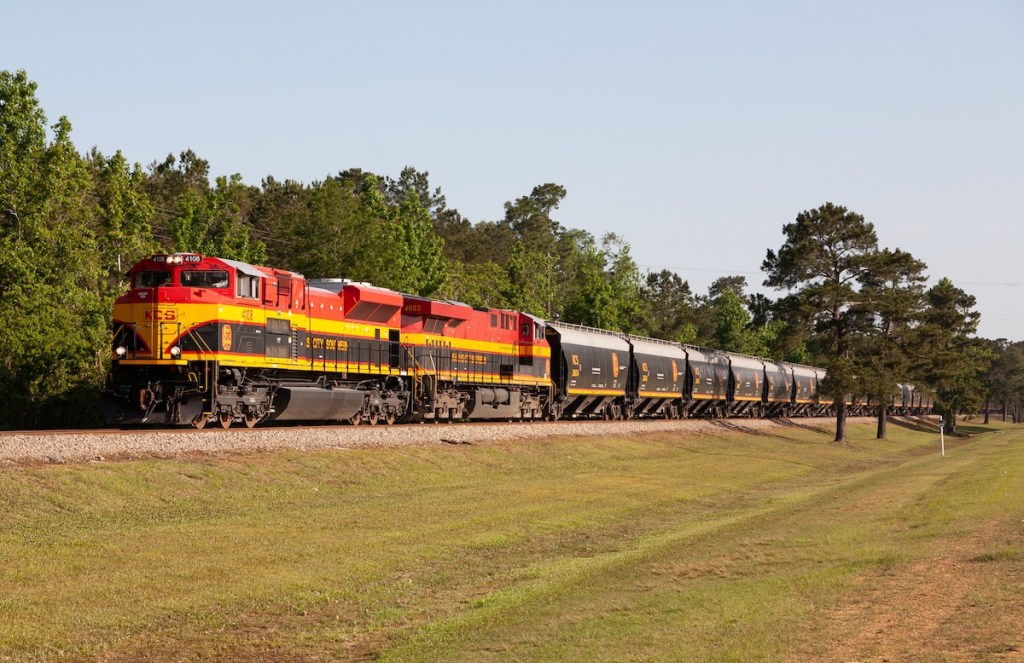
Chicago-Baltimore train I104-26, with ES40DC No. 5303 on the point, had the honor of being the first stack train to arrive at the port.

The governor’s office said the port will become more competitive due to the ability to offer double-stack service to and from markets in the Midwest and Northeast.

State officials say double-stacking containers will help the port grow volumes by about 160,000 containers annually and will create 13,000 jobs in construction and operations. Double-stacking will also complement the expansion of the Seagirt Marine Terminal, operated by Ports America Chesapeake, as home to supersized Neo-Panamax cranes that handle ultralarge container ships.

“This is a significant milestone for intermodal rail service between Baltimore and Midwest markets and wouldn’t be possible without the ongoing collaboration between our federal, state, and local project partners,” CSX CEO Joe Hinrichs said in a statement. “This underscores our broader commitment to enhancing service efficiency and safely expanding our network capabilities through the Howard Street Tunnel project, allowing for greater efficiency in this critical corridor.”

Construction is ongoing at several Maryland sites. However, vertical clearance improvements at rail bridges north of Baltimore are complete, allowing CSX to operate double-stack rail service to the Midwest on a temporary route from the port along the CSX network via Pennsylvania, New Jersey and New York until the Howard Street Tunnel work is complete in 2026.

The Howard Street Tunnel Project includes reconstructing the 129-year-old tunnel in Baltimore and 21 other locations in Maryland, Delaware and Pennsylvania to increase vertical clearance by 18 inches to allow double-stacked container trains to operate to and from the Port of Baltimore. When fully complete, the double-stack project will allow CSX to offer double-stack intermodal service in the I-95 corridor.

Report: Driver shortage claim ‘spurious,’ fixation on efficiency causes turnover

Calling talk of a driver shortage “spurious,” a more than 170-page study on long-distance truckers from the National Academy of Sciences says the constant turnover in the ranks of drivers should be expected given the fundamental business practices of carriers.

Released earlier this month, the study – “Pay and Working Conditions in the Long-Distance Truck and Bus Industries: Assessing for Effects on Driver Safety and Retention” – looks at numerous safety, driver retention and driver pay issues but is straightforward on the driver shortage question.

“Claims of long-term driver shortages are spurious and not likely to be helpful in explaining the sector’s driver turnover patterns and the possible influences of compensation,” the report said in introducing the chapter on retention.

The committee features some well-known names from academia who have studied the issue of trucking and drivers, such as Steve Viscelli from the University of Pennsylvania and Jason Miller from Michigan State University. Caroline Mays of the Texas Department of Transportation and also vice chair of the Special Committee on Freight at the American Association of State Highway and Transportation Officials Standards is on the committee as well.

The National Academy of Sciences is a private institution but was established by an act of Congress during the Lincoln presidency. A provision in the Biden administration’s Bipartisan Infrastructure Law called for the Federal Motor Carrier Safety Administration to employ the NAS to do a study on the intertwined issues of driver pay, safety and retention.

The committee’s work on driver retention draws heavily on earlier studies, such as a 2019 study from the Bureau of Labor Statistics written by Stephen V. Burks of the University of Minnesota Morris and Kristen Monaco from the U.S. Bureau of Labor Statistics.

Some of the findings in the driver retention section of the NAS study could be read as more basic than an Economics 101 curriculum.

“Research indicates that driver retention and turnover rates experienced by truckload carriers can be explained in part by the cyclical factors experienced across all carriers in the sector and trucking generally,” the report stated.

What goes on as the market shifts

For example, when the trucking market is strong, carriers ramp up recruiting through tactics such as offering sign-on bonuses that “bring in new-to-the-industry drivers who are prone to exit rapidly from long-distance truckload jobs.”

“Conversely, when the demand for freight trucking is decreasing, turnover will be lower in this sector, as there will be both fewer new-to-the-industry drivers, and fewer enticements and opportunities for experienced drivers to change firms,” the report added.

The report was careful to note that the turnover issues are overwhelmingly in the truckload sector. Citing data from the American Trucking Associations, the NAS report said average annualized turnover from the third quarter of 1996 through the first quarter of 2023 was 92.7% for large truckload carriers, defined as $30 million-plus in revenue, and 77.6% for carriers below that.

Turnover is defined as “simply the percentage of drivers employed during the year that left employment, including new recruits who may have spent only a few days or weeks on the job.”

Contrasts with LTL, privates

But the less-than-truckload turnover rate was 11.8% during that period. At private carriers, the rate was 15% between 2005 and 2022, according to the National Private Truck Council.

Ultimately, the report concluded that truckload carriers could choose policies that reduce turnover, but economics leads them not to adopt those practices.

“High rates of driver turnover do create costs, as the carrier must incur expenses to recruit and train new drivers while experiencing lower productivity and higher crash risk from the new drivers while they gain experience behind the wheel,” the report said. “To reduce these turnover costs and retain drivers, the carrier may choose to pay a driver more than the worker’s next

best earning opportunity.” The report used construction labor costs as a benchmark for a driver’s alternate opportunities.

Higher pay to reduce some of the less desirable aspects of long-distance trucking, such as lengthy absences from home, are known in economics as a “compensating differential,” according to the report.

“When compensating differentials are high enough, the carrier can reduce quits, even if TL working conditions are tough,” the report said. “The higher pay, however, will raise the carrier’s cost structure, possibly by more than any resulting savings in turnover costs.”

Inefficiency to lower turnover?

Another option, which the report conceded was “counterintuitive at first,” was to reduce the efficiency of dispatching.

That option – not so much a recommendation – would be aimed at minimizing driver time away from home.

“A dispatching system that is intensely focused on the efficient positioning of drivers, such as by sending drivers to the load that is nearest their last drop-off location irrespective of proximity to the driver’s home base, can cause drivers to be sent far and wide across the carrier’s operational area,” the report said. “This practice can increase the likelihood that a driver will quit.”

But adjusting that dispatching to create more time at home generates more empty miles, which is not good for a carrier’s bottom line. “Here again, the TL carrier must make a choice between overall cost savings and revenue maximization,” the report said. 

It all comes down to money, the report stated. “A typical long-distance TL carrier will tend to favor the cost-minimizing choices of an intense, efficient dispatching practice and controlling driver pay expenses while accepting the costs associated with the resulting high turnover,” the authors wrote. 

The decision not to employ that sort of strategy, or similar steps that might reduce turnover in favor of reduced economic efficiency, spurs the volatility in the employee ranks that leads to the conclusion that there is a shortage, the report said. “Carriers have come to believe there are chronic shortages of drivers because of the constant need to replace them during both expansions and contractions of the long-distance TL sector,” the report said. “However, that need, as evidenced by the research and data presented here, may be explained by the overall effect of the industry’s competitive structure, which compels carriers to employ cost-focused managerial strategies.”

To give a specific example of that strategy in action, the committee went back to 1997 and a practice it said was undertaken by J.B. Hunt (NASDAQ: JBHT).

The company, described by the committee as the second-largest truckload carrier that year, adopted a radical change in practice. It raised pay rates by 35% and only hired experienced drivers.

“The carrier expected that its higher payroll costs would be recouped by lower costs

from fewer crashes and lower driver recruitment and training costs,” the report said. And while there was evidence that occurred, the policy was ditched within five years and the former pay schedule was restored. The report does not explicitly say why, but the action would obviously suggest the policy was a failure. 

Such evidence doesn’t mean companies won’t look to reduce turnover, the report said. 

But “carriers focused solely on cost competition must be willing to accept turnover costs when they result in savings in other costs that keep them competitive.”

More articles by John Kingston

Werner CEO stands out for optimistic trucking market outlook

Trucking and marijuana testing find their way to the Supreme Court

As Helene keeps key roads closed, Trimble’s routing service makes adjustments

XPO Q3 earnings: First look

A closeup of a white XPO daycab on a highway

Less-than-truckload carrier XPO reported third-quarter adjusted earnings per share of $1.02, 11 cents better than the consensus estimate and 14 cents higher year over year.

Consolidated revenue of $2.05 billion was a 3.7% y/y increase.

XPO’s (NYSE: XPO) LTL segment generated revenue of $1.25 billion, a 1.9% y/y increase. Tonnage per day was down 3.9% y/y, which was offset by a 3.7% increase in revenue per hundredweight, or yield (6.7% higher excluding fuel surcharges).

Click for full article: “XPO’s shares surge on strong Q3, favorable outlook”

The unit reported an 84.2% adjusted operating ratio (operating expenses expressed as a percentage of revenue), which was 200 basis points better y/y. The adjusted OR was 100 bps worse than in the second quarter, in line with the company’s previous guidance of 100 to 150 bps of sequential OR deterioration (versus the historical trend of 200 to 250 bps of degradation).

“We’re delivering on the strong results we promised for 2024, while positioning the business to accelerate earnings growth when the freight market recovers,” said XPO CEO Mario Harik in a Wednesday news release. “The world-class service we provide creates value for our customers and will continue to be a key driver of our margin expansion.”

Adjusted EPS excluded 23 cents per share ($27 million) of transaction and restructuring costs.

XPO will host a call to discuss third-quarter results with analysts on Wednesday at 8:30 a.m. EDT.

Click for full article: “XPO’s shares surge on strong Q3, favorable outlook”

Table: XPO’s key performance indicators

More FreightWaves articles by Todd Maiden

Automation, speed limiters on former FMCSA deputy’s radar for 2025

DOT headquarters.

WASHINGTON — Three federal rulemakings that have cost implications for truckers and motor carriers are on the short-term horizon for a former top official at the Federal Motor Carrier Safety Administration.

Earl Adams, who served as FMCSA’s deputy administrator and chief counsel under former administrator Robin Hutcheson, led a team at the agency that is developing the first major set of rules for high-level automation in heavy-duty trucks.

Earl Adams. (Credit: Hogan Lovells)

The result of that effort — a proposed rule on autonomous driving systems (ADS) — is on the U.S. Department of Transportation’s calendar for rollout in December.

Combined with a final rule on automatic emergency braking (AEB) and a proposed rule to set a federal top speed for trucks, they rank as the most anticipated regulations on Adams’ radar.

“Whether the outcome of the election is a Trump or a Harris administration, I think you’re going to continue to see significant efforts to collect data around AV [autonomous vehicle] systems already deployed on the roads,” Adams told FreightWaves in an interview.

ADS guard rails

Adams, now a partner at the law firm Hogan Lovells, said the Trump administration took an industry-driven approach toward the development of autonomous vehicle operations by encouraging feedback from the companies that could benefit from them the most.

The Biden administration, in contrast, “was focused on leveraging technology to get safer outcomes,” he said. “We were willing to establish guardrails – that is, an actual rule – as opposed to letting the industry dictate what would happen, and I spent the better part of my two and a half years in the administration trying to develop those guardrails.”

Higher costs for training and certifying individuals performing enhanced inspections for higher levels of automation are expected to be considered in the proposed rule, as well as the potential for sidelining trucks and their drivers with additional inspections that could reduce the amount of time available for revenue-generating service.

Adams cautioned, however, that given recent and growing concerns from labor, getting an AV rule proposed next year could prove difficult even in a Harris administration.

Automatic braking rule to set new standards

A final rule regulating a specific type of automation — braking — has been scheduled for publication in the Federal Register in January, to be issued jointly by FMCSA and the National Highway Traffic Safety Administration.

The rulemaking “is expected to establish performance standards and motor carrier maintenance requirements for AEB systems on heavy trucks and accompanying test procedures for measuring the performance of the AEB systems,” according to a rule summary.

“I’ll be looking to see if they actually move forward on that,” Adams said. “We have a braking rule in place now for passenger cars, but we saw an opportunity to work hand in glove with NHTSA to extend that to trucking.”

The National Association of Small Trucking Companies (NASTC), which represents thousands of small-business motor carriers, contends that technology mandates such as AEB will ultimately raise costs for shippers and consumers, due to higher capital costs for new trucks.

“Further, more expensive, new model trucks slow turnover of older trucks,” said NASTC President David Owen, in comments submitted on the AEB proposed rule.

Owen also asserts that the safety case for mandating AEBs has not yet been adequately assessed nor has the technology been perfected. For example, when AEB’s activate suddenly, it can catch a truck driver by surprise, he said.

“The suddenness of the device’s action causes near-misses and may require evasive action on the professional driver’s part. At present and for the foreseeable future, AEBs present more of a threat to road safety than a solution.”

Speed limiter anxiety

An even more controversial rulemaking on the horizon for trucking that Adams is keeping tabs on is a requirement by FMCSA to limit the top speeds of heavy-duty truck engines equipped with electronic engine control units. That speed limit is to be determined by a proposed rule slated for May 2025.

Much of the criticism FMCSA received was from smaller truck owners and owner-operators, who believe that limiting speeds would make it more difficult to compete with larger carriers – many of which already employ speed limiting devices in their fleets – and would put them out of business.

The Owner-Operator Independent Drivers Association, which strongly opposes speed limiting devices, also contends that they are also unsafe due to increasing speed differentials that would occur with other vehicles on the highway if there was a mandated top speed for heavy trucks.

Adams acknowledged that the FMCSA “received a lot of criticism for the speed limiter proposed rule,” he said.

“But even now, looking back nine months or so to when I was at the agency, we approached this without bias or preconceived ideas, whether speed limiters are good or bad,” he said. “It was an extremely apolitical approach to a technology that has been around for years among fleet owners.

“What was on our mind was the fact that we have 40,000 deaths on the highways per year, with 3,000 coming from commercial trucks, and a large percentage of those were speed-related. So if we can use technology to limit the speed and thus can save lives — that’s the reason we took this on and are so committed to trying to solve it.”

Click for more FreightWaves articles by John Gallagher.

Losses at Heartland Express continue to mount

A white tractor pulling a white Heartland dry van trailer on a highway

Truckload carrier Heartland Express reported a third-quarter net loss on Tuesday as it continues “to be hampered by a challenging freight environment.”

A $9.3 million net loss (12 cents per share) marked a fifth consecutive quarter in the red for the North Liberty, Iowa-based company when excluding one-time gains from real estate sales. Analysts were calling for just a 1-cent loss.

Lower gains on the sale of used equipment were a 1-cent headwind (assuming a normalized tax rate) versus the year-ago quarter.

Revenue was 11.9% lower year over year to $260 million. Weak demand, underutilization of equipment and unfavorable rates weighed on the period.

Heartland (NASDAQ: HTLD) does not provide operating metrics for utilization and pricing.

It recorded a loss on the operating line as well.

A 102.6% adjusted operating ratio (operating expenses expressed as a percentage of revenue) was 20 basis points worse y/y and 320 bps worse than the second quarter. Salaries, wages and benefits (as a percentage of revenue) increased 100 bps y/y. Maintenance expense was 180 bps higher as the average tractor age increased from 1.9 years in the 2023 third quarter to 2.7 years in the recent period.

Insurance and claims expense was 120 bps higher.

Table: Heartland’s key performance indicators

The string of poor results not only stems from a downturn in the freight market but also from inferior results at the two fleets it acquired in the summer of 2022 – shortly after the start of the freight recession.

“We believe that the last four quarters of this current freight cycle are arguably the worst four consecutive quarters experienced in the trucking industry over the Company’s 45+ year history,” CEO Mike Gerdin said in a Tuesday news release.

A $5.9 million adjusted operating loss compared to adjusted operating income of $1.5 million in the second quarter.

Heartland said its legacy fleets have operated at a 92.3% OR over the past year, much better than the acquired companies (Smith Transport and Contract Freighters), but still well off the low-80s OR it is targeting. The acquired fleets have seen sequential (from the six months ended March 31 to the six months ended Sept. 30) OR improvements of 600 bps and 500 bps, respectively.

The company said the improvement has been solely tied to cost cutting and that market improvement is needed to improve margins.

“We believe that we will need a meaningful turnaround in the freight environment, and the associated increase in demand for our on-time freight service, in order to improve the utilization of our assets and lower our consolidated operating ratio back to our long-term expectations,” Gerdin said.

He did point to “encouraging signs” in October but said that he’s not expecting “impactful improvement until 2025.”

Heartland has cut its debt load by more than half since leveraging up to make the acquisitions. It generated $107 million in cash flows from operations in the first nine months of the year, closing the third quarter with $207 million in debt and financing lease obligations.

Chart: (SONAR: NTIL.USA). The National Truckload Index (linehaul only – NTIL) is based on an average of booked spot dry van loads from 250,000 lanes. The NTIL is a seven-day moving average of linehaul spot rates excluding fuel. To learn more about FreightWaves SONAR, click here.

More FreightWaves articles by Todd Maiden

Werner CEO stands out for optimistic trucking market outlook

(A quick summary of Werner’s earnings can be found here.)

Equity analysts have sat in on enough earnings calls this quarter to have heard from plenty of C-suite executives who at best thought 2025 might be better than 2024 – and certainly weren’t popping any champagne corks.

Not surprisingly, it was the more optimistic tone of Derek Leathers, CEO of Werner Enterprises (NASDAQ: WERN), that caught the ear of analysts on the company’s Tuesday call.

Daniel Imbro, an analyst with Stephens, was upfront with Leathers about his projections. 

“I think other CEOs this earnings season have been more mixed on peak season expectations,” Imbro said. “You mentioned big price opportunities and some underlying improvements.” Imbro asked Leathers what he was “seeing in the business that gives you confidence in a more normal peak season. Any more color on why you’ve been more bullish in the fourth quarter?”

The upbeat perception of Leathers’ statements could be discerned easily from his references to improving market conditions.

With that question, Leathers gently pushed back.

“I don’t want the read-through to be that I’m bullish on the fourth quarter,” he said. “I can’t speak to where others are coming from. But what I know is that in our customer base, we believe we’re going to have both a price and volume incremental lift this peak season compared to last.”

“Obviously there are ongoing macro headwinds, and peak is only a small part of the overall organization,” he added, saying the fourth quarter would be a “mixed bag.”

Leathers said rate increases that Werner had been achieving as the company went from Q3 into Q4 were from clients who had been under “duress.” “So those numbers tend to be a little outsized, because that is freight that either needs to be repriced or replaced,” he said.

He offered no specific percentage numbers on the size of those increases, which he said came from “a level of assertiveness.”

Beyond that, Leathers said, “I think it’s too early to try to predict what 2025 looks like.” He added, “I think the next several weeks will really shape and tell us a lot about what to expect going into the formal bid season.”

Outside factors have helped move freight rates higher, Leathers said. (The NTIL.USA freight rate in SONAR, representing the national average for linehaul only and no fuel charge, was $1.71 per mile Monday after being $1.64 per mile on Sept. 28.)

“What I can tell you is that the slow build that has been occuring in Q3 with some add-on in Q4 has been obviously somewhat impacted by natural disasters and the port strikes as well,” he said.

But it is more than that, he added. “There is an ongoing kind of subtle tightening taking place,” according to Leathers. “So I don’t want to call our shot just yet because I’d like to understand just how much tighter it gets as we go through this peak season.”

And in what might be viewed as a strong declaration, after years of a freight recession, Leathers said, “It is our expectation as we look into 2025 that the time for rates to be going up is upon us. The question is the magnitude, and I think it’s too early to tell.”

There were numbers in the third-quarter earnings suggesting an improvement at Werner.

For example, adjusted operating income for the Truckload Transportation Services segment at Werner was $24.5 million. While that was down 41.3% from a year ago, it was also up from the $21 million in the second quarter.

The operating ratio in the TTS segment was 94.7%. In the second quarter, it was 96.1%.  

In the One-Way Truckload segment of TTS, average revenue per truck per week was $4,860 in the third quarter. That was up from $4,770 sequentially and $4,548 a year ago.

The Dedicated segment also had a small improvement in average revenue per truck per week. It came in at $4,563, just about 1.7% more than a year ago and up from $4,534 sequentially.

The overall weak market could be seen in the company’s total revenues of $754.7 million, which were down 9% from a year earlier. They also were down from $760.8 million sequentially.

Health costs hit the bottom line

It was operating income that took a significant hit, down 54% to $17.6 million. However, Leathers on the call said that was affected significantly by a surge in health care costs. He told analysts there was not one particular reason for the rise, because employee health records are confidential.

A 0.3% increase in revenue per total mile year on year was the first for that category in seven quarters, Leathers said.

In other highlights from the earnings call:

  • There may only have been approximately 16 workers at the New Jersey ECM subsidiary of Werner who voted last year to join the United Food and Commercial Workers union. But in a company of more than 13,000 employees, they have been getting an outsize amount of Leathers’ attention. When the drivers there were considering joining the union, Leathers personally visited with the New Jersey-based workers at the regional carrier acquired by Werner in 2021. And with the union having been decertified last month, Leathers took a victory lap on the earnings call, saying he was “pleased to report” about the decertification. Drivers at ECM in New Jersey “decided to work directly with company management in our ongoing effort to remain the best workplace for professional drivers.”
  • Werner has its own driving school. Its performance was cited by Werner management as one of the reasons for the weaker bottom-line numbers. Leathers said the school is a “true asset” but has “been one of the toughest areas over the last couple of quarters, because financially, it obviously underperforms in an area where if you’re shrinking your fleet, or even holding your fleet stagnant, that creates a cost overhang.” But Leathers said to cut back on the school would have been “a major strategic error.” About half its graduates join Werner, Leathers said, and the students who emerged from the school “perform better financially because of less bad debt and a lot less of other kind of negative issues.”
  • Post-close trading in Werner was negative following the results of the earnings. At approximately 6 p.m., Werner stock was down 3.42% to $37. The stock had been up about 5.3% in the past year but down about 2.5% in the past three months. Total company revenue of $745.7 million was less than the SeekingAlpha consensus estimate of $766 million. Net income of 9 cents per share was well below the SeekingAlpha consensus of 21 cents per share. But as Leathers and other Werner management stressed on the call, the net income figure was hit by factors other than a weak trucking market, such as the health care expense explosion.

More articles by John Kingston

TFI’s Bedard: Buying UPS’ LTL operations was not a mistake

Trucking and marijuana testing find their way to the Supreme Court

As Helene keeps key roads closed, Trimble’s routing service makes adjustments

Landstar says ‘muted peak season’ weighs on Q4 guidance

A white sleeper cab pulling a white Landstar trailer on an overpass

Landstar System pointed to the expectation of a “muted peak season” as the reason for its worse-than-expected fourth-quarter guidance. The Jacksonville, Florida-based freight broker reported third-quarter earnings per share of $1.41 after the market closed Tuesday. The result was 4 cents worse than the consensus estimate and at the low end its prior $1.35 to $1.55 guidance range.

A lower tax rate compared to the year-ago quarter was a 4-cent tailwind in the period.

Landstar’s (NASDAQ: LSTR) revenue fell 5.9% year over year in the third quarter to $1.21 billion (compared to guidance of $1.175 billion to $1.275 billion). Total loads hauled by truck declined 7.7% y/y (in line with guidance for a 10% to 6% decline), and revenue per load, or yield, was up 0.7% (compared to guidance of flat to up 4%).

Diesel prices were down 14% y/y, which was a headwind to yields.

Trucks provided by business capacity owners (BCOs) – owner-operators who haul almost exclusively for Landstar – were down 12% y/y and 1.7% from the second quarter. The sequential decline was the smallest since the 2022 second quarter.

The company views revenue per mile on BCO loads as a cleaner pricing metric as it excludes fuel surcharges. Revenue per mile was down 3% y/y on dry van loads in the quarter but remained 19% higher than pre-pandemic levels.

Landstar said cost pressures on this group have resulted in steady capacity attrition since the beginning of 2022. However, it believes the erosion isn’t structural and expects these operators to return when the market improves.

Chart: (SONAR: NTIL.USA). The National Truckload Index (linehaul only – NTIL) is based on an average of booked spot dry van loads from 250,000 lanes. The NTIL is a seven-day moving average of linehaul spot rates excluding fuel. To learn more about FreightWaves SONAR, click here.

“The appeal of the spot market is a little bit hazy,” said Joe Beacom, chief safety and operations officer, on a Tuesday evening call with analysts. “You don’t see people willing to make the investment [in a truck].”

He said there is a good pipeline of potential BCOs but they are unlikely to lease a truck until rates inflect higher.

“If you don’t have that low cost to operate … and you have to go out and have a truck payment that’s at all elevated … do you really want to make the investment to come in at this time?”

BCO truck count is expected to be down sequentially by a similar percentage in the fourth quarter.

Table: Landstar’s key performance indicators

Q4 guidance disappoints

Landstar issued fourth-quarter EPS guidance of $1.25 to $1.45, well below the consensus estimate of $1.57. Expected revenue of $1.15 billion to $1.25 billion compared to a $1.24 billion consensus estimate for the fourth quarter.

The company said the y/y comps ease as the fourth quarter progresses but noted the sequential trends so far in the quarter have been mixed. It saw normal seasonal volume trends from September to October but revenue per load underperformed historical change rates.

Revenue per load is normally up 0.5% from September to October. However, it’s currently flat to slightly down. Management said that puts the fourth quarter in a bit of a hole as yield is about $40 lower than it was at the start of the third quarter.

Landstar normally sees approximately a 1% increase in truck loads and revenue per load from the third to the fourth quarter. That isn’t the call this year as November and December are expected to see muted trends.

It forecast truck loads to be down 4% to up 1% y/y in the fourth quarter (down 3% to up 3% sequentially) with revenue per load flat to up 4% y/y (down 2% to up 1% sequentially).

More FreightWaves articles by Todd Maiden

Federal Railroad Administration awards $2.4B in grants to 122 projects

WASHINGTON — A total of 122 projects in 41 states and the District of Columbia have been named recipients in the Federal Railroad Administration’s Consolidated Rail Infrastructure and Safety Improvements (CRISI) grant program.

The selected projects, announced Tuesday, will receive more than $2.4 billion in funding.

“Through the Bipartisan Infrastructure Law, we’re funding rail infrastructure projects that create jobs and expand workforce development, reduce costs for consumers, and directly benefit communities across the country,” Transportation Secretary Pete Buttigieg said in a press release. “Each project advances a future where our supply chains are stronger, passenger rail more accessible, and freight movement safer and more efficient.”

Most of the grants directly fund infrastructure work, or planning for future infrastructure projects, but some involve job training and apprenticeship, research, or partnerships with universities. FRA Administrator Amit Bose said the grants are “reversing a half-century of federal underinvestment in America’s rail network and delivering the world-class rail our citizens deserve.”

The awards require a nonfederal match, usually of 20% and generally by the organization receiving the grant.

The American Short Line and Regional Railroad Association, a longtime proponent of the CRISI program, celebrated that 81 of the projects involve short line railroads or their partners and account for $1.29 billion, or about 52% of the dollars awarded. The ASLRRA itself was recipient of a grant worth more than $20 million to improve short line infrastructure data.

“FRA’s recognition of the benefits that can be delivered by each dollar invested in these small businesses is evident in the overwhelming success of shortline applications in this latest grant cycle,” ASLRRA President Chuck Baker said in a press release. “Congress and the FRA can be confident that short lines will put these public dollars to good use, providing new and efficient ways of serving customers, linking small town and rural America to U.S. and international markets, improving and expanding infrastructure that will drive safety improvements, and investing in next-generation technology and locomotives that will reduce the already low environmental impact of rail.”

The complete list of awards is available here. A brief summary of each state’s awards follows, with the maximum dollar figure to be awarded. 

Alaska:

  • $43 million to the Alaska Railroad Corp. for final design and construction of Bridge 413.7, a project including rehabilitation of an existing 1,298-foot, 12-span through truss bridge across the Tanana River in Nenana, Alaska.

Arizona:

  • $30.2 million to Amtrak for improvements on BNSF’s Seligman Sub, including right-of-way acquisition to install a siding, control point and crossover, improving access to the Kingman, Arizona, station. BNSF will provide the 20% project match.
  • $21.6 million to the Arizona Eastern Railway for rehabilitating approximately 34 miles of track, replacing three timber bridges, installing two emergency crossings, brush cutting along the right of way, and retrofitting two tank cars for firefighting.
  • $4.99 million to the city of Flagstaff to build a second platform on the south side of the rail line and make Americans with Disabilities Act improvements to the city’s Amtrak Station.
  • $3.4 million to the Grand Canyon Railway for conversion of a diesel locomotive to battery-electric power, allowing the locomotive to take tourists from Williams, Arizona, to the canyon’s South Rim and back.

Arkansas:

  • $5.2 million to Jaguar Transport Holdings for installation of a new yard track and new sidings for the company’s West Memphis Base Railroad.

California:

  • $100 million to the Orange County Transportation Authority for projects to improve resiliency of the Surf Line used by Pacific Surfliners and Metrolink trains, as well as BNSF freight traffic. The OCTA will prove a 68.25% match. This project received $125 million in state funding last week. [See “California agency awards more than $850 million …,” Trains News Wire, Oct. 28, 2024.]
  • $36.5 million to the California Air Resources Board (CARB) to replace 10 diesel locomotives with nine battery-electric locomotives and one hydrogen fuel-cell locomotive, along with four battery chargers. Pacific Harbor Line will acquire five battery locomotives and two chargers; Watco will require four battery locomotives and two chargers, and the Sacramento Valley Railroad will acquire the hydrogen locomotive.
  • $24.7 million to the Transbay Joint Powers Authority for final design of track and rail systems of the Downtown Rail Extension, which will allow Caltrain and California high-speed trains to serve the Salesforce Transit Center in downtown San Francisco, currently used only by buses. The Transbay Joint Powers Authority will contribute a 50% match.
  • $22.7 million to the Arizona & California Railroad for replacement of 36 miles of rail, which will complete a 69-mile track rehabilitation project. Deteriorating 90-pound rail will be replaced with 115-pound rail. The railroad is providing a 30% match.
  • $20.5 million to the Modesto & Empire Traction Co. for repowering nine locomotives, replacing their three current engines with a single Tier 4 engine.
  • $20 million to the Capitol Corridor Joint Powers Authority for a right-of-way safety improvement program involving installation of security fencing in three areas: Oakland to Fremont, Richmond to Emeryville, and Fairfield to Suisun City. It is expected to reduce trespassing and associated incidents by 20%.
  • $18.7 million to the California Department of Transportation for second platforms at two stations on the San Joaquin corridor — Modesto and Denair — and installation of additional track to ease congestion. Three grade crossings will also be improved. Caltrans will contribute a 47% match.
  • $13.1 million to the Trona Railway for replacing six older locomotives with three Tier 4 locomotives. The railway and CARB will provide a 25% match.
  • $11.4 million to Mendocino Railway to acquire three Tier 0 diesel switchers and repower them with Tier 4 engines for the line between Fort Bragg and Willits. The railway will provide a 23% match.
  • $6.4 million to the Napa Valley Railroad to replace four older diesels with three new Tier 4 locomotives. The railroad and CARB are contributing the 40% match.
  • $3.9 million to UC San Diego to research trespassing accidents on rail lines used by the Coaster, Pacific Surfliner, San Joaquin, Altamont Corridor Express, Caltrain and Capitol Corridor commuter and passenger services. The goal of the research is to develop a tool kit of how, where and why trespassing occurs and propose preventative measures.
  • $2 million to the San Joaquin Regional Rail Commission for The Rail Academy of Central California, a training program in conjunction with Sacramento City College. The grant will help fund the academy workforce, purchase equipment and supplies, and develop tools to reach prospective students.

Colorado:

  • $66.4 million to the Colorado Department of Transportation for positive train control installation and installation of a new siding on BNSF’s Front Range Subdivision in northern Colorado, as well as improvements to five grade crossings. CDOT will provide the 30% match.
  • $50.7 million to Colorado-based OmniTRAX for tie replacement projects on railroads in four states: Colorado, Alabama, Georgia and Washington.
  • $11.7 million to Colorado State University, Pueblo, for safety experiments and testing of rail vehicles powered by compressed hydrogen and compressed natural gas. The University of Hawaii and OptiFuel are partners and will contribute the 36% match.
  • $1.07 million to the San Luis Central Railroad for replacement of 6,000 crossties and 126 switch ties between mileposts 10.1 and 15.2; the railroad will contribute a 25% match.

Delaware

  • $14.5 million to the University of Delaware for a Center for Hands-On Training and Learning to utilize the High Tonnage Loop at the Transportation Technology Center in Pueblo, Colorado, to educate the next generation of railroad technical professionals. Also involved in the program are Oklahoma State University, Morgan State University, Michigan Tech, AP Sensing, OptiFuel, Loram and Ensco.
  • $6.4 million to Amtrak for a Roadway Equipment Repairmen Training Program to attract new employees and provide continuing education for repairmen in Wilmington, Delaware, and Groton, Connecticut.

District of Columbia:

  • $58.8 million to Amtrak to install Onboard Shunt Enhancement devices on 443 locomotives and 192 cab cars to prevent trains from losing shunt, which can cause problems with signal and crossing-gate activation.
  • $20.5 million to the ASLRRA for a project to improve the national short line data survey process, improve the accuracy of short line Geographic Information System data and install digital onboard systems on locomotives. This will allow the ASLRRA to analyze information including energy usage, idling and emissions data.
  • $14.4 million to Amtrak for a program to develop a 36-month apprenticeship program to build a mechanical craft workforce to maintain Amtrak’s equipment. The three-level program will be offered in Wilmington, Washington, New York City, Chicago, Los Angeles and Beach Grove, Indiana.

Florida:

  • $7.3 million to the Florida Central Railroad for tie replacement and resurfacing on approximately 50 miles of track on the Florida Central and Florida Midlands railroads. The work will improve the track to FRA Class 2 standards in many locations.
  • $3.2 million to the Florida Department of Transportation for improvement of 43 grade crossings, including monitoring systems, approach signage and highway traffic signalization. The Florida DOT will contribute a 46% match.
  • $200,000 to the Broward Sheriff’s Office to fund a hazardous materials training exercise simulating a train derailment with ethanol fire on the Florida East Coast Railway inside Port Everglades.
  • $150,000 to the Palm Beach County Sheriff’s Office to address trespassing in the city of Lake Worth Beach, at identified hot spots along lines owned by Florida East Coast Railway and commuter operator Tri-Rail. The city is in West Palm Beach County, identified in the National Strategy to Prevent Trespassing as one of the 25 counties with the most pedestrian trespassing casualties.
  • $100,000 to the city of Jacksonville for trespassing enforcement activities along CSX, Norfolk Southern, Florida East Coast and St. Johns Terminal Railroad tracks. It will deploy up to four law enforcement officers at hot-spot locations, providing referral services, issuing citations and warnings, and educating people on trespassing dangers.

Georgia:

  • $30.6 million to Patriot Rail for track work on eight railroads in the Southeast, with a focus on replacing rail, ties and switches.
  • $26.5 million to the Georgia Ports Authority for improvements to the Myd Harris Yard and construction of the new South Side Rail Yard at the Colonel’s Island Terminal in Brunswick. The South Side yard will include four new tracks totaling almost 24,000 feet, as well as an auto storage area. A grade-crossing separation project is also included. At Myd Harris Yard, tracks will be lengthened and reconfigured to bring switching inside the terminal and away from the adjacent neighborhood.
  • $8.5 million to the Georgia Department of Transportation for rehabilitation and upgrades to track, bridges and sidings, and construction of a new spur, on the CaterParrott Railnet in Lowndes and Berrien counties.

Illinois:

  • $157.1 million to the city of Springfield to complete the Springfield Rail Improvements project, including final portions of realignment of Union Pacific and Norfolk Southern tracks into a single corridor and a new Amtrak station. 
  • $40.96 million to OmniTRAX for upgrades to five rail yards on five OmniTRAX railroads in the states of Illinois, Alabama, California and Ohio.
  • $1.8 million to the Midwest Interstate Passenger Rail Commission for regional rail planning, developing a long-term plan for its 12 member states, which also include Indiana, Iowa, Kansas, Michigan, Minnesota, Missouri, Nebraska, North Dakota, Ohio, South Dakota and Wisconsin.

Indiana:

  • $21.4 million to the Chicago, Ft. Wayne & Eastern Railroad for acquisition of a 26-car continuous welded rail train and 75 ballast cars, addressing a shortage of such equipment needed to further infrastructure investments.
  • $6.5 million to the Louisville & Indiana Railroad for repairs to the lift span of Clagg Bridge across the Ohio River between Louisville, Kentucky, and Clarksville, Indiana.
  • $5.4 million to the Madison Railroad to replace the 130-year-old North Muscatatuck River Bridge in Vernon, Indiana, removing the railroad’s last permanent slow order.
  • $4.6 million to the University of Notre Dame to design and build a rail-joining machine for low-force friction rail welding. It would develop a new process capable of welding sections on 136-pound rail, reducing installation costs of continuous welded rail.
  • $722,800 to St. Joseph County to extend Patriot Rail’s Elkhart & Western Railroad to connect with Canadian National’s Chicago-Toronto route.

Iowa:

  • $29.9 million to the Iowa Interstate Railroad for the replacement of the Colfax and DeSoto bridges near Des Moines and the Rock River and Atkinson bridges in Illinois. Clearance restrictions on the two Iowa bridges currently prevent the shipment of large wind-energy components.
  • $19 million to the Cedar Rapids & Iowa City Railway for tie replacement along 56 miles of its main line between Cedar Rapids and Hills, Iowa.

Kansas:

  • $19.8 million to Kansas-based Watco Cos. to replace eight diesel locomotives with an equal number of battery-electric units. They will be used at the Mission Mountain Railroad in Montana, Georgia-Pacific in Oregon, Draslovka in Tennessee, Greens Port Industrial Terminal in Texas and Packaging Corp. of America in Washington. 

Kentucky:

  • $32.1 million to the R.J. Corman Railroad Group for rehabilitation of track on three lines — approximately 30 miles on the Central Kentucky Line, 20 miles on the Bardstown Line, and 14 miles at the Russellville production plant, along with replacing approximately 75 railcars and expansion of track capacity.

Louisiana:

  • $40 million to the Timber Rock Railroad to rehabilitate or replace 29 bridges between Derider, Louisiana, and Kirbyville, Texas.
  • $27.3 million to the Louisiana & North West Railroad for rail replacement and track rehabilitation along 44 miles of the McNeil Subdivision between Magnolia, Arkansas, and Gibsland, Louisiana. This will allow an upgrade from the current 263,000-pound weight limit for cars to the 286,000-pound car standard.

Maine:

  • $53.3 million to the Maine Department of Transportation to upgrade two Eastern Maine Railway lines in Penobscot, Aroostook, Washington and Piscataquis counties, and to rehabilitate currently dormant tracks to provide a connection to the One North Bio-Industrial Park in Millinocket. The grant will provide substantial improvements for more than 140 miles of track, including more than 86,000 new crossties and more than 108,000 tons of ballast, replacing jointed rail with welded rail, improving seven grade crossings and installing equipment defect detectors.

Maryland:

  • $800,000 to the Maryland Department of Transportation for a trespassing safety study to assess incidents on rights-of-way across the state and develop a tool box for reducing injuries and fatalities.

Massachusetts:

  • $36.8 million to the Massachusetts Department of Transportation for final design of the Springfield Area Track Reconfiguration Project, which will include improvements of Amtrak, CSX and Massachusetts DOT track to improve capacity and prepare Springfield Union Station for an anticipated increase in passenger operations.
  • $21.6 million to Pan Am Southern for track repairs and measures to discourage trespassing on the Pan Am Southern Freight Main Line and Waterbury Subdivision. Pan Am Southern, Naugatuck Railroad, MassDOT and the city of New Britain are contributing the 30% match.
  • $8.9 million to the Pioneer Valley Railroad to replace 100-pound rail with 115-pound rail, and replace ties, on its line between Holyoke and Westfield, and build a new freight unloading building. Also, the company’s Tunnel Hill Reclamation facility in New Lexington, Ohio, will be improved to  handle greater volumes of construction and demolition waste.

Michigan:

  • $67.4 million to the Michigan Department of Transportation for a project to upgrade and expand Norfolk Southern’s Livernois Intermodal Facility in Detroit and Wayne County. The project will include 17,200 feet of new track and yard paving, as well as replacement of diesel gantry cranes with hybrid and fully electric cranes. Providing a 40% match are NS; Michigan DOT; the Michigan Department of Environment, Great Lakes and Energy; and the city of Detroit.
  • $27.1 million to Lake State Railway for work between Pinconning and Alpena, replacing  52 miles of jointed rail with welded rail; replacing ties; improving 34 grade crossings; updating signals at 13 crossings; and replacing turnouts.
  • $16.4 million to the city of Ludington for improvements to a Marquette Rail yard in Grand Rapids and Ludington, including track, ties and switch replacement. Marquette Rail and the Michigan Department of Transportation will provide the 35% match.
  • $8.4 million to Amtrak for improvements to the Michigan Line double track between Niles and Glenwood Road in Wayne Township. Amtrak anticipates the work will lead to a trip-time savings of more than 11 minutes.
  • $428,133 to Michigan State University for a project to use FRA light detection and ranging data to analyze rural grade crossings and develop safety assessments through application of machine learning and computer vision techniques.

Minnesota:

  • $37.3 million to Progressive Rail for installation of welded rail, replacement of ties, improvements to turnouts, and ballasting and resurfacing on company-owned track in east central Minnesota.
  • $15.9 million to Minnesota Commercial Railway to replace nine older locomotives with six locomotives meeting Tier 4 emission standards.
  • $11.7 million to the Twin Cities and Western to replace jointed rail with welded rail on approximately 24 miles of the railroad’s main line.

Mississippi:

  • $18.2 million to the Grenada Railroad for projects including rehabilitating 27 grade crossings, adding signals, eliminating 600 rail joints and increasing the capacity of the Canadian National-Granada Railroad interchange in Canton.
  • $7.8 million to the Natchez Railway for replacing 45,000 ties, improving 93 highway grade crossings, replacing and resurfacing track, and restoring 1.2 miles of track to connect to an industrial park.
  • $2.9 million to the Lowndes County Port Authority to construct an additional 6,700 feet of track, which will serve as an additional spur connecting the port to the CPKC main line.

Montana:

  • $6.4 million to Montana State University for a project to increase faculty, student and youth engagement with rail-related topics and skill sets. Cal State Long Beach, the University of Memphis and the Big Sky Passenger Rail Authority are also involved. 

Nebraska:

  • $5.4 million to Manning Rail to rehabilitate the line between Fairmont and Burress in Fillmore County, restoring rail transloading service to a regional grain elevator facility. Manning Rail and Fillmore County are providing the 25% match.

New Jersey:

  • $4 million to the Morristown & Erie for tie and ballast replacement, track resurfacing and installation of a new siding on the Whippany Line between Morristown and East Hanover. The work will upgrade the line to FRA Class 2 standards. The railroad will provide a 35% match.

New Mexico:

  • $4 million to San Juan County for activities related to a project to develop a new rail line to connect the Farmington area to the BNSF Railway at Gallup.
  • $570,920 to the city of Clovis for separation of one grade crossing and improvements to another on the BNSF Railway main line. The city is providing a 53% match.

New York:

  • $215 million for replacement of the Livingston Avenue Rail Bridge across the Hudson River between Albany and Rensselaer. The bridge is 125 years old but rests on piers that are even older, dating to the Civil War. The project previously received more than $600 million from New York state. [See “New York begins work to replace aging Albany rail bridge,” Trains News Wire, July 12, 2024.]
  • $16 million to the Steuben County Industrial Development Agency, in partnership with Norfolk Southern, Alstom and Binghamton University’s New Energy New York consortium, to rebuild two locomotives into battery-powered hybrids at Alstom’s Kanona facility in Bath.
  • $11.7 million to the Ogdensburg Bridge and Port Authority to upgrade more than 14 miles of rail line in New York’s St. Lawrence County, allowing the New York & Ogdensburg Railway to handle 286,000-pound railcars. The railroad is currently limited to 263,000-pound cars.
  • $3.96 million to the New York, Susquehanna & Western Railway to install 8.35 miles of welded rail and new ties, and perform ballast and surfacing work on the Syracuse Branch in Onondaga and Cortland counties.
  • $80,000 to the Broome County Health Department for an education and prevention program to identify trespassing hot spots and conduct outreach and education in Broome and Tioga counties. The project will evaluate four locations through data collection, developing and conducting an education campaign, and monitoring efforts. This is part of the CRISI set-aside for trespassing-related projects.

North Carolina:

  • $105.6 million to the North Carolina Railroad Co. for improvements at seven locations including Raleigh, Cary, Morrisville, Hillsborough, Burlington and Greensboro to increase capacity for passenger operations and reduce freight and passenger delays. The project includes rebuilding 69 miles of track, adding more than 5 miles of sidings and eliminating a grade crossing. 
  • $18.2 million to the Aberdeen Carolina & Western Railway to upgrade its line between Charlotte and Oakboro, including installation of almost 30 miles of continuous welded rail. The 136-pound rail will accommodate industry-standard 286,000-pound cars.

North Dakota:

  • $20.7 million to the Red River Valley & Western Railroad to replace rail and build two new sidings on the railroad’s 3rd Subdivision between Gwinner and Oakes.

Ohio:

  • $12.9 million to the Ohio Rail Development Commission for track upgrades, expansion of the Newark Yard and installation of trespass prevention measures on the Columbus & Ohio River Railroad. The commission and railroad will provide a 35% match.
  • $12.2 million to the Ohio Rail Development Commission to replace deteriorating and broken rail and ties on the eastern half of the Napoleon, Defiance & Western Railway. The commission and railway are providing a 25% match.
  • $6.9 million to the Belpre Industrial Parkersburg Railroad to repair two bridges in Ohio and West Virginia.
  • $6.4 million to the Ohio Rail Development Commission for track improvements on the 24-mile rail line owned by the Sandusky County-Seneca County-City of Tiffin Port Authority and operated by the Northern Ohio & Western Railway.
  • $3.2 million to the Ohio Rail Development Commission for improvements at two locations on R.J. Corman Railroad Group’s Cleveland Line, rehabilitating 24 miles, including reestablishing service on 3 miles in eastern Ohio. The commission and R.J. Corman are providing a 35% match.
  • $1.6 million to the Ohio Rail Development Commission to develop a plan to address congestion in and around Queensgate Yard in Cincinnati. The commission will undertake the project in conjunction with Norfolk Southern, CSX, the Indiana & Ohio Railroad, and the Central Railroad of Indiana.
  • $840,480 to the city of Akron for the installation of crossing gates, as well as law enforcement cameras at 14 crossings where gates cannot be installed.

Oklahoma:

  • $56.6 million to the Kiamichi Railroad for improvements on the Ashdown, Hope and Paris subdivisions in Oklahoma, Arkansas and Texas, including replacing 76 miles of jointed rail with welded rail; ballast installation in three areas; installation of 10 rail lubricators; resurfacing of 114 crossings; and installation of trespassing signs and barriers at 10 crossings.
  • $29.5 million to the Stillwater Central Railroad for tie replacement and surfacing work on 120 miles of track; replacement of 10 bridges; upgrades to 40 other bridges; and upgrading of one grade crossing.

Oregon:

  • $29.8 million to the Port of Coos Bay for Coos Bay Rail Line upgrade planning in connection with the planned Pacific Coast Intermodal Port project. The port also received $25 million for intermodal port planning under a DOT INFRA grant announced last week. [See “Coos Bay, Ore., port receives grant …,” Trains News Wire, Oct. 19, 2024.]
  • $13.7 million to the Lake County Railroad for line rehabilitation between Alturas, California, and Lakeview, Oregon, raising the track to FRA Class 2 standards, allowing the use of 286,000-pound cars and providing connections for new shippers.
  • $4.1 million to the Albany & Eastern Railroad to replace 6.25 miles of 85-pound jointed rail with at least 112-pound rail on the Sweet Home Branch, along with upgrading four turnouts and performing associated tie and surfacing work.
  • $3.4 million to the Albany & Eastern Railroad for replacement of 12,000 ties and associated ballast and surfacing work on the Mill City Branch in Linn County.
  • $1.6 million to Prineville for work on the City of Prineville Railway including replacement of 9,700 ties and associated tamping, resurfacing and aligning.

Pennsylvania:

  • $48.4 million to East Erie Commercial Rail for research and development of dual-fuel combustion engines using hydrogen, and liquid hydrogen tenders. Testing at the Transportation Technology Center in Pueblo, Colorado, will help operators, first responders and others learn how to safely handle hydrogen, as well as develop best practices for operating and maintaining hydrogen technology. Wabtec, Linde and Greenbrier are also involved and will provide the 20% match.
  • $8.96 million to the Pennsylvania Northeast Regional Railroad Authority for track and tie replacement, as well as upgrades to one grade crossing, on the authority’s Pocono main line between Slateford and Gouldsboro.
  • $7.8 million to Amtrak for a security fence project along a section of the Northeast Corridor in Chester, which aims to significantly reduce accidents, injuries and deaths, and minimize operating disruptions because of unauthorized track access. This is part of the CRISI set-aside for trespassing-related projects.
  • $6.8 million to Penn State University to establish the Rail Center for Research Enhancing Short Line Transportation (Rail CREST) to develop affordable technologies for short line and regional railroads. The funded project proposes 10 research projects to be conducted by six universities in partnership with railroads. Kansas State University, the University of Texas, Auburn University, the University of South Carolina and the University of New Mexico are also taking part.
  • $3.6 million to the East Penn Railroad to improve 26 miles of track on its Wilmington & Northern Subdivision, upgrading the line to FRA Class 2 specifications.

South Carolina:

  • $27.4 million to Chester County for right-of-way acquisition, construction, and track and signal improvements for the Lancaster & Chester Railroad, as well as the acquisition of track maintenance equipment.

Tennessee:

  • $14 million to the West Tennessee Railroad to upgrade the Kenton Branch between Jackson and Kenton, installing new rail, replacing ties, resurfacing 15 grade crossings, and surfacing and tamping the line.
  • $10.1 million to the Coney Fork & Western Railroad for improvements on 13 miles between Manchester and Morrison, including rail and tie replacement, new ballast and switches, and resurfacing of 20 grade crossings. The work will improve track to FRA Class 2 standards and accommodate standard 286,000-pound railcars. The work will bring the entire line up to FRA Class 2 standards.
  • $1.6 million to the city of Watertown to build a new rail yard on the Nashville & Eastern, adding 2,000 feet of track and utilizing a turntable donated by the city. It will provide additional capacity for passing and short-term storage on the line used by Nashville’s commuter rail operation. The city and private sources will provide the 33% match.

Texas:

  • $16.8 million to the Dallas, Garland & Northeastern Railroad to replace and rehabilitate rail, ballast and surfacing, and install rail lubricators, between Sherman and McKinney. The railroad will provide a 30% match.
  • $13.4 million to Jaguar Transport Holdings to rehabilitate deteriorating infrastructure on 28.3 miles of the Texas & Eastern Railroad, including replacing or upgrading rail, ties, switches, ballast, surfacing and 17 grade crossings.
  • $5.3 million to the Rio Valley Switching Co. to rehabilitate the Harlingen and Hidalgo yards, add a passing siding in Alamo, and expand capacity on lines leased from Union Pacific. The Rio Valley will provide a 25% match.
  • $4.6 million to the Texas, Gonzales & Northern Railway to replace seven open-deck timber pile bridges, addressing load limitations and wildfire vulnerability. The railway is providing a 30% match.
  • $3.5 million to the Texas Rock Crusher Railway to rehabilitate 2.5 miles of track and replace one timber bridge. The railway will provide a 30% match.

Utah:

  • $1.8 million to the Utah Department of Transportation for a grade-crossing separation project on State Route 39 in Ogden.

Vermont:

  • $19.5 million to the New England Central Railroad for track upgrades, replacement of bridge components, improvement of a locomotive service facility, resurfacing of 12 grade crossings and removal of six others, and reconfiguring of a yard jointly owned by New England Central and Providence & Worcester. The two railroads and the city of Pawtucket will contribute a 25% match.

Virginia:

  • $9.7 million to the Brotherhood of Railroad Signalmen for a project to develop a method of integrating wayside hotbox detectors into the current onboard positive train control system, centralizing critical data gathering. HUM Industrial Technology, Ensco and the University of Texas at Rio Grande Valley are also part of the program.
  • $6 million to the Buckingham Branch Railroad for tie replacement and surfacing on 83 miles of railroad, as well as work on seven grade crossings. The railroad and Virginia Department of Rail and Public Transportation will provide a 50% match.
  • $5.8 million to the Virginia Passenger Rail Authority to upgrade the Staples Mill station, including improvements meeting Amerians with Disabilities Act requirements. The authority will provide a 50% match.
  • $1.5 million to the town of Bedford to develop a new Amtrak station. Bedford is roughly halfway between current stops in Roanoke and Lynchburg.

Washington state:

  • $37.7 million to the Washington State Department of Transportation to replace all rail and ties of Palouse River & Coulee City Rail System. This follows a $72.8 million grant for the same project last year.
  • $26.3 million to the Port of Kalama for a rail expansion project, allowing the port’s tracks to handle two loaded and two empty grain trains simultaneously.
  • $23.5 million to the St. Paul & Pacific Northwest for work between Chewelah, Washington, and Columbia Gardens, British Columbia, to replace two sections of older jointed rail totaling 18 miles with 136-pound welded rail, along with installation of 85,000 new concrete and steel ties. This will upgrade the line to Federal Railroad Administration Class 3 standards.
  • $11.6 million to the Columbia Basin Railroad to rehabilitate approximately 10 miles of rail and approximately 8,000 ties between Moses Lake and Connell.
  • $8.3 million to Tacoma Rail to replace four older locomotives with four Tier 4 units, reducing NOx emissions by 90%.
  • $6.5 million to the Washington State Department of Transportation for corridor improvements between Everett and Vancouver, Washington, including installation of electrically powered switch heaters and elimination of rail gaps.
  • $1.8 million to Rainier Rail to improve the Minnesota Street Bridge in Rainier and three others. The improvements will allow the use of 286,000-pound railcars.

West Virginia:

  • $22.8 million to the Winchester & Western Railroad to eliminate legacy rail and ties in West Virginia and Maryland.

Wisconsin:

  • $72.8 million for the Muskego Yard Bypass project in Milwaukee, which will reconfigure rail lines and the yard, creating a two-track main line that will allow freight trains to bypass the downtown Milwaukee Station used by Amtrak trains. The project also includes replacement or rehabilitation of five bridges. It will help make possible additional frequencies of the Milwaukee-Chicago Hiawatha and potential other Amtrak service.

Wyoming:

  • $3.4 million to the Bighorn Divide & Wyoming Railroad to replace a current locomotive with one meeting Tier 4 emission standards.

More information on the CRISI program is available here.

Werner Enterprises Q3 earnings: First look

Werner Enterprises’ third-quarter earnings did not meet consensus estimates on revenue or the bottom line, and its operating ratio declined from a year ago.

Here are some of the highlights. Werner’s (NASDAQ: WERN) call with analysts is at 5 p.m. EDT on Tuesday.

  • The operating ratio for the company’s Truckload Transportation Services division deteriorated by 320 basis points, to 94.7%.
  • There were some signs of improvement from a year ago. For example, in the entire Truckload Transportation Services segment, average revenue per truck per week net of fuel rose 3.5%. That positive came mostly from the One-Way Truckload segment, where OR rose by 6.9%. In the Dedicated segment, that figure rose just 1.67%.
  • Average total miles per truck per week in the One-Way Truckload segment were up 6.6%. A year ago, the year-on-year comparison was 3.3%. 
  • But revenue for the Truckload Transportation segment was down 9%. Operating income in the segment was $21.6 million, down 44.3%. 
  • Total company revenue of $745.7 million was less than the SeekingAlpha consensus estimate of $766 million. Net income of 9 cents per share was well below the SeekingAlpha consensus of 21 cents per share.
  • CEO Derek Leathers in the company’s prepared statement released with the earnings said: “We continue to make structural changes, driving operating efficiencies, cost savings and advancing our technology roadmap. We continue to adapt to ever-changing conditions and remain focused on positioning Werner for strength and creating long-term value for our shareholders as conditions improve.”
  • Initial reaction in the stock market was negative. At approximately 4:20 p.m. EDT, Werner stock was down 3.42% to $37. The stock had been up about 5.3% in the past year but down about 2.5% in the past three months. 

More articles by John Kingston

International freight drives Q3 intermodal gains

Total intermodal volume in the third quarter increased 9.8% year over year as international containers gained 15.4% and domestic containers were 6% better.

Trailers fell 11%, according to the Intermodal Association of North America.

“International volume continued to be the growth engine in the third quarter,” said Joni Casey, president and chief executive of IANA, in a release. “We expect this strength to drive overall traffic through the end of the year.”

The seven highest-density trade corridors, which collectively handled more than 60% of total volume, were higher in the quarter. The Southeast-Southwest led all gainers, up 25.9%, followed by the South Central-Southwest, 23.8%, Midwest-Northwest, 23.2%, and the highest-volume Midwest-Southwest corridor, 17%.

(Intermodal Associtian of North America)

Trans-Canada traffic was ahead by 7.4% percent, trailed by the Intra-Southeast, 2.7%, and the Northeast-Midwest, 0.4%.

Total intermodal marketing company volume grew by 2.8% from third quarter 2023 on intermodal traffic better by 9.5% and highway loads off 5.8%.

Find more articles by Stuart Chirls here.

Related coverage:

ONE alliance adds Jaxport-East Asia services

Savannah container imports up 17%

Dockworkers expand strike at Montreal port