Weekly U.S. rail traffic remains up

This story originally appeared on Trains.com.

WASHINGTON — Weekly U.S. rail volume showed a solid increase for the seven days ending July 27, with overall traffic up 5.3% over the same period a year earlier.

Statistics from the Association of American Railroads show railroads moved 508,496 carloads and intermodal units for the week. That includes 228,845 carloads, down 0.5% from the corresponding week in 2023, and 279,651 containers and trailers, up 10.5%.

Through 30 weeks, carload traffic is down 4.2% in 2024 while intermodal volume is up 8.5%, for a total combined increase of 2.3% compared to the same period last year.

North American figures for the week, from 10 reporting U.S., Canadian, and Mexican railroads, include 329,218 carloads, down 2.4% from the same week a year ago, and 356,464 intermodal units, up 6.6%. The total of 685,682 carloads and intermodal units represents a 2% increase. The 30-week total volume is up 2.3% compared to the same period in 2023. In Canada, volume through 30 weeks is up 1.6% compared to a year ago; in Mexico, the year-to-date traffic is 4.8% ahead of the 30-week figure of a year ago.

Airline cargo revenues improve in Q2 along with market

Side view of Lufthansa Cargo plane being loaded with pallets at night.

Cargo business at publicly traded passenger and combination airlines showed improvement in the second quarter from the prior three months as the recovery from a prolonged freight downturn fully took hold this year, according to earnings results released so far.

Lufthansa Cargo’s operating profit dipped 3% in the second quarter as rising expenses and lower yields offset an increase in core transportation revenue, but the airline said it expects the peak shipping season to deliver strong growth for the remainder of the year. Importantly, financial and operating performance improved sequentially from the first quarter. 

Cargo revenue at Lufthansa Group’s logistics division increased 13% year over year to 747 million euros ($808 million) on a 14% gain in traffic sales, but was undercut by a 12% increase in operating expenses and yields that were 15% lower than a year ago due to additional capacity generated by expansion of passenger flights across the airline industry. Upward pressure on expenses came from higher costs from cargo jet charters, fleet expansion, wage and salary increases associated with new labor agreements, and a 2% bump in head count.

The inputs added up to $38.9 million in adjusted earnings before interest and taxes, down 3% from a year ago, Lufthansa reported on Wednesday. The results were much better than the first quarter, when Lufthansa Cargo suffered a $23.5 million operating loss as profits fell 114% from the same period in 2023. During the quarter, revenue cargo ton kilometers increased 17% to 2.5 million.

The improvement reflects tailwinds from the recovery in the air cargo market, where volumes are up about 13% year to date from a year ago, as well as strong e-commerce business. Capacity bottlenecks in ocean shipping due to the effective closure of the Red Sea shortcut by Houthi rebels in Yemen have also contributed to higher traffic and rates for airlines. Although yields have moderated with the increase in bellyhold cargo capacity, they remain 18.4% above pre-pandemic levels.

Lufthansa Cargo, which operates 11 Boeing 777-200 long-haul freighter aircraft, earlier this month added two Chinese destinations to its network. It began flying to Shenzehn for the first time from its home base in Frankfurt, Germany, and began service to Zhengzhou three days per week to take advantage of increased demand from e-commerce platforms in China. The new routes were made possible by the expected delivery by Boeing this summer of a new 777 cargo jet. 

Lufthansa Cargo also flies four Airbus A321 regional freighters and has six other 777s that are operated by Aerologic, a joint venture with DHL Express. And, it handles cargo for group passenger airlines with the exception of Swiss International Air Lines.

Overall, Deutsche Lufthansa AG said normalization in passenger ticket pricing, too much capacity and inflation contributed to a 37% fall in operating profit, and it warned of another earnings fall in the third quarter. Lufthansa Airlines, the group’s largest carrier, recorded a loss that was attributed to the negative impact of strikes and delayed aircraft deliveries that led to operational inefficiencies. As part of a new cost initiative, Lufthansa Airlines will decommission its Airbus A340-300, A340-600, A330-200 and Boeing 747-400 aircraft by 2028 to reduce fleet complexity and fuel consumption.

Other passenger airlines

Cargo revenue at United Airlines during the second quarter was $414 million, an increase of 14.4% from the prior year. In April, United Cargo opened a modern cargo facility minutes from Newark International Airport, more than doubling the airline’s cargo space at the hub to 319,000 square feet. Nearly 30% of United’s global tonnage and cargo revenue is connected to Newark.

Delta Air Lines reported second-quarter cargo revenue of $199 million, up 16% year over year. American Airlines was still in negative growth with cargo revenue down 1.3% to $195 million.

Air France-KLM said revenue from actual flown shipments (not including interline revenue, container lease and other charges, and ground handling commissions from other airlines) fell 4.4%, adjusted for currency changes, to $500 million. The group announced Monday that it was suspending cargo routes in Latin America so KLM and Martinair Cargo can relocate several Boeing 747-400 freighter aircraft to the busy Hong Kong-Europe market.

International Airlines Group, the holding company for British Airways and Iberia, on Thursday said cargo revenue inched up 1.1% to $306.3 million despite 11.7% growth in cargo volumes because yields fell 16%.

All Nippon Airways, which operates nine Boeing 767-300 freighters in addition to its large passenger fleet, said cargo revenue increased 12% year over year to $315 million while traffic volume increased 3.3%. Higher rates on the trans-Pacific lane were bolstered by e-commerce out of China.

Cargo-flown revenue at Singapore Airlines was marginally lower than a year before, declining 0.2% to SGD$541 million (US$404 million). Overall air cargo demand remained buoyant, supported by strong e-commerce flows and increased demand for air freight driven by the Red Sea crisis and port congestion. That helped to raise the cargo load factor by nearly 6 points to 57.7% and mitigate the impact from lower cargo yields (-19.1%) due to increased bellyhold cargo capacity. 

United Airlines was the best performer in the first half of the year, among publicly traded airlines that have reported so far, with cargo revenue growth of 5.9%. American (-9%), Delta (-1%), Lufthansa (-3%), IAG (-6.1%) and Air France-KLM (-14.2%) all experienced revenue declines in cargo business during the opening six months of 2024.

Click here for more FreightWaves/American Shipper stories by Eric Kulisch.

Twitter: @ericreports / LinkedIn: Eric Kulisch / ekulisch@www.freightwaves.com

United Airlines sets bar for Q1 cargo performance

Boeing bullish on freighter demand as National Airlines orders 777s

White Paper– Don’t Let Inefficiencies Eat Your Bottom Line: 8 Areas to Improve Your Freight Brokerage

This Workbook will help you evaluate the eight key areas in your transportation process where inefficiencies and bottlenecks threaten your company’s future. 

By optimizing these areas, you could reduce workloads by 50%, empower your team, and boost your bottom line.

You’ll find practical discussion prompts and worksheets to uncover hidden labor and resource costs, identify redundant workflows, and streamline your processes at each essential touchpoint. 

A look at what’s inside:

  • Proven Results: Tai clients reduced their overall workload by a whopping 50%, significantly improving their margins and enhancing revenue.
  • Ideas for Optimization: The Workbook will introduce you to new processes, tools, and platforms for optimizing daily tasks and increasing productivity.
  • Scalable Solutions: Plan for tomorrow by setting up workflows and systems that scale as your business grows.
  • Powerful Data Insights: Learn how to access and analyze critical data for better informed and strategic decision-making. 

Don’t let inefficiencies steal your profits. Download the workbook today!

XPO Q2 first look: LTL carrier beats expectations again

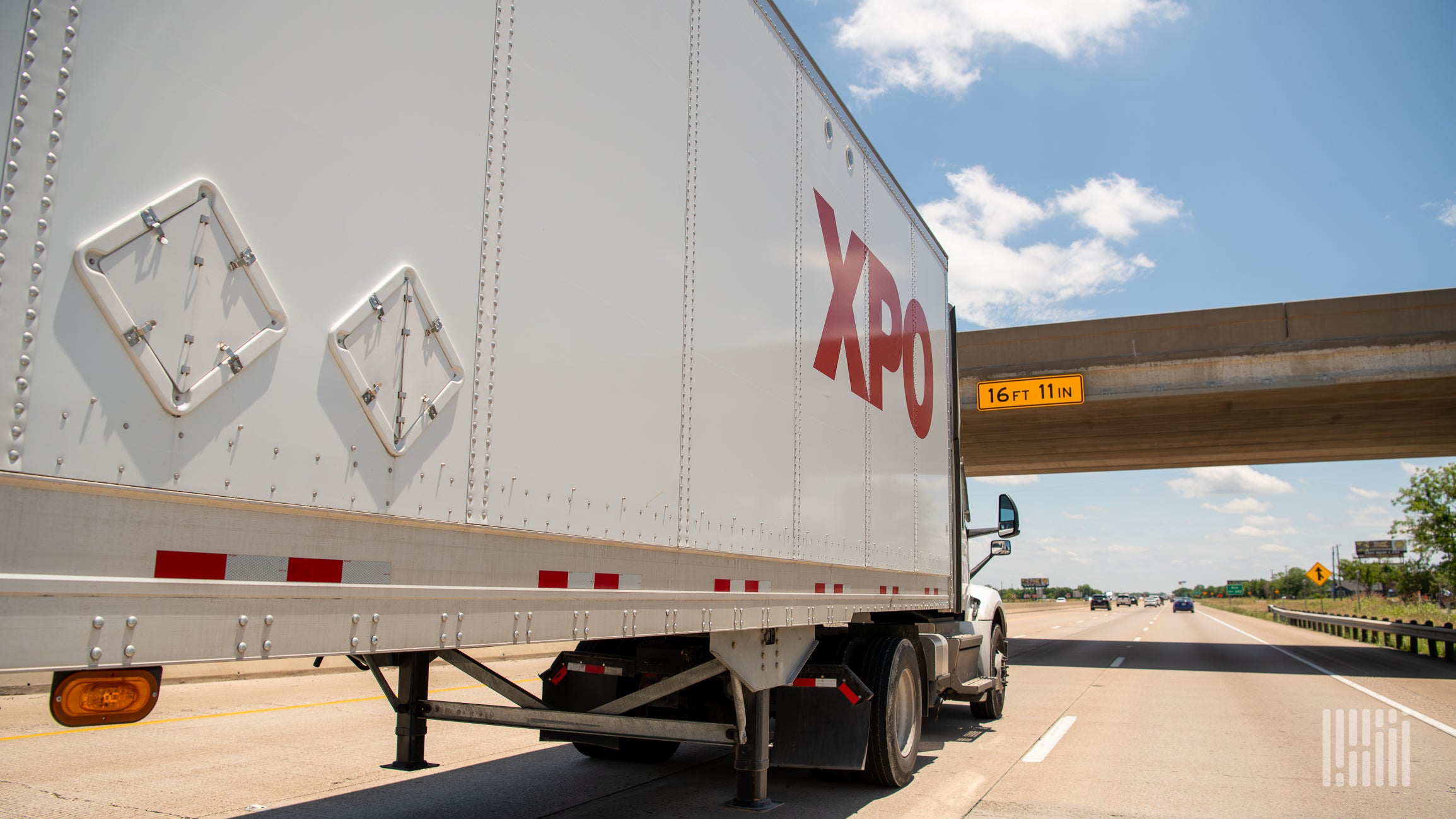
An XPO trailer being pulled on a highway

Click for full report – “XPO expects to deliver solid execution in ‘flattish’ back half”

Less-than-truckload carrier XPO reported second-quarter adjusted earnings per share of $1.12 on Thursday ahead of the market open. The result was 11 cents ahead of the consensus estimate and 41 cents higher year over year.

The adjusted result excluded transaction and restructuring costs of 22 cents per share as well as a $41 million one-time tax benefit (34 cents) tied to the restructuring of its European operations.

XPO (NYSE: XPO) generated consolidated revenue of $2.08 billion, which was 9% higher y/y.

Revenue in XPO’s LTL segment increased 12% y/y to $1.27 billion as tonnage per day increased 3% and revenue per hundredweight, or yield, was up 8% (9% higher excluding fuel surcharges). A 5% increase in daily shipments partially offset by a 1% decline in weight per shipment produced the tonnage increase. 

The unit reported an 83.2% adjusted operating ratio, 440 basis points better y/y and 250 bps better than the first quarter.

The company will host a call to discuss second-quarter results with analysts on Thursday at 8:30 a.m. EDT. Stay tuned to FreightWaves for continuing coverage of XPO’s earnings report.

Click for full report – “XPO expects to deliver solid execution in ‘flattish’ back half”

Table: XPO’s key performance indicators

More FreightWaves articles by Todd Maiden

C.H. Robinson earnings again surprise to the upside; CEO cites operating model

C.H. Robinson posted a second consecutive quarter that exceeded expectations, sent its stock higher in post-market trading and is starting to indicate that Dave Bozeman, roughly one year on the job as CEO, is making changes that are having an impact on the giant brokerage.

When C.H. Robinson (NASDAQ: CHRW) released its first-quarter earnings at the end of April, management’s focus on the subsequent call with analysts was on how the 3PL did sequentially, because comparisons to the corresponding quarter a year earlier remained weak. And although sequential comparisons are almost always considered less important in the stock market, it sent C.H. Robinson’s share price higher, enough that the stock price of $72.09 on the May 1 close, when the earnings were released post-market, was closing in on $88 by the end of May.

A similar reaction occurred in the market Wednesday. By approximately 5:50 p.m., even as C.H. Robinson’s earnings call with analysts continued, its price had risen about 11% to $98.85.

But the key difference between the two quarters is that while the good news three months ago might have been mostly sequential, year-on-year comparisons this time around were mostly positive also.

Profit measure up at NAST

The North American Surface Transportation segment, which conducts the company’s truck, ocean and air brokerage activities, reported a 3% decline in revenue from a year ago. But the segment’s adjusted gross profit (AGP) was up about 4.5%. 

Within NAST, truckload gross profits were about 4.75%, LTL was up about 5.9% and ocean gross profits rose 7.9%. Only air gross profits declined, dropping 9.1%.

Sequential comparisons for the individual segments within NAST also were higher. For example, truckload AGP was up 6.1%. Truckload is the largest segment within NAST.

Without providing numbers, Bozeman said the company’s truckload operations gained market share for the fourth consecutive quarter, “and we took share the right way, with margin improvement in mind.”

The adjusted operating margin for the company as a whole exclusive of restructuring costs rose 600 basis points to 28.1% from 22.1% a year earlier. Adjusted income from operations for the company as a whole was up almost 32%. 

The bottom-line number of non-GAAP earnings per share of $1.15 beat consensus forecasts by 19 cents a share, according to SeekingAlpha. Total revenue of $4.48 billion was short of consensus forecasts by $40 million.

The year-on-year improvements at C.H. Robinson match Bozeman’s tenure almost exactly; he started as CEO on June 26, 2023, and the second quarter of 2024 ended on June 30.

Explaining the model

Bozeman referred on the call to the “new Robinson operating model.” In his opening remarks, he discussed some of the principles of that model in significant detail, notably different from some earlier earnings calls on which analysts seemed to be scratching their heads over what the philosophy that Bozeman was espousing actually entailed.

C.H. Robinson implemented a “balanced scorecard for the enterprise that cascades down to strategy maps and scorecards for each division for the functional support areas,” Bozeman said.  The scorecards contained “key metrics,” he added.

“These metrics may be related to driving growth, meeting customer expectations, optimizing AGP, optimizing cost, managing our talent, improving our cash conversion cycle through a regular cadence of operating reviews on at least a monthly basis,” Bozeman said. “But in some cases, weekly or even daily scorecard metrics are reviewed. And there’s a binary view of whether they are on track.”

Red or green but no yellow

That binary choice is whether the metrics are on track and “green,” Bozeman said, or “red if they’re not on track.”

“There is no yellow,” the CEO added.

When the process yields a red signal, according to Bozeman, change is needed. “This may show up in improvements such as more disciplined pricing, better decisions on the volume that we’re seeking, or how we’re servicing our customers and carriers,” he said. “These operating reviews prosecute the problem and not the person, as we want our people to embrace the red as an opportunity for improvement.”

The improvement in NAST’s AGP was not consistent through the quarter. Michael Castagnetto, the president of NAST, said AGP per day was down 5% in April, up 1% in May and then up 15% in June. 

Some of it was business-related, Castagnetto said, citing a growth in seasonal produce though adding that the same market feature would have been in place a year earlier.

But “number one, obviously” he said, is that “our operating model is still coming into its own. I would expect that as time passes, we get better and the performance should reflect that.”

Separately, in response to an analyst question, Castagnetto said C.H. Robinson is “really starting to see the leverage of the tools related to our dynamic pricing and costing come to life over the last couple of quarters.” 

The improvement in AGP at NAST was not on the back of significant volume. Castagnetto said truckload volume in NAST was up 1.5% sequentially as well as year over year, though he noted that even that small level of growth topped most other carriers during the quarter.

Staff size discussed

Pushing back against reports of significant cutbacks in its sales team, Castagnetto said C.H. Robinson is “actively growing our sales team.”

But there have been changes in operations, he said. “What we did during the quarter was really changed the methodology and the process through our operating model to make sure that we’re putting the right sales process in place and doing it with the right folks with the right customers,” Castagnetto said.

He said there had been “some changes in how we manage that group” but that the “anticipation is that we’re going to continue to add to that growth and pursue growth opportunities.”

Bozeman said C.H. Robinson head count is down 10% year over year. 

A day earlier, Werner Enterprises (NASDAQ: WERN) CEO Derek Leathers said on his company’s conference call that the market might be starting to turn more positive for carriers but had not truly roared ahead. Castagnetto said something similar Wednesday.

“From a market balance perspective, we continue to be in a drawn-out stage of capacity oversupply,” he said. “Although carrier attrition is occurring, it remains at a slower pace and not enough to materially impact the overall market.”

More articles by John Kingston

On eve of earnings report, C.H. Robinson sells European brokerage operations

Reducing waste, manual touches ‘big opportunity’ for C.H. Robinson

For the first time in years, C.H. Robinson’s debt rating is downgraded by S&P Global

White Paper: State of the Industry – August 2024

The August 2024 “State of the Industry Report” — presented in affiliation with Ryder — shares an in-depth overview across the trucking, maritime and intermodal markets, as well as what to expect in the coming weeks. The data contained within the report provides breakdowns of capacity, volumes and rates as we enter into the first quarter.

In this report, you will find:

  • The truckload market has shown increasing signs of fragility, but tender rejection rates are tracking similarly to 2019 levels.
  • LTL pricing isn’t facing the same pricing pressures as the truckload market as contract rates are largely higher y/y in the LTL market.
  • Ocean volumes remain healthy as the traditional peak season is starting, while ocean spot rates have increased m/m, they have moved off their peak.
  • The intermodal market stands to gain some momentum from stronger import levels, but the intermodal market faces pricing challenges.
  • The macroeconomy is now eyeing September for the first interest rate cut in the cycle after positive inflation data in June while the labor market remains strong overall.

Download the complimentary report today to access the full insights.

C.H. Robinson first look: Q2 numbers up from both Q1 and 2023

C.H. Robinson last quarter touted its improvement sequentially since the year-on-year comparisons were still negative. But second-quarter earnings show both continued improvement sequentially from the first quarter and from a year ago.

  • The stock price reacted immediately. By 4:15 p.m., C.H. Robinson (NASDAQ: CHRW) was up almost 9% to $97. It closed at $89.05.
  • In C.H. Robinson’s North American Surface Transportation (NAST) segment, which houses its brokerage operations, revenues were down about 3% from a year ago. But adjusted gross profits were up 4.56%. Truckload gross profits rose 4.76%, LTL gross profits climbed 5.92% and ocean gross profits were up 7.85%. But adjusted gross profits for air operations were down 9.13%.
  • Sequential comparisons for the individual segments within NAST also were higher. Its bottom line is that adjusted earnings per share of $1.15 were more than 20% better than both the 90 cents a share of a year ago and 86 cents per share from the first quarter.
  • “Our second quarter results reflect a higher quality of execution and performance, as we continue to implement the new Robinson operating model. And although we continue to fight through an elongated freight recession, we are winning and executing better at this point in the cycle,” C.H. Robinson President and CEO Dave Bozeman said in a prepared statement. “Our truckload business grew market share for the fourth consecutive quarter, and we took share the right way, with margin improvement in mind. And our adjusted income from operations increased 32 percent year-over-year for the full enterprise.”
  • A conference call with analysts is set for 5 p.m. EDT.

More articles by John Kingston

Port of Long Beach ‘Supply Chain Information Highway’ gets $7.9M grant

The Port of Long Beach received a $7.875 million grant for its data system, which port leaders say will help speed cargo deliveries across the country.

Dubbed the Supply Chain Information Highway, the data system will enable users to make scheduling, planning and operational decisions prior to cargo arrival. The grant from the Governor’s Office of Business and Economic Development will help build out functions including export and rail cargo visibility, security features, data exchange, and truck appointments, the port said in its announcement. 

The data system will be cloud-based and is expected to be compatible with similar data-sharing platforms across the maritime logistics industry. The product is free to registered users and is expected to help more than 200,000 shippers who use the port, Long Beach Harbor Commission President Bobby Olvera Jr. said in the announcement. 

“With six marine terminals at the Port of Long Beach now connecting to a beta version of the Supply Chain Information Highway, we’ve entered a crucial phase of development,” Port of Long Beach CEO Mario Cordero said in the announcement. “This funding will be important as we roll out these new enhancements to increase cargo velocity and tighten coordination across modes of transportation.”

More on the Port of Long Beach:

25% more containers out of LA/Long Beach ports possible: ITS Logistics

Ports of Los Angeles, Long Beach receive $112M for maintenance, repair

Sen. Lena Gonzalez, D-Long Beach, chair of the Senate Select Committee on Ports and Goods Movement, praised the concept, saying it will “not only improve goods access for Californians but also support our communities by strengthening our economic landscape.”

The port tapped technology firm Uncomn to create the Supply Chain Information Highway. Uncomn is working with Amazon Web Services to provide cloud services, the port said. 

Development expected in 2024: 

  • A Container Track and Trace feature to access up-to-date information about container status.
  • The Port Operations Dashboard, where users can review Port of Long Beach operational metrics. 
  • The Beneficial Cargo Owner Dashboard, where BCOs can access detailed information about their containers.

The port announced plans for the platform for digital end-to-end visibility across transportation modes in December 2021.

Canada underprepared for marine emergencies, transportation officials say

The Transportation Safety Board of Canada (TSB) says the Zim Kingston accident in 2021 raises questions about the adequacy of Canadian resources in emergencies that could pose risks to marine vessels, the environment and the general public.

TSB issued that warning during a news conference Wednesday releasing its investigation into the accident. In October 2021, the Zim Kingston lost 109 containers overboard off the west coast of Vancouver Island and subsequently caught fire near Victoria, British Columbia.

“This type of accident is not just a maritime accident; the effects are far-reaching and long-lasting,” Kathy Fox, chair of the TSB, said during the news conference in Vancouver. “The consequences of such accidents threaten marine ecosystems and endanger vessels and their crews, as well as the health and safety of both Canadians and those beyond our borders.”

The Greek-owned Kingston vessel was on long-term charter to ocean carrier Zim (NYSE: ZIM), sailing from Busan, South Korea, to Vancouver with a full capacity of 4,253 twenty-foot equivalent units.

The vessel tipped in high seas about 30 miles south of Ucluelet, British Columbia, experiencing what’s known as parametric rolling, officials said. The rolling caused 109 containers to fall into waters near the mouth of the Strait of Juan de Fuca.

In 2021, the Zim Kingston lost 109 containers that fell into waters near the mouth of the Strait of Juan de Fuca. (Photo: U.S. Coast Guard)

About 36 hours after the loss of the containers, the Zim Kingston anchored off Vancouver Island’s Port of Victoria. While the vessel was anchored, a fire broke out in containers on board the ship. At one point, 10 containers were on fire, two of which contained potassium amyl xanthate, a hazardous material used in mining. 

The fire took almost five days to put out, according to the Canadian Coast Guard.

The TSB said that unlike the United States, Canada does not require carriers to have prearranged plans for fire response or marine salvage.

“This occurrence brought to the forefront the challenges that Canada faces when dealing with marine emergencies that go beyond the response capacity of the vessel crew, including the availability of resources to respond to vessel fires and incidents involving hazardous and noxious substances,” Yoan Marier, a TSB board member, said during the news conference.

“This contractor was quickly able to contact two foreign-flagged vessels with firefighting capabilities that happened to be in Victoria at the time. Our investigation found that the fire response followed industry standards and was conducted efficiently. The contract between the ship’s manager and the U.S.-based marine salvage and response contractor meant that there was rapid access to emergency specialists who provided guidance and to a team of trained personnel who were able to board the vessel and contain the fire.”

Fox said having preestablished salvage and response arrangements can improve emergency preparedness.

“In this occurrence, it was extremely fortunate that the vessel’s manager had made prearrangements for emergency response and that there happened to be suitably equipped vessels nearby. It is important not to mistake this luck for emergency preparedness. The next time we might not be as lucky,” Fox said.

More than 97% of debris from the 109 containers that fell overboard from the Zim Kingston remains in the ocean, TSB said.

“Containers lost at sea are a hazard to navigation while floating, and once they drift ashore or sink and break apart, they can become a risk to coastal environments and marine habitats,” Fox said. “As of January of this year, the ongoing beach cleanups in British Columbia have found new debris that is likely from the Zim Kingston along large stretches of the coastline. The freshness of the debris suggests that the containers continued to release their contents.”

The TSB report said the federal government intends to create a single system to respond to all marine pollution incidents. Transport Canada is developing regulations to strengthen preparedness requirements for the industry, which could take up to four years.

Fox said there needs to be more urgent and effective action before another incident occurs.

“The board is concerned that there are gaps in Canada’s preparedness for marine emergencies that exceed the response capacity of the vessels’ crew, posing a risk to vessels, the environment, and the health and safety of the general public,” Fox said. “It’s not a matter of if but when a similar incident will occur, and the question is, will Canada be prepared for it?”

A Canadian rail strike is likely in late August, CPKC CEO Keith Creel says

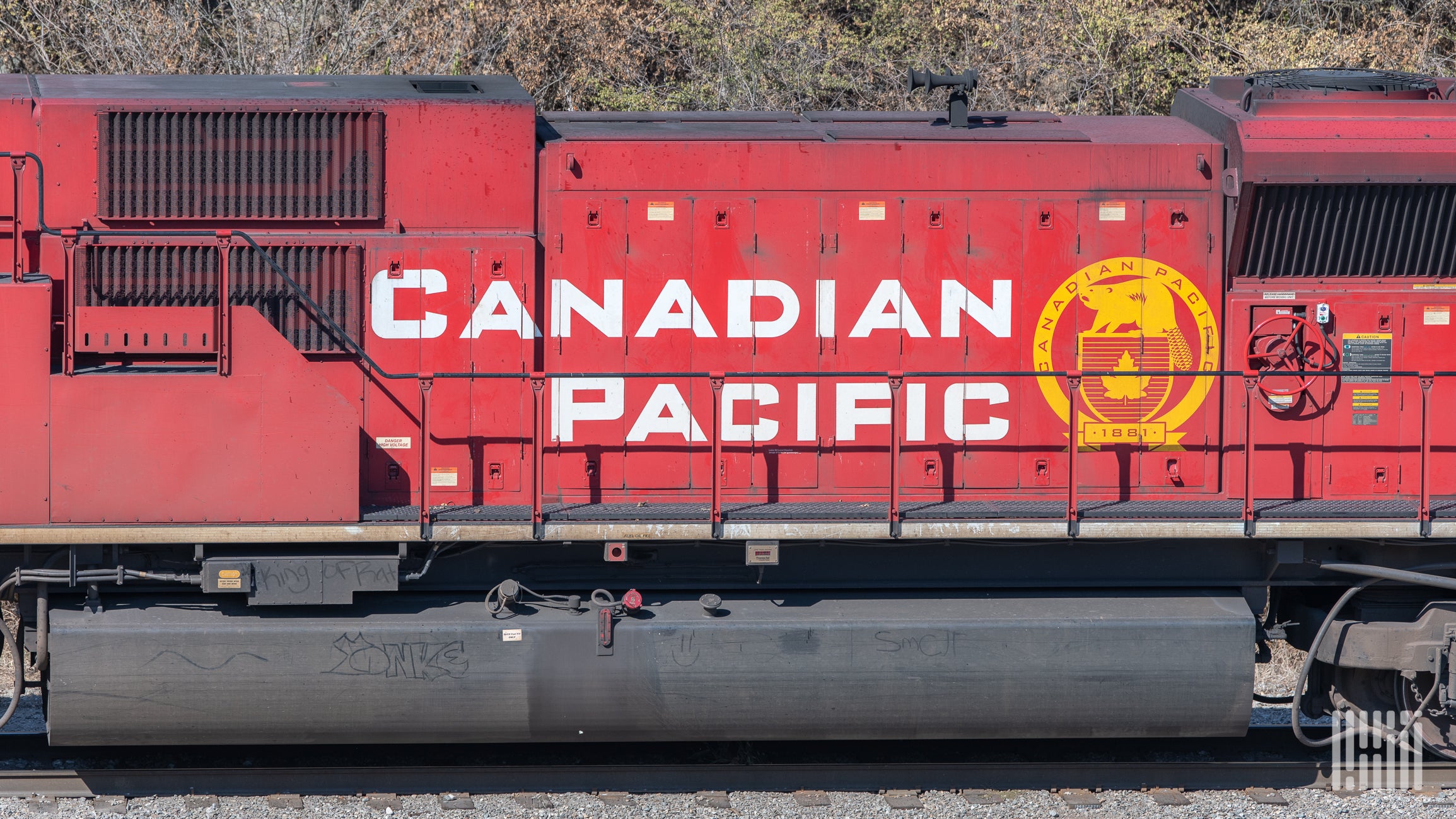
Side of a red train car with Canadian Pacific on the side

CALGARY, Alberta — With labor negotiations at a standstill, a Canadian rail strike is likely to
occur in late August, Canadian Pacific Kansas City CEO Keith Creel said Tuesday.
CPKC and the Teamsters Canada Rail Conference are still talking but remain far apart on a new
contract, Creel said on the railway’s second quarter earnings call.
The Canadian Industrial Relations Board has said it will release a decision by Aug. 9 on what
commodities are vital to health and safety and must keep moving during a work stoppage.
Members of the TCRC, which represents engineers and conductors on CPKC and Canadian
National, have voted to authorize a strike that could begin with 72 hours notice once the CIRB
decision is issued.
A strike would shut down both CPKC and CN in Canada. It also would affect commuter
operations in Vancouver, Toronto, and Montreal because the trains operate on trackage
dispatched by CPKC rail traffic controllers, who are represented by the TCRC. 
“We’re far apart. It’s going to be a challenge,” Creel said of ongoing labor talks.
Last week CN lowered its financial outlook for the year, partly due to a traffic slowdown as
customers divert traffic in anticipation of a strike. CPKC executives said a strike wouldn’t affect
their outlook unless it dragged on for more than two weeks.
Creel said a strike will damage Canada’s reputation as a reliable trading partner, however,
particularly since it may come about a year after a dockworkers strike shut down ports in British
Columbia, which are gateways to Chicago, Toronto, and Montreal. 
“It’s not a good outcome for anyone,” Creel says, noting that some container traffic still has not
returned to Vancouver since the dockworkers strike. A rail strike may give customers “labor
unrest fatigue,” he says.
“We’re going to not give up. We’re going to remain cautiously optimistic,” Creel says of the labor
talks. “But we’re not going to do a bad deal, either.”  
Meanwhile, a potential strike by dockworkers on the U.S. East and Gulf coasts could benefit
CPKC-served ports of Lazaro Cardenas in Mexico as well as Saint John in New Brunswick.
Both could serve as alternatives to U.S. ports if dockworkers walk out.
CPKC recently ran test trains between Lazaro Cardenas, on Mexico’s Pacific coast, and its
terminal in Kendleton, Texas, on the outskirts of Houston. CPKC Chief Marketing Officer John
Brooks says the trains took 3½ days to reach the Houston area, excluding time the boxes spent
on the dock at Lazaro, and were operated with U.S. port labor disruptions in mind. 
Steamship lines, including Maersk, ONE, MSC, and CMA-CGM, have announced new service
calls at Lazaro, he notes.