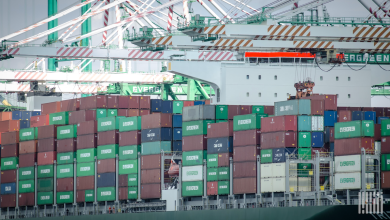
Trans-Pacific container rates fall to pre-Red Sea crisis levels
Container rates on the closely-watched eastbound trans-Pacific fall to their lowest levels since before the Red Sea crisis erupted in 2023.
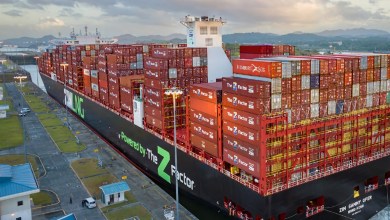
ZIM Integrated Shipping Services Ltd. saw earnings sag as President Trump’s trade war on China hit trans-Pacific container volumes.
Container rates on the eastbound trans-Pacific braked their slide after tariffs fueled record volumes.
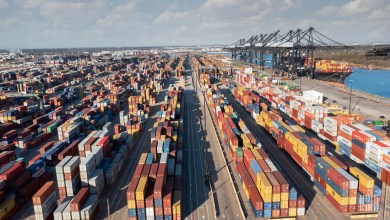
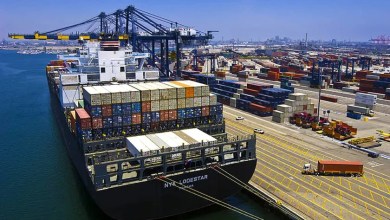
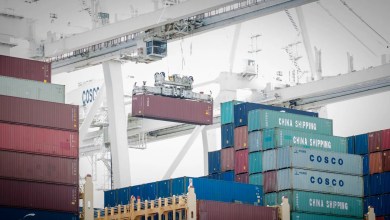
July was a record month for the Port of Los Angeles, as monthly container volumes for the first time topped 1 million TEUs.
Two Chinese military ships collided in the South China Sea while harassing a Philippines coast guard vessel.
Imports of containerized cargo through U.S. ports finished just shy of a monthly record in July, headlined by a recovery of China shipments through the busiest American gateways.
The decline of ocean container rates on the critical Asia-U.S. route is unstoppable amid President Trump’s economic war on China and reset of global trade policy, says analyst Xeneta.
The recent storm of trade news failed to move the needle for trans-Pacific container rates.
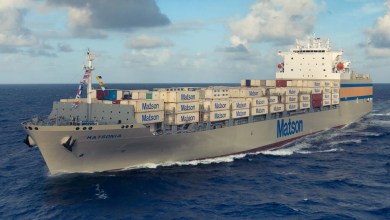
Matson said earnings were weaker as trade and tariff volatility hit volumes on China routes.
Liner operator CMA CGM said it is interested in buying CK Huchison’s global marine terminals.
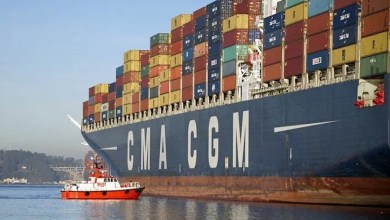
CMA CGM, the world’s third-largest ocean container carrier, said profits fell in the second quarter as trade disputes hit U.S. imports from China.
President Donald Trump said that he will not extend Friday’s deadline for his “reciprocal” tariffs on dozens of U.S. trading partners.
Freight rates on U.S. ocean trade routes hold steady as shippers and carriers wait out trade talks, tariff deadlines.
Despite U.S. tariff impacts, Drewry’s Global Container Port Throughput Index rose modestly in May, but better year-on-year, indicating global trade flows are adjusting.
Shippers are stepping back from the trans-Pacific trade amid trade uncertainty and tariff fatigue.
Small- and medium-sized businesses are feeling the tremors of unpredictable U.S. trade policy and dozens of recent tariff changes.
Ocean container rates on the Asia-U.S. trade lane continue to fall, according to Drewry’s latest data.
Intermodal, coal, and grains are driving Class I railroad traffic higher.
China could block the sale of CK Hutchison’s global port facilities if it doesn’t get a stake in the deal involving a U.S. private equity firm and Mediterranean Shipping Company.
Declining demand and a global tariff fight continue to undermine ocean container rates on key Asia-U.S. trade lanes.