- Read
- Watch
- Listen
- Newsletters
- SONAR
- Events
- Awards
- Discover
- Resources
- About Us
Underlying shifts in domestic shipping are showing up in the spot market.
There has definitely been a sustainable shift in how freight is distributed domestically.
The jury is still out on whether truckload demand has hit the floor.
Companies are still trying to get their margins back to pre-pandemic levels with price increases on finished goods. This will continue to put freight demand at risk in the second half of the year.
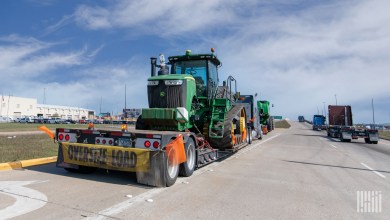
Flatbed capacity tends to be as erratic as its demand, making it harder to secure in general.
After over a year of declining volumes and rates, trucking spot rates have leveled and demand has just witnessed an unseasonable jump.
The pandemic may have exposed long-term weakness to the railroads’ intermodal growth plans.
Southern California markets were flush with transportation activity during the pandemic. That has eroded and then some. This has not only left transportation networks exposed operationally but also created pricing gaps.
What do historically low rejection rates mean for the truckload industry?
Upstream and historic values are predicting another strong deterioration in truckload spot rates in April. How seriously should we take this?
La corrección de la capacidad de carga se prolongará hasta 2023
Perhaps the biggest question of 2023 for domestic trucking is when will the surplus of capacity fade to a point that prices stop falling. One data point provides deeper insight than simply a count of drivers or tractors.
When trucking capacity tightens and rates increase, intermodal shipping by rail becomes more attractive in general. That does not appear to have happened during the pandemic years.
Lunar New Year normally brings a slow shipping period for imports, but the lead-in period was also lackluster. With many companies calling for a return to seasonal patterns later in the year, just how close are we to that being a reality?
Los datos marítimos sugieren que los transportadores siguen teniendo problemas con la demanda
Many people get hung up on trying to figure out how much capacity is readily available in trucking when they should be more focused on monitoring demand trends.
La capacidad de transporte por carretera es relativamente estable, mientras que la demanda es cualquier cosa menos estable.
Are supply chains already manifesting significant changes in domestic transportation patterns?
Los dos mayores estados del país para el transporte de mercancías se mueven en direcciones opuestas
Inventory growth in December is not a great sign for carriers who are expecting the market to bottom this winter.
La demanda de los consumidores podría seguir por debajo de las previsiones de los transportadores
What conclusions can we draw from the relationship between imports and trucking?
La relación entre los pedidos de importación y el transporte por carretera se fortaleció durante la pandemia
Las tasas de rechazo de ofertas se mantuvieron históricamente bajas durante las vacaciones
Truckload carriers nearly auto-accepted load requests during the holidays. While this may look like a blessing to shippers, the implications are not great.
Truckload carriers are providing the best contract compliance since COVID started during a traditionally chaotic time. What does this mean for 2023?
Normally one of the softest regions for truckload activity in the U.S., the Pacific Northwest has become the tightest in the nation.
Fuel costs are a huge cost component of operating a trucking business. Small operators are at a significant disadvantage in the current market thanks not only to declining demand but fuel price volatility.
FreightWaves has announced that SONAR customers can now see Canadian data within the Supply Chain Intelligence (SCI) platform.
Transportation demand continues to erode heading into the slowest months of the year. Could this be the bottom?
FreightWaves SONAR recently released two new market analysis tools that provide lane-level rate benchmarking capabilities and insight into the future state of the domestic truckload spot market.
The automotive industry has been going strong while other sectors of the economy are slowing. What are some of the reasons for this and how long will it last?
El transporte de piezas de automóviles aumenta un 11% en comparación con el año anterior
FreightWaves new spot rate forecast supports a slow start to trucking’s peak season.
Truckload contract rates have slowed their descent after a quick drop in August. What should we make of this as demand continues to ease?
Declining contract volumes may bring large carriers into the spot market, forcing spot rates into negative margin territory if they are not already there.
The truckload market is already experiencing a rapid deterioration in pricing. How long until the LTL market recognizes this inevitability?
Carriers and brokers tend to have the weather on a TV somewhere in their facilities throughout hurricane season because of the dramatic impacts storms can have on their operations and bottom lines. Ian hit at a time when trucking will not be as reactive to this devastating storm.
The ghost of Paul Volcker is stalking truckload carriers as Fed Chairman Jerome Powell looks to his mentor’s 40-year-old strategy to quell inflation. The lagging impacts from the recent interest rate hikes will inevitably erode demand several months into the future.
Outbound truckload tender volumes spiked this week out of Southern California, while intermodal volumes dipped due to a brief embargo. Could this be a result of shippers preparing for a potential strike?
Carriers gobble up contracted freight, leaving the spot market barren for the holiday week. While not overtly obvious, there is still some semblance of hope for a decent peak season for carriers.
Importers have been shifting to the East Coast since 2021, but the full realization of this has peaked over the summer. The shifting import pattern has strong downstream effects for surface transportation providers.
Demand side indicators have been falling since 2021, but inflation continues to be the primary concern for the economy. The problem is there is little the Federal Reserve can be expected to be able to do, thanks to the cause of inflation shifting to the supply side.
The spread between spot and contract truckload rates is unsustainable. The question is just how far and fast will they fall?
Las tarifas al contado indican que es inminente una fuerte
caída de los contratos
Truckload spot rates have eroded dramatically since the start of the year while the bulk of the contracted market remained unscathed. That may be changing.
Knowing what the customer wants and when was once a relatively easy thing to predict. COVID has changed all that.
The recent AB5 ruling will make it difficult for regional operators to handle the ongoing short-haul and drayage demand in California.
Capacity normally tightens in the week leading up to the Fourth of July. The lack of upward movement from spot and rejection rates this past week suggests the market is either propped up by the holiday or seasonal patterns have not returned.
Contract rates have grown at their fastest pace in history over the pandemic era. The contract to spot rate spread fluctuation is an argument for smarter and more efficient growth strategies for carriers.
Import volumes have not realized the dip in shipping orders yet. What does this mean?
Inventory growth has forced companies to change their ordering strategy to a more flexible model.
The contracted freight market is in great condition at the moment, but the short-term indicators raise questions about its sustainability.
FreightWaves releases rate spread indexes in SONAR.
The truckload spot market has fallen apart over the past two months. Larger fleets are in far better shape for weathering the storm.
El costo del combustible ha agravado la erosión de los márgenes en el mercado spot de camiones
Shippers book maritime containers well before it turns into trucking and rail freight in the U.S. The relationship between international and domestic freight strengthened during the pandemic and they are both pointing toward a summer slump.
Container Atlas, the latest addition to SONAR, provides deep-dive data into the maritime sector.
El Índice Nacional de Camiones de FreightWaves es la forma más rápida y precisa de medir la actividad de los camiones en Estados Unidos
New index is fastest, most accurate way to measure US trucking activity
Not all loads are created equal in trucking. Loads moving across the country have a much greater impact on capacity and subsequently spot rates and they are disappearing at an astonishing rate compared to their shorter counterparts.
Many transportation managers and providers are expecting a return to a simpler time, but the data shows simpler times may be a thing of the past.
Heavily contracted carriers are not feeling the full brunt of the truckload market easing just yet, but there is still a lot to be determined about what happens next.
Slower transit times may be what shippers need as inventory levels and costs surge to all-time highs.
Stability lulled transportation managers and providers to sleep in the six years post-recession. The roller-coaster ride of the last four may be more indicative of their future.
Truckload capacity has been extremely difficult to secure over the past 18 months, but the tender data shows things may be changing, rapidly.
Inventory levels grew at an astonishing pace in February. Is the supply chain crisis ending?
The wild fluctuations in crude oil prices have created a strong disconnect between wholesale and retail diesel prices. What are the impacts on transportation costs and subsequently carrier bottom lines?
Relatively abundant for most of the pandemic, flatbed capacity has become scarcer than ever thanks to the surging price of crude and a white-hot construction sector.
The conflict is 8,000 miles away from North America but supply chains are global, which means any disruption around the world is a threat to their well-being. As the impact of COVID diminishes, a new geopolitical threat arises.
Shippers have been bidding against each other for capacity over the past year with little to show for it, and it appears paying more will not solve the crunch.
Carriers are pricing themselves into the markets with the highest rates, which is further fueling the capacity shortage.
Equipment price inflation not only inhibits capacity growth it carries consequences well into the future.
China’s biggest holiday used to have a dramatic impact on U.S. transportation and the flow of goods. Now it seems more of an afterthought.
Carriers are working hard on covering the high-priced West Coast freight, leaving shippers in the Northeast wanting.
Reefer demand remains strong heading into late January, breaking seasonal patterns that many have come to expect.
Prices have increased 17% but carrier compliance shows only marginal improvement
After a year of record demand, shippers are hesitant to pull their feet off the accelerators heading into the “slow” season.
After a year and a half of predictive misses, procurement teams and supply chain managers are in need of Lithium to help treat their bipolar ordering behavior.
Southern California is the main entry point for imported goods in the U.S. Congestion around rail ramps and deteriorating service pushed shippers to trucking over the summer, but that trend is reversing as truckload costs soar out of the West.
Long-haul freight typically shrinks around the holiday season as fulfillment becomes a priority. The exact opposite is occurring this season, which may be indicative of shipper overcorrection.
Los cargadores siguen acumulando inventarios mientras el
consumo disminuye
The refrigerated truckload sector’s capacity recovery has stalled this fall while van has continued to stabilize. Here is the reason.
The trucking spot market is showing signs of softening in a somewhat unexpected time. Should shippers breathe a sigh of relief or is this the calm before the storm?
FreightWaves adds spot rate data and a new market analytics application inside its SONAR platform.
FreightWaves anuncia las tarifas spot TRAC en el nuevo
Market Dashboard de SONAR
The cost of diesel fuel, a main component in the cost of trucking, is climbing rapidly. This is a hidden factor that is helping keep spot rates elevated.
Contract rates for trucking have been rising since late last year and finally appear to be effecting compliance, but at what cost?
Las tasas de rechazo de licitaciones caen al punto más bajo
desde julio de 2020
Domestic intermodal container volume growth over the past two months may not signal a definitive end to the rail yard blues, but it is a positive sign for supply chain managers.
While shortages are being blamed for the bulk of the capacity shortages in transportation, the balance of the movement of goods has become incredibly lopsided.
Las tarifas al contado que se mueven hacia Los Ángeles han
disminuido en el último año, mientras que los carriles de
salida aumentan más del 20%.
Transportation rate growth has gone parabolic as shipping demand continues to strain networks. What are the fundamental reasons for this and how long will these conditions persist?
Used truck prices continued to hit new highs each of the last six months according to ACT Research. Prices will eventually become too much of a burden for small fleets and owner-operators to bear, if they haven’t already.
Congestion around the ports and drayage capacity issues are pushing shippers to use trucks more frequently while loaded container volumes dip. But shipping patterns are changing in more ways than just mode conversion.
Carriers are rejecting a disproportionate amount of long-haul freight heading east versus west. Does this dramatic imbalance have long-term implications?
Increasing the time between the request and requested pickup date is supposed to increase your odds of securing capacity. The aggregate data shows the opposite, but there is more than meets the eye.
FreightWaves SONAR data platform adds GLEC compliance to its carbon calculations.
Shippers are requesting as much capacity as ever from maritime shippers in August after slowing their pace through most of the summer. What should we take away from this?
June proved to be possibly the best month ever for Truckload Carriers Association members. Brokerage revenue growing alongside driver revenues helps paint a picture of success, but what is success for a carrier?