Automation leader says reshoring ‘a matter of national security’

In the latest episode of the Bring it Home podcast, Brian McMorris, founder and president of Futura Automation, said he sees robotics and investments in automation playing a role in reshoring decisions.

Bring It Home celebrates the North American manufacturing renaissance, reindustrialization and reshoring taking place across the continent. Its co-hosts are Craig Fuller, founder and CEO of Firecrown Media, and JP Hampstead, strategic analyst at Firecrown.

Meet McMorris

McMorris, whose company offers automation solutions to manufacturers and helps them with the economics of bringing their operations back to the U.S., has been in the automation industry since 1980. He said he wanted to work in robotics since childhood.

“I grew up with the Jetsons,” McMorris said. “I had that in my mind, but there really wasn’t much in the way of robotics back in the early ’80s. But by the ’90s they became more prevalent, and I joined companies at that time – a couple of different companies – that were focused on the robot industry.”

By 2015, McMorris had become vice president of Adept Robotics – one of the last American manufacturers of robots – until it was acquired by Omron Robotics later that year and his position was eliminated in 2016.

In 2017, McMorris started his own company, Futura Automation, with the goal of helping U.S. companies reshore.

“I always believed in that all the way back into the ’80s when [Japanese manufacturing] first kind of went after the robot industry and the car industry, especially,” he said. “But then, of course, China came along in the 1990s and 2000s. I saw manufacturing disappear before my eyes. I saw cities vaporized by the loss of their main industry, so I was very interested and motivated to help companies get back the manufacturing they had lost.”

Manufacturing and national security

McMorris said that when President Donald Trump was elected in 2016, he rallied support around the issue of unfair Chinese trade practices.

“A tariff-free world works great when everybody plays fairly and by the same rules,” McMorris said. “It doesn’t work at all when some countries cheat and charge tariffs against your [products], or they might call it a value-added tax … . It makes an unfair playing ground, which already is unfair enough because of the differentials in labor costs.”
He said the U.S. over the past several years has shown growing interest in retrieving manufacturing that’s been lost to foreign powers the past several decades.

“It’s become a matter of national security, to be honest, in many different ways,” McMorris said. “Not just [in] defense, but also pharmaceuticals, food, automotive and [other sectors], we can’t lose all of our manufacturing or we have nothing.”

Bringing operations back to the US

McMorris said companies are bringing manufacturing back to the U.S. He said increasing labor costs in China and growing tensions between China and the U.S. are key motivators.

“I think most people in management want to be good citizens,” McMorris said. “They want to do the right thing by their country [and] they don’t want to be the downfall of American hegemony.”

That said, there are “bumps in the road” when it comes to U.S. reshoring efforts, including changes in government policy, changing interest rates and recession fears.

“There’s been this general fear, I think, in the C-suite that we’re going to hit a big recession,” he said. “We haven’t, but because of the interest rates going up to 7% and inflation at 9%, there were thoughts that we were going to have a big recession. It hasn’t panned out, but that didn’t stop the C-suites from getting conservative about it.”

McMorris said he would advise manufacturers interested in successfully reshoring operations back to the U.S. to study what others in their sector are doing first.

“Automation is sort of a playing field leveler,” he said. “The differentials in labor and that sort of thing are less important when you have a robot, because robots cost the same thing everywhere. … It would be nice to see some robot manufacturing come back to the U.S. I don’t have any near-term expectation of that because there’s no companies here anymore, but that would be an important thing.”

He also said automation robots are built using rare earth minerals mostly controlled by China today.

“We need to start mining again, but in a way that is environmentally conscientious,” McMorris said.

Other headlines and topics discussed in this episode include: 

  • The market’s reaction to President-elect Donald Trump’s election win, Cabinet nominations and political appointees.
  • Supply chain reindustrialization via an expected flurry of upcoming trade policy changes by the U.S. government.
  • How national security relates to supply chain reindustrialization.
  • An additional $1.5 billion investment by President Joe Biden’s administration into passenger rail for 19 infrastructure projects in the northeast U.S.
  • Apple’s iPhone partners making plans for U.S. manufacturing.
  • AstraZeneca investing $3.5 billion in research and development and manufacturing facilities in the U.S.

The Bring It Home podcast is currently on YouTube and will soon be available on other podcast platforms.

J.B. Hunt Q4 earnings: First look

J.B. Hunt trailers parked at a terminal

J.B. Hunt Transport Services reported headline earnings per share of $1.53 Thursday after the market closed. The result included $16 million of intangible asset impairments, or about a 13-cent-per-share headwind at the recent quarter tax rate. The consensus estimate for the period was $1.62 per share.

Click for full report – “J.B. Hunt’s record intermodal loads came with higher costs in Q4”

Consolidated revenue fell 5% year over year to $3.15 billion. Adjusted operating income of $223 million was 13% lower y/y.

J.B. Hunt (NASDAQ: JBHT) will host a call at 5 p.m. EST on Thursday to discuss fourth-quarter results.

More FreightWaves articles by Todd Maiden:

Trump tariffs would be ‘blow’ to US allies Canada and Mexico, experts say

President-elect Donald Trump’s promise to hit goods from Mexico and Canada with 25% tariffs when he returns to the White House on Monday could strain trade relations among the three nations, experts said during an online forum.

“We have to start from the premise that the application of 25% tariffs against all products from Canada and Mexico is a huge blow to the USMCA [United States-Mexico-Canada Agreement] and a huge blow to our confidence in the U.S. as an ally,” Steve Verheul, Canada’s chief trade negotiator from 2017-2021, said during the Thursday forum hosted by the Wilson Center in Washington.

The Wilson Center is a nonpartisan policy forum that examines global issues. The forum was titled “USMCA 2026 Review: New Realities and Strategic Shifts in North American Trade.”

Verheul, a principal at Toronto-based GT & Co. Executive Advisors, was Canada’s chief negotiator for the USMCA trade pact, which went into effect in July 2020.

“This is a very aggressive action, and we are going to have to respond, from Canada’s perspective. Probably our most effective levers are going to be in the resource sector, whether it’s critical minerals, whether it’s oil and gas,” Verheul said. “But the way it looks to us is that the U.S. is going to put much stronger barriers against Canada in the U.S. market than they are to China and Venezuela and others. Does the U.S. really want to start buying these essential resources from those countries, as compared to Canada? Who has been a loyal ally to the U.S. throughout all of this, and from Canada’s perspective, we’re far better to go down the track of trying to strengthen North America as a region.”

Along with Verheul, panelists included Earl Athony Wayne, a former U.S. ambassador to Afghanistan, Argentina and Mexico and public policy fellow at the Wilson Center; Juan Carlos Baker, CEO of Ansley International Consultants and Mexico’s former vice minister for foreign trade; and Shauna Hemingway, former Canadian ambassador to the Dominican Republic and deputy head of mission in Mexico City.

Several of the panelists said Trump will immediately make good on his promises to levy the 25% tariffs.

“I believe the most likely scenario is that Donald Trump will do what he did back in 2018 when the Section 232 tariffs started on steel and aluminum – that is to say, sign an executive order saying that tariffs are coming, but for the time being, given that the U.S. is engaged in conversations with Mexico and Canada, those tariffs will be suspended, provided that Mexico or Canada will come successfully out of a negotiation with him,” Baker said. “I think that he will have the stick, but he might not strike immediately, for all intents and purposes.”

Mexico and Canada are the top two U.S. trade partners.

From January through November, U.S.-Mexico trade totaled $776.05 billion, a 6% year-over-year increase compared to the same period last year, according to the latest Census Bureau data.

Trade between Canada and the U.S. totaled $699 billion for the first 11 months of 2024, a 2% year-over-year decrease compared to the same period in 2023.

Mexico ($766 billion) and Canada ($699 billion) are the top two U.S. trade partners year-to-date in 2024. (Photo: Jim Allen/FreightWaves)

Wayne said Trump will most likely address illegal migrants and drugs flowing across both borders before any trade talks can take place.

“I think we’re going to have to be ready for reactions against the two neighboring countries based not on the trade agreement. Before we get to the trade agreement, Trump is going to want to act based on what Mexico is doing vis-a-vis people intending to migrate illegally to the United States,” Wayne said. “Trump is also going to look at what Mexico and Canada are going to do on criminal activities and criminal groups trying to send illegal drugs into the United States. That’s going to be sort of a preliminary block. I think that’s going to stop us actually getting directly to a number of the trade issues.”

Hemingway said the three nations need to come up with a plan to benefit all of North America.

“We talk about these trade agreements and in the North America context that we’re looking for a win-win-win situation, as if that’s a lofty dream and a lofty ambition, but it’s actually essential to all three countries,” Hemingway said. “The win-win-win has to be there. There’s no way to achieve an agreement without that being part of it. It has to be a win-win-win. We should stop sort of talking about it as if that’s an unattainable dream, and recognize that it is the goal and the solution that we’re looking for.”

Trump said Tuesday he will create a new government body to collect tariffs and other revenues from foreign nations.

“Through soft and pathetically weak Trade agreements, the American Economy has delivered growth and prosperity to the World, while taxing ourselves. It is time for that to change. I am today announcing that I will create the EXTERNAL REVENUE SERVICE to collect our Tariffs, Duties, and all Revenue that come from Foreign sources. We will begin charging those that make money off of us with Trade, and they will start paying, FINALLY, their fair share,” Trump said on his social media site, Truth Social.

Baker, Wayne and moderator Diego Marroquin, the inaugural Bersin-Foster North America Scholar at the Wilson Center, recently co-authored a report titled, “A Practical Guide to the USMCA 2026 Review: 3 Principles, 5 Rules for Success.” The guide’s aim is to help trade stakeholders build on the USMCA’s achievements and lay the groundwork for a stronger North American partnership.

“Tariffs are not only inflationary, they’ll make goods more expensive for us consumers, as well as for Canadian and Mexican families,” Marroquin said. “Tariffs are also anticompetitive. They will make our industries less competitive vis-a-vis China, vis-a-vis Russia and even Venezuela.”

Locked up and losing out

Walgreens and retailers are dealing with a delicate balancing act between securing goods from theft while ensuring that security measures don’t drive customers away. Recent insights from Walgreens and the National Retail Federation (NRF) illustrate the complexity of this issue and highlight strategies retailers are employing to address it.

Facing a 52% increase in stolen inventory, Walgreens resorted to locking up a wide range of products. However, as CEO Tim Wentworth noted during a January earnings call, this approach backfired. Locked merchandise deterred potential thieves, but it also alienated customers, reducing overall sales. The company reported a significant operating loss of $245 million for the quarter and is now seeking new solutions to combat theft without shedding customers.

This tension is not unique to Walgreens. A 2024 NRF report reveals a staggering 93% increase in shoplifting since 2019, with organized retail crime becoming more sophisticated. Groups of thieves, often working together, target high-value items with greater frequency, forcing retailers to implement stringent security measures. However, these measures, such as locking up products, using electronic tags and hiring additional security, can negatively impact the customer experience. According to the NRF, 76% of retailers acknowledge that their antitheft strategies have adversely affected how shoppers perceive their stores.

A key challenge lies in tailoring security measures to individual store environments and product categories. High-theft items like cosmetics, over-the-counter medications and electronics are often secured with locks or tags, or are completely removed from sales floors. Yet, the broader impact of these measures, including longer wait times for assistance and reduced convenience, can deter customers from making purchases altogether.

In response, retailers are increasing their budgets for advanced security technologies, including shopping cart locks, receipt-checking systems and AI-driven surveillance. These tools help monitor theft without significantly disrupting the shopping experience. However, the technologies are a significant investment and must include ongoing adaptation as criminals learn how to get around them.

Focusing on customer engagement has shown promise to deter theft. Strategies such as greeting customers, offering assistance and maintaining a visible staff presence in high-risk areas not only discourages theft but enhances customer satisfaction overall. 

Learn more about retailers’ concerns with the security of their products in the NRF study on retail theft and violence.

(Photo: Tenor)


Overhaul fighting the good fight 🥊

Risk management platform Overhaul has raised $55 million in equity funding this week, led by Springcoast Partners with participation from Edison Partners and Americo. The funds will support strategic acquisitions and enhance the company’s proprietary AI technology, including its work fighting freight fraud.

Headquartered in Austin, Texas, Overhaul monitors over $1.4 trillion in global freight movements, helping shippers and 3PLs address challenges like cargo theft, delays and damage. CEO Barry Conlon emphasized the funding’s role in solidifying Overhaul as a market leader, especially as the supply chain technology sector braces for increased consolidation over the next two years.

In tandem with the funding announcement, Overhaul unveiled FraudWatch (great name choice), a solution to combat the growing threat of freight fraud. Designed to tackle fictitious pickups, double brokering and carrier identity theft, FraudWatch uses AI-powered scoring and real-time data to flag high-risk activities before they disrupt operations.

Freight fraud has surged, now accounting for 35% of cargo theft incidents, according to the Transportation Intermediaries Association. Losses to fraud cost U.S. logistics companies an average of $402,000 annually. States like California, Texas and Illinois report the highest rates of incidents.

FraudWatch provides shippers and logistics providers with actionable intelligence, instant alerts and seamless integration into existing workflows. By leveraging insights from law enforcement networks, the platform also helps identify organized theft rings. The solution has saved clients over $100 million in potential losses, according to the company.

Read more about the new product here.

(GIF: Tenor)

Lime crimes 🚨

Customs and Border Protection officers at Texas’ Pharr International Bridge intercepted 870 pounds of methamphetamine hidden in a shipment of Persian limes, valued at $7.7 million. 

Using advanced inspection tools, officers uncovered 357 packages concealed in a tractor-trailer from Mexico. The drugs and vehicle were seized, and Homeland Security Investigations has launched a criminal probe.

Learn more about the creative ways drugs are smuggled into the U.S. through food products here.

(Photo: U.S. Customs and Border Patrol – Laredo)

New Hampshire man created fake trucking, ag businesses to collect COVID funds

Bankruptcies, closures and fraud: Key trucking stories in 2024

Amazon Freight continues to lead the industry through scalability and innovation

Amazon is investing in 14 additional renewable energy projects in North America and Europe.

Over the past several years, Amazon’s transportation innovations have transformed the logistics industry. In fact, Amazon is the only company that has been named on the FreightTech 25 every year since its inception. Most recently, the company ranked third

Beyond setting a new precedent for quick delivery times, the company has a track record of creating technology driven logistics solutions to meet their own needs – and sharing those solutions with everyone else. 

Building a scalable, resilient network

Much like Amazon Web Services (AWS) that grew out of Amazon’s own internal needs, Amazon Freight was born from its efforts to give outside businesses access to the same transportation network Amazon uses. When the company started Amazon Freight, the move opened up Amazon’s transportation network, technology and assets to outside businesses, according to Ari Silkey, General Manager of Amazon Freight.

“We’re proud of the transportation network we’ve built for our Amazon customers, and we want to open that up to all shippers. We want to let everyone use the same technology, the same tools and the same capacity we have created to optimize freight movements,” Silkey said. 

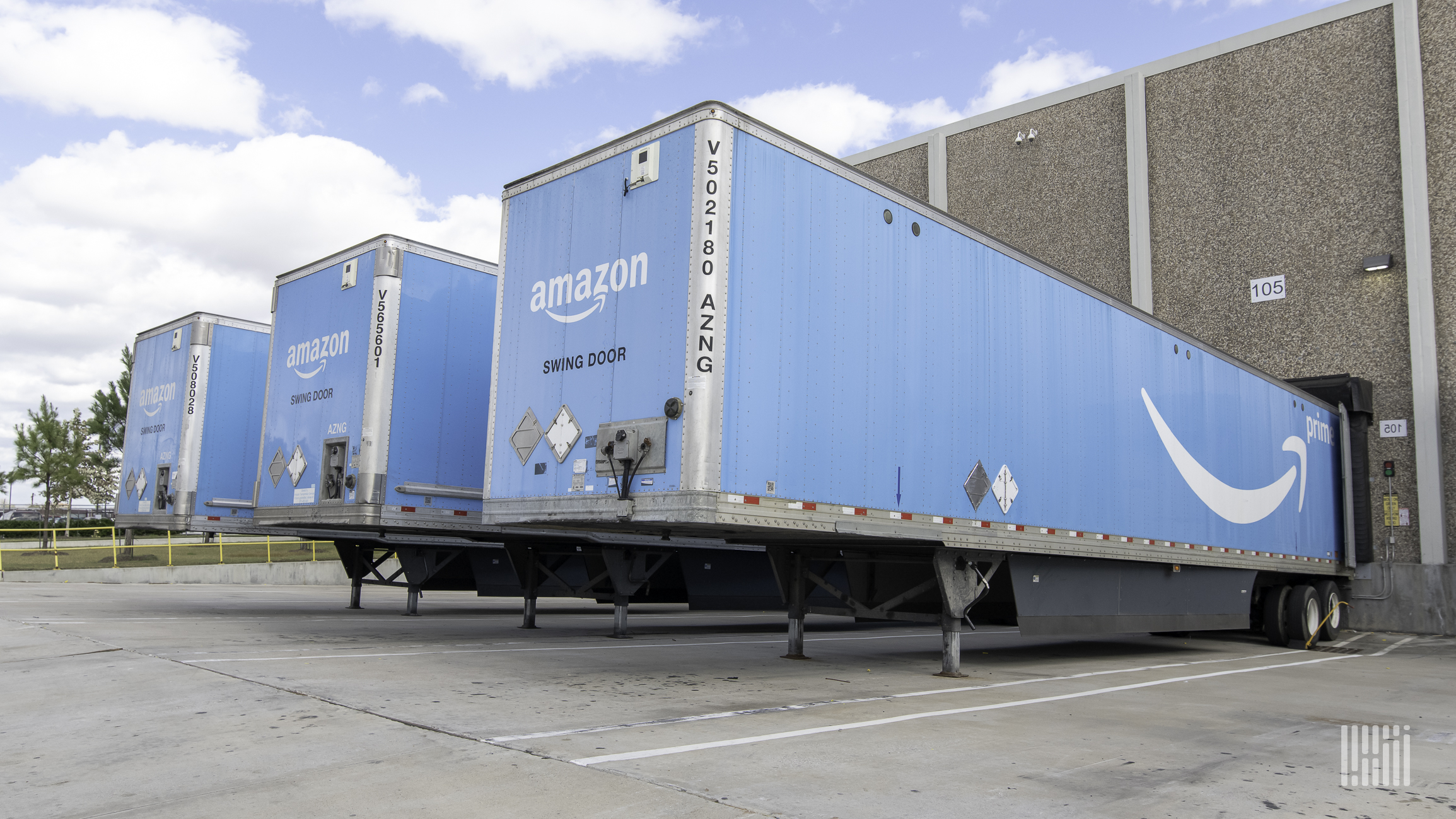
With over 60,000 trailers and 20,000 domestic intermodal containers, Amazon Freight is equipped to provide a simple, reliable and flexible transportation option for shippers. The company offers API/EDI integrations and self-service booking, allowing customers to manage their shipments and secure competitive rates across the Amazon network 24/7.

Customer-focused technology gains

While Silkey stressed the importance of technology in managing every leg of Amazon’s supply chain, he also made it clear that the company does not just utilize tech for tech’s sake. The company focuses heavily on creating solutions tailored to customer needs.

Smart trailer sensors, for example, can communicate information about operations and load status. They can tell Amazon if doors are open or tires have low air pressure. This not only gives Amazon valuable information, but minimizes human intervention, which keeps workers safer. Plus, having visibility into the status of each trailer is invaluable, especially during peak seasons when trailer capacity is at its highest levels.

The company also uses AI and other modern technologies to create tools that give operators the information they need to respond to disruptions and keep the network running smoothly. They are starting to deploy a Gen-AI application that gives its support agents a situational summary of the disruption and context-based data so they can quickly coordinate the logistics of the resolution.

By methodically tackling challenges with technology, Amazon Freight is pushing forward innovations that allow the industry to adapt to rapidly evolving demands. This drives the industry and prevents stagnation. What results is a more efficient and flexible Amazon network – and a better network for Amazon is a better network for its customers.

“In an industry that has been around for a while, people sometimes simply settle for the way things are,” Silkey said. “We don’t accept that. We continue to invent and add technology to solve any problem that is out there.”

Sustainability in motion

Silkey emphasized Amazon’s overall continued commitment to sustainability alongside innovation and efficiency. Amazon co-founded the Climate Pledge with their partner Global Optimism to call on others in the business community to join them in reaching net-zero carbon emissions by 2040.

Amazon as a whole is making strides toward that target. Currently, Amazon’s global network includes over 4,400 compressed natural gas (CNG) trucks powered by renewable natural gas and 24,000 electric delivery vehicles for last mile deliveries. 

 “We know the important role that these solutions can play in reducing carbon emissions,” said Silkey. “Our customers share our passion and we are proud to create greater efficiencies with them.”

As the freight industry faces mounting challenges and opportunities, Amazon Freight offers an inspiring roadmap for achieving scale, efficiency, and sustainability in tandem.

Click here to learn more about Amazon Freight.

Intermodal strength keeps US rail volume ahead of 2024 levels

Carload traffic was down considerably, but intermodal volume remained strong in the latest report on U.S. weekly rail traffic.

According to the Association of American Railroads, traffic for the week ending Jan. 11, 2025, included 465,390 carloads and intermodal units and was up 1.8% from the same week in 2024. That included 199,511 carloads, down 6.4% compared to the corresponding week a year ago, and 265,879 containers and trailers, up 8.9%.

Through two weeks of 2025, the cumulative volume of 398,011 carloads is down 5.5% compared to the first two weeks in 2024, while the 488,789 intermodal units represents a 7.8% increase. The overall volume of 886,800 carloads and intermodal units is an increase of 1.4%.

North American volume for the week, from nine reporting U.S., Canadian and Mexican railroads, includes 305,986 carloads, down 2.7% compared to the second week of 2024, and 348,125 intermodal units, up 8.9%. The total volume of 654,111 carloads and intermodal units is a 3.1% increase. Through two weeks, overall North American volume is up 1.5% compared to the same period in 2024; that includes a 3.1% increase in Canada and a 6.4% drop in Mexico.

Related coverage:

CN testing hybrid biofuel-ready locomotive

California gives up on zero-emissions locomotive regulation

Tariff uncertainty front and center at MARS conference

Analysts predict gradual rate growth amid shifting economic and political winds

FTR’s 2025 Transportation Outlook forecasts gradual growth

(Source: FTR Transportation Intelligence)

In a recent webinar, Avery Vise, vice president of trucking at FTR Transportation Intelligence, outlined the company’s optimistic outlook for the freight market in 2025. Vise emphasized that while contract rates have softened over the past quarter, expectations for 2025 remain positive. 

Vise noted that contract rates have “bottomed out” and are projected to begin rising in the coming months. By the end of the year, FTR forecasts a 5% year-over-year increase, translating to a total contract rate increase of approximately 2%. This gradual improvement is seen as a welcome development for carriers, though Vise cautioned that it won’t mirror the significant spikes observed in 2020 or 2021.

Spot rates are also expected to experience a steady climb, with a projected increase of 5.5% to 6% in 2025 – “Nothing to get overly excited about, but certainly welcome from a carrier perspective,” Vise wrote, indicating a balanced and sustainable rate environment.

Key takeaways for trucking fleets include the anticipation of tighter capacity, despite current labor numbers showing there was an increase in drivers post-pandemic. Vise explained, “Based on the official data we have as of today, we clearly have more drivers than we had before the pandemic.”

Those numbers may be subject to change when revisions come out in the coming months. Heavy Duty Trucking’s Deborah Lockridge wrote, “But hold on – as Vise explained in his column for HDT last month, the current labor numbers are based on monthly estimates. More accurate numbers come from the Quarterly Census of Employment and Wages (QCEW), which takes longer to compile, so capacity likely is somewhat tighter than the numbers suggest.”

Additionally, Vise highlighted that active truck utilization has improved and is expected to continue rising, reaching around 94%-95% by the end of 2025. However, he noted that this level is still below the utilization rates seen in previous years like 2021 and 2018.

Advanced Clean Fleets rule gets a CARB crash following waiver withdrawal

(Photo: Jim Allen/FreightWaves)

The California Air Resources Board (CARB) recently announced it has withdrawn its request for a federal waiver to implement the state’s Advanced Clean Fleets Rule. The sought-after waiver from the Environmental Protection Agency was submitted back in November 2023 and would have allowed CARB to require fleet operations in the state to achieve 100% zero-emissions fleets between 2035 and 2040 depending on fleet size, truck weight and other factors.

For carriers operating in the state, drayage fleets were under the most aggressive timeline had the rulemaking been implemented. FreightWaves’ John Kingston writes, “The most pressing requirement under the ACF was to be the rule that only zero-emission vehicles could be added to the state’s drayage registry starting Jan. 1, 2024. CARB said it would not enforce that requirement while the fate of the ACF waiver was undetermined but that it reserved the right to enforce it retroactively once a waiver was granted. With a waiver no longer coming, it is unclear what happens to that requirement.”

Beginning with the 1970 Clean Air Act, the EPA has granted waivers to California for decades, allowing it to enact tougher pollution limits than the federal government. An added caveat is that once California enacts a tougher standard, federal law allows other states under certain criteria to adopt California standards as their own. The recent news around Daimler’s halting and resuming the sale of Class 8 trucks in Oregon put a spotlight on that not-always-smooth process.

In the case of California, two factors impacted its decision to withdraw its request. The first is that the incoming Trump administration is expected to revoke such waivers. The second is that the state simply ran out of time. 

This is not expected to impact the existing EPA Phase 3 rulemaking, which requires stronger standards to reduce truck greenhouse gas emissions beginning in 2027

Market update: Cass December data shows freight volumes drop, rates firm up

On Tuesday, freight audit and payment provider Cass Information Systems released its December Cass Transportation Index which saw freight volumes in the for-hire space reach their lowest December levels since the early days of the pandemic. However, prices are rising. The Cass Inferred Rates index, which measures domestic freight costs across all modes, is up year over year, for the first time in the past two years. 

The shipments component fell 7.3% m/m in December, with half of the decline being attributed to seasonality. Seasonally adjusted, the index was down 3.1% m/m, erasing the 2.8% m/m gain from November. Compared to the previous year, shipments fell 6.5% in December, the largest decline since January 2024. Tim Denoyer, vice president and senior analyst at ACT Research, wrote in the report, “Ongoing capacity additions are keeping pressure on the for-hire market, and the normal seasonal pattern would have the index down about 6% y/y in January.”

Freight expenditures also took a dip. The index that measures total freight spend fell 2.6% m/m in December, down 3.4% y/y. Denoyer added, “The decline was from shipments, which fell 7.3% m/m, and we infer rates rose 5.1% m/m in December in the fourth straight price increase.”

The inferred rates component, which rose 5.1% m/m in December, posted a gain of 3.7% seasonally adjusted and 3.3% year over year. Denoyer continued, “Based on the normal seasonal pattern, this index will remain positive y/y in January and is headed for gains in 2025.”

Looking ahead, the report notes that winter weather is driving significant spot activity in January. Denoyer concludes that “the supply response in the past couple of months has been interesting. While lower Class 8 supply over the past several months supports a return to rate increases in 2025, the capacity additions to come will be considerable.”

SONAR spotlight: Dry van spot rates’ slow but steady climb

(Source: SONAR)

Summary: Dry van spot market and tender rejection rates resumed a sustained uptick following a brief pause for New Year’s. Dry van outbound tender rejection rates rose 83 basis points week over week from 6.53% on Jan. 6 to 7.36%. Looking at seasonal movements, VOTRI now more closely resembles rates from 2019 and 2020, when tender rejection rates were at 8.08% and 7.21%, respectively. It’s a notable improvement from the past two years when VOTRI ranged from 3.98% in 2023 to 4.36% in 2024.

Spot market rates also saw an uptick, with the SONAR National Truckload Index, 7-Day Average increasing 4 cents per mile all in w/w from $2.48 on Jan. 6 to $2.52. Dry van spot rates have nearly regained their month-over-month high of $2.53 per mile on Dec. 14. A positive sign for dry van rates is the sustained resilience in the NTI, which has declined the first two weeks of January in five of the past six years.

Whether these conditions hold remains to be seen. With the return of a semi-predictable seasonal pattern comes the seasonal decline in spot and outbound tender rejection rates, as late January through February is a slower period in the dry van space. The potential impacts of tariffs remain a wild card. The winner of a glut in imports is a toss-up between full truckload and intermodal, which recently increased its share at the expense of truckload in long-haul corridors like Los Angeles outbound.

DOT releases $320M to repair Helene-damaged truck routes (FreightWaves)

Bay and Bay adds specialized over-dimensional and heavy haul flatbed services (Commercial Carrier Journal)

DOT nominee Duffy vows to prioritize rebuilding I-40 (FreightWaves)

Trucking industry unaffected by restrictions on connected vehicle parts — for now (Trucking Dive)

New entrants are not (completely) crazy (Fleet Owner)
A different job: trucking isn’t what it used to be (Commercial Carrier Journal)

White Paper – The Road Ahead: 2025 Trucking and Fleet Insights

Fleetworthy’s exclusive industry analysis, The Road Ahead: 2025 Trucking and Fleet Insights Report surveys 300 trucking professionals to uncover key trends felt by fleet operators, from skyrocketing compliance costs to the growing demand for technological solutions that streamline operations. 

A few of the key findings include: 

  • 96% of respondents reported reducing costs in other areas of their business to cover compliance-related expenses over the past 12 months. 
  • 93% of respondents face significant challenges in managing tolls, including the complexity of multiple transponders and unpredictable toll expenses.
  • 35% of independent owner-operators have considered ceasing operations due to the rising costs and time required to manage compliance tasks.

Download the report to discover how fleet operators are impacted by key challenges like the overwhelming paperwork burden that delays onboarding and drains resources, complex compliance requirements that put business operations at risk, and the critical need for technology to boost efficiency and cut costs in 2025.    

Emirates leases additional Boeing 747 freighters to meet shipper demand

An Emirates SkyCargo jumbo jet with stripped tail approaches a runway.

Emirates, the fourth-largest cargo airline in the world by traffic carried and No. 2 in passengers, said Wednesday it has increased main-deck cargo capacity by 15% with the wet lease of two additional Boeing 747-400 freighters to meet surging demand. 

The large all-cargo aircraft are being rented under a multiyear transportation services agreement with Bulgaria-based Compass Cargo Airlines, the Dubai-based carrier said in a news release.

“We anticipate that demand will continue to boom, reflecting Dubai’s prominence as a global logistics hub,” said Badr Abbas, divisional senior vice president for Emirates SkyCargo.

The carriers are discussing potential expansion of their partnership, according to Emirates’ cargo division.

Compass Cargo Airlines, which is less than 3 years old, took delivery of its second 747-400 freighter, an extended-range version, on Tuesday, according to data on aircraft tracking site Flightradar24. The freighter previously flew for Turkish all-cargo carrier ACT Airlines, which operated the plane under contract to Qatar Airways Cargo until last month. Compass acquired its first 747-400 from ACT Airlines in mid-2023.

Flightradar24 shows another 747-400ER freighter arrived Thursday at Sofia International Airport in Bulgaria from Istanbul, suggesting that Compass has acquired a third freighter from ACT Airlines.

Compass Cargo Airlines did not respond to a query placed through its generic inbox.

Flightradar24 shows a Compass 747 operating several times in mid-December between Birmingham, England, Dubai and Hong Kong, and shuttling between Dubai and Hong Kong since Jan. 9. An Emirates representative said both planes are now in service.

Emirates fleet buildup

Emirates SkyCargo received two 777 freighters from Boeing last year, which were deployed to the Asia market to support heavy growth e-commerce exports. The fleet now has 16 aircraft – 10 self-operated 777s and six Boeing 747-400s flown by contractors. Emirates recently operated 11 freighters, but recently retired one of them.

Emirates SkyCargo last year resumed outsourcing 747 freighter operations after ending the practice in 2017. Michigan-based Kalitta Air and Aerotranscargo, based in the United Arab Emirates, were each issued contracts to fly a 747-400, FreightWaves reported. Only Aerotranscargo continues to work for Emirates, the company representative said via email.

The additional aircraft are allowing Emirates SkyCargo to widen its network. On Jan. 1, the carrier deployed a dedicated weekly freighter from Copenhagen to its Dubai hub to meet growing demand for transportation out of Denmark, Norway and Sweden. Emirates previously served Copenhagen with bellyhold capacity in passenger aircraft. The Boeing 777 now being used offers about 94 tons of cargo capacity.

In Dubai, shipments are routed around the world through Emirates’ extensive passenger and all-cargo networks.

Emirates SkyCargo said cargo volume from Denmark grew more than 20% in the past fiscal year, which ended March 31, driven by pharmaceutical shipments. Scandinavia has a strong life sciences industry, and there is extensive temperature-controlled warehousing in Copenhagen to serve it. Dubai serves as a major reconsolidation point for trade moving between Europe, Asia and the Indian subcontinent.

The addition of Copenhagen brings the number of destinations served by Emirates freighters to 38. 

SkyCargo also manages cargo that moves in Emirates’ passenger operations. Emirates recently added five destinations to its passenger network, including Johannesburg and Melbourne, Australia, which will increase freight volumes this year. 

Air cargo demand increased more than 10% year over year in 2024, as shippers sought ocean alternatives because of conflict in the Red Sea and threatened U.S. port strikes. But the primary demand driver continues to be e-commerce platforms, which are reserving large amounts of air cargo capacity out of Asia.

More than 20% of general air cargo volumes worldwide are now considered to come from e-commerce platforms, and upwards of 60% of air shipments out of the greater Hong Kong region originate with online marketplaces in China, according to local airlines and industry experts. Freighters operating last year out of China and other parts of Asia were nearly full, especially during the peak season.

Emirates has firm orders for 13 factory-built 777s, which are expected to be delivered by the end of 2026. The airline has previously said some of the new freighters will replace older 777s. It expects to have 21 777s flying in two years.

Emirates also is investing in the conversion of 10 Boeing 777-300 passenger jets into freighters through an arrangement with Israel Aircraft Industries. The IAI conversion design is undergoing regulatory review in the United States, Europe and Israel for commercial production.

More FreightWaves/American Shipper stories by Eric Kulisch.

Write to Eric Kulisch at ekulisch@freightwaves.com.

All-cargo airlines expand capacity on Europe-Asia routes to start 2025

Emirates to nearly double 777 freighter fleet by late 2026

Growth in air cargo demand to decelerate in 2025, IATA says

E-commerce to drive air cargo industry expansion through 2043

Amazon Relay offers flexible freight opportunities

Amazon warehouse delivery

The supply chain has evolved quickly over the past couple decades, and Amazon has evolved alongside it. The company has evolved from a simple bookseller to a leading e-commerce retailer operating its own logistics network. 

Shanti Yetish, senior program manager for supplier diversity at Amazon, recently spoke to FreightWaves about Amazon’s middle mile operations. The company houses three distinct middle mile brands – Amazon Freight, Amazon Freight Partner and Amazon Relay. 

Amazon Relay, in particular, stands out as a gateway for carriers of all shapes and sizes to access Amazon’s growing freight opportunities, allowing them to haul Amazon trailers using their own power units. The Relay marketplace allows carriers to apply via the web portal or mobile app to gain free access to Amazon’s load board and contracts. Once approved, carriers have the flexibility to book the loads they want on their own time. 

Flexibility at the core of Amazon Relay

Relay’s greatest strength lies in its flexibility. The portal provides carriers access to spot freight and short-term contracts across Amazon’s network, as well as the chance to bid on longer duration contracts with unprecedented transparency. Additionally, Relay’s innovative “Post A Truck” feature allows carriers to automatically book loads that minimize empty miles, optimizing both time and revenue for drivers.

“Whether you’re an owner-operator or a huge trucking company, we welcome everyone,” Yetish said, highlighting the platform’s inclusive approach.

While the Amazon Relay portal is open to all kinds of carriers, applicants are required to meet Relay’s requirements, which are designed to vet carriers based on safety and tenure in an effort to keep fraudulent activity out of the network. 

Empowering small and diverse businesses

Amazon Relay’s Supplier Diversity and Inclusion program exists as part of the company’s commitment to welcoming everyone. The program was created to improve access to opportunities for small and diverse carriers, including businesses owned by women, minorities, veterans and other underrepresented groups. The initiative aligns with Amazon’s broader mission to foster diversity and create economic opportunities for a wide range of businesses.

The benefits of participating in the Supplier Diversity and Inclusion program include access to networking opportunities and training resources, which can help support business growth and development.  Amazon also encourages carriers that self-identify as diverse-owned to get certified by one of the big five agencies, which includes the National Minority Supplier Development Council (NMSDC), Women’s Business Enterprise National Council (WBENC), National Veteran’s Business Development Council (NVBDC), Disability:IN and the National LGBT Chamber of Commerce (NGLCC). These agencies provide access to conferences, government contracts and business development resources.

Amazon also accepts certifications through the Small Business Administration for their 8a and Hubzone programs as well as the Department of Transportation Disadvantaged Business Enterprise program (DOT DBE). 

These programs can be game changers for companies that have not historically been able to access this level of support. 

Simplifying operations for carriers

In addition to accessing Amazon loads, carriers using Relay benefit from a suite of tools designed to simplify daily operations. These include real-time updates, automated scheduling, and performance monitoring tools. By streamlining these processes, Amazon Relay reduces administrative burdens, allowing carriers to focus on what they do best—delivering goods efficiently and reliably.

The driver-facing version of Relay’s mobile app prioritizes safety, which aims to keep drivers informed without fostering distractions. The app provides drivers with real-time load change alerts, facilitates automatic check-ins and offers a truck-specific commercial navigation tool, all designed to encourage responsible use in line with safe driving practices.   

A growing marketplace

As e-commerce continues to grow, so does the demand for reliable freight solutions. Amazon Relay is helping to meet this demand while setting new standards for how technology can transform logistics. With its emphasis on flexibility, transparency, and inclusion, Relay is poised to remain a key player in Amazon’s middle mile operations.

For carriers looking to expand their business and leverage the resources of an innovative logistics giant, Amazon Relay represents an unparalleled opportunity.