Building Growth Lanes That Work in Any Market

If your lanes fall apart every time the market shifts, you’re not building a business—you’re just surviving the week. The goal isn’t to chase rates. The goal is to create a network of freight that holds steady when everything else is in flux. This is how real businesses operate. No fluff. No hype. Just structure, consistency, and systems that outperform the chaos.

Let’s set the record straight. The market doesn’t care about your goals. Freight rates will fall. Brokers will go silent. Fuel prices will spike without warning. That’s not doom-and-gloom—that’s the reality of trucking. The fleets that make it through these swings don’t just run loads. They run lanes. And those lanes are built with intention, data, and discipline.

If your week starts with scrambling on the load board, burning time and fuel trying to piece together a plan, you’re operating reactively. That chaos costs you more than money—it kills momentum. But when your routes follow a pattern, and your relationships support that pattern, you stop surviving and start scaling.

Load Boards Are a Crutch—Not a Business Model

Let’s be clear—load boards have a role. They help fill holes. But they can’t build the foundation of a profitable operation. If your calendar revolves around what’s posted Monday morning, you’re handing your control and margin over to brokers who have zero incentive to help you win long term.

Brokers know when you’re desperate. They feel it in your rate negotiations. They hear it in your voice. And they’ll use it to their advantage. But when you operate with structured lanes, everything changes. Driver schedules stabilize. Maintenance is easier to plan. Fuel costs are more predictable. And most importantly, your profit per mile stops swinging like a yo-yo.

Consistency beats chaos. Every single time.

The 3R Filter – Discipline That Builds Durable Freight Networks

There’s a simple system used by disciplined carriers to evaluate whether a load aligns with their business: the 3R Filter. It’s not fancy. But it works.

  • Repeatability – Can you run this same lane week after week?
  • Reliability – Does the rate stay viable in soft markets?
  • Relationship Potential – Is the broker or shipper someone you can count on long-term?

If the answer is no to any of the above, it’s not a business-building load. It’s a distraction. High rates don’t mean sustainable rates. One-off wins don’t build systems. You have to look past the rate-per-mile and evaluate the bigger picture.

10 Tactical Steps to Build Lanes That Don’t Break Under Pressure

1. Define Your Operating Region

Draw a circle—400 to 600 miles around your home base. That’s your battleground. Inside that radius, you can manage fuel better, control detention risk, and keep drivers fresh. Stop chasing freight from New York to California unless your numbers prove it out.

2. Analyze 90 Days of Load History

Pull your records. Look at every lane. Rank them by profit per mile, total margin, and deadhead percentage. Pay close attention to where the consistent wins came from. That’s your foundation—not the random high-paying loads that never came back.

3. Track Broker Consistency

Brokers should be ranked, not just used. Who pays on time? Who communicates clearly? Who ghosts you after one load? Build your bench with brokers who show up every week. Cut ties with those who vanish.

4. Route for Fuel and Rest, Not Just Freight

Look at truck stops, fuel pricing, and legal parking across your lanes. Your most profitable lanes won’t just pay well—they’ll save money with smart stops. That’s a real margin.

5. Set Up Backup Loads

If your main broker cancels, what’s your move? Don’t wing it. Have two to three backup brokers in each lane ready to go. If you don’t, you’re building your week on hope. And hope is not a plan.

6. Create Broker Scorecards

Start grading your brokers. Use clear metrics: rate consistency, ease of communication, payment speed, detention policies. Keep it simple. Review monthly. Cut the worst 20%, double down on the best 20%.

7. Use Load History to Contact Shippers

You don’t need a sales team to go direct. Pull your lane data. See where you’ve been hauling. Find shippers in those corridors. Call. Email. Visit if you’re nearby. Position yourself as the consistent carrier who’s already in the lane.

8. Plan Full Loops—Not Just One-Way Wins

An outbound lane without a return is a half-built system. Always plan your week as a loop. The best carriers have round-trip profitability, even if the backhaul pays a bit less. The key is balance—margin over miles.

9. Secure Anchor Lanes

Once you find a lane that checks the 3R boxes, protect it. Overcommunicate. Be early. Solve issues without drama. Make yourself irreplaceable. That anchor lane becomes your weekly baseline. From there, everything scales.

10. Review Weekly Performance

Every week, look at:

  • RPM trends by lane
  • Detention hours
  • Missed appointments
  • Fuel spend by route
  • Driver breakdowns or fatigue patterns

Use that data to improve—not just adjust. If a lane starts to slide, identify why. If another starts performing better, find out what changed. Your lanes should be alive—not static.

Don’t Hold on to Failing Freight

Loyalty to a dying lane will sink your margins. Be ruthless with your evaluations. If any of the following happen, it’s time to pivot:

  • Rates drop below your breakeven
  • Brokers stop responding
  • Deadhead starts creeping up
  • The return lane dries out

Let it go. Your freight network needs to serve your business, not drain it.

Build Resilience Into Your Routing

This is where growth becomes sustainable. Resilient carriers don’t scramble—they adapt. They:

  • Maintain backup relationships
  • Monitor regional rate trends weekly
  • Track fuel costs across states
  • Use tools like DAT, FreightWaves, and fuel apps to stay ahead

Prepared carriers don’t panic when volume drops. They shift—fast, and with control.

Final Word

You don’t scale a trucking business by chasing spot market chaos. You scale it by owning your lanes, mastering your margins, and structuring your routing like a system—not a guessing game.

It’s not about running 3,000 miles a week. It’s about making $2.75+ per mile on 1,800 miles that are predictable, repeatable, and profitable.

Build lanes that serve your business. Forge partnerships that respect your time. Run freight that keeps your drivers sharp and your numbers clean.

The market will always swing. Your business shouldn’t. Discipline beats hustle. Structure beats scramble.

That’s how small carriers grow—lane by lane, week by week, with zero room for guesswork.

UPS extends buyout offer deadline after low driver interest

A closeup angled view of two brown UPS vans along a street curb.

UPS has extended the deadline for van drivers to apply for a buyout package by two weeks, an indication that the program didn’t meet its target for eliminating jobs.

The integrated parcel carrier initially gave drivers until July 31 to apply for the voluntary separation offer, but the Teamsters union posted on its Facebook page on Friday that “the package giant quietly extended the deadline for its devious driver voluntary severance plan.” A spokesperson for the union declined to provide details, but an individual at a local Teamsters office on the West Coast said UPS (NYSE: UPS) is giving delivery drivers until Aug. 14 to take the buyout.

The person is not authorized to speak with the media and is not being identified to avoid any employer repercussions.

UPS CEO Carol Tomé said on the company’s July 29 earnings conference call that the buyout offer has generated “a lot of interest” so far, but the company has not announced how many people have signed up and whether the package is over or undersubscribed. A UPS spokesperson declined to provide any update on the situation.

About 85% of UPS drivers are at the top end of the pay scale. Those who have 25 to 40 years of service would be the most likely candidates to accept the buyout package, Nando Cesarone, president of the U.S. region and UPS Airlines, told analysts on the call. 

UPS is offering $1,800 per year of service, with a minimum payout of $10,000. A driver with 27 years of experience would receive a $48,600 buyout, according to the offer sheet.

It’s unclear if the delay in achieving the job-reduction target will change the timing of the separation dates.

Applicants were told they will be considered for separation dates between Aug. 31 and Oct. 31, depending on the local needs. If the number of applications exceeds eliminated positions, approvals will be granted in order of seniority. Additional applications may be considered for separation dates between Feb. 1 and March 31. The financial package is in addition to earned retirement benefits, including pension and healthcare. 

The Teamsters union has vehemently opposed UPS’s buyout plan as a violation of its 2023 master contract, which obligates UPS to create about 30,000 full-time jobs. Union leaders have urged members to decline the voluntary separation package.

The Teamsters argue the separation program violates the union contract because it wasn’t negotiated and any program that changes the terms of employment, such as compensation and separation, must be bargained with the union. Seniority order for buyouts also requires union approval. 

Equally important, is that the union considers the buyout as too low, amounting to about a week’s pay per year served. 

The UPS buyout program, announced July,  is connected to a huge network reconfiguration that aims to close 200 domestic package sortation centers over five years, invest in more automation and consolidate volumes in more efficient facilities. The integrated parcel logistics giant earlier this year announced plans to eliminate 20,000 front-line positions to better align the workforce with the smaller footprint and a planned 50% downsizing in business from Amazon, its largest customer.

Click here for more FreightWaves/American Shipper stories by Eric Kulisch.

UPS posts tepid results amid tariff, restructuring challenges

Teamsters call UPS driver buyout offer ‘paltry’

How to Use a Single Spreadsheet to Manage 90 Percent of Your Trucking Business

You don’t need ten apps, a TMS subscription, or another software pitch to get your trucking business in order. What you need is a single, well-built spreadsheet. One tool you control. One system that shows you where the money’s going, what’s working, and what’s not. This article gives small fleet owners a clear, tactical breakdown of how to set up one spreadsheet that runs 90% of your back office. From managing loads and tracking expenses to staying ahead of compliance and spotting red flags before they cost you—this is the blueprint. No fluff. No gimmicks. Just the discipline and clarity required to run a tighter, more profitable operation.

Why a Spreadsheet Still Wins

Forget flashy dashboards and integrations that break when you need them most. A spreadsheet wins because it’s simple, fast, and puts you in full control. There’s no waiting on updates, no monthly bill, and no customer support queue. Just raw access to your numbers in one place. No API. No training videos. Just muscle memory and sharp eyes.

You can build it in Google Sheets or Excel and access it from your phone, laptop, or dispatch center. Done right, it becomes your all-in-one hub for tracking every major piece of your business.

  • Loads, mileage, and deadhead
  • Fuel spend, maintenance, and every dollar out
  • Profit margins, by truck and by load
  • Compliance reminders and renewals
  • Broker payments, invoice status, and aging

This isn’t about saving a few bucks—though you will. It’s about having zero blind spots. Most fleets fail because they don’t catch issues fast enough. Your spreadsheet becomes your radar. Use it right, and you’ll see what’s coming before it hits you.

Build Your Spreadsheet in Seven Tabs

Every tab should serve a purpose, not just sit there. This isn’t busywork. It’s visibility. And visibility gives you leverage. Here’s a layout that covers the 90% you need to monitor every week, without hiring another admin.

1. Load Tracker

Every load you move should be logged here. Not just for records, but to spot patterns.

  • Pickup & delivery dates
  • Origin and destination
  • Broker or customer name
  • Rate per mile and flat rate
  • Deadhead miles
  • Fuel surcharge and accessorials
  • Detention, layover, TONU
  • Notes on issues or driver feedback

You’ll learn which lanes bleed cash, which brokers ghost on payments, and where your drivers burn time. This tab alone will make or save you thousands if updated religiously.

2. Expense Tracker

This is where your real profit hides. If you’re not tracking every dollar out, you’re bleeding.

  • Fuel by transaction
  • Repairs by truck and date
  • Insurance, truck notes, trailer payments
  • Permits, registration, tolls
  • Dispatching, factoring, admin costs

Break it down by truck, tag it by date, and keep your categories tight. You want this tab clean enough to spot problem trends in seconds.

3. Profit and Loss Summary

Now link the Load and Expense tabs together. This is your scoreboard. It tells you whether you’re winning or just staying busy.

  • Gross revenue by load, week, month
  • Total expenses (fuel, fixed, variable)
  • Net profit by truck
  • Profit per mile
  • Operating ratio (expenses ÷ revenue)

If your OR is creeping above 90%, you’re in the danger zone. This tab forces you to confront the truth. It also helps you make faster, smarter cuts.

4. Maintenance Log

Repairs kill cash flow when they sneak up on you. Logging service history keeps your trucks alive longer and helps spot recurring issues.

  • Truck ID and mileage
  • Service type (oil change, brakes, etc.)
  • Date, vendor, and cost
  • Warranty info
  • Next due reminder

This isn’t just for mechanics. It’s for dispatch, billing, and operations. When you’re down, you’re not earning. Prevent that with visibility.

5. Compliance Tracker

Fines and audits hit fast. This tab protects you from those blindside hits.

  • CDL renewals and physicals
  • ELD inspection logs and backup schedule
  • Drug & alcohol program dates
  • IFTA, IRP, UCR deadlines
  • Vehicle inspections (DOT, BIT, etc.)

Set alerts. Color-code what’s due soon. Check it every Monday. This tab saves money and keeps you legal without last-minute scrambles.

6. Invoice Tracker

If brokers owe you money, this is your collection engine.

  • Load ID, invoice number, broker name
  • Invoice date, payment terms, due date
  • Status: unpaid, partial, or paid
  • Days past due
  • Notes (who you spoke with, when, outcome)

Run an aging report every Friday. If something hits 31+ days, start chasing or escalate. Your spreadsheet becomes your billing assistant.

7. Customer and Broker List

Your best lanes don’t come from load boards—they come from relationships.

  • Name, contact info
  • Freight type and region
  • Rate history
  • Payment terms and average pay time
  • Notes on communication, issues, and trustworthiness

This tab turns into your outbound call list. It’s also your safety net when the spot market dries up.

Getting Tactical: Setup Tips That Save Time

  • Use dropdown menus to keep categories consistent (fuel, repair, admin, etc.)
  • Lock formula cells so you don’t accidentally delete key math
  • Use color-coding for alerts and trends (red = urgent, green = profit)
  • Create a dashboard tab for high-level metrics (net profit, open invoices, OR)
  • Use conditional formatting to highlight outliers or overdue items
  • Set a calendar reminder every Friday to review and update

Treat this spreadsheet like a truck. It runs well when you maintain it. You wouldn’t skip a PM. Don’t skip your numbers.

Add-Ons to Level Up (Once You’re Consistent)

  • Add pivot tables to break down trends by customer, lane, or week
  • Sync with a Google Form to log expenses on the go
  • Share access with admin or dispatcher to divide updates
  • Back it up weekly (Google Drive or Dropbox)
  • Export summaries to send with factoring or end-of-month reports

But don’t overcomplicate it. The spreadsheet works because it’s simple. Stick to the rhythm until it’s second nature.

Final Word

There’s no prize for using the fanciest software. In trucking, the winners are the ones who see every number clearly, spot issues early, and act fast. That requires a system. And the cheapest, fastest system you can build is one you already have access to—a spreadsheet.

Track everything. Review every week. Make better decisions.

That’s how disciplined carriers survive. And that’s how smart ones grow.

PlusAI and Goodyear team up to enhance autonomous trucks with intelligent tire tech

Autonomous truck technology maker PlusAI recently announced it is collaborating with The Goodyear Tire & Rubber Company. The collaboration will look at how tire data from Goodyear’s intelligent tire technology suite can enhance SuperDrive, PlusAI’s fully autonomous virtual driver.

Goodyear’s SightLine technology works by using sensors to deliver real-time information on tire health, road surface conditions and friction levels. This is done by continuous monitoring via a tire-road interface.

A goal of the collaboration is to use this data to further strengthen PlusAI’s SuperDrive virtual driver, using the data to optimize vehicle performance and improve reliability in a wide range of driving environments.

“PlusAI’s leadership in autonomous trucking is built on innovative technology, deep collaborations, and rigorous validation,” said Shawn Kerrigan, chief operating officer and co-founder of PlusAI, in a press release. “Our collaboration with Goodyear and their SightLine technology will give us additional vehicle data to further enhance the performance of our SuperDrive system under real-world conditions as we gear up for the commercial launch of factory-built autonomous trucks.”

PlusAI has spent the last nine years developing its virtual driver software and has deployed autonomous driving technology across the U.S., Europe and Asia. The company notes in the release its software has logged more than 5 million miles of driving.

“Our collaboration with PlusAI marks a significant step forward in integrating tire intelligence into autonomous trucking,” said Chris Helsel, senior vice president and chief technology officer at Goodyear, in the release. “By embedding our cutting-edge SightLine technology into factory-built autonomous trucks outfitted with SuperDrive, we’re helping to elevate vehicle performance, safety, and operational efficiency from the ground up.”

PlusAI’s autonomy partners include multiple global OEMs including Traton Group, Hyundai and Iveco — who will factory-build the trucks, validate, deliver, then provide support for the SuperDrive-powered autonomous vehicles.

The release notes that PlusAI and its partners are targeting the commercial launch of its SuperDrive-enabled, factory-built autonomous trucks in 2027, beginning in the United States and then expanding into Europe.

Liberian flag challenges ‘flags of convenience’

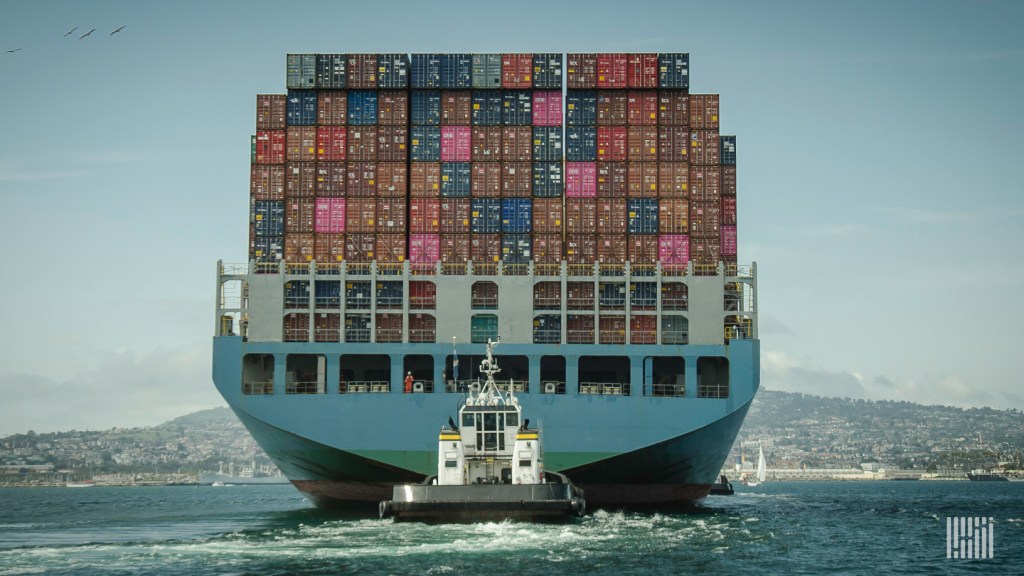
Container ship

WASHINGTON — The Liberian Ship Registry is urging the Federal Maritime Commission to set a new standard when referring to the quality of foreign-flag ship registries and the ship owners that use them by ditching the long-standing “flags of convenience” (FOC) label.

The tag has been used as a “pejorative short-hand,” the registry told the FMC, to imply that because they are open to foreign ship owners – as opposed to flag states that limit vessel registration to ship owners based in that country, such as the United States – they are used to evade regulations and as a way to register vessels cheaply.

“While there are certainly such flag states in existence, the distinction between those that require national linkage and those that do not as a shorthand for low cost, poor quality, or regulatory evasion, is no longer apt,” the Liberian Flag stated in comments filed in the FMC’s flag registry fraud investigation.

“And today, among the highest-performing vessel registries, are international flags, such as the Liberian Flag as well as the Marshall Islands Flag.”

The registry recommends that instead of a “binary” choice between national flag (closed) registries and FOC (open) registries, a more appropriate categorization should be:

  • International Flag: Flag states that allow for the registration of vessels with foreign ownership.
  • National Flag: Flag states that limit the registration of vessels to owners of that country.
  • Flags of Non-Compliance (FONCs): Flag states – whether international or national – that eschew national and international laws, standards, norms, and responsibilities, and are utilized by shipowners to operate on the cheap, evading international customary laws, national laws of port and coastal states, and related regulations.

The registry pointed out that large international flags such as Liberia and the Marshall Islands are sought after by ship charterers because of their quality, which in turn is an incentive for shipowners to choose them.

The three largest international authorities that measure ship registry quality (by assessing vessel detention records) is the Paris MoU, a cooperative of 27 countries mainly in Europe, the Tokyo MoU, a cooperative of 22 countries mainly in the Asia-Pacific, and the United States Coast Guard.

The Paris MoU has consistently “white-listed” the Liberian Flag’s ships, the registry told the FMC, which demonstrates Liberia’s performance as a high-quality flag state. At the same time, the authority currently has on its “grey list” 13 national-flag vessels.

“This is evidence of the fact that international flags such as Liberia and Marshall Islands even outperform many national flags on a quality basis,” the registry stated. “This also demonstrates that quality is not inherent in national flags, and they too can have quality and performance deficiencies just like FONCs.”

For its vessels calling at U.S. ports, the registry pointed out that it has achieved the Coast Guard’s annual “Qualship 21” designation for highest performing flag states (based on vessel detention records) nine times between 2011 and 2024.

The Liberian Flag lost that quality designation starting July 1, however, according to the Coast Guard’s latest Port State Control assessment, and will be ineligible for Qualship 21 status through June 30, 2026.

In addition to retiring “flags of convenience,” the registry suggested the FMC should consider imposing other requirements on flag states depending on what it uncovers in its investigation, including:

  • Becoming a signatory member of the Registry Information Sharing Compact, a platform used by flag states to share information regarding sanctions-evading vessels.
  • Using Long Range Identification and Tracking and Automatic Identification System data in their sanctions compliance assessment of vessels.
  • Creating an office in the U.S. that can coordinate with government agencies, including the Coast Guard and the Treasury Department.
  • Creating an in-house sanctions compliance department.
  • Producing their ISO 9001:2015 certifications to relevant regulatory bodies to encourage effective flag state quality management.

Click for more FreightWaves articles by John Gallagher.

USPS seeks demand surcharge for holiday season parcel deliveries

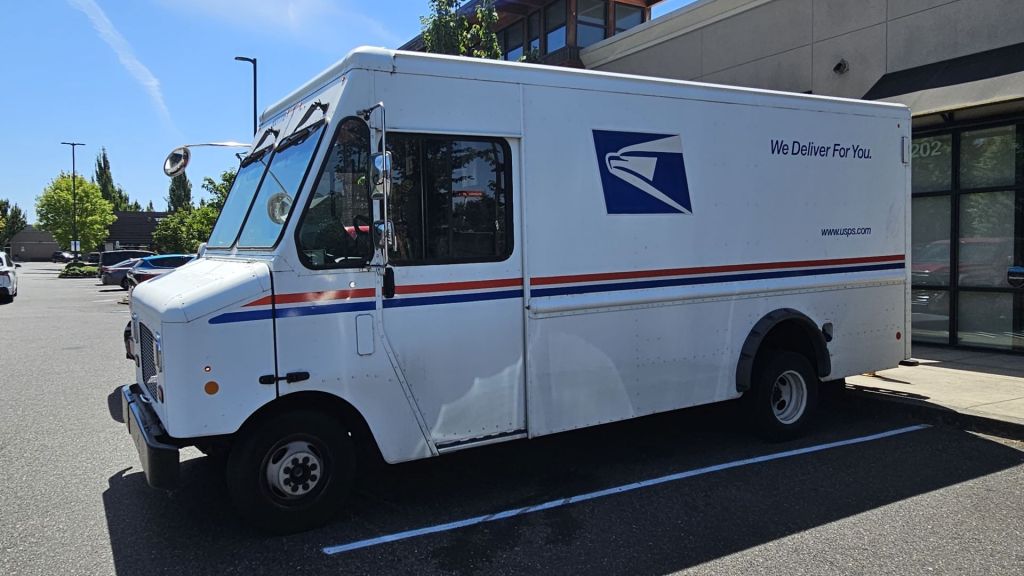
Close up side view of a USPS van parked in a strip mall.

The U.S. Postal Service on Friday announced plans to implement surcharges for package delivery during the peak holiday season to cover extra handling costs, a decision likely to stir more complaints from groups who say rates have been rising too fast.

The surge pricing applies to Priority Mail Express, Priority Mail, Ground Advantage and Parcel Select products. Fees vary by distance shipped and weight, as well as for retail and commercial customers. The average increase for Priority Mail is 4.1%, with an average surcharge of 5.1% for Ground Advantage. A USPS Ground Advantage package going long distance, for example, could cost between 35 cents to $5.50 extra. Pending approval by the Postal Regulatory Commission, the temporary increases would begin at midnight on Oct. 5 and remain in place through Jan. 18.

The seasonal adjustment will bring prices for the Postal Service’s retail and commercial customers in line with private sector competitors, the agency said. It also implemented peak season surcharges last year. FedEx and UPS routinely apply demand surcharges for the busiest shipping season.

The board of governors approved the peak-season pricing during a meeting on Thursday where officials presented third-quarter results. 

The postal operator declared a $3.1 billion loss for the fiscal year third quarter ended June 30, a result of rising costs, lower volumes and non-cash accounting adjustments. The loss was $1.6 billion when excluding costs mandated by law and not under the Postal Service’s direct control.

Postal Service management has focused this decade on the need to raise revenue through price adjustments as part of its long-term transformation plan for improved service and financial stability. The postal operator raised letter prices on July 13. Business groups such as Keep US Posted have complained the frequency and size of postage increases has contributed to volume declines.

Click here for more FreightWaves/American Shipper stories by Eric Kulisch.

Write to Eric Kulisch at ekulisch@freightwaves.com.

US Postal Service loss widens to $3.1B as inflation bites

Postal Service seeks letter price raise to 78 cents

Truck sales in the second quarter might have been the worst performing metric of all

If it wasn’t a great quarter for trucking companies in the second quarter, particularly truckload carriers, the outlook for the companies that make or sell trucks was even worse.

Not every company did poorly; things are going well enough with other operations at truck retailer Rush Enterprises (NASDAQ: RUSHA) that it hiked its dividend. Ditto for engine manufacturer Cummins Inc. (NYSE: CMI).

But on its earnings calls with analysts, several companies that looked into the future–including those two aforementioned operations–saw a market for new heavy duty vehicles that is tepid at best and terrible at worst.

The stark numbers on the ground were captured by FTR in its recent preliminary estimate of June and July class 8 orders. The June order book was 8,900 units, a drop of 25% from May and down 36% from the prior year. July was stronger at 12,700 units, but that was down 7% year on year. 

FTR said the 12-month cycle that ended in July showed an order book down 15% year-on-year.

Jennifer W. Rumsey, Cummins CEO, put a number on the expected size of the decline in that company’s call with analysts. (All quotes in this article are from transcripts of the earnings calls).

She said Cummins expected North America heavy and medium duty truck volumes to decline sequentially 25% to 30% in the third quarter. “We have seen truck orders recently reach multiyear lows and OEMs have initiated reduced work weeks through the next three weeks,” Rumsey said according to a transcript of the earnings call. “The duration of this reduced demand in North America truck markets will largely depend on the trajectory of the broader economy, the evolution of trade and tariff policies and the pace at which regulatory clarity emerges.”

‘Just no demand out there’

It was Marvin Rush, the CEO of retailer Rush Enterprises, who was the most blunt in his outlook for the new truck market for the balance of 2025.

In response to an analyst’s question, Rush on his company’s call said new truck production “will be drastically down across all OEMs, because there’s just not any demand out there because uncertainty is there.”

While tariffs uncertainty was mentioned by several executives as a reason for the uncertainty, a recent development that occurred near the start of earnings season–the EPA’s decision to rescind the “endangerment finding” that permitted the agency to take steps to regulate greenhouse gases–has thrown another question mark into the market for new trucks.

EPA promulgated the new rule in 2022. The key deadline is a requirement calling for a more than 80% reduction in nitrogen oxides–NOx–emissions by 2027. The recent recession of the EPA’s power to regulate GHG under the endangerment finding does not immediately invalidate the NOx rule.

No clarity on GHGs or NOx

“We pulled the greenhouse gas stuff, but that still has not given any clarity as to what we’re going to get from an emissions perspective,” Rush said. Referring to the various NOx standards both current and planned in the 2027 rule, Rush asked what the final number would be. “Is it going to go somewhere in the middle?” he said. “The engine manufacturers and OEMs don’t even have direction yet from the government.”

Paccar’s CEO R. Preston Feight (NASDAQ: PCAR) on that company’s earnings call said he believed rules on greenhouse gas emissions in the Biden administration’s EPA 2024 rule that was seen as pushing zero emission vehicles “is likely not to change.” But he also said he does not expect additional GHG regulations on heavy duty trucks.

If the NOx rule is eliminated, Feight said, that should lead to a reduction in cost “which will encourage customers to be buying trucks probably beginning later in this year.”

Rush also cited California as a benchmark for a particularly troubled market. Class 8 sales in California reportedly have been extremely weak for many months given the uncertainty created by the state’s now withdrawn Advanced Clean Fleets rule and its blocked (but challenged by the state) Advanced Clean Trucks rule, together which mandated sales of zero emission vehicles.

“I don’t want to be like the whole country is like California has been the last 1.5 years,” Rush said. “But from a business perspective, it has been very very difficult on the truck sales side.”

Some green shoots

Although the outlook was generally bleak, it wasn’t totally pessimistic. For example, Rush said reports about upcoming demand is “slightly better than it was in Q1. It’s not outstanding but you can see slight green shoots in there, but not a lot.”

From the company’s German headquarters, Eva Scherer, the CFO of Daimler Truck Holding AG (XETRA: DTG.DE)  on her company’s earning call gave an example of those green shoots. She said July had shown a “pickup in order activity.” 

It would be coming after a particularly difficult quarter. Daimler Truck CEO Karin Radstrom in his remarks on the call started with optimism about its North America segments. He said Daimler’s Trucks North America segment was “a strong contributor to our results, delivering 12.9% return on sales despite a 20% drop in unit sales.”

But Scherer said Trucks North America was the only segment in the Daimler empire in the quarter that had a negative EBIT impact, “primarily due to the economic uncertainty in the U.S., which led to reduced sales volumes.”

And Radstrom said for the half, the 135,000 trucks the company sold in North America were down 7% year-over-year.

However, the July order flow was strong enough that Scherer said she believed the output numbers in North America for Daimler could be between 135,000 to 155,000 in the quarter.

Discussion on the calls about tariffs repeatedly swung back to the same term: uncertainty. Feight’s comments on tariffs was similar to what was heard on other calls. 

“If we get confidence and certainty around tariff structures in the third quarter, then I think customers’ reaction to that will be positive,” he said. “I think that would be favorable for PACCAR. So there’s quite a few reasons to weigh in there for our confidence as the year goes along here.”

But the tariffs might also mean price increases are on the horizon.

On the earnings call for trailer manufacturer Wabash National (NYSE: WNC), president and CEO Brent Yeagy said while the company operates with “95% domestic sourcing and (a) U.S.-based manufacturing footprint,” that protection from higher tariffs has its limits.

“We’re not entirely immune to cost increases, particularly in key inputs and services,” Yeagy said. “To date, we’ve been successful in holding off on price adjustments, and we remain focused on operational efficiency and cost discipline to offset as much pressure as possible. However, based on the current trajectory, we expect that pricing for 2026 orders will need to be adjusted to reflect the rising cost environment.”

More articles by John Kingston

In brief comments, Trimble CEO introduces new product for matching capacity with shippers

At C.H. Robinson, improved profitability, productivity and a lot fewer workers

Each driver’s payout in Lytx Illinois biometrics case will be between about $650 and $850

Retailers: Tariff-battered import volumes to be 5.6% weaker in 2025

Import cargo volume at the nation’s major container ports is projected to conclude 2025 with a 5.6% decrease compared to 2024’s volume, according to the latest Global Port Tracker report released today by the National Retail Federation and Hackett Associates.

 
“While this forecast is still preliminary, it shows the impact the tariffs and the administration’s trade policy are having on the supply chain,” said NRF Vice President for Supply Chain and Customs Policy Jonathan Gold, in a release. “Tariffs are beginning to drive up consumer prices, and fewer imports will eventually mean fewer goods on store shelves. Small businesses especially are grappling with the ability to stay in business. We need binding trade agreements that open markets by lowering tariffs, not raising them.

“Tariffs are taxes paid by U.S. importers that will result in higher prices for U.S. consumers, less hiring, lower business investment and a slower economy.”

The NRF represents Walmart (NYSE: WMT), Target (NYSE: TGT) and other major retailers.

The Trump administration’s on-again off-again trade policy reached a milestone of sorts on Thursday when new tariffs on goods from dozens of countries went into effect amid a flurry of new trade agreements.


“The hither-and-thither approach of on-again, off-again tariffs that have little to do with trade policy is causing confusion and uncertainty for importers, exporters and consumers,” Hackett Associates Founder Ben Hackett said in the release. “Friends, allies and foes are all being hit by distortions in trade flows as importers try to second-guess tariff levels by pulling forward imports before the tariffs take effect. This, in turn, will certainly lead to a downturn in trade volumes by late September because inventories for the holiday season will already be in hand. Meanwhile, U.S. exporters are being left with unsold products as counter tariffs are applied.”

In June, U.S. ports processed 1.96 million twenty foot equivalent units (TEUs), the Global Port Tracker found, an 0.7% increase from May but an 8.4% decrease year-over-year.

SONAR chart showing downward trend of U.S. import containers since June.

Ahead of reported port volume data, the NRF projected that July surged to 2.3 million TEUs as retailers brought in merchandise ahead of this month’s tariffs. That would be a 12-month high, up 17.3% from June and down just 0.5% y/y.

August volume is forecast 5% off at 2.2 million TEUs, and September at 1.83 million TEU, 19.5% weaker y/y. Similarly, October is projected 18.9% off at 1.82 million TEUs, and 21.1% lower in November at 1.71 million TEUs. That would be the lowest monthly total since 1.78 million TEU in April 2023. December is forecast at 1.72 million TEUs, off by  19.3% y.y.

The anticipated decrease in overall import volumes from September to December is primarily due to cargo being pulled forward earlier in the year because of tariffs. Additionally, the significant year-over-year percentage drops are partly attributable to elevated import levels in late 2024, driven by concerns about potential strikes at East Coast and Gulf Coast ports.

Volume for the first half of the year totaled 12.53 million TEUs, better by 3.6% from 2024. Volume for the remainder of this year would bring 2025 to 24.1 million TEUs, a decrease of 5.6% from 25.5 million TEUs in 2024.

Find more articles by Stuart Chirls here.

Related coverage:

Nothing can stop falling trans-Pacific container rates: Analyst

Savannah containers post best FY since pandemic

Maersk raises guidance on higher Q2 volumes 

Container rates unmoved by latest tariff deadline

How to Train Your Admin to Handle Rate Cons, PODs, and Invoicing

Rate confirmations, PODs, and invoicing aren’t clerical work—they’re operational control points. When you mishandle one of these, the entire cash cycle stutters. You risk not only delayed payments but also strained broker relationships and gaps in load documentation that can affect future opportunities. Brokers are moving faster than ever in 2025. If they see you dropping the ball on paperwork or missing consistent follow-ups, they’ll move to someone else. With margins already tight and freight volatility at an all-time high, you need every process working like clockwork.

Let’s quantify the damage: A single late invoice can push payment from net 15 to net 45, which could mean you’re running three more loads before seeing a dime. A missing detention line in a rate con might not seem like much, but across 4–5 loads per week, even $50 per load is $1,000 a month gone. That’s a truck payment. When your admin is trained and proactive, they don’t just help—they lock down the financial foundation your fleet stands on.

The Mistake Many Small Carriers Make

Most carriers treat admin support like an afterthought. They’ll hire someone, throw a few files their way, maybe give a login to QuickBooks or a TMS—and then expect clean billing, zero errors, and timely follow-ups. That’s not training, that’s delegation without direction.

The result? Missed charges, messy folders, and brokers chasing you for paperwork you thought was handled. Then it spirals. You’re behind on invoices, PODs are missing or misfiled, and you’re too deep in the load board to notice. Every one of these gaps is costing you money.

Let’s be direct: If your admin doesn’t understand rate confirmation details, detention policies, POD compliance, or invoicing cadence, they’re flying blind. And if they’re flying blind, your business is bleeding slowly. Training them well isn’t optional. It’s your responsibility as an owner. Give them systems. Walk them through real examples. Don’t assume they’ll figure it out—assume they won’t unless you show them how.

Step 1: Start With a System, Not a Person

Your admin can only be as good as the process you hand them. Systems create consistency. They remove the guesswork and standardize how documents move through your business. Whether you’re on the road or off-grid, the process should work without you micromanaging every step.

Set up this foundational structure:

  • Rate Cons Folder: Use Google Drive or Dropbox. Label it “Rate Cons 2025.” Every file follows the same format: Date_Shipper_Load# (e.g., 2025-07-01_FedEx_20234.pdf).
  • PODs Folder: A separate folder labeled “PODs 2025.” Drivers scan PODs using apps like CamScanner or Adobe Scan and upload them before leaving the dock.
  • Invoicing Tracker: Google Sheets works fine. Build columns for load number, shipper, amount, due date, status, accessorials, invoice number. Keep it simple but clean.

Control Rule: Nothing gets marked complete until it’s cross-checked. Whether it’s verifying a POD against a rate con or confirming an invoice was sent, require signoff in your system.

Step 2: Teach Rate Con Fundamentals

A rate con is your agreement with the broker—it tells you what you’re owed and what you agreed to. Your admin must understand how to read it, file it, and question anything that looks off.

How to train them effectively:

  • Show them a real rate con. Walk through the load number, agreed rate, pickup and delivery instructions, accessorial fees (like TONU, detention, layover), and deadlines.
  • Create a checklist: every rate con must be checked for matching amounts, signed and saved correctly.
  • Give them practice: print 10 sample rate cons and let them file each one using your naming and folder system. Provide immediate feedback.
  • Weekly Task: Every Monday, they cross-check rate cons with the ELD or dispatch notes. If drivers waited at a dock 3 hours and there’s a detention clause, your admin should flag it for billing.

What this looks like in practice: Let’s say a broker allows $50/hour for detention after 2 hours. If your admin isn’t catching that window, you’re losing out. Even catching 2 loads a week with detention equals $400/month. Over a year, that’s nearly $5,000—money most small carriers desperately need.

Step 3: Lock Down the POD Process

A missing or poor-quality POD is the fastest way to get payment delayed—or denied. Yet, so many small fleets treat it casually. That stops now.

Train your admin to run a tight POD protocol:

  • Driver Training First: Drivers must scan and submit the POD immediately after delivery. Apps like CamScanner or even iPhone Notes are free and effective.
  • Admin Daily Review: Set a daily task—your admin checks that all loads delivered have a matching POD uploaded by 6 p.m.
  • Quality Check: Teach them to reject blurry scans, unsigned PODs, or files missing a load number. Those go back to the driver.
  • Match System: Every POD should be linked to its rate con. If they don’t line up (wrong date, wrong shipper), your admin escalates it.

Impact: A tight POD system doesn’t just speed up invoicing—it builds broker trust. A fleet that consistently sends clean PODs fast becomes the one brokers keep calling back. It’s about reputation as much as revenue.

Step 4: Make Invoicing Repeatable and Reliable

Invoicing should be frictionless. You need clean, accurate invoices going out fast. No broker wants to chase you for billing, and no small fleet can afford to wait 30+ days because someone forgot to hit send.

Train your admin on a repeatable method:

  • Use a clean invoice template that includes: company name, MC/DOT number, load #, shipper, rate, accessorials, payment terms (Net 15, Net 30), and invoice number.
  • Walk them through 5 real examples. Have them build and send invoices from actual rate cons and PODs.
  • Set the rule: All invoices must be sent within 24 hours of POD upload. No exceptions.
  • Track everything: Use your invoice tracker to monitor “Date Sent,” “Due Date,” and “Paid Date.” Late payments get flagged every Friday.

Real result: Most small carriers are sitting on 3–4 unpaid invoices at any time. Fixing this workflow can bring in $10,000+ in cash that’s just stuck. That’s not theory—that’s your money waiting.

Step 5: Create a Weekly Admin Rhythm

Consistency matters more than intensity. Set a weekly rhythm that keeps your back office tight.

Suggested cadence:

  • Monday: Rate cons are reviewed. Any detention or TONU charges are flagged.
  • Tuesday–Thursday: Match PODs to rate cons, check for scan quality, organize files.
  • Friday: All invoices for the week are sent. The payment tracker is updated. Any unpaid invoices past terms are flagged.
  • End of Month: Archive completed loads. Spot check for errors. Build a report of missed revenue (e.g., missed accessorials, late uploads).

Train your admin to own this process. It’s their weekly playbook. If they follow it, your business runs smoother—even if you’re 800 miles away chasing freight.

Step 6:  Coach Weekly, Don’t Criticize Loudly

Training is not a one-time dump. It’s an ongoing conversation. You’re not building a robot—you’re developing a professional who supports your business goals.

How to build confidence and skill:

  • Schedule a 30-minute weekly check-in. Use it to review 2–3 loads. Praise accuracy, coach mistakes.
  • Explain the “why.” If they caught a $200 charge, tell them how it affects the bottom line.
  • Ask them what’s working and what’s not. If your folder system is confusing, fix it.
  • Celebrate wins. Caught a $400 TONU you missed? That deserves credit.

This kind of leadership creates ownership. Your admin will start looking for ways to improve the process—not just follow instructions. That’s when you know they’re ready to operate without you watching.

What to Watch Out For

Even with training, things can slip. Stay on top of these red flags:

  • Missing PODs: One missed POD can hold up $3,000. No excuses.
  • Sloppy Invoices: Wrong amounts, missing info, or unprofessional emails delay payments.
  • Untracked Detention: If no one’s reviewing ELD time vs. appointment time, you’re leaving money on the table.
  • Email Issues: Don’t invoice from Gmail. Use your own domain. It signals professionalism and avoids spam filters.
  • System Overload: If your admin is overwhelmed, your process might be too complex. Trim the fat.

Set a monthly review to audit these. Catch errors before they become patterns.

Final Word

If your admin isn’t trained to manage rate cons, PODs, and invoicing with precision, your business is leaking money—plain and simple. In today’s market, where every dollar counts and brokers are quick to move on, you can’t afford to “hope” this gets done right.

Give your admin a repeatable system. Train them in real-world tasks. Review their work consistently. Treat them like a core part of your operation, because they are. Remember: fleets that win in 2025 aren’t the biggest—they’re the most buttoned up. And it starts with training your admin to protect every load, every invoice, every dollar.

English Proficiency in Trucking – Crackdown, Context, and the Questions No One Wants to Ask

Since June 25, more than 1,500 truck drivers have been put out of service for failing English-language proficiency tests during roadside inspections. The Federal Motor Carrier Safety Administration (FMCSA) says the vast majority worked for U.S.-based carriers. Some see this as a long-overdue safety measure. Others see it as a political stunt aimed at a convenient scapegoat.

Either way, it’s happening — and if you’re running freight in America, this crackdown affects you whether you’re directly targeted or not.

But here’s where it gets interesting.

  • 1,500 sounds big — until you remember there are nearly 2 million active CDL holders in the U.S. That’s barely a drop in the bucket.
  • The Western region (think Texas, Arizona, California, Wyoming) leads the nation with 412 violations — which tells you more about where enforcement is focused than the actual distribution of drivers with limited English skills.
  • And almost 99% of the drivers cited weren’t foreign-based carriers at all. They worked for U.S.-domiciled companies, hauling U.S. freight, often with U.S. tags.

So, what does this actually mean for safety, rates, and the day-to-day grind for small carriers and owner-ops? Let’s walk it through without jumping to the easy talking points.

The Rule Was Always There — We Just Stopped Enforcing It

This isn’t a brand-new law. The requirement for commercial drivers operating in the U.S. to read, write, and speak English well enough to:

  1. Converse with the public.
  2. Understand road signs and signals in English.
  3. Respond to official inquiries.
  4. Make entries in required reports and records.

…has been on the books for decades.

What changed? In 2016, under a different political climate, active roadside enforcement of this rule essentially stopped. Inspectors could still flag English proficiency issues, but out-of-service orders for this reason weren’t the norm. That meant thousands of drivers entered and stayed in the industry without ever being tested beyond the CDL exam itself.

Fast forward to May 2025 — Transportation Secretary Sean Duffy directs FMCSA and the Commercial Vehicle Safety Alliance (CVSA) to start actively enforcing it again. By June 25, inspectors were told to begin all roadside inspections in English, and if a driver’s responses raised red flags, to dig deeper.

From there, the current numbers started stacking up.

What the Enforcement Actually Looks Like

This isn’t about a formal classroom test. It’s about interaction at the side of the road.

Inspectors are instructed to:

  • Greet and give basic inspection instructions in English.
  • If the driver struggles, conduct a short interview to gauge conversation skills.
  • If the driver passes conversation but struggles with written or signage comprehension, test highway sign recognition.

If the driver fails any of the core requirements — speaking, reading, understanding signage, or responding to official inquiries — they can be issued one of several specific violation codes and placed out of service (OOS) immediately.

The most common?

  • Cannot read or speak English sufficiently to respond to official inquiries.
  • Unable to understand English-language highway traffic signs/signals.

Inspectors must document the reasons for the violation, but this process is still subjective — which is where a lot of the debate lives.

The Numbers by Region – More About Enforcement Patterns Than Driver Demographics

Breaking it down:

  • Western Region: 412 violations. This region covers the largest geographic area, including states with heavy port traffic and major interstate freight corridors.
  • Southern Region: 364 violations. Includes big freight states like Texas, Florida, Georgia, and North Carolina.
  • Midwestern Region: 273 violations.
  • Eastern Region: 163 violations.

If you look at it purely as a safety story, you might think drivers with poor English are concentrated in certain states. But that would be a mistake. These numbers don’t reflect where drivers are from — they reflect where inspectors are making it a priority to check.

Enforcement is always shaped by resources, state politics, and inspection station activity. If Wyoming has a small population but shows up in the top states for violations, that tells you something about how aggressively their DOT is looking for them.

The Low Number That Should Worry You

1,500 sounds like a lot until you remember:

  • There are roughly 14 million trucks on U.S. roads.
  • Even if you narrow that to interstate CDL drivers, you’re still talking millions.

That means less than one-tenth of one percent of drivers have been sidelined for English proficiency since June.

That could mean two things:

  1. There aren’t that many drivers with limited English skills — and this isn’t the massive “safety crisis” some claim.
  2. Or, enforcement hasn’t even scratched the surface yet — and the hammer could fall harder if this becomes a true inspection priority nationwide.

If it’s the second one, the ripple effects could be big. More drivers sidelined means shifts in capacity, changes in rates, and a scramble for carriers to tighten up hiring standards.

The Political Firestorm

On social media, this has become a lightning rod. Some see it as a straightforward safety measure: if you can’t read the signs or understand instructions in English, you’re a danger on the road.

Others see something more cynical — a selective enforcement push that targets certain groups of drivers while ignoring other, equally dangerous issues like:

  • Drivers falsifying logs.
  • Equipment with critical maintenance violations.
  • Unsafe broker practices (ex: assigning team loads to solo drivers unintentionally) pushing carriers into bad situations.

One thought gaining traction is that this is about “wage dumping” — the idea that carriers are hiring drivers with limited English at lower rates, undercutting others. But here’s the reality check: kicking those drivers out of service isn’t going to make rates climb. Rates rise when freight demand exceeds truck capacity — and history shows that as soon as rates spike, capacity floods back in.

If this is meant to improve rates for American truckers, it’s a very indirect path with no guarantee of success.

The Subjective Nature of “Proficiency”

One of the thorniest parts of this whole debate is how “proficiency” is measured. The regulation doesn’t spell out a scoring system.

That means two inspectors could have two different interpretations of what counts as “sufficient.” One might be satisfied if the driver can answer basic questions. Another might dig into more technical or conversational detail.

From a carrier’s perspective, that unpredictability means you can’t take chances — you need to prepare drivers for the strictest possible interpretation.

Why This Isn’t the Silver Bullet for Safety

Let’s zoom out. The top causes of large truck crashes, according to FMCSA studies, are:

  • Brake problems.
  • Traffic congestion.
  • Speeding.
  • Unfamiliar roads.
  • Driver fatigue.

Language proficiency didn’t make the top five. Does it matter? Yes — especially for understanding signage and responding to instructions. But removing 1,500 drivers for language skills, without addressing mechanical violations or fatigue, is like changing one tire on a truck with a blown engine.

How This Could Expand

If enforcement ramps up:

  • Carriers will face more pre-hire screening pressure.
  • Insurance companies may start asking about English testing in underwriting.
  • Certain freight lanes could see temporary capacity drops if large pockets of drivers are sidelined.

If enforcement stays light:

  • This will remain more of a political talking point than an industry-shifting factor.
  • The 1,500 number will grow slowly, and we’ll still be talking about the same bigger-picture safety issues next year.

The Balanced Reality

Here’s the uncomfortable truth:

  • Yes, a driver who can’t read signs or communicate in English is at a disadvantage on U.S. roads and should not operate a commercial vehicle.
  • Yes, the rule has been on the books for years and should be followed.
  • No, this alone won’t fix safety as a whole, capacity, or rates.

It’s one piece of a much bigger puzzle — and the industry is making a mistake if it treats it as the magic fix for everything from safety to freight rates.

Final Word – Don’t Get Caught Off Guard

If you’re a small carrier or an owner-operator, the playbook is simple:

  • Review the English proficiency rule in black and white — not social media summaries.
  • Make sure your drivers are compliant, legal and can pass a roadside conversation, signage recognition, and basic questioning without hesitation.

Because whether you think this is the right fight or not, the fight is here — and if the number jumps from 1,500 to 12,000, the conversation in trucking will change overnight.