What Brazil’s ‘Egg King’ Buying Hillandale Farms Means for US Eggs and Freight

Brazilian entrepreneur Ricardo Faria, dubbed the “Egg King,” has acquired one of America’s largest egg producers, Hillandale Farms, for $1.1 billion through his Global Eggs company. The March 2025 deal wrapped up in May and marks another significant foreign acquisition in the US food sector, following a pattern that has seen Smithfield Foods sold to China’s WH Group in 2013 for $4.7 billion and Anheuser-Busch acquired by Belgian-Brazilian InBev in 2008 for $52 billion.

The acquisition comes at an important time when egg prices have been volatile due to repeated bird flu outbreaks, supply chain disruptions, and fires at major production facilities. For the freight industry, this sale represents a shift in control over one of the most transportation-intensive food products in the US.

The Hillandale Empire Moves Huge Freight Volume

Hillandale Farms ranks as the fourth largest egg producer in the US, housing 18.34 million layers across production facilities in the Northeast, Midwest and Southeast. What made Hillandale unique in the industry was its fully vertically integrated operations the company controlled everything from breeding chickens and producing feed to transportation and distribution.

Hillandale operates a fleet of approximately 250 trailers to transport eggs throughout New England, from Maine down to the Carolinas, with about 40 trucks and 100 trailers primarily traveling major highways through large cities. This extensive transportation network moves millions of dozens of eggs weekly to major retailers and distributors, making it a significant player in food freight.

The company’s transportation-intensive model extends beyond just egg delivery. As a fully integrated operation, Hillandale also manages:

  • Feed transportation from mills to farms
  • Live chicken transport between facilities
  • Equipment and supply distribution
  • Waste and byproduct hauling

Foreign Food Control

The Hillandale sale continues a trend of foreign control over critical US food infrastructure. China now controls more than a quarter of US pig production through Smithfield Foods, while Brazil-based JBS has a 14% market share, meaning two foreign companies control two-fifths of US pig production.

The deal will double Global Eggs’ production output, giving the combined company 2024 revenue of about $2 billion. As part of the acquisition, Brazilian investment bank BTG Pactual will invest $300 million in Global Eggs in exchange for an 11% stake.

Unlike the Smithfield acquisition, which faced significant political resistance, the Hillandale sale has received minimal mainstream media coverage despite occurring during a period of elevated egg prices and supply concerns.

Hillandale has faced significant operational challenges in recent years that likely influenced the sale decision:

Bird Flu Devastation: The company’s Ohio facilities were hit by bird flu outbreaks that resulted in the culling of roughly 3 million chickens, disrupting production and requiring expensive biosecurity measures.

Catastrophic Fires: In early 2023, a fire at Hillandale’s Connecticut facility killed an estimated 100,000 hens, further straining supply.

Facility Closures: The company permanently shut down its Turner, Maine operations in December 2024, citing high costs of doing business in Maine and expensive feed transportation. Since 2015, the Maine facility had scaled down production by approximately two-thirds, from 2.3 million birds to under 500,000.

These setbacks contributed to the broader egg supply issues that have plagued American consumers, with wholesale egg prices reaching as high as $8.16 per dozen earlier this year before recent declines.

Transportation and Freight Implications

The sale has several implications for freight and transportation, especially for small carriers and owner-operators who rely on payment terms to keep their cash flow flowing. When Inbev purchased Anheuser-Busch payment terms went to 180 days, which removed many small fleet operators from the AB Inbev freight ecosystem unless they had serious backing or a terrific factor. 

Brazilian Import Competition: US imports of Brazilian eggs surged 93% in February 2025, as the US has boosted imports from Brazil due to domestic supply constraints. With a Brazilian company now controlling a major US producer, questions arise about future import strategies and potential supply redirection during crises.

Vertical Integration Under Foreign Control: Hillandale’s integrated model means the new Brazilian owners control not just egg production, but the entire supply chain, including transportation networks, feed mills, and distribution systems.

Regulatory Oversight: Hillandale operates under multiple USDOT numbers across different states, with transportation operations that will now ultimately answer to foreign ownership.

Supply Chain Security: During the 2022-2023 egg crisis, Hillandale’s integrated model and transportation capabilities were crucial for maintaining supply to major markets. That infrastructure is now foreign-controlled.

The Freight Data Reality

The egg industry represents a significant portion of agricultural freight. According to industry data:

  • Total truck tonnage is projected to rise from 11.27 billion tons in 2024 to 13.99 billion tons in 2035
  • Agricultural freight, including perishable foods like eggs, faces increased costs with maintenance averaging $14,000 annually for owner-operators

The Brand Reality Behind Egg Production

A little-known industry reality is that many premium organic and cage-free brands source from the same large producers, with differences often coming down to feed composition and housing systems rather than entirely separate operations. Store brand trailers regularly load alongside organic name-brand eggs that sell for four to five times the price at the same grocers.

Industry analysis shows Hillandale operates as “an industrialized organic brand that focuses on profit margin rather than dedication to organic ideals,” providing outdoor access strips rather than true pasture systems. This raises questions about whether Brazilian ownership will maintain even current welfare standards.

Concentration and Control

The acquisition transforms Global Eggs into a major international player with significant presence in North America, South America, and Europe. Faria noted plans for a potential IPO of Global Eggs on the New York Stock Exchange.

US antitrust enforcers are already investigating whether America’s top egg producers are engaged in illegal price fixing, with wholesale egg prices spiking 255%. In comparison, only 15% of the egg-laying flock was killed by bird flu.

The Hillandale sale represents more than just another corporate transaction. It’s the latest transfer of critical American food infrastructure to foreign control, with significant implications for supply chains, transportation networks, and ultimately food security. The freight industry should closely monitor how these ownership changes affect routing, pricing, and supply reliability in the months ahead.

The deal’s low profile compared to previous high-profile foreign acquisitions of American food companies may reflect timing and media attention cycles. Still, the implications for transportation and food security are no less significant.
Trimac expands flatbed offering with Searcy Trucking acquisition

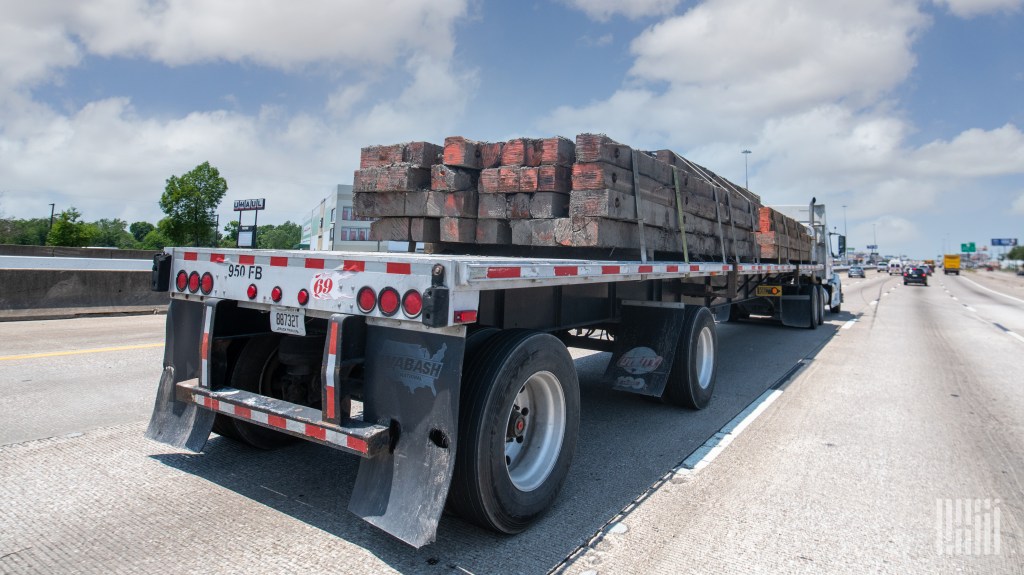
a flatbed trailer with center beams being pulled by a tractor on a highway

Canadian bulk hauler Trimac Transportation announced on Wednesday that it has acquired flatbed and heavy haul carrier Searcy Trucking.

Winnipeg, Manitoba-based Searcy operates a fleet of more than 120 trucks and 170 trailers, serving the construction, agriculture and manufacturing industries. The 56-year-old company also has 20,000 square feet of storage space and provides transloading, warehousing and distribution services.

Financial terms of the transaction were not disclosed. The deal closed last week.

“By combining strengths, we are creating even more value for customers and expanding what is possible for our teams across North America,” said Matt Faure, Trimac president and CEO, in a news release.

Searcy will continue to operate under its current banner, with its leadership team remaining in place.

Trimac said the deal improves its flat deck, less-than-truckload and specialized transportation offerings in Western Canada and in the U.S. Midwest. Trimac acquired flatbed carrier Watt & Stewart in January.

“Becoming part of Trimac allows us to carry that legacy forward with a partner who respects where we’ve come from and shares a vision for where we’re going,” said Norm Blagden, president of Searcy Trucking. “This is the right next step for our employees, our customers and the future of specialized transportation.”

Trimac operates more than 140 locations in the U.S. and Canada with a team of 3,400 employees.

More FreightWaves articles by Todd Maiden:

From event to improvement: 7 steps for turning dash cam alerts into driver coaching

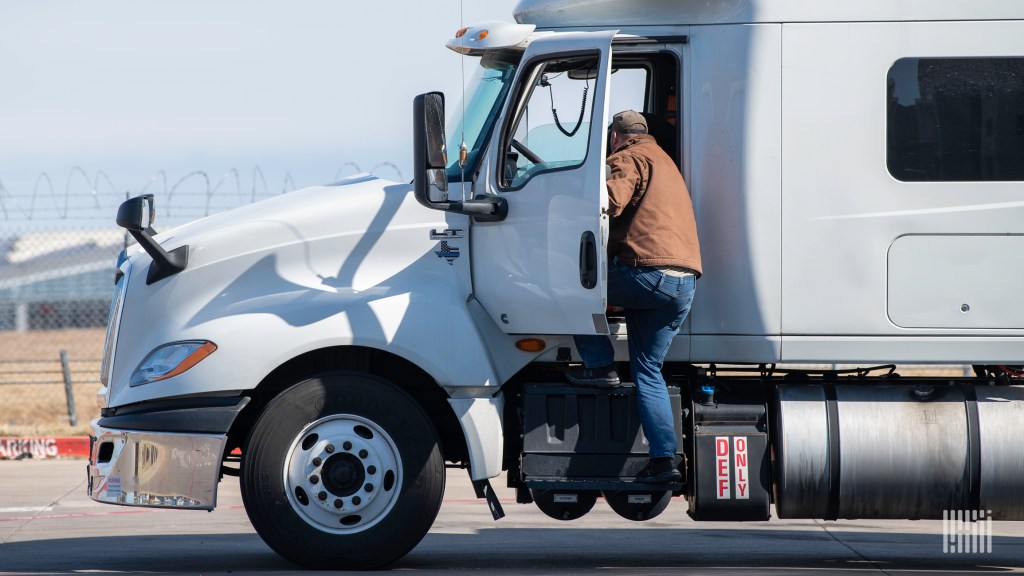
truck driver getting into a truck

Dash cameras are great at capturing risky moments on the road, but the real power lies in what happens after the footage rolls.

“A well-structured coaching workflow transforms dash cam events into meaningful behavior change, reducing risk and building a culture of safety,” says Tom Bray, senior industry business advisor at J. J. Keller & Associates, Inc..

That transformation isn’t hypothetical. A 2019 Virginia Tech Transportation Institute study found that carriers using video-based coaching saw major improvements. One group reported a 49% average drop in DOT crash rates, while others saw double-digit improvements in their CSA BASIC scores for unsafe driving and crash indicators.

So, how do carriers move from alert to actual improvement? Here’s how fleets can make the most of dash cam data—without turning the process into a recordkeeping spiral.

Step 1: Start with smart detection

Good coaching starts with the right tools. Modern dash cams do more than just record—they flag incidents like speeding, hard braking, rolling stops and tailgating. The best systems use AI to tag what happened and why, then serve up short video clips to help managers assess what’s really going on.

A strong dash cam system includes road- and driver-facing views, real-time alerts and tools designed with coaching in mind.

Step 2: Decide what deserves attention

Not every alert needs immediate follow-up. Focus on the moments that signal serious risk, like texting while driving or blowing through a construction zone. Look for patterns: Is this a one-off or part of a bigger issue?

Here’s a sample list based on FMCSA disqualification criteria, crash prediction research and CSA severity weights:

High priority (immediate action required) 

  • Use or possession of drugs/alcohol in a CMV
  • Leaving the scene of an accident
  • Texting while driving
  • Reckless driving
  • Speeding 15+ mph over the limit
  • Failure to wear a seatbelt

Medium priority (coaching required)

  • Following too close
  • Failure to yield right of way
  • Improper lane change
  • Failure to obey traffic control devices
  • Speeding in a construction zone

Low priority (monitor or coach as needed)

  • Rolling stops on private property
  • Occasional and minor lane drift
  • Incomplete signaling

A tiered approach can help prioritize what gets coached right away versus what gets monitored over time. The key is making sure the response matches the severity of the behavior.

Step 3: Make coaching a conversation

Coaching is where the change happens. It should be timely, specific and collaborative. This isn’t about scolding, it’s about building safer habits together.

Start by watching the clip with the driver. Talk about the risk the behavior poses, then work together to find a better approach for next time. Keep the tone constructive: “What could you do differently?” works better than “Don’t ever do this again.”

Step 4: Assign targeted training when needed

If a behavior needs more than a quick conversation, it’s time for corrective action training (CAT). That might mean assigning a short, focused course—like one on following distance for drivers who tailgate or a refresher on attention management for those caught distracted.

These modules aren’t just check-the-box exercises, they’re targeted tools to help drivers get back on track.

“By focusing on CAT for improvement, carriers can reduce accidents, eliminate down time and foster a culture of continuous improvement,” Bray said.

The key to effective corrective action training is keeping the modules short, focused and relevant to the behavior, ensuring the main message doesn’t get overlooked. 

Step 5: Follow up

One conversation doesn’t fix a pattern. After coaching or training, carriers should circle back. This means reviewing new dash cam clips, scheduling a check ride or simply monitoring performance over time. Managers should let the driver know they are keeping an eye out. Accountability reinforces improvement.

Step 6: Document the whole process

Coaching only counts if there’s a record. If something goes wrong down the line and there’s no documentation, it can look like the company ignored red flags.

“If there are events in your system, but no records indicating that you counselled, coached and corrected the drivers involved, it appears that you are aware of — or should have been aware of — drivers that were underperforming, but took no action,” Bray said. “This could become an issue should a driver be involved in a serious crash that can be tied back to the behaviors that were evident in the events that you didn’t act upon.” 

To protect everyone involved, a good dash camera program should set a sunset date for each record. That way, old events don’t haunt drivers and carriers indefinitely.

Step 7: Celebrate the wins

This step often gets overlooked, but it matters. Carriers should recognize driver improvement. A quick shoutout when a driver handles a tough situation well can go a long way. Positive feedback helps shift the dash cam program from a punishment tool to a partnership for safety.

The bottom line

Dash cam alerts are just the beginning. With the right workflow in place, fleets can turn video events into lasting improvements—on the road, in driver habits and across the entire company culture. It’s not just about catching mistakes. It’s about building better drivers, safer fleets and stronger operations.

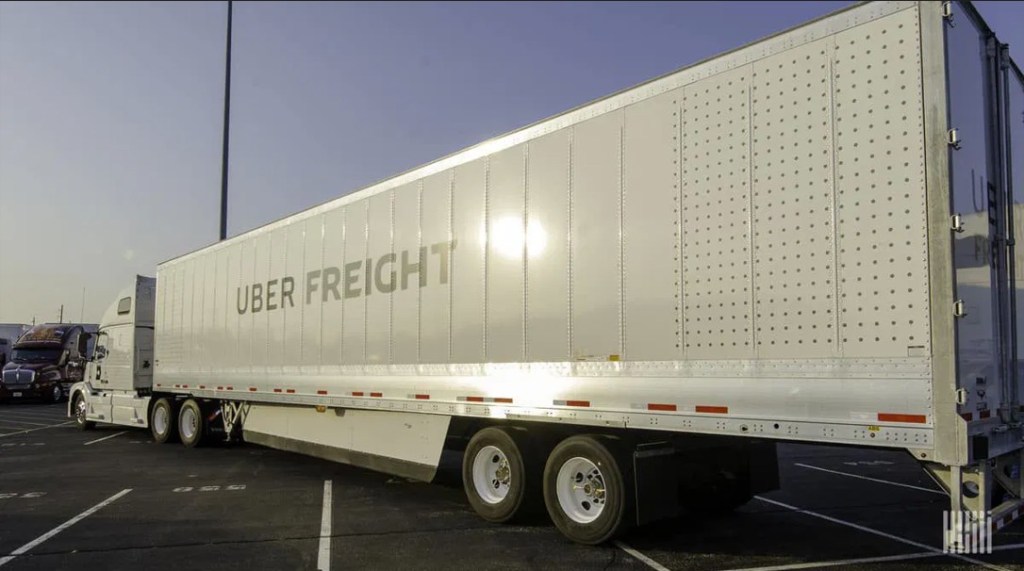
Uber Freight still a negative EBITDA but it’s improving

Uber Freight moved closer toward a positive EBITDA in the second quarter, but it isn’t there yet.

EBITDA at Uber Freight was negative $6 million, according to the company’s second quarter earnings released Wednesday. That was an improvement from the negative $7 million in the first quarter.

The results continue the streak where after posting positive EBITDA in the third and fourth quarters of 2022, Uber Freight has failed to bust through that breakeven point again.

However, the last two quarters have shown significant improvement in its negative EBITDA numbers. Uber Freight’s EBITDA in the fourth quarter of 2024 was negative $22 million. A year ago, it was negative $12 million before sliding to negative $19 million in the third quarter before the big decline at the end of the year. 

The small shifts led to a slight improvement in the EBITDA margin as a percent of revenue, rising to negative 0.5% from negative 0.6%. In the fourth quarter, that number was negative 1.7%.

“Uber Freight is seeing strong momentum across our business, driven by continued growth in Transportation Management and brokerage, as well as improved margins,” a company spokeswoman said. “Our recent advancements in AI — including the launch of the industry’s first scaled AI logistics network powered by a proprietary large language model — are helping shippers automate execution, gain proactive intelligence, and unlock new efficiencies. We’re also seeing sustained strength in Intermodal, where volumes have grown significantly year-over-year as customers diversify their mode mix and benefit from our deep railroad partnerships.”

More than in the past, the company’s earnings report and conference call with analysts had nothing to say about its Freight division. There was no commentary in the earnings about the group’s performance, just a report on its financial numbers. There usually are a few sentences of comments on the company’s activities in the quarter; there were none this quarter.

References to Uber Freight on the parent company’s (NYSE: UBER) conference call with analysts are infrequent. There were none this quarter. 

More articles by John Kingston

Each driver’s payout in Lytx Illinois biometrics case will be between about $650 and $850

Uber Freight’s best EBITDA in years gets little attention

Uber Freight CEO vows focus on growing opportunities for carriers

GXO encouraged by pre-peak season activity, well positioned for 2026

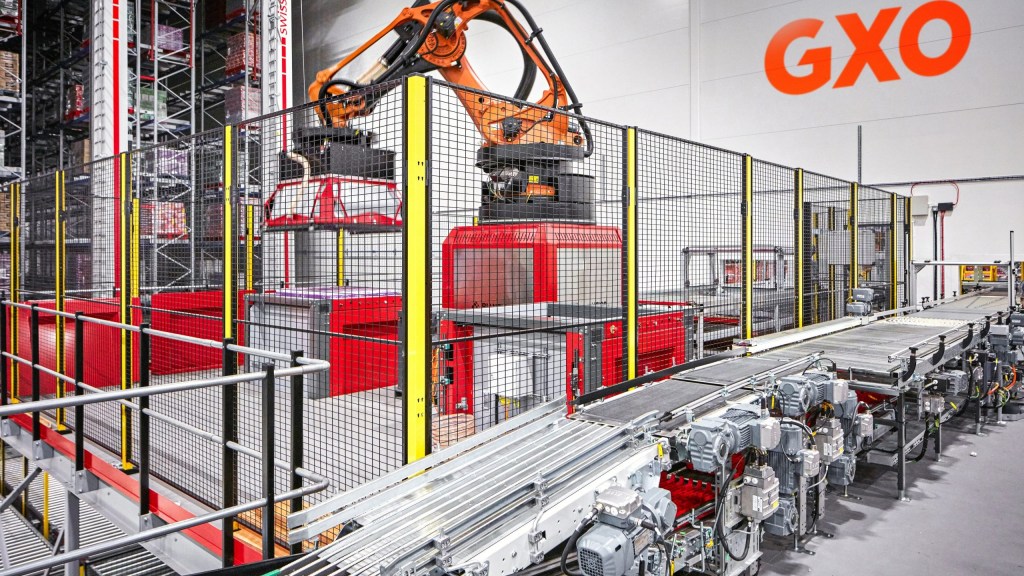
a robot arm and a conveyor belt at a GXO facility

Contract logistics provider GXO Logistics touted new business wins and slightly raised its 2025 outlook on Tuesday after the market closed. The Greenwich, Connecticut-based company cited increased interest from e-commerce and reverse logistics companies as a reason.

GXO (NYSE: GXO) reported second-quarter adjusted earnings per share of 57 cents. The result was 2 cents higher year over year and 1 cent ahead of the consensus estimate. (Adjusted results exclude nonrecurring acquisition and restructuring expenses, among other items.)

Adjusted earnings before interest, taxes, depreciation and amortization of $212 million was 13% higher y/y.

GXO inked $307 million in new deals during the second quarter, pushing total business wins to $535 million in the first half of 2025. The company’s pipeline was $2.4 billion at the end of the period, a modest step down from $2.5 billion at the end of the first quarter, however it continues to convert the pipeline into revenue.

(The pipeline excludes any contribution from the Wincanton acquisition, which was cleared by the UK Competition and Markets Authority in June.)

Management described the pipeline on a Wednesday call with analysts as “more diverse than ever before,” and noted it contains more warehouse automation opportunities than in the past. It said many of its new wins in the e-commerce space include the use of AI inventory replenishment tools.

Consolidated revenue of $3.3 billion was 16% higher y/y and ahead of the consensus estimate of $3.1 billion. The bulk of the growth was tied to recent acquisitions. Organic revenue grew by 6% in the quarter.

GXO reiterated its full-year 2025 outlook for organic revenue growth of 3.5% to 6.5% and adjusted EPS of $2.43 to $2.63. (The consensus EPS estimate was $2.50 at the time of the print.)

It raised adjusted EBITDA guidance by $5 million to a new range of $865 million to $885 million. This was the second increase to the EBITDA outlook since it released first-quarter results in May.

“We’re seeing customers really preparing in earnest for what will be a good holiday season,” said GXO CEO Malcolm Wilson on the call. He said the recent activity provides “a strong level of confidence in delivering the full-year organic outlooks.”

He also said that the company is set up well for 2026 given the recent business wins, noting it will enter a new year with more incremental revenue booked than ever before.

Wilson admitted the management team has a reputation for “being prudent” with guidance. While acknowledging “several opportunities” to outperform the new guide, he said a level of conservatism is warranted given market uncertainties and the company’s upcoming executive leadership transition.

GXO announced in June that supply chain veteran Patrick Kelleher will succeed Wilson, who is retiring as CEO this month. It also announced on Tuesday that Chief Financial Officer Baris Oran is leaving the company to pursue other opportunities but will remain in place until a new CFO in named.

Shares of GXO were off 0.2% at 11:29 a.m. EDT on Wednesday compared to the S&P 500, which was up 0.6%.

More FreightWaves articles by Todd Maiden:

Infrastructure fund pays $1B to acquire largest US regional railroad

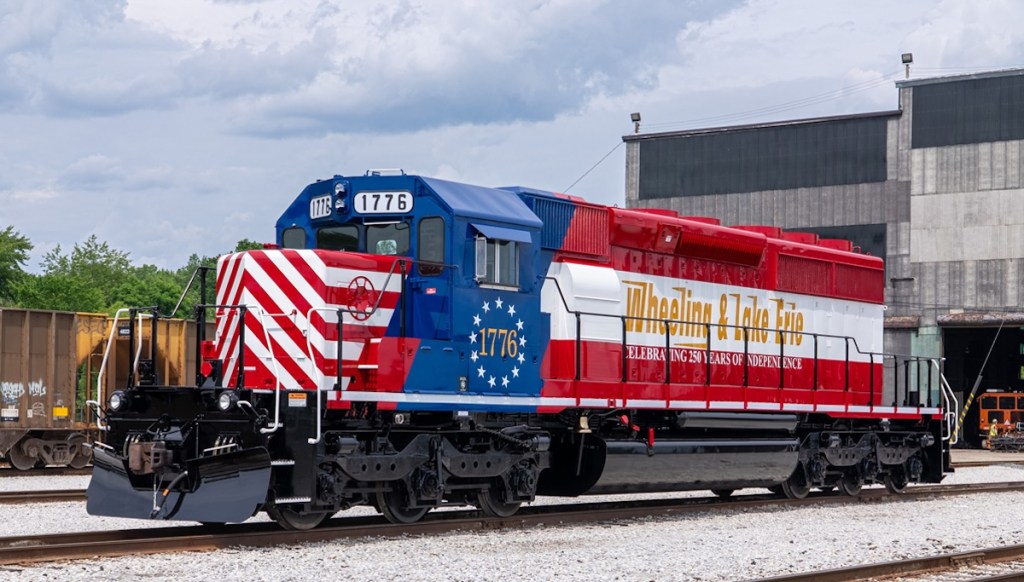
The Wheeling & Lake Erie Railway — at 840 miles the largest independent regional railroad in the U.S. — is being acquired by FTAI Infrastructure in a billion-dollar deal, the companies announced today.

FTAI ( NYSE: FIP), which owns short line and terminal switching operator Transtar, will pay The Wheeling Corp. $1.05 billion to acquire the regional railroad created from lines that Norfolk Southern spun off in 1990. FTAI is managed by an affiliate of Fortress Investment Group.

The Class II W&LE serves more than 250 customers in Ohio, Pennsylvania, West Virginia, and Maryland. The W&LE connects to Transtar’s Union Railroad in the Pittsburgh area.

“Growing our freight rail platform has been a key focus for FIP, and we are thrilled to have this opportunity to combine with the W&LE,” FTAI Chief Executive Ken Nicholson said in a statement. “We believe the W&LE is an excellent candidate for a combination with Transtar, adding scale, diversification, and network reach. Together, Transtar and the W&LE have identified several growth opportunities and operating efficiencies that we expect to drive substantial growth.”

Since 1992, Wheeling Corp. CEO Larry Parsons has been the driving force behind the rebirth of the W&LE. He guided the railroad through a period of extraordinary change and transformed a coal-dependent line into a modern, customer-focused regional railroad, FTAI said.

“His leadership has left an indelible mark on the company and the communities it serves. In seeking a long-term partner to carry this legacy forward, Mr. Parsons chose FTAI Infrastructure Inc. and Transtar, whose values and operational excellence reflect the foundation he spent a lifetime building,” FTAI said.

The railroad carries more than 140,000 carloads per year, interchanges with three Class I railroads and 16 regional and short line railroads, and employs more than 425 people.

W&LE currently handles steel and raw materials to and from five different mills; aggregates from three different quarries; chemicals; industrial minerals, including frac sand; plastic products; grain and food products; lumber; paper; and petroleum products, including LPG and NGL produced in the Marcellus and Utica shale formations.

The transaction is expected to close into a voting trust in the third quarter of 2025, subject to customary closing conditions. FTAI said it expects to gain control of the W&LE upon receipt of approval by the Surface Transportation Board, at which time the W&LE will be an affiliate of Transtar.

Pittsburgh-based Transtar operates former U.S. Steel properties, including The Union Railroad; the East Ohio Valley Railway; The Lake Terminal Railroad in Lorain, Ohio; the Delray Connecting Railroad in the Detroit area; The Gary Railway in Indiana; The Fairfield Southern in Alabama; and the Texas & Northern.

In May 1990, Wheeling Acquisition Corp. paid Norfolk Southern $40 million for 446 miles of track that became the core of today’s W&LE. NS simultaneously leased the new railroad an additional 121 miles of track.

Subscribe to FreightWaves’ Rail e-newsletter and get the latest insights on rail freight right in your inbox.

Find more articles by Stuart Chirls here.

Related coverage:
Efficiencies, demand aid Freightcar America earnings

Rail merger will bring ‘dismal service,’ ‘high rates’, says shippers group

UP-NS merger puts intermodal giants on the wrong side of the map

Hub Group is fully behind a potential UP-NS transcontinental railroad creation

Container rates unmoved by latest tariff deadline

Freight markets witnessed a relatively subdued response following last week’s dramatic trade announcements, contrasting sharply with earlier reactions to tariff developments. 

Previously, shippers hurriedly loaded goods between announcement periods to beat deadlines. However, the current situation reveals a lack of urgency ahead of the August 7 tariff imposition deadline set by President Donald Trump, according to the latest update by analyst Freightos. This may be attributed to the weariness of shippers who previously engaged in proactive frontloading, leading to a diminished urgency during this tariff window.

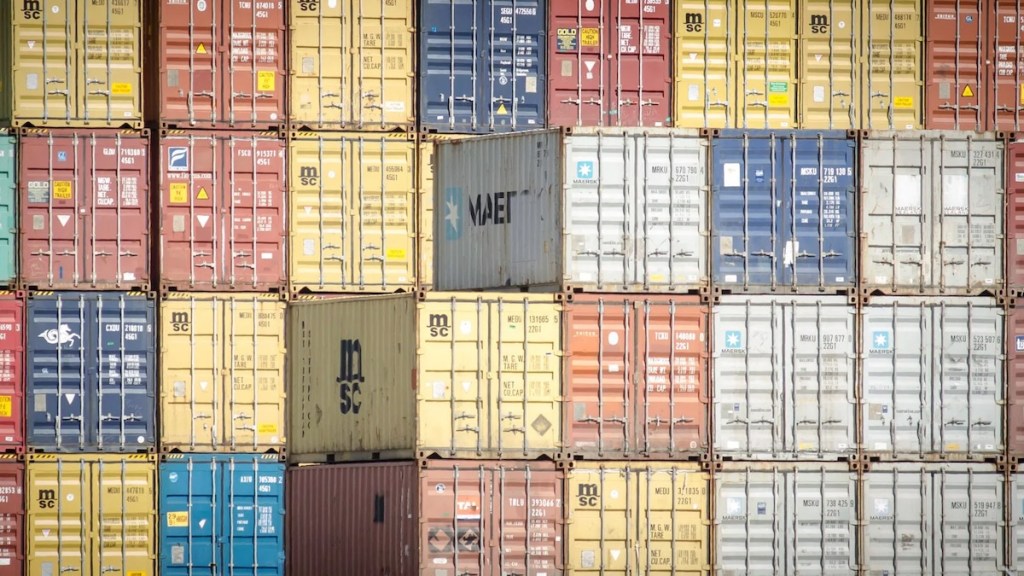
Trans-Pacific container rates to the West Coast have maintained stability for three consecutive weeks, remaining at an average of $2,300 per forty-foot equivalent unit (FEU). Daily rates have seen a slight decrease of approximately $100 since August 1. In contrast, the East Coast experienced a 4% drop to $3,950 per FEU, marking the sixth week in a row of declining rates. Meanwhile, trans-Atlantic rates have also held steady at around $1,900 per FEU, indicating persistent stability in that corridor.

Sources told FreightWaves that related factors have been affecting eastbound volumes from China: Congestion from a ‘terrible’ situation with blank sailings as carriers try to right-size capacity, while shippers waiting out the tariff chaos hold back loaded containers, treating the docks like a warehouse. 

Rates to Long Beach from affected regions such as Vietnam and India have remained mostly unchanged, Freightos said, since the tariff announcement on August 1. However, rates from Indonesia, which are subject to a 19% tariff commencing August 7 have increased moderately by 8%.

There is a possibility that the trans-Pacific ocean demand might witness a rebound, fueled by a 90-day tariff extension for China. Yet, it is anticipated that any potential surge will not match the previous peak season intensity due to extensive frontloading earlier in the year. This suggests that the apex of the peak shipping season has likely already occurred.

Turning to Asia-North Europe trade lanes, container rates have remained stable at approximately $3,400 per FEU — a level consistent since early July. This stability persists despite reports of a relatively robust peak season, underscored by ongoing congestion issues that typically exert upward pressure on freight rates. Conversely, the Asia-Mediterranean market has seen a 4% reduction to $3,263 per FEU, marking a consecutive seven-week decline and resulting in these prices dipping below Asia-North Europe levels for the first time since November.

The plaintiffs are seeking damages for vessel repairs and coverage for any third party claims.

Find more articles by Stuart Chirls here.

Related coverage:

Shipbuilder sued by owner, operator of ship in deadly Baltimore bridge collapse 

China trade fight weakens Matson earnings

Panama ports sales challenge could turn into Trump win

Why a French shipping magnate with US ties is interested in China-owned port terminals 

Efficiencies, demand aid Freightcar America earnings

Railcar builder FreightCar America reported adjusted net income of $3.8 million, or $0.11 per share, in the second quarter despite weaker revenue from lower deliveries, beating market estimates of $.06 per share.

FCA (NASDAQ: RAIL) said revenue for the quarter ending June 30 totaled $118.6 million from $147.4 million in the year-ago quarter as deliveries of new railcars 939 units from 1,159 units y/y. 

Gross margin improved to 15%, up from 12.5%, for  a year ago, resulting in gross profit of $17.8 million compared to $18.4 million. The company in a release said the margin improvement came on more efficient production and managed pricing strategies amid volatile conditions.

Nick Randall, President and Chief Executive, in the release said the results reflect strong operational execution and healthy customer demand despite broader market uncertainties that had delayed some orders earlier in the year. 

The Chicago-based company received new orders for 1,226 railcars valued at $106.9 million. This robust order activity contributed to the company’s backlog, which increased to 3,624 units valued at $316.9 million, surpassing the previous quarter by approximately 300 units.

Randall in a call with analysts said while it’s too early to predict the effect of a possible merger between Union Pacific and Norfolk Southern, any productivity gains and improvements for customers would be good for the rail industry as a whole.

Company executives said they are beginning to see a softer new railcar demand environment due in large part to uncertainties around tariff policies that are affecting customer order timing. They said total 2025 industry deliveries will fall below the previously expected 40,000 units per year average.

The company reaffirmed its guidance for fiscal year 2025, projecting  deliveries between 4,500 and 4,900 units, up 7.7%.

Revenue is projected at $530 million to $595 million, up 0.6%. 

In mixed results for the sector, FCA’s earnings outpaced Trinity Industries (NYSE: TRN) and Greenbrier Cos. (NASADQ: GBX), which both missed analyst expectations.

Subscribe to FreightWaves’ Rail e-newsletter and get the latest insights on rail freight right in your inbox.

Find more articles by Stuart Chirls here.

Related coverage:

Rail merger will bring ‘dismal service,’ ‘high rates’, says shippers group

UP-NS merger puts intermodal giants on the wrong side of the map

Hub Group is fully behind a potential UP-NS transcontinental railroad creation

Report: CSX talks with investment bank about merger options

The AI revolution is here; Firecrown & FreightWaves are on the front lines

There’s been considerable discussion recently about how we use AI for content production at Firecrown across all our brands. Setting aside misrepresentations, we’d like to clarify how our team leverages AI and the expectations we established months ago.

Any media company not using AI at this point is already behind, particularly in the digital space. Committing to never using AI sets a dangerous precedent.

Large Language Models (LLMs) are evolving rapidly, and keeping pace with them is an ongoing challenge.

AI is one of the most transformative technologies in history and a powerful resource for all companies, including media. We want our journalists to have access to the best technology available, and we’re not afraid to make significant investments to achieve that.

Our mission is to be informative and responsive in the markets we serve, especially during breaking news events. AI enables us to produce more content on topics our audiences care about.

Firecrown is not alone. According to The State of Journalism in 2025, a comprehensive research study by Muck Rack, 77% of journalists use AI tools to assist in developing content. 

Our official policy is that any writer who publishes content, whether AI-assisted or not, is responsible for every single word.

Firecrown’s embrace of AI has caused concern among some former journalists intimidated by the technology. They’ve misunderstood our stance on incorporating AI and other automated tools into their work, rather than using these tools to make their jobs easier and more productive. This is unfortunate.

We’ve observed a significant increase in the quality of content from journalists who use AI for copy editing, ideation, and research, particularly with legal and legislative documents. AI also enables us to monitor developing events in breaking news stories.

It also enables us to publish content faster and more frequently, especially on breaking stories.

A prime example is the 700-plus-page MOSAIC regulatory document, released by the FAA with little context. Using AI tools, our team searched the entire document for relevant topics and published content within an hour of its release. Traditionally, this would have taken much longer without AI’s capabilities.

We’ve applied the same approach to major court case filings and rulings, where legal documents can be overwhelming even for the most experienced journalists.

AI, for copy editing or research, can supercharge our top journalists, enabling us to produce more content with deeper insights into subjects that captivate readers. The goal is higher-quality content, delivered faster.

We are also developing AI solutions that allow us to deliver personalized content to our readers based on their preferences and interests. Combined with editors and journalists who have deep subject matter expertise, we can explore a much wider range of topics in niches we previously had limited resources to cover. This is the power of the AI revolution, which provides our editorial teams with tools to enhance their productivity while building on their personal experiences and interests. This is one of the most exciting applications of AI in our business.

Rest assured, we will never use AI to write experiential or product reviews, though it’s invaluable for tracking and reacting to unfolding news. This aligns with practices at global leaders like Fox News, The Wall Street Journal, and Bloomberg.

AI poses some threats to our business, and we understand concerns about its impact on business models, especially in media. Having seen media companies fail by not embracing digitization or the internet, we don’t intend to follow that path.

This journey requires our editorial teams to evolve with the times, though we recognize this doesn’t always happen. We believe transparency about where we use AI and automation is essential.

A major concern for our business is how AI is transforming Google Search, which publishers have long relied on for traffic. That reliance is waning.

As Google has introduced AI summaries and AI Mode, our search volume has sharply declined.

We’ve advised our team to assume search traffic will approach zero in the next 24 months, a sentiment echoed by other media outlets

Over the past year, we’ve tested AI-assisted articles and found they significantly outperform non-AI-assisted ones. As generative content engines play a larger role in digital traffic, AI-assisted articles excel in nearly every metric: traffic, time on site, engagement, and more. In the digital world, platforms determine which articles get read. We must adapt.

For instance, on nearly all our digital sites, we’ve implemented tools to make our content more discoverable by generative AI engines. Sites that have adopted these tools have seen traffic increase two to three times during this period. We’re encouraged by these results and believe further investment is warranted. On sites where editorial teams have resisted, such as AVWeb, we’ve seen a dramatic traffic collapse. Our goal is to encourage these teams to use tools that best position them for success in the next digital era.

This trend isn’t unique to Firecrown; many other publishers report similar patterns.

In some cases, we’ve had to part ways with teams that resisted change. We understand this may have caused disappointment and tension, but we don’t intend to let any of our brands fail due to technophobia. The digital world can be feast or famine, and we’re forced to adapt.

AI-Written Stories

Recently, we’ve been accused of using AI to write full-fledged stories, particularly in the aviation group, with minimal human oversight.

This is false.

While we use AI tools for research, breaking down complex documents, transcription, and similar tasks, all inputs and outputs are carefully reviewed by our editorial team.

AI enables our editors and journalists to be far more productive with research, copy editing, and ideation, tasks that often consume significant time otherwise spent creating high-quality content.

Another misconception is that AI is a cost-cutting measure.

Perhaps this is true at other companies, but we’ve made substantial investments in emerging technology built specifically for publishers. On a per-user basis, the AI tools we provide our workforce are the most expensive software we license. We continue to invest in our editorial team, hiring journalists and editors who embrace the future rather than resist it.

We know some traditional journalists are upset by our adoption of this technology. This is expected. The media business model is being upended by the same technology. For Firecrown and its brands to survive, we must embrace the future.

One such tool, developed by a former Wall Street Journal editor, is being tested at other major outlets.

For instance, this tool takes an entire audio or video file and field notes, then transcribes them into text that can be quickly converted into an article under the direction of a journalist. 

The easier it is to transcribe content from video and audio into written text, the more often our team can provide first-hand accounts of the products and services they experience. This is truly impactful.

Our overarching goal is to provide our content producers with AI as a tool to better serve their audiences. Initiating research, gathering real-time breaking news, and assisting with proofreading are just a few ways AI supports our team.

The AI era is here, and we plan to embrace it.

For transparency, we’re sharing how we direct our content team to use AI in their daily work, including:

When We Use AI Tools

  • Locating sources for research
  • Monitoring breaking news, emerging trends, or stories
  • Transcribing audio or video files for stories, such as interviews and podcasts
  • Translating field notes into text
  • Compressing and analyzing large documents, such as court filings and regulatory reports
  • Using large datasets to tell stories. Most journalists aren’t Excel experts or adept at manipulating CSV files, but AI helps.
  • Project management and task assistance
  • Copy editing and proofreading
  • Conducting research
  • Generating content ideas
  • Making our content more accessible to generative search engines
  • Providing tailored content, directed at specific interests and niche topics 

How We Won’t Use AI Tools

  • Publishing LLM outputs outright. All articles are reviewed, fact-checked, and bylined by journalists responsible for their published words.
  • Using AI to plagiarize or mimic others’ work.
  • Using AI-generated images, as licensing remains a challenge.
  • Publishing AI-generated summaries or recaps without citing sources or misrepresenting content origins, which is unethical.
  • Allowing AI content without editorial review, as it may unintentionally reinforce stereotypes, inaccuracies, or biases from training data.

We owe our loyal readers the best, fastest, and smartest content, and Firecrown is committed to delivering that across our brands.

Lineage says high food prices weighing on warehouse occupancy

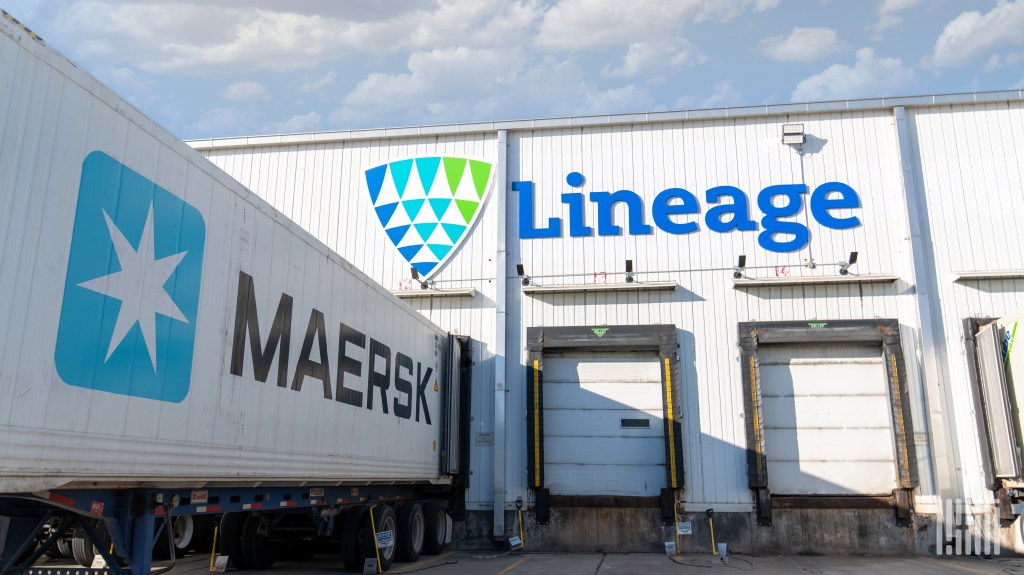
A Maersk container on a chassis at a Lineage facility

Temperature-controlled warehouse operator Lineage Inc. said high food prices and tariff uncertainty are weighing on customer inventories. The combination pushed occupancy lower at its facilities during the second quarter. With “demand bouncing along the bottom” the Novi, Michigan-based company lowered its full-year outlook.

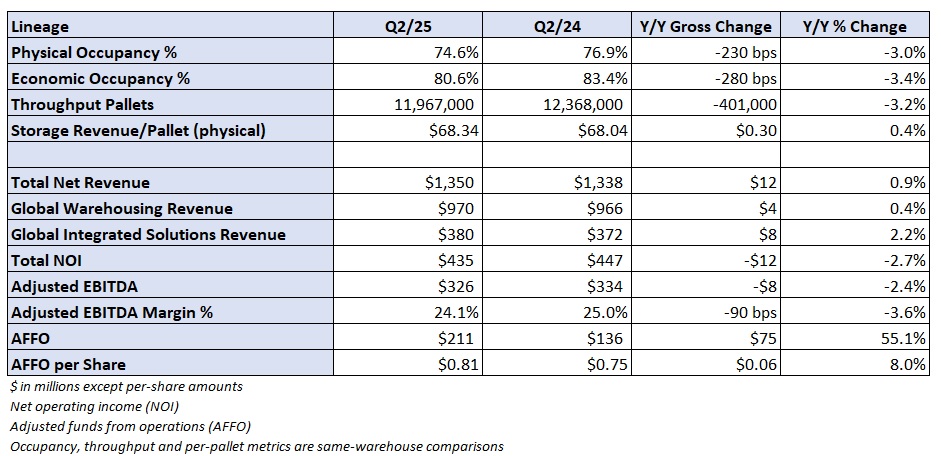
Lineage (NASDAQ: LINE) reported a headline net loss of $7 million for the second quarter on Wednesday before the market opened. Adjusted funds from operations (AFFO), which excludes depreciation, acquisition and restructuring costs, of 81 cents per share was 6 cents higher year over year.

The company reported a 1% y/y increase in consolidated net revenue to $1.35 billion. On a same-warehouse comparison, pallets processed through its facilities declined 3% y/y, with storage revenue per pallet up just slightly. Physical occupancy was 74.6% in the quarter, which was 230 basis points lower y/y and 190 bps worse than the first quarter.

Table: Lineage’s key performance indicators

“We saw muted seasonal inventory levels late in the second quarter and early into the third and are therefore lowering our outlook for the year,” said Lineage President and CEO Greg Lehmkuhl in a news release. “While we expect continued sequential improvement in both same warehouse and total NOI in the second half, we are taking a more measured view of the balance of the year.”

The company lowered full-year 2025 AFFO guidance by 20 cents per share to a new range of $3.20 to $3.40 per share, a 6% reduction at the midpoint of the range. Adjusted earnings before interest, taxes, depreciation and amortization guidance of $1.29 billion to $1.34 billion was reduced by 4% at the midpoint.

On a Wednesday conference call with analysts, management said it has seen some seasonal improvement in demand in recent weeks, but the uptick has occurred later and at a more gradual pace than in past years. Lineage’s new forecast calls for inventories to build throughout the rest of the year, pushing occupancy higher across the network, albeit at a lower rate than previously contemplated.

Management said the pricing environment is “competitive but stable,” pointing to a 5% sequential increase in revenue per pallet during the quarter.

“Our focus remains on revenue growth, optimizing labor productivity, and controlling the controllables, setting the stage for strong operating leverage when our industry rebounds,” Lehmkuhl said.

Lineage manages 485 facilities with 3.1 billion cubic feet of space across North America, Europe and the Asia-Pacific region. It also provides freight forwarding, customs brokerage, drayage and truck transportation.

More FreightWaves articles by Todd Maiden: