Tips for navigating the coming capacity correction

By Craig Allan

The views expressed here are solely those of the author and do not necessarily represent the views of FreightWaves or its affiliates.

The catastrophic Francis Scott Key Bridge collapse was a tremendous loss for the city of Baltimore, which is left grieving the tragic loss of life and bracing for massive disruption.

This is also a global event, and many shippers are now on uncertain ground — phones are lighting up as they try to navigate the rapidly shifting environment. What we’re sharing with them: Indications of a national capacity correction are emerging, and the bridge collapse will likely accelerate this trend in the region.

With domestic freight volumes dead and rates still falling, most shippers aren’t seeing a capacity crunch today. But a convergence of forces is primed to disrupt supply chains, drive capacity out of the market and push up freight rates — across the U.S.

Despite recent news events, don’t be lulled into complacency amid the current shipper-friendly freight market. A shift is coming, and if you start planning now, you can get ahead of the trends and mitigate the impacts on your business.

A perfect storm is already brewing

Domestic and global factors are expected to drive a capacity correction and rebalance freight rates in just six months’ time, and the bridge collapse will certainly accelerate that timetable in Baltimore — and perhaps beyond.

Rising ocean container volumes

Pre-COVID volume patterns are returning. FreightWaves reported “clear growth” for maritime imports in comparison with pre-pandemic years — and the early evidence is already materializing at our West Coast ports.

According to Allison Dane Camden, deputy assistant secretary for multimodal freight infrastructure and policy at the U.S. Department of Transportation, “We’re starting to see a little bit [of an uptick]” in containers going to the West Coast, based on data from DOT’s Freight Logistics Optimization Works initiative.

Panama Canal and Suez disruptions

Climate and geopolitical conditions continue to disrupt global trade routes. Drought in Central America is expected to persist at least through April, resulting in fewer Panama Canal crossings, longer wait times and higher tolls.

Likewise, conflict on the Red Sea is creating delays and rising costs as container ships wait for naval escorts to the Suez Canal or reroute around the Cape of Good Hope.

Summer fuel price surge

The summer driving season is just around the corner and, with it, historically the return of higher fuel prices.

The impact is twofold: First, these costs will be passed on to shippers in the spot freight market. Second, carriers locked into unsustainable, rock-bottom contract rates and without sufficient cash reserves will be forced out of the market when that cash dries up — tightening capacity and further driving up costs.

Labor stoppages

The threat of labor stoppages at our East Coast and Gulf Coast ports is looming. We expect labor negotiations to dominate the domestic transportation and logistics press this summer and early fall, and if a deal is reached, it will go down to the wire. If ports do shut down, things would get ugly for shippers, fast.

We’re already seeing early congestion issues pop up at our West Coast ports as more volume is pushed in that direction. Recently, we had drivers waiting for six hours to pull containers. It’s not a problem every time or at every terminal, but we have seen it often enough at a few of the larger Los Angeles container terminals to raise eyebrows.

Similar constraints at Baltimore-adjacent ports are likely to follow this pattern.

While the Port of Baltimore managed just 2.4% of U.S. twenty-foot equivalent unit imports this year, we expect to see significant disruption within the regional port apparatus through the spring. Cargo will likely be redirected to Philadelphia, New York and Norfolk, Virginia — bringing freight volumes back into equilibrium, accelerating an impending capacity crunch and pushing up drayage prices in the region. Meanwhile, we may not see containers coming into Baltimore until May/June. Carriers that rely on the Port of Baltimore and don’t have the cash flow to sustain their businesses through the spring will be forced out, reducing available capacity.

These converging conditions will likely mean shipping delays and upward pricing pressure.

Strategic approaches to minimize capacity correction impact

We may be months out from a national market shift, but the time to start planning for it is now. 

Shippers who plan to bring containers into the Port of Baltimore must take immediate action to mitigate business repercussions.

If you engage in overseas production or rely on business-critical overseas suppliers and you bring your containers into East Coast ports, we recommend a few approaches:

  • Reroute your containers to West Coast ports. Following COVID, many large shippers tried to balance out their deliveries to both coasts for added resilience, but this summer and early fall, you’d be wise to push your freight to the West Coast if you can.
  • Bring your shipments into the U.S. early. Redirecting cargo to the West Coast isn’t a workable option for everyone, especially small-to-medium-size businesses. The good news: Plenty of warehousing capacity is available at the moment. By importing your cargo into the country in advance of Europe’s August holidays, you can mitigate the risk of labor stoppages at our East Coast ports this fall. (Of course, this activity could mean tightening warehouse and carrier capacity in the summer when we typically wouldn’t expect it.)

We also urge you to reevaluate your transportation and logistics partners. Black swan events are creating increasingly challenging financial conditions in the freight and logistics industry, and financially unsustainable partners represent a risk to your business. Some carriers and 3PLs will shutter, as they always do, and the last thing you want is a suddenly out-of-work driver walking away from a truck and your container when a business runs out of cash.

Our recommendations:

  • Re-vet all of your partners with an eye toward financial viability. We constantly check our partners for fiduciary signals, like debt-credit scores, payment history, outstanding debts, types of credit and credit utilization. Referring to Dun & Bradstreet also provides insights: Businesses with Paydex scores under 50 represent a high risk of late payment.
  • Confirm that your partners are using market-leading vetting tech. Not only does tech, like Highway, enable your partners to evaluate a business’s legitimacy amid rising fraud, but it also signals that they have the financial resources necessary to invest in your freight and data security.

Lastly, consider broadening your partner base to boost your resilience. Should one of your existing partners go under, this approach will give you the added flexibility you need to minimize business impact. After all, when capacity tightens, brokers and carriers will take care of their existing customers first, and you want to be among them.

Reading the tea leaves

The signs are there: We’ll likely be looking at a balancing freight market and tightening capacity by fall and winter of 2024.

As the market corrects, some will thrive and others will sadly disappear. Considering your go-forward approach now will help ensure you’re on the sustainable side of that equation.

About the author

Craig Allan, president of BWS Logistics
Craig Allan is the president of BWS Logistics. An industry leader experienced in all modes of distribution, he’s spent the past 20 years of his career-boosting service levels, reducing operating costs, improving profitability and implementing tech solutions for large and small organizations, including Hillebrand Gori. Allan launched his career on the floor of the New York Stock Exchange before entering logistics. You can reach him at c.allan@bws-logistics.com or through his LinkedIn account.
Preliminary Q1 results at embattled Norfolk Southern miss expectations

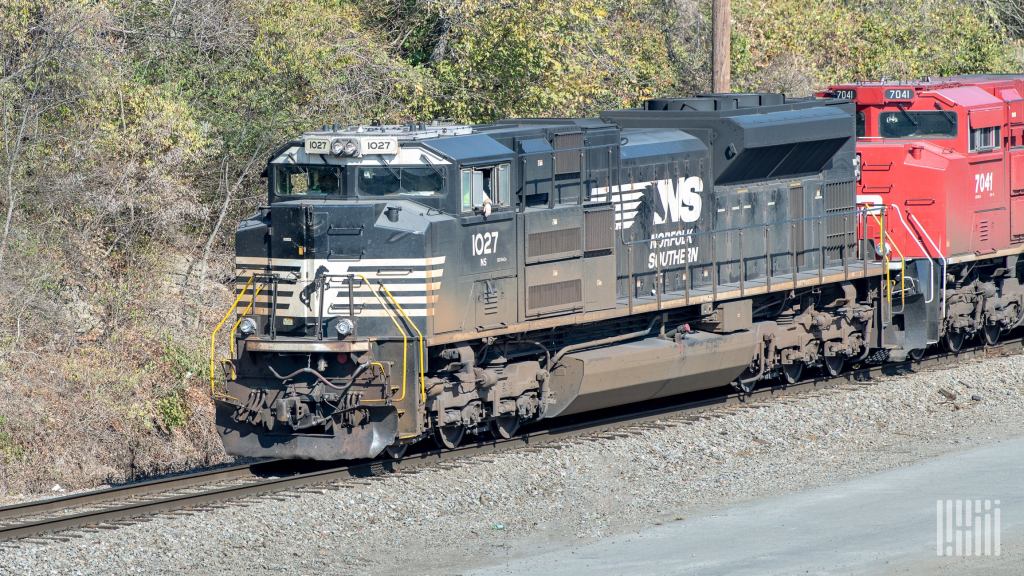
Norfolk Southern heads toward its May 9 annual meeting and the resolution of its battle with activist shareholder Ancora over control of the company with a public campaign that may have taken a hit Tuesday, judging from a preview of the railroad’s first-quarter numbers.

In an outlook for Q1 earnings, which are to be released April 24, Norfolk Southern said adjusted earnings would come in at $2.49 a share and adjusted operating ratio would be 69.9%.

Those numbers are both below Wall Street consensus on how the railroad, which serves the Eastern half of the U.S., performed in the quarter. The report initially pushed Norfolk Southern (NYSE: NSC) stock down before a later rebound.

According to SeekingAlpha, the consensus forecast for adjusted EPS was $2.59 a share, 10 cents more than Norfolk Southern said it made in the quarter. The adjusted OR was expected to be 69%, according to consensus, 90 basis points better than what Norfolk Southern now says it will report.

The nonadjusted numbers are far different from the adjusted figures, primarily as a result of the company’s $600 million settlement over the East Palestine, Ohio, derailment and chemical spill last year. Those GAAP results, which take into account charges connected to East Palestine as well as other charges, take the OR up to 92.9% and diluted earnings per share to 23 cents a share.

Sitting down with Wolfe Research

As part of its campaign against the Ancora push for new management, which is taking place now through proxy voting, Norfolk Southern management has been making numerous public appearances. On Wednesday, an online interview with transportation analyst Scott Group of Wolfe Research had embattled CEO Alan Shaw saying the Tuesday report wasn’t all that bad. 

“We had said that first-quarter OR was going to be 100 to 200 basis points deterioration from the fourth quarter, and it’s up 110 basis points with normal seasonality,” Shaw said. “But we’re encouraged by the fact that OR improved throughout the quarter each and every month and really positions us well to deliver that 400-to-500-basis-point improvement in the second half of the year.”

But Amit Mehrotra, the head of the transportation research group at Deutsche Bank, described the railroad’s preliminary numbers as “very difficult” in his daily transportation email update.

Settlement before May 9?

Mehrotra, who will host an online session with Shaw and other NS executives next week, added that the outcome of the proxy battle will not necessarily stretch until the May 9 annual meeting. Before that, Mehrotra said, there likely will be “significant visibility” on which way the vote is going. “So, it’s very possible for there to be a settlement in early May, in our view, if the results are overwhelmingly one sided,” he said.

“The bottom line is change is coming to NSC one way or another, in our view,” Mehrotra wrote. “Either with current management that will remain under pressure until tangible progress is achieved, or with new management and a new board that will likely adjust and accelerate the profit improvement plan.”

Ancora recently boasted that its effort to replace existing management got the backing of asset manager Neuberger Berman. 

Shaw, in the interview with Group, of Wolfe Research, said there have been negotiations between the Norfolk Southern board and representatives from Ancora. He said part of the offer Norfolk Southern has made is to have “some” of what the railroad considers “their better candidates” become members of the Norfolk Southern board.

“The response from the activists has been unreasonable,” Shaw said. “They’re looking for wholesale change. And that’s not something that the board feels is the right approach for our shareholders going forward.”

But he added that the company is open to a settlement.

(Settlements between company management and activist investors often end a proxy battle. That occurred Tuesday in a battle over control over Macy’s (NYSE: M).

The Norfolk Southern statement of its projected first-quarter earnings reviewed the company’s operations during the three months. Among the highlights: Volume was up 4%, but revenues were down 4% because of headwinds from lower fuel surcharges and “the continuation of adverse mix,” a euphemism for the type of cargo the company is hauling being less profitable than might be seen at other times.

But NS also said the company had record revenue less fuel in its merchandise markets.

The report was not so dire as to change any Wall Street analyst ratings on Norfolk Southern stock. Wire services reported that the current outlook for the railroad was held steady by RBC Capital and Susquehanna even after the preliminary numbers were released.

Orr hiring attacked by Ancora

Ancora also released a letter to shareholders last week, which criticized the hiring of rail veteran John Orr as COO.

The letter held back little. Ancora criticized Norfolk Southern for not interviewing its candidate for COO, former CSX executive Jamie Boychuk. It also said Orr was hired primarily because of his ties to Claude Mongeau, a Norfolk Southern director and a former CEO of Canadian National, where Orr had worked before he was at Canadian Pacific, now known as Canadian Pacific Kansas City (CPKS) after its merger with Kansas City Southern. 

Norfolk Southern said when it announced Orr’s hiring on March 20 that it had paid $25 million to CPKS (NYSE: CP) for the right to hire Orr. But the Ancora letter questions that figure, saying an analysis of what CPKC said about the deal and its impact on earnings suggests a figure that is far higher in total value.

Boychuk’s Ancora-backed candidacy for COO at Norfolk Southern runs alongside the candidacy of former UPS executive Jim Barber Jr. to replace Shaw if he is pushed out. Ancora also has nominated eight directors.

The letter also brought up accusations from Orr’s past that he was abusive to employees, with plenty of redacted adjectives he allegedly used to describe employees. The letter leveled charges of racism and sexual harassment.

Former Orr colleagues interviewed by Ancora representatives “indicated that they would provide sworn affidavits regarding Mr. Orr’s conduct,” the activist shareholder group said. “We do not understand how the Board and Mr. Shaw have decided to bet the Company’s future on Mr. Orr.”

The issues raised by Ancora did not come up in the interview with Wolfe Research. 

More articles by John Kingston

Rerouting trucks and ships away from Baltimore: What early data shows

Teamsters out at Southern California trucking company; other votes mixed

Drop in Class 8 truck orders in March looks big but analysts aren’t worried

FMCSA sees ‘significant impacts’ on truck drive times in Baltimore area

Baltimore Harbor Tunnel sign

WASHINGTON — The loss of Baltimore’s Francis Scott Key Bridge is ramping up truck drive times in the region as data from the government and private sources begins to accumulate.

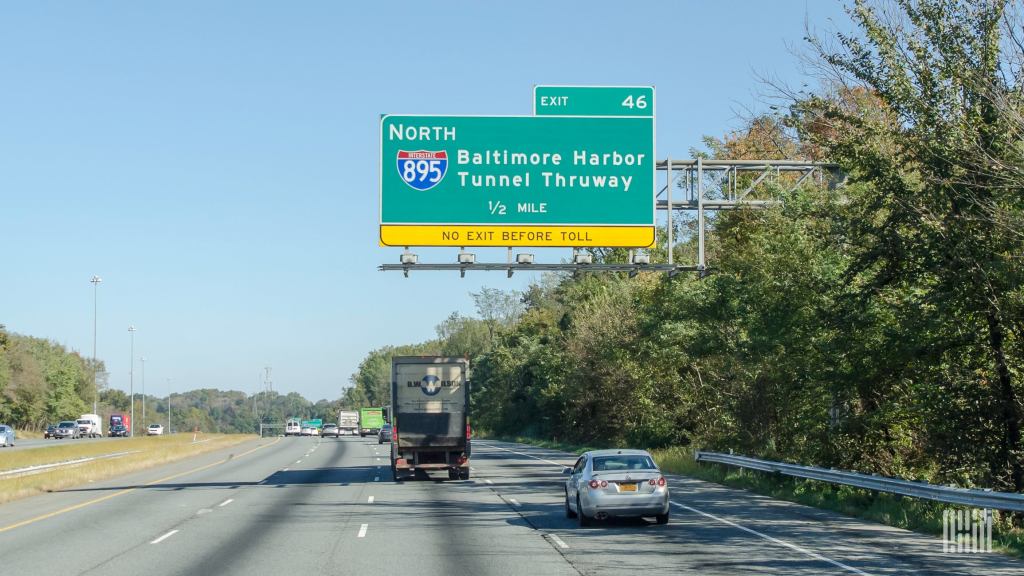
The Federal Motor Carrier Safety Administration confirmed on Wednesday that it is seeing “significant impacts” on truck trips in the region based on data supplied by the University of Maryland, particularly on traffic now being diverted through the Baltimore Harbor Tunnel (Interstate 895), the Fort McHenry Tunnel (Interstate 95) and the western side of the Baltimore Beltway (Interstate 695).

“We’re monitoring these roadways for reliability and how much variation there is in the travel time,” said Nicole Katsikides, an FMCSA transportation specialist, speaking on an FMCSA-sponsored webinar.

“We know truck drivers are concerned about reliability when route planning, because high variability in travel time impacts on-time deliveries and efficient operations. We will continue to monitor this information, which helps best to support the commercial vehicle community as things change related to the port.”

FMCSA’s data is supported by the most recent data compiled by Geotab ITS, a business unit of Toronto-based transportation telematics company Geotab Inc.

Geotab ITS supplied FreightWaves with the following information on drive time increases for commercial vehicle traffic through Baltimore’s two tunnels, as of Saturday, compared to average drive times before the bridge collapse:

Baltimore Harbor Tunnel:

  • Long-haul: 25%.
  • Regional: 20%.
  • Local: 18%.

Fort McHenry Tunnel:

  • Long-haul: 20%.
  • Regional: 20%.
  • Local: 20%.

With an emergency declaration extended until May 8 that adds two hours to the 11-hour driving limit for drivers hauling freight that now must be diverted to other ports, FMCSA is now focusing on longer-term impacts of the bridge collapse, according to Thomas Liberatore, the agency’s state programs division chief.

“This is a marathon, not a sprint, so this is not something we’re committed to just in the short term,” Liberatore said during the webinar. “We will continue to monitor traffic impacts and other issues that could be expanding or impacting the movement of freight in and around Baltimore and the surrounding region.”


Trucking operations using FSK bridge before collapse that are now being rerouted. Source: Geotab ITS.


That could mean expanding the current hours-of-service emergency order to include other types of long-haul freight moving through the region that is being affected by the added congestion, Liberatore said, depending on FMCSA’s ongoing analysis.

“We’re going to continue to monitor the data, and if there are things we need to do following consultation within the department and with state and local partners, we have the ability to do so.”

Truck parking comes into play

Delays caused by the sudden shortfall in highway capacity could also mean providing more truck parking relief, Liberatore said, in the form of providing resources for motor carriers and drivers to help identify new or expanded parking options.

“Truck parking comes mostly under the domain of the Federal Highway Administration, who we’re working with on a daily basis,” he said.

“But it’s trying to identify where those traffic congestion points may lie, particularly for drivers that are coming up to their hour-of-service limits: Are they going to require a 30-minute break or sleeper berth time? We want to try to provide resources particularly for those drivers that may not be used to running into these issues around certain corridors as to where they can stop safely if they need to.”

Click for more FreightWaves articles by John Gallagher.

Decline in Delta Air Lines’ Q1 cargo revenue has silver lining

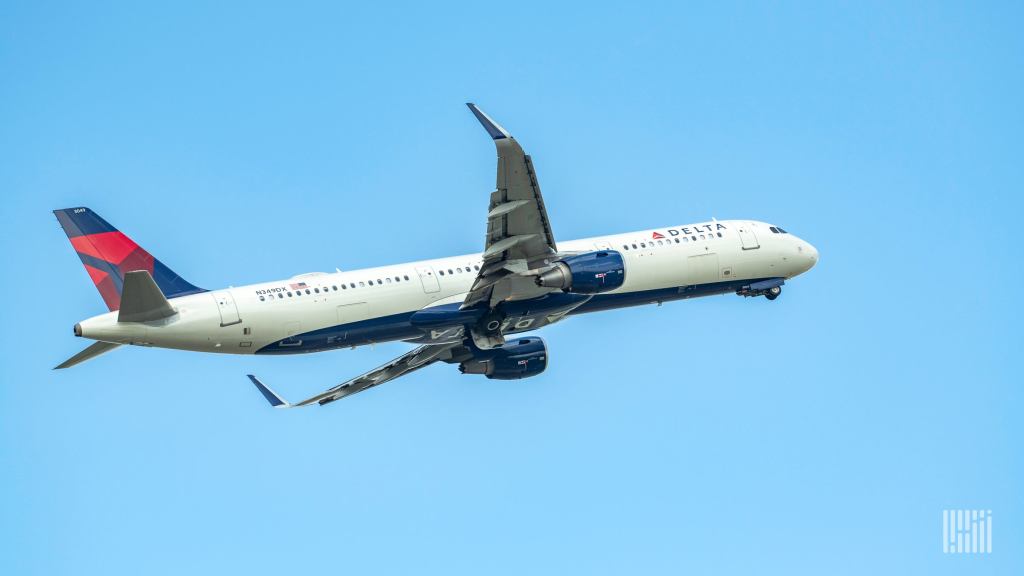
Blue-tailed Delta jet rises into a blue sky.

The rate of decline in cargo revenue at Delta Air Lines slowed further in the first quarter, reflecting an overall improvement in global market conditions for airfreight. 

Atlanta-based Delta (NYSE: DAL) on Wednesday reported record first-quarter adjusted revenue of $12.6 billion, but cargo revenue fell 15% year over year to $178 million. The world’s second-largest passenger airline by passengers carried almost never mentions cargo beyond a line on the income statement, but the earnings news release twice said cargo and maintenance service were nearly a 1-point drag on total unit revenue, which dipped 0.7% year over year.

Delta’s cargo revenue during the fourth quarter, the busiest period for freight, fell 24% to $188 million. That was better than the prior three quarters, when cargo revenue was down between 28% and 37% from the same periods in 2022. For the full year, Delta Air Lines’ cargo sales fell 31% to $723 million.

Delta wasn’t alone in experiencing negative effects of a prolonged international freight recession. Most hybrid and all-cargo airlines saw revenues drop between 25% and 50%, or more, last year. Shipping demand and rates bottomed out last summer and have steadily improved since September, with global air cargo volumes surging about 12% during the first quarter versus a year ago, according to market data providers.

Delta recently named Peter Penseel, an air logistics veteran based in Europe, to take the helm of the cargo division, effective June 1.

The airline credited strong domestic, international and corporate business travel, along with good operational execution, for higher corporate revenues and a 17% increase in operating income to $640 million. Pretax income was up $163 million to $380 million. The company said corporate travel has continued to accelerate since the start of the year and predicted record corporate revenues in the second half.

The company reiterated its full-year outlook and released second-quarter guidance for revenue growth of 5%-7%.

Revenue and adjusted earnings per share of 45 cents beat analysts’ consensus estimates.

Delta shares were down 1.7 points in late afternoon trading.

Click here for more FreightWaves stories by Eric Kulisch.

Sign up for the weekly American Shipper Air newsletter here

Delta Air Lines taps Peter Penseel to lead cargo division

Air cargo market rides an incoming wave, but can it last?

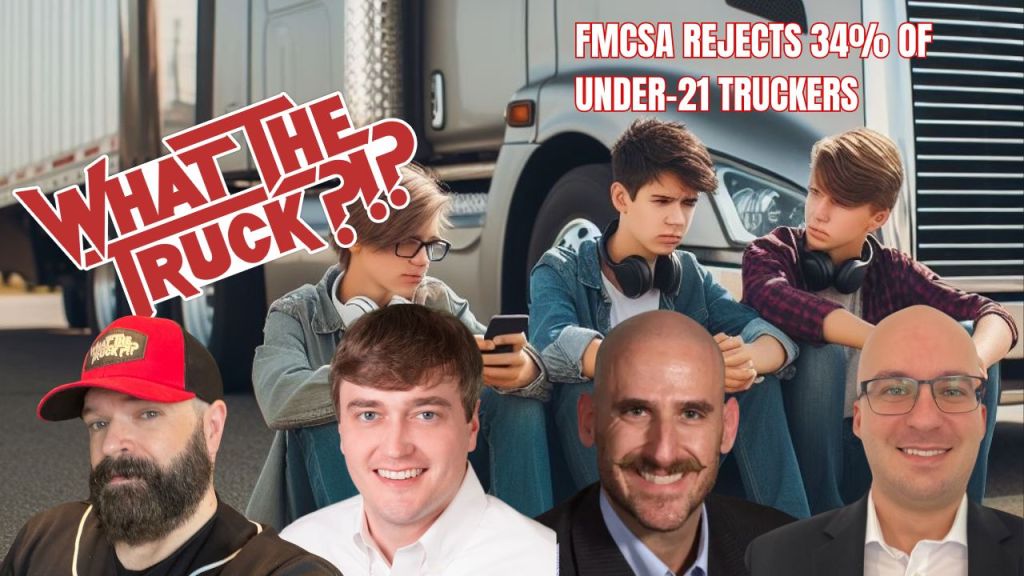
FMCSA rejects 34% of truckers under-21; Haul of Fame; fuel fraud – WTT

On episode 704 of WHAT THE TRUCK?!? Dooner is talking about the FMCSA’s under-21 apprenticeship program. So far, only 113 motor carriers have applied and 34% of those have been rejected. We look into why.

Drivers, start your engines! Relay Payments CEO Ryan Droege gets us off the starting line for their Haul of Fame 2024 that will see a pair of drivers win a NASCAR experience in Atlanta. We’ll find out all about the event and how you can nominate drivers for this amazing opportunity. 

1970 Group CEO Stephen Roseman helps companies minimize the challenges caused by insurance carriers’ collateral requirements. We’ll learn how it may free up your balance sheet.

Amous CEO Mark Shevchuk talks about what’s right and wrong with Transportation Management Systems. We’ll also learn how they’re partnering to help prevent fuel fraud.

Plus, a man embezzles $1.5 million from a truck dealer; a unique ferry for semis; and Michael Lombard seizes the day. 

Watch on YouTube

Subscribe to the WTT newsletter

Apple Podcasts

Spotify

More FreightWaves Podcasts

XPO starts opening terminals acquired from Yellow

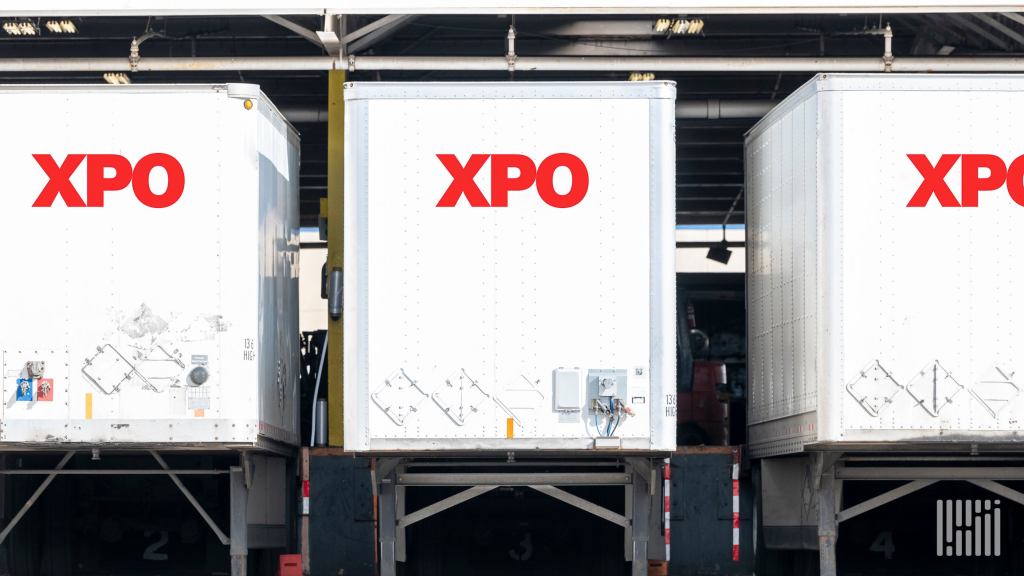
XPO trailers loading at a terminal in Houston

Less-than-truckload carrier XPO announced Wednesday it has begun opening the service centers it acquired from bankrupt Yellow Corp.

XPO (NYSE: XPO) purchased 26 owned terminals and two leased locations from Yellow (OTC: YELLQ) in the estate’s first auction in December. XPO’s $870 million bid for the terminals represented the largest allocation of Yellow’s properties at the time. XPO was not active in a second auction where privately held Estes added five locations to bring its total acquisitions from Yellow to 29 properties. However, the value of those sites ($284 million) is one-third that of XPO’s acquisition.

The three facilities XPO has opened are in the Nashville, Tennessee area; Grand Junction, Colorado; and Nogales, Arizona. The Nashville location has 100 doors and is the first of two sites that the company will open in that market during the second quarter.

“Our first three acquired facilities have launched on schedule, following our landmark investment in our network,” stated XPO CEO Mario Harik in a news release. “With a deeper presence in strategic markets, we are introducing new premium services and expanding our existing offerings, such as our cross-border service with Mexico.”

In total, XPO acquired approximately 2,900 doors from Yellow’s estate, which will complement the roughly 17,000 it was operating prior to the deal. The entirety of the acquisition is expected to produce a 10% to 15% increase in total door capacity as some of the additions are not fully incremental. XPO will be replace existing facilities with larger locations in some markets.

The release said the new space will enhance operational efficiencies and improve linehaul capabilities, ultimately improving service metrics.

On its fourth-quarter call in February, XPO said it planned to open the first 12 locations within three to six months, the next dozen in six to 12 months and the remaining sites in 12 to 18 months. Upgrades, repairs and rebranding need to be performed before the sites can be relaunched into service.

On the February call, management said it had opened a dozen service centers in recent quarters and those sites were accretive within 30 to 60 days. In totality, the acquired terminals will have little impact on the carrier’s operating ratio this year even as depreciation and amortization expenses increase. The sites are forecast to be accretive to earnings in 2025, with the guide assuming incremental margins in the 30% to 40% range.

XPO has been very aggressive in seizing the freight opportunity created by Yellow’s closure.

The company continues to post tonnage gains ahead of most peers despite industrywide declines in weight per shipment. It showed positive volume trends in a first-quarter update provided a month ago, following tonnage and yield growth in the fourth quarter. It has forecast first-quarter yield (excluding fuel surcharges) to again increase by 10% year over year.

On Monday, LTL competitor Saia (NASDAQ: SAIA) said it has opened two new terminals, including a location it acquired from Yellow. It acquired a total of 28 terminals from the estate valued at $244 million.

Roadrunner (OTC: RRTS) announced Wednesday it opened a 75-door facility in Atlanta that was formerly operated by Yellow.

With the three openings, XPO now operates 297 service centers.

More FreightWaves articles by Todd Maiden

Railroads can prevent further derailments by looking at history

By Bart M. Schwartz, chairman of Guidepost Solutions

The views expressed here are solely those of the author and do not necessarily represent the views of FreightWaves or its affiliates.

There are approximately three railroad incidents in the United States each day. Some are fatal and otherwise more destructive than others.

In early March, a Norfolk Southern train derailed, with two cars landing in the Hoosic River in New York. In February 2023 — just over a year ago — a Norfolk Southern train derailed in East Palestine, Ohio, an accident that made national headlines. The latter was carrying hazardous materials, creating conditions that are dangerous to the environment and the people in the local community. NS agreed on Tuesday to pay $600 million to settle a class-action lawsuit but said the settlement is not an admission of liability or wrongdoing.

According to the U.S. Department of Transportation, between 2000 and 2022, there were on average 1,615 train derailments each year. In 2023 derailments again surpassed the 1,000 mark and rose for the top five freight rail companies, including Norfolk Southern, compared to previous years.

Train derailments remain an urgent safety and economic issue that has devastating human, environmental and economic ramifications for all communities, the companies that rely on the rail system, their employees  and the government. The railroad industry plays a central role in our national supply chain network and thus the overall health of the national economy.

The DOT has acknowledged the importance of improving the safety of railroad transportation, but the path to achieving that remains unclear. Until we can gain that clarity, the rail system will remain vulnerable and our dependence on it at risk.

The DOT and the Federal Railroad Administration launched a pilot program called Confidential Close Call Reporting System, designed to enable the reporting of unsafe events. According to the FRA, as of January 2024, only one of the top five freight companies, Norfolk Southern, had joined the program.

Another stalled attempt at a solution is the Railway Safety Act of 2023 introduced by Sen. Sherrod Brown of Ohio. It has not passed the Senate. The bill aims to enhance safety requirements for rail carriers “operating a train carrying hazardous materials” and “provides funding for research and development to improve railway safety,” according to the Library of Congress.

Despite the new reporting mechanisms, public awareness, legislative efforts and the launch of a special investigation by the National Transportation Safety Board, success has been limited. This is in part because current efforts are independent of one another and do not cohesively contribute to a comprehensive solution that is needed to address the complexity of the problem.

This is not the first and probably not the last time that a major federal agency has faced a problem of this magnitude that has an impact on consumers, businesses and communities throughout the country.

In the auto industry, for example, the government used a variety of mechanisms to hold companies accountable, assess compliance with laws and court orders, make recommendations, and issue reports informing the public and the authorities on how to improve their operations.

In some cases, the government has appointed a federal monitor to help companies implement changes. This is beneficial when the magnitude of the problem is so great that the government does not have the capacity to address or recommend the wide range of improvements needed over an extended period of time in a way that would sustain the industry while improving it.

By developing open, cooperative and transparent relationships with the railroad companies, federally appointed monitors would be in a unique position to diagnose issues, develop effective strategies and, if necessary, make tough decisions to implement needed changes. Furthermore, because they are independent, they can objectively and effectively communicate with the public and other impacted parties.

Government agencies are hesitant to undertake such vast mandates themselves, in part due to stretched resources. However, the statute gives the secretary of transportation significant power and authority to inquire into railroad companies, issue subpoenas, investigate, and, among other things,  bring civil actions against carriers if violations are uncovered.

To address the pressing issues in the railroad industry, we need to put people on the ground, employ experts, speak to the impacted constituencies and effectively communicate about the issues that exist, how they are being addressed and the effectiveness of the efforts to implement improvements. Government agencies simply do not have the resources to do that for every industry they oversee, and we cannot expect them to.

The future of the railroad industry depends on its ability to analyze and diagnose issues and to monitor compliance with applicable rules, laws and regulations, while identifying deficiencies in the system and proposing modern, achievable, cost-effective solutions.

We know that train derailments and other incidents are often caused by track and equipment issues, dated technology and human error. Additionally, there is often a lack of reporting and transparency about accidents and other safety issues that impedes necessary repairs and improvements.

The industry needs to tackle each of these issues, dive into the existing data, conduct interviews with affected parties and rail workers, propose solutions, and monitor the implementation for a successful outcome.

It’s unclear to what extent they can do that on their own.

We need to deploy adequate resources in a consistent way to effect the needed change and renew confidence in the industry. We also need to change the culture of the railway industry. Encouraging workers and others to report safety incidents and concerns is a good start.

However, railroad companies also need to be held accountable if they drag their feet or prove obstinate or obstructive to these efforts.

The residents of East Palestine are still living with the unknown as to what the medium- and long-term effects of the derailment will be on their community and quality of life. Hundreds of other communities every year will continue to be impacted by train derailments and related incidents until there is a comprehensive solution to deal with these problems.

To get the railroad industry back on track, we need to deploy a proven, effective strategy and hold rail companies responsible and accountable while also equipping them to succeed as responsible stewards of the vitally important service they supply to our country.

Managing insurance costs for growing operations

Dooner and Jessie Merritt talking on set.

In an environment where rates are so low that carriers are struggling to turn a profit, cost-cutting measures are vital. Only not every cost should be cut. Insurance, while one of the higher costs for motor carriers and freight brokers, is the one thing that can protect a company from massive loss. Jessie Merritt, Reliance Partners’ executive vice president of sales, was on a recent episode of WHAT THE Truck?!? to break down the importance of insurance and knowing what is covered under a current policy.

“One of the most important things to consider when it comes to scaling and growing a [trucking] company or freight brokerage is that it’s critical that your claims get paid,” Merritt said. “There is no right or wrong way to buy insurance as long as you know what you’re buying and you know what’s covered.”

For example, most motor carrier policies have a towing supplement, which typically falls under physical damage. This supplement typically covers about $10,000-$15,000 in tow truck services. It’s not out of the ordinary for a wrecker service to charge more than that depending on distance traveled, any additional vehicles needed, the state the accident occurs in and a multitude of other factors. So a tow could open the carrier up to a sizable loss without proper coverage.

Most carriers have a stronger understanding than freight brokers of what their insurance covers. More recently, though, freight brokers have started carrying their own insurance so they don’t have to rely on just the carrier’s insurance.

Merritt breaks down the three most common insurance policies for brokers. “Contingent cargo is only going to pay its contingent upon the failure of the motor carrier’s coverage. It will take awhile to get a denial from their insurance, which will take awhile for the shipper to be made whole. It’s a challenge if the shipper can’t wait a while for payment. The second type is cargo legal liability. It will pay if you’re legally liable for the cargo, [through a] written contract or verbal agreement. The third is shipper’s interest. If the shipper has an interest in the claim being paid, it will be paid. Know what you bought and what the common exclusions are.” 

When theft or loss occurs, it’s important to cooperate with local authorities even though the volume of claims and thefts is overwhelming to law enforcement. It’s crucial that carriers and brokers have information ready for the police report, and if stolen or lost cargo is found, it’s of utmost importance to go get it as there isn’t space for the police to hold it.

What can fleets do to mitigate costs? According to Merritt, there are a few options for motor carriers. It could be, “take on a deductible or a retention depending on size. Look at all insurance policies to see if you feel like you’re getting a fair shake in the marketplace, and make sure your agent is going out to market and getting you competitive rates. On the liability side, make sure your house is in order with safety scores and inspections. Safety scores have a big bearing on insurance premiums as well as claim history.”

With the rise of cargo theft in various forms, it’s more prevalent now that brokers and motor carriers have more sustainable insurance coverage. Insurance companies are in business to be profitable, and the theft trend is having a negative impact on the insurance industry – to the extent that their losses over time are going to prompt some to restrict coverage. 

Click here to learn more about Reliance Partners.

Stord acquires ProPack Logistics, expands North American footprint

Fulfillment provider Stord announced recently it has acquired ProPack Logistics to strengthen its temperature-controlled and last-mile shipping services to its omnichannel brands. Terms of the deal were not disclosed.

“ProPack’s 30 years of experience bolsters our own, making Stord a clear front-runner for any brand requiring the added complexity of temperature-controlled storage and transportation,” co-founder and CEO Sean Henry told FreightWaves. 

“Stord is already an emerging leader in fulfilling nutritional products with clients like Athletic Greens, Legion Athletics and Seed Health. We are also a leading logistics partner for many health and beauty clients with similar temperature-controlled needs.”

Another important piece of the acquisition is expanding into the markets that ProPack services across the United States and Canada.

Stord currently has fulfillment centers in its headquarters, Atlanta; North Haven, Connecticut; Dallas; and Las Vegas and Reno, Nevada.

This purchase establishes the company in Seattle, Salt Lake City and Nashville, Tennessee. It also includes two Canadian locations in Vancouver, British Columbia, and Mississauga, Ontario. 

According to Stord, this purchase now has the company operating in 1.6 million square feet of fulfillment centers and projected to send out over 25 million direct-to-consumer and business-to-business orders with its new assets.

“The strategic locations ProPack adds to Stord’s existing network allow us to offer brands the geographic footprint they need, with Stord’s robust order management system and warehouse management system, to achieve speed, efficiency, scalability and real cost savings,” said Henry.

In October, Stord launched a vendor delivery consolidation program to support small merchants looking to earn a spot on the shelves of big retailers. Stord will pick up at these small enterprises and use its data to consolidate freight for inbound loads going to the same warehouses.

The company also began offering customers an order management system called Stord One Commerce and its companion warehouse management system last May. It includes solutions for order routing, multichannel inventory and last-mile optimization.

“E-commerce and omnichannel retail continue to evolve at an accelerated pace as consumer demands have incorporated habits from digital-only experiences during COVID into the broader retail environment. This has forced brands to embrace additional channels, geographies, and unique pre- and post-purchase experiences to meet consumers where they are and provide a world-class experience. … Stord is positioned to solve each of these challenges for brands, and do so in a way that allows them to sell more, save money and reduce headaches,” Henry explained.


Platform Science secures $125M to grow OEM partnerships

Uber Freight taps industry veterans for commercial, final-mile growth

Sheer Logistics acquires CargoBarn to expand brokerage specialties

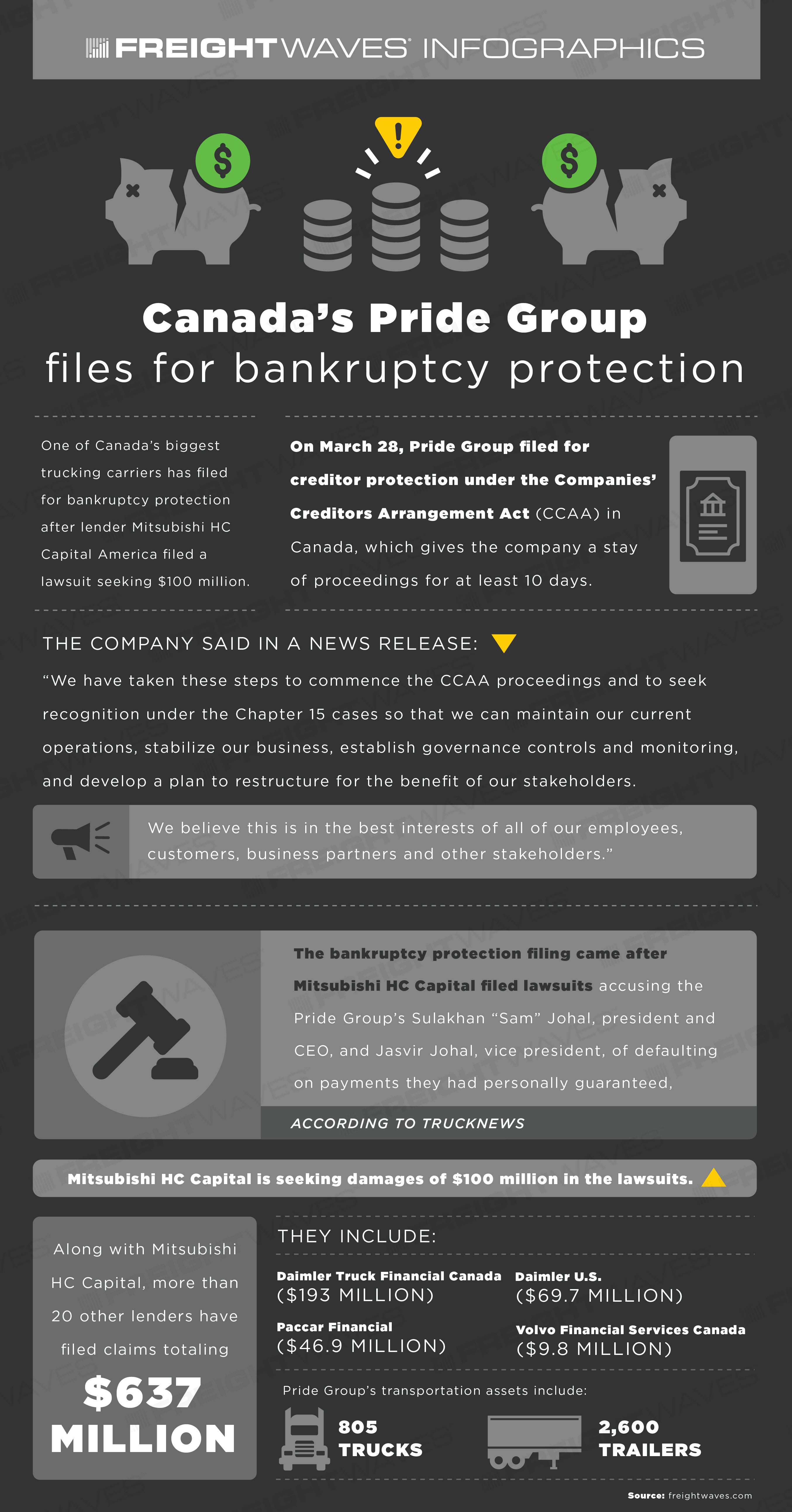
FreightWaves Infographics: Canada’s Pride Group files for bankruptcy protection, faces $100M lawsuit


To view more FreightWaves infographics, click here