Drop in Class 8 truck orders in March looks big but analysts aren’t worried

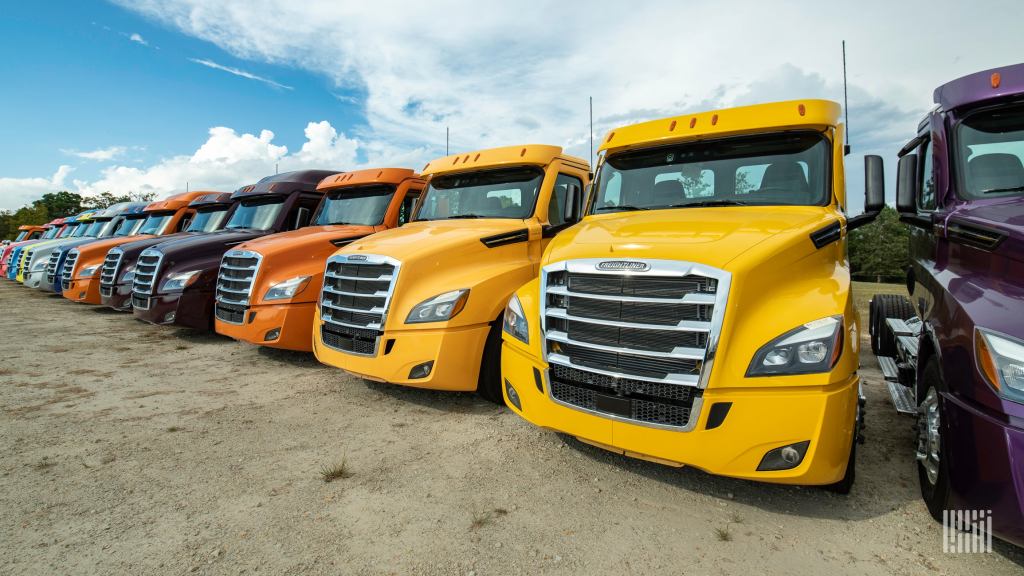
Orders for Class 8 trucks were down in March, according to the two key agencies that supply that data, but the decline is not being described as significant.

According to ACT Research, preliminary data shows that North America Class 8 net orders were 17,300 units in March, which was down 10,400 units from February and 8.7% from a year ago.

Meanwhile, FTR Transportation Intelligence reported a net order figure of 18,200 Class 8 vehicles last month. FTR said that is down 34% from its February figure and 4% from March 2023.

Although the numbers on the surface appear to signal a big downturn in order books, that’s not the way the analysts at FTR and ACT see it.

“March orders are consistent with the recent demand trend and are in line with seasonal expectations,” FTR said in its release of the month’s estimate. “After maintaining an average level of around 27,000 units for the last three months, orders appear to be slowing at a seasonally typical rate. Build slots continue to be filled at a healthy rate. With March orders comparable to the March 2023 level, the market is still performing at a solid level.”

At ACT, analyst and Vice President Steve Tam saw a “forced conservatism among a portion of the truck buying populace,” which he said “capped” the level of new units ordered in March.

The preliminary figures are subject to later revisions. ACT said one of the factors for the revisions is a seasonal adjustment, which it said is a “middling” 1.3% in March. That would reduce the March figure to 17,100 units. ACT said March is the first month since 2023 that the seasonally adjusted total is fewer than 20,000 units.

FTR Chairman Eric Starks, in a prepared statement, also suggested the decline does not signal the start of a broader downturn.

“Despite weakness in the freight markets that has persisted for more than a year, fleets continue to be willing to order new equipment,” he said, saying the March figure was “in line with seasonal trends.

“Demand is not declining rapidly, but neither is the market doing significantly better than replacement level demand. Our expectation for replacement output by the end of this year is unchanged.”

More articles by John Kingston

Truck lease purchase deals come under heavy fire at MATS and in court

Missouri court upholds nuclear verdict, blasts carrier’s safety practices

Further appeals to block AB5 from California trucking seen as a long shot

Selling profitably on Amazon becomes even harder

Amazon imposes inventory-placement fees and low-inventory fees

(Photo: Jim Allen/FreightWaves)

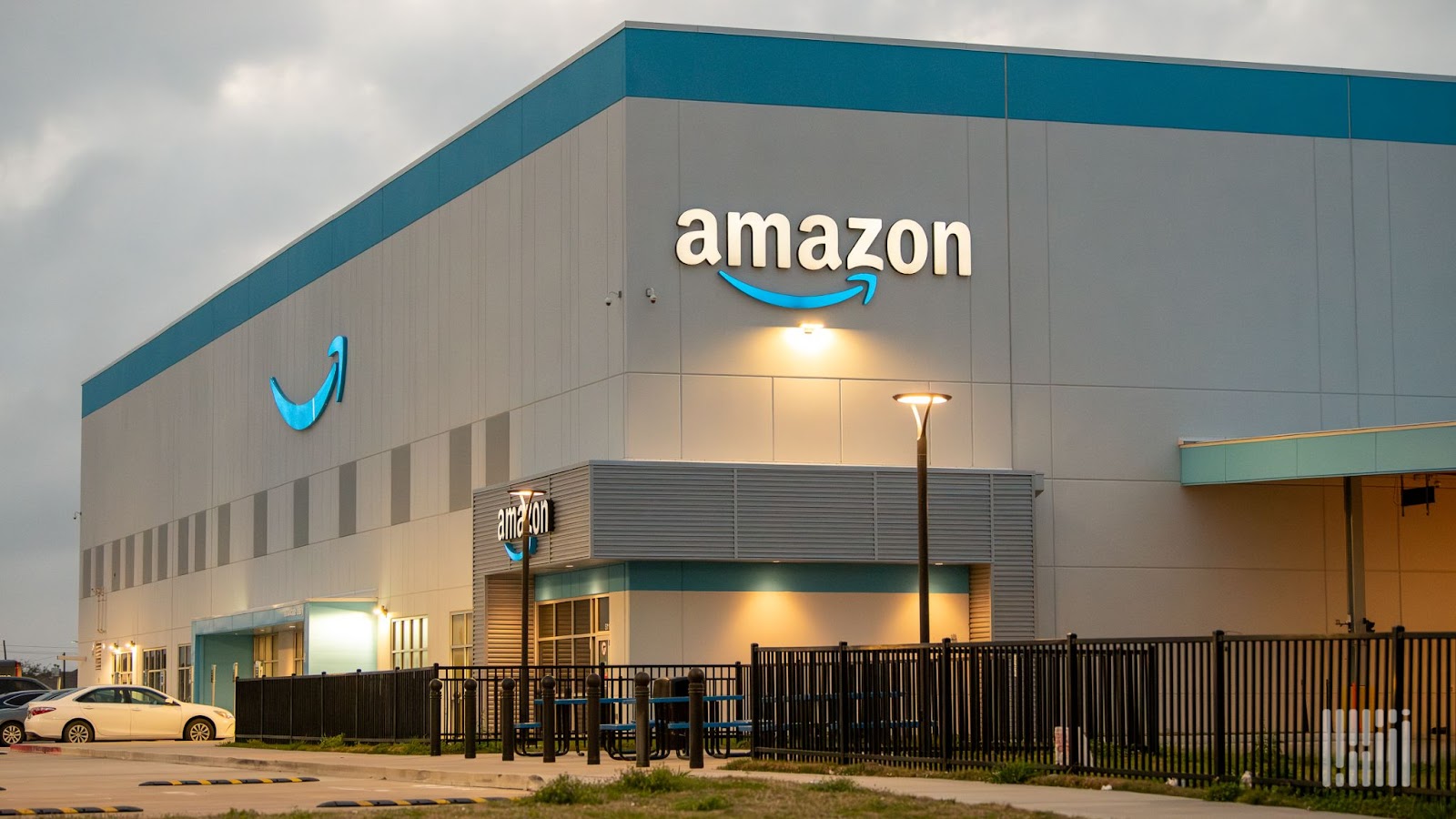
For anyone involved with selling through Amazon, I recommend going through the latest newsletter published by Cartograph, a company that helps brands sell profitably on Amazon. I interviewed Chris Moe, Cartograph’s CEO, on past The Stockout shows. Those discussions impressed upon me that brands must understand, and play by, Amazon’s numerous and frequently changing rules in order to sell profitably through the online giant. Now, Amazon is changing its policies for inventory placement within its fulfillment centers while also adding low-inventory fees. Both of these changes to fees seem to more heavily penalize smaller brands that are more likely to use smaller shipments and those that sell lower-value items, including CPG items.

Inventory-placement fees potentially punitive to LTL shipments:

What stood out to me in Cartograph’s writeup is the dramatic changes to potential fees associated with LTL shipments, which, in some cases, could rise from the low to mid-$100s to $2,000 or more per shipment. That could encourage some brands to consolidate LTL shipments into larger truckload shipments, but, according to Cartograph, that’s not necessarily better because Amazon will still rebalance inventory between warehouses at brands’ expense.

Low-inventory fees to impose explicit cost on de-prioritizing Amazon as an inventory channel:

New fees will be imposed for having less than 28 days of inventory, calculated weekly as average days of supply over 30- and 90-day periods. When both averages (30 and 90 days) fall below 28 days of inventory, there is a fee that ranges from 30 cents to $1 per item shipped (fees escalate at lower inventory levels). Since it’s calculated at the product level (which Amazon calls the Amazon Standard Identification Number), some varieties of a product can be out of stock without the brand incurring a fee. Since the fees are calculated weekly, Cartograph recommends moving products in and out of Amazon warehouses weekly. Another strategy is to reduce advertising and promotional spending when inventory levels decline to low levels.  

Use Shein’s supply chain at your own risk

(Image: FWTV)

On Monday’s The Stockout show, Grace Sharkey and I discussed the impact of the Francis Scott Key Bridge collapse, Shein’s opening of its supply chain to outside designers, Home Depot’s acquisition and the current freight market.

The focus of the show was on last week’s announcement that controversial fast fashion online retailer Shein plans to launch a supply chain as a service offering. That would enable outside brand designers and manufacturers to tap into Shein’s supply chain infrastructure and technology, which uses real-time data to inform small-batch production schedules. Leveraging Shein’s supply chain could enable brands to test new designs efficiently without the need for large capital investments. The risk of using the company’s supply chain as a service is that outside brands could become entangled in the same controversies, which include suspicions of the use of forced labor in China, the circumvention of import duties, intellectual property infringement and environmental concerns. 

See Monday’s episode here or see the full The Stockout playlist here.

International intermodal outshines domestic intermodal in Q1

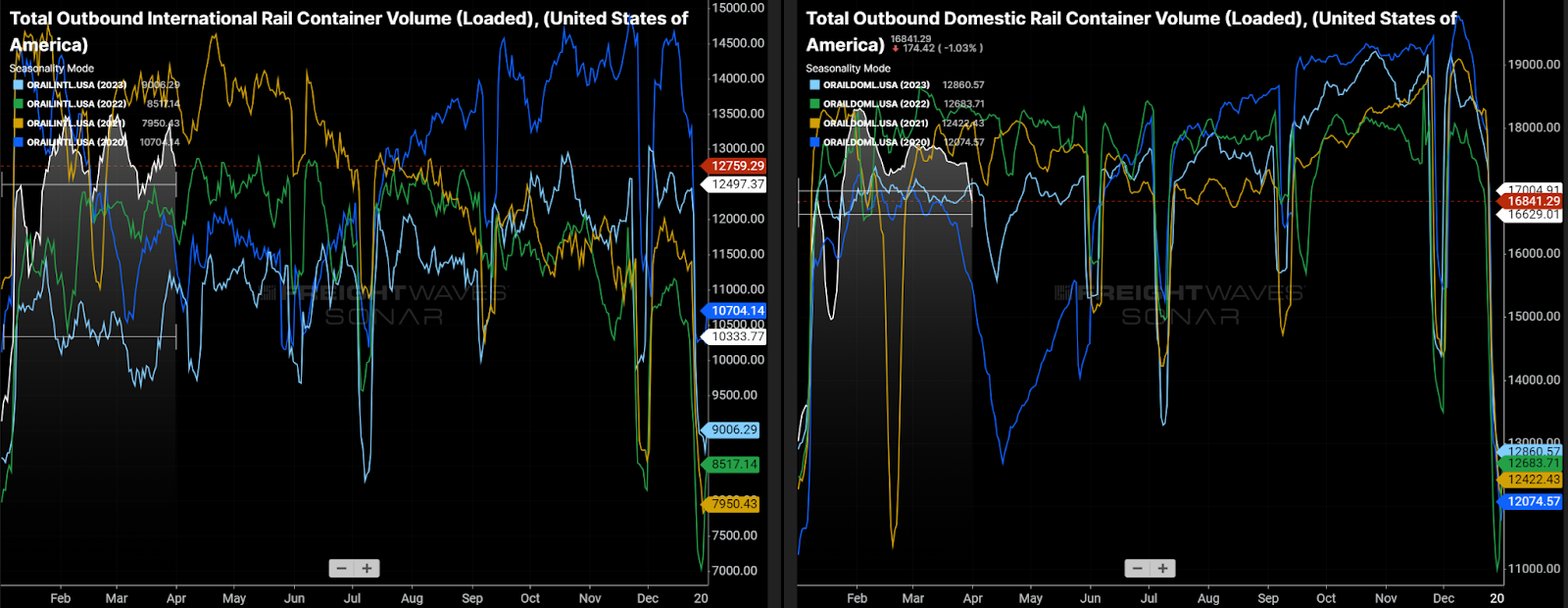
SONAR Tickers: ORAILINTL.USA Seasonality, ORAILDOML.USA Seasonality

Most public intermodal volume data sets conflate international and domestic intermodal volume, which should be treated as separate segments, as SONAR does. In Q1 2024, international intermodal was responsible for most of the intermodal volume growth. Specifically, in Q1, loaded international intermodal volume was up 20.9% year over year, while loaded containerized domestic intermodal volume was up 2.2%. Meanwhile, the more widely seen containerized intermodal volume data published by the Association of American Railroads was up 11.3% through March 23. That number includes both domestic and international volume as well as empty containers that are being repositioned (known as revenue-empties). SONAR data shows that revenue empties were up 28.8% year over year in the first quarter, primarily as a result of international containers being repositioned back to the port.

Containership lines are only willing to send international intermodal volume inland in large quantities when there are plenty of oceangoing containers available, as there appear to have been in the first quarter. In addition, it’s important for investment analysts to base their Q1 expectations for the domestic intermodal companies (e.g., J.B. Hunt, Hub Group and Schneider) off the domestic intermodal volume rather than a figure that combines segments. The breakdown is also important for domestic intermodal shippers, who should base their expectations for available capacity off the more modest year-to-date domestic intermodal volume growth.

To subscribe to The Stockout, FreightWaves’ CPG and retail newsletter, click here.

The world’s first road-to-rail autonomous solution? – WTT

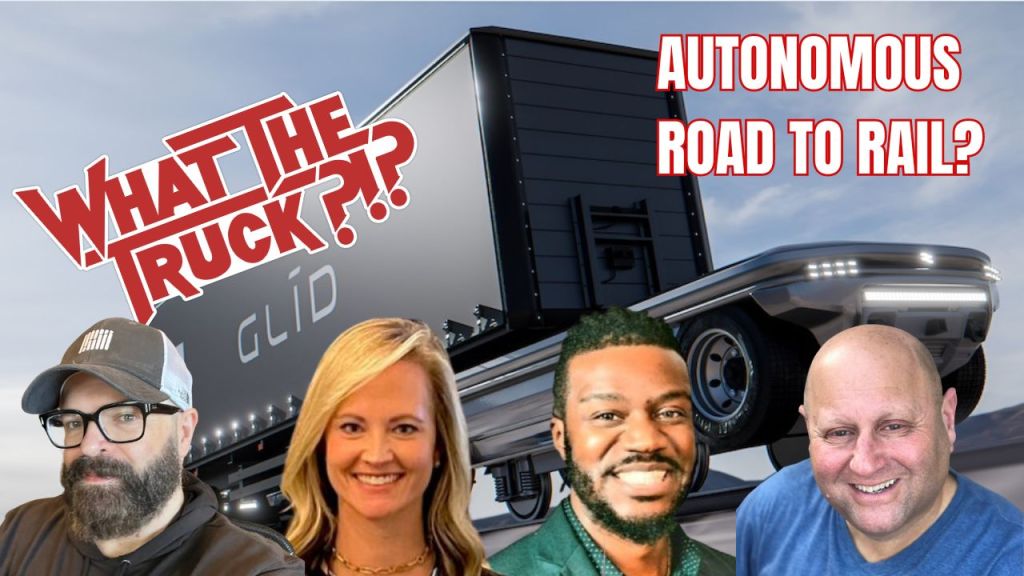
On Episode 701 of WHAT THE TRUCK?!?, Dooner is talking to Glid Technologies founder and CEO Kevin Damoa about the world’s first road-to-rail autonomous solution.

FreightWaves’ Alan Adler is fresh off a test ride in an Aurora autonomous truck. We’ll find out his impressions. We’ll also learn what goes down at GM’s fuel cell lab.

Reliance Partners’ Jessie Merritt shares tips on choosing an insurance policy that’s appropriate for your size, scale and growth plans.

Plus, spring storm topples trucks, truck lease purchase deals come under heavy fire, how runaway truck ramps work and more.

Watch on YouTube

Subscribe to the WTT newsletter

Apple Podcasts

Spotify

More FreightWaves Podcasts

Wisconsin, West Virginia split on capping damages in CMV accident lawsuits

Editor’s note: This story has been updated.

Wisconsin Gov. Tony Evers has vetoed a bill that would have put a $1 million cap on awards for non-economic damages, such as pain and suffering, in lawsuits stemming from commercial motor vehicle accidents.

West Virginia Gov. Jim Justice, meanwhile, has signed into law a bill capping non-economic damage awards in CMV-related accidents at $5 million.

The trucking industry has pushed to limit damages in accidents involving trucks, citing nuclear verdicts in the tens of millions of dollars that spike insurance rates or make it difficult to get motor carrier coverage at all.

In a statement on Friday, Evers called the $1 million cap arbitrary and said “the law should redress a party’s injury, not repress an injured party.” The bill also violates the U.S. and Wisconsin constitutions’ guarantees of due process, he said, and would conflict with existing state law, inviting “continuous litigation.”

Doug Morris, who works in government affairs for the Owner-Operator Independent Drivers Association, said Evers doesn’t grasp the impact of massive damage awards on the trucking industry and on individual truckers.

“The governor has failed to understand the abuse of the system by trial lawyers and harm caused to the industry, especially small-business truckers, by allowing unlimited verdicts,” Morris said in a statement to FreightWaves. “Truckers are essential workers, not banks.”

The Wisconsin State Senate passed the cap on nonmonetary damages with mostly Republican support. The State Assembly, which is also controlled by Republicans, passed it on a voice vote. Evers is a Democrat.

In testimony in January backing the legislation, Republican state Rep. Rick Gundrum cited an American Transportation Research Institute study which found that verdicts of greater than $1 million in truck crash lawsuits had risen on average from $2.3 million in 2010 to $22.3 million in 2018.

The Wisconsin Association for Justice, an attorney organization, blasted the proposed damages cap as “an attack on Wisconsin citizens’ ability to obtain justice after experiencing catastrophic injuries and death on Wisconsin roadways.”

In West Virginia, the American Trucking Associations on Tuesday heralded the Legislature’s overwhelming passage of a $5 million cap on non-economic damages related to CMV accidents and praised the governor for signing the bill into law. ATA President and CEO Chris Spear said the reform “ensures justice and fairness drive accident litigation outcomes, not profits.”

Traci Nelson, West Virginia Trucking Association president, also lauded the measure.

“With approximately 33,890 West Virginians employed in the trucking industry and 84 percent of our communities relying solely on trucks for goods transportation, this legislation is critical for our state’s economic well-being,” Nelson said.

The state Senate passed the bill 32-1. It passed in the House of Delegates by a vote of 81-15. In 2021, West Virginia lawmakers enacted a reform making a plaintiff’s nonuse of a seatbelt admissible as evidence, a measure that Indiana approved in March of this year.

Related articles

Georgia bill would restrict truck-crash lawsuits against insurers

Seatbelt use can now be used as evidence in accident lawsuits in Indiana

Burning of chemicals after Ohio derailment was unnecessary, NTSB head says

Daseke now part of TFI International as acquisition closes

Flatbed operator Daseke ended its history as an independent trucking company Monday when its acquisition by Canada’s TFI International closed for $1.1 billion.

The acquisition by TFI (NYSE: TFII) was announced Dec. 22. The share price for the acquisition was $8.30, after closing at $4.91 on Dec. 21.

Daseke reported revenue of $1.57 billion in 2023. In 2016, revenue was $651.8 million.

The disappearance of Daseke from the list of publicly traded carriers follows that of such companies as U.S. Xpress and USA Truck, as well as nontrucking companies whose public earnings provided a window into the strength or weakness of the business. Those include Travel Centers of America and Echo Global Logistics, which stopped trading as public companies when they were acquired by others.

The count on Daseke’s operations as reported in its final 10-K filing with the Securities and Exchange Commission is that its Flatbed Solutions segment had 2,339 tractors and 2,849 trailers. The Specialized Solutions segment, which the company described as focused on “delivering transportation and logistics solutions that require the use of specialized trailering transportation equipment,” had 2,430 tractors and 6,820 trailers. Although Daseke was known primarily for its flatbed operations, the Flatbed Solutions segment provided only 41% of the company’s revenue, with Specialized Solutions supplying the balance.

Last year, company and owner-operator drivers drove 388.2 million miles, according to the 10-K.

For TFI, the acquisition of Daseke is its second in less than a month. It announced the acquisition of less-than-truckload carrier Hercules Forwarding March 11.

TFI’s acquisitions in recent years have skewed toward LTL, enough that most equity analysts who follow TFI now see it as an LTL rather than truckload carrier. And at the time the Daseke deal was announced, CEO Alain Bédard said a split between the truckload operations of TFI and the LTL and other lesser-mile operations was under consideration.

“This acquisition also advances our strategic consideration of creating a unique opportunity for shareholders to separately invest in a specialized truckload business and in an LTL [package and courier] and Logistics business,” Bédard said. “Our immediate focus will be on improving Daseke’s financial results, with the strategic consideration to follow and be ongoing.”

In late January, Deutsche Bank initiated coverage on TFI. “We view the LTL industry as one of the most attractive investment areas across all industrials, reflecting the consolidated nature of the market and resulting pricing power,” Deutsche Bank said in its rationale for initiating coverage. “We think a rising tide will lift all boats, and with TFII trading at a notable valuation discount to the group, we have confidence in double digit gains.”

In announcing the closing of the deal, TFI also said it had closed on a $500 million term loan that it described as “oversubscribed.” The three tranches in the loan are $100 million maturing in March 2025, $100 million maturing in March 2026 and $300 million maturing in March 2027. 

More articles by John Kingston

Wisconsin court affirms Amazon Flex drivers were not independent contractors

Texas trucking company employee gets over 5 years for payroll fraud

RXO gets negative outlook from Moody’s but keeps investment-grade rating

Trans-Pacific container rates plunge again

Eastbound trans-Pacific ocean container spot rates plunged again this week as container ship capacity on the trade lane recovers and volumes reset at a lower level than they were pre-Lunar New Year.

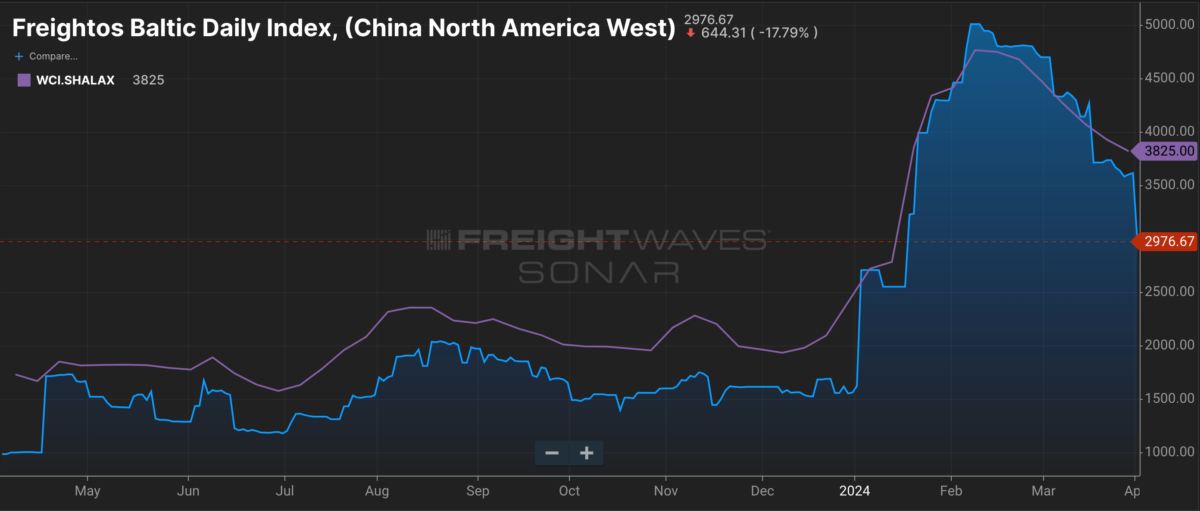
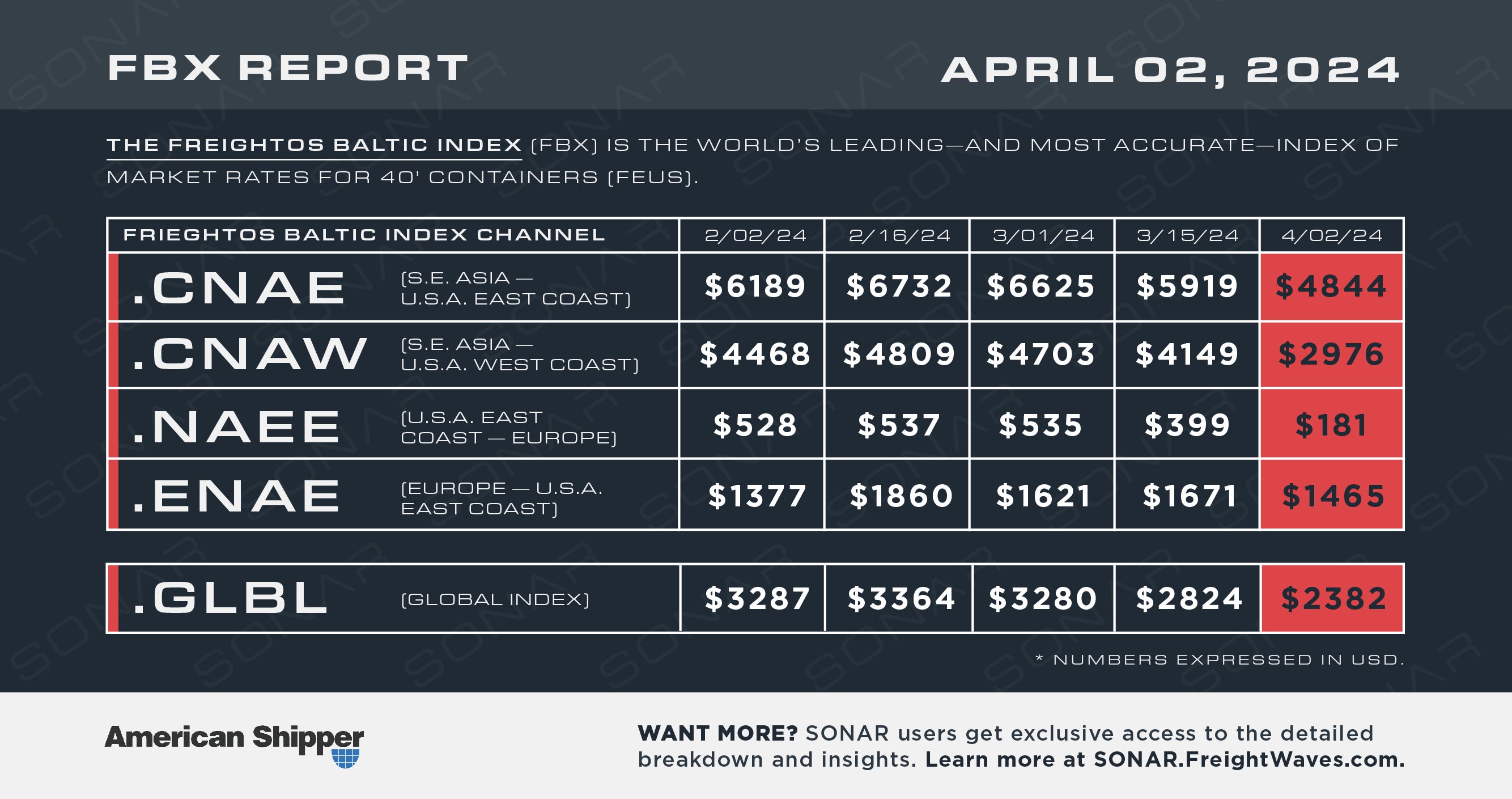
The Freightos Baltic Daily Index spot rate for China to the West Coast of North America fell from $3,620 per forty-foot equivalent unit to $2,976 per FEU this week, a drop of 17.8%. The rate has come down more than 36% since March 1 as steamship line networks have adjusted and capacity has loosened during the Red Sea crisis.

A similar benchmark, the Drewry’s World Container Index, Shanghai to Los Angeles, stands at $3,825 per FEU after declining from its high of $4,771 on Feb. 8.

(Two key eastbound trans-Pacific container spot rate benchmarks have recently declined. Chart: SONAR)

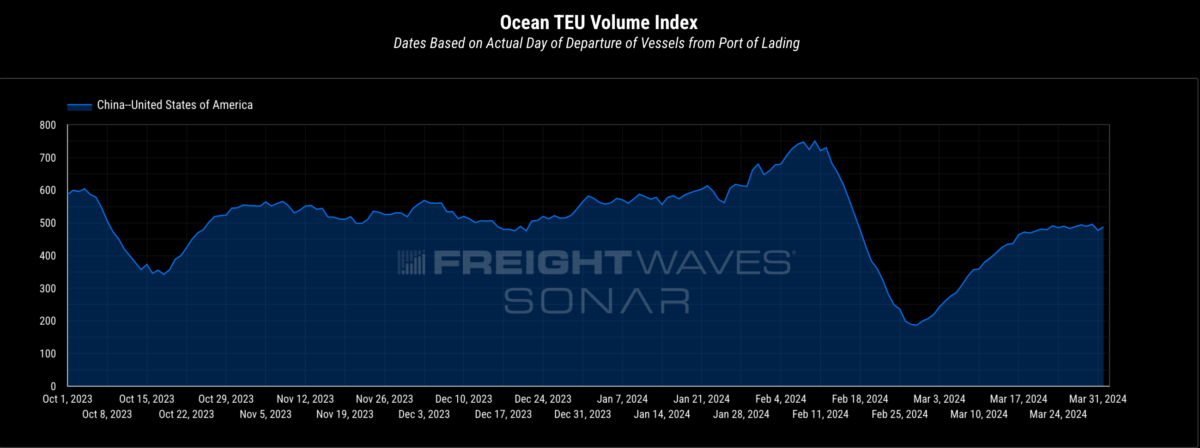
According to the Caixin manufacturing purchasing managers’ index, China’s industrial activity is growing again: The diffusion index hit 51.1 on Monday, above 50, the level indicating expansion, for the fifth month in a row. But that growth — or to be precise, optimism regarding growth — hasn’t yet shown up in China-U.S. trade. According to SONAR’s Container Atlas, ocean container bookings outbound from China to all ports globally have recovered nicely, reaching the equivalent of pre-Lunar New Year levels with a notable acceleration in bookings in the past week.

But it appears that exports to the United States — or directly to the United States — are accounting for a smaller share of that outbound container flow. 

(All outbound bookings from China have mounted a robust recovery following the Lunar New Year, but volumes from China to the United States haven’t kept pace. Chart: SONAR Container Atlas)

Last week, FreightWaves reported on Maersk’s open admission and indeed advertisement of its services helping importers avoid tariffs by moving goods through Mexican ports and then into the U.S. Gradually shifting container flows that take advantage of those services and improving Mexican logistics infrastructure may be responsible for lagging volumes from China to the U.S.

Steamship lines may be taking steps to put a floor under eastbound trans-Pacific rates, although these measures haven’t been felt much, according to other SONAR Container Atlas data points. In the past few weeks, total twenty-foot equivalent unit capacity on China to U.S. routes has peaked and started coming down, from 572,000 TEUs of capacity departing the week of March 22 to just 427,000 TEUs of capacity departing Chinese ports during the week of April 1. Meanwhile, rejection rates bounced upward from 11.9% to 14.2% over approximately the same time period, while lead times have continued to normalize following the Lunar New Year, contracting from a peak of more than 17 days on Feb. 22 to eight days on Tuesday. Less capacity and higher rejections indicate a slight tightening in the market. Shorter lead times can be caused by rebookings after rejections and a greater sense of urgency on the part of shippers to find capacity, although a lead time of eight days is still on the shorter end of the ‘normal’ lead time range.

The backhaul or westbound lane on the trans-Pacific is also very low; at $200 per FEU, according to the Freightos Baltic Daily Index, shippers moving goods from the West Coast back to China are enjoying the lowest rates they’ve seen in years. Drewry’s World Container Index, meanwhile, shows a rate of $691 per FEU from Los Angeles to Shanghai, which has been cut in half since the summer of 2022 but remains above pre-pandemic levels.

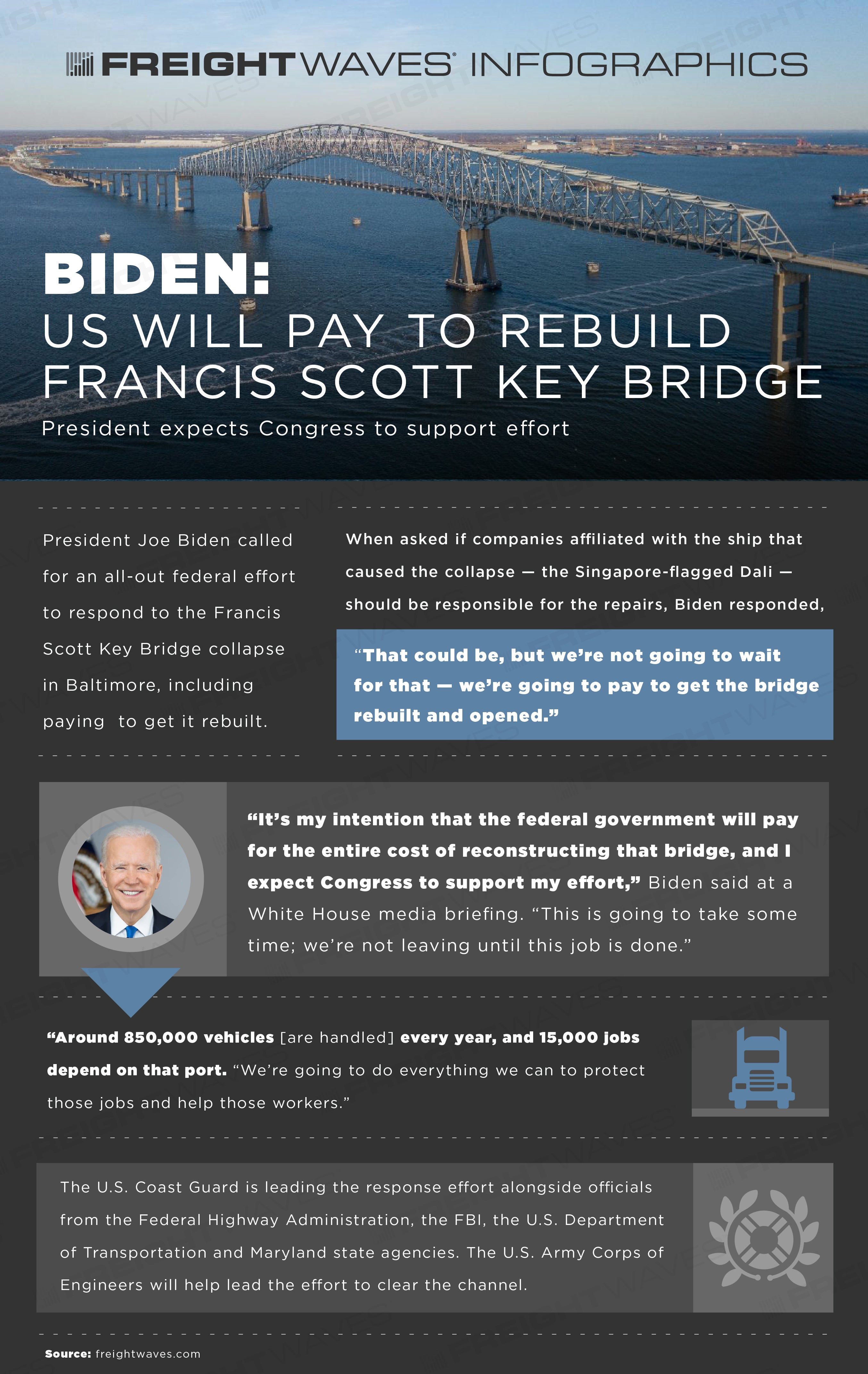
FreightWaves Infographics: Biden: US will pay to rebuild Francis Scott Key Bridge


To view more FreightWaves infographics, click here

Uber Freight taps industry veterans for commercial, final-mile growth

Managed transportation provider Uber Freight announced Wednesday it has hired two key executives to leverage their expertise in growing the company’s commercial operations and final-mile network.

Dan Annunziata, Uber Freight’s head of Commerical (Photo: Uber Freight)

The leadership of the company’s commercial organization will now be entrusted to Dan Annunziata. With a track record spanning 15 years at legacy brokerage C.H. Robinson (NASDAQ:CHRW), he brings extensive experience in various sales roles. He has served as vice president of the North American Surface Transportation division at C.H. Robinson for the past 3 1/2 years.

“My Dad put 45 years into [logistics], my grandfather was in the industry for 40 years, and I have an opportunity to leave a mark on this space as well,” Annunziata told FreightWaves. “I like being on the front lines of innovation and being considered a disrupter, and shippers are becoming very interested in what Uber Freight has to offer and its talent as well. … I want to be a part of that.”

Hany Elkordy, an expert in final-mile and parcel logistics, will bring his expertise to the Uber Freight team as head of Logistics and Last Mile Solutions. He has been instrumental in shaping last-mile solutions during his tenure at various industry giants.

Hany Elkordy, Uber Freight’s head of Logistics and Last Mile Solutions. (Photo: Uber Freight)

Elkordy played a pivotal role at Amazon for three years, spearheading initiatives in this segment. His contributions extended further during his two-year stints as vice president of logistics and last-mile delivery at Walmart’s eCommerce segment (NYSE:WMT), as well as vice president of logistics for the pet supply site Chewy (NYSE:CHWY).

“From a shipper’s perspective, Uber Freight is in a unique position. They built out this middle-mile network over the past few years, and now they have this great coverage map. Yet, it doesn’t go the whole distance,” Elkordy explained. “Uber Freight unlocks this interesting end-to-end opportunity for shippers. … We have this modality that is sitting out on an island that could be interesting from a product development perspective.”

During his interview with FreightWaves, Annunziata elaborated on the growing demand from shippers for innovative partners to navigate their technological-logistics transition. Joining the Uber Freight team presents an opportunity for him to fulfill this demand by providing shippers with a long-term partner who approaches the industry through a technological lens.

“These shippers probably have five years worth of work in front of them to fortify, make visible and digitize their supply chains. I think about that opportunity that is in front of us and helping shippers answer the question: Who do I align with in the future knowing that supply chain is a critical component of our company’s business?”

For Elkordy, he hopes to expand on Annunziata’s plans and bring that same enthusiasm to his work in the last-mile offering. 

“Small and medium-sized businesses are under pressure to speed up their networks to try to get to customers quicker, closer to the two-day delivery that is now table stakes,” he told FreightWaves. “I can help with how we actually stitch our network together to take full advantage of the scale and the coverage of Uber Freight. For small shippers, it’s about speed and coverage, and they don’t have a lot of alternatives right now.”

Elkordy explained that Uber Freight has built the infrastructure to connect all the geographies and the carrier networks that cover them. Now his focus is adding the final-mile connection for shippers that want the same Uber Freight experience across all modes.

From Annunziata’s perspective, having played a pivotal role at such a prominent logistics player in North America, he is excited to share with shippers his increasing knowledge about Uber Freight.

“Uber Freight, for the most part, was just not on the list of competitors for us. Now I am learning more about this company, and my mind is blown by the solutions Uber Freight has to offer that the marketplace still does not know about,” he said.

Uber Freight also made public a few more members of the team that it has brought on in Q1, including its head of intermodal, D’Andrae Larry, a former executive at Norfolk Southern Corp. (NYSE:NSC); Vice President of Mid-Market Sales Alec Getschow, former PalletTrader and C.H. Robinson sales lead; and Vice President of Emerging Products and Business Development Brooks McMahon, a former Convoy executive.


Sheer Logistics acquires CargoBarn to expand brokerage specialties

Blue Yonder to acquire One Network for $839M

Venture 53 invests in Heale Labs’ tokenization technology

Truck lease purchase deals come under heavy fire at MATS and in court

Editor’s note: The Federal Motor Carrier Safety Administration will not release a recording of the panel hearing but is eventually expected to release notes on the Truck Leasing Task Force’s website.

The Truck Leasing Task Force (TLTF), created by the Department of Transportation to study leases that independent owner-operators work under with trucking companies, has had four public meetings.

But it was at the most recent one, at the Mid-America Trucking Show (MATS) in Louisville, Kentucky, that members of the task force went directly into the world of truck drivers. And based on testimony given from the floor of the hearing at MATS, lease purchase plans rarely favor drivers.

The testimony also revealed that a significant legal case is underway in the U.S. District Court for the Northern District of Illinois involving six plaintiffs suing Super Ego Holding and several affiliated companies with which the plaintiffs had “leased on” with, to use the industry term.

The suit dates back to August 2022. Court records make clear that efforts to settle the case via arbitration failed and the parties are in the discovery phase.

James Stark, the lead attorney on the case, spoke at the TLTF’s Louisville session. He is with the Stark Law Firm in Wheaton, Illinois, according to court filings.

Stark said about 1,400 drivers have “opted into” the case, “and we expect it to be between 10,000 and 20,000.”

There is no indication in court records that the lawsuit has been certified as a class action, though they do contain the document being sent to drivers to expand the list of plaintiffs. Stark did not respond to emails and phone messages to his firm.

“The driver is in the worst position in this whole scenario,” he told the task force. If there are issues with a lease contract, “the driver can go to court — that’s if they find a lawyer and if they can afford one, which can’t always happen.”

Load board provider Truckstop.com, which provides other services as well, has a webpage on which it clarifies differences among leases.

A lease operator “leases equipment from the carrier. At the end of the lease, you need to give the truck back.” The lease is “effectively just a rental contract. If you ultimately want to own your equipment, this isn’t the best choice,” Truckstop writes.

A leased owner-operator, who operates under what was called a lease purchase program during the session, makes a down payment and has a payment plan that could leave the driver owning the truck at the end of the lease period. This model came in for much of the criticism.

A third type of lease involves an independent owner-operator bringing his or her own truck to a lease arrangement with a carrier.

OOIDA not finding many success stories

Tom Weakley is the director of the OOIDA Foundation, created by the Owner-Operator Independent Drivers Association. He said his group had done a survey of OOIDA members who had been in lease purchase programs and calculated how many of them came out of it owning a truck.

“It’s a small percentage,” Weakley told the task force. He added that most of OOIDA’s members are likely to have never been in a lease purchase program.

But even getting data on the level of success can be difficult because owner-operators who crashed out of their lease purchase programs probably can’t be contacted. “They’ve gone out of business, so you don’t get really good data on that,” Weakley said.

Pathway’s Harris to the defense

The role of defender in the March 21 session fell to Matt Harris, the president of Pathway Leasing, which offers lease purchase plans to drivers.

Harris said he is “very proud” of the company’s programs and “we’re fortunate to have a lot of people who have completed leases.” But he added that there are “dangers and pitfalls that people fall into. So I thank the task force for trying to address those issues and come up with real solutions.”

“I certainly hope that in seeking to do that, the regulations don’t make it so difficult on companies that are doing well,” Harris added. He noted that anybody with a CDL who wants to become a company driver can do so fairly easily. For drivers who seek to become independent owner-operators, there are “different paths you can take. And some of those will work well for different individuals.”

One panelist told Harris that his successful lease purchase deals would need to be compared to the ones that are failing. “That kind of trust you have with your driver costs something,” the panelist said. “I guess I’m hopeful that people in your position can be helpful in identifying specifically what you see are the contrasts to your business that we should be aware of there.”

Harris cited no specific differences. He did say the weak trucking market in place going back to 2022 has made success in a lease  purchase plan even harder. Harris added that “due diligence” is necessary to “make sure that the money they’re spending is giving that person the best opportunity to be successful. Make sure that people have a fair shot at being successful.”

Lots of tales of woe

But that sort of optimism was the minority view that panelists at MATS heard.

One speaker, Shelly Vandenberg, reviewed a lease purchase plan she and her husband signed that turned into a fiasco, with high maintenance costs and an attempt to break away from the lease with the company. “That’s when the real trouble started,” Vandenberg said, citing being locked out of motor carrier authority and insurance accounts. “We had no control over any aspect of our identities,” she said. 

But even after reviewing a litany of horror stories, Vandenberg did not want to see lease purchase plans regulated or legislated out of existence. “It’s important to keep these options open for drivers,” she said. “We just need to somehow crack down on these predatory leasing companies in our industry that know all too well how to work around FMCSA guidelines.”

The idea that some lenders are taking advantage of unsophisticated drivers by painting a picture of the lucrative life of a successful independent owner-operator came up several times. As one panelist said of some signing on to bad lease purchase deals, “a lot of them are not sophisticated enough to understand the bad actors, and it’s running people out of our industry.”

Wheatley said when he was a truck driver, he never signed up for a lease purchase program. But that was not for lack of opportunity. Of companies that try to recruit their drivers into lease purchase deals, Wheatley said, “Let me tell you, they can sell it.”

The sales pitch often involves a company official saying he or she got into truck ownership through a lease purchase deal and telling the potential lessee, “You have any problems, you just come in and talk to me because I too came up this way. I support you 100%.”

As Wheatley said, “That’s pretty hard not to bite into.”

The criticisms were harsh. One speaker, Clifford Lawrence Peterson, gave a broad list of accusations about how companies treat lessees. “They skim off the top and they don’t tell you exactly what percentage you’re supposed to be getting and they steal from you that way. They overcharge you for maintenance. I paid $900 for an oil change. It’s ridiculous.”

Besides Harris, the leasing companies had no obvious defenders in the room. Panelists who came from the industry were mostly sidelined, given that the event was designed to be a time when the panel went into the field at a gathering of thousands of truck drivers and heard their stories.

But task force Chair Steve Rush, founder of Carbon Express, offered a Horatio Alger defense of lease purchases. He called them “a great opportunity for somebody like myself, a high school dropout who didn’t know anything about business but managed to survive. It took me 58 years to get there.”

Rush responded to several calls to, as one commenter said, not “throw the baby out with the bathwater.” “We don’t want anybody to misunderstand what we’re trying to do here,” Rush said. “We’re not trying to hurt the owner-operators, but eliminate the predators that are taking advantage of people.”

Status of the lawsuit

The lawsuit cited by Stark has several subsections in its amended complaint from November 2022, several months after the initial complaint, in which allegations are made against the defendant companies: Defendants “fraudulently altered load confirmation documents to pay plaintiffs less than the rates specified in their work contracts; plaintiffs were employees for the purposes of the Fair Labor Standard Act and the Illinois Wage Payment and Collection Act; the companies operated as “alter egos” with drivers being assigned to haul loads for companies other than the lessor.”

Further briefings in the case are expected to be filed this month.

More articles by John Kingston

Court decision serves as primer on pitfalls, possibilities of truck leasing

Independent contractor definition battles may further complicate lawsuits over lease purchases

Wisconsin court affirms Amazon Flex drivers were not independent contractors

FBX Report: April 02, 2024


To learn more about FreightWaves SONAR, click here.