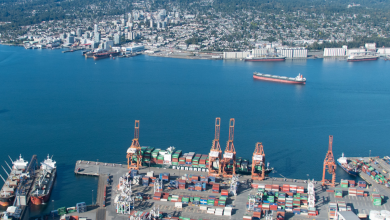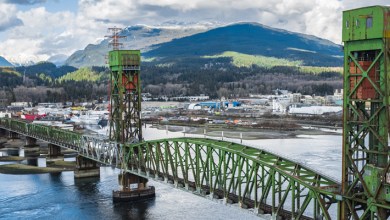
CN continues work to expand capacity and fluidity in Vancouver
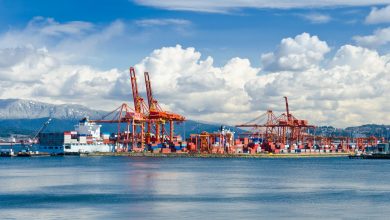
Coordinated effort is vital to optimizing use of the Port of Vancouver, Canada’s busiest port complex, says Canadian National CEO Tracy Robinson.
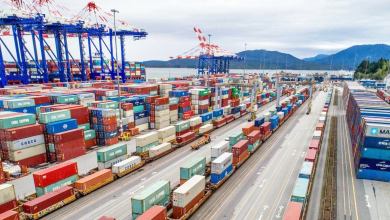
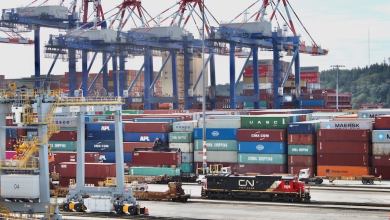
Canada’s largest railroads see mixed progress at the country’s busiest container gateway.
Port fees on Chinese ships are aimed at boosting U.S. shipbuilding but could have follow-on effects for intermodal traffic, too.
The year’s five biggest U.S.-Canada cross-border supply chain stories include Pride Group’s bankruptcy, as well as railway and port strikes.
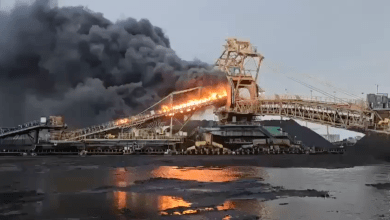
A fire at a Port of Vancouver marine coal terminal caused damage but no injuries over the weekend.
There are some delays as Canada’s top import gateways work off backlogs of containers from labor-related shutdowns.
The Canada Industrial Relations Board ordered port operations to resume in British Columbia and Montreal after lockouts of union dockworkers halted container traffic.
Canada Labor Secretary Steven MacKinnon asked the Canada Industrial Relations Board to order operations to resume at the ports of Montreal, Vancouver and Prince Rupert and send employers and longshore unions back to the bargaining table.
Western Canada port employers and their longshore union met separately with a federal mediator Saturday, but the talks ended quickly with no new bargaining scheduled.
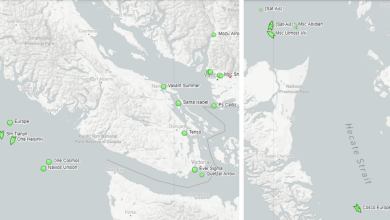
Ships are waiting at anchor after port employers at Vancouver and Prince Rupert on Monday locked out union forepersons after contract talks broke down.
The British Columbia Maritime Employers Association representing ocean carriers and terminal operators plan to lock out union forepersons after the International
Longshore and Warehouse Union rejected a final contract offer.
Canada’s busiest import gateway is managing port fluidity as railroads issue lockout notices, and Teamsters are warning of a planned strike as the latest contract talks fail.
Rail volumes to and from the Canadian ports of Vancouver and Prince Rupert are returning to normal after the 13-day strike in July, although capacity to catch up on the backlog appears limited for now, according to RailState’s analysis of its data.
U.S. rail imports from Vancouver and Prince Rupert are imperiled again. ILWU Canada has rejected the proposed dockworkers contract.
The extended strike in western Canada was beginning to affect U.S. supply chains. Its resolution limits the fallout.
Although international intermodal traffic has come to a halt at the Canadian West Coast ports since the start of the work stoppage on July 1, carload volumes for commodities such as coal and grain have grown, according to supply chain data visibility firm RailState.
U.S. imports via Canadian ports face rising fallout as the war of words escalates between dockworkers and employers.
As the labor strike continues at the ports of Vancouver and Prince Rupert, Class I railroads are taking steps to ensure that their networks face minimal disruptions.
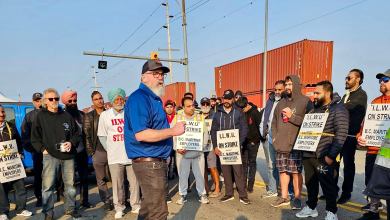
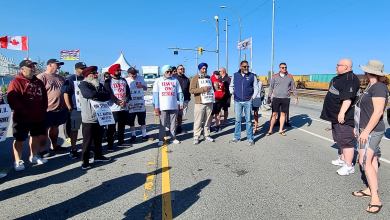
More than 7,400 dockworkers in Canada remain on strike Wednesday after labor contract negotiations with their employer have stalled.
More than 7,400 dockworkers have gone on strike in Canada, potentially causing disruptions at ports in Vancouver and Prince Rupert.