The ‘ingenious strategy’ behind most truckers’ least favorite week of the year: International Roadcheck

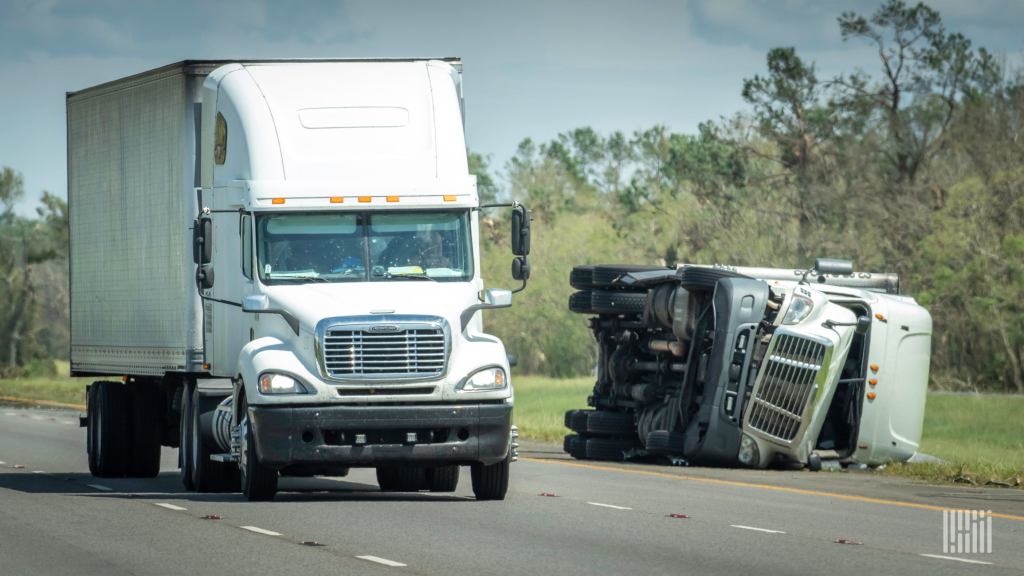
truck fallen over

International Roadcheck Week is hardly the sexiest topic in trucking, but it is a darn-tootin’ important one. Inspectors in the U.S. and Canada halt tens of thousands of trucks for vehicle inspections for a few days every summer or early fall. They remove thousands of trucks and drivers from the road; in 2021, 16.5% of inspected vehicles were put out of service along with 5.3% of drivers.

It’s uncommon for truck drivers to actually get their vehicles inspected at random during most of the year. To avoid International Roadcheck Week, many truckers simply don’t drive during that period of time — which, presumably, means more unsafe vehicles and drivers on the road outside of the inspection blitz. It’s a question that ate at Andrew Balthrop, a research associate at the University of Arkansas Sam M. Walton College of Business. 

Around 5% fewer one-person trucking companies are active during International Roadcheck Week. But Balthrop and his fellow researcher, Alex Scott of the University of Tennessee, found a major upside to the inspection blitz — even with all the folks who avoid it. According to their working paper published in March 2021, vehicles are safer a month before and after the inspection period. There’s a 1.8% reduction of vehicle violations, according to Balthrop and Scott’s analysis. Surprise inspection blitzes don’t result in the same uptick of compliance. 

I caught up with Balthrop about his research last week at FreightWaves’ Future of Supply Chain conference, and we chatted again on the phone this week about his findings on International Roadcheck Week.

Enjoy a bonus MODES and a lightly edited transcription of our phone interview: 

FREIGHTWAVES: For our readers who are not aware of what Roadcheck Week actually is, can you explain a little bit about what it and why it is important to drivers and companies?

BALTHROP: “The International Roadcheck is part of an alliance between the inspectors in Canada and the ones in Mexico and the U.S. to have a unified framework for making sure trucks are safe to operate. That should make it easier to go across borders when you have this kind of unified structure.

“In the U.S., one of these CVSA inspection blitzes is the International Roadcheck that happens for three days in the summer. Usually it’s a Tuesday, Wednesday and Thursday. And usually it’s the first week in June.

“And in it, they focus on Level One inspections, the North American Standard Inspection where they inspect the driver records, the hours of service, the licensure and I believe medical records as well. Then they inspect the truck. It’s an in-depth inspection where the inspector will actually crawl under the truck to look at various things. And these inspections, from the data that I’ve seen, take about a half an hour on average.

“During the Roadcheck Week, they’ll do about 60,000 inspections, so 20,000 a day. They’re going to pull over a lot of trucks, and this can cause a little bit of congestion at the weigh stations and the roadside inspections localities as the inspectors are doing these inspections.”

Roadcheck Week doesn’t catch all truck drivers, but it has a long-lasting benefit to safety

FREIGHTWAVES: So, can most drivers kind of expect to be pulled over? How likely is that?

BALTHROP: “There’s 1 million or 3 million trucks on the road, somewhere around there on any given day. With 20,000 inspections, most drivers still will not get inspected, but there’s going to be a higher proportion of drivers inspected. 

“You’re more likely to get inspected on these days. If you don’t have a recent inspection on your record, or if you have a bad recent inspection on your record, you’re more likely to be pulled over on these days.”

FREIGHTWAVES: Your research focused on that it’s just unusual that this inspection is announced, that it’s planned. We were talking before about how normally, if you’re trying to assure quality or compliance, you would not announce an inspection in advance. It would be more of a surprise-type situation. 

Can you walk us through why that’s so unusual, or what’s the rationale that you see behind announcing it in advance?

BALTHROP: “It is unusual, and on the surface, it doesn’t make much sense, but it turns out to be kind of an ingenious strategy. So I’ll walk through it here. 

“Over the course of a year, there’ll be 2 million inspections of 3 or 4 million trucks out there. The average rate of inspections is pretty low. It’s not uncommon for truckers to go years without having an inspection. With this low inspection intensity, the FMCSA has sort of a problem of, how does it get anybody to abide by the regulations?

“I’m a jaded economist, and I don’t worry or consider too much ethics and morality and all that kind of stuff. It comes down to incentives for drivers to follow these inspections. The incentives do guide behavior. So, how could the FMCSA incentivize drivers to follow these regulations more closely and adhere to the standards?

“They do this by announcing the blitz. This does two things. On one side, it allows everybody to prepare in advance. There’s a bunch of anecdotal evidence out there that people do prepare for these blitzes in advance. They will have their trucks inspected beforehand for any problems. They’ll time maintenance and upkeep in advance to make sure that their vehicles are in order. “They’ll be a little bit more cognizant of the driver-side regulations. One thing we notice in our study is that hours-of-service violations really drop during these extensions, because people see them coming. They don’t fudge the books in any way.”

Owner-operators can evade Roadcheck Week. Big carriers, not so much.

BALTHROP: “The issue with the announcement, on the flip side, is that it allows people to just dodge the inspection entirely. For a long time, people have talked about how owner-operators and smaller carriers time their vacations for this particular time. They could do this for a couple reasons. To avoid the hassle is a nice way to put it, but it also allows you to be noncompliant to avoid the high-intensity inspections.

“You have this balance here that on one side you get the behavior you want with people complying with regulations. That’s the behavior the FMCSA wants. But on the flip side, you get a bunch of people that are kind of outright dodging inspections.

“When you compare these two things on balance, the policy is actually pretty effective because you get a lot of people focused on maintaining their trucks and obeying the rules during that particular week. Especially with the vehicle maintenance stuff, that lasts a long time. 

“In our research, we saw that vehicle violations, a month before and up to a month afterwards, is when you still notice your vehicle violations. That trucks are kind of better maintained around these blitzes.

“The ingenious aspect of it is that the FMCSA, by concentrating their inspection resources all at one time and announcing it, they’re making it clear that they’re serious about enforcing these regulations and everybody prepares for it. For the number of inspections that are happening, you get fewer tickets than you would have otherwise expected.

“The FMCSA, they’re putting people through a little bit of a hassle, but they’re not having to write a bunch of tickets to get people to comply. They’re not really punishing a whole bunch of people because, by making this apparent that this is going to happen, people comply and the FMCSA gets what they want essentially without having to come down on carriers too hard.”

A convenient time for a vacation, indeed

FREIGHTWAVES: OK, interesting. And how does this pattern of shutting down, how does that compare for an owner-operator versus a driver for a big fleet?

BALTHROP: “If you’re a motor carrier with thousands of power units, you can’t just pack up and not do business on a particular day. They just don’t have that option. So they get inspected at a higher intensity, and you see the larger carriers kind of more focused on making sure that they’re prepared for these inspections. With so many inspections, the larger carriers are going to be inspected at higher rates. You can really damage your reputation if your equipment isn’t in order on this particular day. 

“Versus the smaller carriers, especially if you’re talking about a single-vehicle fleet, an owner-operator type, it is not that difficult to just not work for those three days. And so you see a lot about that. 

“In terms of what the roadway composition looks like, if we look at inspection data and relative to a typical day with the usual inspections, on these Roadcheck days, you have about 5% fewer owner-operators on the road than you otherwise would expect.”

FREIGHTWAVES: Wow. And when you say owner-operators, you also mean just like fleets with just —

BALTHROP: “One-vehicle fleets.”

FREIGHTWAVES: OK, that’s interesting.

BALTHROP: “You know, you see a little bit of effect with the smaller fleets, below six vehicles, but it basically disappears by the time you get to a hundred vehicles.

“This effect is being driven by smaller carriers staying off the road in terms of avoidance. You see this goes also how you would expect; it’s also older vehicles that stay off the road. This is correlated with carrier size. The larger carriers use newer vehicles and owner-operators tend to use some of the older vehicles. But it’s particularly the older vehicles that are off the road.

“This makes intuitive sense. Older vehicles are more costly to keep compliant. Maintenance is more costly, and they’ve been around longer so there’s time for more stuff to have broken essentially.

How a truck driver gets stopped for inspection

FREIGHTWAVES: Can you explain a little bit more, the idea of having this inspection history and why it would benefit a larger or small carrier?

BALTHROP: “Getting flagged for inspection is sort of random, but not totally. If somebody notices something obviously wrong with your truck, that’s ground for a more in-depth inspection. Or if you get pulled over for some other reason, this can be grounds for inspection of some type. 

“But there’s also the inspection selection service. The computer program that is random, that it randomly flags people in for inspection, but it’s based on your inspection history.

“So if your firm hasn’t been inspected recently, or if your carrier doesn’t have a very dense inspection history, you’ll be more likely to trigger that system to pull you in and have you inspected. If you have a dense inspection history, you’re less likely to get inspected.”

FREIGHTWAVES: So how do you get pulled over for inspection? As a person who only drives a passenger car, my main interaction with being pulled over is, I’m driving down the freeway or wherever, and I get stopped by the police. How does it work for a truck driver? How does getting pulled over or inspected work in that way?

BALTHROP: “The law is that you cannot pass a weigh station without pulling in and getting weighed. At that point they may flag you to be inspected. Now, in the past decade or two, there’s been a bunch of electronic devices that are installed in cabs. You may have heard of PrePass or Drivewise. This allows you to pass weigh stations. 

“I don’t have data on how many trucks have the in-cab devices. But from a trucking perspective, they’re so convenient that you don’t have to stop every time you cross a state line. I think the vast, overwhelming majority of trucks have some sort of one of these electronic devices. The DOT inspectors at these roadside inspection points have a dial they can twist essentially about how many people they want to inspect. 

“So during the roadcheck inspection week, they’ll crank that dial all the way up and pull everybody over. And if they get too backed up, they might crank it back down a little bit and so on.”

FREIGHTWAVES: OK, interesting. It reminds me of a highly sophisticated E‑ZPass.

A $10 million-plus expense to trucking companies every year … but it’s worth it if just one fatal crash is avoided

FREIGHTWAVES: Zooming out, when we hear about large truck crashes, something like a vehicle maintenance issue is not really the most sexy explanation. But just looking at the FMCSA data, in 29% of all truck crashes, a major factor is brake problems. So it seems like a lot of the truck crashes on the road are caused by vehicle maintenance, versus something like the driver using illegal drugs or some other sort of more dramatic explanation. Can you speak a little bit to why this sort of vehicle maintenance is important for safety in preventing large crashes?

BALTHROP: “We did a little bit of a back-of-the-envelope cost benefit analysis of this. Let me try and make sure I remember it clearly, but we have it in the paper that the cost of this on one side is that you have the compliance costs the firms are undertaking, and then you have to add to that the delay costs from doing this, and then the cost of the inspection itself, having to pay federal inspectors to do this.

“On the benefit side, it reduces crashes. So when we add up, just looking at the cost of what an inspection is, we don’t have a good idea of how to measure the compliance cost. It’d be fun to measure the delay cost, but I don’t have good enough price data on that to get at that cost. 

“But if you look at what the cost of an inspection is, it is something like $100 or $120 is what you would pay to have one of these inspections done privately. A lot of people do this in the run-up to inspections, and have it done privately so that you can fix whatever the problems are and be sure that you would pass the FMCSA inspection.

“With that $120 figure, if you aggregate that up to 60,000 inspections or whatever, and you take that in comparison, I’m going to give you a bad figure here, it’s on the order of $10 million. That is about the value of a statistical human life. Looking at this economically, it’s worthwhile if it saves one human life. If you identify just one faulty brake system that would’ve resulted in an accident, you’re getting some value out of the program. 

“When you add those other costs in there, we’re going to need to save a couple of lives, but in terms of cost benefit analysis with this kind of stuff, we’re usually looking at orders of magnitude differences in cost and benefits to say something for sure. 

“If you can save just a couple lives, this program will pay for itself.”

Time to start inspecting in the winter

FREIGHTWAVES: Then one last question: Is there any rationale for this program happening in the summer? 

BALTHROP: “I think part of it is that for the inspectors this gets much harder and much more miserable to do in winter conditions.”

FREIGHTWAVES: That makes sense.

BALTHROP: “Inspectors are less productive. One of the things that we talk about in the paper, that they have in addition to the International Roadcheck, is that they have Brake Week where they focus a little bit more on brake inspections. You have Operation Safe Driver a little bit later on in the summer, usually in September, where it’s a little bit more focused on passenger vehicles and how they drive around these trucks.

“But there’s not one in the winter time. There’s an unannounced brake check that usually happens in May, a surprise inspection that’s just one day. But you’re right in pointing out that it might be worthwhile having one of these in the wintertime. You have this periodic high-intensity inspection that kind of incentivizes everybody to be compliant through the summer. 

“But there’s nothing in the winter, so that’s an area. But if I was managing the FMCSA, that would be one of the first questions I ask, ‘Why don’t we have one of these in the wintertime?’”

FREIGHTWAVES: That makes sense. Maybe they can do it in the South or something. Maybe a Miami January inspection … 

That’s it for this special bonus MODES. Subscribe here if you’re not already receiving MODES in your inbox every Thursday. Email the reporter at rpremack@www.freightwaves.com with your own tales on International Roadcheck Week or any other trucking topics. 
Why the Northeast is quietly running out of diesel

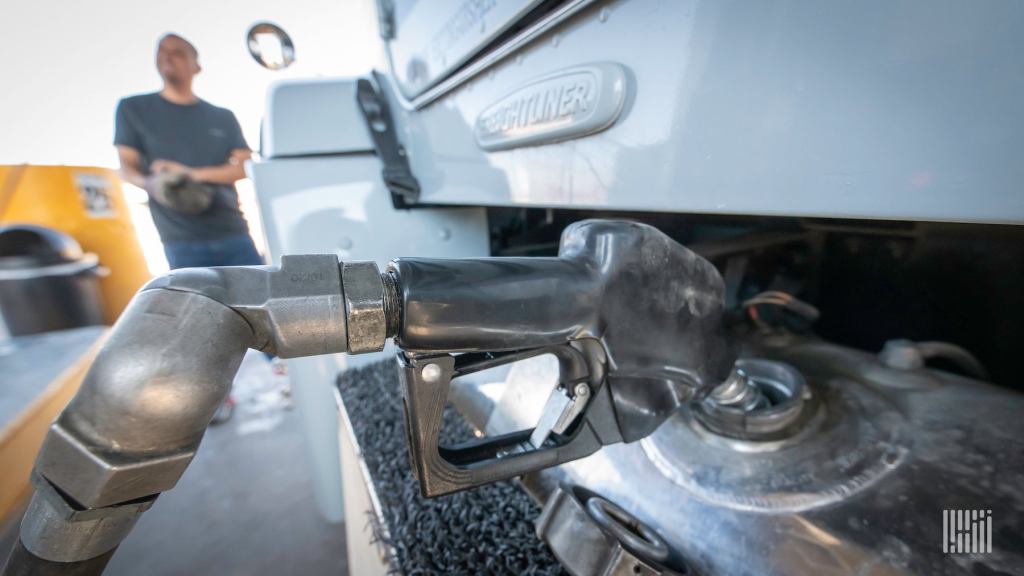
The nozzle of a diesel fuel pump is inserted into the tank of a commercial truck as its driver looks on the bankground.

The East Coast of the U.S. is reporting its lowest seasonal diesel inventory on record. And some trucking companies appear spooked.

The East Coast typically stores around 62 million barrels of diesel during the month of May, according to Department of Energy data. But as of last Friday, that region of the U.S. is reporting under 52 million barrels. 

The sharp increase of diesel prices has been a major stressor in America’s $800 billion trucking industry since the beginning of 2022. According to DOE figures, the price per gallon of diesel has reached record highs — a whopping $5.62 per gallon. It’s even higher on the East Coast at $5.90, up 63% from the beginning of this year. 

When relief is coming isn’t yet clear, and experts say higher prices are the only way to attract more diesel into the Northeast.

“I wish I had some good news for the Northeast, but it’s bedlam,” Tom Kloza, global head of energy analysis at OPIS, told FreightWaves. 

2022 has seen record-setting diesel prices. (SONAR)

Everyday Americans don’t fill up their cars with diesel, but the fuel powers our nation’s agriculture, industrial and transportation networks. More expensive diesel means the price of everything is liable to increase. Trucks, trains, barges and the like consumed about 122 million gallons of diesel per day in 2020

Patrick DeHaan, a vice president of communications at fuel price site GasBuddy, reported that retail truck stops are hauling fuel from the Great Lakes to the Northeast, calling it “extraordinary.” We’ve also seen anecdotal reports from truck drivers posting company memos:

Pilot Flying J and Love’s, two of America’s largest truck stops, told the Wall Street Journal yesterday that they were not planning to restrict diesel purchases, but were monitoring low diesel inventory.

Not unlike every other supply chain crunch we’ve seen in the past few years, the cause of the Northeast’s diesel shortage is multifaceted. A yearslong degradation of refineries is rubbing against the Gulf Coast preferring to ship its oil to Europe and Latin America.

Here’s a breakdown:

1. The East Coast has lost half of its refineries. 

As Bloomberg’s Javier Blas wrote on May 4 (emphasis ours): 

In the past 15 years, the number of refineries on the U.S. East Coast has halved to just seven. The closures have reduced the region’s oil processing capacity to just 818,000 barrels per day, down from 1.64 million barrels per day in 2009. Regional oil demand, however, is stronger.

Rory Johnston, a managing director at Toronto-based research firm Price Street and writer of the newsletter Commodity Context, told FreightWaves that refining is a “thankless industry,” with intense regulations that have limited the opening of new refineries. The Great Recession of 2008 led to several East Coast refineries shuttering, but there have been more recent shutdowns too. One major Philadelphia refinery shuttered in 2019 after a giant fire (and it already had declared bankruptcy), and another refinery in Newfoundland shut down in 2020.

2. It’s a financial risk to bring diesel to the Northeast.

The Northeast has increasingly relied on diesel from the Gulf region. Much of that diesel travels to the Northeast through the famous and much-adored Colonial Pipeline. You may remember the 5,500-mile pipeline from last year, when a ransomware attack shuttered it for nearly a week!  

It takes 18 days for oil to travel on the Colonial Pipeline from its source in Houston to New York City (or, more specifically, Linden, New Jersey), Kloza said.

That’s a long enough time to prioritize Colonial pipelines financially risky for traders — or, as Kloza said, “incredibly dangerous” — thanks to a concept called “backwardation.”

Backwardation refers to the market condition in which the spot price of a commodity like diesel is higher than its futures price. It’s only gotten stronger over time in the diesel market, Kloza said. So, a company could send off a shipment of diesel and find that it dropped by $1 per gallon in the time the diesel traveled from the Gulf Coast to New York — er, New Jersey. That could mean hundreds of thousands or more in lost profits, so traders often avoid such a fate.

“We’re not in an era where there are any U.S. refiners or big U.S. oil companies who would ‘take one for the team’ and bring cargo in where it’s needed,” Kloza said. 

The desperation is showing in New England and the mid-Atlantic regions. New England diesel retail prices are up 75% from the beginning of 2022, per DOE data. In the mid-Atlantic, diesel is up 67%. 

It’s not worth the risk, even amid ultra-high prices. As FreightWaves’ Kingston reported last week, the spread between a gallon of diesel in the Gulf Coast and its New York harbor price is usually a few cents. Last week, that swung up to 66 cents.

But that uptick still isn’t justifying moving oil to the Northeast — particularly when traders can make so much more money selling diesel abroad. 

3. Of course, we can blame COVID and the crisis in Ukraine. 

The catalyst for this diesel shortage, of course, is the ongoing conflict in Ukraine — particularly Europe’s desperation for diesel after weaning off Russian molecules. 

As CNBC reported in March, Europe is a net importer of diesel. Europe consumed some 6.8 million barrels of diesel each day in 2019; Russia exported some 600,000 barrels per day of that. Today, Europe has only eliminated one-third of its Russian diesel, so prices are expected to continue to climb amid that transition. Latin America, too, has been clammoring for U.S. diesel.

The Gulf Coast has been happy to provide such diesel, amid “insane” prices for diesel abroad, said Johnston. Waterborne exports of diesel from the U.S. Gulf Coast hit record highs last month, according to oil analytics firm Vortexa. (The records only date back to 2016.)

Naturally, COVID is also to blame for the Northeast’s run on diesel. Those refineries still retained on the East Coast scaled back during the pandemic due to staffing issues. It takes six months to a year to reignite refineries that were previously shuttered, Kloza said.

The ‘everything shortage’ endures

It’s been a tale as old as, well, last year. An industry is quietly hampered by supply issues for years, or even decades, and COVID pulls back the curtains on its unsteady foundation. It’s particularly jarring for commodities we never thought about before, like shipping containers or pallets, but that quietly underpinned our livelihood all along. 

Recall the Great Lumber Shortage of 2020? Big Lumber had unusually low stockpiles of wood by the summer of 2020, thanks to a vicious 2019 in the lumber industry shuttering sawmills and the spring of 2020 sparking staffing issues. (There was also a nasty beetle infestation.) Those in lumber expected the pandemic to slow the economy, not ignite online shopping, construction and housing mania. It meant lumber went from around $350 per thousand board feet pre-pandemic to a crushing $1,515 by the spring of 2021. The lumber price roller coaster persists today.  

In diesel, there’s no beetle infestation, but there are plenty of other headaches. It all means higher fuel prices on the East Coast, particularly the Northeast, to lure molecules from the Gulf Coast. And, down the line, probably more expensive stuff for you. 

Do you work in the trucking industry? Do you want to say that you hate or love MODES? Are you simply wanting to chitchat? Email the author at rpremack@www.freightwaves.com, and don’t forget to subscribe to MODES.

Updated on May 13 with the latest comments from truck stops.

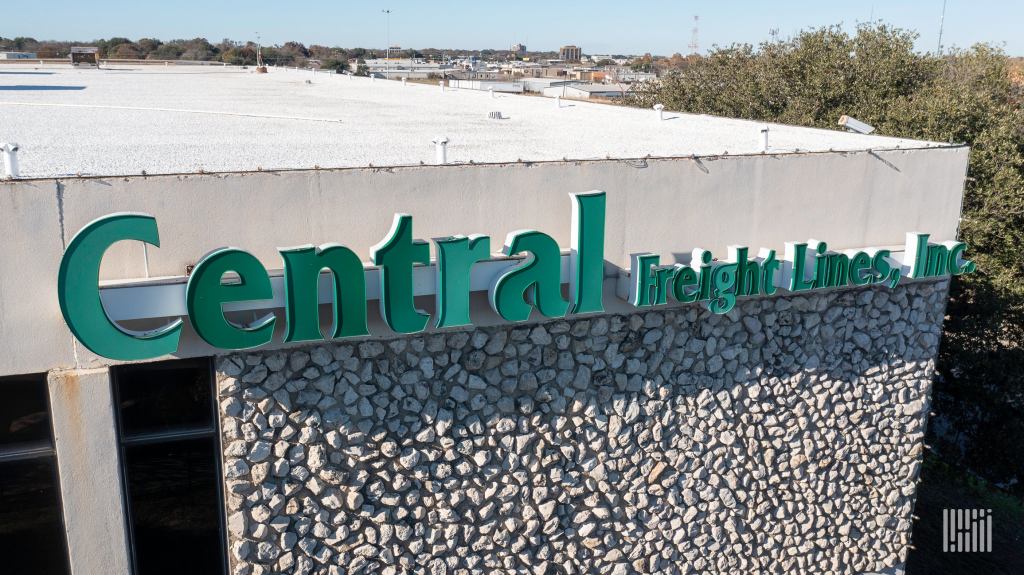
Exclusive: Central Freight Lines to shut down after 96 years

Nearly, 2,100 employees will be laid off right before Christmas. Central Freight Lines is the largest trucking company to close since Celadon ceased operations in 2019.


Waco, Texas-based Central Freight Lines has notified drivers, employees and customers that the less-than-truckload carrier plans to wind down operations on Monday after 96 years, the company’s president told FreightWaves on Saturday.

“It’s just horrible,” said CFL President Bruce Kalem.

A source close to CFL told FreightWaves that CFL had “too much debt and too many unpaid bills” to continue operating, despite exploring all available options to keep its doors open.

Kalem agreed.

“Years of operating losses and struggles for many years sapped our liquidity, and we had no other place to go at this point,” Kalem told FreightWaves. “Nobody is going to make money on this closing, nobody.” 

Central Freight will cease picking up new shipments effective Monday and expects to deliver substantially all freight in its system by Dec. 20, according to a company statement.

A source familiar with the company said he is unsure whether CFL will file Chapter 7 or “liquidate outside of bankruptcy,” but that the LTL carrier has no plans to reorganize.

The company reshuffled its executive team nearly a year ago in an effort to stay afloat, including adding the company’s owner, Jerry Moyes, as CFL’s interim president and chief executive officer. Moyes remained CEO after Kalem was elevated to president in July.

“I think it was surprising that there wasn’t a buyer for the entire company, but buyers were interested in certain pieces but not in the whole thing,” the source, who didn’t want to be identified, told FreightWaves. “Part of it could have been that just the network was so expansive that there was too much overlap with some of the buyers that they didn’t need locations or employees in the places where they already had strong operations.”

Third-party logistics provider GlobalTranz notified its customers that it had removed CFL as “a blanket and CSP carrier option immediately, to prevent any new bookings,” multiple sources told FreightWaves on Saturday.

CFL, which has over 2,100 employees, including 1,325 drivers, and 1,600 power units, is in discussions with “key customers and vendors and expects sufficient liquidity to complete deliveries over the next week in an orderly manner,” a CFL spokesperson said. Approximately 820 employees are based at the company headquarters in Waco.

Despite diligent efforts, CFL “was unable to gain commitments to fund ongoing operations, find a buyer of the entire business or fund a Chapter 11 reorganization,” another source familiar with the company told FreightWaves.

Kalem said the company had 65 terminals prior to its decision to shutter operations. 

FreightWaves received a tip from a source nearly two weeks ago that CFL wasn’t renewing its East Coast terminal leases but was unable to confirm the information with CFL executives. 

Another source told FreightWaves that some of the LTL carrier’s West Coast terminals had been sold recently, but that no reason was given for the transactions.

At that time, Kalem said the company was “working to find alternatives” and couldn’t speak because of nondisclosure agreements. He said executives at CFL, including Moyes, were trying to do everything to “save the company.”

“Jerry [Moyes] pumped a lot of money into the company, but it just wasn’t enough,” Kalem said.

Kalem said he’s aware that a large carrier is interested in hiring many of CFL’s drivers but isn’t able to name names at this point. 

“Central Freight is in negotiations to sell a substantial portion of its equipment,” the company said in a statement. “Additionally, Central Freight is coordinating with other regional LTL carriers to afford its employees opportunities to apply for other LTL jobs in their area.”

As of late Saturday night, Kalem said fuel cards are working and drivers will be paid for freight they’ve hauled for the LTL carrier until all freight is delivered by the Dec. 20 target date.

“I’m going to work feverishly with the time I have left to get these good people jobs — I owe it to them,” Kalem told FreightWaves. “We are going to pay our drivers — that’s why we had to close it like we’re doing now. We are going to deliver all of the freight that’s in our system by next week, and we believe we can do that.”

During the outset of the pandemic, Central Freight Lines was one of four trucking-related companies that received the maximum award of $10 million through the U.S. Small Business Administration’s Paycheck Protection Program (PPP). This occurred around the time that CFL drivers and employees were forced to take pay cuts, a move that didn’t go over well with drivers.

“It all went to payroll,” Kalem said about the PPP funds. “Yes, our employees and drivers did take a pay cut over the past few years, and we gave most of it back, even raised pay over the past several months, but it just wasn’t enough to attract drivers.”

FreightWaves staffers Todd Maiden, Timothy Dooner and JP Hampstead contributed to this report.


Watch: Central Freight Lines’ impact on the LTL market


FreightWaves CEO and founder Craig Fuller reacts to the Central Freight Lines news:

“With Central struggling for many years and unable to reach profitability, it makes sense that they would want to liquidate while equipment and real estate are fetching record prices.”


Central Freight Lines statement

Here is the statement given by Central Freight Lines to FreightWaves late Saturday after reports surfaced of its impending closure:

“We make this announcement with a heavy heart and extreme regret that the Company cannot continue after nearly 100 years in operation. We would like to thank our outstanding workforce for persevering and for professionally completing the wind-down while supporting each other. Additionally, we thank our customers, vendors, equipment providers, and other stakeholders for their loyalty and support.

“The Company explored all available options to keep operations going. However, operating losses sapped all remaining sources of liquidity, and the Company’s liabilities far exceed its assets, all of which are subject to liens in favor of multiple creditors. Despite diligent efforts, the Company was unable to gain commitments to fund ongoing operations, find a buyer of the entire business, or fund a Chapter 11 reorganization. Given its limited remaining resources, the Company concluded that the best alternative was a safe and orderly wind-down. As we complete the wind-down process, our primary goal will be to offer the smoothest possible transition for all stakeholders while maximizing the amount available to apply toward the Company’s obligations.

“Central Freight is in negotiations to sell a substantial portion of its equipment. Additionally, Central Freight is coordinating with other regional LTL carriers to afford its employees opportunities to apply for other LTL jobs in their area. Discussions are ongoing and no purchase of assets or offer of employment is guaranteed.”


Brief history of Central Freight Lines

1925Founded in Waco, Texas, by Woody Callan Sr.
1927Institutes regular routes in Texas between Dallas, Fort Worth and Austin.
1938Dallas facility opens as world’s largest freight facility.
1991Receives 48-state interstate operating authority, expands into Oklahoma.
1993Joins Roadway Regional Group and begins service in Louisiana.
1994Expands into Colorado, Kansas, Missouri, Illinois and Mississippi.
1995Consolidation of Central, Coles, Spartan and Viking Freight Systems into Viking Freight Inc. is announced. Central’s Waco corporate HQ starts closure.
1996Becomes the Southwestern Division of Viking Freight Inc.
1997Investment group led by senior Central management purchases assets of former CFL from Viking Freight and reopens as a new Central Freight Lines.
1999Expands into California and Nevada.
2009CFL Network provides service to Idaho, Utah, Minnesota and Wisconsin.
2013Acquires Circle Delivery of Tennessee.
2014Acquires DTI, a Georgia LTL carrier.
2017Acquires Wilson; new division created with an increase of 80 terminals.
2020Wins Carrier of the Year from GlobalTranz.
Acquires Volunteer Express Inc. of Dresden, Tennessee.
Source: Central Freight Lines

Warehouse cramming is about to begin — Freightonomics

nVision Global, is a leading Global Freight Audit, Supply Chain Management Services company offering enterprise-wide supply chain solutions. With over 4,000 global business “Partners”, nVision Global not only provides prompt, accurate Freight Audit Solutions, but also providing industry-leading Supply Chain Information Management solutions and services necessary to help its clients maximize efficiencies within their supply chain. To learn more, visit www.nvisionglobal.com

Warehouse space is at a premium right now and with peak season right around the corner, shippers are starting to scramble for space. 

Zach Strickland and Anthony Smith look into what shippers are doing to prepare for the end-of-year crunch. They welcome Zac Rogers from Colorado State University to the show to talk through the industry tightness. 

The three also talk about the latest Logistics Managers Index results and what they mean for the fourth quarter of 2021. 

You can find more Freightonomics episodes and recaps for all our live podcasts here.

Seasonality pushing rejections and rates higher ahead of the Fourth

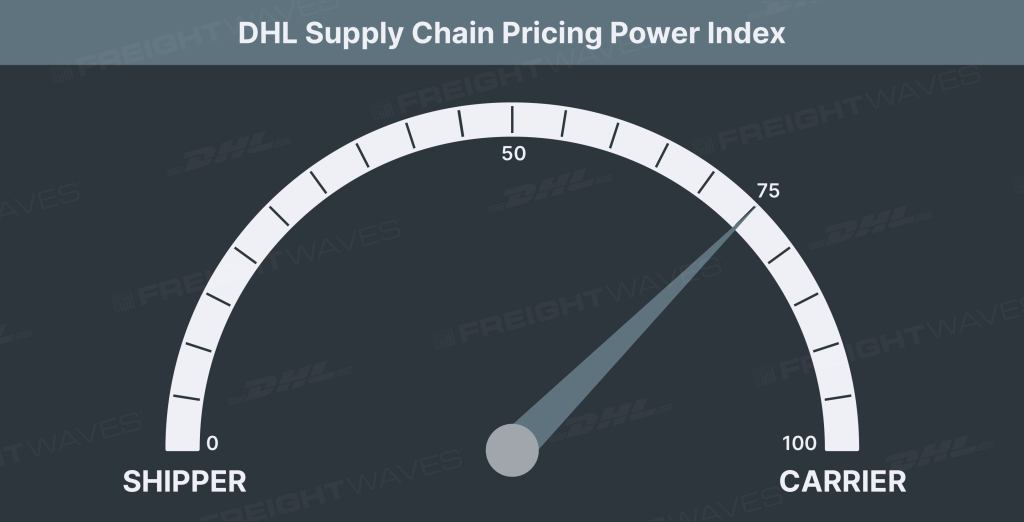
This week’s DHL Supply Chain Pricing Power Index: 75 (Carriers)

Last week’s DHL Supply Chain Pricing Power Index: 70 (Carriers) 

Three-month DHL Supply Chain Pricing Power Index Outlook: 70 (Carriers)

The DHL Supply Chain Pricing Power Index uses the analytics and data in FreightWaves SONAR to analyze the market and estimate the negotiating power for rates between shippers and carriers. 

The Pricing Power Index is based on the following indicators:

Load volumes: Absolute levels positive for carriers, momentum neutral

The Outbound Tender Volume Index at 15,980 is nominally higher now than basically at any point in the past 12 months with the exception of the week prior to Thanksgiving/Black Friday last year. OTVI captures all electronic tenders, including rejected ones, so when accounting for the rejection rate, we can get an even more accurate look at volumes. 

OTVI rose through the back half of May into the national holiday and has risen even further since. Throughout the back half of May and into the middle of June, tender rejections declined substantially. Meaning, current volume throughput is actually understated when comparing OTVI now to OTVI in November 2020. After adjusting for rejected tenders, the accepted outbound tender volume index is just 2.2% below the 2020 peak in November. At that time, OTVI surged towards 17,000, but the rejection rate moved in-kind towards its natural ceiling of 28%. So, the total accepted freight tenders in mid-June is comparable to the peakiest of peak seasons in 2020. Incredible. 

However, since the middle of June, tender rejections have begun increasing again heading into Independence Day, a time when many drivers spend time off the road with their families. The move higher in OTVI this week has been driven primarily by higher rejection rates, rather than higher freight demand. 

Over the past month, the drivers of freight volumes have continued to be imports and from just about every port. The west coast continues to provide seemingly non-stop container ships, while Houston, New Orleans, Miami and Savannah are seeing very strong throughput as well. 

It is van volumes that are driving freight markets higher right now. The Reefer Outbound Tender Volume index has tumbled 25% since its all-time high in the weeks after the polar vortex in February. Since Memorial Day, ROTVI has fallen another 10.5%. This is likely a factor of declining grocery demand, but I would expect the trend to reverse course in the near future as summer festivities accelerate. 

Dry van volumes pushed higher in the back half of May and into June while reefer volumes have declined significantly. 

SONAR: VOTVI.USA (Blue); ROTVI.USA (Green)

The congestion at our nation’s ports has spread from Los Angeles and Long Beach to Oakland, California. The California coastline is a parking lot of container ships, most of which are full to the brim with imports, awaiting berth. As detailed in the economic section, there are some signs that the reversion is underway with Americans paring back spending on pandemic superstar categories in favor of airlines, lodging and entertainment. But spending remains strong despite the moderation, and low inventory levels offset much of the decline that will occur from slowing demand. Real inventories are 3% higher now than pre-pandemic, but real sales growth is far outpacing inventory growth, leading to the lowest inventory-to-sales ratio in decades. 

On the manufacturing side, the ISM Manufacturing PMI expanded in May after declining in April. We’ve been in expansionary territory for 12 consecutive months. New orders, production, imports/exports and employment are all growing. The major issues should come as no surprise: Deliveries are slowing, backlogs are growing and inventories are too low. 

In all, there are many, many catalysts to keep freight demand strong for the foreseeable future. Americans are traveling and spending on services at a high clip, but the high savings rate is enabling it to occur without a massive detriment to goods spending. 

SONAR: OTVI.USA (2021 Blue; 2020 Green; 2019 Orange; 2018  Purple)

Tender rejections: Absolute level and momentum positive for carriers

After declining steadily from mid-March to mid-May, the Outbound Tender Reject Index has reversed course heading into Independence Day. This is typical for a national holiday as carriers selectively choose loads to bring drivers closer to home. OTRI now sits above 25% for the first time in June. 

One of our newest indices in SONAR gives us the ability to compare markets on as close to an apples-to-apples basis as possible. FreightWaves’ Carrier Trend Market Score indices are divided into two perspectives – shipper/broker and carrier. The scores are positioned on a scale from 1-100 and have values measuring van and refrigerated (reefer) capacity. The higher values represent more favorable trends for whichever perspective. For instance, a value near the high-end of the range would suggest very favorable conditions for carriers in our carrier capacity trend score index. 

For the past several weeks, capacity disparities have been driven by import volumes. The markets with the tightest carrier capacity coincide with the nation’s busiest ports. Ontario, California, Savannah, Georgia, and Atlanta all have carrier capacity trend market scores of 100. 

SONAR: Capacity Trend Market Score (Carriers – VAN)

By mode. Reefer rejection rates tumbled from it’s all-time high in March to under 35% in mid-June before popping higher over the past two weeks. Reefer rejections are still quite high from a historical standpoint at 38%, but are significantly lower than just three months ago when reefer carriers were rejecting half of all electronically tendered loads. 

SONAR: VOTRI.USA (Blue); ROTRI.USA (Orange)

Dry van tenders make up the majority of all tenders, so the van rejection rate mirrors the aggregate index closely. Van rejections have surged from ~23% to ~26% over the past two weeks. 

Yes, one-in-four loads being rejected is not ideal, but it’s better than 30%. I am unaware of any meaningful signals that capacity is being added at a rate that would change my outlook. With so many catalysts for demand, and many constraints on drivers including the Drug & Alcohol Clearinghouse, driver training school closures and continued government unemployment benefits, the outlook is tight throughout this year and into 2022. That’s not to say we won’t see improvement as consumers revert to pre-pandemic spending habits and drivers enter or reenter the market. But I’m not expecting any quick reversal of this environment; there are simply too many catalysts driving volume and suppressing capacity. 

SONAR: OTRI.USA (2020/21 Blue; 2020 Green; 2019 Orange)

Freight rates: Absolute level and momentum positive for carriers

Throughout June, spot rates have moderated while contract rates have pushed higher. The Truckstop.com dry van rate per mile (incl. fuel) has fallen from $3.21 to $3.11 since the beginning of June, while FreightWaves van contract rates have risen from $2.50 to $2.59/mile, exclusive of fuel. 

I still believe the Truckstop.com dry van national average will not retest the post-vortex surge pricing that brought spot rates up to an all-time high of $3.30. But, there aren’t many catalysts to bring spot rates down anytime soon either. Demand is unwavering with continued strong consumer goods demand, humming industrial recovery and a potentially cooling, yet still sizzling, hot housing market. And carriers can’t fill enough trucks to keep up with demand. 

Prior to the seasonal movements we’re seeing in tender rejections, routing guides generally had been improving through Q2. We should continue to see a convergence between spot and contract rates, but spot rates will remain historically very elevated throughout the summer as demand simply outstrips capacity. 

SONAR: TSTOPVRPM.USA (Blue); VCRPM1.USA (Green)  

Economic stats: Momentum and absolute level neutral

Several economic releases this week are worth noting.

Weekly jobless claims were released Thursday and give us one of the best close-to-real-time indicators of the overall economy.  This week, the data was again very promising as the labor market continues on a bumpy but trajectorially stable recovery path. 

First-time filings totaled 411,000 for the week ended June 19, a slight decrease from the previous total of 418,000 but worse than the 380,000 Dow Jones estimate, the Labor Department reported Thursday. Initial claims have held above 400,000 for consecutive weeks after falling to a pandemic low of 374,000 three weeks ago. As things stand, the current level of initial claims is about double where it was prior to the Covid-19 pandemic. 

The good news on the jobs front is that continuing claims are on the decline, falling to 3.39 million, a drop of 144,000. That number runs a week behind the headline claims total.

Initial jobless claims (weekly in May 2020-May 2021)

At the time of writing, the newest weekly data for the week ending May 29 had not been updated in SONAR. This week, claims fell from 405,000 to 385,000. 

SONAR: IJC.USA

Consumer. Turning to consumer spending, as measured by Bank of America weekly card (both debit and credit) spending data, total card spending (TCS) in the latest week accelerated to 22% over 2019. This is the first time in June that TCS has topped 20% over 2019, but spending has been running up 16-19% consistently on a two-year comp for months. For contect, the average pre-pandemic two-year growth rate was about 8% (from 2012 to 2019). 

The Bank of America team highlighted service spending in the nation’s two largest state economies, California and New York, which are now fully reopened. Spending at restaurants is now well above 2019 in both states, and the team believes there is more capacity for spending to accelerate in the states that were slower to reopen given pent-up demand. 

There was also a notable acceleration in spending on clothing this week, according to Bank of America. It could be a reversal from some softening in the early weeks of June, or an indication of people refreshing wardrobes ahead of a return to work, more travel and vacations. One tepid statement for freight markets from this week;s report: Leisure spending is on the rise and durable goods spending is flatlining.  

FreightWaves’ Flatbed Outbound Tender Reject Index, both a measure of relative demand and capacity, moves directionally with the ISM PMI. 

SONAR: ISM.PMI (Blue); FOTRI.USA (Green) 

Manufacturing. Over the past two weeks, regional manufacturing surveys have reported generally positive readings amid logistical challenges. The New York Fed’s Empire State business conditions index declined 6.9 points to 17.4 in June, retreating from strong readings the past two months. The Empire State Index is a diffusion index with a baseline of zero; any reading above zero indicates improving or expansionary conditions. 

Delivery times lengthened to a new record during the month, new orders and shipments fell, and inventories entered negative territory. The supply chain and transportation challenges are as visible upstream as downstream, but overall the manufacturing sector is handling. Growth continued throughout the second quarter in both the Empire State and Philly Fed indices. 

The Philadelphia Federal Reserve’s business activity index edged lower to a still robust 30.7 in June from 31.5 in the prior month. Unlike NY, the pace of shipments growth accelerated in the Philly region during June. The employment subcomponent rose to a very healthy 30.7 from 19.3 last month, the regional bank said. 

Record-long lead times, wide-scale shortages of critical basic materials, rising commodities prices and difficulties in transporting products are continuing to affect all segments of the manufacturing economy, but demand remains strong. 

For more information on the FreightWaves Freight Intel Group, please contact Kevin Hill at khill@www.freightwaves.com or Andrew Cox at acox@www.freightwaves.com.

Check out the newest episodes of our podcast, Great Quarter, Guys, here.

Project44 acquires ClearMetal to strengthen predictive tools

Project44, a leader in real-time visibility of the global supply chain, announced on Thursday it has acquired ClearMetal, a San Francisco-based supply chain planning software company that focuses on international freight visibility, predictive planning and overall customer experience. The terms of the acquisition were not disclosed.

ClearMetal, founded by top software engineers and data scientists from Stanford, Google and other Silicon Valley elites, has created a “continuous delivery experience” that leverages proprietary machine learning algorithms that can forecast supply chain disruptions. 

In an interview, Jason Duboe, chief growth officer at project44, explained that bringing in ClearMetal’s elite team is essential for the company’s future predictive solutions.

“Their team construct is fundamentally different. When you look at their data science, machine learning and computer science background, they are best in class,” he said. “Applying the team to solve really interesting challenges, starting with highly predictive ETA and deeper exception management to create more predictive analytics is really a key component here.”

Project44 recently acquired Ocean Insights to gain global supply chain vessel visibility and has announced it has expanded its truckload tracking services within Asia. Bringing on this new team of engineers will allow the company to capitalize on strong predictive tools, strengthening the supply chain of its customers.

“We’re going to be expanding deeper into Asia, and from a port perspective, getting data much earlier than competitors,” explained Duboe. “Our freight forwarder integrations will give us much deeper visibility from an end-to-end perspective in these regions.”

Along with the acquired skills the ClearMetal team will bring to project44, it brings a large book of customers, including large CPGs, retailers, manufacturers, distributors and chemical companies. These advanced use cases will strengthen the predictive planning tools, and project44 continues to expand into different customer markets.

“What we gain from ClearMetal is a holistic platform for anybody that joins the platform in the future,” said Duboe. “They have large customers with incredibly demanding and advanced use cases. So when it comes to order and inventory, functionality, supplier onboarding, and moving upstream into those processes, we can capture exceptions earlier on.”

Click here for more articles by Grace Sharkey.

Related Articles:

Project44 expands real-time visibility into China

Project44 reels in Ocean Insights in ‘largest acquisition in visibility space’

‘Project44’s vision has always been global’

Optimus previews digital twin of US freight network

Optimus Freight Intelligence Graph mapping US highway corridors in a freight digital twin

Optimus Technology Inc. on Thursday previewed a digital twin of the U.S. freight network built to model how disruptions and structural changes ripple across corridors, facilities and commodities. The freight digital twin, called the Freight Intelligence Graph, is under development at the Austin, Texas-based company.

The prototype models roughly 350,000 U.S. highway-network nodes and nearly 1 million directed road segments. It runs on top of Optimus’s proprietary freight data foundation. That layer maps more than 450,000 geocoded shipper and receiver roles across nearly 400,000 facility locations. It covers more than 500,000 distinct directional city-to-city corridor combinations.

“Most market intelligence explains what has already happened,” said Ed Stockman, founder and CEO of Optimus. “We are building a model of the physical economy to address a more consequential question: What happens next, and what happens after that? A change in one market can alter capacity, economics and commercial activity several corridors away. Understanding those second- and higher-order effects is essential to planning for the future.”

Access is limited for now to early design partners working on disruption planning, network strategy, infrastructure siting and market exposure. Those use cases sit with strategy and risk teams, upstream of the dispatchers who buy most freight software.

Hyper Predictors and the freight nobody sees

Underneath the graph sit what Optimus calls Hyper Predictors, specialized machine-learning models that combine shipment history, economic activity, geography, commodities, seasonality, weather and network behavior. Their job is to estimate the freight that never shows up in observed data.

“Observed freight data will always leave parts of the network unseen,” said Toby Pasquale, head of engineering at Optimus. “Hyper Predictors close those gaps by combining specialized models, each focused on a different part of the system. Together, they let us infer likely freight flows and identify where demand, loads and capacity pressure may emerge before those patterns become obvious in historical reporting.”

Pasquale previously spent 13 years at Amazon building network routing, optimization and predictive transportation systems.

The company’s worked example is a hurricane hitting Houston. The storm interrupts local freight, then the effects travel: rerouted shipments, repositioned capacity, shifting fuel and route economics, and pressure in markets nowhere near the coast. Analysts inside the prototype can define changes in commodity demand, diesel prices and route conditions. The system then compares a modeled baseline against the scenario to show where flow pressure builds.

What the freight digital twin will not do

Optimus draws the boundary itself. The prototype is a planning and simulation system, not a live fleet map or an ETA product. It does not present a modeled route as an executed shipment, a weather warning as a confirmed road closure, or modeled pressure as actual capacity.

Four principles govern the output: Verified transactions stay distinct from modeled estimates; scenarios are presented as plausible, with no single outcome called inevitable; every output retains its source and limitations; and defensible abstention. Most freight forecasting tools are not built to say they do not know.

Humanoids building humanoids

The most speculative scenario in the preview is the one Optimus cannot ground in any observed data: humanoid robots capable of building more humanoid robots and other goods. If that capability scaled, production capacity would expand faster and sit closer to end markets. Freight would shift from long-haul finished goods toward raw materials, components and localized assembly. Facilities, inventories and transportation networks would reorganize around a different production model.

No such capability exists at that scale, and Optimus is not forecasting one.

“E-commerce transformed distribution, fulfillment and consumer expectations,” Stockman said. “Humanoids building humanoids could represent a substantially greater change to the physical economy. The precise outcome is uncertain, but that is the purpose of scenario modeling: to define the assumptions, explore how first-, second- and higher-order effects could unfold, and identify the signals that would indicate whether a particular future is beginning to emerge.”

Why 22 States Are Suing to Block a Federal Demand for 17 Million Truckers’ Records.

Sean Duffy

A legal battle now underway over the records of America’s truck drivers is being described very differently depending on who is doing the describing. The U.S. Department of Transportation calls it a “radical” effort by state attorneys general to shield dangerous drivers from the law. The states call it an unlawful federal seizure of the private data of 17 million people. Both descriptions are advocacy. The purpose here is to explain, as neutrally as possible, what is actually being fought over and why the states are challenging it, so that a driver whose own record is in that database can understand what is at stake.

What Actually Happened

The dispute centers on the Commercial Driver’s License Information System, known as CDLIS. Congress established it in 1986 under the Commercial Motor Vehicle Safety Act to give states a secure way to share information about CDL applicants, chiefly to make sure a driver cannot hold licenses in multiple states or escape a disqualification by crossing a state line. It is operated by the American Association of Motor Vehicle Administrators, or AAMVA, a nonprofit whose members are the state licensing agencies, under contract with FMCSA since 1988. The database contains sensitive personal information, including names, dates of birth, driver’s license numbers, and Social Security numbers, for the roughly 17 million people who hold commercial licenses.

According to the states’ complaint, on August 11, 2026, FMCSA demanded that AAMVA turn over the full database, every driver’s records going back five years, by August 17, or face termination of AAMVA’s federal contracts and more than $10 million in federal funding. The states further allege that the Department of Homeland Security issued a separate immigration-enforcement subpoena to AAMVA for the same records with the same deadline, which the states characterize in their filing as coordinated with FMCSA.

The states also describe a sequence leading up to the demand. AAMVA, caught between the federal demand and the objections of many of its member states, proposed on August 14 to let its board consider an opt-in or opt-out choice, allowing each state to decide whether to authorize the transmission of its own data. According to the complaint, FMCSA rejected that proposal on August 11 as “unacceptable.” Facing the threat of losing its federal contracts, which the states say could shut CDLIS down entirely, AAMVA told the states it would comply and turn over the records on or around August 17. That is what prompted the coalition to file suit on August 13 in the U.S. District Court for the Eastern District of Virginia and to seek an emergency order blocking the transfer.

Twenty-one states and the District of Columbia are named in the suit against DOT, FMCSA, and AAMVA, and a coalition of 22 states and D.C. filed a companion suit against DHS over the parallel subpoena. The participating states include Illinois, California, New York, New Jersey, Washington, Massachusetts, Michigan, Colorado, Arizona, Nevada, Oregon, Virginia, Maryland, Minnesota, and others, along with Pennsylvania.

The Federal Government’s Position

The Department of Transportation has stated its case forcefully, and it rests on safety and enforcement.

DOT frames the data request as necessary to keep unsafe and unqualified drivers off the road, and specifically to identify commercial drivers who obtained licenses improperly. In its August 13 statement, Secretary Sean Duffy said, “Every administration since 1988 has had access to this basic database, so let’s be clear on what this ridiculous lawsuit is really all about. These radical state AGs want to make it harder for my Department to enforce the rules of the road and easier for dangerous illegal immigrant truck drivers to operate a big rig.” He added, “We will fight this lawsuit tooth and nail to prevent more senseless crashes by unqualified drivers.”

DOT tied the demand to a broader enforcement campaign it has run since an April 2025 executive order on the trucking industry. The department says that effort has revoked more than 30,000 improperly issued commercial licenses, removed nearly 10,000 fraudulent or unqualified CDL training providers from the federal registry, placed more than 26,000 operators out of service under English language proficiency standards, and closed what it calls the non-domiciled CDL loophole. The department has connected the data demand to the August 12, 2025 crash on Florida’s Turnpike, a three-fatality collision that DOT attributes to an undocumented driver operating with an improperly issued license.

DOT’s legal position, as stated in its release, is that AAMVA “is contractually and legally obligated to furnish the requested records at FMCSA’s direction, with federal protection against state-level liability.” In other words, the federal government argues it has always had access to this database, that AAMVA is required to comply with FMCSA’s direction, and that the states cannot hold AAMVA liable for complying.

Why the States Are Challenging It

This is the part the political framing tends to skip, and it is the reason the lawsuit exists, so it is worth laying out in full. The states’ challenge does not rest on a single argument but on several distinct legal and practical objections.

The first is ownership and consent. The states argue that they, not the federal government, own the driver data stored in CDLIS, and that they placed it in the shared system for a specific, limited purpose, checking licensing status across states, under agreements that bar broader disclosure. Their position is that CDLIS was built as a state-to-state information-sharing tool, and that the statute creating it contains no provision allowing the federal government to demand a bulk transfer of all state records as a condition of participation. As Illinois Attorney General Kwame Raoul put it, “This database was created 40 years ago so states could share information with each other to stop unsafe drivers from operating commercial vehicles, and the federal government’s decision to ransack that database puts the whole system in jeopardy.”

The second is the contracts. The complaint alleges that several states, including Illinois, California, Maine, and the District of Columbia, have contracts with AAMVA that expressly prohibit disclosure of confidential driver data without the state’s authorization and require compliance with state and federal privacy law. The states say no contracting state has authorized the release, and that the contracts “flatly bar” it. This is the basis for a breach-of-contract claim against AAMVA specifically.

The third is privacy law. The states argue that a bulk handover of 17 million people’s Social Security numbers, birth dates, and license numbers, without individual justification or privacy safeguards, would violate the confidentiality protections that states pledged to those drivers, and potentially federal privacy statutes governing how driver data can be used and shared.

The fourth is the manner of the demand. A significant part of the states’ objection is not only what was demanded but how. They characterize the funding threat, comply or lose your contracts and more than $10 million, as coercion, and the alleged coordination between FMCSA’s demand and the DHS immigration subpoena as an attempt to route around the legal limits on each. The states argue an agency cannot use a funding ultimatum to compel a private contractor to do what the agency could not lawfully order directly.

The fifth is the practical consequence. The complaint argues that the demand puts AAMVA in an impossible position: comply and breach its agreements with the states, or refuse and have its federal contracts terminated, which would shut down CDLIS and leave states unable to issue commercial licenses or verify them across state lines, potentially costing states hundreds of millions in federal highway funds. The states argue that a bulk disclosure would also damage public trust and could deter people from applying for CDLs, which cuts against the safety purpose the system exists to serve.

The remedy the states are seeking is not a permanent bar on all federal access to driver information. It is an emergency order stopping this particular bulk transfer while the courts decide whether the demand is lawful. AAMVA has informed the coalition it will not produce the records by the deadline while the matter is being litigated.

Cutting Through the Framing

Because this story has been assigned political labels from both directions, it helps to separate what is genuinely contested from what is not.

It is not seriously disputed that the federal government has long had a relationship with CDLIS and some access to it. DOT’s claim that “every administration since 1988 has had access to this basic database” refers to that longstanding relationship. What the states dispute is whether routine access for interstate license verification is the same thing as a right to compel a one-time bulk transfer of all 17 million records for a five-year period to support an immigration enforcement campaign. The federal government treats those as continuous. The states treat them as fundamentally different in kind and scale. That distinction, ordinary operational access versus a mass data transfer, is the actual heart of the legal fight, and a court will have to resolve it.

It is also worth being precise about what the lawsuit does and does not say. The states’ filing is a challenge to the legality of the data demand and the process used to make it. It is a set of allegations, not proven facts, and the federal government disputes them. Likewise, DOT’s characterization of the states’ motives, that they want to shield dangerous drivers, is an assertion, not an established fact, and the states reject it. A reader is not required to accept either side’s characterization of the other’s motives in order to understand the underlying legal question, which is narrower and more concrete than the rhetoric surrounding it: does the federal government have the legal authority to compel this specific bulk transfer of state-owned driver records, and does the way it made the demand comply with the law?

What It Means for Drivers

For the individual CDL holder, the immediate practical effect is limited, but the stakes are real and worth understanding.

Your personal information, including your Social Security number, is in CDLIS, and this lawsuit is fundamentally about who can access the full set of those records and under what conditions. If you hold a commercial license, you are one of the 17 million people whose data is at the center of this. That alone is a reason to follow it, regardless of where you land on the politics.

In the near term, nothing about your license changes because of the lawsuit itself. CDLIS continues to operate, your license remains valid, and the interstate verification the system performs continues. The emergency order the states are seeking is aimed at freezing the bulk transfer while the case proceeds, which means the immediate question is procedural: whether the data moves now or waits for a court ruling.

The longer-term significance is larger than any one driver’s file. The case will test a genuinely unsettled question about the boundary between federal authority and state control over driver data, and its outcome could shape how driver information is shared, protected, and used for years. It also sits at the intersection of two forces this platform has covered repeatedly: the aggressive FMCSA enforcement posture of the past two years, and the growing use of data systems to police the industry. However it is resolved, it will say something about how much control any individual driver, or any state, retains over the personal information that a commercial license requires them to hand over.

Why It Matters

The federal government says it needs bulk access to 17 million drivers’ records to keep unqualified and unlawfully licensed operators off the road, while 22 states say the demand is an unlawful, coercive seizure of private data they own and pledged to protect, and both positions are now in the hands of a federal court. For every CDL holder in the country, the case will help settle a question that has never been squarely answered, which is who ultimately controls the personal information behind a commercial license, and what the government must prove before it can compel that information to be handed over in bulk.

$6.6M in vapes, nicotine pouches seized from US semis entering Canada in 4 days

Three U.S. semis entered Canada carrying nicotine products worth nearly $6.6 million Canadian within four days. Border officers intercepted all three loads at Ontario’s Blue Water Bridge. The seizures included 61,758 vapes plus thousands of kilograms of nicotine pouches. Canada Border Services Agency confirmed the investigations remain ongoing.

The first interception occurred Aug. 7 at the Blue Water Bridge port of entry in Point Edward, Ontario. Officers seized approximately 61,758 nicotine vapes from a commercial driver arriving from the United States. CBSA valued those products at approximately CAD$2,778,177. Three days later, another major discovery followed at the same crossing.

Border personnel seized 570 kilograms of nicotine pouches from a commercial operator on Aug. 10. Authorities estimated that merchandise at CAD$835,200. Officers intercepted another pouch shipment from a separate driver that day. CBSA placed the third load’s approximate value at CAD$2,983,500.

Three seizures within four days

CBSA valued the three seizures at approximately CAD$6.6 million combined. The agency has not identified any trucking companies connected with the loads. Officials also withheld shipment details, citing federal privacy law. Investigations into the cases remain ongoing.

CBSA would not disclose what triggered closer inspections of the commercial vehicles. The agency uses several risk-based indicators when deciding whether freight requires additional examination. Those reviews can lead officers to examine a shipment or investigate further. CBSA declined to provide specifics about what raised concerns in these cases.

The Blue Water Bridge connects Port Huron, Michigan, with Point Edward, Ontario. Commercial traffic makes the crossing an important freight gateway between both nations. The location has also produced several large contraband discoveries involving trucks. Recent cases there have included hundreds of kilograms of cocaine and methamphetamine.

Organized crime fuels enforcement concerns

CBSA views illegal nicotine and tobacco sales as a source of revenue for organized crime. Profits can strengthen criminal networks and finance other illegal operations in Canada and internationally. The agency identified that connection while discussing its broader enforcement efforts. Investigations into the three Blue Water Bridge seizures remain ongoing.

The crossing has produced major commercial smuggling cases involving other contraband. Officers intercepted 1,317 kilograms of cocaine from truck shipments there through October 2025. They also seized 349 kilograms of methamphetamine during the same reporting period. Those cases made Blue Water Bridge a recurring location for large commercial vehicle interceptions.

That activity continued into 2026 with another major drug seizure. Officers found 266.4 kilograms of suspected methamphetamine in a truck at the crossing in February. Authorities arrested the driver and transferred the case to the Royal Canadian Mounted Police. RCMP later filed importation and possession for trafficking charges.

CBSA confirmed the latest nicotine products were seized with no terms of release. Investigations remain active, and authorities have not announced charges involving any commercial driver. Federal privacy restrictions prevent the agency from identifying carriers or providing additional shipment information. CBSA also withheld destinations and declared commodities. FreightWaves will update this story if authorities announce charges or release additional details about the investigations.

Why it matters

Three multimillion-dollar interceptions within four days show how commercial freight can become part of cross-border contraband investigations. Carriers and brokers need visibility into drivers, shipments and unusual activity moving through their networks.

CFCO

FreightWaves offers Certified Fraud Compliance Officer training focused on verification, risk identification and consistent decision-making. In my opinion, stronger training can help transportation teams recognize warning signs before questionable freight enters legitimate networks. CFCO provides a structured process for knowing when additional scrutiny makes sense.

Click here for more articles on cargo theft and freight fraud by Phil Brink.

Nearly $111M in data center freight stolen as thieves test ‘bump and run’ tactic – FreightWaves

Indiana State Police recover 12 stolen truckloads worth more than $11 million – FreightWaves

Staged truck crashes could bring 20 years in federal prison under new bill – FreightWaves

Before “Freight Tech” Was a Category: 2018 to 2020 and the Founding Class

Nominations for the 2027 FreightTech 100 close August 31. Nominate your company here.

There was a time, and it was not long ago, when telling someone at a shipping conference that you worked in “freight tech” would get you a blank look. The freight industry had technology, of course. It had transportation management systems, some of them decades old. It had load boards. It had EDI connections held together by institutional memory and a few people who understood how the whole thing actually worked. What it did not have was a shared sense that any of this constituted a category, a distinct space worth watching, investing in, and recognizing on its own terms.

FreightWaves launched the FreightTech awards in 2018 to change that, and the timing turned out to matter more than anyone knew.

The gap the award was built to fill

The problem in 2018 was not that freight lacked innovation. It was that the innovation was invisible, scattered, and unrecognized. Venture capital was beginning to notice the space, but the broader industry had no reliable way to identify which companies were genuinely moving the category forward versus which were simply the loudest in a given quarter. There was no canonical list, no peer-validated signal, no annual moment where the industry itself said, these are the companies that matter right now.

FreightWaves built the award to be exactly that signal, and it built it deliberately to be credible rather than promotional. From the beginning, the structure separated the wide field from the ranked few: a broad FreightTech 100, narrowed from hundreds of nominations by a FreightWaves panel, and then a FreightTech 25 selected from that hundred by a hand-picked peer group of CEOs, industry leaders, and investors actively putting money into freight. The voting used a points-based formula, the same kind of ranked-ballot math used for major sports polls, and FreightWaves was explicit that it held no influence over the FreightTech 25 outcome. As Craig Fuller put it at the launch, the design guaranteed the company would have zero influence on the FreightTech 25 result, by design, and it was not a pay-to-play award. Nominating a company then, as now, cost nothing.

That combination, a wide net narrowed by analysts and then ranked by the people with capital and operating experience on the line, is what gave the list its authority from year one. It was not a magazine editor’s opinion. It was the industry recognizing itself.

What the landscape actually looked like

To understand the founding class, you have to remember what the freight tech landscape was in 2018 to 2020, because it looks primitive next to today and it was anything but at the time.

Transportation management systems were the established core, but a wave of newer, cloud-native platforms was challenging the incumbents. Digital load matching was moving from a concept into real products, promising to replace the phone-and-fax rhythm of finding capacity with something that looked more like software. Visibility, the ability to actually know where a truck and its freight were in real time, was still nascent, still something a shipper mostly did not have and mostly assumed was impossible at scale. The companies working on it were building the plumbing for a capability the industry did not yet know it would soon consider non-negotiable.

The earliest honorees reflected that moment. The lists in those years mixed established giants that were investing seriously in technology with the venture-backed newcomers trying to unseat them, names that would go on to define the category and, in some cases, names that would not survive it. Past honorees across the program’s history include companies like Amazon, FedEx, J.B. Hunt, Convoy, project44, and Tesla, a range that captures the breadth the award covered even early on, from the largest players in transportation to the startups betting everything on a single insight.

Why the structure mattered from the start

It is worth pausing on how deliberately the award was built, because the structure is the reason the list carried weight in a space full of self-congratulation.

Plenty of industries have awards that amount to a magazine buying itself attention, or a vendor paying for a badge to put in a sales deck. FreightWaves built the FreightTech program to be the opposite. Any company connected to the industry could be nominated, and anyone could nominate, at no cost, which kept the front door wide open. Then the narrowing happened through judgment rather than dollars: a FreightWaves panel of analysts, researchers, and journalists cut the full field down to the FreightTech 100, and a separate peer group of CEOs, investors, and industry leaders ranked the FreightTech 25 from there. The people doing the final ranking were the same people deploying and funding freight technology, which meant their votes carried the weight of money and operating experience rather than opinion.

That design solved the credibility problem at the root. A company on the list was not there because it bought its way on or charmed an editor. It was there because analysts vetted it and peers with capital on the line recognized it. In a young category desperate for a trustworthy signal, that was the whole value, and it is why the founding lists are still worth citing today.

What “innovative” meant then

The word that anchored the award from the start was innovation, but what counted as innovative in the founding years was different from what counts now, and the difference is instructive.

In 2018 to 2020, innovation in freight tech often meant simply digitizing something that had always been analog. Turning a phone call into an API. Turning a spreadsheet into a dashboard. Turning a shipper’s blind spot into a live map. The bar was not agentic AI or predictive optimization, because those were not yet realistic. The bar was making a fundamentally offline industry work more like software, and the companies that did it convincingly, at real scale, with real customers, were the ones that made the list.

That founding definition of innovation would be tested almost immediately, because the world was about to hand freight tech the most severe stress test the supply chain had faced in generations. But the framework the award established in those first years, a wide, credible, peer-validated recognition of the companies actually moving the category, held up through everything that came next. It is the same framework that will identify the winners for 2027.

The FreightTech 100 has been identifying the category’s leaders since before most of the industry agreed the category existed. That track record is the whole point, and it is why a place on the list still means something.

Nominations for the 2027 FreightTech 100 close August 31. Nominate your company here.

Nearly $111M in data center freight stolen as thieves test ‘bump and run’ tactic

Scott Cornell confirmed that cargo thieves deliberately struck security escorts protecting two high-value technology shipments. The drivers then continued with each load instead of stopping for help. Cornell serves as EVP and Crime and Theft Specialist at SPG Cargo & Logistics. Cornell also serves as Chair of TAPA Americas and has spent more than 30 years investigating cargo theft.

Cornell described the “bump-and-run” method during an interview on FreightWaves’ Fraud Watch podcast. He linked both successful crimes to failures during carrier verification. “We’ve seen a big concentration around the theft of high-tech loads,” Cornell told FreightWaves. He identified cargo intended for data centers as a leading target.

During the interview, Cornell estimated nearly $100 million in losses. He later confirmed $110.6 million in known reported thefts since June 3. The stolen shipments carried data center equipment and other high-value technology cargo. Several incidents involved multimillion-dollar values.

Individual cases ranged from $2 million to $38 million, according to Cornell. He also cited thefts valued at $8 million, $12 million, $14 million, $20 million and $24 million. “When you add all those up, the impact is absolutely tremendous,” Cornell said. Those amounts have pushed average loss values sharply higher.

Watch the full Fraud Watch interview with Scott Cornell on data center cargo theft, bump and run tactics and carrier verification failures.

Thieves target security escorts

“On two of those thefts, they were being escorted by security teams,” Cornell said. “Individuals intentionally crashed into the security escorts on those loads.” He called the method a significant change for cargo theft in the United States. However, Cornell cautioned against treating two events as a nationwide trend.

The tactic required cooperation from each shipment’s driver, Cornell explained. “If the drivers are bad guys, when the escorts get bumped, the drivers then take off,” he said. A legitimate operator would stop, call 911, or reach a safe location. “The drivers weren’t properly vetted,” Cornell added.

Proper verification could have neutralized the entire operation, according to Cornell. Criminals needed compromised operators to continue after each collision. Otherwise, the security distraction would not provide an escape route. “That’s what made the bump-and-run a successful tactic in both cases,” he said.

Cornell offered another recent technology theft involving an obvious carrier mismatch. A Google search showed the company operated as a hotshot auto hauler. That business accepted specialized freight outside its normal region without suitable equipment. “That was just a simple Google search,” Cornell said.

Criminal rings build their own supply chains

Modern theft groups can move stolen products faster than older regional crews, according to Cornell. Those networks use cross-docks, parking-lot transfers and altered shipping documents. “These international crime rings have created their own economy,” he said. Cornell described a separate transportation system operating alongside legitimate logistics businesses.

“People still think some of these thefts are random, and they’re not,” Cornell said. “They have customers, they have a customer base, and they’re filling orders.” Criminals can relabel stolen televisions as general electronics after a cross-dock transfer. Another document change can identify the same shipment as freight of all kinds.

Cornell identified paper bills of lading as a major weakness. Thieves can replace specific product descriptions with broader terms before returning goods to legitimate channels. “I can camouflage it just by falsifying that paperwork,” he said. The altered documents discourage workers from opening sealed trailers and checking their contents.

“Six or seven out of every 10 loads stolen in the U.S. now leave the country,” Cornell estimated. Earlier regional crews often stored products before selling smaller quantities online. International organizations now move entire shipments through established distribution networks. That speed gives investigators far less time to locate missing freight.

Verification starts before pickup

Cornell encouraged transportation companies to use secure digital bills of lading alongside existing paperwork. A protected record could expose altered pallet counts at the receiving dock. “It’s all about time. How quickly can you respond?” he asked. Immediate detection could prevent criminals from moving the remaining merchandise.

Technology alone cannot replace carrier and driver verification, according to Cornell. Companies must compare equipment, operating history, geography and business activity before releasing valuable products. One extra search could reveal an impossible match within minutes. That pause becomes especially important for data-center equipment, metals and other heavily targeted commodities.

Cornell also urged companies to train employees who assign freight or work near loading docks. Senior security leaders cannot review every driver or document. “We’re not trying to make the frontline employee an expert,” he said. “We’re trying to give them a Spidey Sense so they raise their hand.”

Sales teams also need basic cargo-theft awareness, Cornell explained. Pricing decisions must leave enough room for necessary security procedures. Employees should understand the pressure that valuable freight places on carrier-compliance departments. A rushed agreement can create risks long before anyone arrives for pickup.

Why it matters

Data center cargo can carry eight-figure values, making one verification failure financially devastating. Even security escorts may fail when a compromised driver participates in the theft.

CFCO

In my opinion, this case reinforces one Certified Fraud Compliance Officer rule: confidence comes from verification, not assumptions. CFCO teaches teams to verify driver identity, business control, equipment, location and operating history before releasing freight. Those details must support each other rather than create unanswered questions. Security escorts cannot correct a verification failure that began before dispatch.

Click here for more articles on cargo theft and freight fraud by Phil Brink.

Indiana State Police recover 12 stolen truckloads worth more than $11 million – FreightWaves

Staged truck crashes could bring 20 years in federal prison under new bill – FreightWaves

Truck tractors hauled 132 pounds of cocaine to Florida, sheriff says – FreightWaves

Truck Driver Health: Why so many are dying young

Truck drivers face immense challenges, from unhealthy food options to sedentary lifestyles and poor sleep, leading to a significantly shorter life expectancy. Jeremy Reymer, founder of Project 61, reveals how these conditions directly contribute to alarming safety risks on the road. Learn why the trucking industry’s “operating system”—its drivers—are often overlooked, and how Project 61 is working with the FMCSA to provide free resources, education, and even explore incentives like GLP-1 drugs to foster better driver health and longevity. Discover how changing daily habits can save lives and improve the entire supply chain.

Truck drivers in the United States die at an average age of 61 — decades short of the general population’s life expectancy — and a new nonprofit called Project 61 is working to change that through free education, a mobile app, and a nascent federal partnership to incentivize healthier eating. Jeremy Reymer, who founded driver recruiting platform DriverReach before selling it last year, launched Project 61 after concluding that the industry invests heavily in safety technology while largely ignoring the health of the person behind the wheel.

“The main operating system of that truck, the driver, is an area that we just kind of look the other way when it’s so important,” Reymer said. “When you’ve got a driver who’s tired, who’s cranky, who hasn’t moved or hasn’t slept, their ability to react quickly isn’t there when they’re operating at maybe what, somewhere in the neighborhood of 30%, 40% of what they could be otherwise.”

The safety stakes are concrete. Reymer described a recurring exercise he conducts when speaking to groups of fleet owners: he asks how many have lost a driver — meaning a driver died — in the past year, and every hand in the room goes up. Medical emergencies in the cab, he noted, represent a significant and underappreciated crash risk, pointing to the ongoing litigation surrounding the Lucas Superior case, described as the largest nuclear verdict in trucking history to be paid out by an existing company, in which the driver had reportedly said he was not feeling well days before the fatal accident.

“When I’m in a group of fleets, I’ll ask this question — how many of you have lost a truck driver who works for you in the last year? And every single hand goes up. By lost, I mean they’ve died. And I say, keep your hands up, look around. This is not some isolated thing. This is happening all the time.”

Reymer identified poor nutrition as the single biggest lever available to drivers, citing three compounding factors: less than five hours of sleep per night on average, near-constant sedentary time during 11-hour driving shifts, and limited access to whole food at truck stops and travel centers. Project 61 structures its guidance around what it calls the “five axles of health” — fuel (nutrition), move (exercise), recharge (sleep), mental drive (mental health), and preventative maintenance — all tracked through a free mobile app available at project-61.org. Daily nutrition targets inside the app include three servings of protein, three servings of vegetables, two servings of fruit, whole grains, and healthy fats, along with hydration reminders.

The organization is also working with the Federal Motor Carrier Safety Administration and the Department of Health and Human Services on a program to financially incentivize drivers to purchase healthier food options, though Reymer said details are still being developed. Truck stop operators, he added, have been supportive of Project 61’s mission, but acknowledge that healthier options go unpurchased when drivers aren’t educated on why the choices matter.

On the broader freight market, Reymer — who ran a truck driver staffing company for more than 15 years before founding DriverReach — said the industry has been “right-sizing” excess capacity that built up after a post-COVID pendulum swing brought a flood of new entrants and private equity into trucking. He described the period from roughly summer 2020 through the first quarter of 2022 as “some of the strongest environment for the demand for recruiting and hiring drivers” he had seen in a long time, followed by four years of correction. He sold DriverReach last year and has since shifted his focus full-time to driver health through the nonprofit.

  • Truck drivers die at an average age of 61, and Project 61’s free mobile app targets nutrition, sleep, exercise, mental health, and preventive care to address the crisis.
  • Project 61 is working with FMCSA and HHS on a program to incentivize drivers financially when they purchase healthier food, though details are still in development.
  • Reymer says the post-COVID freight cycle — peaking from mid-2020 through Q1 2022 and correcting over the following four years — has largely run its course as the industry right-sizes capacity.

This Summary is generated thanks to a transcription of the interview, for the full interview please enjoy the video above.

Freight Market Rejection Index: Is the ‘Softness’ Misleading? | SONAR Update

The freight market is showing what appears to be softness, but a closer look at the Rejection Index reveals a different story. This week’s SONAR update breaks down why current market conditions are actually robust, not cooling off. Learn how intermodal savings and strategic shifts are painting a picture of strength as we head into peak season. Don’t miss the critical insights on truckload rates and rail’s growing market share.

A 34% cost discount between intermodal contract rates and truckload contract rates is pushing shippers toward rail, according to SONAR data reviewed live on FreightWaves Today. Truckload contract rates have risen 7.5% over the past three months while intermodal contract rates have remained essentially flat, up just 0.6% over the same period — a spread that is fueling volume gains for domestic intermodal operators and the railroads that support them.

“Why would you not take advantage of that?” said Craig Fuller, noting that the 34% discount reflects door-to-door pricing for putting freight on a train versus a truck. Julie Van de Kamp added that the mode conversion opportunity is especially compelling in the eastern half of the U.S., where truckload capacity has been the tightest and where the bulk of the intermodal volume increases are concentrated.

“Unlike past crunches, like if you go back during COVID where you had that massive intermodal crunch because you couldn’t get chassis… the fact that these are on the eastern half means that the railroads and the IMCs can balance their networks so much easier,” Fuller said.

The intermodal strength stands in contrast to a perceived softening in the truckload market. The national tender rejection index currently sits at approximately 13.5% — a level that never appeared at any point during all of 2024, even during last year’s peak season. Van de Kamp emphasized that while 13.5% may feel modest relative to the elevated readings of recent months, it represents a significant premium over where the market stood in prior years. Spot rates at $3.34 per mile are 21% above last year’s levels and still within range of the all-time record Fuller cited at roughly $3.55 per mile set in late 2021.

Fuller characterized the current dip as normal seasonal behavior rather than a structural softening. Tender rejections peaked around the July 4th holiday weekend, as they have consistently across multiple years in SONAR’s historical data, and Fuller said he expects a pickup beginning in the last week of August heading into Labor Day, followed by peak-season tightening in mid-October through early November as retailers push product into brick-and-mortar supply chains ahead of Black Friday.

Volume data adds context: outbound tender volumes have pulled back from a Memorial Day surge but are now consolidating, running above 2024 and 2025 comparison lines and roughly in line with the same period in 2023. A major mall operator Fuller spoke with the morning of the broadcast described consumer activity as “really robust,” which he said supports a constructive outlook for the remainder of the year.

On the product side, FreightWaves’ SONAR platform released a new intermodal API this week covering rates across more than 2,000 intermodal lanes, with broader UI availability described as coming soon. Van de Kamp called the timing ideal given the surge in shipper interest in mode conversion. Fuller flagged JB Hunt — which he described as the largest domestic intermodal operator — along with Hub Group, Schneider, and Knight-Swift as companies positioned to benefit from the current intermodal pricing environment.

  • Intermodal contract rates are 34% below truckload contract rates on a door-to-door basis, with truckload contracts up 7.5% in three months versus 0.6% for intermodal.
  • The national tender rejection index at ~13.5% exceeds every reading recorded throughout all of 2024, including last year’s peak season, despite seasonal softness since July 4th.
  • SONAR launched a new intermodal API this week covering rates on more than 2,000 lanes, as shipper demand for mode conversion data accelerates.

This Summary is generated thanks to a transcription of the interview, for the full interview please enjoy the video above.

Freight Brokers: Your Trailer Insurance Has HUGE Gaps!

Freight brokers often face hidden risks with their trailer insurance. Andy Kuchar, President of Centerline Insurance Company, reveals why many trailers are “criminally underinsured” and how common policies exclude crucial over-the-road coverage. Learn the red flags in your current insurance and how dedicated policies protect against massive liabilities, even for small incidents.

Freight brokers operating trailer pools may be carrying insurance that provides virtually no protection when those trailers are in use on the road. Andy Kuchar, of Centerline — an insurance company owned by Watkins Associated Industries, the family behind Watkins Motor Lines that became FedEx Freight — said the problem surfaced clearly when his firm launched a dedicated trailer insurance product roughly five and a half years ago.

Kuchar said the first policy he reviewed after entering the market, written by a major carrier he declined to name, contained a specific exclusion for trailers over the road. The broker holding that policy believed it was fully covered and had thousands of trailers in its fleet. “The coverage was with a great company. It was inexpensive, but it didn’t really cover anything,” Kuchar said.

“I think you need to start asking some very pointed questions of your insurance agent to say, do I really have this covered? And show me.” — Andy Kuchar, Centerline

The stakes are rising for brokers following the post-Montgomery legal environment, where plaintiffs’ attorneys are increasingly bypassing small single-truck carriers — who typically carry only $1 million in coverage against a federal minimum of $750,000 — and targeting brokers directly because of their deeper pockets. Providing a trailer to a motor carrier adds a distinct layer of liability beyond brokering a load, Kuchar said, because the equipment itself can be named in litigation. He cited one claim where a worker unloading building materials from a parked trailer was killed in an accident; the trailer lessor was pulled into the lawsuit. “Today to get somebody out of a claim is usually at least $100,000,” he said.

Small claims compound the exposure. Kuchar noted that in legacy trucking insurance programs his firm previously wrote, a third of property-damage claims involved losses under $2,000 — yet bodily injury payouts on those same claims ran $50,000 to $75,000 or more as claimants continued treatment to inflate values.

Centerline’s trailer liability product is aimed at three customer segments: freight brokers that lease trailers and need coverage acceptable to lessors; transportation firms that operate combined motor carrier, brokerage, and equipment-leasing arms; and, most recently, leasing companies themselves. Kuchar said Centerline has signed master programs with half a dozen leasing companies in the last 30 to 60 days. The firm also writes per-shipment cargo coverage on high-value loads, with a growing volume of business covering inbound freight from Mexico — often auto parts moving through Laredo — on loads that can reach $1 million in value. That cargo product is nearly 10 years old; the trailer product is five and a half years old.

Kuchar, who holds a doctorate in insurance from the University of Georgia and said he personally wrote every word of every policy Centerline has issued, flagged two red flags brokers should watch for in their current coverage: any policy language using the word “contingent,” and reliance on a motor carrier’s certificate of insurance, which explicitly confers no rights on the certificate holder. He said Reliance Partners, a Chattanooga-based retail insurance agency, is among Centerline’s largest distribution partners, and that the firm works with any retail broker whose clients need the specialty coverage.

  • Many trailer insurance policies carry explicit over-the-road exclusions, leaving freight brokers with pools of leased trailers effectively uninsured for their primary exposure.
  • Centraline has signed master trailer-liability programs with half a dozen leasing companies in the past 30 to 60 days, reflecting rising legal pressure on equipment owners after the post-Montgomery shift in plaintiff litigation strategy.
  • Even small property-damage claims under $2,000 can balloon into $50,000–$100,000+ bodily injury payouts, making trailer liability coverage a cost brokers should build into their business model.

This Summary is generated thanks to a transcription of the interview, for the full interview please enjoy the video above.

DHL Express triples Shenzhen air cargo capacity with terminal expansion

Yellow DHL trucks are seen lined up at a large air terminal as seen from the ground level.

DHL Express has completed the $204 million expansion of its “super gateway” at Shenzhen Bao’an International Airport in South China’s Guangdong province, tripling shipping capacity to 992 tons per day and enabling more direct cargo flights.

The project represents the company’s largest investment in mainland China to date, supporting cross-border trade and time-definite international express services in one of China’s most important manufacturing and export regions.

A gateway in the DHL network is a regional connection point that links local service centers to the global network. Some shipments from producers in Shenzhen and trucked to DHL’s main terminal at Hong Kong International Airport if they need to reach other intercontinental hubs.

Once at full capacity, annual throughput is expected to exceed 286,000 tons, about 10 times the volume handled by the previous Shenzhen gateway, according to the China Daily News. Construction of the facility began in 2022. The heavily automated facility features high-speed sorting systems, automated storage, robotic arms and automated guided vehicles designed to efficiently and safely unload, store, handle, inspect and monitor parcels and larger shipments. 

Complementing the expansion of shipment processing capacity, DHL has introduced a new dedicated air route with a widebody Boeing 767 cargo jet linking Shanghai; Bangkok, Thailand; Bahrain and Brussels, Belgium, to meet demand for air cargo transport between China and key markets across Asia, the Middle East and Europe, DHL announced this week.

The new capabilities give DHL Express more flexibility to support customers’ logistics needs, especially in target sectors such as AI data centers, semiconductors, technology, life sciences and healthcare and next-generation energy, including electric batteries. The express air network is also heavily used by e-commerce shippers.

The addition of a 767 freighter route fits with the company’s new Heavyweight Express offering, connecting suppliers interested in moving larger shipments through DHL Express’s time-definite network with predictable transit times. 

DHL Group’s second-quarter profit grew 22% on $25.8 in revenue. Express heavyweight is a premium product in the DHL network and one the company is promoting to shippers with urgent consignments that can use the extra capacity in its package freighters.

Click here for more FreightWaves/American Shipper stories by Eric Kulisch.

Write to Eric Kulisch at ekulisch@freightwaves.com.

DHL 30% profit growth led by heavy air freight

ICE expands state law enforcement partnerships with Indiana, Oklahoma, Wyoming 

U.S. Immigration and Customs Enforcement has expanded partnerships with state law enforcement agencies that allow trained local officers to perform immigration enforcement functions under federal supervision.

The  Memoranda of Agreements are between ICE and the Indiana State Police, Oklahoma Department of Public Safety and Wyoming Highway Patrol under its 287(g) Task Force Model. It allows state and local police to enforce immigration issues when they arise during traffic stops, commercial vehicle inspections or other safety-related enforcement activities.

Wyoming Highway Patrol spokesman Aaron Brown told FreightWaves the program is already being used by 17 troopers and can apply during routine commercial vehicle inspections and traffic stops.

Brown said the agency’s current agreement was signed in July 2025 and follows previous agreements with ICE dating back to 2024.

“For our troopers this program will work as a part of daily duties already being performed,” Brown told FreightWaves. During a typical Department of Transportation inspection, questions regarding citizenship may arise organically, and if a driver is found to be in the country illegally, “then the driver will be detained and transferred to ICE custody.”

FreightWaves also sought comments from ICE, the Indiana State Police and the Oklahoma Department of Public Safety regarding the agreements, including implementation timelines, the number of officers participating and whether commercial vehicle enforcement personnel would be involved. None responded to requests for comment by publication time.

Brown emphasized that Wyoming troopers do not act as federal immigration agents.

“Our troopers do not act as ICE agents, but will enforce immigration issues in coordination with ICE only through the course of daily duties,” Brown said.

The agreements come amid increased federal and state enforcement efforts involving commercial trucking. 

Over the past year, federal authorities have expanded initiatives targeting unqualified commercial drivers, fraudulent commercial driver’s license programs and immigration-related violations discovered during roadside inspections.

For Wyoming, Brown said the program is ultimately tied to highway safety.

“The purpose of the agreement with ICE is to bolster the efforts in that priority by allowing enforcement through our trooper’s daily duties,” Brown said, referring to the agency’s mission of protecting motorists and commercial carriers on the state’s highways.

Whether Indiana and Oklahoma intend to deploy similar enforcement models, how many officers will participate, and whether commercial vehicle enforcement divisions will be involved remains unclear pending responses from those agencies and ICE.

Why it matters: The partnership between U.S. Immigration and Customs Enforcement and state law agencies could have direct implications for trucking fleets, drivers and enforcement operations on major freight corridors.