






Visibility lacking in high-stakes pharmaceutical sector
With pharmaceutical spending reaching new heights, a single shipment can be worth millions of dollars, leading to monumental financial losses — as well as serious threats to human lives — in the event of a transportation or distribution error.

XPO gears up to help shippers thrive during relentless peak season
During a year characterized by historically tight capacity, shippers should enter peak season prepared for even harsher conditions.

Flock Freight attracts top talent in competitive labor market
Flock Freight’s fierce dedication to greening up the supply chain helps it stand out from its peers and attract a wealth of talent from several different backgrounds.

Shippers must be proactive to thrive this peak season
It is clear that shippers need to pinpoint proactive solutions to their peak season woes if they hope to safeguard their bottom lines and maintain positive relationships with their customers in the upcoming months.

How will venture capitalists shape the future of freight?
There is plenty of opportunity for innovative companies to solve for industry headwinds, a prospect that excites both new investors and existing stakeholders across the industry.

XPO Logistics’ tech offerings help shippers, carriers navigate peak season
Experts expect demand to continue to outpace supply through at least the first quarter of 2022.
Emerge draws investor attention with digital procurement, mini bids
Freight is attracting record levels of investment right now, and Emerge’s dedication to making the industry more flexible and efficient through digitization has drawn attention.

Shippers be nimble, shippers be quick – to survive
When the market shifts, flexibility is the key to acting fast and capitalizing on new opportunities. Despite this, many processes in the industry can be quite rigid.

M&A activity staying hot across logistics industry
Pent-up demand is making its way to the surface in 2021; this year has seen an explosion in M&A activity due to the large amount of money available from strategics, private equity and venture capitalists.

Successful driver recruitment is multifaceted issue
Tenstreet partnered with FreightWaves to better understand why drivers leave carriers and what they look for in new roles. Almost 4,000 drivers responded to a survey published by the pair earlier this month, revealing valuable insights about driver turnover and what drivers prioritize when applying for new roles.

Driver recruitment, retention require multifaceted approach
Companies across the industry have tried various ways to attract and retain drivers, offering everything from sign-on bonuses to tuition reimbursement. Despite these incentives, it can be difficult to secure those drivers in an industry that is constantly competing with itself.
Dynamic rating promises increased transparency, profitability
Companies spend more than 10,000 man hours rating invoices every year. Dynamic rating solutions can change that.

Carrier scorecards represent next generation of visibility
As visibility solutions have become more accessible, they have started to move from “perk” to “necessity.” This transition is expected to continue, getting another boost when the freight market cools down and regains equilibrium.

Shippers should expect strained market into 2022
A perfect storm of factors has led to a historically strained market in the wake of the ongoing coronavirus pandemic. Shippers looking forward to market equilibrium should expect to continue waiting well into early 2022.
Innovative technology gives carriers the power to lower insurance rates in real time
Insurance accounts for a large portion of fixed costs for trucking companies. There is one thing, however, that can help carriers take control of snowballing rates while still protecting insurance companies: transparency.
Keeping trucks loaded is the first step toward a sustainable supply chain
When people think about “environmentally conscious trucking,” they tend to think about electric vehicles and other environmentally conscious trucking operations. While these cutting edge technologies can play a role in sustainability, they often come with high price tags, long waitlists and significant barriers to entry.
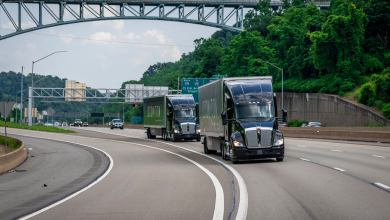
Locomation’s autonomous truck platform promises serious cost, emissions savings
Most often, hesitation surrounding autonomous vehicles centers on cost and safety concerns. Locomation set out to address these pain points with a phased approach.

Tap into a digital network to expedite your RFP process
The increased efficiency shippers find when using digital RFP tools will allow them to both build out their carrier networks and increase the frequency of their RFPs, giving them the power to respond to market shifts earlier.

Visibility solutions amplify carrier earning potential
Visibility software can all but eliminate annoying check calls, help carriers access better freight and keep trucks loaded.

Live organ transplants: Shipment visibility is a matter of life and death
Most compromised shipments result in lost time and money. Some result in lost lives.
Drivers: Why do you leave carriers?
Drivers who complete this short, seven-question survey can enter their email address for a chance to win a $70 Visa gift card.

Visibility paramount in supply chain management
Companies in the industry have come to expect better visibility from their partners. Just as importantly, end consumers have started expecting real-time visibility on online orders.

Building an award-winning 3PL
Hiring for virtually all roles in the logistics space is fiercely competitive. While all eyes are on the infamous driver shortage, recruiting and retaining top-notch brokerage employees is no easy task either.

Increasing vehicle production may not be enough to satisfy demand
Parts shortages are beginning to let up, pointing to a looming surge in vehicle production. Still, the market is expected to remain strained for the foreseeable future.

Sustainability and profitability: Going green doesn’t have to be costly
Sustainability has garnered a reputation as cutting edge and costly. There are ways to embrace environmentalism without breaking the bank. In fact, becoming more sustainable can actually drive profits higher.

What does current consumer sentiment mean for the freight industry?
A return to typical consumer spending drives conventional freight market conditions but the process of returning to normal has been anything but conventional.
Stronger supply chains: Healthy relationships require both parties to take risks
The key to strong relationships can be augmented by finding companies that are willing to share in the inherent risks that come with moving inbound and outbound freight. Relationships and good risk management strategy do not exist to absolve one party of responsibility, shifting blame onto the other.
Visibility and predictability are key to managing driver safety
It is impossible to predict exactly when an incident will occur on the road. It is possible, however, to have a predictable system for processing safety issues and handling corrective training, driving down the odds of the same types of issues continuing unchecked.
Beyond the buzzword: Culture fit promotes successful tech partnerships
Historically, the cultural fit between a brokerage and technology partner has been glossed over in partnership discussions. As these relationships become more collaborative and dynamic, however, the importance of culture is becoming more pronounced.
The warehouse paradox: Looking to remnant spaces
Warehouse space is more expensive than ever. In an environment where everyone is scrambling to claim their share of this finite resource, maybe the best strategy is not to use warehouse space at all.

Industry tailwinds push shippers toward fewer, more advanced partners
Companies will demand a full, scalable suite of services from their partners over the next few years, leading to widespread consolidation and the emergence of a handful of clear leaders with considerable market share.
Service-level agreements maximize efficiency, preserve relationships
The main purpose of these agreements is preparation. Companies can revisit and revise an SLA that they find no longer serves them. If trouble comes when there is no SLA in place, however, resolving conflict can become difficult.

Are the best logistics companies really tech companies?
The instability of a global pandemic made it clear that up-to-date technology is required to survive, not just thrive.
Careful carrier selection provides pathway for shippers to reduce carbon footprint
As the push for a more sustainable planet continues to grow stronger, companies across the supply chain will be expected to have a clear plan for cleaning up their operations.

Many shippers underestimate visibility expectations
Companies want transparency from their partners, and end consumers want to know exactly when their packages are going to arrive.

The evolution of carrier booking behavior
Carriers of all shapes and sizes embraced technology with fervency in the face of COVID-19. In turn, technology providers have placed renewed emphasis on convenience and efficiency.

Rethinking RFPs: The power of conversation
Picking up the phone before partnering up can help identify ill-suited broker-shipper relationships and avoid costly mistakes.
Do changing LTL limits create new hurdles for shippers?
Every company aims for maximum profitability. For less-than-truckload carriers, that has meant lowering linear-foot caps from 16 linear feet to 12 linear feet and turning away freight that exceeds those caps.

Disruption paves way for opportunity and collaboration
Seeking collaboration over individualism is vital. In a world — and an industry — that grows more connected by the minute, it is impossible to do anything in a vacuum.
Becoming (and staying) a shipper of choice in a volatile market
In an attempt to be a “shipper of choice” companies generally focus on creating carrier-friendly spaces and policies. Shippers hoping to set themselves apart should shift their focus toward innovating from within first.

Carriers can’t afford the costs of bad record-keeping
Keeping out-of-date or inadequate files is a costly mistake, leading to avoidable fines and unnecessary hurdles.

Collaboration among tech providers more important than ever
Historically, digital platforms and transportation management systems (TMS) have largely existed in their own, individual spaces. Now, platform integrations are taking center stage.

4PLs provide competitive advantage needed to thrive in 2021
During market shifts, it can be difficult for shippers to decide which modes, providers and contract/rate types will serve their business best.

Shifting perspective on what makes a quality driver
The coronavirus pandemic inspired retirement-age drivers to leave the industry en masse while also shutting down driving schools for months on end, exacerbating the existing shortage.

IT outsourcing offers respite for overwhelmed industry
For many companies, sourcing talent and growing their IT teams to meet new demands is both time consuming and cost prohibitive.

Human-guided autonomous tech projected to save money, improve driver lifestyle
ARCs — paired with freight optimization services — can lead to operating margin improvements as high as 30% and utilization increases of up to 130% for carriers.

Managing customers’ supply chains in a digital world
Companies that resist technological innovation or refuse to audit their current systems at this point may be risking more than just favorable rates; they may be risking the viability of their business.
Relationships key to navigating capacity crunch
How brokers and logistics providers choose to navigate the current capacity crunch will affect both their own chances of success and their relationships with their carrier partners for years to come.

Still relying on 3G networks? It is time for an upgrade
Companies relying on older cellular networks to run their remote monitoring and telematics applications will soon start to experience performance issues and reliability drops ahead of widespread network shutdowns.
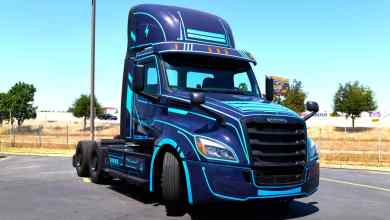
New Legend energizes local lanes, ordering 50 Freightliner eCascadias
New Legend announced plans Monday to switch all of the company’s local running lanes to an entirely all-electric fleet by 2023.

There is no room for technological stagnation in time-critical logistics
Prior to the implementation of AI and machine learning solutions, shipment visibility was dismal, and about one in three time-critical shipments arrived late.
Holistic approach helps shippers cope with driver shortage
There may not be an end in sight for the driver shortage, but holistic supply chain solutions are well-positioned to help shippers and carriers alike weather the storm.
Legend Transportation raises the bar on driver pay and honesty
Driver surveys examining turnover rates have consistently shown that drivers value three things: pay, time and respect.

Industry success calls for data sharing among competitors
In a business model in which each company keeps its information to itself, data becomes siloed and consumers ultimately pay the price.

Mobile warehousing and storage frees capacity from crowded ports
Companies need to think outside the box in order to meet consumer demand despite crowded ports and constrained capacity. Mobile warehousing and storage offers an affordable solution.

New era of shipping: E-commerce, climate change and data analytics
Shippers who have a deep understanding of their data, with access to comprehensive models, are the ones most likely to win in today’s shipping environment.

Sourcing capacity, finding freight don’t have to take all day
Most innovative solutions are inspired by seemingly insurmountable problems. That is exactly how Evotrux was born

A healthier planet depends on a greener supply chain
Scientists and government leaders are pushing for a more sustainable supply chain. Consumers are paying attention.

Schneider offers digital tools to help shippers compete in tight market
Schneider, a premier provider of trucking, intermodal and logistics services, has expanded its digital marketplace – Schneider FreightPower® – to shippers of all sizes.

Autonomous vehicles poised to solve long-term industry ills
With trucking demand expected to surge in lockstep with e-commerce growth, autonomous vehicles offer an innovative solution for an industry with an already strained workforce.

Last-mile delivery made smarter with transit technology
Once regarded as stubbornly resistant to change, transportation and logistics is fast becoming a high-tech industry as entire supply chains reshape themselves around the demands of 21st century consumers.

No more secrets: Honesty is hallmark of connected future
The rate of technological advancement makes it nearly impossible to rely on in-house developers for every new feature. How do you choose the right third-party partner?

Holistic changes necessary to thrive in connected future
Changes in customer demand and rising expectations are helping force the transportation industry to evolve in order to meet the growth of this market.

Tech solutions prove useless without real-world collaboration
In an environment as hands-on as trucking, bridging the gap between the digital and physical worlds can prove challenging.
Driving business forward in the face of change and uncertainty (with video)
The only certain thing about the market is that it changes. Regardless of the state of the market, however, there are certainties and uncertainties that must be acknowledged.

Quality customer service is still a strategy worth betting on
Sometimes the transportation industry can feel a little impersonal. A people-first mindset can help combat that.

Coronavirus vaccine distribution one of greatest logistics challenges ever seen
Vaccine distribution is an inherently complex process. The process is further complicated by this specific vaccine’s short shelf life.

Keeping carriers loyal requires more than competitive rates
Competitive rates will convince a carrier to pick up a load, but the right combination of relationship and convenience will keep them coming back to the same broker over and over.

Time, money and humanity: Attracting and retaining qualified drivers
Driver turnover is consistently ranked as one of the biggest – and most buzzworthy – problems facing carriers. Research suggests that the solution may be threefold: more home time, higher wages and better treatment.

Hard-to-find IT talent proves essential to carrier viability
Industry expectations surrounding information access and transparency have grown. Qualified IT professionals are required to meet these new demands.
Skill makes all the difference in final-mile space
Consumers do not want their new exercise equipment delivered to their door. They want it unboxed, assembled and ready to use inside their homes. A good final-mile partner makes that possible.

Forager launches transparent cross-border load board
Carriers moving cross-border freight have not had the same access to loads as those moving loads within the U.S. Forager is working to change that.
E-commerce growth furthers interest in direct-from-origin shipping options
A quickly changing retail landscape has sparked interest in more innovative shipping models, including bypassing domestic warehousing with direct-from-origin options.

Old-school arts industry embraces tech amid COVID concerns
Fine art logistics provider Masterpiece International saw benefits of technological innovation firsthand when switching from human couriers to high-tech trackers during the coronavirus pandemic.
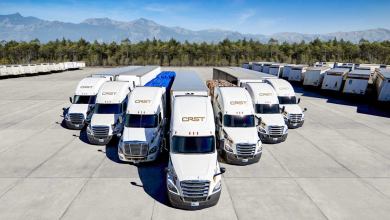
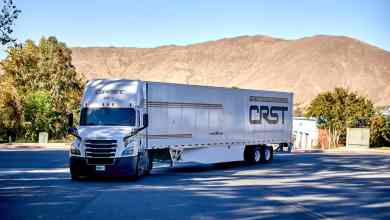
From dry van to drayage: CRST boasts full suite of services
When a single point of contact handles all of a company’s freight needs, customers are rewarded with lower costs, less confusion and more transparent shipments.

Expect tech companies to hone in on user experience in 2021
In 2021, you do not just need to offer a solution; you need to offer a smart solution.

Nominations open for 2021 Shipper of Choice award
Nominate industry-leading shippers for FreightWaves’ annual Shipper of Choice award.

Turn questionable suspects into actual prospects
The right tool can help brokers turn a measly 5% success rate into sales wins at 50% or more.

More than a buzzword: Visibility goes beyond dots on a map
Getting people to think about visibility in a more dynamic and collaborative manner requires dismantling the idea that visibility refers only to a moving dot on a map.
Track record matters when moving fragile, high-value goods
Many companies have had poor experiences shipping fragile goods in the past. The right partner could make all the difference.

Early tech adoption: Making money in a volatile market
Small and midsize companies – brokers and carriers alike – often wait to adopt new technologies. They are being eclipsed by both larger companies and their less risk-averse peers.

Drivers still stand to benefit from family-driven environment
No amount of technology can take the place of a warm, inviting work atmosphere.
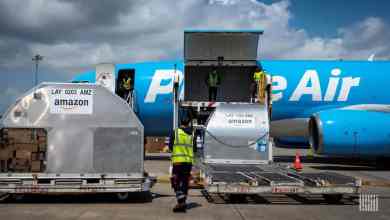
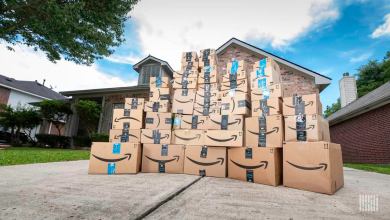
Amazon cements its place as a supply chain leader amid uncertainty
Amazon handles two-thirds of its deliveries in-house as of late 2020 — a rapid departure from the mostly outsourced model the company relied on just a few years ago.
Manufacturing proves resilient: What to expect from industry in 2021
FreightWaves partnered with Redwood Logistics to assess the current state of the manufacturing industry and assess where it is headed in the new year.

Automatic spot rate tools give shippers an edge in digital marketplaces
To make the best possible match at the best price for everyone involved, shippers post their freight and take market feedback from carriers.
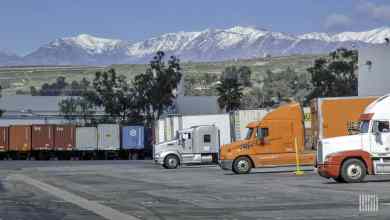
Visibility is no longer innovative. What’s next?
If visibility has moved from perk to table stakes, what exactly is “the next big thing” now? What innovative technology can companies adopt to help them stand out among their competitors?
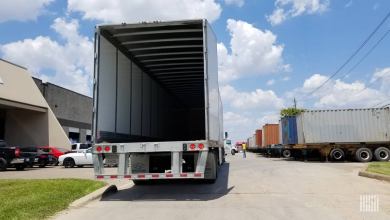
New prebate program makes shared truckload more attractive than ever
Flock Freight designed Instant Prebate to provide automatic cost savings on contracted TL freight. Savings vary by lane, commodity and time of shipment, but they can come in as high as 50% on some loads.
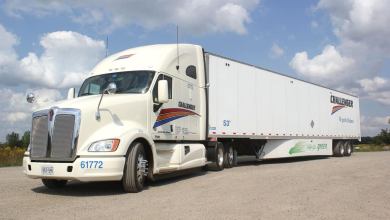
Trucking company utilizes technology to attract new drivers
With the bulk of the driver workforce approaching retirement age in the next decade, it is more important than ever to figure out how to attract younger drivers.

What would Thanksgiving be like without truck drivers?
Without truck drivers working tirelessly in the days and weeks leading up to Thanksgiving, stores shelves would be barren.

Modern shipping requires both technological innovation and human expertise
Without humans at the helm, the industry’s vast technological gains would be virtually useless.

Advanced tech solutions win industry stamp of approval
The transportation industry’s technological renaissance has inspired a new era of innovators – and a new era of holdouts. In a volatile market, the innovators come out on top.

Digital freight matching, quick payments focus of industry innovations (with video)
Presenters brought their best to the final demo block of FrightWaves’ free LIVE @HOME conference on Friday afternoon.

Reigning champ Amazon takes FreightTech 25 third year in a row (with video)
Undefeated champion Amazon (NASDAQ: AMZN) secured first place in the 2021 FreightTech 25 – a position it has held for the past three years. The Seattle-based disruptor – known most widely for its lightning-fast shipping speeds – seems to have a hand in just about every part of the logistics industry at this point. The […]

Innovative companies cut waste, keep drivers safe with tech solutions (with video)
Rapid-fire demos give industry movers and shakers an opportunity to showcase their latest innovations — with added flair and no PowerPoints.

Pandemic continues to fuel freighter demand
With passenger planes all but out of commission earlier this year – and still lagging considerably in the fourth quarter – shippers had significantly fewer options for moving their products across the world.
Marketplace model delivers competitive spot rates with full pricing transparency
Spot market transactions are notoriously inefficient and expensive. Digital freight matching can make transactions more straightforward for shippers and carriers alike.
Pharma shippers continue to face brutal pandemic demands
Everyone has been impacted by the current political, economic and health climate in the U.S. For the health science industry, these challenges are amplified.
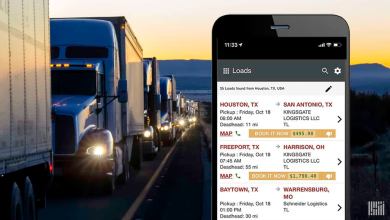
Don’t wait: A new blueprint for brokerage success in the digital age
The road to success is paved with digital tools and technological adoption.
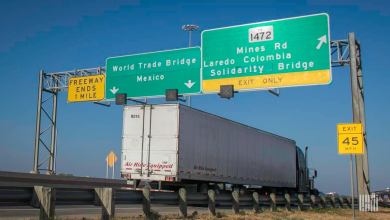
Forager brings new level of transparency to cross-border shipping
Shippers can get instant and spot quotes in mere seconds, book loads and track their freight across borders using SCOUT.

People, technology and solutions: BNSF Logistics is delivering what matters for your supply chain
The BNSF Logistics team rallies around a shared purpose: “We deliver what matters.”