




John Kingston
Tuesday, October 7, 2025
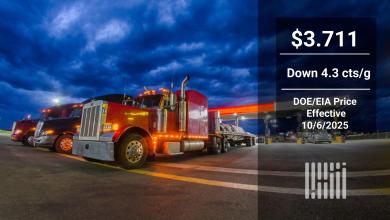
Diesel benchmark falls as talk of oil glut emerges again
The benchmark used for most fuel surcharges declined to its lowest level in about two months.
The benchmark used for most fuel surcharges declined to its lowest level in about two months.
Over 8 out of 10 attendees walked into Amazon RelayCon 2025 looking to grow — not survive — and the event made one thing clear: for the right type of small carrier, Relay is a business model worth studying.

Every small carrier says they’re “reliable.” Every one says they’re “family-owned.” And all of them promise they “treat customers like partners.” Those slogans look good on a website, but the truth is they don’t move the needle when you’re one of nearly 580,000 active U.S. carriers — and more than 91% of them run 10 […]
PMI just posted a 49.1 — and while that might not mean much to most, for small carriers, it’s a crystal ball into freight demand, margin pressure, and the moves you need to make now to stay profitable.
Every small carrier has been there — staring at a weak load board, wondering if hauling a $1.35-a-mile load is better than running empty. On paper it looks like “something is better than nothing.” But the real cost of cheap freight goes far beyond the numbers you see in the rate confirmation.

Trucking isn’t a flat line — it’s a rollercoaster of peaks, valleys, and regional swings driven by what people eat, buy, and build. If you don’t plan for freight seasons, they’ll plan for you — and usually the result is a thin wallet.
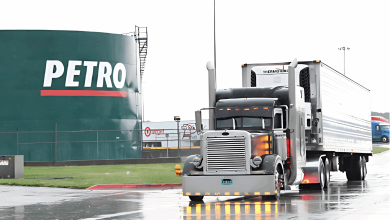
Every owner-operator faces that moment of truth: take the cheap freight in front of you, or burn diesel running empty to the next market. The wrong choice can eat your margin. The right one can save your week. Here’s how to know the difference.
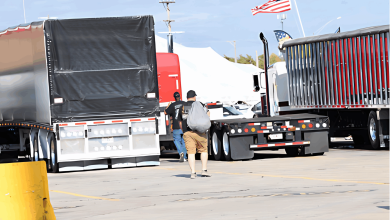
Many small fleets don’t think about their next driver until the seat is already empty. By then it’s too late — you’re scrambling, trucks are parked, and revenue is bleeding. Building bench strength isn’t a luxury, it’s survival.
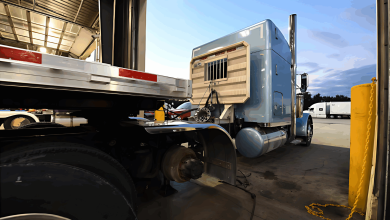
Consistently heavy freight doesn’t just risk a DOT ticket — it slowly eats away at your truck’s suspension, brakes, and cooling system until potentially one day you’re sidelined with a repair bill.
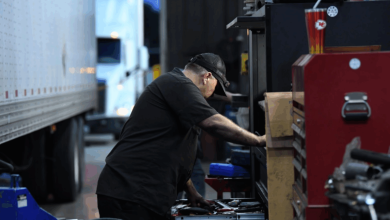
Your trailer doesn’t have to blow a tire or drop a landing gear to ruin your week — sometimes it’s as simple as a drip from the roof or a weak wall panel that lets in water. Those small oversights are what turn profitable freight into expensive claims and can cost you the shipper’s trust for good.

This article is contributed content. It does not reflect the views or opinions of FreightWaves or any of its subsidiaries. Freight fraud is the industry’s open secret: for years, carriers complained about unpaid loads, shippers voiced frustrations over losses, and brokers warned of schemes that drained time and trust. The noise was constant, but it […]

Diesel price benchmark edges up, highlighting market stability amid oversupply and Chinese oil buying.
The recently introduced FAIR Trucking Act (H.R. 5268) is Congress’ latest attempt to address the crisis in trucking litigation, but is it enough to actually address the systemic issues in the industry? The bill, sponsored by Rep. Ashley Hinson (R-Iowa), would give federal courts jurisdiction over highway accident cases involving commercial motor vehicles where damages […]
Transportation Secretary Sean P. Duffy announced this week that the first phase of the NCCDB modernization is now live, marking what the agency calls “an overdue tech upgrade” that could fundamentally change how safety violations, fraud, and service issues get reported and addressed in trucking. The modernized database represents a significant shift in how federal […]
Excerpt: The produce industry’s demographic shift toward Millennial consumers is creating new transportation opportunities for reefer carriers as the freight recession shows signs of improvement. With Millennials driving 68% of produce growth and demanding convenience-focused solutions, cold chain logistics faces challenges and opportunities in 2025.
Federal watchdogs are once again questioning whether we have one CDL standard or 50. With nearly 5,000 truck and bus fatalities last year and English proficiency enforcement under fire, the new OIG audit could reshape how states test, license, and oversee drivers nationwide.

From twin sticks to push-button drive, trucking’s gearshift evolution changed transmissions, it changed drivers, and it changed the industry. The old twin-stick rigs demanded patience, timing, and respect for the machine. They created a natural filter, separating those willing to master the craft from those who weren’t. Today, with 90% of new trucks equipped with automated manuals, anyone can simply drop it into drive and go. Easier? Absolutely. But in removing the barrier, the industry may have also lost a layer of mechanical awareness, attentiveness, and skill that once defined professional driving.
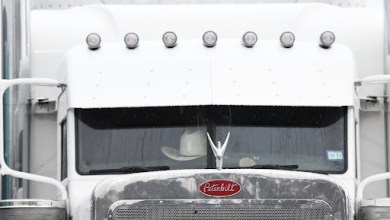
With the DOT floating new flexible Hours of Service (HOS) pilot programs, owner-operators could stand to earn more per mile — or lose ground fast if the changes don’t match their operations. Here’s what to look at.
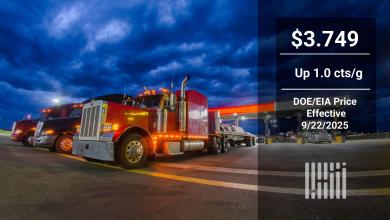
The price used for most fuel surcharges rose one cent in a market that has featured stability for weeks Stability in the retail price of diesel remains the prevailing condition in the market, with the benchmark price used for most fuel surcharges moving a mere one cent this week. The Department of Energy/Energy Information Administration […]
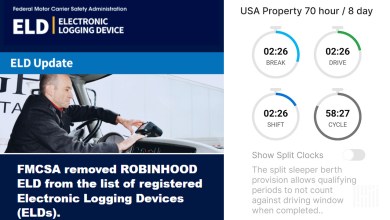
The removal of ROBINHOOD ELD from FMCSA’s registered devices list underscores the importance of selecting reputable ELD vendors, as fleets now face a 60-day scramble to replace systems while managing driver frustration and operational disruption.