USPS tried to ban immigrant truck drivers — it went horribly

US Postal Service long-haul truck on the highway.

The U.S. Department of Transportation (DOT) Secretary Sean P. Duffy recently announced an emergency interim final rule to restrict non-domiciled Commercial Driver’s Licenses (CDLs), causing significant disruptions in the trucking and supply chain industries. Issued by the Federal Motor Carrier Safety Administration (FMCSA) on September 29, 2025, the rule addresses widespread abuse in the issuance of these licenses to immigrants. The rule requires that states immediately stop issuing new non-domiciled CDLs, but created a two-year phase in period before all non-domiciled CDLs are invalidated.

Non-domiciled CDLs, originally intended in 2017 to allow drivers residing in one state to obtain a license in another, evolved to include non-U.S. residents, sometimes without proper work permits. A DOT audit revealed that at least 200,000 such licenses were issued, with over 25% in California improperly granted.

In March 2019, FMCSA provided regulatory guidance stating that foreign drivers with employment permits or unexpired passports and CBP Arrival/Departure Records could obtain non-domiciled CDLs. However, many states failed to verify permits or align expiration dates, leading to concerns over fraud and safety.

The growth of these licenses coincided with an explosive increase in trucking capacity, contributing to the longest freight recession in history due to a glut of truck drivers.

USPS Implementation and Rapid Reversal

A few weeks ago, the U.S. Postal Service (USPS) implemented a policy banning the loading of contractors using drivers with non-domiciled CDLs, aligning with evolving federal guidelines on immigration and transportation. Facilities were instructed not to load trailers hauled by such drivers as part of efforts to improve safety across a network of asset carriers and brokers handling local, regional, and cross-country work.

The policy’s impact was immediate, resulting in canceled loads and widespread disruptions. USPS operations, heavily reliant on these drivers, saw trips missed and sorts delayed, exposing vulnerabilities in the postal linehaul network.

Within days, USPS reversed the ban, deeming the service and cost impacts too severe for an abrupt change. This highlighted the critical role non-domiciled drivers play in mail delivery reliability.

Key Insights from Leadership

Pete Routsolias, USPS SVP of Logistics, addressed suppliers in a call, explaining the reversal: “We didn’t understand the magnitude of how many people were using non-domiciled CDLs, and quite honestly, the amount of omits was astronomical. And right now, I am not willing to impact service that bad.” He added, “What we’re announcing is, as of right now, you can go back to using non-domiciled CDL drivers,” while emphasizing that other rules—such as English proficiency and two drivers per truck—still apply.

Initially, USPS planned a delayed ban until January 1, but supplier pushback led to indications that a full ban currently has an uncertain implementation date.

The proliferation of non-domiciled CDLs to immigrants has caught so many veteran trucking executives off-guard. For years, the trucking industry has been trying to understand how capacity had grown so substantially.

Since the FMCSA permitted foreigners to get a non-domiciled CDL in March 2019, over 200,000 have been issued. In that same period, the trucking industry has added more than 310,000 trucks, flooding the market with way too much capacity.

Due to the massive surge of trucking capacity, the trucking industry has been suffering from the longest downturn in history, we dubbed the Great Freight Recession. This freight recession started in March 2022 and has continued unabated ever since. The primary culprit: a way oversupplied trucking market. The elimination of non-domiciled CDLs pool will have a significant impact on the freight market as these drivers leave the service. After all, depending on how many of the 200,000 non-domiciled CDLs are currently active and hauling freight, it could wipe out 5%+ of all truckload capacity in the market.

The Administration’s other policies, including the English Language Proficiency (ELP) rule could have a big impact on capacity over time, as truck drivers that fail to speak, read, or understand English get put out of service. An insurance executive at a large agency suggested that at least 10% of the truck drivers on the road would fail an inspection if tested on their English language proficiency.
With all of the regulatory pressure to remove truck drivers from the industry which either have a non-domiciled CDL or lack English proficiency, a capacity crunch may happen sooner than later.

DAT execs in two forums discuss how it seeks to reshape the freight sector

CHATTANOOGA–Roper Technologies has a large portfolio of technology-focused companies.  But on its third quarter earnings call Thursday, it was DAT that took center stage in the presentation by Roper executives who were overwhelmingly positive about how the loadboard giant–now a lot more than that–is performing.Coincidentally, Bill Driegert, the executive vice president of the Convoy Platform at DAT, spoke in a fireside chat with FreightWaves and SONAR CEO Craig Fuller a day before the earnings release at the FreightWaves Festival of Freight (F3), discussing the “load board wars.”

Fuller said DAT for many years was perceived as “this really big company that isn’t doing anything, like a sleepy friendly giant. It was sort of a benign monopolist.”

“I recognize that the company is making an effort to make their products better,” Fuller said. “The acquisitions show a road map that was not apparent before.”

The financial performance of DAT was not broken out in the Roper earnings call Thursday, a day after the Driegert fireside chat. 

But even as praise was being heaped on the segment, Roper management conceded the Convoy data stack DAT recently bought from Flexport is not profitable. Optimism was the prevailing management view about the ability of the Convoy acquisition to pay off in the long term.

No profits from Convoy purchase yet

Neil Hunn, president and CEO of Roper (NASDAQ: ROP), said in his prepared comments on the earnings call that the acquisition of Convoy was “an unusual transaction for us as it is currently not profitable, but we expect the financial returns over the next several years to be extremely attractive,” according to a transcript.

The tech stack acquired from digital broker Convoy, which shut its doors two years ago, is a prime candidate to scale up, Hunn said. It will do so, he said, by “leveraging DAT’s advantaged customer unit economics for both brokers and carriers to drive sustained growth and profitability.”

Hunn discussed broader trends in AI that are impacting various Roper subsidiaries. These subsidiaries are “already seeing measurable yet early product and commercial results.”

“DAT exemplifies this strategy in action, evolving from a traditional freight matching network to a fully automated freight marketplace powered by AI,” Hunn said. “Through this transformation, DAT is unlocking significant efficiency and economic value for brokers and carriers alike, positioning itself for improved high-quality growth.”

A trifecta of deals

The Convoy tech stack was not the only recent DAT acquisition. It purchased Trucker Tools in December and Outgo in May

The Trucker Tools app has a wide variety of applications, some as mundane as a guide to truck stops but others more complex like the ability to book a load on the platform.

Outgo is an online tool that offers payment and other financial services to drivers and fleets. 

A slide about DAT’s structure presented in conjunction with the earnings report said DAT has “all the components to transform the freight ecosystem.” It listed those capabilities: load board scale, data & analytics, visibility & tracking, payments platform and an automation & compliance platform, with many of those coming out of the recent acquisitions.

The end result is what DAT says is “one-click automation.”

Hunn offered some statistics on DAT. It has more than 1.2 million loads posted and 15 million rate views each day. 

Now, with the recent acquisitions in the fold, Hunn said, “DAT is building capabilities across the entire freight automation workflow from carrier vetting to broker carrier matching to AI-driven rate negotiation, load management tracking and finally, payment and settlement.”

The anticipated savings from the capabilities provided by these tools will produce savings of $100 to $200 per load “while giving carriers greater predictability and faster payments on their invoices,” Hunn said.

The Trucker Tools app has a wide variety of applications, some as mundane as a guide to truck stops but others more complex like the ability to book a load on the platform. Outgo is an online tool that offers payment and other financial services to drivers and fleets. 

The strategy of the recent acquisitions and folding them into DAT, Hunn said, is the next step after the deep penetration of DAT into the trucking market, and then looking “how do you just scaffold more value on both sides of the network.”

Hunn said the goal is to “integrate the capability into the TMS of every broker so it’s native.” He said early results of the expanded capabilities of the DAT system were “sold out on the broker front.”

Building a Convoy substitute would have been tough

Responding to an analyst’s question, Hunn said the Convoy acquisition was “very much a buy versus build” choice. The algorithms in the Convoy system are “very complicated and complex,” describing them as more machine learning than AI. 

“There’s a very large group of talented engineers that came with the acquisition,” Hunn said. “They’re now part of the DAT sort of franchise. And so it’s unique in that it’s money losing at the moment, but it’s like the final piece to sort of manifest the strategy of DAT.”

Driegert said recent management changes that began about two years ago were first focused on stabilizing the main load board, which had experienced various difficulties. But after that, he said, a focus began to switch to product development which became the “acquisition-driven strategy” that manifested itself in the purchases of the Convoy tech stack, Trucker Tools and Outgo.

He added that the Convoy acquisition has been “particularly beneficial” in DAT’s efforts to fight fraud on its platform. Additionally, Trucker Tools provides a wealth of data about its users that can then be integrated into the DAT platform to identify potential scammers. “We can start to parse that all together to get a more accurate data set,” Driegert said. 

More articles by John Kingston

China expert Miller: why supply chain ‘choke points’ matter most

Trailer manufacturer Wabash’s nuclear verdict lawsuit settled

Factoring companies squeezed by slowing shipper payments: Alsobrooks

Is Union Pacific Trump ballroom donation Vena’s merger knockout punch?

Not only is Union Pacific Chief Executive Jim Vena a former locomotive engineer who literally built his career from the track up, he’s also a former hockey player who often boasts publicly about mixing it up along the boards in order to move the puck.

So it came as little surprise when it was revealed that UP (NYSE: UNP) was on a list of 37 donors who have contributed toward construction of President Donald Trump’s $300 million White House ballroom.

No details including the amounts of the donations were disclosed from donors that include Amazon, Apple, Google, Microsoft and T-Mobile. Trump has said that the project would be privately funded.

Contractors last week demolished most of the White House’s historic East Wing to clear the way for the 90,000-square foot President Donald J. Trump Ballroom. 

It’s the latest move in a public campaign by Vena to win support for the historic $85 billion acquisition of eastern carrier NS (NYSE: NSC) in July. If approved, the merger would create the first U.S. transcontinental freight railroad and reshape the North American rail industry.

A Union Pacific spokesperson told FreightWaves that the company had no comment.

Some observers inside and outside railroading have all but conceded that approval is a foregone conclusion. But the merger has failed to generate sustained excitement on Wall Street, where UP’s shares are trading more than 10% lower than when the deal was first announced.

Commerce Secretary Howard Lutnick earlier praised the plan, as did Trump during a visit by Vena to the Oval Office visit in September. Prior to that Trump fired Robert Primus, a Joe Biden appointee and former chairman of the Surface Transportation Board, which will approve or deny the merger. Primus was the only vote against the Canadian Pacific (NYSE: CPR)-Kansas City Southern merger in 2023.

Vena also won the backing of SMART-TD, UP’s largest labor union, in exchange for post-merger job guarantees. Some of the largest intermodal companies that stand to benefit the most from a single-line coast-to-coast rail route have also blessed the deal.

The Justice Department will ultimately make a recommendation on the merger to the STB; the formal application could be filed as soon a next month.

UP’s western rival, BNSF, has been vocal in its opposition to mergers in general. Chairman and CEO Warren Buffett of parent Berkshire Hathaway (NYSE: BRK-B) has said that the company won’t bid for NS or other eastern Class I carrier CSX (NASDAQ: CSX). The latter’s then-CEO Joe Hinrichs rejected initial merger overtures from UP, which led to his being replaced by Steve Angel.

Chemical and petroleum shippers have kept up a steady drumbeat opposing the merger, saying it will result in poor service, reduce rail competition and higher freight rates.

During Trump’s first administration, at least one railroad industry trade association seeking approval of its legislative agenda booked an event at Trump’s Washington, D.C., hotel, which soon became a point of entry for entities seeking to curry favor with the federal decision-making machinery.

Trump sold the hotel after he was defeated by Joe Biden in the 2020 election.

Subscribe to FreightWaves’ Rail e-newsletter and get the latest insights on rail freight right in your inbox.

Find more articles by Stuart Chirls here.

Related coverage:

Short line CEO joins STB rail advisory council 

U.S. weekly rail traffic finishes down again

First look: Norfolk Southern Q3 earnings

Union Pacific profits rise on operational efficiency, pricing gains

Hong Kong salvage team pulls sections of cargo jet from sea

A barge with a heavy crane lifts a broken aircraft section from the sea after an accident.

(UPDATED 7:05 a.m. ET, Oct. 27)

Salvage experts have retrieved the tail section, one engine, landing gear and the flight data recorder from the AirACT freighter aircraft that skidded off the runway at Hong Kong International Airport last Sunday, the airport authority said.

Hong Kong’s Air Accident Investigation Authority is investigating the accident with help from the U.S. National Transportation Safety Board. 

Authorities utilized two barges for the collection effort next to the North Runway. The salvage team conducted an underwater sonar survey before divers were sent into the water to find pieces of the aircraft. All salvage operations are now completed, the airport authority said in an Oct. 27 news release.

Flight operations have remained normal most of the week since the accident, which occurred when the Boeing 747-400 cargo jet operated by AirACT under contract to Emirates lost control and went off the runway and into the sea. The plane hit a security car patrolling a perimeter road. The two occupants of the car were killed when the car was knocked into the sea. The crew of the aircraft escaped without injury.

The North Runway was temporarily closed while the barges, which have large cranes on them, conducted work. 

AirACT is based in Turkey.

Click here for more FreightWaves/American Shipper stories by Eric Kulisch.

Kalitta Air prepares to fly first-ever converted 777 cargo jet

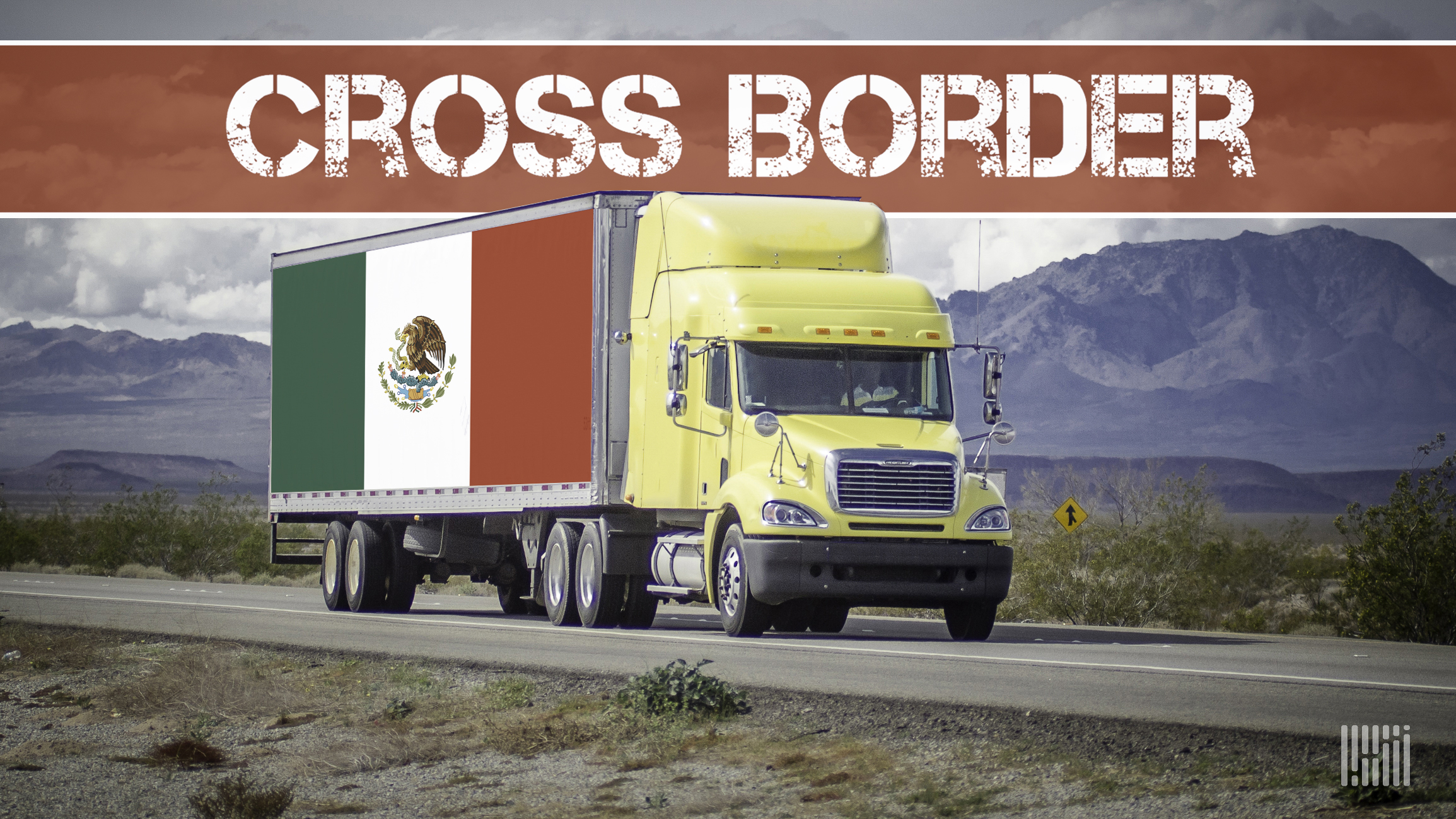
Borderlands Mexico: New customs regulation could slow cross-border trade, expert says

Borderlands Mexico is a weekly rundown of developments in the world of United States-Mexico cross-border trucking and trade. This week: New customs regulation could slow cross-border trade, expert says; Daye opens $300M manufacturing plant in Nuevo León; and US eases truck tariff burden for Mexico under new trade structure

New customs regulation could slow cross-border trade, expert says

Mexico’s customs system is about to undergo a major procedural change — a shift that could reverberate through factories, carriers, and warehouses on both sides of the border.

Starting Dec. 9, importers will be required to electronically submit a Manifestación de Valor Electrónica (MVE) — known in English as the Electronic Declaration of Value — through the Mexico’s Ventanilla Única de Comercio Exterior Mexicano (VUCEM) portal before their goods can clear customs into the country.

The new digital requirement transforms what was once a back-office record-keeping duty into a front-end compliance checkpoint. 

Importers must now file a sworn statement detailing how the customs value of each shipment was calculated and attach supporting evidence such as commercial invoices, freight and insurance charges, supplier contracts, and proof of payment.

“Before, importers could assemble this paperwork after the shipment had already been cleared,” said Adolfo Campero, CEO of Unimex Group’s customs and warehousing division and a licensed customs broker in both the U.S. and Mexico, told FreightWaves. “Now nothing can cross the border until the sworn declaration is transmitted to the Mexican government.

Why Mexico is tightening the rules

According to Campero, the government’s push stems from high-profile fraud cases tied to fuel imports, where under-valued shipments cost Mexico billions in unpaid taxes.

“There’s been a lot of media coverage about fraud in petroleum imports,” he said. “So, instead of focusing only on those offenders, the government decided to impose very strict requirements on everyone. They’ve increased penalties for any kind of error — even inadvertent ones.”

The reforms, he said, may strengthen oversight but risk penalizing legitimate importers caught in the digital paperwork dragnet. “It’s going to make operations slower, at least at the beginning,” he said. “It will also make customs services more expensive because brokers need more manpower and technology to handle the new process.”

A new digital bottleneck

Campero said the shift, though meant to increase transparency, adds a new layer of digital bureaucracy that many companies are unprepared to handle.

“It’s a little bit of an onerous process,” he explained. “You have to go onto a government website, fill out electronic forms with drop-down fields, and upload multiple supporting documents. It’s not something you can rush through five minutes before a truck arrives at the bridge.”

Accessing VUCEM requires each importer’s electronic tax signature, or e.firma — a credential that unlocks all tax and customs data held by Mexico’s authorities. Because of cybersecurity concerns, companies rarely share that signature with outside parties.

“Many importers are reluctant to let their customs brokers use the e.firma,” Campero said. “They treat it like their corporate bank password — very few people even inside the company have it. So, if they don’t give it to the broker, the importer has to do the filing themselves.”

That’s creating anxiety across import/export departments already overloaded with paperwork. “These teams tell us they don’t have the time or expertise to calculate customs values and fill government forms,” he said. “That’s why they rely on brokers in the first place.”

Delays, penalties — and rising costs

Because the MVE must be filed before customs clearance, even small administrative hiccups can hold up entire shipments. Missing documents — such as a freight invoice or contract between a U.S. parent and its Mexican subsidiary — can block the filing, leaving loads stranded at the border or accruing storage fees at ports and airports.

“We anticipate delays in clearing customs for many shipments,” Campero said. “That means trucks waiting on the U.S. side of the border or containers sitting at maritime terminals because one document is still pending.”

The new rule also carries steep fines for mistakes. Under Mexico’s updated customs code, errors in the MVE automatically translate into errors in the pedimento, the formal import entry, exposing companies to combined penalties that can exceed 70,000 pesos (about $3,800) per shipment.

“Even minor administrative errors could become very costly,” Campero said. “If there’s a mistake in the valuation on the MVE, that same mistake carries over to the pedimento, so you’re penalized twice.”

To avoid that risk, Unimex has begun training clients on how to use the VUCEM platform, calculate customs values correctly, and maintain digital records for audits. “We’re offering workshops to help companies get familiar with the process, because it’s not intuitive,” he said. “You have to know where to find every number — freight, insurance, assists — and have documentation ready to upload.”

Preparing for impact

Campero said Unimex is already helping multinational clients map their supply chains to identify where costs originate — from factory gates in Asia to inland freight carriers delivering to Mexican ports.

“Some clients are asking us to literally chart who provides every piece of information used to calculate customs value,” he said. “They want contact names, emails, and documents for each supplier and intermediary. It’s forcing companies to really understand their supply chains in a way they hadn’t before.”

He advises manufacturers to build buffer inventory and reconsider just-in-time logistics strategies to avoid production stoppages once the new rule takes effect.

“Every day we deal with shipments that are urgent, where a delay could shut down a production line,” Campero said. “This is one more obstacle we’ll have to manage. Companies that keep zero safety stock are going to feel it the most.”

Daye opens $300M manufacturing plant in Nuevo León

Chinese manufacturer Ningbo Daye Garden Machinery Co. has opened a new $300 million production facility in Salinas Victoria, Nuevo León, underscoring the state’s growing appeal as a hub for advanced manufacturing and foreign investment.

The plant, which will produce electric tools and smart gardening and irrigation products, is expected to create more than 2,000 direct jobs and strengthen local and regional supply chains. Company officials said the investment highlights Nuevo León’s skilled workforce and competitive industrial environment.

“Opening this plant consolidates Nuevo León’s position as a national leader in attracting foreign investment,” a company representative said.

Yuyao, China-based Ningbo Daye Garden Machinery manufactures tools and garden machinery.  

US eases truck tariff burden for Mexico under new trade structure

The Trump administration has finalized a new tariff framework for imported medium- and heavy-duty trucks (MHDVs) that will impose a 25% duty on non-U.S. content while easing costs for vehicles assembled in North America. 

The measure, signed by President Donald Trump on Oct. 17 and effective Nov. 1, 2025, allows trucks and parts meeting USMCA origin requirements to be taxed only on the foreign portion of their value — offering significant relief to Mexico, the top U.S. truck exporter.

The proclamation maintains a 25% duty on MHDV imports from countries outside North America. It also extends a 3.75% manufacturing credit through 2030 for U.S.-built light, medium and heavy-duty vehicles — a measure aimed at offsetting higher parts costs and incentivizing domestic assembly.

Truckload capacity is falling faster than demand

Chart of the Week:  Outbound Tender Volume Index, Outbound Tender Rejection Index – USA SONAROTVI.USA, OTRI.USA

The national Outbound Tender Volume Index (OTVI) — which measures truckload demand — hit an all-time low for the month of October last week, registering a value of 9,311. This places the index roughly 19% lower than last year and 15% below 2023 for the same period. Normally, a collapse of this magnitude would trigger a corresponding drop in tender rejections and spot rates. However, nearly the opposite has occurred: rejection rates (OTRI) are higher than both 2023 and 2024 levels, while spot rates have moved erratically over the past two weeks but trended mostly upward. This suggests that capacity is leaving the market faster than demand is declining — but let’s dive deeper.

Understanding Capacity

A common question people ask is, “How many trucks are on the road?” While intuitive, that’s an incomplete question. There could be a million trucks available for 500 loads, and we could still face a capacity problem if those trucks aren’t in the right places. This type of imbalance happens frequently, even in well-supplied markets, though the effects are usually short-lived.

The rise of freight brokers and load boards has improved carrier visibility and connectivity with available freight. These tools accelerate market response times, which can make rates volatile in the short term but help prevent prolonged capacity shortages.

Nearly every carrier network operates out of balance. Carriers are constantly repositioning equipment from markets with excess inbound freight to those with greater outbound demand. Southern California is the quintessential example of this imbalance.

In Los Angeles, the Outbound Tender Volume Index (OTVI) consistently exceeds the Inbound Tender Volume Index (ITVI). Without carriers intentionally driving in empty — or “deadheading” — this market would quickly run out of available trucks.

Carriers compensate by charging higher rates for loads leaving undersupplied markets like Los Angeles (known as headhauls) and lower rates for freight leaving oversupplied markets (known as backhauls).

One of the most well-known backhaul markets is Lakeland, Florida, where tender data indicates nearly twice as much outbound freight as inbound freight. This imbalance is why rates from central Florida are typically among the lowest in the country.

The Collapse of Long-Haul Freight

Over the past 18 months, long-haul demand — defined as loads moving more than 800 miles—has fallen about 30% year-over-year. Much of this decline is due to freight shifting toward rail and intermodal service. With many shippers pulling inventory forward and extending domestic delivery timelines, the urgency to move freight by truck has diminished.

Intermodal currently offers near-record savings compared to trucking, making it an easy choice for shippers who can use it. But this shift has disrupted connectivity between regions, making trucking more regionalized and harder to maintain as a national network. As a result, the market has become more vulnerable to demand spikes in long-haul lanes.

This trend is showing up in the data: long-haul tender rejection rates (LOTRI) climbed to 12.5% this month, the highest since May 2024. At that time, a wave of unexpected West Coast imports — driven by concerns over maritime service stability — caused a temporary surge in rejections. The most recent surge had no accompanying volume. 

Political and Regulatory Pressures

Recent crackdowns on immigrant and non-domiciled drivers may also be contributing to tightening conditions. California, a frequent target of Trump administration enforcement efforts, has seen more scrutiny than other states, suggesting regional political bias in regulatory actions. 

While there is a case to be made that recent redoubling of efforts by ICE on the trucking sector may be a factor recently, it is hard to say that it has been the case all year long. Rejection rates increased without a similar increase from demand in July and August before falling back in September. This is more supportive of carrier network challenges than regulatory activity. 

Spot rates from Los Angeles to Chicago — a lane that competes heavily with intermodal—have been increasingly erratic throughout 2025 and trending higher since May. Anyone operating in this lane on the transactional side has likely experienced growing inconsistency in available capacity.

FMCSA data analyzed by Carrier Details shows capacity continues to exit the market at a rapid pace. This data is more reflective of the multi-year freight downturn than ICE raids and regulatory pressure. The added strain from the government is helping to exacerbate the effects of the long running freight recession and making it less vulnerable to the worsening demand side economics. 

About the Chart of the Week

The FreightWaves Chart of the Week is a chart selection from SONAR that provides an interesting data point to describe the state of the freight markets. A chart is chosen from thousands of potential charts on SONAR to help participants visualize the freight market in real time. Each week a Market Expert will post a chart, along with commentary, live on the front page. After that, the Chart of the Week will be archived on FreightWaves.com for future reference.

SONAR aggregates data from hundreds of sources, presenting the data in charts and maps and providing commentary on what freight market experts want to know about the industry in real time.

The FreightWaves data science and product teams are releasing new datasets each week and enhancing the client experience.

The growing problem of CDL Mills: compromising highway safety

Overview of Current Issues in Truck Driver Training and Licensing

The trucking industry faces a critical safety crisis that has largely gone unnoticed by the American public. Each year, approximately 100,000 truck crashes occur on U.S. highways, resulting in roughly 5,000 fatalities annually. These alarming statistics point to serious flaws in the system that qualifies individuals to operate commercial vehicles weighing up to 80,000 pounds on our nation’s roads.

At the heart of this crisis lies a regulatory change implemented in February 2022 that fundamentally altered how Commercial Driver’s Licenses (CDLs) are issued. This change has enabled the proliferation of what industry experts call “CDL mills” – substandard training facilities that fail to adequately prepare drivers for the immense responsibility of operating commercial trucks.

Video: Steve Gold spoke with Craig Fuller at F3 on how the entry-level driver training program created under Biden has made the trucking industry far less safe.

Background Information on Commercial Driver’s License Requirements

Historically, obtaining a CDL required rigorous training under state-licensed programs that emphasized safety, technical proficiency, and compliance with federal regulations. However, the landscape changed dramatically when the Federal Motor Carrier Safety Administration (FMCSA) introduced a self-certification database that allows virtually anyone to register as a CDL trainer without demonstrating proper qualifications or adhering to state licensing requirements.

This regulatory shift created two distinct paths to becoming a commercial truck driver:

  1. Traditional Path: Attending one of approximately 2,100 properly state-licensed CDL schools that provide comprehensive training programs
  2. Deregulated Path: Receiving minimal training from one of the over 32,000 self-registered “training providers” in the federal registry

The difference in training quality between these paths is substantial. Legitimate schools like 160 Driving Academy provide 160 hours of comprehensive training, while self-certified providers may offer as little as a few hours of orientation before sending drivers to obtain their licenses.

The Proliferation of CDL Mills and Their Impact

The term “CDL mill” refers to operations that exploit regulatory loopholes to rapidly process would-be drivers through minimal training before sending them to obtain their licenses. These operations have flourished under the current regulatory framework, which allows virtually any entity – from established carriers to small businesses with a single truck – to self-certify as training providers.

As Steve Gold, founder of 160 Driving Academy, explains: “The feds come in, they create this self-certification database, and you can register to be a CDL trainer at the federal level. And employers, if you’re an employer, you’re exempt. You don’t have to be licensed in the state. So there’s 32,000 registered federal training providers who can provide training for CDLs.”

The lack of oversight is particularly alarming. When asked what evidence these self-certified trainers must provide to demonstrate they’ve properly trained a driver, Gold was unequivocal: “You don’t do a damn thing.” This means someone could receive minimal instruction, or even just watch YouTube videos about truck operation, before being directed to a DMV to obtain a commercial license.

Some states have further exacerbated this problem by abandoning their own licensing standards in deference to federal guidelines. Indiana, for example, eliminated state oversight of truck driver training schools after the federal registry was implemented, essentially creating a regulatory vacuum.

Safety Concerns and Public Risk

The consequences of this deregulated approach to commercial driver training are severe and measurable. According to the National Highway Safety Administration, 2023 saw 153,472 highway truck accidents resulting in 5,472 fatalities – a shocking 40% increase from 2014 levels. Similar fatality levels continued into 2024.

These statistics translate to a disturbing reality: the odds of being killed by a commercial truck are approximately 20 times greater than dying in a commercial airline crash. This disparity highlights the stark difference in training standards between the aviation and trucking industries.

A particularly troubling incident occurred in Fort Pierce, Florida, where a driver who couldn’t speak or read English obtained a CDL and subsequently caused an accident that killed a family of three. This tragedy exemplifies the dangers posed by inadequate training and licensing standards.

Industry assessments further validate these concerns. When 160 Driving Academy evaluated experienced commercial drivers for large carriers, approximately half scored below 50% on proficiency tests – a failing grade that would typically disqualify them from employment with safety-conscious companies. However, these drivers often find work with smaller operators who may lack robust safety departments or evaluation processes.

Legislative and Regulatory Responses

In response to these alarming trends, some states have begun taking independent action. California, which ranks second nationally in highway fatalities caused by commercial trucks, unanimously passed legislation to eliminate substandard commercial driving schools. Florida and Colorado have issued cease-and-desist letters to unlicensed training facilities that attempt to circumvent state laws by claiming exemption under federal rules.

At the federal level, the Department of Transportation under Secretary Sean Duffy has recently taken steps to address related issues, particularly regarding non-domiciled CDLs. These are licenses issued to individuals who aren’t residents of the issuing state, which have raised additional safety concerns.

However, industry lobbying initially contributed to the deregulation of driver training requirements, based on claims of a perpetual driver shortage. This approach may have inadvertently compromised safety while also undermining the economic stability of the trucking industry by flooding the market with inadequately trained drivers.

The Path Forward: Enhancing Safety Through Proper Training

Addressing the proliferation of CDL mills requires a multifaceted approach combining federal oversight, state regulation, and industry commitment to higher standards. As Gold suggests, this isn’t an insurmountable challenge: “This is not a hard problem to fix.”

Potential solutions include:

  1. Strengthening the federal registry by requiring all training providers to demonstrate state licensing before certification
  2. Implementing robust enforcement mechanisms to ensure compliance with training standards
  3. Establishing clear penalties for entities that falsely attest to providing proper training
  4. Supporting state efforts to maintain or enhance their licensing requirements

The trucking industry plays a vital role in the American economy, with commercial drivers moving more than 70% of all freight across the country. These essential workers deserve proper training, and the public deserves the assurance that commercial vehicles are operated by qualified professionals.

By addressing the issue of CDL mills and substandard training, we can work toward reducing the alarming rate of truck-related accidents and fatalities while ensuring that commercial transportation remains both efficient and safe for all road users.

The trucking industry needs CDL reform

Man watching truck with driver in skills test

I am a DOT Safety and Compliant consultant, with 23 years of industry experience. I’ve seen the issues with the current CDL system and believe there are solutions that can significantly improve safety and eliminate fraud. – Tab Caticha

How to Overturn the CDL System: A Comprehensive Reform Proposal

The Commercial Driver’s License (CDL) system, along with USDOT numbers, is plagued by inefficiencies, fraud vulnerabilities, and inconsistent oversight across states. These shortcomings undermine transportation safety and regulatory compliance, creating opportunities for exploitation. A bold overhaul is needed, centered on federalizing CDL issuance, strengthening security measures, and streamlining regulatory processes.

Below is a detailed plan to reform the system, ensuring greater safety, accountability, and efficiency:

Centralizing CDL Issuance Under USDOT

The foundation of this reform is transferring CDL issuance from individual states to the United States Department of Transportation (USDOT). This would establish a single, standardized Federal CDL, replacing the patchwork of state-issued licenses. Key features include:

  • Unified Federal CDL: USDOT would exclusively issue Federal CDLs, while states retain authority to issue regular driver’s licenses and Intrastate Only CDLs for drivers aged 18–20.
  • Elimination of the K Restriction: Removing the K restriction, which limits certain CDL holders to intrastate driving, would simplify identification of driver privileges for industry professionals and law enforcement.
  • Standardized Training and Testing: All CDL holders would undergo identical training and testing nationwide, ensuring consistency and reducing disparities in driver qualifications.

Benefits of Federal CDL Issuance:

  • Simplified Relocation: Drivers moving between states would only need to update their address, not obtain a new CDL.
  • Efficient Suspension Tracking: A centralized database would enable immediate identification of suspended drivers across all states.
  • Fraud Reduction: Uniform processes would minimize opportunities for fraudulent CDL acquisition.
  • Dual Functionality: A Federal CDL would also serve as a standard driver’s license, reducing the need for multiple credentials.
  • Streamlined DMV Visits: Drivers would only visit state DMVs for specialized licenses (e.g., motorcycle or boating licenses).

Strengthening Security with TWIC Card Integration

To enhance security and prevent fraud, every Federal CDL would be paired with a Transportation Worker Identification Credential (TWIC) Card, administered by the Transportation Security Administration (TSA). This integration would include:

  • Comprehensive Background Checks: TWIC cards would verify a driver’s identity, legal status, and background, preventing illegal aliens from obtaining CDLs.
  • Biometric Data: TWIC cards would incorporate biometric identifiers to prevent individuals from obtaining multiple USDOT numbers or CDLs under different identities.
  • Real ID Compliance: All Federal CDLs would meet Real ID standards, ensuring rigorous verification of residency and identity.

Standardized Testing and Issuance Procedures

To ensure consistency and security, CDL testing and issuance would occur exclusively at federal facilities:

  • Federal Testing Locations: CDL tests would take place at federal buildings, administered by federal employees. Tests would be conducted in English to confirm language proficiency, a critical safety factor for navigating federal regulations and road signs.
  • Secure Testing Environment: Entry to testing facilities would require identification, reducing fraud opportunities.
  • One-Stop Issuance: Federal buildings would serve as hubs for issuing both CDLs and TWIC cards, streamlining the process. Alternatively, the two credentials could be combined into a single document.

Reforming Company Ownership Regulations

Fraudulent “chameleon companies”—businesses that evade regulations by frequently changing names or locations—pose a significant challenge. To address this:

  • TWIC Requirements for Owners: Company officials applying for a USDOT number would provide their TWIC Card SSN, linking their identity to the application.
  • Address Restrictions: Each physical address would be limited to one company registration, with verification to ensure the location is commercial, not residential. Virtual addresses like P.O. boxes or mailing centers would be prohibited.
  • 21-Day Verification Period: A mandatory waiting period would allow USDOT to verify application details before granting authority.
  • Insurance Oversight: Alternatively, insurance companies could be barred from issuing policies to multiple companies at the same residential address, with an industry database ensuring compliance.

Federalizing Apportioned License Plates

To curb chameleon companies, USDOT would take over the issuance of apportioned license plates:

  • Centralized Plate Issuance: Federal oversight would prevent companies from switching vehicles between entities to evade detection.
  • State Flexibility: States could continue issuing Intrastate Only license plates for local operations.
  • Enhanced Accountability: Centralized plate issuance would make it harder for companies to relocate across state lines to avoid scrutiny.

Streamlining IFTA Tax Compliance

The International Fuel Tax Agreement (IFTA) system is prone to evasion. To improve compliance:

  • IRS Oversight: IFTA tax collection would be redirected to the Internal Revenue Service (IRS), which would redistribute funds to states.
  • Reduced Evasion: Centralizing tax collection would make it harder for companies and owner-operators to avoid IFTA taxes by relocating across state lines.

Funding the Overhaul

Implementing these changes requires funding, which can be sourced efficiently:

  • Reallocating MCSAP Funds: The Motor Carrier Safety Assistance Program (MCSAP) budget would be redirected to cover federal CDL issuance and plate administration, as states would have fewer responsibilities.
  • Cost Efficiency: The federal government already issues license plates for its agencies, so expanding to apportioned plates would incur minimal additional costs.

A Path to a Safer, More Efficient System

The current CDL system’s state-based approach is outdated, vulnerable to fraud, and inefficient. By federalizing CDL issuance, integrating TWIC cards, standardizing testing, regulating company ownership, and centralizing apportioned plates and IFTA taxes, this proposal tackles systemic flaws head-on. These reforms would enhance transportation safety, reduce fraud, and create a streamlined, equitable system for drivers, companies, and regulators. The transportation industry deserves a modernized framework—centralized USDOT oversight is the key to achieving it.

Shaquille O’Neal’s $180,000 Range Rover stolen in suspected transport scam

NBA legend Shaquille O’Neal is missing one of his prized rides — a custom 2025 Land Rover Range Rover valued at $180,000 — after it was stolen while being transported from Georgia to Louisiana, according to the New York Post.

According to the Lumpkin County Sheriff’s Office in Georgia, the Range Rover had been worked on at a custom auto shop in Dahlonega.

“The vehicle was there to have modifications done to the front seat area, to move it back some,” Lumpkin County Sheriff Stacy Jarrard told The Dahlonega Nugget. “And then the towing company picked up the vehicle on Oct. 20 to take it on to the next location.”

California-based Effortless Motors, which had customized the vehicle for O’Neal to accommodate his 7-foot-1 frame, said it arranged the transport and later discovered the vehicle never reached its destination.

“The location it was taken to was apparently in Atlanta,” Jarrard said. “We have leads on people of interest out of this location, and we have search warrants.”

GPS data suggests the Range Rover may have already been loaded onto a shipping container headed overseas.

FirstLine Trucking LLC, the company hired to deliver the vehicle, said the driver listed for the job was never actually dispatched — suggesting someone may have posed as the transporter to steal the SUV. Effortless Motors is now offering a $10,000 reward for information leading to its recovery.

Jarrad said investigators spoke to O’Neal, who was hopeful to get the vehicle back.

“He was really hopeful that someone would be held accountable for the theft and was going to jail,” she said. “And we’ll do everything we can possibly do to make that happen.”

Short line CEO joins STB rail advisory council 

The Surface Transportation Board continues to strengthen an advisory panel of railroads and shippers.

Ryan Ratledge, president and chief executive of short line operator Pinsly Railroad Co., has been appointed to the rail regulator’s Railroad-Shipper Transportation Advisory Council (RSTAC) for a three-year term as the small railroad representative.

Ryan Ratledge (Photo: Pinsly)

“I am honored to represent Pinsly Railroad Company and small railroads across the country on the RSTAC committee,” said Ratledge. “I look forward to the opportunity to positively impact the industry by contributing to RSTAC’s objectives.”

The long-standing 15-member RSTAC provides advice and recommendations on regulatory, policy, and legislative matters to STB board members, the Secretary of Transportation, the Senate Committee on Commerce, Science and Transportation, and the House Transportation and Infrastructure Committee. Members include representatives from BNSF, Norfolk Southern (NYSE: NSC), CN (NYSE: CNI), OmniTrax, R.J. Corman, Archer Daniels Midland (NYSE: ADM), and rail union TD-SMART. 

However, the panel does not directly confer on pending issues before the regulator which would include the proposed merger of Union Pacific (NYSE: UNP) and Norfolk Southern, an $85-million blockbuster deal which would transform the U.S. rail industry.

Ratledge, with 30 years in freight rail, since 2022 led privately-held Pinsly’s expansion from two to nine short lines in seven states as well as acquisitions in warehousing, transload and trucking.

Subscribe to FreightWaves’ Rail e-newsletter and get the latest insights on rail freight right in your inbox.

Find more articles by Stuart Chirls here.

Related coverage:

U.S. weekly rail traffic finishes down again

First look: Norfolk Southern Q3 earnings

Union Pacific profits rise on operational efficiency, pricing gains

The chemicals industry hates the UP – NS merger