Old Dominion not changing course as downturn lingers

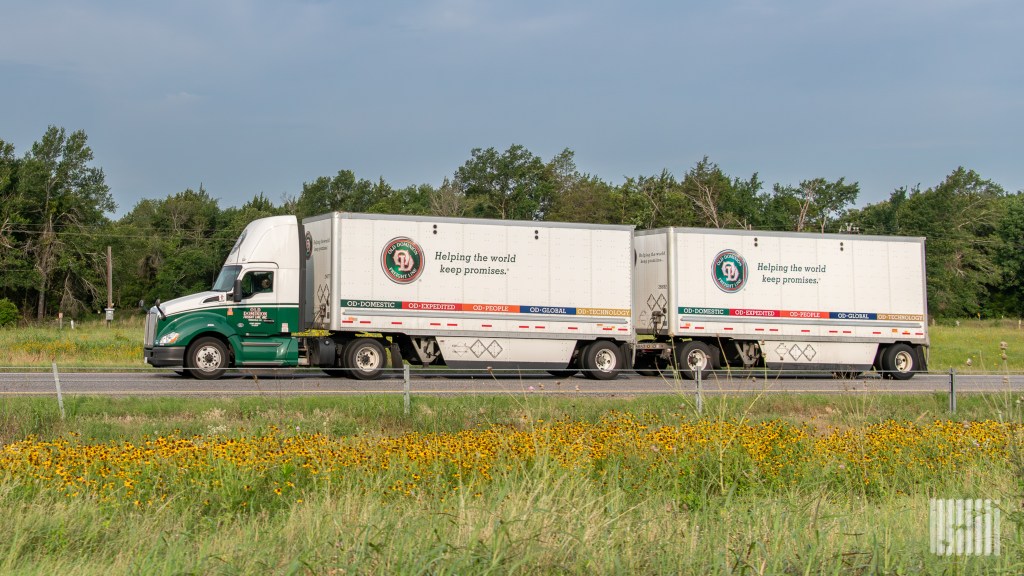
A closeup of an Old Dominion tractor pulling a trailer on a highway

Not surprisingly, Old Dominion Freight Line said Wednesday it will continue its strategy of attempting to hold market share while raising yields through economic downturns. The approach has allowed it to consistently generate industry-leading margins.

The less-than-truckload carrier said its book of business is off about 15% three years into a freight recession, a percentage it believes is on par with the rest of the industry. However, the company has been able to increase yields during this stretch, outperforming most in the space.

Old Dominion’s (NASDAQ: ODFL) revenue declined 6% y/y to $1.41 billion in the second quarter as tonnage fell 9.3% and revenue per hundredweight, or yield, increased 3.4% (5.3% higher excluding fuel surcharges).

On a two-year-stacked comparison, the carrier’s yield was 10.2% higher (excluding fuel). A 2.1% y/y decline in shipment weight was a modest tailwind to the yield metric in the quarter.

Table: Old Dominion’s key performance indicators

Old Dominion’s y/y tonnage comps ease in the back half of the year (negative-5% y/y and negative-8% y/y in the third and fourth quarters, respectively). However, the monthly sequential changes in tonnage during the second quarter still lagged historical trends by 200 to 300 basis points. Further, revenue per day was up less than 1% sequentially in the quarter when it normally increases 8.2%.

Tonnage is down 8.5% y/y in July with revenue per day off 5.1% y/y. Both numbers represented a slight slowdown from the second-quarter declines. The carrier said the sequential tonnage change in July (from June) was about 100 bps better than normal.

Management is calling for a 4% to 4.5% y/y increase in yield (excluding fuel) during the third quarter, which implies a roughly 1.5% sequential improvement. It said pricing on contract renewals continues to be positive and noted that the rate increases are accompanying more volume in some instances.
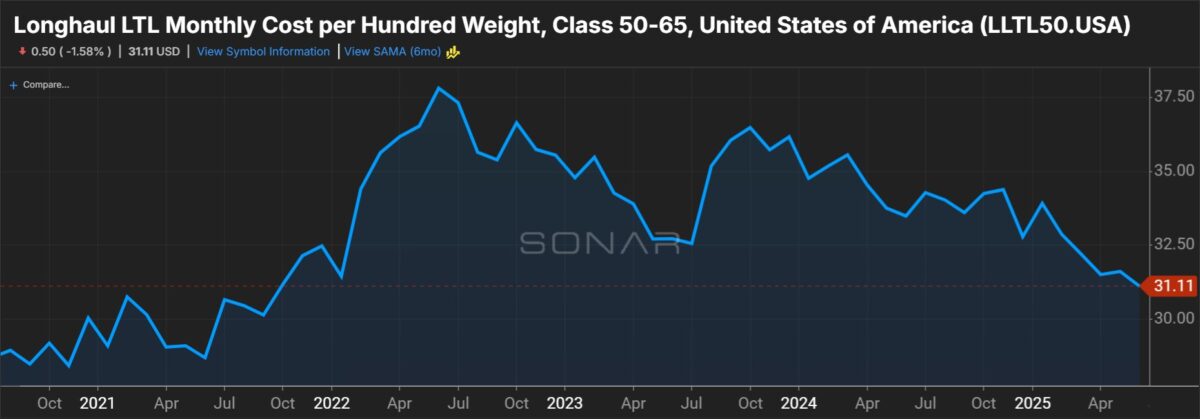
SONAR: Longhaul LTL Monthly Cost per Hundredweight, Class 50-65 Index. Less-than-truckload monthly indices are based on the median cost per hundredweight for four National Motor Freight Classification groupings and five different mileage bands. To learn more about SONAR, click here.

The company reported a 74.6% operating ratio (inverse of operating margin), which was 270 bps worse y/y and just 80 bps better than the first quarter. That was shy of management’s guidance for 100 bps of sequential improvement. (The carrier normally sees 300 to 350 bps of sequential margin improvement in the second quarter.)

Cost per shipment was up 5.1% with revenue per shipment up just 1.2%, a 390-bp negative spread.

Salaries, wages and benefits expenses (as a percentage of revenue) increased 210 bps y/y. A 4.8% decline in headcount didn’t keep pace with the 7% drop in shipments.

Depreciation and amortization expenses were 80 bps higher y/y.           

Old Dominion’s OR normally sees no change to 50 bps of deterioration from the second to the third quarter. However, that move typically accompanies a 3% sequential increase in revenue, which is not occurring currently.

If revenue remains flat throughout the quarter, the carrier will likely see 80 to 120 bps of margin degradation, implying a 75.6% OR (at the midpoint), or 290 bps worse y/y.

The carrier also faces some headwinds across multiple expense lines. Benefits costs are up and the company implements an annual wage increase every September.

It also called out recent losses on equipment sales as it modestly trims the fleet. Truckload carriers selling two-year-old tractors have been booking gains, but Old Dominion is trying to move 10-year-old daycabs with more than one million miles.

The company is also carrying excess capacity (and additional costs) as it awaits an eventual market turn. As such, its overhead costs represented 22% of revenue in the second quarter compared to just 17% in 2022 — a much stronger demand environment.

The company’s high-fixed-cost network should again see operating leverage as revenue increases. Old Dominion saw a 60% incremental operating margin in the second quarter (as compared to the first quarter). It normally sees 35% to 40% incremental margins coming out of downturns.

Old Dominion reported second-quarter earnings per share of $1.27 ahead of the market open on Wednesday. The result was a penny light of the consensus estimate and 21 cents lower y/y. A decline in net interest income was nearly a 2-cent drag compared to the year-ago quarter.

Shares of ODFL were down 8.7% at 12:23 p.m. EDT on Wednesday compared to the S&P 500, which was up 0.3%. Shares of ArcBest (NASDAQ: ARCB) were also under pressure, down 11.1%, after reporting second-quarter results light of expectations earlier in the day.
More FreightWaves articles by Todd Maiden:

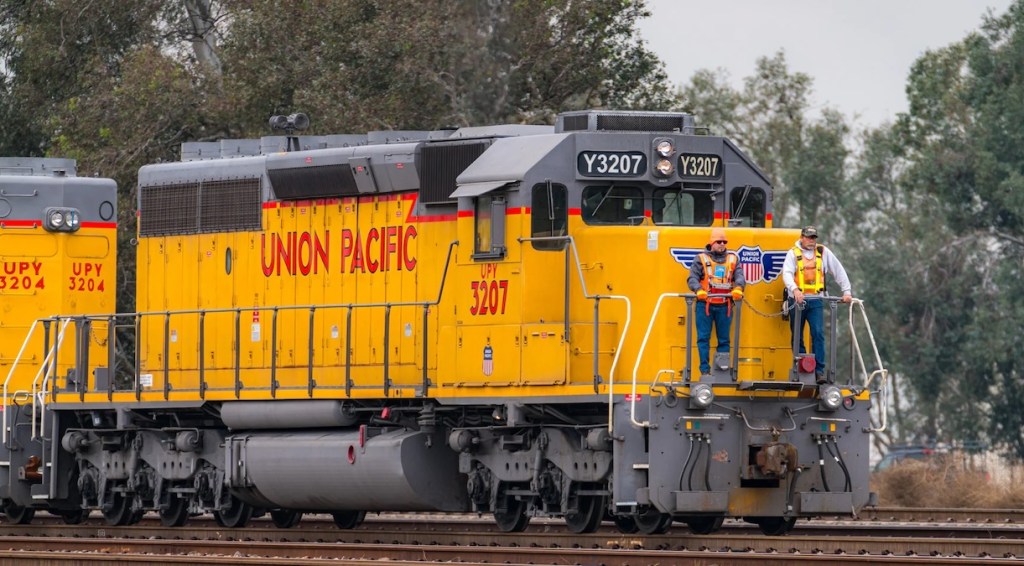
Union Pacific, Norfolk Southern submit merger ‘pre-filing’

As expected, Union Pacific and Norfolk Southern on Wednesday submitted a pre-filing with the Surface Transportation Board regarding UP’s proposed $85 billion acquisition of NS.

The Notice of Intent to File Application for Approval of Transaction, Finance Docket 36873, officially notifies the competition regulator that UP (NYSE: UNP), through wholly-owned subsidiary Ruby Merger Sub 1 Corporation, is seeking control of Norfolk Southern Corp. (NYSE: NSC), and its NS railroad unit.

The acquisition would create a company with a capitalization in excess of $250 billion, operating more than 52,000 miles of track in 43 states.

The five-page document stated that UP and NS anticipate filing their formal application with the STB on or before Jan. 29, 2026. That document, which initiates the formal review, will address a wide range of factors, from business and operational concerns to environmental and community impacts. It will also mark the first time tougher merger rules written in 2001 will be tested.

The White House, Justice Department, and Federal Railroad Administration will submit their own recommendations as part of the STB’s review.

The filing notes that the proposed agreement represents a “major transaction” under federal law, because it involves two Class I railroads.

NS is represented by Washington law firm Sidley Austin LLP; Covington & Burling LLP, also of Washington, is representing UP.

In the filing UP and NS said the deal “represents an unprecedented opportunity to create America’s first transcontinental railroad, which will transform the U.S. supply chain, unleash the industrial strength of American manufacturing, and create new sources of economic growth and workforce opportunity.”

The railroads touted their “highly complementary networks,” and that current customers “will benefit from a faster, more efficient, and more reliable network that provides single-line service from coast to coast, linking approximately 100 ports and nearly every corner of North America.”

Shippers in the Ohio Valley and Mississippi River watershed of the country, seen as underserved by rail, will have new options that are more accessible, sustainable, and lower cost for both manufacturers and consumers.

“The combined UP-NS will produce rail volume growth that will drive additional employment opportunities in towns and cities across the combined rail network and generate economic growth in communities across the United States. 

“The combined company will also compete more effectively with Canadian railroads to win back U.S. freight volume and American jobs.”

The last statement references the 2023 merger of Canadian Pacific and Kansas City Southern, which created CPKC (NYSE: CP) the only single-line railroad serving Mexico, the United States, and Canada.

Subscribe to FreightWaves’ Rail e-newsletter and get the latest insights on rail freight right in your inbox.

Find more articles by Stuart Chirls here.

Related coverage:

While shippers cite concerns, rival railroad sees ‘value’ in mega-merger 

CEOs say Union Pacific-Norfolk Southern merger will reverse rail freight decline

Shippers line up against railroad mergers

Union Pacific and Norfolk Southern reach $85 billion merger deal

Averitt pay increase could be a sign of some acceleration in driver wages

During the days of the great post-pandemic freight boom, the press releases from companies announcing pay increases for drivers arrived fast and furious. 

Companies that rarely put out a press release about anything instead wanted to let the world know–multiple times in some cases–that they were keeping up with the Joneses and fattening the wallets of in-demand drivers.

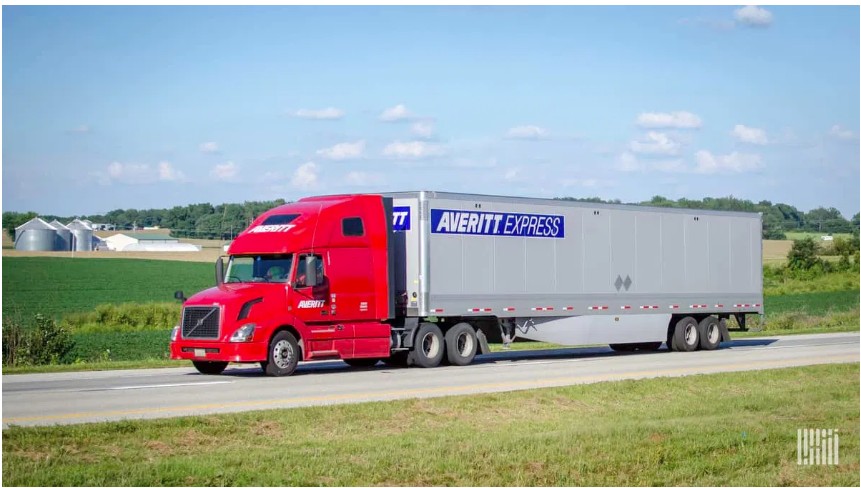
That rarely happens anymore, which is why it was so notable earlier this month to receive a press release from (mostly) LTL carrier Averitt that it was raising pay for various categories of drivers, with specific data on some of the increases.

In its prepared statement, Averitt said its pay for regional drivers with a hazmat endorsement was being increased to 64 cents per mile. The previous rate was 60 cents per mile. 

Averitt, in its statement, called it the largest increase for regional drivers in the 54-year history of the company.

The current level of pay for regional drivers without hazmat endorsement is now 54.5 cents/mile. But that information was not in the Averitt statement. 

Asked about the difference in what was released, an Averitt spokeswoman said in an email to FreightWaves that the increases in pay for what it called its LTL associates–defined as “pickup and delivery drivers, shuttle drivers, dock associates, preventive maintenance associates and others”–was “significant but not as historic as the increases for our regional drivers.” The previous increase wasn’t all that long ago, the spokeswoman said: 2024

The increase comes as independent surveys of driver pay are mixed, though none of them show that driver pay completely stalled during the freight recession. Wages just went up by a slower amount.

‘Small upward trajectory’

Leah Shaver, the president of the National Transportation Institute (NTI), is considered one of the leading experts of driver pay trends. While she would not comment specifically on the Averett increase, Shaver said in an email to FreightWaves that beginning in late 2024, “the rate of growth began a small upward trajectory, and that trend has continued.” But she added that “wage gains remain relatively muted.”

That followed a period that began in late 2022, she said, when “the rate of wage growth began to slow significantly as fleets became much more cautious and intentional with their approach to compensation adjustments starting in 2023.”

Increases in driver pay are coming against spot linehaul rates that are lower than they were at the start of the year, according to the NTIL index in SONAR.

The recent report on driver wages published by the American Transportation Research Institute, the research arm of the American Trucking Associations gave its own recap on the trends of the past few years. 

In its report, ATRI said wage gains for drivers last year averaged 2.4%. In 2021, when the announcements of higher pay were flying into mailboxes, that rate was 10.8%, ATRI said. A year later, it was 15.5%. 

During the first two months of this year, according to the ATRI report, the rate was 0.9%.

BLS showing steady gains

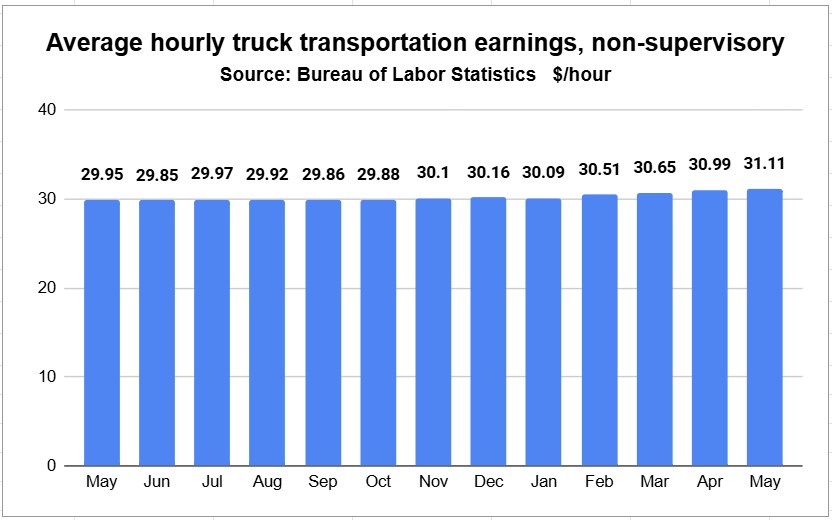
But another set of data, that of the Bureau of Labor Statistics, recently has showed some stronger gains not specifically for drivers but in the category of non supervisory and production employees in the BLS’s truck transportation sector. Drivers would be in that category.

Between May and October 2024, the hourly wage for that sector barely budged: $29.95 in May, down to $29.88 in October. 

But wages have risen every month since except one. The figure for May, the most recent available, was $31.11/hour. That number is the highest ever in that category. 

The June figure will be released Friday along with the monthly employment report.

Increases in driver pay are coming against spot linehaul rates that are lower than they were at the start of the year, according to the NTIL index in SONAR. 

That increase in the BLS data would align with what Shaver said NTI is seeing. “More fleets are reporting pay increases in our surveys this year than last year, and those increases are a little more ambitious,” she said. “The data does not point to any type of inflationary cycle, but we are seeing upward movement in the rate of growth and have seen that since last summer.”

The announcement of the pay increase gave Averitt an opportunity to tout other parts of its driver compensation, including a profit sharing plan that routes 20% of the company’s profits into employee 401K plans. 

The company also offers health insurance, company-provided life insurance and holiday pay after 30 days and paid time off after 90 days.

The spokeswoman also said compensation increases at Averitt generally are announced publicly. “This year our focus was on bringing awareness to the historic nature of the increase for regional drivers,” she said.

More articles by John Kingston

Sequential numbers at diversified trucking operator TFI International may mark a turnaround

Ryder’s used vehicle numbers show a bullish corner: tractor sales

Five takeaways from the State of Freight for July: What earnings and the indices are saying about the market

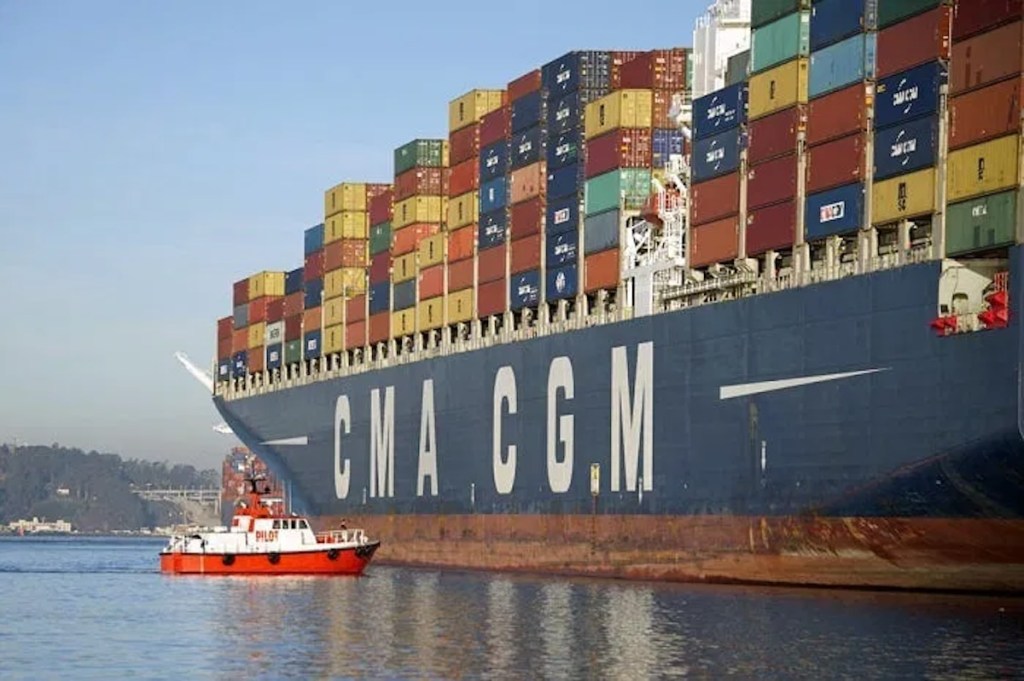
CMA CGM revenue, earnings decline on China tariff fight

CMA CGM said maritime business totaled $8.2 billion in the second quarter, reflecting a slight decrease of 1.5% compared to the same timeframe in 2024.

The world’s third-largest container carrier said that earnings before interest, taxes, depreciation, and amortization (EBITDA) fell by 19.9% to $1.6 billion, on increasing economic pressures. EBITDA margin saw a reduction to 19.4%, a decrease of 4.5 percentage points compared to the previous year. 

Average revenue per TEU decreased by 1.2% to $1,367.

The Marseilles-based company transported 6 million twenty foot equivalent units (TEUs) in the quarter, consistent with the previous year. This near-stability is significant, given the sharp yet temporary decline in trade flows between China and the United States during the quarter. Shipping lines have been whipsawed by the Trump administration’s off-and-on tariff policies, which have undercut import demand from China and set downward pressure on container rates.

Rodolphe Saade, chairman and chief executive, in a release said, “In a context marked by persistent geopolitical tensions and renewed trade uncertainties, our group is delivering a stable performance, driven by the resilience of its maritime activities.

“These results also highlight the relevance of our diversification strategy across terminals, logistics, and air freight, which enables us to offer global solutions and adjust our operations more swiftly to shifts in global trade.”

Find more articles by Stuart Chirls here.

Related coverage:

Ocean container rates becalmed as shippers, carriers try to be calm 

FMC publishing container freight data

HK company offers stake in port terminals sale to Chinese company

South Korea offers billions to help make US shipbuilding ‘great again’

No US trade deals with Mexico, China, Canada, as tariff deadline nears

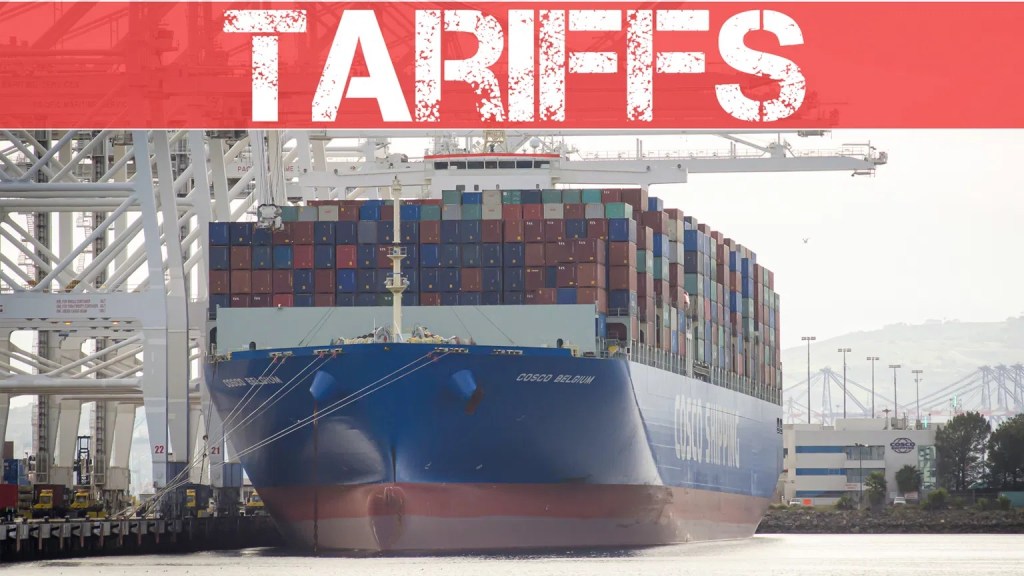
With less than two days to go until the White House’s Friday tariff deadline, the trade policy landscape remains mixed. 

President Donald Trump said that he will not extend Friday’s deadline for his “reciprocal” tariffs on dozens of countries that do business with the U.S., including top trading partners Mexico, Canada and China.

“THE AUGUST FIRST DEADLINE IS THE AUGUST FIRST DEADLINE — IT STANDS STRONG, AND WILL NOT BE EXTENDED. A BIG DAY FOR AMERICA!!!” Trump posted on Truth Social on Wednesday.

Trump said Monday any country that does not have a deal with the U.S. would face a baseline minimum duty rate of 15% and 20%.

Negotiations between the U.S. and China, Canada and Mexico have stalled in recent days.

Trump told Mexico and Canada he would impose a 30% and 35% duty rate on imports from their countries, respectively, if no deal is in place by Friday.

Mexico was the top U.S. trade partner in May at $74.5 billion, according to Census Bureau data. Canada ranked No. 2 for trade with the U.S. in May at $57.6 billion, and China ranked third at $27 billion.

However, imported goods covered by the United States-Mexico-Canada Agreement were expected to remain exempt from tariffs.

Trade talks between the U.S. and China have also stalled after a third round of negotiations in Stockholm with representatives from both countries ended on Tuesday without a deal.

At its highest, Trump’s tariffs on Chinese imports totaled 145% — while China countered with 125% duties on goods from the U.S. 

China and the U.S. agreed on May 12 to a 90-day truce to roll back tariffs to 30% and 10%, respectively. That pause is currently set to expire Aug. 12.

On June 27, the White House and China agreed on a trade deal framework that would reduce tariffs, along with expediting shipments of Chinese rare-earth metals to the U.S. But the deal has not been finalized.

Trump unveiled “reciprocal” import taxes on goods coming into the U.S. from more than 90 countries on April 2, the bulk of which were postponed twice.

Trump’s “reciprocal” tariffs include a 10% blanket duty rate on foreign imports worldwide, along with higher individualized duties of up to 50% for dozens of countries.

Other tariffs announced by Trump in recent months include:

  • 50% tariff on steel and aluminium imports effective June 4
  • 50% tariff on copper imports starting Aug. 1
  • 25% tariff on foreign-made cars and imported engines and other car parts

The White House has announced framework deals with the European Union, the United Kingdom, Japan, Vietnam, Indonesia and the Philippines. Although those trade agreements have yet to be finalized, they favor the U.S. by imposing one-sided tariffs.

The Trump administration on Wednesday said it will impose a 25% tariff on goods from India, along with a penalty for buying arms and energy from Russia amid the war in Ukraine.

Don’t look to last year; Werner cites improved numbers sequentially in its earnings

Given that everyone knew year-on-year comparisons of trucking company financial results between 2025’s second quarter and the corresponding three months of 2024 were always going to be bad, there’s been a focus this year at a few companies of how things look sequentially in comparison to the first three months of this year. 

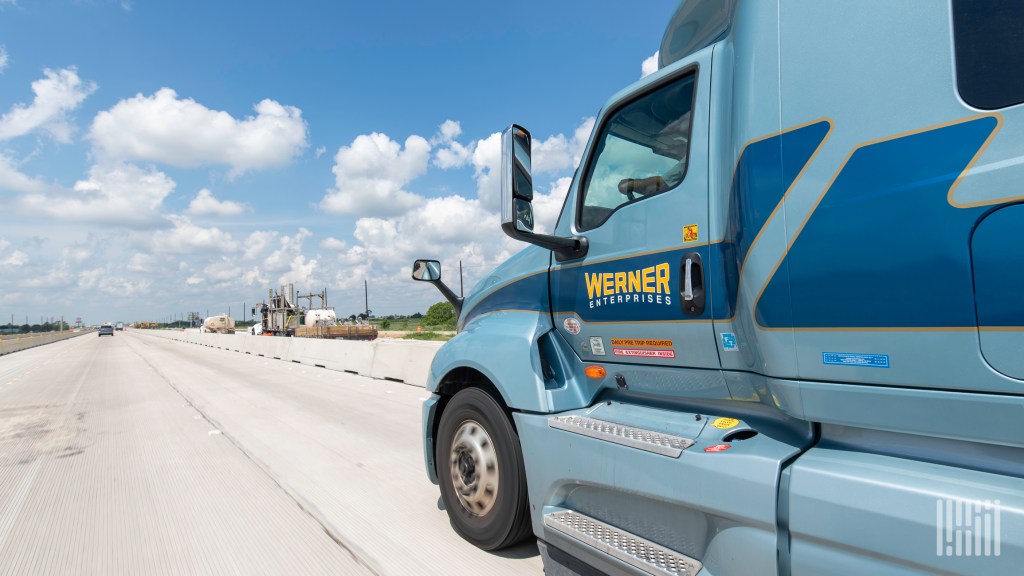
That was the case also with Werner Enterprises (NASDAQ: WERN), which released its earnings Tuesday and followed up with an earnings call with analysts. 

Right off the bat on the call, Werner CEO Derek Leathers declared: “We generated solid results during the second quarter and are encouraged by the sequential improvement in financial performance relative to Q1. “

Werner’s bottom line results were positively impacted  by the reversal of two liabilities it had been carrying on its books, one of them related to the nuclear verdict from 2018 that was reversed by the Texas Supreme Court during the quarter. The reversals impacted operating and net income.

But strip that out and Leathers’ comments have a solid basis. For example, in the first quarter, Werner posted a non-GAAP adjusted operating margin of negative 0.3%. In the second quarter, that margin was 2.2%.

Revenue in the second quarter was $753.1 million, up from $712.1 million in the first quarter. The adjusted operating ratio (OR) for the Truckload Transportation Services segment was 97.5% in the second quarter, compared to 99.6% in the first quarter.

Adding to that, CEO Christopher Wikoff said the first indications from the current quarter were positive. Wikoff said he expects another sequential improvement in revenue, with much of it attributed to new customers in the company’s Dedicated division. He also said Werner is “seeing very positive momentum” in its logistics operations. 

Good numbers in logistics, used equipment sales

The transportation team at TD Cowen led by Jason Seidl said in a report after the earnings call that Werner had “(found) its footing” in the second quarter, but that it wasn’t just freight transportation at the truckload carrier that was the largest unexpected contributor.

Instead, he cited as an example the company’s logistics segment. It grew its operating income to $4.3 million in the second quarter compared to $550,000 a year earlier. 

Seidl said the performance in logistics “beat our estimates nicely” and reflects load growth of 7% year on year “on execution in winning new business.” “Year on year growth momentum is expected to continue in (the second half) which we view positively given widely anticipated core demand softness,” Seidl wrote. 

Another area of significant improvement cited by both Seidl and the company was in used vehicle sales, which Ryder (NYSE: R) recently cited as a sequential area of improvement. “Used truck and trailer values have accelerated since March, benefiting from tariff and other macro uncertainty,” Leathers said.

Specifically, Werner said its gains on sale of property and equipment were $5.9 million in the second quarter, up from $2.7 million a year earlier. First quarter equipment sales were $2.8 million. 

The difference was not volume; Werner said it sold 54% and 60% fewer tractors and trailers, respectively. But the average unit price was “much higher,” it said.

What the big rail merger means to Werner

The timing of Werner’s earnings report made it the first truckload carrier to report following the announcement of a merger agreement between Union Pacific (NYSE: UNP) and Norfolk Southern (NYSE: NSC).  Given that one of the planned benefits of the transcontinental hookup would be putting rails in better position to compete with trucks, it was inevitable that analysts would ask about it.

Leathers said he wanted to be “a bit careful about getting too much into the weeds” about the merger, but still described it as good news. Both companies are the predominant intermodal partners for Werner in their respective services areas, Union Pacific in the West and Norfolk Southern in the East, he said.

Current features of Werner’s routes, Leathers said, make it more difficult to shift that traffic to rail: length of haul, cross-border Mexican business, expedited freight. “Those are for different reasons much tougher to tackle and much tougher to convert,” Leather said. 

But he added: “I’m not naive enough not to believe that there won’t be some freight out there that’s convertible, and that’s why we have an intermodal product, and that’s why we’ve had some good success converting it ourselves.”

The company’s Dedicated offering is about 65% of the revenue of the Truckload Transportation Services sector. Leathers said that business is “completely insulated from any kind of rail merger.”

He also stressed that intermodal has always been an offering at Werner. There are opportunities in that mode “around the edges,” Leathers said, “and we’re constantly working with our customers on some of those opportunities because if it’s going to go intermodal, I’d rather it go intermodal here than somewhere else.”

Impact of the English language rule

Another issue that has risen in importance since Werner’s first quarter conference call is the enforcement of the English language proficiency rule for drivers.

In response to an analyst question, Leathers said he does not expect any impact on Werner’s fleet from enforcement. “We’ve always kept our English language proficiency test in place throughout the time that the rule wasn’t being enforced,” he said.

The impact on broader capacity so far has been minimal, Leathers added. The month to month and a half when enforcement has been underway is too short to have an effect, he said: “1.5 months in government time is like 1.5 minutes in everybody else’s life, meaning it just goes slower than we’d like to see.” 

But he added that Werner has seen enforcement “starting to ramp up,” with differences among states in the level of enforcement.

He cited 1,500 out of service orders as a result of enforcement, a level he said is “at a slower rate than we would have expected or that maybe we would have wished for.”

Talking the Texas Supreme Court decision

The earnings call was also the first opportunity Leathers had to publicly address its victory at the Texas Supreme Court that reversed a 2018 nuclear verdict that had grown in size to more than $100 million. 

Leathers said the decision “provided much needed clarity in the state of Texas, but legal reform is still needed in many states across the country. We will continue to work at the state level and with others in and outside our industry for fairness and reasonableness regarding these types of claims and lawsuits.” 

He called the decision that ended the legal saga from a 2014 fatal wreck the “end of a decade-long and difficult chapter.” He also said Werner would not “lose sight of the tragic loss for the Blake family,” which suffered fatalities and serious injury in the crash with a Werner truck. 

In response to an analyst question, Leathers said he hoped the Texas Supreme Court decision would be “a start of a tidal wave of similar decisions, but I think that would be a bit optimistic at this point.”

The road to tort reform can be long, Leathers said. “We think we’ve got a lot of work to do still as an industry and as a company,” he said. “We’ve got to do that at a state-by-state level. It’s difficult work, but work that needs to be done. 

More articles by John Kingston

Sequential numbers at diversified trucking operator TFI International may mark a turnaround

Ryder’s used vehicle numbers show a bullish corner: tractor sales

Five takeaways from the State of Freight for July: What earnings and the indices are saying about the market

First look: Old Dominion Q2 earnings

A sideview of an Old Dominion tractor pulling two LTL trailers on a rural highway

Less-than-truckload carrier Old Dominion Freight Line said its second-quarter results reflected “the ongoing softness in the domestic economy,” in a Wednesday news release.

Old Dominion (NASDAQ: ODFL) reported second-quarter earnings per share of $1.27, a penny light of the consensus estimate and 21 cents lower year over year. A decline in net interest income was nearly a 2-cent drag compared to the year-ago period.

Revenue fell 6% y/y to $1.41 billion and came in just slightly below consensus. A 9.3% y/y tonnage decline was the combination of a 7.3% drop in shipments and a 2.1% dip in weight per shipment.

Weaker volumes were partially offset by a 3.4% y/y increase in revenue per hundredweight, or yield. Yield was 5.3% higher excluding fuel surcharges. The decline in shipment weight was a modest tailwind to the yield metric.

Yield (excluding fuel) was up a little more than 10% on a two-year-stacked comparison.

Click for full report – “Old Dominion not changing course as downturn lingers”

“Old Dominion continues to manage through a difficult operating environment that has persisted for longer than anticipated,” said Old Dominion President and CEO Marty Freeman in the news release. “Although demand for our services continues to be impacted by a challenging economy, we remain confident that we are well positioned for the long term.”

Table: Old Dominion’s key performance indicators

The company reported a 74.6% operating ratio (inverse of operating margin), which was 270 basis points worse y/y and just 80 bps better than the first quarter. That compared to management’s guidance for approximately 100 bps of sequential improvement. (The carrier normally sees 300 to 350 bps of sequential margin improvement in the second quarter.)

Cost per shipment was up 5.1% with revenue per shipment up just 1.2%, a 390-bp negative spread.

Click for full report – “Old Dominion not changing course as downturn lingers”

Salaries, wages and benefits expenses (as a percentage of revenue) increased 210 bps y/y. A 4.8% decline in headcount was outpaced by a bigger step down in shipments. An increase in total employee benefit costs was also a headwind in the quarter.

Depreciation and amortization expenses were 80 bps higher y/y.

Shares of ODFL were down 5% in pre-market trading on Wednesday.

Old Dominion will host a conference call at 10 a.m. EDT on Wednesday to discuss second-quarter results.

More FreightWaves articles by Todd Maiden:

Semi-trailer with $15M in Apple products, semiconductors stolen in Nevada

Black-and-white security photo of a truck trailer at night at a warehouse.

A truck shipment managed by Ceva Logistics and containing about $15 million worth of Apple products and semiconductors was stolen earlier this month in Reno, Nevada, and remains under investigation, according to authorities and a source familiar with the case.

Detectives are actively investigating the theft of a semi-trailer containing electronics, which occurred July 3, the Reno Police Department said in a news release. “The manager arrived to find that a company trailer that was loaded with merchandise had been stolen. Total loss is unknown,” the department said in an initial statement about the crime. 

Ceva Logistics, one of the largest third-party logistics providers in the world, dispatched a truck to deliver the load from one of its facilities in Sacramento, California, to Sierra Airfreight Express in Reno, a person with close knowledge of the case told FreightWaves. The source was not named because of the sensitive nature of an ongoing investigation. The contents included AMD microchips, according to the person.

The suspects drove a tractor onto the Sierra lot, hooked up to the Ceva Logistics trailer and drove off. The trailer was recovered several days later in Madera, California, with all of its contents gone.

A person who answered the phone at Sierra Airfreight Express, a small truckload carrier serving northern Nevada and northern California, said employees were instructed not to discuss the case.

The Ceva truck arrived at a non-secure Sierra warehouse, with no fencing or guards, after normal business hours when no employees were on site, the source said. 

The cargo theft raises questions about what security protocols Ceva Logistics followed to protect a high-value load and how criminals knew to target the vehicle.

Last year, cargo crimes increased to an all-time high of more than $1 billion, up 27% from 2023, according to theft prevention company CargoNet. Annual cargo theft losses are expected to rise another 22% by the end of 2025. 

CargoNet, part of insurance company Verisk, and GearTrack on Wednesday released their July Cargo Security Index revealing a spike in organized cargo theft activity across the U.S.

“Cargo crime has evolved into a sophisticated operation driven by insider leaks, advanced surveillance, and AI-enabled coordination,” said Ilan Gluck, general manager of GearTrack. “Our data shows a shifting geographic concentration of thefts, especially in areas with growing warehousing and distribution activity, like Indianapolis and key corridors through Arizona.”

This month’s report shows a 75% rise in theft incidents in Indiana, 40% in Texas, and 35% in Illinois, with a nationwide surge targeting high-value commodities such as vehicles, household goods, and consumer electronics.

The U.S. averaged 185 reported cargo thefts per month, a rate of six per day in 2024, up from 4 per day in 2023, according to supply chain security firm Overhaul. Stealing full truckloads remained criminals’ most popular tactic in 2024, comprising nearly two-thirds of total thefts in Canada and the U.S. Electronics was the most targeted product type in both countries.

Ceva Logistics declined to comment and Apple did not respond to inquiries about the stolen load.

Click here for more FreightWaves/American Shipper stories by Eric Kulisch.

Write to Eric Kulisch at ekulisch@freightwaves.com.

Ceva Logistics restructures North America operations, names new chief

CMA CGM to invest $20B in US shipping, supply chain capabilities

Ceva Logistics to acquire logistics provider in Turkey

First look: ArcBest Q2 earnings

A closeup of a white ArcBest trailer in a parking lot

Trucking and logistics provider ArcBest missed second-quarter expectations ahead of the market open on Wednesday.

The Fort Smith, Arkansas-based company reported second-quarter adjusted earnings per share of $1.36, which was 10 cents light of the consensus estimate and 62 cents lower year over year.

ArcBest’s (NASDAQ: ARCB) consolidated revenue declined 5% y/y to $1.02 billion and came in just shy of consensus. The company’s asset-based unit, which includes results from less-than-truckload subsidiary ABF Freight, reported a slight y/y increase in revenue to $713 million.

Click for full report – “ArcBest’s efficiency initiatives helping offset soft demand”

Tonnage per day at the unit was up 4.3% y/y as a 5.6% increase in daily shipments was partially offset by a 1.2% decline in weight per shipment. Revenue per hundredweight, or yield, was down 3.1% y/y (also off by a low-single digit excluding fuel surcharges).

Comparisons to the prior year were skewed. The tonnage comp from the 2024 second quarter (a 20.3% y/y decline) was easy, while the yield comp (plus-23%) was not. The company has been taking on more freight from core accounts and using a dynamic pricing model to improve equipment utilization in down markets.

Revenue per day is down 1% y/y so far in July, the result of flat tonnage and a 1% decline in yield. The month is facing a relatively easy tonnage comp from July 2024 (negative-12.5%).

Table: ArcBest’s key performance indicators

The company said “LTL industry pricing remains rational” in a news release, pointing to a 4% average increase in contractual rate renewals and a new 5.9% general rate increase, which will take effect on Monday. It implemented a similar GRI last September.

The asset-based unit reported a 92.8% adjusted operating ratio (inverse of operating margin), which was 300 basis points worse y/y. The OR improved 310 bps from the first quarter, which was in line with the historical sequential average change of 300 to 400 bps of improvement.

Salaries, wages and benefits expenses were up 180 bps y/y (as a percentage of revenue). Rents and purchased transportation expenses were up 80 bps.

The company said it expects to see roughly 70 bps of sequential OR improvement from the second to the third quarter, which is in line with historical trends. That implies a 92.1% OR for the third quarter, which would be 110 bps worse y/y.

Click for full report – “ArcBest’s efficiency initiatives helping offset soft demand”

ArcBest’s asset-light segment, which includes truck brokerage, reported an adjusted operating profit of $1.1 million after seven consecutive quarterly losses. The unit is expected to see breakeven results to $1 million in adjusted operating income in the third quarter.

ArcBest will host a conference call at 9:00 a.m. EDT on Wednesday to discuss second-quarter results.

More FreightWaves articles by Todd Maiden:

Colorado trucking company files for bankruptcy

A Pierce, Colorado, trucking company has filed for Chapter 11 bankruptcy.

Indian Creek Express filed for bankruptcy in the U.S. Bankruptcy Court for the District of Colorado on Monday. The filing was made by company President Donne Jefferson.

According to the bankruptcy filing obtained by FreightWaves, Indian Creek Express has $1 million-$10 million in liabilities to one to 49 creditors. The company has up to $50,000 in assets.

Top creditors are Daimler Truck Financial Services in Fort Worth, Texas, claiming $1.9 million, BMO Bank in Indianapolis, claiming $1.3 million, and Cobalt Funding Solutions in New York, claiming $186,343.

According to SAFER data, Indian Creek Express hauls general freight, metal, building materials, fresh produce, livestock, grain, meat, refrigerated food, beverages and paper products. The company employees 40 drivers and operates 43 power units.

In the last 24 months, the company has had 35 vehicle inspections and 80 driver inspections. Six of these vehicles and one of the drivers were put out of service.

Indian Creek Express has reported seven crashes in the past two years. One of these crashes was fatal and another resulted in injury.