OIG report flags ongoing safety challenges for DOT in highway safety despite declining fatalities
Inspectors are monitoring the progress of DOT organizations in implementing prior recommendations.
State licensing agencies had a decade to implement what amounts to a database connection for CDL medical certifications. Instead, FMCSA has spent 2025 issuing waiver after waiver while drivers get placed out of service and fraud vulnerabilities persist. The agency’s hands-off approach to NRII enforcement explains why states feel comfortable ignoring federal CDL standards across the board.
California’s latest high-risk audit reads like a warning label for the freight industry. As the state struggles with data integrity, benefit administration, and mounting fiscal pressure, the consequences may extend beyond Sacramento, into CHP staffing, roadside inspections, and federally funded enforcement programs that trucking depends on.
Transportation attorney Matthew Leffler says that a new bill in Congress meant to hold freight brokers accountable has some issues.
The order directs expedited rescheduling to Schedule III, but the same agency that’s held up oral fluid testing for two years now holds the keys to marijuana testing’s future.
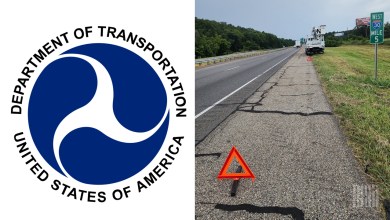
A new FMCSA research initiative to evaluate warning triangles and flares is really about building the regulatory foundation for autonomous truck operations. With Waymo and Aurora knocking on the door with exemption requests, the agency needs data to either justify current requirements or clear a path for alternatives.
Biden’s FMCSA buried a FOIA request seeking to link driving schools to fatality data.
California is expected to reissue approximately 17,000 non-domiciled commercial driver’s licenses it planned to revoke after federal enforcement pressure, setting up what may become the most significant federal-state confrontation over CDL authority in decades.
Trump’s marijuana rescheduling could strip DOT of testing authority for 4 million CDL drivers. Without a safety carve-out, the agency that’s kept impaired operators off highways for 34 years loses its legal teeth. Here’s what carriers need to do before the rules change.
One owner who hired an unqualified driver got 60 days. Other owner offered no time plea deal. The driver who killed seven was acquitted. The system that enabled them both remains largely unchanged.
Federal regulators issued a temporary hours-of-service waiver for truckers hauling heating fuel in four states due to severe cold and a major refinery outage.
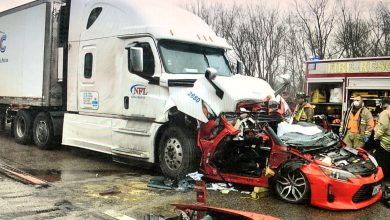
These carriers have the highest crash rates, per FMCSA data.
When a November 2025 draft memo from the Department of Transportation surfaced promising a groundbreaking “data-driven severity matrix” to catch chameleon carriers, it raised uncomfortable questions about ARCHI (Application Review and Chameleon Investigation), built with $3.5 million in congressional funding in 2012-2013. Is this bureaucratic amnesia, rebranding of an underperforming system, or evidence that FMCSA’s chameleon detection infrastructure has been quietly abandoned?
Why not include a preventable crash rate in CSA scores?
The Federal Motor Carrier Safety Administration is rolling out Motus, a new registration system designed to replace the agency’s decades-old platform, offering what it calls “a more intuitive, user-friendly experience.”
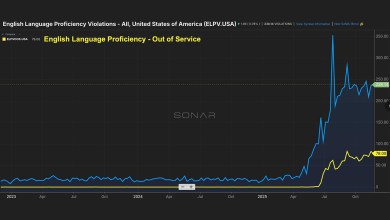
Inspectors issued 6,455 English-language proficiency violations through October 2025 while placing only 1,816 drivers out of service, reflecting a notable enforcement gap stemming from legitimate regulatory exemptions rather than inconsistent application.
The Trump administration’s crackdown on non-domiciled CDLs was carried out with no evidence safety was at risk, according to states.
After 25 years of documented CDL fraud schemes producing 6,000+ fraudulent licenses and at least 13 deaths, FMCSA finally removed 3,000 training providers from the federal registry. The problem? Another 36,000 providers remain unvalidated, operating on the same honor system that enabled Operation Safe Road, Larex Incorporated, and the Massachusetts golden handshake scheme.
The FMCSA announced Monday a “complete overhaul” of the ELD approval process, implementing pre-publication vetting. This comes after the agency has revoked 308 devices from the approved list.
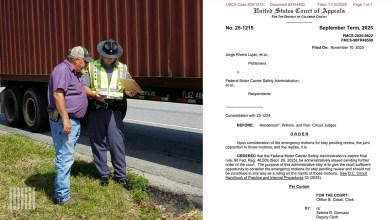
The U.S. Court of Appeals for the District of Columbia Circuit found FMCSA likely violated federal law when it attempted to eliminate approximately 200,000 commercial driver licenses without following standard procedures. The November 13 emergency stay revealed failures that leave 200,000 drivers in legal limbo while courts define the boundaries of administrative power during claimed emergencies.