





John Paul Hampstead
Thursday, November 20, 2025
FMCSA’s tighter bond enforcement looms over freight brokers in 2026
Even BMC-85 trust funds must now consist of cash or cash equivalents.
Even BMC-85 trust funds must now consist of cash or cash equivalents.

The Federal Motor Carrier Safety Administration issued a waiver on October 9, 2025, extending the deadline for full implementation of the National Registry II electronic medical certification system to January 10, 2026.
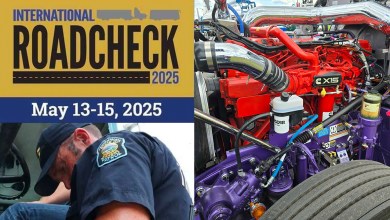
The Commercial Vehicle Safety Alliance’s 2025 International Roadcheck brought more than 56,000 inspections to highways across the U.S., Canada, and Mexico, revealing that the same familiar culprits, brake systems, tires, and logbook falsifications, continue to drive out-of-service violations.

The recently introduced FAIR Trucking Act (H.R. 5268) is Congress’ latest attempt to address the crisis in trucking litigation, but is it enough to actually address the systemic issues in the industry? The bill, sponsored by Rep. Ashley Hinson (R-Iowa), would give federal courts jurisdiction over highway accident cases involving commercial motor vehicles where damages […]

Transportation Secretary Sean P. Duffy announced this week that the first phase of the NCCDB modernization is now live, marking what the agency calls “an overdue tech upgrade” that could fundamentally change how safety violations, fraud, and service issues get reported and addressed in trucking. The modernized database represents a significant shift in how federal […]

Some truckers are rejecting FMCSA’s pilot program to extend the daily driving window, arguing the real problem is corporate-driven unpaid labor.

The U.S. trucking industry is facing a crisis of overcapacity, safety lapses and national security risks, exacerbated by decades of deregulation and lax enforcement. Since March 2018, the number of active for-hire carriers has nearly doubled from 138,000 to 212,000 today, a 54% increase. According to SONAR’s OTVI index, freight volumes are only 1.2% higher […]
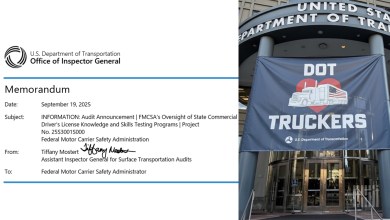
Federal watchdogs are once again questioning whether we have one CDL standard or 50. With nearly 5,000 truck and bus fatalities last year and English proficiency enforcement under fire, the new OIG audit could reshape how states test, license, and oversee drivers nationwide.
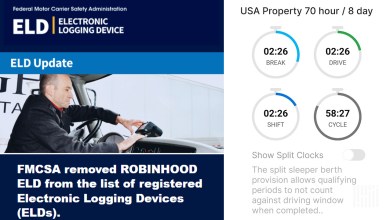
The removal of ROBINHOOD ELD from FMCSA’s registered devices list underscores the importance of selecting reputable ELD vendors, as fleets now face a 60-day scramble to replace systems while managing driver frustration and operational disruption.

Five takeaways from September’s State of Freight webinar.

Several types of publicly available data recorded by the Federal Motor Carrier Safety Administration have seemingly vanished from the Department of Transportation’s website.
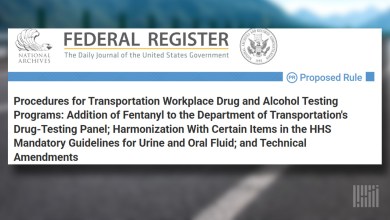
The Department of Transportation announced this week it wants to add fentanyl testing to its mandatory drug screening program for commercial drivers, marking the first major expansion of federal drug testing requirements since amphetamines were added in 2017.
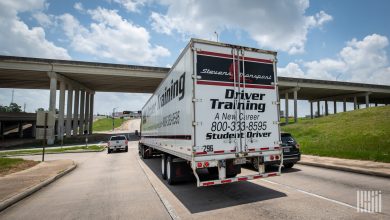
ATRI seeks motor carriers for study on FMCSA entry-level driver training’s effects on trucker safety and retention, building on 2008 research.

The Federal Motor Carrier Safety Administration has extended its temporary waiver allowing commercial drivers and motor carriers to use paper medical examiner certificates for up to 60 days after issuance, up from the previous 15-day allowance, as state licensing agencies continue transitioning to electronic medical certification systems. The modified waiver addresses ongoing implementation challenges with the National Registry II electronic transmission requirements that took effect June 23, with only 38 states and the District of Columbia currently compliant while 12 states including California, Florida, and New York have yet to implement the new system.

A commercial tractor-trailer’s illegal U-turn on Florida’s Turnpike last week killed three people in a minivan that collided with the trailer at highway speed, putting new focus on critical flaws in commercial driver licensing and training standards that have made America’s highways increasingly dangerous.

The trucking industry’s decade-long push for hair follicle drug testing is reaching a critical inflection point as the Trump administration prepares to address guidelines that have been delayed repeatedly since 2015. Major carriers say hair testing catches 10 times more drug users than urine screens, but face fierce opposition from minority groups and independent truckers who claim the methods are discriminatory.
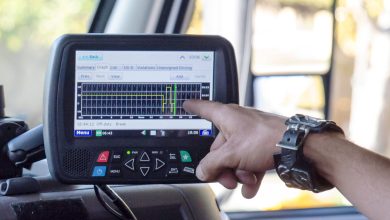
Trucking companies and drivers responding to the deadly flood in Central Texas are temporarily exempt from work-hour rules.

Operation Safe Driver Week begins July 13, targeting speeding and unsafe driving behaviors across North America. For fleets, these blitzes can directly impact FMCSA data, ISS scores, and safety ratings, which affect your ability to win freight, retain insurance, and stay on the road. Here’s what to know, what’s coming next, and how to build a clean inspection strategy before it’s too late.

For the first time in decades, the federal government is shifting its attention from policy roundtables to the actual drivers and fleets keeping the country moving.

Starting June 2025, the FMCSA will enforce long-delayed rules on driver medical certification and English proficiency, with direct implications for fleets, intrastate drivers and licensing agencies. From MVR downgrades to out-of-service roadside inspection orders, these rules shift from paper compliance to real-world enforcement. Fleets that fail to adapt may face costly violations or sidelined equipment.