Warehouses empty in December
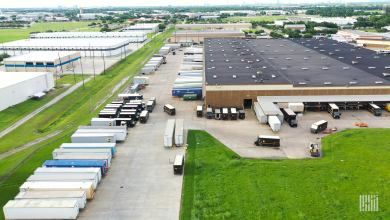
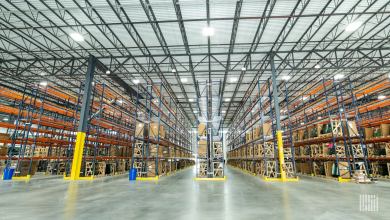
Inventory levels dropped at their fastest clip in over ten years according to the LMI in December. This lean management strategy could be a boon for trucking.
Shippers are signaling a return to just-in-time shipping in reducing the inventory level buffers that they were building. This could pull some freight back into the truckload market.
Truckload carriers are not only hauling less freight, but moving it less distance. This has a compounding effect on keeping capacity loose as longer moves take up more capacity. If supply chain strategies normalize, it could have an impact on transportation markets.
Tariffs and a confounding trade policy have helped boost import demand in the first half, but that appears to be settling out to finish the year.
Container imports surged to a multi-year high in early July, driven by importers racing to recover lost time after tariff disruptions. While volumes spiked, this early peak doesn’t necessarily signal stronger demand.. As inventories grow more expensive to hold, maritime carriers are bracing for softer demand and more volatile shipping patterns in the months ahead.
Until recently, surface transportation demand in total was relatively flat with shippers utilizing the rails more frequently. Annual intermodal growth has stabilized, with truckload demand eroding beyond the modal shift offset.
Supply chain managers stockpiled goods again in February in efforts to outrun looming tariffs.
Shippers are giving longer notice for contracted truckload carriers to pick up their freight. What does this mean?
Inventory pull-forward has been the driving theory behind container import growth, but data suggests that may not be as true as people think. What are the implications to domestic transportation markets?
Pace of carrier exits needs to speed up to achieve economic balance in the truckload sector, according to RXO Chief Strategy Officer Jared Weisfeld.
Consumers remain remarkably spendy in the face of rising debt balances.
The air cargo sector was banking on a turnaround in market conditions by this fall, but it might have to wait until late next year unless demand unexpectedly revives.
The freight recession’s impact on small fleets and owner-operators gained mainstream media attention on Monday with an article by Shannon Pettypiece, a senior policy reporter for NBC News. The article related the story of Arnesha Barron, a 39-year-old driver who in 2021 became an owner-operator after working at a trucking company for six years.
Recovery from the recession in airfreight transportation looks like it will be drawn out over the next year — and very slight when it does happen.
With record inventories building and bottlenecks easing is deflation next?
Inventory levels grew at an astonishing pace in February. Is the supply chain crisis ending?
December supply chain numbers again show “significant expansion.” The Logistics Managers’ Index report questions whether retailers ordered too much for the holidays.
J.B. Hunt transload service starts as shippers deal with intermodal and port congestion J.B. Hunt Transport Services has started a transload service in the New York metro area. In a press release, the offering is touted as “a one-stop source for quickly transferring ocean freight into equipment for domestic transport.” The facility, located in Jersey […]
The Federal Trade Commission will investigate whether large companies have taken advantage of the supply chain chaos at the expense of consumers or smaller competitors.
Private trucking fleets expand amid soaring spot rates According to a recent National Private Truck Council Report, private fleets continue to expand due to high spot market rates and dwindling capacity in the market. Less capacity equals less service, and service metrics remain a big driver for in-house transportation. For large common carriers (they haul […]
National Tree CEO: Don’t wait till Black Friday to shop for holidays
An April survey of supply chain executives showed “continued downward pressure on transportation capacity” with prices surging to a 2.5-year high.
The January Logistics Managers’ Index moves higher as more firms take on inventory and delays throughout the supply chain further deplete transportation and warehouse capacity.
Transportation capacity has dropped to new lows and the precipitous rate at which pricing is increasing is expected to continue for at least the next 12 months, according to a September supply chain survey.
Joined by special guest Zac Rogers, Anthony and Zach discuss the current freight market’s propensity to overachieve over the past few months and explore reasons why that will persist or crumble.
Companies are cramming warehouses full of freight as they change their supply chains to better suit the post COVID-19 world. Trucking capacity tightens as a result.
The October Logistics Managers’ Index hits record low, suggesting peak shipping season may disappoint.