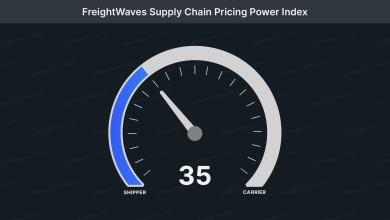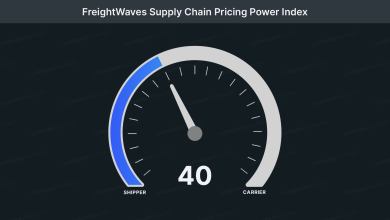
Holidays place pricing power firmly in carriers’ hands
Rejection rates are now back above 22%, the highest level since early September. Pricing power moved further to carriers despite the holiday related tender volume collapse.
Rejection rates have surged past the 21% level on the national level. Meanwhile, volumes have turned positive year-over-year. The combination of tightening capacity and stronger demand is placing upward pressure on rates.
Volumes turn downward heading into the Christmas week while rejection rates have rebound back above 20%. Carriers still maintain a firm grip on pricing power in the market.
Volume levels are following a similar trend to 2019, just 40% higher. Tender rejection rates are trending sideways, likely to move higher over the next week.
Southern California is the main entry point for imported goods in the U.S. Congestion around rail ramps and deteriorating service pushed shippers to trucking over the summer, but that trend is reversing as truckload costs soar out of the West.
Tender volumes decline but remain elevated compared to ‘normal years’ meanwhile rejection rates have found footing around 20%.
Truck broker Landstar System announced Wednesday it will use 2021’s record performance to pay shareholders a $2-per-share special dividend.
Tender volumes have started to erase the Thanksgiving noise. At the same time, rejection rates have plateaued around the 20% mark.
Thanksgiving noise continues to mask freight volumes, but that noise will be erased in the upcoming days. Meanwhile, Thanksgiving drove spot rates higher over the past week.
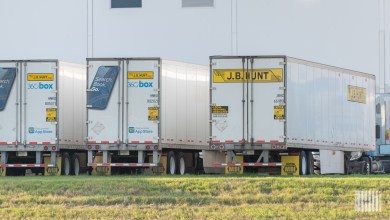
J.B. Hunt transload service starts as shippers deal with intermodal and port congestion J.B. Hunt Transport Services has started a transload service in the New York metro area. In a press release, the offering is touted as “a one-stop source for quickly transferring ocean freight into equipment for domestic transport.” The facility, located in Jersey […]
Long-haul freight typically shrinks around the holiday season as fulfillment becomes a priority. The exact opposite is occurring this season, which may be indicative of shipper overcorrection.
Thanksgiving always leads to a sharp decline in tender volumes. Leading into Thanksgiving freight markets experienced an uptick in accepted volumes.
Spot rates didn’t experience the uptick that rejection rates did last week. Thanksgiving is impacting both freight volumes and capacity.
The refrigerated truckload sector’s capacity recovery has stalled this fall while van has continued to stabilize. Here is the reason.
Rejection rates have accelerated over the past week as drivers start to come off the road for the holiday.
Volume growth dissipates to kick off November while rejection rates remain well below year-ago levels.
The trucking spot market is showing signs of softening in a somewhat unexpected time. Should shippers breathe a sigh of relief or is this the calm before the storm?
Volume growth dissipates to kick off November while rejection rates remain well below year-ago levels.
FreightWaves adds spot rate data and a new market analytics application inside its SONAR platform.
Volume growth dissipates to kick off November while rejection rates remain well below year-ago levels. Tightness in Southern California will put upward pressure on rates.
Tender volumes rebound as tender rejection rates jump back over 20%. Meanwhile, spot rates break the three-week downward decline.
Load volumes are stable with volume growth inbound. Spot rates follow rejection rates on a downward slide.
Freight volumes in the largest markets are starting to accelarting, signaling the start of the peak truckload season.
Freight volumes in Southern California are starting to ramp, signaling the start of the peak truckload season.
Elevated accepted tender volumes and rates signal that carriers are maintaining pricing power. Truckload capacity constraints are easing as contract rates climb.
Strong freight volumes signal that carriers are firmly in the driver seat with regards to pricing power.
Congestion around the ports and drayage capacity issues are pushing shippers to use trucks more frequently while loaded container volumes dip. But shipping patterns are changing in more ways than just mode conversion.
Spot rate snap back signals that carriers are firmly in the driver seat with regards to pricing power.
Increasing the time between the request and requested pickup date is supposed to increase your odds of securing capacity. The aggregate data shows the opposite, but there is more than meets the eye.
Shippers are requesting as much capacity as ever from maritime shippers in August after slowing their pace through most of the summer. What should we take away from this?
There are numerous reasons carrier compliance rates have been increasing over the past few months. An increase in short-haul freight may be making it easier for carriers to cover more freight.
An April survey of supply chain executives showed “continued downward pressure on transportation capacity” with prices surging to a 2.5-year high.
Schneider National sees several favorable catalysts through the remainder of 2021 that are supportive of its guidance raise. Finding equipment and drivers will be the challenge.
A good truckload provider will have a strong network and the ability to leverage multiple modes.
Companies are paying significantly more for transportation than they were a year ago with many contracts yet to be implemented.
Freight volumes have exploded out of southern California over the past two years. Is this pattern sustainable?
Spot rates continued to increase after the holiday period ended even as capacity returned to the market according to the Outbound Tender Reject Index.
Reefer carrier revenues are expanding rapidly as capacity tightens faster for the temperature-controlled segment of trucking.
P.A.M. Transportation Services sees a “marked improvement” as its auto manufacturing customer base gets back to work. The carrier expects “upward rate pressure” as truck capacity tightens.
The Cass Freight Index booked 7% sequential gains in shipments and expenditures during September.
U.S. Xpress’ industry forecast calls for the truckload market to experience high driver turnover, declining capacity and “overwhelming” volumes through 2021.
With many data points sitting at cycle highs, several industry participants are calling for the trucking market’s bull rally to last well into 2021.
Tightening truckload and intermodal markets have carriers expecting the hot freight market to carry forward. One carrier is calling for large rate increases in 2021.
April’s 20% year-over-year declines in Cass data may mark the bottom of the COVID-19 downturn.
Truckload and transportation companies talk freight markets ahead of reopening with some calling a market bottom in April as spot rates remain below breakeven.
Landstar System calls attention to its variable cost model as first quarter falls short of expectations. No guidance issued for second quarter.
Heartland Express’ better than expected result was diminished by the lack of gains on equipment sales.
Morgan Stanley upgrades its freight transportation industry view from “cautious” to “in-line.” The firm lowered its earnings expectations for the group.
Chart of the Week: Outbound Tender Volume Index – USA SONAR: OTVI.USA People have been clearing store shelves in parts of the country as if they were preparing for a zombie apocalypse this past week. This mass purchasing—or threat thereof—has spiked trucking volumes in the U.S. as the national Outbound Tender Volume Index (OTVI) increased […]
Declines in Cass data accelerate but report calls for rates to inflect higher in 2020.
Manufacturing outlook: The coming week will give some insights into the outlook for manufacturing activity in the Northeast region via the Empire State Manufacturing Index. The overall segment remains depressed and sustained rise is not expected through the first quarter. Construction outlook: There will be updates for housing and construction from housing starts, building permits, […]
Tender rejections: Looking into the week, we expect the capacity to continue to loosen as volumes remain at midwinter levels. Occasional surges in demand are not unheard of in February, but they are unlikely to have much impact on capacity. Carriers who operate in California and around the ports need to start thinking about the […]
Diesel fuel price outlook The rack-to-retail spread has widened to more than $1.10/gallon, creating an unearned windfall for trucking carriers. Diesel markets have been sliding in part on an overall decline in oil since the start of the year, but retail is slow to follow. Diesel itself has fallen farther than crude, primarily on fears […]
While the truckload carriers are happy to turn the page on 2019, investors in truckload stocks may be hoping for more.
FreightWaves Market Expert Chris Henry provides a look into truckload’s year that was and commentary on a possible path toward consistent profitability.
Markets from Los Angeles and Ontario to Yuma, Salt Lake City, and Minnesota have suddenly tightened as routing becomes directionally constrained.
Larger fleets positioned to reap benefits from carrier bankruptcies
ArcBest posted flat to down second quarter results as a weak LTL macro environment and too much truckload capacity hit its two main units.
“June is a big month in the second quarter historically…and if we don’t see it here in the month of June you really have to question what we are going to see in July and August,” said Rourke.