Mack Trucks plans layoffs at Pennsylvania, Maryland factories
Mack Trucks will eliminate up to 450 jobs at facilities in Pennsylvania and Maryland due to tariffs and economic uncertainty.
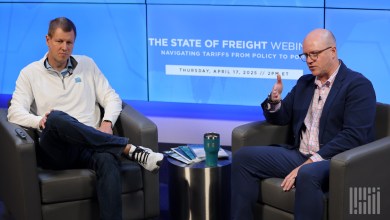
The State of Freight webinar focused on a market that is coming to terms with a raging trade war.
Q1 earnings season is upon us, with early results pointing to continued degradation in truckload carriers’ financial health. Wisconsin-based Marten Transport released its Q1 earnings on Wednesday, but with publicly traded companies timing is everything.
A proposed California law, Assembly Bill 1331, could upend how trucking fleets monitor drivers by prohibiting dashcam and GPS surveillance during off-duty periods, even inside the vehicle. If passed, the bill would redefine off-duty time as private, creating costly compliance challenges and raising concerns about safety, theft prevention, and liability. With $500 penalties per violation and the potential for lawsuits, fleets operating in California, and nationwide, may need to rethink how they balance privacy with operational oversight.
Arkansas Just Passed a Law That Will Hit Drivers for Not Speaking English — Here’s What You Need to Know If you have drivers running through Arkansas, pay attention: A new bill passed last week that’s going to fine truckers who can’t speak or read English “sufficiently.” HB1745 cleared the state House and Senate unanimously, […]
Freight fraud was the consistent theme at the opening session of the annual meeting of freight brokerage’s biggest group, the Transportation Intermediaries Association.
A proposed California law, Assembly Bill 1331, could upend how trucking fleets monitor drivers by prohibiting dashcam and GPS surveillance during off-duty periods, even inside the vehicle. If passed, the bill would redefine off-duty time as private, creating costly compliance challenges and raising concerns about safety, theft prevention, and liability. With $500 penalties per violation and the potential for lawsuits, fleets operating in California, and nationwide, may need to rethink how they balance privacy with operational oversight.
The release of the diesel price used as the basis for most fuel surcharges is shifting to Tuesday mornings instead of Monday afternoons.
Market chaos reigns supreme: tariffs, trucking authorities, and tender rejections spell uncertainty for the start of April.
Truck transportation jobs in March rose by the largest amount since the start of 2022.
Truckers are getting a new opportunity to tell the Trump administration what regulations are hurting their business.
The operators of a tanker that the U.S. military contracted to haul jet fuel are suing a subsidiary of the owners of a shipping company whose container ship struck the tanker in March.
Why More Trucks Won’t Fix the Problem – And Could Actually Wreck the Spot Market A new bill just dropped in Washington – the Strengthening Supply Chains Through Truck Driver Incentives Act – and it’s being pitched as a solution to fix the “driver shortage,” unclog the supply chain and lower costs for American families. […]
Adam Wingfield debuts The Playbook at the 2025 Mid America Trucking Show in Louisville, KY.
Derek Barrs, a member of the American Trucking Associations’ Law Enforcement Advisory Board, has been nominated to lead the Federal Motor Carrier Safety Administration.
The Arkansas House of Representatives and Senate are debating two bills to enact harsher punishments against truck drivers who are in the U.S. illegally and obtain or use CDLs.
The benchmark diesel price used for most fuel surcharges rose for the first time in three weeks.
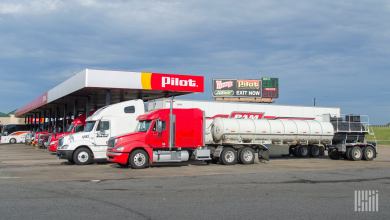
B99 biodiesel is now or will soon be available at select Pilot travel centers.
Fleet maintenance has evolved beyond the old-school break-fix mentality. While preventive maintenance is a step up from waiting for breakdowns, predictive maintenance, powered by telematics and AI diagnostics, is the new gold standard. By using real-time data to forecast failures before they happen, fleets can drastically cut repair costs, improve safety, and reduce costly downtime.
Technology-driven platforms like Motive and Fleetio enable fleets to automate diagnostics, optimize maintenance schedules, and track performance metrics in real time. In an industry where compliance, efficiency, and cost control are everything, predictive maintenance is a necessity.
Fuel is one of the largest expenses for trucking fleets, making conservation strategies essential for long-term profitability. By leveraging technology such as fleet fuel cards, AI-powered route optimization, and real-time driver monitoring, fleets can reduce waste, improve efficiency, and prevent fuel fraud. Implementing preventative maintenance, minimizing idling, and optimizing routes are key to ensuring every gallon is used effectively. With fluctuating diesel prices and tightening margins, adopting a data-driven fuel management approach is necessary for survival in today’s trucking industry.