Parcel business is bright spot for global postal operators

Conveyor system with pieces in a mail processing center.

Steady growth in e-commerce parcel volumes and new lines of business are more than offsetting declines in traditional letter mail for global postal operators, but rising operating costs are squeezing profits, according to the latest annual report by International Post Corporation.

National posts saw the number of parcel shipments increase by 4.4% in 2024, with parcel and express revenue up by 3.8% year over year. Overall revenue for the 53 postal operators covered in the report grew 2% on average to $522 billion, the report said. While growth rates ranged widely, more than two-thirds of participants saw stable or increasing revenues in 2024. 

The group’s operating profit margin of -0.8% worsened from -0.5% in 2023, as rising costs for labor, fuel, and transportation and other expenses outpaced gains in parcel revenue. In response to inflation and slowing economic growth, many postal operators are implementing cost-control measures, such as automation and optimizing logistics networks. Many posts and private parcel networks have been forced to increase shipping rates to help cover their costs. 

The U.S. Postal Service posted a $2.7 billion operating loss for the fiscal year ended Sept. 30 compared to a $1.8 billion loss the prior year. Canada Post has been in the red for seven consecutive years and is on track for a record loss in 2025.

(Source: International Postal Corp.)

In the first half of 2025, mail volumes fell almost 10% on average, while parcel volumes grew 4% and parcel revenue increased 3%, according to interim reports from a limited number of posts.

The IPC is a cooperative of 26 member postal operators that provides services to the postal industry. 

The increase in postal revenue “is the result of . . . efforts to increase efficiency, diversify and innovate to better respond to the changing needs of e-commerce consumers on delivery markets. The transformation of postal operators into e-commerce consumer-centric companies is more than ever essential,” said IPC Chief Executive Officer Holger Winklbauer, in a news release on Thursday. 

Global e-commerce sales reached $4.9 trillion in 2024 and represented 23.3% of total retail sales, according to Euromonitor. Online sales are forecast to reach $7.7 trillion by 2029. Increasing competition has kept postal volume growth below e-commerce growth, but postal operators saw volumes grow faster than private parcel integrators on aggregate.

To support growing parcel volumes, posts have invested in their parcel delivery networks, with increasing use of parcel lockers.

Canada Post, Australia Post and the U.S. Postal Service, for example, are adjusting operations and investing in infrastructure to handle more parcels and provide the consistently reliable service that retailers and consumers seek. Perhaps no postal operator has embraced the secular transition from mail to packages more fully than PostNord in Denmark, which is scheduled to end letter delivery on Dec. 31 to focus on parcel shipping. Still, nine of 23 posts that shared parcel data experienced a decline in parcel volumes last year. 

Meanwhile, traditional mail usage has dropped by nearly 37% in the past decade. Since 2019, mail volumes have consistently fallen each year as consumers increasingly rely on email and text for communications, and shop digitally and make payments through their computers or mobile devices. Average mail revenue growth returned to positive territory last year at 1.7%, after contracting for two years.

Postal operators are diversifying their business by adding financial services, telecommunications, retail networks, logistics, and freight transportation to make up for the slowdown in mail revenue.

Click here for more FreightWaves stories by Eric Kulisch.

Sign up for the biweekly PostalMag newsletter The Delivery here

Denmark says goodbye to letter delivery

Canada Post reports record loss of $385M as parcel revenues plunge 

Transfix’s big move as it licenses its brokerage TMS to NFI

Transfix has reached a milestone in its transition from a freight brokerage to a freight technology provider with the first external adoption of its internally-developed TMS system for brokerages.

The company that has agreed to license the TMS is the same company that bought the brokerage: truckload carrier NFI.

In its prepared statement announcing the deal with NFI, Transfix made a bold declaration about the significance of the transaction. The deal, it said, “completes its transition from digital freight broker to pure-play freight technology company, focused on helping the industry unlock sustainable growth through connected, predictive, and data-driven solutions.”

Jonathan Salama, co-Founder and CEO of Transfix, said in an interview with FreightWaves that at the time the deal was signed with NFI, the agreement was that NFI’s brokerage unit would operate the Transfix TMS–which had been operated in its freight brokerage–for a year alongside its other TMS systems. 

“And then we would revisit a year later what we want to do,” Salama said. It was going to take that test period, he added, because “technology wasn’t at the forefront of the acquisition. It was the brokerage.”

With that test having gone on now for about a year, Salama said, “they see how efficient it is.”

“This is a really unique and exciting opportunity to have built a product for the last 10 years and now going to market and sell it,” Salama said.

In the prepared statement announcing the deal, NFI CEO Sid Brown said the relationship with Transfix “underscores our commitment to this best-in-class technology.”

“After evaluating several TMS platforms in the market, there is no doubt that Transfix has built the clear leader,” Brown said. “The system’s intelligence, usability, and integration depth make it the natural platform for our freight brokerage business going forward.”

The TMS that Transfix offers has its roots back to 2013 when the digital brokerage was launched.

NFI at present is the only customer for the Transfix TMS. But Salama said there will be other deals signed “very soon.”

Looking first to the existing customer base

The current market for new sales of the TMS, Salama said, is the existing customer base for the cost model software that Transfix also offers. “The reaction from them has been that this is completely different from what’s in the market,” he said. “It actually does what it is supposed to do.”

That cost model software offered by Transfix, Salama said, takes a broker’s data and “we’re able to predict your rate for spot or contract. We also provide a lot of tools to help you price your rate.”

It also is set up to work in tandem with the TMS software, he added.

Salama conceded that all TMS providers, including Transfix, are offering AI solutions in their systems. “The main difference is we were a broker, and we know what a broker needs to do,” Salama said.

It isn’t all AI

But AI isn’t the only tool for automation inside the TMS, he added. Earlier automation and machine learning processes are built into it as well. “All these steps that some TMS providers don’t even know exist are fully managed in our TMS, whether it’s with AI or not,” Salama said.

Whereas those in the freight tech field these days rush to announce their AI bonafides, Salama was somewhat more circumspect.

“I am really controlling when it comes to code and its quality,” he said. “AI codes really fast, but you need to make sure that every single line that comes into our software, even if AI is right, is being ready by somebody.”

He added that doing that “does not cost as much time as you think.”

In a post-interview email, a spokeswoman for Transfix said the only generative AI tool in the TMS is a load summarizer “that accounts for every single update, note, and task that belongs to one single load/shipment and gives you a clean status summary within seconds.”

But other tools are powered by automation, she said. These include scheduling, carrier machine and routing, a rate coach, an RFP manager and operations workflows.

For companies looking to transition to a new TMS, Salama said the time needed can be as short as a month. But he said the average would be between three to four months. 

More articles by John Kingston

Strange bedfellows as states say brokers not protected under ‘safety exception’

Logistics startup founder loses appeal on conviction, 20-year sentence

Trucking credit metrics at BMO slide as the business gets smaller

Seamless integration behind DP World rebrand of ocean container line

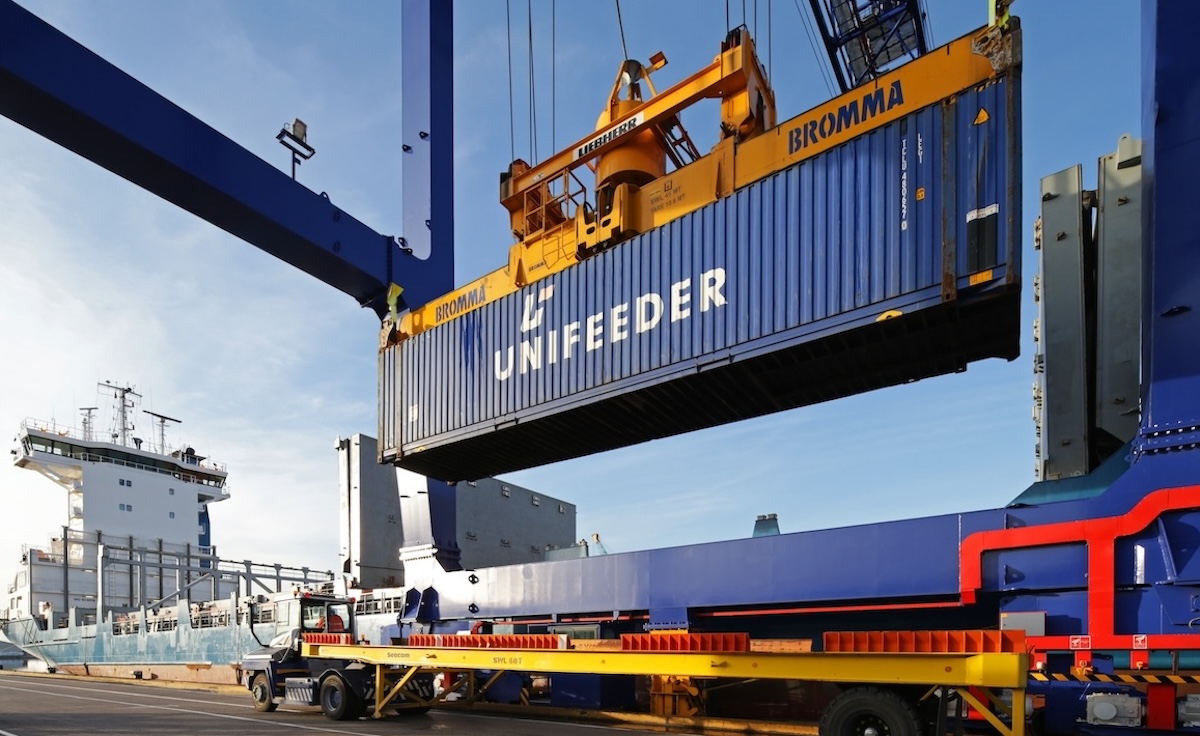
DP World’s Marine Services is rebranding its Unifeeder ocean liner unit.

As of December, the world’s 16th-largest container carrier, which comprises Unifeeder A/S and Unifeeder ISC, will now be known as Shipping Solutions.

The Dubai-based logistics provider also rebranded Multimodal Solutions (formerly P&O Ferrymasters) and Maritime Solutions (formerly P&O Maritime Logistics).

“In an industry known for its complexity, this step promises a future where customers benefit from the clarity of interacting with one brand, one interface, and one powerful logistics partner,” DP World said in a post on the Unifeeder website. “Unifying the brands marks another milestone in DP World’s transformation from a leading port operator into a fully integrated global logistics provider.”


Based in Denmark, Unifeeder was acquired by DP World in 2018 when it ranked 29th among global carriers with capacity of 46,000 twenty foot equivalent units, analyst Lars Jensen noted in a LinkedIn post. Today it ranks 16th with capacity of more than 155,600 TEUs, a 0.5% market share, according to Alphaliner. It provides feeder services between hundreds of major and niche ports in Europe, the Indian Subcontinent, the Middle East, East Asia, Africa and the Americas. The last includes schedules to ports in Puerto Rico, Venezuela, the Greater Antilles, the Dominican Republic, Haiti, Mexico, Aruba and Colombia.

The Marine Services businesses offer integrated logistics from feedering and shortsea shipping, inland connectivity and specialized cargo shipping to port services, offshore and energy solutions across a range of modalities including container, trailer and bulk transport.

“As supply chains evolve, so must we,” says Ganesh Raj, Global Chief Operating Officer, Marine Services at DP World, in the release. “Our customers increasingly expect seamless, end-to-end service delivery. Unifying our Marine Services businesses under one brand reinforces our ability to meet that expectation while positioning ourselves for growth in an increasingly complex logistics landscape.”


Raj will continue to lead Shipping Solutions across Asia, Middle East and Africa, while Martin Gaard Christiansen will continue leading it across Europe and the Americas as chief executive of Shipping Solutions EAM – Marine Services.

Find more articles by Stuart Chirls here.

Related coverage:

Jaxport COO Bennett dies in car crash

Retailers see container import hangover for 2026

Asia-US container rates uptick can’t obscure recent plunge

Israel urged to block Hapag-Lloyd offer for Zim: Report

You share a beer, we share a truck: Stone Brewing’s blueprint for balanced cost, reliability and sustainability

In beer, making the product is only half the challenge; the other half is delivering within strict windows without sacrificing quality or budget. To tackle this challenge, Stone Brewing partnered with Flock Freight to add Shared Truckload (STL) to a blended transportation strategy, cutting spend on underutilized truckloads by 23%, while maintaining 99% on-time pickup and 97% on-time delivery, and eliminating 195 metric tons of CO2e in the first year.

“With Flock, we’ve seen a positive impact on our service KPIs and customer experience. With greater flexibility and visibility, we’re able to plan more proactively, respond faster to changes, and deliver with more consistency. That reliability strengthens our customer relationships and supports long-term growth,” said Tyler Thorpe, Senior Transportation Manager, Sapporo-Stone Brewing.

Why beverage shipping needs a different approach

Beverage shippers often manage orders that fall between LTL and full truckload, with volumes that swing by distributor demand, promotions, and seasonality. Traditional LTL adds handling and dwell time through hub-and-spoke networks, while full truckload can leave unused space and higher costs. STL aggregates compatible freight on similar routes so shippers pay only for the space they need, while preserving truckload-level handling and appointment integrity.

Stone’s network design: A blended mode strategy

Stone didn’t replace existing modes; they built a simple structure that flexes by volume, lane density, and lead time:

  • STL for mid-sized shipments and irregular lane patterns
  • Multi-stop truckload for higher-volume, sequential deliveries
  • Single-stop truckload for direct, high-capacity moves

This keeps operations smooth while safeguarding service KPIs.

How optimization works

Flock Freight evaluates each shipment and recommends the mode in real time using their patented pooling technology, deploying STL only when it provides a clear advantage. When volume or lane patterns are better suited to single-stop or multi-stop TL, the mode adjusts to meet appointment schedules and distributor requirements.

Beyond execution, Flock provides proactive trend analysis and KPI tracking, flagging opportunities and making recommendations ahead of market shifts so Stone can plan with confidence, even through seasonal demand spikes or capacity swings.

Key initiatives:

  • Planning around appointment constraints to avoid penalties or rescheduling delays
  • Blending STL, multi-stop, and TL modes as markets shift
  • Prioritizing service standards to protect distributor and retailer relationships

A broader shift across food and beverage

Beverage and food shippers are adopting STL to balance service with cost, reporting an average 23% savings versus traditional truckload, along with an industry-leading 99.8% damage-free performance.

Where STL fits best:

  • Mid-sized shipments that don’t justify a full truckload
  • Time-sensitive orders where LTL delay risk is too high
  • Fragile and damage-sensitive products

Evaluating lanes that routinely run under full utilization, and incorporating STL alongside single- and multi-stop TL, helps teams reduce cost, improve reliability, and advance sustainability goals.

The model going forward

The Stone and Flock partnership shows how innovation plus focused execution can deliver truckload-level service at a lower cost, tighter control of service performance and customer experience, and measurable environmental impact. To learn more, visit the Stone Brewing × Flock Freight campaign page.

Mexico targets Asian imports with new tariffs ahead of USMCA negotiations

The Mexican government on Wednesday approved a sweeping package of new import tariffs — some as high as 50% — on more than 1,400 products from China and other Asian nations.

The tariffs are a dramatic shift in trade policy that analysts say is designed to shore up domestic industry while easing pressure from the U.S. ahead of contentious negotiations with the Trump administration.

The tariffs, which take effect Jan. 1, will apply to goods including autos, auto parts, steel, aluminum, plastics, clothing, appliances, toys, footwear and textiles. 

The measures target countries that lack a free trade agreement with Mexico, including China, South Korea, India, Thailand and Indonesia. Together, the affected product categories represent approximately $52 billion in annual imports, or 8% to 9% of Mexico’s total inbound trade.

Most tariff lines will see rates of up to 35%, while select products — such as certain steel items, textiles, cosmetics, auto parts and specialty vehicles — will reach the maximum 50% threshold.

China pushes back, warns move is “harmful” and urges reversal

China reacted sharply to the tariff package, warning that Mexico’s decision constitutes “unilateralist and protectionist practices” and will “substantially harm the interests of trading partners like China,” according to El Financiero.

A Chinese foreign ministry spokesperson said pursuing protectionism “does not benefit oneself,” urging Mexico to maintain dialogue and protect the bilateral relationship — one Beijing described as increasingly important amid a “volatile international landscape.”

Mexico runs a significant deficit with China, importing far more from China than it exports to the country, importing electronics, industrial machinery, autos and auto parts.

In the first half of 2025, Mexico’s imports from China reached approximately $62.1 billion, while Mexican exports to China were about $4.6 billion, marking record China-Mexico trade for that period, according to The Mexican Chamber of Commerce in China.

Although Mexican President Claudia Sheinbaum’s administration framed the measure as essential to boosting the country’s industrial competitiveness and protecting more than 320,000 domestic jobs, the timing has fueled perceptions that the tariffs are also meant to calm U.S. concerns about China’s expanding presence in Mexico.

The Trump administration has repeatedly warned that Chinese firms may be using Mexico as a backdoor into North American supply chains, a central issue as the U.S.–Mexico–Canada Agreement (USMCA) approaches its 2026 review.

Analysts cited in a Reuters report said the move “appeases the U.S. ahead of the next USMCA review” and provides Mexico with additional fiscal capacity—around $3.7 billion in new tariff revenue next year — as it seeks to narrow its budget deficit.

The action also comes as Mexico faces a series of trade threats from President Donald Trump, including 50% duties on Mexican steel and aluminum, a proposed 25% fentanyl-related tariff, and Trump’s recent threat of an additional 5% tariff over water-treaty disputes.

Has FMCSA’s Decade-Old Chameleon Carrier System Been Running on Autopilot?

A leaked Department of Transportation memo promising a revolutionary new approach to identifying chameleon carriers has set off alarm bells among industry observers who remember that federal regulators already built this exact system more than a decade ago.

The November 12 memo, written by Shaz Umer, Director of Strategic Initiatives in the Office of the Assistant Secretary for Research and Technology, outlines plans for a groundbreaking “data-driven severity matrix” to catch carriers that repeatedly shut down and reopen under new identities to evade enforcement.

The problem is simple: FMCSA already has that system. It’s called ARCHI, Application Review and Chameleon Investigation, and Congress allocated $3.5 million to build it back in 2012 following a damning Government Accountability Office report on carrier vetting failures.

So why is DoT circulating a 2025 memo that reads like they’re inventing something from scratch, with no mention of the system taxpayers already funded?

The story behind ARCHI starts in the worst possible place, preventable deaths that could have been avoided with proper carrier vetting. In 2008, a bus operated by a carrier with documented safety violations crashed near Sherman, Texas, killing 17 Vietnamese Catholics on a church trip. That same year, Virginia state trooper Kelly Linhart was struck and killed during a routine roadside inspection. Both crashes involved carriers that had gamed the system, shutting down operations after enforcement actions only to reopen under new names with the same unsafe drivers and equipment.

FMCSA’s vetting program at the time was pathetically inadequate. The agency was checking just 2% of new applicants, only bus companies and household goods movers, while the remaining 98% of freight carrier applications, the segment most likely to be involved in fatal crashes, faced minimal scrutiny.

Following the 2012 GAO report documenting these failures, Congress allocated $3.5 million specifically for FMCSA to develop automated detection systems. By June 2013, FMCSA submitted a detailed report to Congress describing its new ARCHI system.

According to that congressional report, ARCHI was designed to automatically screen every new carrier application using a sophisticated matching algorithm that examines business names and variations, physical and mailing addresses, phone and fax numbers, Federal Employer Identification Numbers, names of owners and key personnel, vehicle identification numbers, and commercial relationships.

The system assigns each application a “match score” based on similarities to existing carriers. Applications scoring 1.5 or higher trigger “motive” screening, which checks whether the previous carrier was involved in bankruptcy, fatal crashes, fines, out-of-service orders, or unsatisfactory safety ratings.

By 2016, ARCHI was fully operational. FMCSA officials stated the system had screened nearly 90,000 applicants and flagged approximately 8,000 as potential chameleon carriers.

Now compare that to what the November 2025 memo proposes. According to the leaked document, DoT wants to create a “data-driven severity matrix”, essentially a risk score, that identifies carriers whose behavior suggests they’re hiding behind new DoT numbers. The memo says analysts have reviewed SAFER and registration data and noticed “behavioral patterns that mirror the tactics used by high-risk carriers attempting to disguise operational identity.”

Those patterns include shared addresses, rapid turnover of DoT numbers, duplicate contact information, inconsistent equipment reporting, clusters of nearly identical companies in the same commercial corridors, and leased equipment appearing under multiple DoT numbers.

That’s the exact methodology ARCHI has been using since 2013. The memo even uses nearly identical language to the 2013 congressional report, stating that the next step is to “use these indicators to generate a severity score for every carrier, showing which ones are most likely to be fraudulent.”

The core methodology is identical. The data sources are the same. Even the stated goals are virtually interchangeable. The only substantive differences appear to be terminology changes; what was called ARCHI’s “match and motive scores” is now being rebranded as a “severity matrix”, and vague claims about expanded scope and integration with other systems.

What’s conspicuously absent from the 2025 memo is any mention of ARCHI itself, the 2013 congressional mandate, or the $3.5 million already spent building this system.

Is ARCHI still running? If so, why does DOT need to develop a system that already exists? If not, why did it stop, and why isn’t anyone talking about that? Has ARCHI been effective? The system was supposed to flag thousands of potential chameleon carriers, what happened to those flags? How many applications were actually denied? How many enforcement actions resulted?

FMCSA has consistently declined to provide specific data on ARCHI’s performance. When asked about chameleon carrier enforcement, agency officials typically say they’ve “taken aggressive steps” and point to expanded authority under MAP-21. Still, they won’t disclose how many applications ARCHI flags annually, how many flagged applications are denied, how many enforcement actions result from ARCHI detections, or what percentage of known chameleon carriers slip through anyway.

The Specialized Solutions case from Michigan illustrates why these questions matter. In 2016, investigators documented that Anvar Akhmedov had operated at least four trucking companies, three of which had been put out of service. A compliance review explicitly predicted that “Azda Logistics will most likely reincarnate itself as Specialized Solutions LLC to avoid an adverse safety rating or history.”

That’s exactly what happened. Despite clear documentation of the pattern and ARCHI’s supposed operational status, Akhmedov’s new company received operating authority. When confronted, he admitted switching company names to hide his troubled safety record from customers. As of today, Akhmedov appears to be connected to multiple active carriers, including Nextgen Heavy Haul, which has a vehicle-out-of-service rate of 42%, well above the national average, despite being in business for less than two years.

This is precisely the scenario ARCHI was built to prevent. The system’s apparent failure to catch obvious patterns suggests either that the technology doesn’t work as advertised, enforcement personnel aren’t acting on the flags it generates, or something else has gone fundamentally wrong with implementation.

While federal enforcement appears stuck in neutral, private industry has developed its own solutions. Companies like Freight Validate, SearchCarriers.com, and Genlogs have built tools that help shippers and brokers identify potential chameleon carriers. Genlogs uses tactics similar to intelligence agencies, deploying sensors across the country to track trucks and verify that carriers actually operate where and how they claim.

DAT developed a free Alias Search tool that allows users to check whether an address, phone number, or fax number has been previously used by a carrier that went out of business, combining current FMCSA data with historical data no longer publicly available.

The fact that private companies felt compelled to build these tools, and that shippers are willing to pay for them, suggests the federal system isn’t working as advertised. The private sector has invested more resources in solving this problem than the federal government appears to have deployed, despite receiving $3.5 million specifically for this purpose.

Both the 2013 report and the 2025 memo mention integrating chameleon carrier detection with the Unified Registration System. The 2013 report said full implementation would happen in 2015, “resources permitting.” It’s now 2025, URS still isn’t fully deployed, the chameleon carrier problem has gotten worse, and we’re seeing memos that read like regulators are starting from scratch.

This pattern, ambitious plans, promised timelines, resource caveats, indefinite delays, has become depressingly familiar in federal motor carrier safety enforcement. CSA scores, ELDs, entry-level driver training, and the Drug and Alcohol Clearinghouse; each reform was sold as transformative, each faced implementation challenges, and each left gaps that bad actors learned to exploit.

The human cost behind these bureaucratic failures is staggering. According to GAO data, from 2005 to 2010, chameleon carrier drivers were responsible for 3,561 injuries and 217 deaths. Chameleon carriers are three times more likely to be involved in crashes resulting in serious injury or fatality than other new applicant carriers. ARCHI was supposed to change that, it was sold as the technological shield that would prevent these operators from repeatedly victimizing the public.

More than a decade later, we’re reading memos that suggest federal regulators are still at the drawing board.

For legitimate carriers, this mess creates direct economic harm. Chameleon carriers undercut rates, drive up insurance costs for everyone, damage industry reputation, and create an uneven playing field in which rule-breakers gain a competitive advantage. Every chameleon carrier that gets authority despite red flags is a direct threat to compliant operations. Everyone who operates for months or years before being shut down does lasting damage to the freight ecosystem.

Before FMCSA moves forward with what the November 2025 memo describes, the agency owes Congress and the public clear answers. Is ARCHI currently operational? If yes, provide performance data showing how many applications have been screened, flagged, and denied since 2016. If no, when did it stop and why?

What happened to the $3.5 million Congress allocated in 2012? What specific deliverables did that money produce? How many chameleon carriers has FMCSA successfully identified and shut down since 2013? Why does the November 2025 memo read like ARCHI never existed? Is this bureaucratic amnesia, rebranding of a failed system, or something else?

What accountability exists for systems that cost millions, promise significant safety improvements, and then either fail or vanish without explanation? Why has URS implementation taken more than a decade when it was initially scheduled for 2015?

The chameleon carrier problem should have a straightforward solution. The data exists. The technology exists. The legal authority exists. Private companies have proven it can be done. What’s missing is the institutional will, continuity, and accountability actually to use the tools Congress paid for.

A leaked memo suggests DOT is preparing to launch a revolutionary data-driven system to catch chameleon carriers. But that system was already built with $3.5 million in taxpayer money back in 2012-2013. Either that original system works, in which case show us the results, or it doesn’t work, in which case explain why and what’s being done differently this time.

What we can’t have is federal officials acting like they’re breaking new ground when they’re walking paths that should have been cleared a decade ago, leaving bodies in their wake. The trucking industry has been begging FMCSA to address chameleon carriers for over a decade. Congress funded the solution in 2012. It’s now 2025, and we’re seeing memos that read like the problem was just discovered.

Right now, it looks an awful lot like taxpayers paid for dinner in 2012 and are being asked to pay the check again in 2025 for the same meal. Someone at DOT needs to explain what happened to ARCHI and why anyone should believe this “new” system will be any different.

Union Pacific sets date for historic rail merger filing

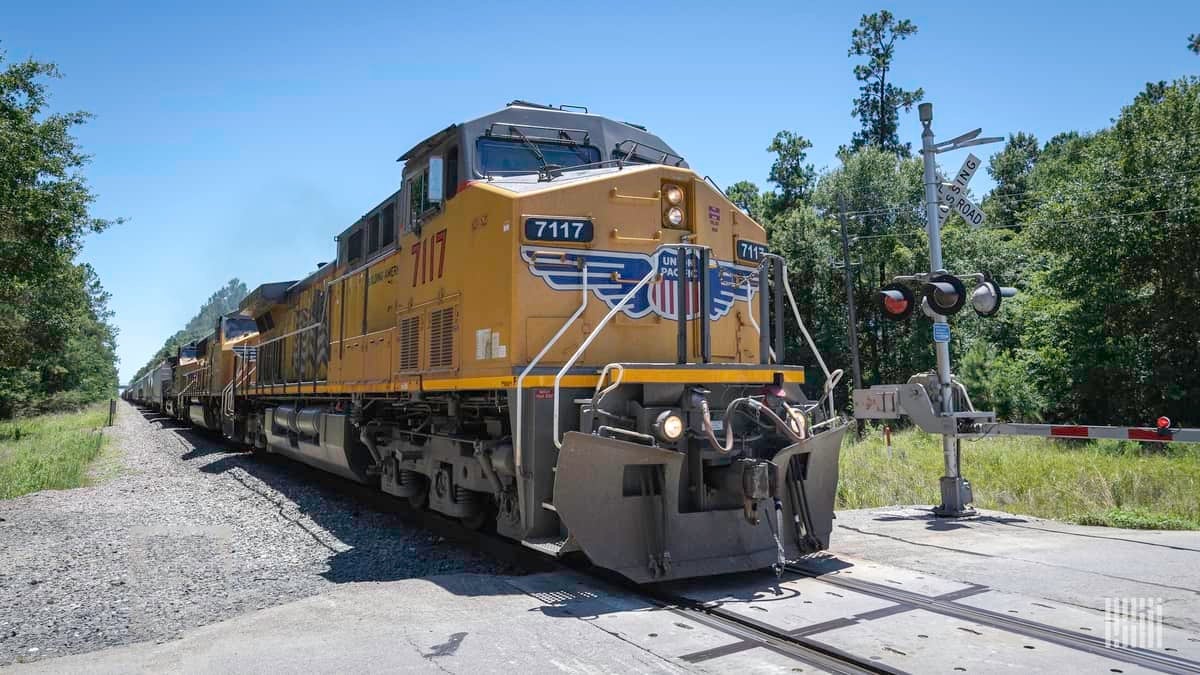
Rail freight stakeholders can mark up their merger calendars.

Union Pacific and Norfolk Southern plan to file their formal merger application with federal regulators on Dec. 19.

The date for the filing covering the creation of the first freight-only transcontinental railroad was contained in a document advising of a delayed filing submitted to the Surface Transportation Board Dec. 5, and has not been previously reported.

According to a timeline posted on the STB website, the filing of what Union Pacific has said will be a 4,000-page document triggers a statutory 30-day review by the STB for completeness after which the regulator can accept a complete application, or reject it as incomplete. 

This phase is separate and involves no evaluation of the merger itself.

While the 2023 merger of Canadian Pacific and Kansas City Southern ran to 10,000 pages, the marriage of UP (NYSE: UNP) and NS (NYSE: NSC) is likely to generate more documentation and data for review than for any previous merger. The consolidation will be the first test of more stringent criteria adopted by the STB after a whirlwind of railroad consolidation in the Nineties.

This article was updated Dec. 11 to delete a sentence that misattributed a Dec. 16 filing date to UP CEO Jim Vena.

Subscribe to FreightWaves’ Rail e-newsletter and get the latest insights on rail freight right in your inbox.

Find more articles by Stuart Chirls here.

Related coverage:

Feds OK automation, say railroads can make fewer visual track safety checks

Ahead of mega-merger, railroads say they steady economy, supply chain

Union Pacific delays rail merger filing

Ports warn intermodal in the crosshairs of rail merger

Bouqs picks Roadie for same-day flower delivery

A woman driver gets out door holding a vase of flowers.

The Bouqs Co., a direct-to-consumer floral retailer, has engaged UPS (NYSE: UPS) subsidiary Roadie to make same-day deliveries in several major cities using gig drivers as holiday demand spikes and customers seek arrangements that need special handling.

The online flower seller is forecasting a 44% increase in planned order volume in the fourth quarter from the prior period, but won’t be able to easily fulfill late orders before holiday deadlines from its network of distribution centers. By partnering with Roadie, Bouqs can prepare and send orders the same day for customers in key markets like Los Angeles, the company said in a news release on Tuesday. 

Roadie is a crowdsourced delivery platform that connects shipments to a network of independent drivers that make deliveries with their personal vehicles. It picks up orders for customers such as Walmart, Tractor Supply, FilterBuy, Spirit Halloween, paint brand Benjamin Moore  and Nothing Bundt Cakes, at local stores and warehouses for last-mile delivery to shoppers. 

Bouqs has expanded its online model to include physical retail locations in San Diego, Los Angeles, and New York, which are co-located in other stores, and flower counters inside some Whole Foods Market stores. It plans to set up storefronts in San Francisco and Chicago, according to its website. Same-day delivery is also currently available in San Francisco, Chicago and Dallas.

In addition to addressing capacity constraints during peak periods and service gaps created by traditional delivery windows, Roadie enables Bouqs to offer premium products, like florist-arranged centerpieces and compote-style vases, that aren’t suited for boxed, long-distance shipping. The partnership will continue past the holiday season, Roadie Chief Operating Officer Dennis Moon said in an email response.

Bouqs also benefits from Roadie’s 24/7 delivery capability, real-time tracking, photographic chain of custody and a same-day delivery radius of up to 100 miles, he added. 

Click here for more FreightWaves stories by Eric Kulisch.

Sign up for the biweekly PostalMag newsletter The Delivery here

Teamsters union to press UPS over Roadie use of gig drivers

Freight Market Turmoil and What Smart Carriers Do Differently To Survive

Another weekend, another batch of DOT revocations. More drivers out of work, more equipment sitting idle, more owners walking away from everything they built and right on schedule, the comment sections fill with the same tired explanations: poor management, no cash reserves, should’ve planned better. Small carrier survival requires solid financial management to overcome market conditions. 

Some carriers aren’t closing because they failed. They’re closing because the system rewards the wrong behavior and punishes operators doing everything right. The carriers that survive this freight recession share something the bankrupted fleets don’t: strategic financial management that looks beyond next week’s settlement.

Remember 2020? While property carriers were printing money, passenger carriers watched their entire business model evaporate overnight. Tours cancelled. Charters gone. Airport shuttles closed. Fixed routes running empty.

Some passenger carriers immediately filed bankruptcy and liquidated. Others took a different approach.

The survivors executed strategic financial preservation while positioning for the inevitable rebound. They furloughed strategically rather than panic-firing their best people. They negotiated with lenders instead of defaulting. They stopped burning cash on reactive maintenance and shifted to predictive management of their aging fleets.

When travel demand returned in 2022? Those same carriers were acquiring their bankrupt competitors’ assets at liquidation prices, understanding that temporary market conditions don’t justify permanent business decisions.

The difference wasn’t luck. It was management.

There is a difference between reaction and planning. Most small carriers operate in constant reaction mode. A tire blows, they buy a tire. An engine fails, they overhaul an engine. A load cancels, they scramble for backhaul. Cash flow becomes a weekly crisis instead of a managed metric.

Airlines don’t wait for turbine failure at 35,000 feet to schedule engine maintenance. They forecast component life cycles, plan overhauls during off-peak periods, and build replacement costs into their operating budgets years in advance. The difference is predictive management versus reactive scrambling, and that difference determines who survives market downturns.

Right now, carriers with professional financial management are forecasting maintenance intervals, planning equipment replacement cycles, and calculating the exact point where continuing to operate an aging truck costs more than controlled disposal. They’re not waiting for catastrophic failures to force expensive emergency decisions.

They’re managing tire life cycles across their fleet. They’re buying used equipment at distressed prices while competitors liquidate. They’re renegotiating insurance terms and cutting non-essential spending without gutting their operation’s core capabilities.

Meanwhile, carriers operating week-to-week are discovering that maintenance costs they deferred in 2023 are now due in 2025, except they’re due all at once, in a market that can’t support the revenue needed to cover them.

Here’s the uncomfortable truth nobody wants to say out loud: well-managed small carriers are being crushed by market dynamics they can’t control.

Mega-carriers can haul loads below cost when they’re running 2,000 trucks. A single bad week gets absorbed across their entire fleet. They can undercut lanes to maintain customer relationships, knowing they’ll make it back on volume. They’ve got the balance sheet to sustain losses while waiting for the market to correct.

Small carriers don’t have that luxury. They need every load to generate a positive margin. One blown motor hits them directly. One soft week actually hurts. They can’t absorb sustained losses while waiting for rates to recover.

So when mega-carriers normalize cheap freight to keep customers happy, they drag the entire market with them. Brokers see it. Shippers see it. Suddenly, that lowball number becomes the new standard, and small outfits running clean CSA scores, well-maintained equipment, and properly insured operations are expected to compete against companies hauling freight for less than it costs to turn a wheel.

Add broker behavior to the mix, rewarding ghost carriers and rule-breakers who post cheap rates on load boards, and you’ve got a system that actively punishes carriers doing everything right.

It stops when people start saying no.

It stops when shippers realize cheap freight usually becomes late freight, damaged freight, or freight that never shows up at all.

It stops when brokers stop rewarding bottom-feeders just because they posted the lowest number on a load board.

It stops when enough small carriers refuse to haul loads that don’t even cover their bare-minimum operating costs.

The problem is that most small carriers aren’t in a position to say no. They’re desperate to keep wheels turning, terrified of losing drivers, scared of losing customers. And that desperation perpetuates the race to the bottom.

The carriers who survive are the ones with financial management sophisticated enough to say, “We’re not hauling that load at that rate. Period.”

They’ve forecasted their break-even point. They know their cost per mile. They understand that hauling freight at a loss doesn’t keep you in business, it just delays bankruptcy while draining whatever cash reserves you had left.

It really boils down to management over market conditions. It’s the difference between relationship-driven, shipper-direct freight and random, low-rate spot freight from the boards and the random brokers that post. So when someone says a carrier closed because of poor management, they’re not entirely wrong. When they say a carrier closed because the market conditions were impossible to survive, they’re not wrong either.

The real difference is that carriers with strategic financial management, good CFOs, accurate forecasting, and disciplined cost control can survive temporary market downturns because they’re not just managing the present. They’re positioning for the recovery.

They’re cutting strategically, not desperately. They’re preserving cash for strategic opportunities, not burning it on reactive emergencies. They’re maintaining their best people, their cleanest equipment, and their strongest customer relationships while competitors implode around them.

When this freight recession ends, because it will end, those carriers will be buying distressed assets, hiring experienced drivers from bankrupt competitors, and capturing market share from operations that couldn’t hold on.

This industry doesn’t have a small carrier problem. It has a broken market problem.

It has a system that rewards operators willing to cut every corner, haul every load at a loss, and burn through equipment and people until there’s nothing left. It punishes carriers running legal, safe, compliant, and sustainable operations.

Until that changes, we’re going to keep seeing closures, layoffs, and experienced drivers thrown out of the industry.

Some carriers are failing because of poor management. That’s true but many are failing because the market rewards the wrong people, and strategic management can only overcome that for so long.

This industry is dying because the system rewards the wrong people and punishes the ones doing everything right.

Strange bedfellows as states say brokers not protected under ‘safety exception’

It isn’t often you find Texas Attorney General Ken Paxton and New York Attorney General Letitia James on the same side of an issue.

But that pairing and numerous others that cross the political divide among the attorneys general of red and blue states and the District of Columbia can be found over the issue of broker liability. 

There are 29 Attorneys General who signed their names on to an amici curiae brief filed this week in the case of Montgomery vs. Caribe. That is the case before the Supreme Court expected to yield a legal precedent over whether the safety exception found in the Federal Aviation Administration Authorization Act, known as F4A, can bring in a broker as a defendant in legal actions like a tort. 

Ohio Attorney General Dave Yost is the lead AG in the filing, which makes a total of 30 AGs on the brief.

And what do the Attorneys General want? Based on the brief, they want a finding by the Supreme Court that brokers do not have protection from state tort action under the safety exception of F4A. 

The James-Paxton pairing reflects the broad ideological spectrum of the Attorneys General on the amicus brief. Others besides Paxton and James have national profiles; from the right, Kris Kobach of Kansas is there. On the left, Rob Bonta from California can be found among the names.

Five amicus briefs in support of Montgomery

The Attorneys General’s action is one of five amicus briefs submitted to the court Monday in support of Shawn Montgomery. Montgomery’s truck was on the side of an Illinois highway when it was struck by another truck driven by Caribe Transportation, hired to move a load by C.H. Robinson. Montgomery’s injuries were severe enough to lead to an eventual leg amputation. 

The resulting litigation in the Seventh Circuit tossed out C.H. Robinson as a defendant. As it had earlier done in the case of Ye vs. GlobalTranz, the 7th Circuit found that the safety exception of F4A that allows state torts to proceed against transportation companies can not include brokers as a target.

F4A prohibits state action that might impact a transportation “price, route or service.” But the safety exception allows a state action, like a tort, to proceed if it is “with respect to motor vehicles.” Conflicting circuit court decisions on whether the phrase “motor vehicles” includes brokers is why the case is before the Supreme Court.  

Awaiting C.H. Robinson’s brief

The “other side” of Montgomery vs. Caribe before the Supreme Court is not the latter party.  (Caribe is still listed as active with the Federal Motor Carrier Safety Administration, but with only one power unit). Rather, it is C.H. Robinson (NASDAQ: CHRW). The 3PL will be filing the response to Montgomery’s brief, with a deadline of January 14. 

The core message of the Attorneys General is that the issue of broker liability poses a significant question of federalism and the ability of the federal government to preempt state action. 

The Supreme Court, the states’ brief says, “has instructed courts to be cautious before displacing state law with federal law, especially in domains that are traditionally regulated by the states.” And one of those areas, the brief says, is “the quintessential tort, a motor vehicle accident.”

The states’ brief says Congress made clear the states’ “traditional role of regulating road safety” in the statute governing the federal jurisdiction over intrastate transportation. 

Congress’ goal in F4A, according to the states, was to guarantee that the economic deregulation of transportation which developed in the late 70’s and early 80’s not be undercut by state action. Given that, the states say in the brief, F4A is “aimed at economic deregulation, (and) cannot substitute for state road-safety laws.”

The intention of Congress

The 7th Circuit in Montgomery, the state AGs said, “got the answer wrong when it comes to whether the Act preempts the States’ road-safety laws.”

The combination of F4A and its limitations, and the safety exception, led the Attorneys General to argue that “these provisions show that Congress did not envision removing the states from their traditional role of regulating safety, and protecting their citizens, on roadways with a statute aimed at deregulating economic barriers to interstate commercial transportation.”

“Robust tort systems, in particular, offer injured drivers and passengers recovery against negligent motorists,” the states say in their brief. “Indeed the public looks to state law to understand the rules of the road. And it looks to state tort law to vindicate injuries caused by drivers that break the rules of the road.:”

The Restatement of Torts, described as a “series of treatises” that was published by the American Law Institute, is cited at several points by the states’ brief. 

It says the Restatement’s “basic element” is that “an employer is subject to liability for physical harm to third persons caused by his failure” to take steps to keep its workers safe. 

“The tort aims to protect the motoring public from unfit truckers—those who have a track record for unsafe driving, a prior history of safety violations, or lack the necessary qualifications—put in charge of transporting heavy commercial loads,” the brief says.

The safety exception does not specifically exclude brokers from making a path toward lawsuits.  It refers only to motor vehicles even though the broader federal law that includes F4A does have a specific section that limits other state action against brokers and freight forwarders. But it’s separate from the safety exception. 

That lack of a specific reference to brokers has been a key part of the debate, which the states weighed in on. Omission, they argue, is relevant. ”(F4A) contains no clear statement that Congress intended to preempt personal-injury claims of negligent selection against brokers,” they write.

Cox weighs in

One of the other briefs was submitted by Robert Cox, widower of Greta Cox whose own case on broker liability, Cox vs. Total Quality Logistics, is sitting in front of the Supreme Court seeking certiorari on the issue. Greta Cox was killed in a crash involving a truck hired by TQL. 

The key difference is that Cox prevailed at the Sixth Circuit, with the appellate court finding TQL was not protected by F4A’s safety exception. 

It is assumed by trucking industry attorneys that a Supreme Court decision on granting Cox certiorari is on hold while it deals with the same issues in Montgomery. 

Cox’ brief largely argues that the Supreme Court should follow the legal findings in his Sixth Circuit decision, which would reduce protection for brokers under the safety exception. 

Other briefs submitted this week were from a group that includes the Truck Safety Coalition, Parents against Tired Truckers and Citizens for Reliable and Safe Highways; Gergana Franco, who is involved in a lawsuit against Jack Cooper Transport, which no longer operates, in a case involving preemption under F4A; and a group of attorneys and law professors who filed under the name of the Preemption Scholars.

That latter group said its interest is in “the constitutional importance of maintaining the States’ vital role in our federalist structure.” A subhead on one of its arguments is that “The Seventh Circuit Over-Read the Scope of Federal Preemption Under the FAAAA.”

More articles by John Kingston

Logistics startup founder loses appeal on conviction, 20-year sentence

Trucking credit metrics at BMO slide as the business gets smaller

Inside the Amazon-Teamsters showdown: What’s next?