Tax credit could boost competition among Gulf coast ports

ZPMC cranes at Long Beach container terminal

WASHINGTON — New tax incentives proposed by Republican lawmakers aimed at protecting US supply chains from Chinese market power could also boost competition among Gulf Coast ports.

The Port Crane Tax Credit of 2025, introduced recently by U.S. Reps. Mike Ezell, R-Miss., Jen Kiggans, R-Va., and Nicole Malliotakis, R-N.Y., would establish tax credits to incentivize the domestic production of port cranes, “a critical step toward strengthening U.S. supply chain security and revitalizing American manufacturing,” according to the bill’s sponsors.

“I’m deeply concerned that so many of our ports are forced to use cranes manufactured by Shanghai Zhenhua Heavy Industries [ZPMC], a Chinese state-owned company,” Kiggans said in a press statement.

“It makes no sense to let our top adversary build and maintain the very equipment that powers our supply chains. The work our ports do is imperative – we cannot afford to leave that in the hands of the Chinese Communist Party.”

The American Association of Port Authorities (AAPA) sees the incentive as a counter to levying tariffs on Chinese-built cranes to achieve economic and national security policy goals. Last year the Biden administration imposed a 25% tariff on Chinese cranes, and the Trump administration has proposed raising it to 100%.

“Instead of levying unfair taxes on port development, the Port Cranes Tax Credit Act is a tangible first step on the supply side towards incentivizing the reshoring of key [container handling equipment] in the coming years since there are currently no domestic STS [ship-to-shore] crane manufacturers,” said AAPA President and CEO Cary Davis.

Gulf Coast ports have been particularly vocal about the cost increases they face due to existing and potential new tariffs on Chinese-made container cranes.

The Port of Houston, Port Freeport in Texas, and the Port of New Orleans all have invested in the past several years in container cranes built in China, which dominates the U.S. and international container gantry crane markets.

Their rivals in the Eastern part of the Gulf – the ports of Gulfport and Pascagoula in Mississippi, and Port Tampa – see the tax credit as a way to help compete for business as well as incentivizing domestic manufacturing.

The proposed tax credit “is exactly the kind of forward-thinking support Gulf Coast ports like ours need to stay competitive and meet the demands of a modern, American-made supply chain,” said Port Pascagoula Port Director Bo Ethridge.

“As manufacturing continues to return to U.S. shores, our port is experiencing increased demand and new growth opportunities. Yet we remain the only major Gulf Coast port without cargo cranes, which is an infrastructure gap that limits our ability to diversify commodities. This legislation is a vital step toward closing that gap.”

Jon Nass, executive director at the Port of Gulfport, said the legislation “creates a path to bring new skilled jobs to Mississippi and reinforces our ability to compete globally while supporting our maritime and port industries.”

Port Tampa Bay, which installed Chinese-made cranes at its container terminal in 2016 to help compete for larger container ships, supports the tax credit because it “addresses urgent national security concerns,” said Paul Anderson, the port’s president, by incentivizing U.S-made port equipment.

Click for more FreightWaves articles by John Gallagher.

Why a French shipping magnate with US ties is interested in China-owned port terminals 

French container line CMA CGM could purchase port container terminals being sold by HK Hutchison of Hong Kong, a company executive said.

“It’s very important for the industry, and it’s important for us as a major player in this sector,” CMA CGM Chief Financial Officer Ramon Fernandez said during the company’s earnings presentation this week. “We are present in 65 terminals around the world so we are following this operation very closely and are naturally interested in participating.”

The Marseilles-based company, which is controlled by the Saade family, is the world’s third-largest container carrier and also operates dozens of terminals of its own, including seven in the United States.   

Chief Executive Rodolphe Saade was in the Oval Office in March when President Donald Trump announced a wide-ranging initiative to rejuvenate the domestic maritime sector. Saade at the time said his company would invest $20 billion over four years in U.S. shipping.

Prior to that, Trump had threatened that the U.S. would take back the Panama Canal, where Hutchison owns terminals at the ports of Cristobal and Balboa, alleging China was controlling the waterway.

Not long after, Hutchison (0001.HK) announced plans to sell more than 40 container terminals under its Hutchison Port Holdings unit to a consortium led by BlackRock, the U.S. asset manager, that includes Geneva-based shipping line MSC, for $23 billion. 

After the exclusivity deadline for the deal passed, Huchison this week said it was including a “major investor,” thought to be China’s Cosco, after Beijing threatened to block the sale unless a Chinese company was brought into the transaction. 

Huchison, which is controlled by billionaire Li Ka-shing, also said it would not sell its Panamanian terminals.

Find more articles by Stuart Chirls here.

Related coverage:

Rail deal will open new markets for top US container port 

Activist investor may target CSX, citing slumping financial performance

While shippers cite merger concerns, rival railroad looks instead to ‘collaborations’

CEOs say Union Pacific-Norfolk Southern merger will reverse rail freight decline

XPO sees ‘massive runway’ to push margins higher

A closeup of a white XPO tractor on a highway

An improved freight mix, significant network investments and self-help productivity initiatives are pushing XPO’s financial results higher. The Greenwich, Connecticut-based less-than-truckload carrier again beat analysts’ expectations on Thursday.

XPO (NYSE: XPO) reported adjusted earnings per share of $1.05, which was 6 cents better than the consensus estimate but 7 cents lower year over year. (The adjusted EPS number excluded transaction and restructuring costs.)

The company’s LTL unit reported a 2.5% y/y decline in revenue to $1.24 billion. A 6.7% decline in tonnage per day was partially offset by a 4.2% increase in revenue per hundredweight, or yield. (Yield was 6.1% higher y/y excluding fuel surcharges.)

A weak manufacturing economy again weighed on LTL industry tonnage in the quarter. XPO’s tonnage decline resulted from of a 5.1% y/y decline in shipments per day and a 1.7% decline in weight per shipment.

On a y/y comparison, XPO’s tonnage fell 5.5% in April, 5.7% in May and 8.9% in June. Preliminary results for July showed an 8% y/y decline. The carrier acknowledged a seasonally weaker June but said July was slightly ahead of normal seasonal patterns.

The two-year-stacked tonnage comps showed an acceleration in the declines (from low-single-digits in the second quarter to 8.8% in July). However, XPO’s prior-year comps get much easier starting in August. From August 2024 through the end of 2024, it averaged mid-single-digit y/y tonnage declines.

(Daily shipments and tonnage increased sequentially in the second quarter by 4.9% and 3.6%, respectively.)

Table: XPO’s key performance indicators

Further, XPO’s freight mix is changing for the better.

The carrier has onboarded over 5,000 local accounts this year. These are largely small-to-midsize businesses that carry better margin profiles. Shipments among this group increased by a high-single-digit percentage in the second quarter, which was a step up from a mid-single-digit increase in the first quarter. The group represents a low-to-mid-20% share of XPO’s LTL revenue currently and the goal is to push that to 30%.

Also, XPO continues to increase premium services revenue, or shipments that incur accessorial charges. This accounts for a low-double-digit percentage of revenue currently and there is opportunity for a few more percentage points of growth.

The LTL unit reported an 82.9% adjusted operating ratio (inverse of operating margin), which was 30 basis points better y/y and 300 bps better than the first quarter. The result was at the top end of management’s guidance.

Purchased transportation expenses (as a percentage of revenue) were down 280 bps y/y. Linehaul miles executed by third-party carriers have been reduced from more than 20% a couple of years ago to 6.8% in the recent quarter.

Also, an AI-enabled model has allowed it to reduce linehaul miles by 3%, empty miles by 10% and freight diversions by more than 80%. It is now running fewer miles (down by a mid-single-digit percentage) to move the same amount of freight.

The initiatives led to a $36 million y/y reduction in the expense line in the quarter. It recently implemented a similar program to rework its pickup and delivery network.

Productivity initiatives are helping to reduce labor hours per shipment, and XPO’s average tractor age is now less than 4 years, which has lowered maintenance costs per mile by 6%.

Most of the carrier’s more than 30 new terminals are now open and it is already carrying the costs to operate them. That means there is significant margin leverage when the market turns.

The LTL unit has delivered nearly 400 bps of margin improvement through the downturn. It outperformed all public carriers by 440 bps in the second quarter. Further, XPO sees “a massive runway ahead” for many of these idiosyncratic initiatives.

The unit normally sees 200 to 250 bps of OR degradation from the second to the third quarter. However, this year it is forecasting no change, implying an 82.9% OR, or 130 bps of y/y improvement. The guide assumes a moderation in the y/y tonnage declines and a continuation of sequential increases in revenue per shipment and yields.

Yield excluding fuel surcharges is expected to increase by at least the same percentage it did in the recent quarter (up 6.1% y/y). XPO’s yields have increased by a mid-teen percentage on a two-year-stacked comparison over the past four quarters.

SONAR: Longhaul LTL Monthly Cost per Hundredweight, Class 50-65 Index. Less-than-truckload monthly indices are based on the median cost per hundredweight for four National Motor Freight Classification groupings and five different mileage bands. To learn more about SONAR, click here.

XPO’s European transportation segment reported a 4% y/y increase in revenue to $841 million with an adjusted earnings before interest, taxes, depreciation and amortization margin of 5.2%, 80 bps lower y/y.

XPO generated $247 million in cash flow from operations in the quarter and reduced its net debt leverage to 2.5 times from 2.7 times a year ago. It had $824 million in liquidity to end the quarter and remains focused on paying down debt and buying back stock.

Those efforts will be bolstered as annual capex steps down from 15% of revenue. The company has already onboarded terminals and refreshed the fleet.

Shares of XPO were down 8.9% at 3:05 p.m. EDT on Thursday compared to the S&P 500, which was flat.

More FreightWaves articles by Todd Maiden:

Rail deal will open new markets for top US container port 

The Port of Los Angeles stands poised for significant growth and transformational change following news of Union Pacific’s plans to acquire Norfolk Southern (NYSE: NSC) and create the nation’s first transcontinental freight railroad.

In a phone interview with FreightWaves, Executive Director Gene Seroka emphasized the vast opportunities presented by the historic rail agreement, particularly in terms of enhancing cargo flow and expanding reach into key markets across the country.

“We’ve been working real closely with Union Pacific (NYSE: UNP) on bringing more cargo in to go through the Alameda Corridor,” Seroka said, referring to the below-grade rail freight route used by UP and BNSF to access the San Pedro port complex, which he said was a “great investment but underutilized.” 

The $85 billion rail consolidation aims to optimize the use of the corridor, opening up access to the populous regions east of the Mississippi, and boosting intermodal freight capabilities out of the southern California container hub.

Seroka reminisced about past successes in transcontinental cargo movement as president of the Americas for American President Lines, noting how apparel was efficiently transported from Asia to New York. 

“Think about garments on hangars that would come right out of the box to Macy’s on 34th Street in Manhattan’s Garment District and get put right on their racks,” he recalled. This efficient supply chain model is a compelling vision for future operations, especially with the potential enhanced efficiency from the merger.

Seroka said that the rail-tie up would enable more efficient transportation of goods from Los Angeles to East Coast destinations. 

“You’re reducing paperwork and handoffs, you’re improving digital technology and you’re sailing on a ship getting to Los Angeles to on- dock rail through the Alameda Corridor,” he said. “There’s the retail consuming area of the tri-state New York, New Jersey and Connecticut, the ability to get to Boston, to get to the Mid- And South Atlantic, to get to the Sunbelt, which is growing so fast. And you can do that today, but if you combine the two companies, whether it’s steel wheel interchange at UP’s Global 4 terminal north of Chicago or west of Cleveland, you now have the same company trying to make that turn more efficient.”

The prospect of streamlined logistics would benefit other major markets.

“That will also buoy our biggest markets like Chicago where 20% of our intermodal goes, and then to Memphis and Dallas, but also to get to secondary and tertiary markets quicker. Think of Kansas City, Denver, Salt Lake City. There’s going to probably be a reconfiguration of how the two companies combined to get deeper and longer into this market.”

Despite the transformative potential, the merger is subject to multi-level approvals. Seroka expressed confidence in the diligent work being conducted at both the federal and state levels to secure this future. 

“We’re confident both companies have been working on that,” he said. “But what [the merger] does is it improves our service offering. You know what’s interesting? When just before the Alameda Corridor opened [in 2002], 41% of our imports were intermodal. It dropped down as low as 23%. These ports on the East and Gulf coasts for decades now have hired switched-on leaders, aligned with policymakers and have made massive investment. Cargo owners have gone to a four-corner strategy of port diversification. It’s now possible to get to Chicago from a Mid-Atlantic port. But this puts us back in the game with a higher level of service offering to go out and champion the cause for that discretionary cargo.”

Subscribe to FreightWaves’ Rail e-newsletter and get the latest insights on rail freight right in your inbox.

Find more articles by Stuart Chirls here.

Related coverage:

Activist investor may target CSX, citing slumping financial performance

While shippers cite merger concerns, rival railroad looks instead to ‘collaborations’

CEOs say Union Pacific-Norfolk Southern merger will reverse rail freight decline

Shippers line up against railroad mergers

What a Real Back Office Looks Like for a Two-Truck Operation

Let’s clear this up: your back office isn’t an office. It’s the system you build to make decisions, protect your money, and stay on the road legally. It doesn’t need to be big—but it does need to be tight. The three main roles of your back office are:

  1. Financial Visibility – So you know what each truck is making (or losing).
  2. Compliance Control – So you don’t get sidelined by fines or failed audits.
  3. Operational Clarity – So you can grow without chaos.

If your current setup involves a legal pad, a shoe box of receipts, and a mental note that something’s due “sometime this month,” you’re already behind.

Your Financial System Is the First Line of Defense

Every successful small carrier knows their breakeven rate down to the penny. And that starts with having a real financial system, not guesswork.

What You Need:

  • A basic digital accounting platform (QuickBooks Online, Wave, or Zoho Books)
  • Weekly tracking of:
    • Revenue per truck
    • Load-specific expenses
    • Fuel, maintenance, tolls, permits
    • Pay, insurance, factoring fees

What to Set Up:

  • Load Profit Tracker (per truck)
  • Monthly P&L snapshot
  • Reconciliation checklist for checking vs. EFS/fuel cards

Reflection Moment:  If you can’t answer “How much profit did I make per truck last month?” in 60 seconds, you need better visibility.

Compliance Isn’t Optional

You don’t get a pass on DOT compliance because you’re small. The fines hit just as hard. And worse—your insurance rates and CSA score can spiral fast if you’re not buttoned up.

Minimum Compliance Setup:

  • FMCSA registration log (MC, DOT, UCR, MCS-150)
  • IFTA folder with quarterly checklists
  • Centralized storage for:
    • BOC-3
    • Proof of Insurance
    • Annual inspections
    • Driver qualification files (even if you’re driving yourself)
    • ELD data pulled weekly

Use Google Drive or Dropbox to keep everything searchable and backed up. Use calendar alerts for expirations. Miss nothing.

Reflection Moment: Set one recurring calendar block each Friday for a “compliance sweep” so you never fall behind.

Documentation and Admin That Doesn’t Suck Up Time

Paperwork is the silent killer of growth. The more time you spend chasing down BOLs and resending rate confirmations, the less time you spend doing what pays: running trucks.

What to Systematize:

  • BOL Upload Flow: Driver → scanner app → shared folder
  • Rate Confirmation Tracker: Spreadsheet or TMS with rate, broker, and load info
  • Invoice Sent Log: Track invoice date, payment terms, and due date
  • Broker Email Templates: For follow-ups, disputes, and rate confirmations

Free tools like Adobe Scan, Gmail templates, and a simple spreadsheet can replace hours of admin time. If you can’t afford a TMS, build your own with Airtable or Google Sheets.

Reflection Moment: Every hour saved on admin is one you can spend quoting higher-paying loads or onboarding better brokers.

Broker Management Is a Back Office Function

Too many small carriers treat broker relationships like one-night stands—book a load, hope it pays, move on. That’s not a strategy.

What to Track:

  • Payment terms for every broker you work with
  • Payment history (on-time, late, issues)
  • Red flags (chargebacks, changed rate cons, poor communication)
  • Volume history and seasonality

Use a tracker (spreadsheet, Airtable, or CRM) to log every interaction. Use DAT or Truckstop’s data tools to assess repeat volume before you call. Stop treating every broker the same.

Reflection Moment: If a broker’s rate is always low and their payment always late, you’re not being flexible—you’re being exploited.

When to Outsource and What to Let Go

If you’re spending more than 6 hours a week doing admin tasks, you’re ready to start outsourcing. Not everything needs to be done by you—and frankly, some of it shouldn’t be.

What You Can Offload First:

  • IFTA prep
  • Invoicing and collections
  • Permit renewals and filings
  • Maintenance reminders and DOT inspection scheduling

You don’t need a full VA—just someone who can log in a few hours a week and keep the wheels turning behind the scenes.

Reflection Moment: The goal is simple—free up your time to work on the business, not just in it.

Use Load Boards for Freight, Not Back Office

Load boards are a tool—not a business model. Use them to fill gaps, spot trends, and test lanes—but don’t let them dictate your strategy.

Use Load Boards To:

  • See lane trends and compare RPMs
  • Find new brokers (after vetting)
  • Spot outbound strength before you deadhead

Don’t Use Load Boards To:

  • Rely 100% for freight
  • Skip broker tracking and vetting
  • Assume all brokers are equal

Reflection Moment: If you can’t explain your load board strategy without saying “I just look for what’s available,” you don’t have a strategy.

Final Word 

Your back office isn’t something you “get to later.” It’s the foundation. For a two-truck operation, you don’t need expensive systems or a full-time admin. But you do need structure.

If you want to grow beyond two trucks—or even keep both trucks profitable long-term—you’ve got to start treating the business like a business. That means tracking, organizing, and executing with intention.

The ones who win in this game don’t just out-drive the others. They out-manage them.

What Is the Best Front and Rear Dash Cam with Night Vision for Trucking?

When you’re out running loads in the dead of night, your dash cam doesn’t get to sleep. It’s still working. Still recording. Still protecting your business. And if you’re relying on a camera that can’t see clearly after sunset, you’ve got a weak link in your operation.

Accidents don’t check the clock. Most incidents—whether it’s a sideswipe on a dim backroad or a rear-end in a dark parking lot—happen outside of perfect lighting. That’s where night vision becomes non-negotiable. And if you’re serious about running your business like a business, a dual dash cam with true low-light clarity isn’t optional—it’s essential.

Why Night Vision Isn’t Just a Nice-to-Have

Let’s talk real-world. Truckers drive more nighttime miles than just about anyone else on the road. Early-morning pickups. Late-night deliveries. Cross-country hauls with windows full of stars instead of sunlight.

You need a dash cam setup that doesn’t just work in the daytime. You need one that captures plate numbers under streetlights, picks up movement in dark lots, and shows enough detail to prove what happened—clearly.

Because let’s be honest: grainy footage won’t hold up in court. And “I think that’s the car” isn’t enough when it’s your CDL or insurance on the line.

Top Features to Look For in a Front and Rear Night Vision Dash Cam

Ignore the marketing. Focus on specs that actually translate to performance:

  • Infrared (IR) Night Vision or STARVIS Sensors: These technologies capture more light and detail in low-light conditions without blowing out the image.
  • 1080p or Higher Resolution (Front and Rear): Clarity matters, front and back.
  • Wide Dynamic Range (WDR): Balances bright headlights and dark shadows in the same frame.
  • Wide-Angle Lenses (140°+): You need full-lane coverage to catch sideswipes and blind spot moves.
  • G-Sensor & Emergency Lock: Automatically saves footage if a collision is detected.
  • Loop Recording: Keeps the memory card cycling so you don’t lose new footage.
  • GPS Integration (Optional): Adds location and speed data to your recordings.

In trucking, every detail counts. That means your camera’s low-light performance could be the deciding factor in whether you win or lose a claim.

Top Picks: Best Front and Rear Dash Cams with Night Vision for Truckers

We filtered out the toys. These are workhorse models that hold up under pressure—and in the dark.

1. Vantrue N4 Pro Triple Channel Dash Cam

  • 4K front camera + 1080p rear and interior
  • Sony STARVIS 2 sensor for top-tier night vision
  • Infrared night mode on interior cam
  • Supercapacitor (not battery) for heat resistance
  • GPS and motion detection

Why it works: This one’s built for pros. You get three angles of protection—front, rear, and inside. Ideal for team drivers or anyone who sleeps in their cab. Footage is crisp even in pitch-black conditions.

2. Thinkware U1000 + Rear Cam Bundle

  • 4K UHD front + 2K QHD rear
  • Super night vision 2.0 with Sony sensors
  • Built-in Wi-Fi, GPS, and cloud connectivity
  • Parking surveillance mode
  • Optional radar module for motion alerts

Why it works: If you’re running high-value freight or want the highest video quality possible, this setup is tough to beat. Great for fleet trucks with overnight downtime in yards or rest stops.

3. Blueskysea B4K Dual Dash Cam

  • 4K front + 1080p rear
  • Sony IMX415 STARVIS sensor
  • Super night vision with WDR
  • Touchscreen display
  • Compact, easy install

Why it works: Mid-range price, pro-level night footage. If you’re an owner-op building out your truck with gear that performs without draining your pockets, this is a smart choice.

Hardwire or Plug-and-Play? Let’s Clear That Up

Most cameras come with a 12V plug, but if you want full parking mode protection or a cleaner install, hardwiring is the way to go. That setup ensures your cam runs even when the truck is off (without draining the battery if wired correctly).

If you’re a fleet owner, this also prevents tampering or accidental unplugging. Install it once, lock it in, and forget it. Your cam will be working while the truck rests.

Storage Tip: Don’t Trust Cheap SD Cards

Use a name-brand, high-endurance microSD card (128GB or higher). Night footage takes up more space due to higher contrast and exposure. The last thing you want is for your proof to be sitting on a corrupted card.

Final Word

There’s no such thing as “off the clock” when you’re a trucking business owner. The dash cam you choose needs to work when visibility is low, stress is high, and no one else is watching.

A good front and rear dash cam with night vision is more than just a gadget—it’s your insurance policy. It keeps your version of the story intact when things go sideways. It protects your license, your truck, and your name.

Don’t wait for a close call to invest in visibility. Choose a system that sees what you see—even in the dark—and let the footage do the talking when it matters most.

FAQS

1. What key features should I look for in a dash cam for trucking, especially for night vision? When choosing a dash cam for trucking, prioritize models with high video resolution (1080p or 4K), a wide dynamic range (WDR) or high dynamic range (HDR) for improved low-light performance, and infrared (IR) LEDs for enhanced night vision in the cabin. A wide-angle lens for both front and rear cameras is also crucial for comprehensive coverage.

2. Why is a front and rear dash cam setup important for truckers? A dual front and rear dash cam setup provides comprehensive coverage of the road ahead and behind your truck. This is vital for capturing evidence in various scenarios, from rear-end collisions to incidents involving trailers, and can also help deter theft or vandalism when parked.

3. Are there any specific considerations for installing dash cams in a truck compared to a regular car? Trucks often have larger cabins and different power supply configurations. Consider longer cable lengths for routing to the rear camera, robust mounting solutions to withstand vibrations, and ensure the dash cam can handle the potentially wider temperature fluctuations experienced in a truck’s interior. Some truckers also prefer models with GPS logging to track routes and speeds.

Schneider National delays stance on railroad merger until more details emerge

An orange Schneider intermodal container being pulled on a highway

Management from Schneider National said Thursday it is still contemplating how a Union Pacific–Norfolk Southern merger could impact its $1 billion-plus intermodal offering.

Schneider moved from the BNSF Railway (NYSE: BRK.B) to the UP for Western rail service in 2023. The same year, it inked a deal for North-South service with the CPKC (NYSE: CP).

UP’s (NYSE: UNP) $85 billion bid for Norfolk Southern (NYSE: NSC) would create a transcontinental railroad, likely redrawing North America’s intermodal trade lanes. But not all parties potentially impacted by the deal are ready to pick sides yet.

“We’re pro-competition and we’re pro-customer, and to the degree that any of this helps us achieve those, then that’s kind of where we’ll come down,” Schneider President and CEO Mark Rourke told analysts on a Thursday call. “We don’t have enough information at this time to take an official position.”

Schneider (NYSE: SNDR) reported second-quarter adjusted earnings per share of 21 cents on Thursday before the market opened. The result was 1 cent ahead of analysts’ expectations and level with the year-ago quarter. Consolidated revenue of $1.42 billion was 8% higher y/y and slightly ahead of consensus.

(The adjusted EPS number excluded 1 cent per share in acquisition-related amortization expenses.)

The company trimmed the top end of its full-year 2025 EPS guidance by 5 cents to a new range of 75 cents to 95 cents. The new guide bracketed the consensus estimate of 84 cents at the time of the print. Schneider generated EPS of 69 cents last year.

(Schneider’s initial 2025 outlook contemplated EPS of 90 cents to $1.20).

Table: Schneider’s key performance indicators

Q2 produces modest improvements

Revenue in the company’s truckload segment increased 15% y/y to $622 million as average trucks in service stepped 15% higher and revenue per truck per week was up slightly. The y/y revenue increase was driven by the December acquisition of Cowan Systems.

The dedicated fleet saw no change in revenue per truck per week while the one-way fleet reported a 1% increase in the metric. Combined, the TL unit again saw low- to mid-single-digit rate increases in the quarter.

SONAR: National Truckload Index (linehaul only – NTIL) for 2025 (blue shaded area), 2024 (green line) and 2023 (pink line). The NTIL is based on an average of booked spot dry van loads from 250,000 lanes. The NTIL is a seven-day moving average of linehaul spot rates excluding fuel. Spot rates are flat on a y/y comparison. To learn more about SONAR, click here.

The TL unit’s operating ratio improved 70 basis points y/y to 93.6%. Utilization improvement initiatives and an enterprise-wide cost reduction program totaling $40 million helped drive the result. Also, a modest increase in gains on equipment sales was a tailwind in the period.

Intermodal revenue increased 5% y/y to $265 million. Loads were up by a similar percentage while revenue per load was flat. The company is roughly 75% through its bid season and rates accompanying volume awards have largely been flat. However, peak season surcharges have already been implemented (roughly six to eight weeks early) at most of its large accounts.

The segment reported a 93.9% OR, which was 30 bps better y/y. Average turns per container improved 6% y/y.

Schneider’s logistics segment saw a 7% y/y revenue increase to $340 million. Both lower volumes and yields partially offset the increase from the Cowan acquisition. The unit reported a 97.7% OR, 120 bps worse y/y.

Cowan’s brokerage business will be rolled under the Schneider Logistics banner in October.

Shares of SNDR were off 0.4% at 12:14 p.m. EDT on Thursday compared to the S&P 500, which was up 0.6%.

More FreightWaves articles by Todd Maiden:

Activist investor may target CSX, citing slumping financial performance

Ancora Holdings, the activist investor that waged a proxy battle for control of a beleaguered Norfolk Southern in 2024, now may have CSX in its crosshairs.

“We’ve been a growing shareholder in CSX (NASDAQ: CSX) and I think that company finds itself at the crossroads … of whether it wants to find a merger partner or whether it’s going to have to go retool management,” Ancora Alternatives President James Chadwick said Wednesday in an interview with CNBC.

Chadwick said that the railroad’s operational and financial performance has slipped under Joe Hinrichs, who became chief executive in September 2022. Prior to his tenure, Chadwick noted, CSX had a sub-60% operating ratio. Today CSX’s 64.1% operating ratio trails the other four publicly traded Class I railroads.

The operating ratio increased 3.2 points year-over-year in the second quarter as unfavorable changes in traffic mix drove a revenue decline, while costs rose amid congestion and detours related to a pair of construction-related main line outages.

The second-quarter earnings, however, beat Wall Street expectations by about 5%. And the railroad recovered much faster than expected from congestion related to a string of harsh weather events and the Feb. 1 closure of the Howard Street Tunnel in Baltimore for a long-awaited clearance project. The railroad also is rebuilding its Blue Ridge Subdivision, which was heavily damaged by Hurricane Helene in late 2024 and is not expected to reopen until this fall.

Former CSX Chief Operating Officer Jamie Boychuk, who was Ancora’s candidate to replace Norfolk Southern’s operations chief during the proxy contest, has been advising the Cleveland-based investor about CSX, Chadwick said.

Hinrichs tapped retired Canadian National Chief Operating Officer Mike Cory to replace Boychuk in September 2023.

When asked if Ancora would agitate for management change at CSX, Chadwick said, “That will be up to CSX ultimately. Whatever actions they make from here will dictate what we do.”

CSX declined to comment today.

Ancora has been pleased with Norfolk Southern’s performance and is buying additional NS stock, Chadwick said. He praised the railroad’s leadership, strategy, improved safety metrics, and strong board. “Now they’re running a PSR railroad, which they weren’t before, and you can see it manifested in their improving OR and improving results,” Chadwick says, referring to the lower-cost Precision Scheduled Railroading operating model.

Ancora failed to wrest control of Norfolk Southern (NYSE: NSC) and oust CEO Alan Shaw, but three of its board candidates did win election to the railroad’s board. And in November 2024 the railroad and activist investor reached a settlement agreement.

Ancora supports the proposed Union Pacific-Norfolk Southern merger, Chadwick told CNBC.

Subscribe to FreightWaves’ Rail e-newsletter and get the latest insights on rail freight right in your inbox.

Related coverage:

While shippers cite merger concerns, rival railroad looks instead to ‘collaborations’

CEOs say Union Pacific-Norfolk Southern merger will reverse rail freight decline

Shippers line up against railroad mergers

Union Pacific and Norfolk Southern reach $85 billion merger deal

US and Mexico agree to 90-day extension to land trade deal

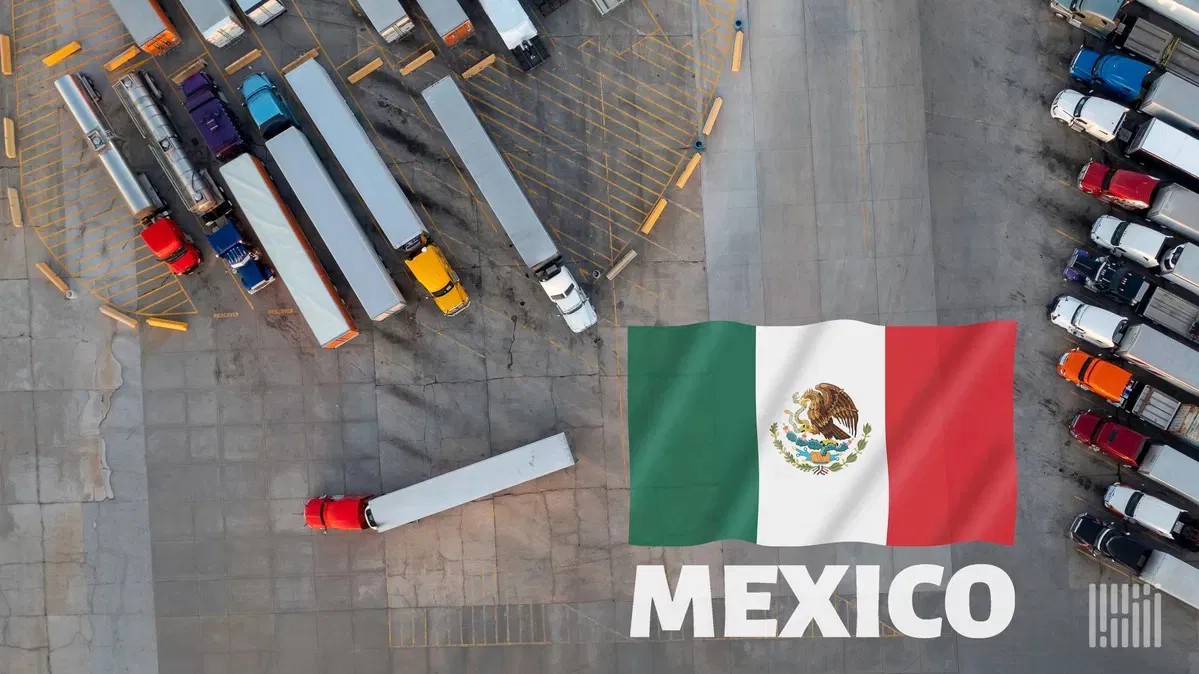
President Donald Trump said on Thursday he had agreed with Mexican President Claudia Sheinbaum to extend an existing trade deal with Mexico for 90 days while negotiations continue for a long term agreement.

The 90-day extension means a 25% tariff rate will stay in place for Mexico instead of a 30% levy that would have started Friday as part of the Trump administration’s global “reciprocal” tariff policy.

“The complexities of a Deal with Mexico are somewhat different than other Nations because of both the problems, and assets, of the Border,” Trump wrote on Truth Social.

Mexico is currently the top U.S. trade partner, with two-way trade totaling $74.5 billion in May, according to Census Bureau data. In 2024, U.S.-Mexico trade reached a record breaking $840 billion.

Sheinbaum said they will continue to work with the Trump administration on a trade agreement.

“We had a very good call with the President of the United States, Donald Trump,” Sheinbaum wrote on Facebook. “We avoided the tariff hike announced for tomorrow and achieved 90 days to build a long-term agreement from dialogue.”

Brother of NFL, Army hero Pat Tillman charged with post office arson

The charred remains of a post office and a vehicle after they were intentionally set on fire.

Federal prosecutors on Wednesday charged the brother of late NFL star and Army Ranger Patrick Tillman with fire destruction of a U.S. post office in San Jose, California. 

According to the criminal complaint, Richard Tilman, 44, set fire to the Almaden Valley U.S. Post Office on Crown Boulevard in the early hours of July 20. Tillman is alleged to have placed instalogs throughout his vehicle, doused them with lighter fluid, backed the vehicle into the post office’s lobby, got out and lit the vehicle on fire with a match. 

Tillman then allegedly began spray painting the words “Viva La Me” on the outside of the building, but didn’t finish the graffiti because the heat from the fire was too intense. 

San Francisco Bay area media reported that Tillman is the youngest brother of Patrick Tillman, who played for the NFL’s Arizona Cardinals and enlisted in the Army after the 9/11 attacks in 2001. He was killed fighting in Afghanistan. 

The Almaden Valley post office was partially destroyed by the fire, according to the federal authorities.

Tillman told law enforcement officers that he set the fire to make a statement to the U.S. government and that he livestreamed the event on YouTube using his phone. 

Tillman is currently in federal custody.  He is next scheduled to appear in district court on Aug. 6, 2025, for a status conference before U.S. Magistrate Judge Nathanael Cousins.    

If convicted, Tillman faces a minimum of five years in prison and a maximum sentence of 20 years in prison for malicious destruction of government property. 

The San Francisco Chronicle recently wrote about Tillman’s mental health problems and examples of a downward spiral. 

Click here for more FreightWaves/American Shipper stories by Eric Kulisch.

Write to Eric Kulisch at ekulisch@freightwaves.com.

Large union, US Postal Service finalize 3-year contract