OneCompass Holdings to pair carrier Koleaseco with Hyway Trucking

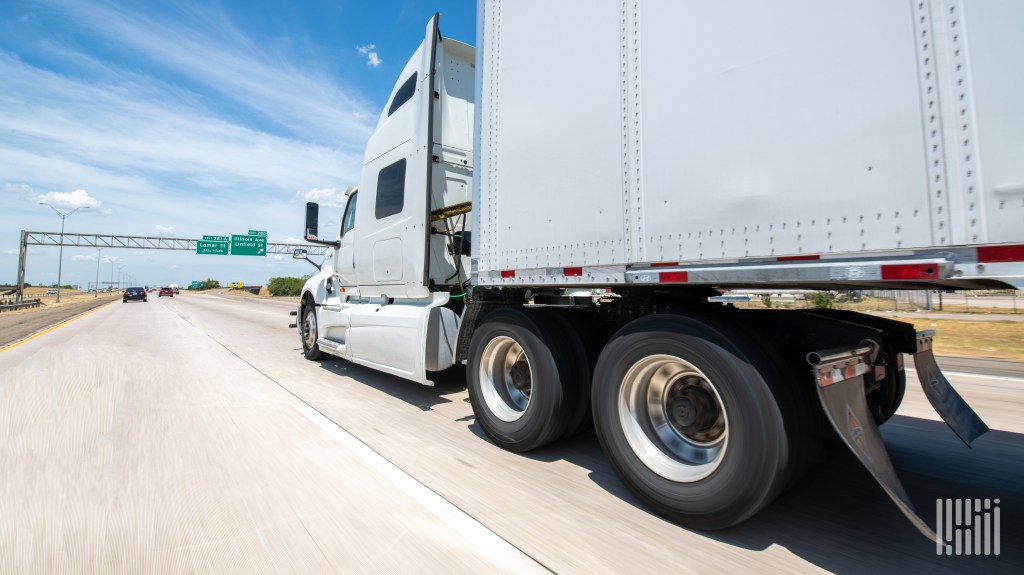
a white sleeper cab with a white trailer

Employee-owned acquisition holding company OneCompass Holdings announced it has entered into an agreement to acquire dryvan and temperature-controlled carrier Koleaseco, Inc.

Financial terms of the transaction were not provided. The deal is expected to close on Aug. 22.

Hudsonville, Michigan-based Koleaseco is listed with 128 power units and 148 drivers, according to the FMCSA’s database. The company also has a full-service brokerage offering for shippers in the U.S. and Canada.  

OneCompass plans to roll the assets of Koleaseco under another one of its portfolio companies, Dublin, Ohio-based Hyway Transportation. Once the deal closes, Koleaseco will operate under the Hyway Trucking banner.

“We’re excited to welcome the employees and customers of Koleaseco to the OneCompass family and the Hyway Transportation platform, said OneCompass Chairman and CEO Matt Hartman in a news release.

“Their team and capabilities are a great addition to the Hyway network and will play a key role in speeding up our shared vision for national growth. We’re especially pleased to integrate their people into our employee ownership model, where they can help shape the future and share in the success they contribute to.”

The combination will allow both fleets to better compete on a national scale.

Hyway is also an asset-based carrier that specializes in dryvan and temperature-controlled freight. It is listed with 130 power units. Hyway is a subsidiary of FST Logistics, another OneCompass portfolio company.

“I’m confident this transition will create meaningful opportunities for our team and carry forward the legacy of service and integrity that has defined Koleaseco for more than 30 years,” said JP Koop, owner of Koleaseco.

More FreightWaves articles by Todd Maiden:

Truckstop.com celebrates thirty years of innovation in logistics

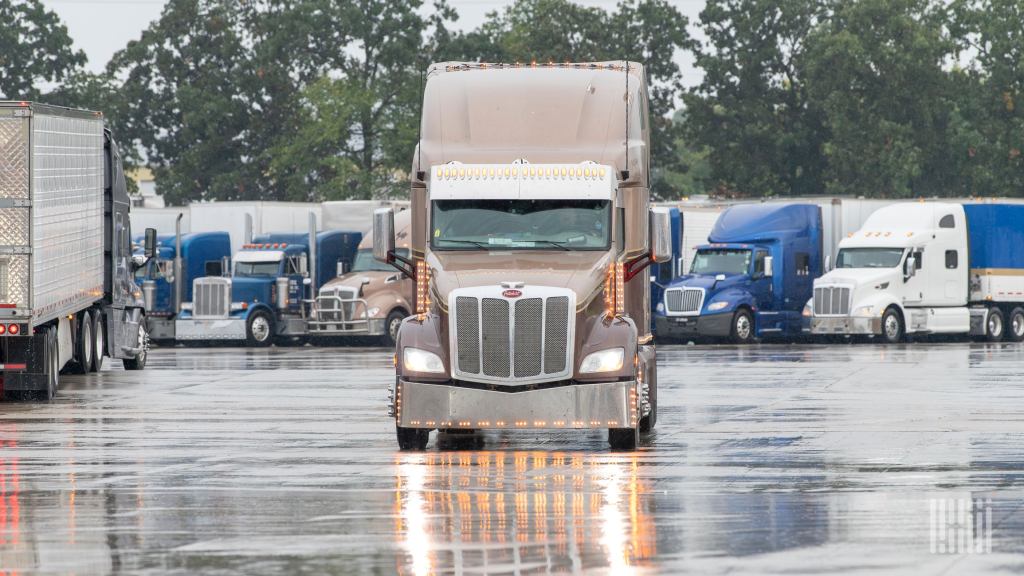
Several trucks in the rain at a truckstop

During the July 21 episode of What the Truck?!?, host Thomas Wasson sat down with Todd Waldron, Vice President of Carrier Experience at Truckstop.com, to discuss how the industry is evolving, especially with the integration of AI and other emerging technologies. 

As Truckstop.com celebrates its thirtieth anniversary, it’s the perfect time to reflect on significant milestones and the role technology plays in driving optimism and efficiency within the industry.

“Truckstop.com has been a staple of this industry since before I started my career in logistics, so to be here for a milestone like this is incredible,” Waldron said.

Technology, particularly the integration of AI tools, is transforming the logistics landscape in no small way. 

According to a recent Truckstop.com survey, 60% of drivers are optimistic about the freight future. This optimism, Waldron says, is largely fueled by technological advancements. “Technology is giving carriers greater control, more security, higher efficiency, and is leading to this positive outlook,” Waldron said.

Freight fraud has been a significant challenge for carriers, particularly in the last few years. However, advancements in technology have offered substantial improvements. Over 50% of carriers reported enhanced fraud prevention efforts using new tools.

“We’re seeing the biggest impact in freight fraud prevention and route optimization, and more than half of drivers say that fraud prevention efforts have significantly improved,” Waldron said.

Truckstop.com’s multi-layered approach to security has tangible benefits, with customers reporting 45% less fraud year-over-year.

Drivers have a reputation for being reluctant or slow to adopt new technologies, but some new tools are seeing high rates of driver satisfaction and participation.  

“One time I had a driver who would foil wrap his driver tech unit because he didn’t want to be watched,” Waldron said. 

However, the industry has come a long way, with 70% of drivers, particularly those under 35, feeling comfortable using emerging technologies. This shift, Waldron says, is due in part to an increased familiarity and understanding of the value technology brings.

Logistics decision-making processes are made smarter and more strategic by data and AI every day. Predictive tools can help anticipate maintenance needs and optimize dispatch operations, and it’s changing the experience that drivers have on a daily basis. 

“Drivers now feel like they’re achieving value from these tools,” Waldron said.

Waldron predicts that exposed intelligence and more collaborative ecosystems will shape the next phase of technological development in the supply chain. “How do we leverage our strengths to be more efficient together?” he asked, hoping for a future where collaboration, rather than competition, might drive innovation.

Despite the rapidly changing technological landscape of logistics, relationships and trust still remain the most important factors to many industry veterans. In an industry poised for substantial growth and change, Waldron says, it’s never been more important to maintain a trustworthy reputation.

“73% of carriers say that Truckstop.com is a brand that they trust, and 69% believe we will lead the freight industry for the next thirty years,” Waldron said. “That kind of longevity makes it exciting to talk about this technology landscape, and it gives us confidence to continue working on new solutions in the future.”

Truckstop.com’s dedication to evolving with the times mirrors the broader industry’s journey towards a more advanced, connected future. As Truckstop.com looks toward another thirty years, the focus on technology, security, and collaboration remains at the forefront of the company’s mission to lead the supply chain’s transformation.

Click here to learn more about Truckstop.com.

Ceva Logistics restructures North America operations, names new chief

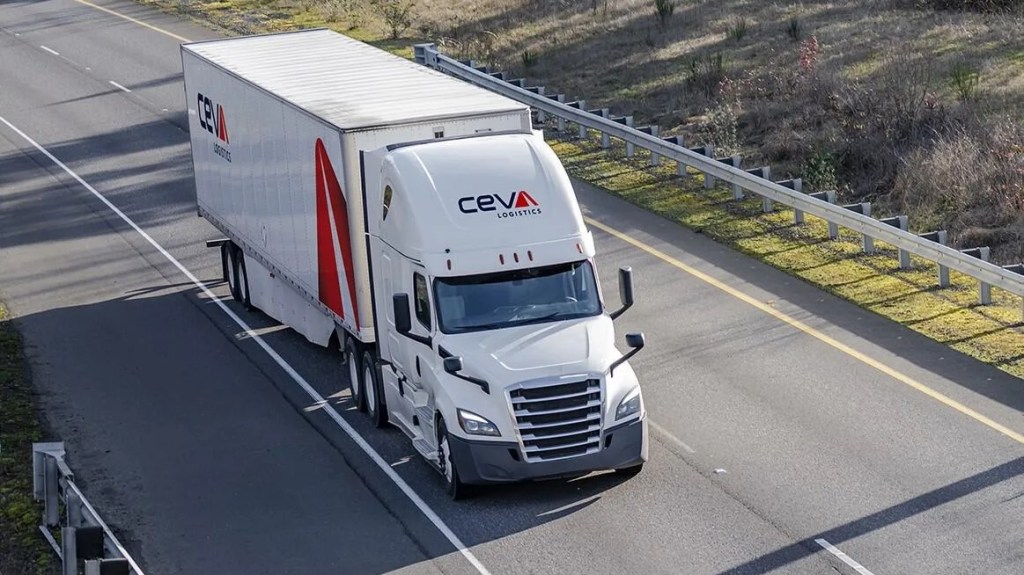
A white truck with Ceva Logistics logo heads down the highway, approaching the camera on an overpass.

Supply chain services giant Ceva Logistics has appointed Yves Laforgue, who joined the company last year through the acquisition of France-based Bolloré Logistics, as its new North America coordinator to better align regional operations with management’s vision, according to an internal communication.

CEO Mathieu Friedberg told employees in a memo on Friday that he is restructuring the North American organization, with Laforgue in charge, so it can capitalize on upcoming investments by parent company CMA CGM Group, and improve profit margins as it works to integrate Bolloré Logistics into its sprawling organization.

Laforgue will continue his duties as CEO for Ceva Logistics Air & Ocean North America in addition to holding the new role.

Ocean shipping giant CMA CGM, which acquired Ceva Logistics in 2019 and bought Bolloré Logistics in February 2024 for $5.2 billion as part of its transformation into a vertically integrated logistics services provider, announced in March that it would invest $20 billion over four years in U.S. ocean, air cargo and warehousing operations. 

Ceva Logistics is now the fifth largest global logistics service provider by gross revenue.

“In anticipation of these investments and to ensure that we are delivering on our three critical areas for success in 2025 — profitable growth, modernization and efficiency, and people — I have decided to reposition our NORTAM organizational structure and processes to enable greater efficiency, agility and cohesion,” Friedberg said in the message, which was obtained by FreightWaves. 

A Ceva employee, who spoke on condition of anonymity to avoid potential job retaliation, described operations on the ground as “dysfunctional.”

“In his new role, Yves will focus on aligning and coordinating regional initiatives that span our products and functions. In addition, he will represent the company in front of public authorities and support our customers globally. His mandate is to simplify governance, accelerate decision making and make Ceva more agile and more responsive to the needs of our customers and our NORTAM teams on the ground,” Friedberg told staff members. “We will accelerate in North America and need to create the right momentum and governance as close to the ground as possible.

Alison Jahn, head of marketing and communications for Ceva North America, declined to comment on the organizational changes.

Laforgue spent 30 years as an executive at Bolloré Logistics, including most recently as CEO of the Americas. 

Ceva has spent the past 18-months integrating Bolloré under its brand. Bolloré, which operated in 148 countries and employed 15,000 people, was a major air and ocean freight management company with additional capabilities in contract logistics, multimodal transportation, and e-commerce logistics. 

Ceva Logistics has continued to grow this decade through CMA CGM acquisitions of French automobile logistics provider GEFCO, Ingram Micro’s e-commerce and lifestyle services business, and French last-mile delivery company Colis Privé Group. CMA CGM also launched its own all-cargo airline three years ago. 

Click here for more FreightWaves/American Shipper stories by Eric Kulisch.

Write to Eric Kulisch at ekulisch@freightwaves.com.

CMA CGM to invest $20B in US shipping, supply chain capabilities

Ceva Logistics to acquire logistics provider in Turkey

HK company offers stake in port terminals sale to Chinese company

One of the largest operators of global port terminals said it has offered a stake in its pending sale to a Chinese investor. 

In a filing with the Hong Kong Stock Exchange, CK Hutchison said its planned sale of dozens of port facilities would include a major strategic investor from mainland China.

The company (0001.HK) in March announced plans to sell more than 40 container terminals under its Hutchison Port Holdings unit to a consortium led by BlackRock, the U.S. asset manager, that includes Geneva-based shipping line MSC, for $23 billion.

But Beijing said it would block the transaction if it didn’t get a cut of the deal. 

Published reports identified the investor as Chinese maritime conglomerate Cosco, which had been identified by the U.S. as an arm of China’s military that had used unfair trade practices to dominate the shipping and shipbuilding industries.

The filing stated that the exclusive negotiation period with the consortium regarding the sale of Hutchison Ports Group had expired but that discussions with members of the group continue.

The reports said Cosco could receive a stake in 41 port properties except the pair near the Panama Canal that the Trump administration claimed are under Chinese influence.

Hutchison had no comment. BlackRock and Costco did not immediately respond to requests by FreightWaves for comment.

Find more articles by Stuart Chirls here.

Related coverage:

South Korea offers billions to help make US shipbuilding ‘great again’

Houthis make new threats against Israel-linked shipping

Trade flows boost China, Europe ports while tariffs pain US gateways

CMA CGM container vessel becomes largest under U.S. flag

Less than 2 years after Flexport bought Convoy’s tech stack, it’s being sold to DAT

convoy

The tech stack that was at the heart of now-defunct digital brokerage Convoy is on the move again, being sold to DAT in a move seen as significantly broadening that company’s value proposition in the freight market.

Freight forwarder Flexport, which acquired the tech stack from the remnants of Convoy less than two years ago, said Monday it is selling the product to DAT. 

When a company retreats from something it bought quickly, it is often a sign of defeat. (An old reference certainly, but the deal by Quaker Oats (NYSE: PEP) in the 90’s to buy beverage maker Snapple for $1.4 billion, only to sell it back to its original owners three years later for $300 million, is considered the ultimate example of that sort of humbling failure).

There is no sign that is the case with the quick flip of the Convoy tech stack. 

Ryan Petersen, the CEO of Flexport, said the return on the sale of the Convoy tech “puts Flexport in an awesome place financially.” When Flexport purchased the Convoy tech stack in late 2023, the price on the transaction was reportedly $16 million, though neither company confirmed that price. The sale to DAT reportedly was made at a price near $250 million, though the companies declined to disclose the sales price.

Besides the strong return on investment, Petersen, in a joint interview with DAT’s CEO Jeff Clementz, said the presence of a powerful technology tool serving brokers that is supposed to be neutral could often complicate Flexport’s primary business of freight forwarding. 

Neutral might not be neutral

“What we realized is that a neutral platform is not neutral,” Petersen said. “We have a brokerage. We’re a massive freight forwarding company.” The combination, he said, raised questions in the industry whether the Convoy platform truly could be seen as neutral.

It’s not the first time a company in the freight tech world has wrestled with the issue. When what is now Triumph Financial (NASDAQ: TFIN) bought HubTran to serve as an open loop auditing system for brokers and factoring companies, Triumph’s management took great pains, repeatedly, to stress that its traditional factoring business could not get an inside look at what its factoring competitors who were using the legacy HubTran platform were doing. 

Petersen noted that the digital brokerage business that came with its 2023 acquisition of the Convoy tech stack will remain with Flexport. It processes about 100,000 loads per year, he said, 98% of which are completed with no human involvement. 

It will also continue to use the Convoy system even though it will now be owned by DAT, according to Petersen. “On day one, we will be their biggest customer and we hope to continue to be their biggest customer,” he said. 

A widening range of offerings from DAT

For DAT, the purchase is possibly transformative. In the past several months, besides promoting Clementz to CEO,  it has purchased visibility provider Trucker Tools and payments platform Outgo. (Clementz said DAT did not pursue an acquisition of the Convoy tech stack when it was first offered for sale as part of the Convoy bankruptcy).

With the purchase of the Convoy tech stack, it has now vastly increased its range of offerings to the freight sector with capabilities that have moved well beyond its traditional load board.

Clementz, in his interview with FreightWaves, laid out what might be considered the three segments of how loads are offered into the market. About 50% of broker loads, he said, get moved through a broker’s private network. But after that, he said, “you might go to other load boards,” adding that DAT is the “backstop you need to go to, ultimately, especially in the last 24 to 48 hours.”

If brokers choose to use their private network, Clementz said, that also may come with a decision to put the load on what will now be DAT’s Convoy platform, “because I don’t have to touch it. And if it all works, fantastic. If not, then I’ll intervene and I’ll work it through the load board.”

Ultimately, he said, DAT believes the Convoy platform, with its power of automation to get broker and carrier together, will be the first place that loads will be placed.

But from there, Clementz said, if a match isn’t made it can “waterfall” down to the DAT platform. 

“We think the broker can go directly from the shipper to the TMS (transportation management system) and into the Convoy platform directly and then move to the load board,” Clementz said. The Convoy tech team–which is coming over to DAT in the deal–already has been working with TMS providers to have loads in a TMS populate into the Convoy platform automatically.

Load board will continue to be dominant for awhile

But change isn’t overnight. “We actually think the load board will be the primary use case for quite a long time,” Clementz said. 

Fraud prevention is expected to be a major selling point of the broader DAT product offering, Clementz said. DAT already was set to launch a fraud management solution before the deal with Flexport.

But the Convoy system long had been admired for its own fraud prevention tools, Clementz said. Building it into the DAT platform on top of its own capabilities “will really make DAT the safest platform,” he added.

There will be no upfront fees for DAT users to sign up to use the Convoy platform, Clementz said. Fees will be transactional, so a DAT user can access the Convoy system with no payments unless a transaction is completed.

But that fact also is a driver to the deal, according to Clementz. Bringing in new users on to the system has an extremely low customer acquisition cost, which often goes by the acronym CAC, and that may slow some early adoption, he added.

“I think we will have more demand than we can handle for onboarding, so we’ll probably have to create a wait list because there’s no cost to sign up for this,” Clementz said. “It will take time for us to integrate accounts, set them up and get them going.”

DAT is a unit of publicly-traded Roper Technologies. (NASDAQ: ROP) In the company’s latest conference call with analysts, president and CEO Laurence Hunn said DAT’s financial performance in the second quarter “was solid…and had strong (average revenue per unit improvements).” DAT data is not broken out separately in the Roper earnings. 

Hunn also said DAT had made “significant progress” integrating Trucker Tools into its system. 

More articles by John Kingston

Yet another broker liability case, this time in the Fifth Circuit, adds to the growing mix 

Ryder’s used vehicle numbers show a bullish corner: tractor sales

Five takeaways from the State of Freight for July: What earnings and the indices are saying about the market

South Korea offers billions to help make US shipbuilding ‘great again’

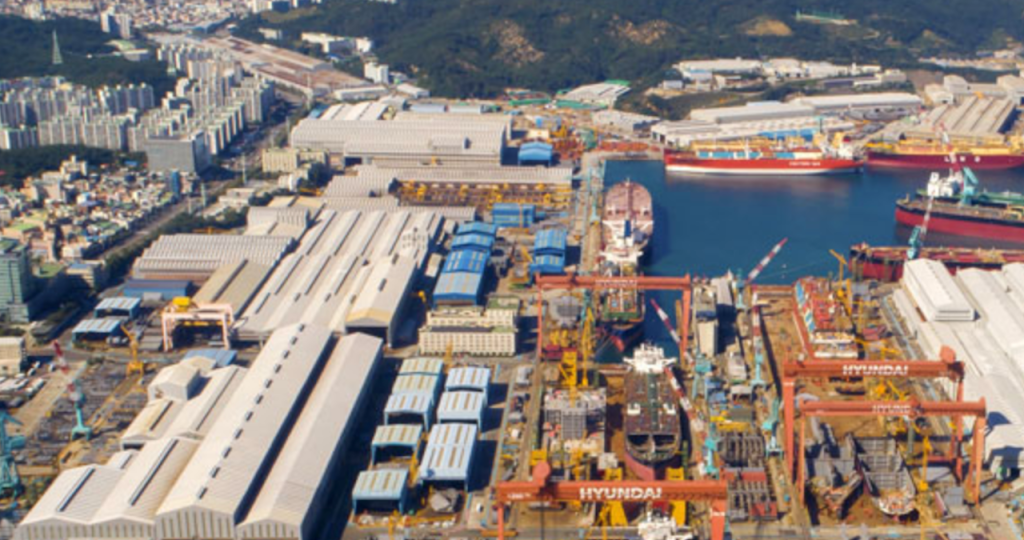
South Korea is proposing a massive shipbuilding partnership with the United States in an effort to avoid 25% tariffs in current trade negotiations.

Seoul is marketing the multi-billion dollar proposal as Making American Shipbuilding Great Again (Masga), according to the Yonhap news agency, which did not provide further details.

The Trump administration earlier this year announced initiatives to revitalize U.S.-flag shipping and shipbuilding as a means to counter China’s dominance of both sectors.

South Korea is the second-largest shipbuilder behind China, which claims more than half of the current global orderbook.

The program would include investment in U.S. facilities worth trillions of won by Korean shipbuilders, along with other financial support.

South Korea’s presidential office confirmed the offer  in a statement to Reuters on Saturday.

Questions have been raised about the U.S. maritime push after the departure, along with other staffers, of the head of a newly-created White House office overseeing those efforts, and its relocation to the Office of Management and Budget.  

The initiative did get a boost this past week when CMA CGM of France re-registered a 9,300-TEU container ship, making it the largest merchant vessel sailing under the U.S. flag.

While Japan and the European Union have reached trade deals with the U.S., political infighting in Seoul has stalled progress on an agreement for Asia’s fourth-largest economy.

Negotiators from the U.S, and South Korea are scheduled to meet this week in an effort to reach an accord before retaliatory tariffs take effect August 1.

Find more articles by Stuart Chirls here.

Related coverage:

Houthis make new threats against Israel-linked shipping

Trade flows boost China, Europe ports while tariffs pain US gateways

CMA CGM container vessel becomes largest under U.S. flag

NATO warns ports vulnerable to ‘unprecedented’ cyber threats

US-EU deal sets a 15% tariff on most goods from Europe

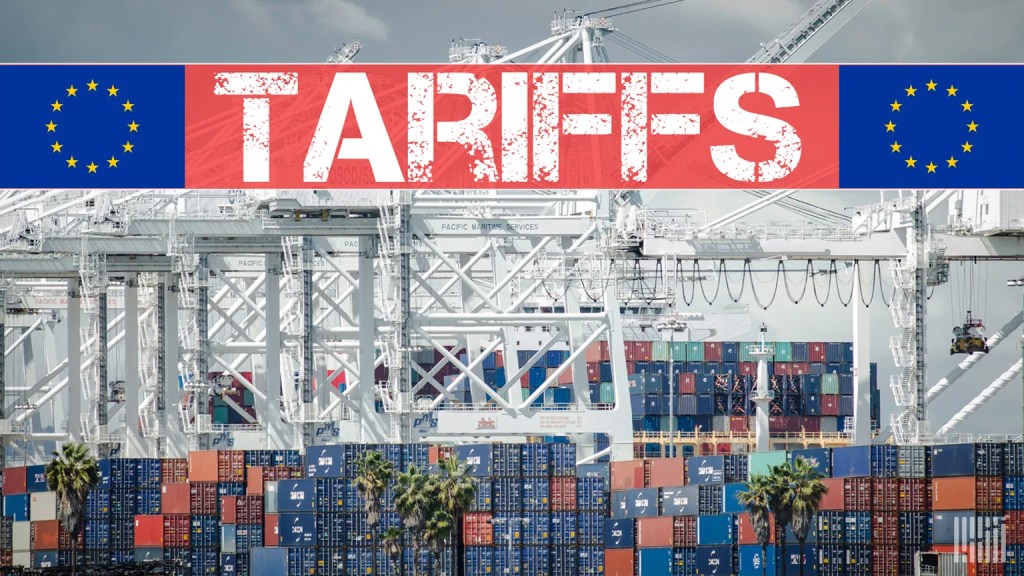
The Trump administration and the 27-nation European Union agreed on Sunday to a trade framework setting a 15% tariff on most imported goods from Europe, while goods from the U.S. will face zero tariffs.

U.S. exports to the EU include fuels, pharmaceuticals, machinery, and aircraft. The EU, in turn, exports cars, pharmaceuticals, vehicles, semiconductors and machinery to the U.S.

As part of the deal, the EU agreed to purchase $750 billion worth of energy from the U.S., and invest $600 billion more in the U.S.

“All of the countries will be opened up to trade with the United States at zero tariffs, and they’re agreeing to purchase a vast amount of military equipment,” President Donald Trump said, according to CNN

The agreement, which has yet to be finalized, staves off the 30% tariffs Trump had threatened to impose on the EU earlier this month, as well as high import duties on U.S. goods into EU countries.

Trade between the U.S. and EU totaled around $975 billion worth of goods in 2024, according to Commerce Department data. 

Ursula von der Leyen, the president of the European Commission, said the deal creates certainty for companies on both sides of the Atlantic.

“Today with this deal, we are creating more predictability for our businesses,” von der Leyen said in a news release. “In these turbulent times, this is necessary for our companies to be able to plan and invest. We are ensuring immediate tariff relief. This will have a clear impact on the bottom lines of our companies.”

The deal comes after the U.S. announced trade agreements with Japan, Vietnam, Indonesia, and the United Kingdom.

The Trump administration has yet to reach final trade agreements with the top three U.S. trade partners — Mexico, Canada and China.

Teamsters call UPS driver buyout offer ‘paltry’

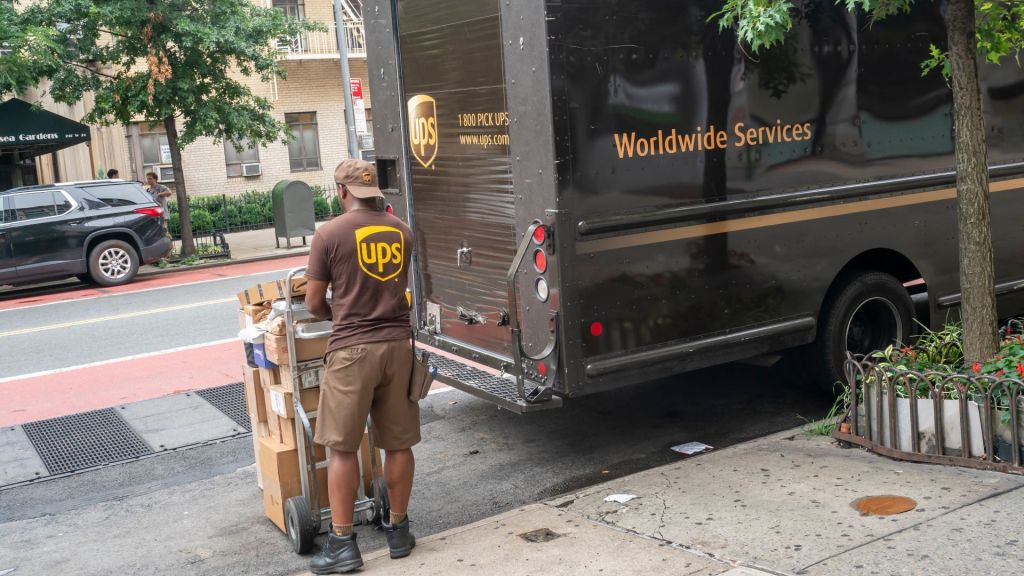
A UPS driver in a brown uniform unloads a brown UPS truck and puts packages on a hand cart in the city.

UPS is offering delivery drivers voluntary severance packages worth $1,800 per year of service, with a minimum payout of $10,000, according to a recent statement from the company.

Drivers have until Thursday to apply for the program, according to an employee memo visible in a TikTok video posted last week by the Teamsters union, which claims the buyout violates the collective bargaining agreement and is urging members not to accept the offer. The video is accompanied by the Elvis Presley song “Return to Sender” and shows a man tearing up the offer sheet. FreightWaves was able to magnify the image with software tools to read the text, which is fuzzy to a normal viewer.

“UPS Teamsters want secure retirements with hard-earned pensions, not paltry buyouts,” the union said in an X message on Sunday. A driver who spoke on a YouTube video called $1,800 per year of service “a slap in the face.”

UPS (NYSE: UPS) announced the buyout program on July 3 as a follow-on to the largest network reconfiguration in company history, now underway. The strategy, called Network of the Future, calls for the closing of 200 domestic package sortation centers, investment in more automation and consolidation of volumes in more efficient facilities. The integrated parcel logistics giant earlier this year announced plans to eliminate 20,000 front-line positions to better align the workforce with the smaller footprint and a planned 50% downsizing in business from Amazon, its largest customer.

A driver with 27 years of experience would receive a $48,600 buyout, according to the internal communication posted by the Teamsters. 

Applicants will be considered for separation dates between Aug. 31 and Oct. 31, depending on the local needs, UPS said. If the number of applications exceeds eliminated positions, approvals will be granted in order of seniority. Additional applications may be considered for separation dates between Feb. 1 and March 31. The financial package is in addition to earned retirement benefits, including pension and healthcare.

Supply Chain Dive first reported on the specifics of the buyout offer. 

The Teamsters argue the Driver Voluntary Separation Program violates the union contract because it wasn’t negotiated and any program that changes the terms of employment, such as compensation and separation, must be bargained with the union. Seniority order for buyouts also requires union approval. And, the union notes, that UPS offered job security guarantees in 2023, as well as promising to elevate more than 20,000 part-time drivers to full-time status.

The Teamsters are urging UPS drivers not to accept the buyout terms, likely because they believe they can negotiate a better deal, and also to maintain control over how these types of scenarios are handled, experts said

“This situation with UPS and the Teamsters is a classic example of how even a company’s apparent right to manage its resources is limited by the terms of existing agreements. The ‘illegality,’ according to the union, lies not in the act of downsizing itself, but in the procedure and conditions that violate the current collective bargaining agreement. This is a struggle over who dictates the rules of engagement in the relationship between the company and its union-represented employees,” wrote Dmitriy Karpov, co-founder and CFO of e-commerce technology provider Split Development LLC, on LinkedIn.

Satish Jindel, CEO of ShipMatrix, a parcel shipping consultancy and analytics provider, said  in an interview, “UPS is allowed to offer buyouts. Workers can say no. Nothing says they can’t make an offer” when market conditions change.

He said the Teamsters is lucky UPS backed down from a looming strike in 2023 because it could have become union-free at half the cost by offering those jobs to FedEx and Amazon drivers, who would have eagerly jumped at a $25/hour rate and good benefits.

UPS is scheduled to issue second quarter earnings results on Tuesday.

Click here for more FreightWaves/American Shipper stories by Eric Kulisch.

UPS to eliminate 20K jobs as Amazon decoupling accelerates

UPS drivers to receive buyout offer as company shrinks parcel network

Houthis make new threats against Israel-linked shipping

Houthi rebels issued a new, broader threat against shipping companies with links to Israel.

The Yemen-based militia in a statement Sunday said its escalation “includes targeting all ships belonging to any company dealing with Israeli ports, regardless of the company’s nationality, and anywhere within the reach of the armed forces.”

The group, which the United States declared a Foreign Terrorist Organization earlier this year, warned companies to cease their dealings with Israeli ports, “otherwise, their ships, regardless of their destination,” will be targeted with missiles and drones.”

The statement also called on countries to pressure Israel to halt military operations in Gaza.

The Houthi attacks on vessels in the Red Sea since early 2024 led most major container carriers to divert services connecting Asia with Europe, the Mediterranean, and North America on longer, more expensive voyages around the Horn of Africa.

Among the largest global lines, only CMA CGM of France operates scheduled services on the route. The French government has said it intends to recognize Palestine as an independent state.

A stepped-up bombing campaign by the U.S. failed to stop more Houthi attacks, which sank one ship and killed two seamen. On July 24 the group attacked and boarded a Comoros-flagged livestock vessel off the coast of Yemen. 

Find more articles by Stuart Chirls here.

Related coverage:

Trade flows boost China, Europe ports while tariffs pain US gateways

CMA CGM container vessel becomes largest under U.S. flag

NATO warns ports vulnerable to ‘unprecedented’ cyber threats

Historic order for U.S.-built LNG carrier could test new rules 

Volvo trucks pushes new VNL to the max with extreme Arctic testing

Volvo truck testing in Alaska Arctic conditions

The only way to test a truck in the cold is to put it there. For Volvo Trucks North America, that involved subjecting its all-new Volvo VNL to a 3,000-mile road trip from Colorado to Alaska. The site in Fairbanks, Alaska, is one of the world’s most rigorous testing environments, where temperatures routinely plunge to 40 degrees below zero Fahrenheit (minus 40 C). The extreme cold-weather testing program aims to validate the truck’s performance, reliability and comfort capabilities under the most challenging operational conditions.

The validation process first involves getting the trucks to Alaska, where Volvo’s test team conducts comprehensive real-world evaluations that surpass laboratory testing limitations. Over several months, engineers subject the trucks to various driving scenarios ranging from long-haul highway routes to stop-and-go city traffic. The goal is to simulate actual customer operations across diverse conditions.

A critical component of the testing regimen includes the “cold soak” procedure, where vehicles remain outside overnight with engines off until all components reach subzero temperatures. After 12 hours in these extreme conditions, engineers then test the startup procedures similar to what drivers would require in real-world situations.

The stakes are more than table stakes, as waiting on the roadside in subzero temperatures poses unique challenges, in addition to being hazardous to one’s health. During testing, professional drivers with extensive experience navigating Alaska’s terrain provide detailed feedback to the test team daily. These insights, combined with real-time performance data, enable engineers to fine-tune every aspect of the truck.

“The all-new VNL was designed to change everything and that includes how we approach testing and refinement in real-world conditions—to challenge our trucks and gain insights that would be impossible to replicate in a lab,” Voorhoeve noted in a press release. “What we learn in Alaska helps us deliver a truck that is not only innovative but proven where it matters most: on the road, in the real world, and in the hands of our customers.”

The Arctic testing environment is part of five distinct American biomes that the company uses. These biomes include urban, desert, prairie, coastal forests and Arctic tundra environments.

Feds put the brakes on speed limiter mandate

(Photo: Jim Allen/FreightWaves)

Federal regulators have withdrawn proposals that would have mandated speed limiters on large commercial trucks, citing significant data gaps and uncertainties about the rule’s costs and benefits. The Federal Motor Carrier Safety Administration (FMCSA) and the National Highway Traffic Safety Administration (NHTSA) canceled two proposed rulemakings that would have capped speeds for trucks weighing over 26,000 pounds.

The canceled proposals include the original 2016 rule initiated during the Obama administration at the request of the American Trucking Associations and Schneider National, and a follow-up proposal issued in 2022 under the Biden administration. The controversial measures generated over 16,000 public comments from stakeholders across the industry.

“In light of significant policy and safety concerns and continued data gaps that create considerable uncertainty about the estimated costs, benefits, and other impacts of the proposed rule, FMCSA and NHTSA have decided to withdraw the proposal,” the agencies stated in notices posted on Wednesday.

The 2016 proposal, which examined engine speed mandates of 60, 65 and 68 mph, had projected that a 65 mph limit would save between 63 and 214 lives annually, with estimated benefits between $716 million and $2.4 billion, plus $848 million in fuel and emissions savings.

The proposed mandates polarized the trucking industry between two camps: large versus small motor carriers and owner-operators. Major carriers supported the measures, highlighting safety benefits and fuel economy improvements. However, small fleets and owner-operators strongly opposed the regulation, viewing it as detrimental to their competitiveness.

“By establishing a one-size-fits-all federal mandate restricting heavy-duty CMVs to a speed separate from passenger vehicles, this regulation would create dangerous speed differentials between CMVs and other cars and thereby increasing the likelihood of crashes,” wrote a group of 17 associations, including the Owner-Operator Independent Drivers Association, in a January letter to President Trump.

Regulators cited several key concerns that factored into their decision, including the uncertainty about the impact of speed differentials on crash rates and the inability to quantify potential increases in rear-end collisions involving commercial vehicles. The agencies also noted that advances in crash avoidance technologies like automatic emergency braking systems might already address some of the safety concerns the speed limiters aimed to solve.

You’re halfway there! To read the rest of the Loaded and Rolling newsletter, subscribe below. It’ll be delivered to your inbox every Thursday at 2pm eastern.

Most recent episode