Biggest gets bigger: Walmart leads all retailers as sales grew 7% in 2024

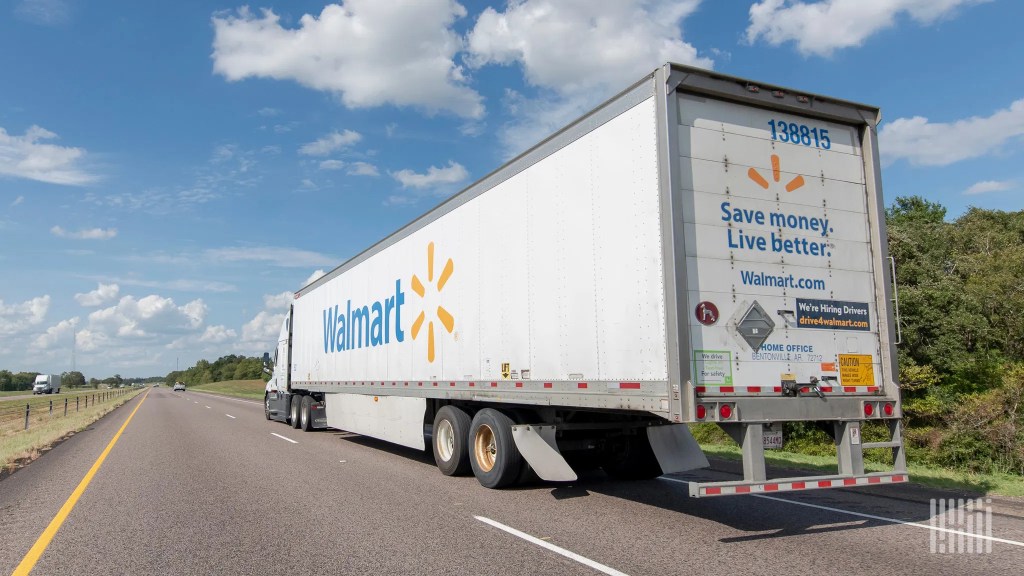
Walmart again led the rankings of the top 100 retailers as its sales grew 7% to $568.70 billion in 2024.

Amazon retained its hold on the second position with sales of $273.66 billion, according to data compiled by the National Retail Federation and Kantar. Costco Wholesale, The Kroger Co., and The Home Depot completed the top five.

This year’s list reveals a notable trend of stability among the largest stores, with the top 13 chains remaining mostly unchanged from the previous year. Target dropped from the seventh to the eighth position, while Boots Alliance made an upward move to claim seventh place.

“As consumers evaluate their spending priorities, businesses are unlocking new ways to better connect with customers and retain loyalty,” said Mark Mathews, NRF’s executive director of research, in a release, who noted that the modern retail environment increasingly demands a nuanced understanding of consumer needs, digital transformation, and a commitment to customer engagement.

(Graphc: NRF/Kantar)

“While the companies at the top of the list not only reflect those with the strongest retail sales, they are also a reflection of those that have remained nimble to a changing landscape from the impacts of trade policy and shifting consumer habits,” said David Marcotte, senior vice president of global insights and technology at Kantar.

The report also touches on the declining fortunes of drugstores, with Rite Aid notably sliding from No. 29 to No. 40. This decline can be attributed to a drop in front-store sales, even as health services performed well following the pandemic. At the same time, the pet retail industry has seen moderate changes. PetSmart and Petco experienced slight decreases in their U.S. store numbers and sales, reflecting the stabilization of pet ownership post-pandemic and changing discretionary spending on pet products.

Find more articles by Stuart Chirls here.


Related coverage:

“Brace!” Endless disruptions mark new path to supply chain resiliency

Geodis returns solutions aim for streamlined reverse logistics
Warehouse automation surging ahead despite predicted slowdown

FedEx to close 30% of package facilities as network integration ramps up

Trump taps DOT’s Duffy to head NASA

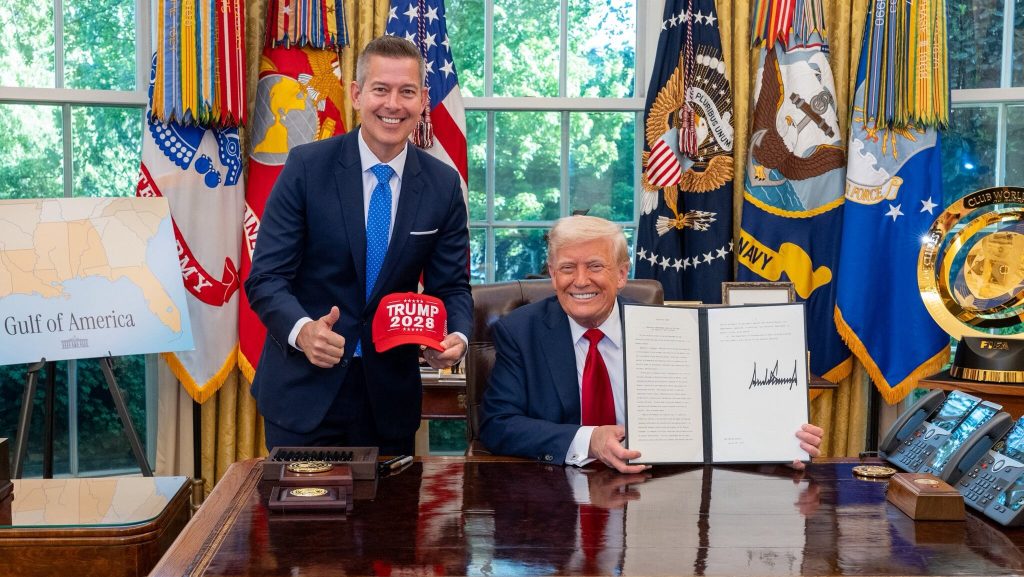
Sean Duffy and Donald Trump

WASHINGTON — President Trump has named Transportation Secretary Sean Duffy to be the interim administrator of National Aeronautics and Space Administration (NASA), becoming the latest member of the president’s cabinet to take on dual roles within the administration.

Trump praised Duffy for his oversight of modernizing the country’s air traffic control system and for improving transportation infrastructure.

“Honored to accept this mission. Time to take over space. Let’s launch,” Duffy posted on X in response to Trump’s announcement.

The previous nominee tapped to lead the agency, billionaire entrepreneur and private astronaut Jared Isaacman, was withdrawn by the White House just days the Senate was scheduled to vote on his nomination.

The Hill newspaper called Isaacman “a close ally” of Tesla CEO and a former special government employee Elon Musk “who has since had a falling out with the president,” the publication reported.

In taking on multiple leadership roles within the Trump administration, Duffy joins Secretary of State Marco Rubio, who is also National Security Advisor, and Office of Management and Budget Director Russel Vought, who is also Acting Director of the Consumer Financial Protection Bureau.

Click for more FreightWaves articles by John Gallagher.

Carrier Logistics automates LTL shipment data entry

Unmarked LTL pup trailers at a terminal

Carrier Logistics, Inc. (CLI) announced Thursday that data entry fields on its transportation management system can now be automatically populated from a bill of lading.

The Elmsford, New York-based SaaS provider said a new AI-powered tool will allow less-than-truckload carriers using its FACTS freight management system to upload shipment data from a BOL. The automated process significantly reduces the time spent and errors created by manual data entry.

The tool reduces discrepancies, which often result in reweighing freight and reworking freight bills.

“This technology directly addresses one of the most persistent challenges in our industry — capturing critical shipment data quickly and accurately,” said Ben Wiesen, president of CLI, in a news release.

CLI primarily works with asset-based LTL carriers, last-mile operators and cross-dock providers.

“By extracting data in real time, we help carriers act faster and more confidently. The result is a transformative solution that helps LTL carriers using FACTS turn operational efficiency into a strategic advantage,” Wiesen said.

More FreightWaves articles by Todd Maiden:

White Paper: Spreadsheets Aren’t Strategy. It’s Time to Run Like a Real Business. 

Still managing your trucking finances on spreadsheets and gut feel? That’s not a system—it’s a liability. As your fleet grows, so do the headaches: payroll, cash flow, taxes, compliance. It all gets harder to track—and costlier to guess at. 

This guide from PCS, “Take Control of Your Finances: A Practical Guide for Carriers in Trucking,” is built for carriers with 25+ trucks who’ve outgrown patched-together tools. Whether you’re the CFO, the controller, or the one chasing down P&Ls after hours—this is how you get back in control. 

Learn how Phoenix Cargo ditched the spreadsheet chaos, tightened up their numbers, and scaled without second-guessing. 

What You’ll Learn: 

  • Spot and fix cash flow gaps, tax mistakes, and underperforming assets—before they wreck your margins. 
  • Cut billing cycles by 2–3 days with automated invoicing that moves as fast as your loads. 
  • Boost accounting productivity by up to 30% with GAAP-compliant financials built for trucking. 
  • Track real metrics—cost per mile, profit margin, ROA, AR aging—without stitching together six reports. 
  • See how Phoenix Cargo unified payroll, factoring, and profitability insights—all in one platform. 

Don’t Just Run Freight—Run the Numbers. 

Download the guide now. 

White Paper: How private wireless networks are driving efficiency and innovation in distribution and logistics

To scale operations and compete more effectively, many distribution centers and warehouse operators are turning to technologies and tools that enable and accelerate automation. From autonomous mobile robots (AMRs) to Internet of Things (IoT) sensors and artificial intelligence (AI)-driven video analytics, innovative technology solutions are transforming the distribution and logistics industry.

But before they can take full advantage of advances in automation technology, distribution center and warehouse operators must answer one key question: Is the network connectivity we have in place today able to support the supply chain of tomorrow?

Complete the form below to download your complimentary copy.

Polish parcel powerhouse InPost buys Spanish delivery provider

A white van with yellow InPost accents drives on a road.

InPost, a fast-growing express delivery firm based in Poland, has acquired Spanish courier and fulfillment provider Sending, the company announced Wednesday. The deal, part of a broader European push, expands its logistics network and product offering on the Iberian Peninsula.

Sending provides 24-hour door-to-door delivery service, which will complement InPost’s network of 3,000 parcel vending machines and more than 9,000 pick up and drop off points in Spain and Portugal. InPost will also add 155 logistics centers to its network, bringing the total number of facilities in Spain to 170. Sending also serves Andorra, Gibraltar, the Canary Islands and the Azores, and also provides transport services to Spain and Portugal from Belgium, France, Germany, Italy, the Netherlands and the United Kingdom. InPost also operates in Luxembourg.

InPost says it has the second-largest parcel locker network in the Iberian Peninsula, with plans to add another 1,000 units by the end of the year. 

“We are consistently implementing our expansion strategy across Europe – both through organic growth and the acquisition of attractive companies in key markets. This strategic step, like our recent acquisitions in the UK, will not only expand our reach but also accelerate the development of innovative out-of-home delivery solutions,” said Rafał Brzoska , founder and CEO of InPost Group.

InPost earlier this year acquired Yodel for $144 million, making it the third-largest independent parcel operator in the UK. 

Spain’s e-commerce sector is projected to grow at a 9.4% compounded annual rate through 2029, going from $45.7 billion to $71.7 billion, compared to a global growth rate of 8.1%, according to research firm ECDB GmbH. It attributed the rise to the recent arrival of Chinese marketplaces TikTok, AliExpress and Temu, in addition to large domestic players Inditex and department store chain El Corte Inglés.

Terms of the Sending deal were not disclosed.

Click here for more FreightWaves/American Shipper stories by Eric Kulisch.

Write to Eric Kulisch at ekulisch@freightwaves.com.
RELATED READING:

US parcel market to grow 36% by 2030, Pitney Bowes says

DHL Express Canada resumes service after workers ratify labor deal

Massive rare earths elements deposit confirmed in Wyoming

In a groundbreaking moment for the American mining industry, the Fluor Corporation has confirmed the feasibility of large rare earth element deposits at Ramaco Resources’ Brook Mine in Wyoming. This announcement marks a significant step towards redefining the United States’ position in the critical minerals market. The confirmation by Fluor not only solidifies the economic potential of the Brook Mine but also positions Ramaco Resources as a key player in reducing the country’s dependency on foreign sources of rare earth elements.

Ramaco Resources, initially known for its operations as a metallurgical coal miner, was thrust into the spotlight with this unexpected discovery. The company, headquartered in Lexington, Kentucky, had been primarily focused on coal mining in Appalachia. The Brook Mine project represents a strategic pivot for Ramaco, leveraging its mining expertise to tap into the lucrative rare earth element market.

According to the Preliminary Economic Assessment (PEA) conducted by Fluor Corporation, the rare earth deposits at Brook Mine are not only abundant but also economically viable. The PEA outlines a robust financial outlook, with a net present value (NPV) of $1.197 billion at an 8% discount rate and an internal rate of return (IRR) of 38% pre-tax. The report projects that the mine will produce 1,242 tons annually of oxides, including high-value minerals such as dysprosium, neodymium, and scandium, which are critical to various advanced technologies. Specifically, dysprosium and neodymium have unusual magnetic properties that make them perfect for high-performance magnets in electric vehicles and various electronics, while scandium’s most important applications involve its use as an alloy for aluminum.

The economic significance of these discoveries cannot be overstated. Rare earth elements are integral to modern technology, playing a crucial role in the manufacturing of everything from electric vehicles and wind turbines to sophisticated military systems. Historically, the United States has relied heavily on imports, particularly from China, to meet its demand for these minerals. The Brook Mine’s potential to support 3-5% of the U.S.’s total permanent magnet demand is a crucial development in shifting the nation’s supply chain dynamics.

Aside from economic viability, the strategic implications are profound. Rare earth elements have long been a strategic lever for China, which controls roughly 85% of global production. China’s dominance in the market has allowed it to wield significant influence, at times restricting exports as a tool in trade negotiations. This dependency has underscored the urgency for the U.S. to establish a secure, domestic supply of these critical materials.

Ramaco’s leadership has recognized the strategic and national security dimensions of their project. Randall Atkins, the Chairman and CEO of Ramaco Resources, emphasized the importance of the Brook Mine discovery not only for the company but also for the nation. With plans to develop processing facilities capable of handling these rare earth elements domestically, Ramaco aims to foster a vertically integrated supply chain, addressing both extraction and processing within the United States.

The transition from a coal-centric operation to a rare earth element powerhouse reflects broader shifts in the global energy landscape. As the demand for cleaner, sustainable energy solutions grows, the need for rare earth elements will only increase. The Brook Mine discovery positions Ramaco at the forefront of this evolution, offering significant economic rewards while contributing to national security.

As Ramaco Resources continues to develop the Brook Mine, the focus will be on optimizing extraction processes and scaling up operations to meet projected demand. The backing from Fluor Corporation, an internationally renowned engineering firm, provides additional credibility and support to Ramaco’s ambitious plans.

The discovery and subsequent validation of rare earth elements at the Brook Mine is a landmark event for Ramaco Resources and American industry at large. By establishing a domestic supply chain for these essential materials, the United States not only reduces its reliance on foreign sources but also strengthens its strategic autonomy.

Tariff pauses ‘unlikely’ to halt tumbling trans-Pacific rates: Freightos

Global shipping continues to experience significant fluctuations, influenced largely by the U.S. tariff strategy involving numerous trading partners, with the situation surrounding China remaining a major focal point.

Recent developments in U.S. tariff policies have drawn considerable attention to ocean freight rates, marking a momentous shift in shipping dynamics, said analyst and SONAR data contributor Freightos in an update.

The Freightos Baltic Index saw Asia-U.S. West Coast rates fall 8% to $3,124 per forty foot equivalent (FEU) for the week ending July 4, while Asia-U.S. East Coast prices dropped 16% to $5,159 per FEU.

SONAR’s Inbound Ocean TEUs Volume Index (IOTI.USA) as of July 8 surged ahead of 2022-2024 levels. 

Arrow points to current U.S.-bound TEUs. (Diagram: SONAR)

President Donald Trump recently signed an executive order extending the pause on reciprocal tariff rollouts for several U.S. trading partners until August 1. This extension offers a brief respite from imminent tariff hikes and allows additional time for negotiations that aim to reduce or completely avoid these increases. Notably, the existing tariffs with China will remain unchanged until their current expiration on August 11. This pause has subtly impacted the overall volume and direction of international shipping activities.

Significant frontloading of goods from various countries was observed before the anticipated tariff hikes, especially from China due to previous tariff levels that went as high as an embargo-like 145%. This frontloading led to an overall slump in U.S. ocean imports during April and May, with trans-Pacific container rates maintaining stability, and at times, decreasing due to strategic blanked sailings by carriers. However, any potential spike in shipping activities in July is expected to be muted because of the short timeframe until the pause’s expiration.

Trans-Pacific spot rates from Asia to the U.S. West Coast saw a marked reduction, falling 8% during the week ending July 4 to $3,124 per forty foot equivalent unit (FEU), and further dropping to $2,390 per FEU. This represents a decline of 60% from just three weeks prior when rates were as high as $6,000 per FEU. 

Similarly, East Coast rates have fallen by 30% since mid-June to $4,900 per FEU, though they remain above their March-to-May levels, reflecting limited capacity additions on this route compared to the West Coast’s quicker transit options.

In terms of capacity adjustments, carriers are making strategic decisions to combat decreasing demand and falling rates. Planned general rate increases (GRIs) have been abandoned or reduced, with many carriers opting to remove capacity in attempts to stabilize market conditions and halt the decline. This strategic reduction in vessel availability is intended to align capacity with dropping demand and prevent further rate deterioration.

Rates on Europe trades have been influenced by relatively steady peak season demand coupled with ongoing congestion at key container hubs. Despite an overall reasonable demand, rates remain below last year’s peak, driven down by continual fleet growth and substantial scheduled capacity on the Asia-North Europe lane. Carriers are reportedly planning to increase blankings, reducing scheduled capacity even amid typical peak season increases, to stabilize rates, which have risen 14% to $3,384 per FEU last week but remain significantly below the previous year’s highs.

Find more articles by Stuart Chirls here.

Related coverage:

June rebound as West Coast containers best East, Gulf ports

Port Newark opens new electric drayage charging station

Italy shipbuilder appoints new US chief

Crowley adds new U.S. Northeast ocean service with Central America

What Shippers Want from Small Fleets That Brokers Can’t Deliver

Let’s set the record straight—brokers aren’t the enemy. They serve a purpose. They connect capacity to freight when a shipper doesn’t have time to build direct relationships. But if you’re a small fleet trying to grow your business and secure long-term, profitable freight, depending on brokers will keep you running in circles.

Shippers want more than just a truck and a rate. What they really want is trust, consistency, and visibility. And here’s the good news: that’s where small fleets shine. You just have to know how to position your business to deliver what brokers never can.

If you’re serious about breaking free from the spot market and building direct relationships with shippers that actually last, you need to understand what those shippers value—and how your fleet can step up and deliver. Because once you do, you stop chasing loads and start building lanes. And that’s how you win in this business.

First, Understand What Shippers Are Really Looking For

Most carriers think all shippers want the lowest rate. That’s broker thinking. That’s a race to the bottom. And if that’s your mindset, you’ll always be replaceable.

Here’s what real shippers want:

  1. Reliability
  2. Visibility
  3. Communication
  4. Service consistency
  5. Problem-solving
  6. Speed
  7. Trust

And here’s the kicker: they’re not getting most of that from brokers.

Why? Because brokers deal in transactions. You deal in execution. And that’s where your leverage comes in.

1. Direct Communication and Real-Time Feedback

Brokers act as a middleman. Every message gets filtered through someone who’s not even behind the wheel. That delay in communication? That’s a problem for shippers.

Small fleets can offer what brokers can’t—direct, fast, accurate updates.

When your team controls the truck, the load, and the dispatch, you can give the shipper exactly what they need: real-time status without the fluff.

How to capitalize on this:

  • Assign a dedicated dispatcher or point of contact for every shipper.
  • Use real-time tracking tools (MacroPoint, Project44, FourKites) that they already recognize.
  • Provide proactive communication: don’t wait for the shipper to ask for an update—send one before they do.

You’re not just a carrier—you’re an extension of their supply chain. Own it.

2. Relationship Over Transaction

A broker’s relationship with a shipper is only as strong as their last load. When things go south, that relationship gets tested—and often replaced.

As a small fleet, you have the chance to build a real, human relationship with the shipper. You can learn their preferences, understand their rhythms, and become part of how they move freight—not just someone who moves freight for them.

Example:

One of our members had a 3-truck fleet. He started picking up a weekly lane from a small packaging company. Every Friday, he brought the receiving manager a cold drink and always showed up 30 minutes early. A year later, that one lane turned into three weekly loads and a contract renewal—all without a broker in sight.

You don’t need 100 trucks to build trust. You just need to show up, solve problems, and communicate like a partner.

3. Customized Service That Brokers Can’t Match

Brokers are working across dozens or hundreds of carriers. They don’t have the capacity—or time—to customize service.

You do.

Whether that means:

  • Using specialized equipment (liftgate, reefer, hazmat)
  • Running odd hours or short lead times
  • Helping with on-site loading or drop trailers

Shippers remember the carrier who went above and beyond. That kind of service flexibility is a major reason they’ll ditch brokers for a direct relationship.

Your advantage: You can say yes to what brokers can’t even offer.

But here’s the catch—you have to let them know. If your capabilities aren’t clearly outlined in your outreach, your website, or your initial conversations, they won’t know what you can do. And they’ll go right back to the brokerage that plays it safe.

4. Consistency Builds Predictability

Brokers pull from the spot market. That means the shipper never knows who’s going to show up. One day it’s a pro, next day it’s a rookie. That inconsistency adds risk.

Small fleets can provide predictable capacity with familiar drivers who know the shipper’s facilities and routines.

That familiarity creates confidence. And confidence turns into longer-term freight commitments.

Tactical move: Assign the same drivers to recurring lanes. Teach them the shipper’s dock rules, preferred routes, and loading habits. Then communicate that to the shipper: “Our lead driver Mike handles this lane weekly—he knows your team and how you like things done.”

You just became the “easy button” they’ve been looking for.

5. Faster Problem Resolution

Here’s a reality: Freight doesn’t always go as planned. Things break. Traffic happens. Misloads occur.

The question is—how fast can you respond?

With brokers, problems bounce between layers of communication. One issue could take hours to get resolved. That’s where small fleets beat the system.

You have speed. You have control. You can fix problems in real-time.

When a shipper sees you step in and solve something on the spot—without finger pointing or delay—they’ll remember that.

That’s the kind of reliability you can’t fake. And it’s why they’ll call you before ever calling that broker again.

6. Better Economics for Both Sides

Brokers need to make a margin. And most times, that’s coming out of your rate or the shipper’s rate.

When you eliminate the middleman, both sides win:

  • You can charge more than a spot rate but less than what the broker quoted.
  • The shipper gets cost savings and better service.
  • You increase your margins and your load consistency.

It’s a win-win—and it’s the biggest financial reason why direct relationships matter.

But don’t lead with price. Lead with value. Show them the math after they’ve experienced your consistency and communication. That’s how you build a long-term partnership—not just a load.

7. Brand Trust and Driver Presentation

Let’s not ignore this—shippers care about how your truck shows up. It’s not about being brand new. It’s about being clean, professional, and reliable.

If your driver looks sloppy and your trailer looks like it hasn’t been washed in months, that reflects directly on the shipper’s brand.

Small fleets have the ability to control their presentation. And shippers notice.

Simple standards to enforce:

  • Clean equipment inside and out
  • Uniform or professional appearance
  • Courteous drivers who follow on-site rules

Those details matter more than you think. A polished, dependable fleet tells the shipper you care about the work—and that care transfers into long-term freight.

8. Real Visibility Into Operations

Brokers can’t give shippers a look under the hood. They can’t explain driver behavior, trailer conditions, or route challenges—because they don’t control the assets.

But you can.

If you have even basic fleet management tools—ELDs, GPS, telematics, maintenance logs—you can offer the shipper real visibility into how you run your fleet.

Shippers love data. When you show them trends like on-time performance, average loading time, detention history, and safety scores, you speak their language.

You don’t need a TMS to do this.
Just start by tracking and sharing:

  • On-time delivery %
  • Number of loads hauled
  • Equipment type and condition
  • Maintenance record
  • Insurance compliance

You’ll come across more like a logistics partner than a carrier. That positioning opens doors brokers can’t even knock on.

Final Word

Shippers aren’t just looking for capacity. They’re looking for partners who can give them consistency, trust, communication, and control. That’s exactly what small fleets can deliver—when they step up and run like a business.

Brokers aren’t going away. But that doesn’t mean you need to keep competing in their world. Build relationships based on execution, not rate. Lead with your value, not your truck count. And most importantly, show shippers what they’ve been missing from brokers all along.

Because once you become the carrier they can count on, you’ll never have to fight for their freight again.

That’s how small fleets play big—and win.

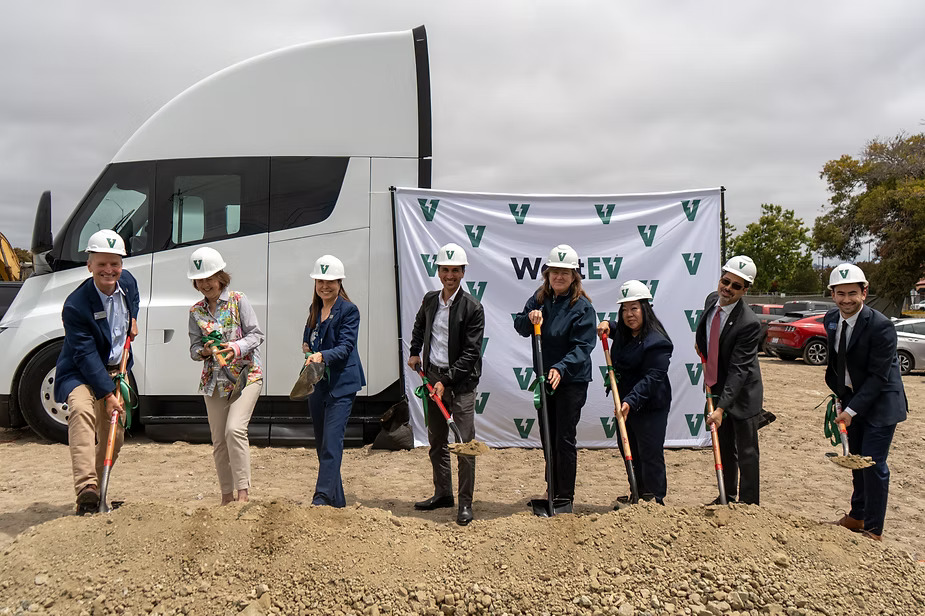
WattEV breaks ground on sixth electric truck charging depot at Port of Oakland

WattEV breaking ground port of oakland

WattEV, a provider of heavy-duty electrification services and charging infrastructure, recently broke ground on its sixth heavy-duty electric truck charging depot in California at the Port of Oakland. The new facility will establish a zero-emission freight corridor connecting the Bay Area to Sacramento, Nevada and WattEV’s existing Southern California operations. 

“We’ve been working towards opening a Northern California charging depot for several years,” said Salim Youssefzadeh, CEO and co-founder of WattEV in a press release. “Until now, most truck charging infrastructure has been concentrated in Southern California. This project marks a significant milestone for WattEV, the Bay Area, and California’s zero emission freight future.”

Youssefzadeh told FreightWaves the Oakland depot will feature 15 240-kilowatt CCS dispensers and six MCS dispensers. The release notes the company aims to enable concurrent charging of 25 medium and heavy-duty electric trucks. Designed from the ground up for megawatt charging, the facility aims to reduce charging “dwell times” to 30 minutes or less compared to the hours required with kilowatt charging. 

WattEV’s has a unique approach, where it is both an infrastructure provider who also operates its own trucking fleet. This allows the company to test vehicle capabilities, establish efficient routes, and build relationships with shippers. 

“We don’t want to see our stations sit idle,” Youssefzadeh explained. “We came up with the idea of creating a transport company not with the idea of becoming a large-scale transporter but testing the capabilities of the vehicles, building relationships with shippers, testing the routes, and then being able to give those to owner-operators as we scale up.”

Looking ahead to 2026, Youssefzadeh predicts the emergence of megawatt-capable vehicles, with the Tesla Semi currently supporting MCC capabilities. WattEV has ordered 40 Tesla Semis and is already testing two in its fleet, with most manufacturers committed to the megawatt charging standard.

The Oakland facility expands WattEV’s existing network of five charging depots throughout Southern California. The company has 15 additional sites under development that will cover the entire West Coast from San Diego to Washington, with plans to operate 100 charging stations by 2035.