State of Freight Takeaways: English language rule for truckers takes effect, early impacts emerging

Just when some aspects of the freight market were starting to calm down, there’s a new factor that has the potential to inject renewed volatility into supply chains. 

That was one of the points made in the June State of Freight webinar featuring Firecrown and SONAR CEO Craig Fuller along with Zach Strickland, SONAR’s director of market intelligence.

FreightWaves’ State of Freight webinars the past few months took place against a backdrop of tremendous volatility and uncertainty in freight markets. Fuller and Strickland saw some aspects of the supply chain growing somewhat calmer, but also discussed a change in a key benchmark from the SONAR data dashboard that could be signaling any calming might not last.

Here are five takeaways from the June State of Freight webinar. 

An OTRI spike and what it means

The Outbound Tender Rejection Index in SONAR has moved up sharply in the past few days. Fuller said it could be the first signs of tightening capacity because of the English Language Proficiency requirement that began a renewed round of enforcement this week. 

The impact of enforcing the ELP–which is not a new regulation, but is getting a new enforcement push from the Trump administration–goes well past having a driver taken off the road because he or she failed the ELP during a safety stop. 

Out of Service orders that would accompany a driver being taken off the road end up on the records of a carrier, Fuller said. “If you’re a fleet and you have an out of service violation, this time is recorded on your record,” Fuller said. “And what’s interesting about that is that it shows up in your insurance rates. It also means some shippers will not book you if you have a lot of out of service violations.”

That recent spike in tender rejection rates could be a sign of carriers taking drivers off the road rather than have them become the focus of an Out of Service order that results in that mark on a company’s record, according to both Fuller and Strickland.

Has the trade war run its course?

Fuller was 50-50 on whether to call the trade war that was raging in April and into May “an afterthought.” “It  has become sort of that, but you’re still dealing with it,” he said. Fuller said he saw evidence in the news cycle that “the administration seems to have largely moved on.”

But Fuller also noted that the 90-day deadline on other countries cutting trade deals with the U.S. is coming up fast. (The 90-day pause on many tariffs was announced April 9). “My guess is they just end up extending them out because tariffs were far less popular among the independents and obviously the bond market,” he said, referring to the sharp spike in Treasury rates when “Liberation Day” tariffs were announced. 

Speaking of the U.S. bombing of Iranian nuclear facilities, Fuller said “I think it seems to be that’s where the administration is focused on. It has moved on from trade, and I think it’s a positive for everybody.”

The Vietnam and Thailand dance

Fuller and Strickland discussed the Trade War Center on SONAR and what it is saying about ocean shipments. Strickland noted that the dashboard shows that ocean going volumes are now running above last year,  “and if you recall, last year was a strong year for import activity,” he said.

And a lot of that ocean going traffic is coming out of Vietnam and Thailand, which Fuller said is an effort to take Chinese-made goods, transship them through those countries and avoid the steep tariffs on Chinese imports.

“A lot of transshipping is going on,” Fuller said. “It’s nearly impossible to know how much it is.” He added that there are estimates as much as 70% of U.S. Imports from Vietnam could be goods that were transshipped from China, but he also has seen estimates as low as 30%.

A tepid prediction for LTL

Strickland, who came out of the LTL business, said he “thought LTL was going to come out in much better shape through all this, just because the industrial sector is dying to wake up and is ready to go.”

But Strickland said he now believes LTL won’t perform any better than a recovery in truckload, which remains in the doldrums. 

But Strickland had optimism for the truckload sector, which could drag LTL along with it. “I think the truckload market will flip, and I think we’re close to it,” he said. “What’s going to happen is the truckload market is going to have an inflection point and then that’s going to trigger a downstream reaction into LTL.” He added that he believed September or October might be a period when that “flip” would occur. 

But LTL is ultimately tied to industrial activity. “And on the industrial side of things, we need economic certainty or clarity,” Strickland said. 

Electric vehicles face a big headwind from Washington 

“The biggest thing you can take from the Big Beautiful Bill is that the administration is very anti-EV now,” Fuller said. He noted the various incentives for electrification that were in the Inflation Reduction Act are being terminated in the legislation passed by the House and now before the Senate that carries that BBB name. 

As a result of that, Fuller said, “the pressure to electrify is off somewhat, because fleets no longer feel that this is a necessary thing they have to contend with,” Fuller said. 

He also noted a statement made by a leading U.S. Volkswagen official in the U.S. who said that customers were going to be offered EVs aggressively because of the huge pool of money the IRA provided to incentivize EV purchases. But that pool of money is now drying up. “If you look at the bill, we’re changing directionally,” Fuller said. 

More articles by John Kingston

5 takeaways from State of Freight: Getting ready for auto tariffs

State of Freight takeaways: Freight crash may turn into sudden revival

A market on the precipice: 5 takeaways from the April State of Freight

FedEx to close 30% of package facilities as network integration ramps up

A FedEx Express truck with orange lettering and a FedEx Ground truck with green lettering parked together on a city street.

FedEx Corp. plans to close 30% of its U.S. package distribution facilities within two years under its Network 2.0 consolidation program, which is gaining momentum and expected to contribute toward $200 million in savings this quarter, executives said during an earnings briefing.

In April, the integrated parcel and logistics giant completed the optimization of its parcel operation in Canada. The company is now turning its attention to the U.S. market, where it synthesized 45 U.S. stations in the fiscal year fourth quarter that ended May 31, CEO Raj Subramaniam told analysts Tuesday evening.

Since its founding in the early 1970s, FedEx (NYSE: FDX) has operated in a siloed manner, with each business unit running on its own. Management aims to improve the efficiency with which FedEx picks up, transports and delivers packages by integrating the legacy Express and Ground networks, with the ultimate goal of removing surplus capacity and $2 billion in annual costs. The plan is to have a single van deliver parcels to a neighborhood rather than different vans crisscrossing the same area multiple times per day. 

In June, Memphis, Tennessee-based FedEx blended the operation of 30 stations across 11 local markets and will optimize another 33 stations across nine markets by the end of the month, Subramaniam said. By then, about 2.5 million packages, or 12% of total volume, will flow through consolidated facilities on an average daily basis.

Executives said the company expects to reduce structural costs by $1 billion this year, much of it through Network 2.0. About $200 million of the total benefit will be achieved in the current quarter through the network transformation and the final stages of the Drive campaign, which has taken out $4 billion in costs since mid-2023. 

In addition to closing 100 U.S. stations, FedEx optimized 290 stations by the end of the fiscal year. 

The program was unveiled two years ago, but the company says it is on track. Management stressed that it is methodically implementing the network transformation to ensure it meets and exceeds current levels of service.

“We’re seeing good progress on both the reliability side, as well as the financial side, for those locations we have transitioned,” Chief Financial Officer John Dietrich said. “We’re seeing a 10% improvement on our pick up and delivery costs. And we’re learning and adapting along the way.”

By the end of the current fiscal year, FedEx expects about 40% of total volume to flow through redesigned facilities, Subramaniam said during the third quarter earnings briefing in March.

“We have to be mindful not to disrupt service. So this is not a speed race for us. This is a journey that we intend to get right, and we want to be sure we get it right to line up the 2.0 facilities in a way that delivers the results we want” without disrupting customers, Dietrich said last month during a Bank of America presentation. 

Dietrich said about 1 million of 1.6 million Express packages per day have a profile that allows them to be absorbed into the Ground network. 

Under a new organizational structure, FedEx Ground is now part of FedEx Express and no longer exists as a separate business unit. But the physical integration will take longer than the change at the corporate level.

“We believe there are meaningful benefits to be had from this [Network 2.0] undertaking, not just in terms of raw cost savings, but better planning and service as well,” said Stifel equity analyst Bruce Chan in a client note.

Rival UPS is also in the process or downsizing and consolidating its parcel footprint in the United States.

Click here for more FreightWaves/American Shipper stories by Eric Kulisch.

FedEx navigates tariff swings to modest profit gain

FedEx retires a dozen freighter aircraft in efficiency move

FedEx taps leaders from within for LTL spinoff, to Wall Street’s dismay

Bill aims to level playing field for railroad workers

Bill gives supervisors routing yard traffic new work-hour protections. (Photo: Jim Allen/FreightWaves)

WASHINGTON — Railroad employees who supervise traffic moving through rail yards would receive the same work-hour protections as other rail workers, including those who operate trains, according to legislation introduced this week.

U.S. Reps. Salud Carbajal, D-Calif, and Mike Lawler, R-N.Y., reintroduced the Railroad Yardmaster Protection Act, a bill that places yardmasters under the same federal hours of service requirements that currently cover locomotive engineers, conductors, switchmen, dispatchers, and signal employees.

“Yardmasters are the traffic controllers of our country’s railroad network,” Carbajal said in a statement commenting on the legislation.

“Like their counterparts in aviation, they play a vital role in ensuring the safety of everyone traveling by train. My bipartisan legislation will improve working conditions and support the professionals who keep America’s railroads running safely and efficiently.”

The bill ensures that a yardmaster is not allowed to remain on duty for more than a total of 12 hours, and then must receive a minimum of 10 hours off duty.

Lawler said in a statement that the legislation “closes a long-overdue gap” in rail safety.

“Yardmasters are essential to the safe and smooth operation of our freight rail system, and it’s only right that they receive the same duty hour protections as other rail employees,” Lawler said. “This legislation is about protecting workers, improving safety, and ensuring our rail network continues to serve communities and commerce across the country effectively.”

SMART-TD, which represents yardmasters, endorses the bill, as it did when the legislation was first introduced in 2019 and reintroduced in 2024.

“For far too long, our yardmaster members have been left without the basic protections afforded to other safety-sensitive rail employees,” the union stated in a press release. “This bill finally addresses that gap by extending hours of service safeguards to these essential workers.”

 Click for more FreightWaves articles by John Gallagher.

With Mideast shipping on high alert, Maersk re-opens Israel port

Maersk, the world’s second-largest container carrier, said it is again accepting imports at Israel’s Port of Haifa days after suspending service when the city came under missile attack from Iran.

The carrier (OTC: AMKBY) in an advisory said it re-opened Haifa cargo service for imports June 25.

“We are monitoring the situation very closely and based on the recent developments and with prospects of a ceasefire currently in place, we expect to be able to re-open export cargo acceptance once the lower safety risk of doing so has been reconfirmed.”

Maersk said operations continue at the Port of Ashdod, also in Israel. 

It went on to say that the critical Strait of Hormuz “remains navigable”. 

The narrow waterway guards the entrance to the Persian Gulf, where some 20% of the world’s crude oil supply and 2-3% of global container traffic originates.

“Our teams are working out contingency plans on a case-by-case basis to swiftly adapt to potential changes and will update customers of changes to the situation,” Maersk added.

Israel and Iran agreed to a ceasefire after the United States bombed Iran’s nuclear facilities.

At the same time, there have been ongoing reports of disruptions to satellite ship identification systems in the region. Those disruptions are suspected ahead of the June 17 collision and fire involving two tankers off the United Arab Emirates, about 24 miles south of the Strait of Hormuz.   

Reports claim that some merchant ships have taken to broadcasting fake messages identifying themselves as Arab vessels or with Muslim crews, to throw off malicious targeting.

Find more articles by Stuart Chirls here.

Related coverage:
Maersk unveils new AI platform to simplify customs tasks

New Mideast tensions fail to boost trans-Pacific container rates

US maritime chief Sola steps down

Maersk stops Haifa service prior to Iran missile attacksf Hormuz

Maersk unveils new AI platform to simplify customs tasks

Shipping giant Maersk has rolled out Maersk Trade & Tariff Studio, a digital solution designed to empower global cargo owners and bring clarity to complex customs processes. 

The platform, backed by artificial intelligence, arrives as businesses grapple with rising tariffs, heightened regulatory scrutiny, and frequent disruptions to customs procedures.

For many internationally active companies, the traditional approach to customs involves managing a disparate network of local brokers, often numbering in the dozens across various ports and countries. This fragmented strategy, Maersk (OTC: AMKBY) said in a release, leads to disconnected data, limited visibility into the customs journey, and, crucially, significant overpayments in duties. 

Maersk’s research reveals that 5-6% of tariffs are, on average, overpaid due to a lack of centralized data and optimization efforts. Furthermore, 20% of shipment delays can be attributed to inadequate customs preparation, disrupting supply chains and adding to operational costs.

Perhaps one of the most striking inefficiencies identified by Maersk is the underutilization of Free Trade Agreements (FTAs). Despite the existence of over 650 FTAs globally, only 50-55% of eligible trade actually benefits from them. The complexity of these agreements, coupled with the considerable resources required to fully understand their nuances at both origin and destination, means that many global supply chain owners are leaving money on the table.

Maersk Trade & Tariff Studio harnesses AI-powered tariff engineering and optimization. This advanced capability ensures the correct application of over 6,000 product codes and more than 20,000 sub-codes, a monumental task that previously relied heavily on manual interpretation and expertise. The AI also drives upstream compliance risk screening, proactively helping customers sidestep costly delays, detentions, and penalties.

The platform is continuously updated with real-time information from data partners and Maersk’s worldwide network of 2,700 customs experts. These specialists feed crucial tariff and regulation changes into a unified system, ensuring that businesses always have access to the most current information. 

The Studio will be available June 28 after comprehensive pilot testing with large customers, Maersk said, for U.S. cargo imports, with full global rollout scheduled for August. The company said the Studio is designed as part of its integrated logistics services but can also be implemented as a stand-alone solution.

Find more articles by Stuart Chirls here.

Related coverage:

New Mideast tensions fail to boost trans-Pacific container rates

US maritime chief Sola steps down

Maersk stops Haifa service prior to Iran missile attacks

Tanker rates surge, Maersk still sailing through Strait of Hormuz

Teamsters complain UPS slow to deploy air-conditioned vehicles

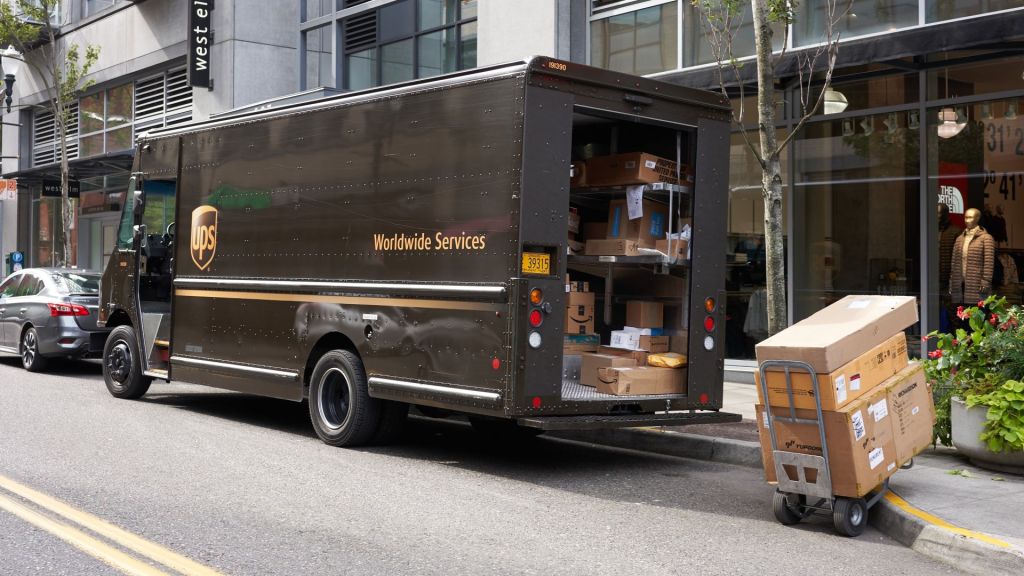
A brown UPS truck parked on a city street as driver unloads boxes.

The Teamsters union on Wednesday called out UPS for not living up to the terms of their 2023 labor agreement, alleging the employer is dragging its feet on purchasing air conditioned package cars and moving part-time workers to full-time status. It also accused UPS of violating rules on overtime work. 

Under a five-year contract finalized in August 2023, UPS (NYSE: UPS) committed to deliver at least 28,000 new or replacement sprinter vans and package cars with in-cab air conditioning purchased after Jan. 1, 2024, create 7,500 new full-time jobs by combining part-time hours into full time ones and fill 22,500 open jobs. The last-minute agreement averted a potentially crippling nationwide strike. 

The Teamsters, which represents about 340,000 UPS warehouse and delivery workers, said it has formally asked UPS to explain by July 1 why key contract terms are unfulfilled. Information requested includes the status of air conditioning, UPS’s plans for completing the fleet upgrade and the number of full-time opportunities offered to part-time workers to date.

The demand for air conditioned vehicles comes amid a blistering heat wave in the Midwest and Northeast where temperatures have soared to record highs this week, including above 100 degrees in New York, Boston and Philadelphia. The collective bargaining agreement calls for UPS to prioritize deployment of air conditioned vehicles in the hottest southern states, such as Texas, Arizona and Nevada.

The Teamsters said it estimates that UPS has delivered only 10% of required air-conditioned vehicles.

“How does UPS expect to actually deliver 20,000 or more air-conditioned package cars and vans over the next two years, when the delivery giant is already so far behind? We want answers,” Teamsters President Sean O’Brien said in a news release. “The summer heat beating down on our members is no joke. UPS is playing a dangerous game with the lives of thousands of essential American workers.”

The union said UPS is obligated to create 7,500 more full-time jobs during the last three years of the contract.

“We are in regular contact with the Teamsters and remain committed to the agreements we reached in 2023, as part of our contract negotiations,” UPS told FreightWaves in a statement.

The Teamsters are also asking for more details on all open and settled grievances related to alleged overtime abuses. The contract protects workers who the company forces to work overtime and awards additional compensation to members who suffer repeated violations, according to the union. 

“In so many ways — from the painfully slow delivery of air-conditioned vehicles to overworking our rank-and-file and failing to provide up-to-date information on new job opportunities — UPS has a lot of catching up to do to honor this agreement,” O’Brien said. “The weather is getting worse, but still our members show up every single day to ensure this company remains the best in the business. The Teamsters’ patience with UPS mismanagement is wearing thin.”

The Teamsters is one of the largest unions in the country and has regained influence under O’Brien, who spoke at the Republican convention last summer and is working to organize Amazon workers. 

Click here for more FreightWaves/American Shipper stories by Eric Kulisch.

Teamsters overwhelmingly ratify UPS contract

Fred Smith, FedEx founder and parcel industry pioneer, dies at 80

Texas ports record mixed freight movements in May

Container flows in May increased in Houston, while movements of crude oil declined at the Port of Corpus Christi, Texas.

Port Houston sees gains in containers, steel movements

Port Houston handled 381,640 twenty-foot equivalent units in May, a 5% year-over-year increase compared to the same month in 2024. 

Year-to-date container volumes are up 4% to 1.8 million TEUs compared to the same period in 2024.

“Shippers remain positive about Port Houston as their gateway of choice, even with the volatility in the market and everything that’s been going on in recent days,” Ryan Mariacher, chief port operations officer, said during a monthly commission meeting on Tuesday. “May was a solid month after a really strong March and April.”

Rina Lawrence, economic development manager at Port Houston, said the port continues to attract global shippers.

“We continue to see strong interest from companies — from domestic and international companies — who continue to explore opportunities to locate or expand their operations in Houston, more specifically along the Houston Ship Channel,” Lawrence said during the commission meeting. “[Port Houston] is actively engaged with multiple prospects, including manufacturing and clean energy projects, many of which are driven by nearshoring, or reshoring trends in trade.”

General import cargo at Port Houston was up 1% year-over-year in May at 609,341 tons.

Steel imports decreased 4% year-over-year to 420,610 tons, while steel exports dropped 40% year-over-year to 39,400 tons.

Full import and export containers in May both increased 1% year-over-year at 166,005 TEUs and 132,900 TEUs, respectively.

Movements of empty export containers were up 12% year-over-year in May to 18,358 TEUs. Empty import container movements at the port were up 23% year-over-year to 64,377 TEUs in the month.

The port totaled 697 vessel calls in May, a 2% decrease from last year. Barge calls at the port totaled 297 during the month, a 5% decrease compared to May 2024.

Mariacher said the port has been tracking blank sailings, but does not forecast any drastic changes to vessel traffic in the next several months.

In shipping, a blank sailing (also known as a cancelled sailing) refers to a situation where a scheduled voyage or port call is canceled by a shipping carrier.

“We’re up to 13 [blank sailings] as of today on our schedules, but the good news is, eight of those have passed with five to come,” Mariacher said. “In spite of this, our mid-June volumes look pretty strong, much stronger than we forecasted, with a pretty strong surge in our export volume leading the charge at this point.”

Port of Corpus Christi posts gains in crude oil, dry bulk goods

The Port of Corpus Christi moved 16.98 million tons of cargo in May, a 3% year-over-year decrease from the same month in 2024.

The port handled 10.6 million tons of crude oil during the month, a 9% year-over-year decrease. Exports of crude oil for the month totaled 9.9 million tons, a 7.4% decline from last year.

Shipments of petroleum totaled 5.37 million tons during May, a 15.2% year-over-year increase. Exports of petroleum totaled 4.34 million tons for the month, a 14.5% increase from the same month last year.

Dry bulk cargo slipped 3% year-over-year to 705,345 tons, while chemical cargo volumes totaled 255,084 tons in May, a 6% year-over-year fall from the same month in 2024. 

Breakbulk cargo movements in May totaled 46,205 tons, a 21% year-over-year decline.

The Port of Corpus Christi had 190 ship calls for the month, a 1% year-over-year decrease in ship calls compared to last year. Barge calls in May totaled 469, a 27% year-over-year increase.

Motive: pioneering AI-powered fraud prevention in fleet management

Motive has established itself as a leader in fraud prevention technology, earning recognition as a winner of the 2025 FreightWaves Fraud Fighter Awards. The company’s innovative approach combines fleet management and spend management into a single platform, providing businesses with unprecedented protection against the growing threat of fleet-related fraud.

The financial consequences of fraud in the physical operations sector are staggering. According to research, 19% of current fleet spend is lost to fraud or theft, leading to an average revenue loss of nearly $1 million per year for companies across trucking, logistics, construction, oil and gas, and other sectors. Without proper safeguards, a 500-vehicle fleet can “lose over $250,000 a year in unauthorized transactions due to skimming, fuel theft, and out-of-policy spend,” noted Caroline Barragan, Head of Product Marketing at Motive.

“The greatest threat today is the speed, scale, and sophistication of fleet card fraud,” Barragan wrote. “Worldwide card fraud losses are projected to exceed $43 billion in the next year, with U.S. businesses alone expected to lose $12.5 billion in 2025.”

Motive’s comprehensive approach to fraud prevention sets it apart. “Motive is the only platform that combines Fleet Management and Spend Management in one place and offers the most accurate way to stop fleet-related fraud,” the company said. Unlike standalone solutions that address only one aspect of operations, Motive integrates vehicle telematics data with payment information from the Motive Card.

This integration enables Motive’s AI systems to automatically decline suspicious transactions with 90% accuracy, protecting businesses from common fraud schemes including fuel siphoning, fuel theft, and card skimming. The system’s holistic approach eliminates the need for fleet managers to spend hours manually identifying fraudulent transactions or disputing charges after they occur.

Motive recently announced “the industry’s highest fraud protection guarantee, covering up to $250,000 in losses annually when customers enable AI-powered fraud controls on the Motive Card.” This substantial commitment underscores the company’s confidence in its fraud prevention capabilities.

Motive’s platform is a cornerstone in combating fraudulent activities in fleet management, incorporating several key mechanisms designed to guard against specific fraud types. First and foremost is the vehicle proximity auto-decline feature, which acts as a deterrent to fuel fraud by automatically rejecting transactions when a vehicle isn’t near the fueling station. This ensures that transactions outside the expected geofence are swiftly declined, securing the fleet’s financial integrity. Additionally, there’s an upcoming feature known as the fuel tank threshold auto-decline. This innovative enhancement is poised to prevent fraudulent activities, like side-fueling, by imposing limits on the fuel tank’s capacity. If a vehicle’s tank is already full, any attempt to purchase additional fuel will be automatically declined, safeguarding against unnecessary expenditure and abuse.

Central to Motive’s approach is its sophisticated AI monitoring system. These advanced AI models work tirelessly, analyzing transaction patterns in real-time to detect and preempt any suspicious activity before it affects operations. This proactive measure not only thwarts potential fraud but also inspires confidence among users. Furthermore, the Motive Card provides businesses with customizable spend controls, allowing them to impose restrictions based on various parameters such as time, transaction amount, and specific merchant categories or locations. An anticipated update will refine this control by enabling automatic declines at pricey merchants when more affordable options are nearby. Together, these comprehensive features illustrate Motive’s commitment to providing robust, adaptable, and forward-thinking solutions to fleet-related fraud.

The effectiveness of Motive’s approach is evident in customer experiences. Scott Hodson, fleet manager at Damian’s Wholesale Ice Cream, shared: “Our old card provider didn’t protect us from fraud or buddy-fueling, which prompted the move to the Motive Card for more visibility and more control. We haven’t had fraud since the Motive Card was put in place. It has helped us identify issues so we can address them and given us the data we need to optimize fuel spend.”

Similarly, Alex Amort, VP of compliance at Cascade Environmental, reported: “Because we’re able to manage our fleet expenses in one dashboard, we have much closer control over our operations, can stop fraud before it happens and can better coach our driver on fueling policies and efficiency. With Motive, we’re able to obtain true, documented, direct savings to our bottom line.”

Motive’s fraud prevention technology has demonstrated remarkable results across various companies. Logistics company Southwind auto-declined over 2,000 transactions valued at $1.1 million using Motive Card and fraud detection features, accounting for 3% of their total transactions in 2024.

In another notable case, KLX Energy, with over 2,000 vehicles, turned to Motive after experiencing “a major fraud event in 2018 involving card skimming and millions in unauthorized fuel charges.” By implementing Motive’s comprehensive solution, KLX Energy identified approximately $170,000 in savings while reducing the number of unidentified drivers by 50% almost immediately.

“Motive’s been protecting fleets against fraud since 2023. Last year, our customers prevented over 80,000 unauthorized transactions with our fraud detection capabilities, saving $55 million,” Barragan said.

The company’s approach to fraud prevention has evolved significantly over time. “When we launched Motive Card, we began by focusing on setting up rules and alerts to flag anything that looked suspicious,” Barragan explained. “Today, we’ve moved to a much smarter system. When it comes to building AI for our customers, we’re focused on accuracy, meaning no false positives or burdening customers with events and alerts that aren’t real.”

With its integrated approach to fleet management and fraud prevention, Motive has established itself as an industry leader in protecting businesses from costly fraud schemes. By combining vehicle telematics with spend management and employing sophisticated AI technology, the platform offers real-time protection that stops fraud before it happens.

As Barragan advises: “Make sure your systems talk to each other. If your fleet cards, telematics, and driver tools are separate, it’s much easier for fraud to go unnoticed. Look for a single platform to manage your physical operations end to end so you have complete visibility and no blind spots.”

Yellow gets court OK on separate groups of terminal sales, Saia buyer of three

Saia has obtained court approval to acquire three terminals being sold out of the bankruptcy of Yellow Corp.

In a court filing with the Delaware Bankruptcy Court last week, the court approved the sale to Saia (NASDAQ: SAIA) of former Yellow terminals in Deer Park, New York, on Long Island; Calexico, California, which sits on the Mexican border in southern California;  and Orlando.

The price paid for the three assets is $8.5 million. The deal has not closed, with the actual closing still dependent on various requirements being met. 

On Saia’s most recent earnings call with analysts, held April 25, Saia CFO Matthew Bateh said in the prior 12 months the company had opened 21 terminals. 

The final sales price is higher than the $6.5 million originally agreed to in early May. As reported, when the trio of terminals is in the Saia fold, the LTL carrier will have acquired 31 facilities out of the Yellow bankruptcy. 

The Orlando terminal has 72 doors. In Deer Park, there are 54 doors, and the Calexico facility has 21 doors.

Yellow’s court approval to sell the three sites to Saia came just a few days after the court also agreed to a separate sale of assets from the LTL carrier’s bankruptcy that were first filed earlier this month. The final sales price for the terminals was $6,845,000. 

None of the buyers were transportation companies. The assets consisted of facilities in Knoxville, Tennessee; Southington, Connecticut; a facility near Baton Rouge; and a smaller facility in Tupelo, Mississippi.

More articles by John Kingston

SCOTUS decision on California Clean Cars waiver could have benefit to trucking later 

Independent terminal operator Outpost adds four new facilities, targets more growth

Relay Payments expands into maintenance with trio of deals

DHL Express Canada, striking workers tentatively agree on labor deal

Workers picket a DHL facility waving a read Unifor flag.

DHL Express Canada and striking workers have reached a tentative agreement on a new contract, according to the Unifor union, raising stakeholder hopes the national courier will soon be able to resume operations.

Unifor, which represents more than 2,100 DHL Express truck and van drivers, warehouse pickers and clerical workers in Canada, said details of the deal will not be disclosed until it is finalized. A ratification meeting for members will take place in the next few days, it said.

Unifor will maintain picket lines until the deal is ratified, said spokeswoman Jenny Yu. DHL Express confirmed in an email that a preliminary settlement has been reached.

DHL Express Canada locked out workers on June 8 and the union immediately reciprocated with a strike action. DHL Express was able to operate for about 10 days by using replacement workers, but was forced to suspend operations on June 20 when new legislation banning the use of strikebreakers took effect. The company was unsuccessful in getting the Canadian government to issue an exemption for the continued use of replacement workers.

Unifor was seeking a 22% hourly wage increase and a 42% cost-of-living increase for owner-operator drivers over three years. 

DHL Express said it offered a 15% wage increase over five years, premiums for certain job classifications and increased pension benefits. It also sought to revise the compensation formula for independent drivers so that it is based on market conditions. 

DHL Express is not one of the top five couriers in Canada, but is an important shipping option for many businesses, especially for international deliveries. A resumption in operations will also improve parcel capacity at a time when Canada Post, the largest delivery company, is locked in protracted bargaining with mail carriers who refuse to work overtime. 

Click here for more FreightWaves/American Shipper stories by Eric Kulisch.

DHL Express Canada seeks exemption on use of replacement workers

DHL Express Canada to suspend parcel operations amid labor deadlock