Trans-Pacific, East Coast ocean rates strong in late November
Container rates to the U.S. West and East coasts stayed above $5,000 per FEU as tariff talk and labor issues shadowed shippers’ plans.
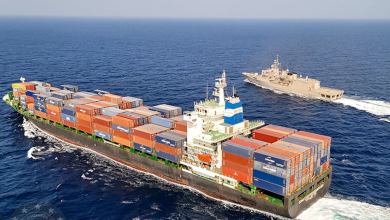

The American Apparel & Footwear Association said the U.S. should do more to protect Mideast shipping as attacks on vessels spur “unsustainable” higher costs and delays.
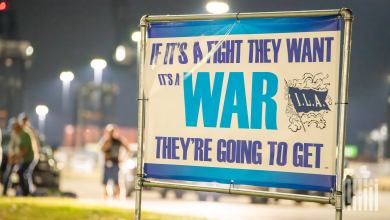
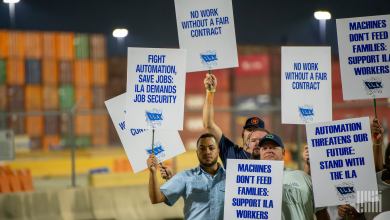
The International Longshoremen’s Association broke off negotiations on a new contract with the United States Maritime Alliance, charging employers want to eliminate union jobs.
The United States Maritime Alliance and the International Longshoremen’s Association are scheduled to resume bargaining next week on a new master contract covering 45,000 workers at 36 East and Gulf Coast ports.
Newly announced federal spending on zero-emission equipment and infrastructure at container ports won the approval of the International Longshoremen’s Association.
East Coast ocean carriers and terminal operators will resume bargaining with the International Longshoremen’s Association on a new contract in November.
Container handling resumed this weekend at dozens of ports on the East and Gulf coasts following a brief strike by dockworkers as the International Longshoremen’s Association and shipping lines prepare to resume bargaining.
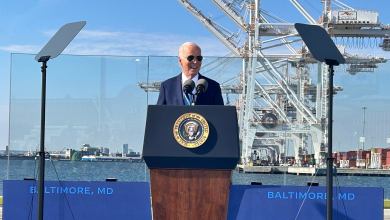
President Biden claims a major victory late in his term while the International Longshoremen’s Association negotiates a curious compromise after months of talking tough on the docks.
Port employers have come to a tentative agreement with unionized dockworkers on a 61% hourly wage increase, ending the three-day strike that shut down major East Coast container ports.
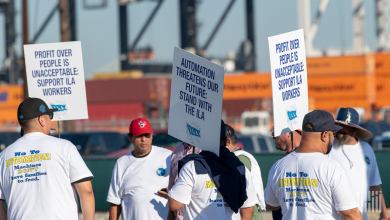
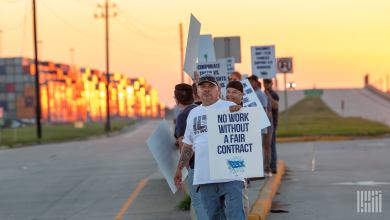
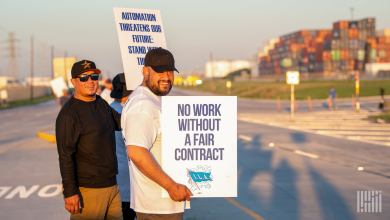
While tens of thousands of unionized longshore employees picket at ports along the East and Gulf coasts, the number of container ships waiting outside major maritime hubs continues to grow by the day.
While tens of thousands of unionized longshore employees picket at ports along the East and Gulf coasts, union leaders say they have received death threats during a work stoppage that has shut down vital container imports.
Shippers and a wide range of port-related businesses will be affected by the International Longshoremen’s Association strike that began Tuesday at maritime hubs from Texas to Maine.
Reports of panic-buying at supermarkets began spreading across social media Tuesday as a union dockworker strike got underway at East and Gulf Coast ports.
The first port strike by the International Longshoremen’s Association since 1977 would bring a halt to an array of goods flowing through East and Gulf Coast maritime hubs.
Ports from Texas to Maine are bracing for a midnight strike by the International Longshoremen’s Association, the first since 1977, that will bring billions of dollars in seaborne trade to a halt.
Barring last-minute developments, the International Longshoremen’s Association said it plans to follow through on plans to strike at ports throughout the East and Gulf Coasts and bring container and ro-ro handling to a standstill.
From the White House on down, everyone has different strategies and different expectations when it comes to the port labor dispute.
With a strike by East and Gulf Coast dockworkers just days away, port employers on Thursday asked the National Labor Relations Board to order the International Longshoremen’s Association to resume contract negotiations.
Facing an Oct. 1 strike deadline by the International Longshoremen’s Association, ports and other waterside logistics providers along the East and Gulf coasts are advising customers to brace for a shutdown of the container business.
Container traffic at the second-busiest U.S. port complex will come to a halt Oct. 1 absent a new contract covering 45,000 union longshore workers from Texas to Maine.