June rebound as West Coast containers best East, Gulf ports

In June 2025, U.S. container import volumes experienced a modest rebound, marking a stabilization after May’s sharp decline.

Data from Descartes reveals a 1.8% increase in container imports to 2,217,675 twenty foot equivalent units, narrowing the year-over-year decline to 3.5%. This rebound suggests that U.S. importers are beginning to adapt their supply chains amid ongoing tariff and policy shifts, with year-to-date import volumes tracking 3.8% above 2024 levels.

Volume gains at top U.S. ports

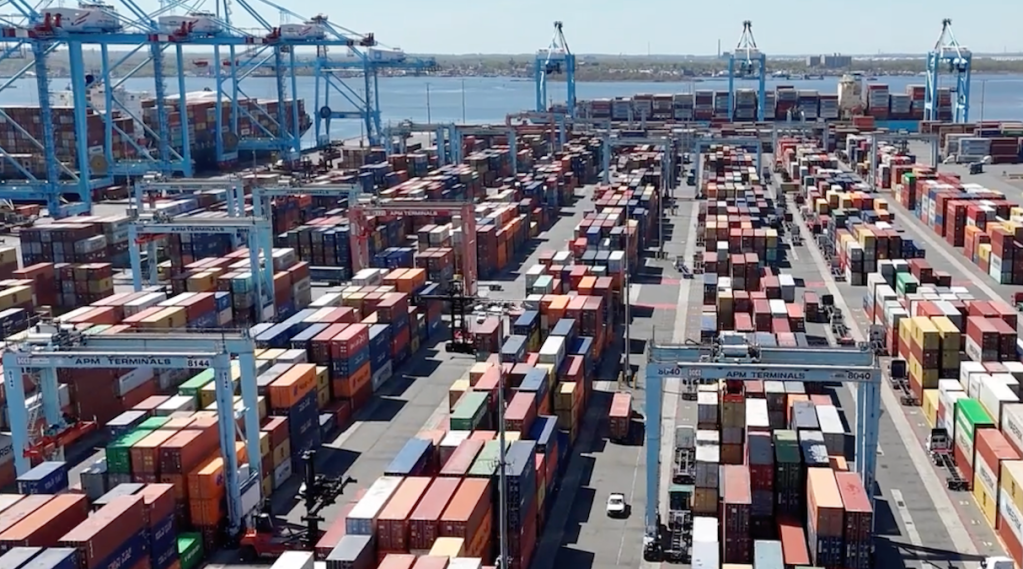
The shift in port dynamics was noticeable, with top West Coast ports regaining momentum. Los Angeles experienced a 29.1% increase in volume, adding 103,884 TEUs, while Long Beach saw an 18.8% rise, contributing an additional 58,492 TEUs. Tacoma’s volume increased by 33.3%, highlighting a strong performance on the West Coast.

Conversely, most East and Gulf Coast ports reported significant declines. Savannah saw a decrease of 16.9%, and Houston experienced a 15.8% drop in volumes. Overall, the top 10 U.S. ports handled a combined volume showing a 3.1% rise month-over-month.

China-origin import challenges

Despite a slight month-over-month increase of 0.4% to 639,300 TEUs, U.S. imports from China were down 28.3% from June 2024, reflecting the sustained impact of elevated tariffs and the rollback of the de minimis exemption. Categories such as furniture and plastics saw sharp year-over-year declines. With China-origin imports constituting only 28.8% of total U.S. imports — the lowest in four years — importers are pushing toward diversification, favoring Southeast Asian countries. Vietnam, for example, increased its export volumes to the U.S. by 7.7% over May, indicating a shift in sourcing strategies.

Port delays and efficiency improvements

Port delays improved notably in June, particularly at key West Coast ports such as Los Angeles and Long Beach, which saw reductions in congestion by 2.1 and 3.3 days, respectively. This improvement signals an easing of the bottlenecks prevalent in May. East and Gulf Coast ports, while experiencing smaller gains, remained more stable with minimal changes in transit times.

U.S.-China trade talks and global shipping disruptions

As of July 2025, the U.S.–China trade relationship remains under a temporary truce, with a framework agreement in development following May’s tariff reduction to 30%, down from 145%. However, upcoming deadlines in July and August could trigger renewed tensions if unresolved disputes persist. Meanwhile, worsening disruptions in the Red Sea due to Houthi attacks on shipping and Iran–Israel conflicts continue to impact global shipping routes, forcing carriers to reroute vessels, leading to higher costs and extended transit times.
Descartes had recommendations to manage supply chain risk:

  1. Monitor tariff deadlines: With upcoming expirations of key tariff agreements, modeling the impacts of potential increases is critical for planning.
  2. Assess port volumes and delays: Given the historical strain on U.S. logistics infrastructure at certain volumes, continuous monitoring is essential.
  3. Track geopolitical risks: Ongoing Middle Eastern conflicts necessitate strategic assessments of routing options and potential alternatives.
  4. Diverse sourcing: Evaluating supplier and factory locations can mitigate risks associated with over-reliance on specific regions, a crucial step in maintaining supply chain resilience.

Find more articles by Stuart Chirls here.

Related coverage:

Port Newark opens new electric drayage charging station

Italy shipbuilder appoints new US chief

Crowley adds new U.S. Northeast ocean service with Central America
Merchant vessel attacked in Red Sea

The Right Way to Create a Driver Scorecard That Sticks 

If you are running a moderate sized fleet with more than 15-20 trucks, measuring your drivers is important. Let’s cut through the fluff—most driver scorecards fail not because the data isn’t there, but because the leadership behind them doesn’t know how to use them. Slapping together a spreadsheet with a few red, yellow, and green boxes and calling it a “driver scorecard” is not leadership. It’s laziness disguised as management.

A driver scorecard done the right way can be one of the most powerful tools in your operation. Done wrong, it’s just another reason good drivers walk out your door. If you’re serious about building a fleet that runs efficiently, keeps insurance under control, and gets freight delivered without headaches, then it’s time to rethink how you’re tracking and communicating driver performance.

This isn’t about micromanaging. It’s about accountability, clarity, and ownership. And if you build your scorecard right, it becomes a system that drives culture, not conflict.

First, Understand the Real Purpose of a Driver Scorecard

A scorecard is not about catching drivers doing something wrong. It’s not a punishment system. It’s a leadership tool—meant to give both the driver and the business a clear picture of performance based on facts, not feelings.

The right driver scorecard tells a story: How is this driver helping the company win? Where are they falling short? What support do they need to improve?

When scorecards become a tool for growth—not just compliance—you shift the dynamic. Now it’s not just about protecting your CSA scores or reducing idle time. It’s about coaching drivers into the top 10%, retaining the right talent, and building pride in performance.

But to get there, you have to build it the right way. Here’s how.

Step 1: Choose Metrics That Matter, Not Just What’s Easy to Measure

If your scorecard is built only around telematics data like speeding, harsh braking, and idle time, you’re only scratching the surface. Yes, those metrics matter. But performance in trucking goes beyond dots on a GPS screen.

Here’s a framework that works:

Core Categories for a Sticky Driver Scorecard:

  1. Safety – Speeding events, hard braking, seatbelt usage, HOS violations.
  2. Efficiency – Fuel consumption, idle percentage, route compliance.
  3. Customer Service – On-time delivery percentage, communication ratings from dispatch, claims or damages.
  4. Compliance – Pre-trip/post-trip inspections, logbook accuracy, documentation submission.
  5. Professionalism – Cleanliness of equipment, attitude, teamwork, overall driver conduct.

Pro tip: Keep it balanced. If 90% of your scorecard is automated data from ELDs and cameras, you’re missing the human side of performance. Use both hard data and human insight.

Step 2: Make the Scorecard Visual and Understandable

If a driver needs a translator to interpret your scorecard, you’ve already lost.

Keep it simple. Use clear headings, percentages, and a summary column for quick interpretation. Avoid overloading the page with analytics that make you feel smart but leave your team confused.

Example Layout:

MetricTargetDriver ScoreStatusNotes
Speeding Events0/month3Needs WorkFrequent violations in 65 zones
On-Time Delivery Rate95%+98%ExceedsGreat reliability this month
Fuel Efficiency (MPG)6.5+6.8On TargetTop performer in fleet
HOS Violations01MonitorMissed break alert
Equipment CleanlinessPass/FailPassSatisfactoryUnit inspected, met expectations

Print it. Hand it out. Post it on a company board. Email it with a quick summary. The goal is to make it a tool drivers can actually use—not just data you file away.

Step 3: Review It Monthly—and In Person

This is where most scorecards die.

Too many fleet owners and managers send out the scorecard once a quarter (if that), with no context, no coaching, and no follow-up. Drivers open the email, glance at the numbers, shrug, and go right back to business as usual.

Here’s what actually works:

Hold Regular 1-on-1 Performance Reviews

Yes, it takes time. But this 15-20 minute sit-down each month builds trust, creates accountability, and shows drivers you’re serious about leadership—not just logistics.

Use the session to:

  • Review each section of the scorecard
  • Celebrate wins first
  • Ask for driver feedback
  • Set one clear improvement goal
  • Ask what you can do better to support them

You’ll be shocked how much more buy-in you get when the conversation is two-way. Drivers want to feel heard just as much as they want to feel valued.

Step 4: Tie It to Rewards That Actually Motivate

Recognition isn’t just about money, but let’s be real—money talks.

The best scorecards are tied to meaningful incentives. That doesn’t mean throwing random bonuses around. It means linking performance to intentional rewards that match your business goals.

Incentive Ideas That Work:

  • Fuel bonus for top MPG drivers
  • Monthly “Zero Violations” safety bonus
  • Top Scorecard Performer gets company gear or a gift card
  • Annual “Driver of the Year” award with family inclusion
  • Paid admin day (no driving) for perfect compliance months

Don’t make it too complicated. The key is to consistently reward the right behavior and communicate the “why” behind it.

And don’t forget non-monetary rewards. Sometimes, a handwritten note or a public shout-out during a team meeting can go just as far as a cash bonus.

A scorecard is not just a monthly grade—it’s a progress report. If you’re only looking at this month’s data, you’re missing the bigger story.

Create a dashboard or simple tracker that shows:

  • Rolling 3-month and 6-month trends
  • Upward or downward movement in key categories
  • Correlation between coaching and performance gains

When you show a driver how they’ve improved over time, it motivates them. When you see a drop-off after a rough dispatch month, it gives you context.

This kind of trend visibility lets you coach smarter and lead proactively—not reactively.

Step 6: Use Scorecards to Promote From Within

Here’s something no one talks about: Driver scorecards should also be your leadership pipeline.

Want to promote a driver into a trainer role? Or build your next dispatcher from the driver seat? Start by looking at their scorecard. The ones who consistently perform, communicate well, and care about the business—those are your future leaders.

Too many owners promote based on personality or seniority. That’s how you end up with the wrong people in the wrong seats. Let the scorecard tell the truth.

Use it to build a culture of advancement—where drivers see a path, not just a paycheck.

Final Word

A driver scorecard that sticks isn’t built in Excel. It’s built on leadership. It’s built on the willingness to have hard conversations, to recognize wins, and to treat your drivers like the professionals they are.

This industry doesn’t have a driver shortage—it has a leadership shortage.

Build a scorecard that aligns with your values. Use it to coach, not criticize. Share it often. Reward the right behavior. Track the trends. And use it to grow your team from within.

If you do that, your drivers won’t just tolerate your scorecard. They’ll respect it. And when drivers respect the system, they protect the business.

That’s how you win in trucking. Period.

ServiceUp raises $55M to simplify fleet vehicle repairs

Los Gatos, California-based tech platform ServiceUp has raised $55 million in Series B funding to streamline the vehicle repair process for fleet operators and insurers.

The round, led by PeakSpan Capital and existing investors, brings the company’s total funding to $70 million since its founding in 2021.

Originally an app designed to remotely manage consumer vehicle maintenance and repair, ServiceUp now also serves as a B2B repair partner for fleets, insurers and shops across the U.S. 

The company manages the entire repair process for vehicles – all while providing updates and streamlining data in one platform from pickup to delivery.

“We’re not here to slightly improve vehicle repair management,” said Brett Carlson, co-founder and CEO of ServiceUp, in a news release emailed to FreightWaves. “We’re rebuilding it from the ground up. Every delay, every unknown, every wasted hour — we’re eliminating all of it with tech and automation. This raise gives us the fuel to move faster, go bigger, and keep pushing the auto repair industry forward.”

Making repairs easier

The platform removes manual follow-ups and offers greater transparency for previously clouded repair tracking processes. Its centralized dashboard manages collision, maintenance and mechanical repairs.

According to the company’s news release, ServiceUp has served leading logistics businesses by reducing their repair cycle times by over 30%.

“Auto repair has remained one of the last great black boxes in the modern economy — fragmented, opaque, and bogged down by outdated workflows and siloed point solutions,” said Jack Freeman, partner at PeakSpan Capital, in the release. “It’s a system that frustrates fleet operators, drains productivity, and kills margin for insurers and service providers. ServiceUp is dismantling that model. They’ve built the first truly intelligence-driven system of engagement for the automotive repair space — redefining how the entire ecosystem connects, communicates, and operates.”
The latest capital fundraising effort will allow ServiceUp to grow its team, enter new markets and boost development of its software as a service configuration: Connect. The new software is designed to pair seamlessly with ServiceUp 360, a managed service model for faster cycle times and more visibility at more efficient costs.

BNSF, UP clash over new Salt Lake City intermodal service

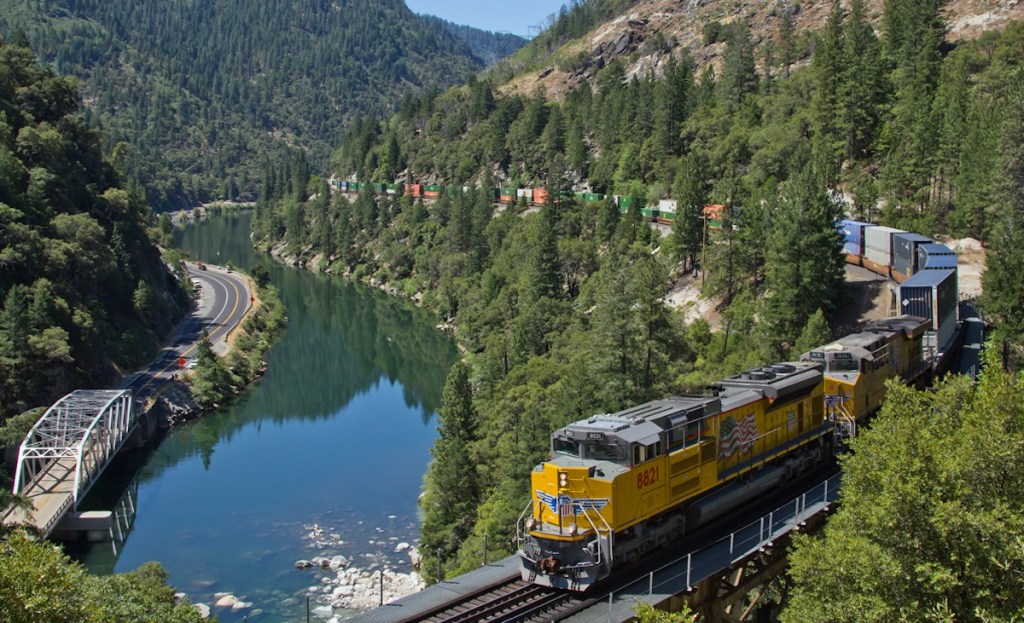
BNSF Railway wants to launch international double-stack service this week between Southern California and Salt Lake City via trackage rights over Union Pacific’s former Western Pacific route through the Feather River Canyon.

Not so fast, UP says.

Union Pacific (NYSE: UNP) says that BNSF has not provided sufficient notice so that UP can hire and train crews to handle the five trains per week between Roseville, Calif., and Salt Lake City. UP also says the BNSF trains must follow its directional running pattern, with eastbounds moving over the former Southern Pacific route over Donner Pass – which would trigger a provision requiring BNSF to pay for half the cost of UP’s 2009 double-stack clearance project.

So BNSF yesterday asked federal regulators for an emergency order directing UP to permit it to begin operating the trains this week for customer CMA CGM via the former Western Pacific, which BNSF dubs the “northern route.”

“BNSF respectfully requests that the Board promptly issue a decision ordering UP to allow BNSF to run double-stack intermodal trains eastbound and westbound over the Northern Route pursuant to BNSF’s trackage rights over these lines and ordering UP to provide the crews for these BNSF trains,” BNSF said in a filing with the Surface Transportation Board.

The trains will use a new intermodal terminal on short line Salt Lake Garfield & Western.

“The SLGW intermodal facility will open for business today,” BNSF said in its July 7 filing. “The first empty train arrived in Salt Lake City last night and the first container arrived today. Once loaded, the first westbound train is expected to leave Salt Lake City this week. BNSF anticipates that the first eastbound movement of BNSF double-stack intermodal trains over the Northern Route will begin as early as later this week.”

BNSF contends that the trackage rights agreement that was part of UP’s 1996 acquisition of Southern Pacific allows it to select which lines it will operate over. 

“At the time of the UP/SP merger, there was no restriction on BNSF running double-stack intermodal trains bi-directionally on the Northern Route, and there is no such restriction today,” BNSF told the board.

In addition, BNSF notes that it already operates both eastbound and westbound traffic over portions of the former Western Pacific.

“BNSF operates bi-directionally today on a portion of the Northern Route between Roseville, Calif. and Keddie, Calif., so BNSF assumed that it could move its new intermodal service bi-directionally on the remaining segment of the Northern Route between Keddie, Calif. and Weso, Nev.,” BNSF told the board.

BNSF also claims that UP’s attempts to delay the new service are retaliation for losing Marseilles-based CMA CGM’s business.

“By refusing to allow BNSF to run its double-stack intermodal trains eastbound over the Northern Route, UP is blatantly attempting to disrupt the business of BNSF and its intermodal partners and to recoup UP’s lost contribution from that intermodal business by forcing BNSF to pay for one-half of the costs UP unilaterally incurred when it took steps to increase the clearances of the Donner Pass tunnel on the Southern Route for its own business purposes in 2009,” BNSF told the board.

BNSF initially told UP on May 2 that it was planning the new service that would begin in June, without specifying a route.

CMA CGM, in a letter to the STB, urged regulators to act quickly to allow the service to begin.

Subscribe to FreightWaves’ Rail e-newsletter and get the latest insights on rail freight right in your inbox.

Related coverage:

CPKC paces all railroad freight gains in latest quarter

U.S. intermodal rail narrowly down

This new LA-NY passenger train will carry long-haul trucks, too

UK investor sees not one, but two, pathways to rail mergers

Port Newark opens new electric drayage charging station

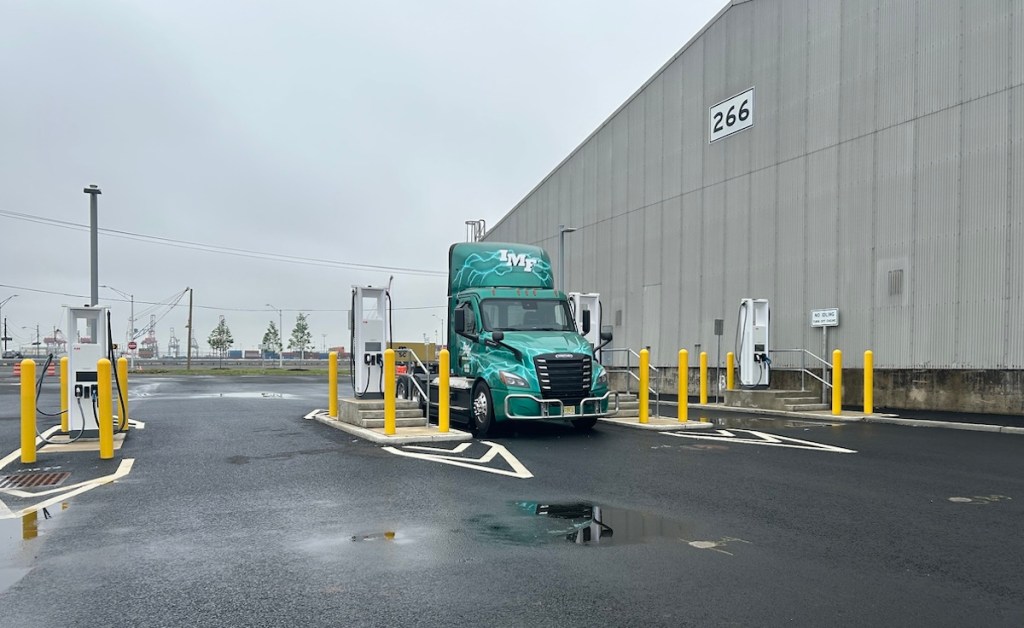
The Port Authority of New York and New Jersey has unveiled a new electric truck charging station at Port Newark, marking a significant stride in the transition towards zero-emission drayage trucking operations. 

Located at the intersection of Marlin and Kellogg streets at the busiest East Coast container port, this facility is designed to support the burgeoning shift to electric trucks, in line with the authority’s broader environmental agenda.

The introduction of this station is a pragmatic move in a sector that contributes heavily to the region’s emissions, the agency said in a release. Drayage truck operations account for approximately 48% of port-wide greenhouse gas emissions, according to the seaport’s latest air emissions inventory. 

The new infrastructure — comprising four 350-kilowatt direct current fast chargers — offers substantial charging capability to reduce downtime and increase operational efficiency. A 10-15-minute session could extend a truck’s range by 20-40 miles, depending on the load and driving conditions.

“What gets taken off these ships and loaded onto these trucks is ultimately what ends up in our closets, in our refrigerators, and in our garages,” said Port Authority Chairman Kevin O’Toole, in the release. “It’s our duty to make sure every element of the critical work at the Port of New York and New Jersey is operating as efficiently and sustainably as possible. These chargers are an important piece of that puzzle as we usher in a more sustainable future for the thousands of trucks serving the East Coast’s busiest port every day.”

Port Authority Executive Director Rick Cotton emphasized the agency’s commitment, stating, “Our promise to reach net-zero carbon emissions by 2050 reaches beyond the port authority itself to our operational partners. We want to add charging infrastructure wherever possible, from the East Coast’s busiest port to our airports and at port authority facilities across the region to help every facet of our transportation ecosystem become more environmentally friendly.”

This initiative is not isolated but part of broader actions, including the Truck Replacement Program and the Clean Vessel Incentive, aimed at reducing emissions through financial incentives. These efforts underscore the port authority’s comprehensive net-zero roadmap and environmental stewardship.

The new charging station’s initial availability is set from 6 p.m. to 5 a.m., aligning with the Port Street Corridor Improvement Project traffic adjustments, with plans to extend hours as conditions permit.

Find more articles by Stuart Chirls here.

Related coverage:

Italy shipbuilder appoints new US chief

Crowley adds new U.S. Northeast ocean service with Central America
Merchant vessel attacked in Red Sea

US container import tariffs averaging 21%, says Maersk

Breaking the Million Dollar Ceiling with Less Than 5 Trucks

Let’s get one thing straight—hitting seven figures in revenue with a small fleet isn’t a fantasy. It’s a formula. But it’s a formula most small carriers never get close to cracking, not because they lack hustle, but because they lack the strategy and discipline required to operate like a high-performing business with low overhead and high yield. I’ve seen it done. I’ve helped operators do it. And in this article, I’m going to break down what it actually takes to break that million-dollar ceiling with less than five trucks. No fluff. No magic. Just real-world execution.

The Million-Dollar Math – What It Actually Looks Like

If you’ve got five trucks, the numbers are clear. You need each truck bringing in at least $4,000 a week for 50 weeks out of the year. That’s $1,000,000 in top-line revenue. Sounds simple, right? But here’s the thing—most carriers aren’t disciplined enough to hit that number consistently because their operation leaks money in all the wrong places.

I’ve seen folks with two trucks making more profit than fleets with ten. Why? Because they know their numbers. They know their lanes. And they run lean. They’re not playing the volume game—they’re playing the profitability game.

You don’t need to haul more freight. You need to run smarter freight, with better customers, better planning, and better control over your costs.

Step 1: Specialize in a Lane You Can Dominate

Million-dollar carriers don’t chase freight—they command it. And that starts with owning a consistent lane. Pick one or two lanes that:

  • Run at least 2-3 times per week
  • Keep you under 600–700 miles one-way
  • Have solid outbound and backhaul options
  • Allow for repeatable, scheduled operations

You want to run like a bus route. Predictable. Repeatable. Efficient. If your trucks are bouncing around the country chasing whatever’s paying high this week, you’ll burn fuel, hours, and sanity.

Dominate one lane and become a known, reliable option in that corridor. That’s how you get the kind of consistency that million-dollar carriers build off of.

Step 2: Dispatch Like a CFO, Not a Load Board Cowboy

If you’ve got five trucks, you need to dispatch for margin, not mileage.

That means looking at:

  • Cost per hour, not just cost per mile
  • Time spent loading, unloading, waiting
  • Driver utilization across the week
  • Loaded vs deadhead percentage
  • Detention revenue, accessorials, and fuel surcharge effectiveness

Most small carriers are reactive with their dispatching. They book freight that fills gaps instead of freight that builds toward a profitable week. Million-dollar operators build weekly dispatch plans that hit revenue benchmarks—before the week even starts.

Set revenue goals per truck. Know what each day has to produce. And coach your dispatchers to make margin-based decisions, not ego-based ones.

Step 3: Eliminate Waste from the Core of Your Business

You can’t scale sloppily. Every inefficiency becomes more expensive with every truck you add. Before you think about growth, you need to lock in:

  • A tight maintenance schedule that avoids breakdowns and controls costs
  • A fuel program that saves 30–60 cents per gallon consistently
  • TMS automation to reduce administrative time and prevent invoice errors
  • A system for driver communication that avoids “he said, she said” dispatching

Million-dollar fleets have structure. That doesn’t mean you need a full-time staff for every role. It means you build repeatable systems that protect your profit, not just your trucks.

Start with your top 3 cost centers: Fuel, maintenance, and labor. Reduce variance. Track every dollar. And audit weekly, not monthly.

Step 4: Build Direct Shipper Relationships Early

You want to know the difference between a $700,000 fleet and a $1.2M fleet with the same number of trucks?

Freight quality.

Direct shipper freight comes with better rates, more stability, and less wasted time. But here’s the kicker—it’s not just about landing a contract. It’s about delivering consistently on service and communication.

If you’ve got five trucks and you’re still 100% dependent on load boards, it’s time to rethink. You don’t need 20 shippers. You need 2-3 strong ones that you can build your base around. Start with the lanes you already run. Target the midsize manufacturers and distributors. Send a pitch email. Follow up. Prove your safety score, your on-time rate, and your driver professionalism.

And when you do get a shot—execute flawlessly. That’s how small carriers get big contracts.

Step 5: Hire Drivers Who Think Like Owners

You’re not going to hit $1 million with lazy drivers who want max pay for minimum effort. You need drivers who:

  • Understand why on-time delivery matters
  • Protect equipment like it’s their own
  • Communicate proactively
  • Follow SOPs without drama

Now here’s the real play: Pay them fairly and give them a reason to stay. Create a bonus structure tied to metrics that matter—fuel economy, safety, on-time delivery, and miles driven.

And don’t wait until there’s a problem to have a conversation. Coach weekly. Review performance. Set expectations.

A high-performing driver on the right lane can generate $250K+ in annual revenue. Four of those? You’re already flirting with $1 million—without even maxing your fifth truck.

Step 6: Build the Back Office BEFORE You Need It

Here’s what kills most small carriers who try to scale: the business outgrows the back office. Invoicing gets delayed. Payroll gets messy. Compliance gets ignored. Customers get annoyed. And everything starts falling apart.

You don’t need a giant staff. But you do need systems.

  • Use a TMS with invoicing, settlement, and tracking built in
  • Set weekly admin rhythms for invoicing, collections, and compliance
  • Hire part-time or virtual help before you get overwhelmed

Million-dollar carriers run like million-dollar businesses—not like one-person shows.

Build the foundation now so you can scale without stress later.

Final Word

Breaking the million-dollar ceiling with less than five trucks isn’t about luck, hustle, or the spot market gods smiling down on you. It’s about discipline. It’s about consistency. It’s about treating every truck like a business unit with its own profit and loss sheet—and building from the inside out.

Don’t get caught up in truck count. Get obsessed with revenue per truck, margin per load, and driver performance per week.

When you lock in your operations, dial in your dispatch, and stop chasing freight you can’t control, you’ll realize that growth isn’t a guess—it’s just execution.

This is how small fleets win. This is how you build a million-dollar business the right way. One truck. One system. One result at a time.

J&T Express reports 24% jump in parcel shipments

Red-and-white facade of a J&T Express warehouse.

Rapid international expansion continues to fuel growth at Hong Kong-based e-commerce logistics provider J&T Express, which reported record second quarter volume of 7.4 billion parcels, up 23.5% from the prior year. Total parcel volume for the first half of the year increased 27% to 14 billion pieces.

J&T Express achieved full-year profit for the first time in 2024 behind a 16% increase in revenue to $10.3 billion. It turned a net profit of $110 million compared to a $1.2 billion loss in 2023.

The company, which operates in 13 countries, processed 81.2 million parcels on an average daily basis during the second quarter.  

J&T Express is a major express carrier in Southeast Asia, with a market share of 29%, according to independent research groups and the company. Customers include popular e-commerce platforms, local brands and B2B shippers. In addition to serving e-commerce platforms, J&T has also expanded into parcel delivery for general customers.

The courier reported that volumes increased by two-thirds to 1.7 billion parcels in the region during the April-June period — the fastest single quarter since its listing on the Hong Kong Stock Exchange in October 2023. The company officially launched in Indonesia in 2015. Full-year regional volumes last year exceeded 4.5 billion pieces

J&T is heavily investing to improve its network capacity and efficiency in Southeast Asia. It added another 700 service points during the first half of the year, bringing the total number of delivery stations to 10,500. The carrier now has 5,400 line-haul vehicles after adding 800 vehicles this year. It also invested in 58 additional automated sorting machines across multiple countries. 

China is J&T’s largest market. In the second quarter, it handled 5.6 billion parcels, representing a 14.7% increase year over year. Toy manufacturers are one of the large industry verticals it serves. In October, the company opened a 1.6 million-square foot, self-operated distribution park in Yangzhou that can process up to 6 million parcels per day. The facility is equipped with advanced sorting technologies, including cross-belt sorters for inbound and outbound shipments, tilt-tray sorters, high-speed unloading wheels, smart scanners, and security scanners. 

The express carrier is also pushing into Latin America and the Middle East, with footholds in Saudi Arabia, United Arab Emirates, Egypt, Mexico and Brazil. 

Click here for more FreightWaves/American Shipper stories by Eric Kulisch.

FedEx, UPS lose parcel market share to big retailers, small couriers

DHL Express Canada reinstates service after workers ratify labor deal 

Check Call: Tariffs pushed again

(GIF: GIPHY)

July 9 was supposed to be the day that reciprocal tariffs went into effect. The tariffs announced on Liberation Day were put on a 90-day hold shortly after being announced. The original tariffs ranged anywhere from 10%-145% depending on the trading partner. 

Monday President Trump signed an executive action Monday to extend the date for all “reciprocal” tariffs, with the exception of China, to August 1. Trump sent letters to some of the U.S. trading partners. The letters specify new “reciprocal” tariff rates that are higher or lower compared to April levels.

The letters detail new tariff levels, ranging from 25% to as high as 40%, for countries including Bangladesh, Cambodia, and Japan. The tariffs will take effect unless bilateral trade agreements are finalized before the August deadline. Some countries, such as Canada, are in ongoing negotiations, while others (like China, Vietnam, and the United Kingdom) have already reached deals and avoided steeper penalties. For example, the U.S.-China agreement capped American tariffs at 55%, while Chinese tariffs were limited to 10%.

In all 14 letters, Trump threatened to raise tariffs even higher than the specified rates if a country retaliated against the United States with tariffs of its own. Trump said these rates would be “separate from all Sectoral Tariffs,” meaning, for instance, the new tariff won’t be stacked on top of the current auto tariff of 25%, the White House confirmed. That would apply to any future sector-specific tariffs, too, a White House official said.

Collectively, the US bought $465 billion worth of goods last year from the 14 countries that received letters on Monday, according to US Commerce Department figures. Japan and South Korea, America’s sixth- and seventh-largest trading partners, accounted for 60% of that, shipping a total of $280 billion worth of goods to the US last year.

The whiplash of this effect has led shippers, carriers, and brokers to operate on a more conservative approach as it becomes a race to see if products can be imported before tariffs go into effect again. 

Get the full edition to your inbox every Tuesday by subscribing below.

Yellow Corp. selling 4 terminals for $4M

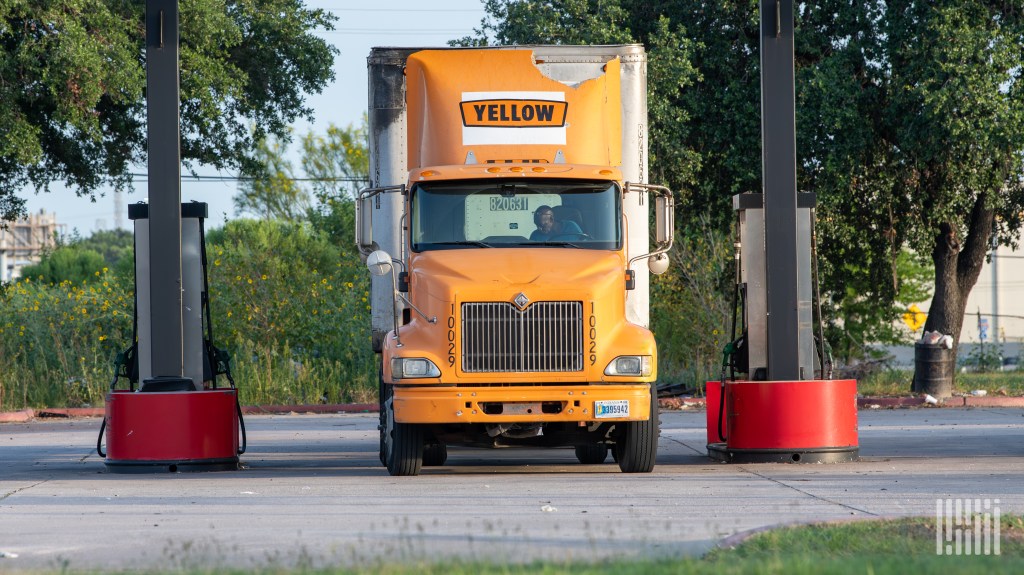
a Yellow tractor at a truckstop

Various real estate investors have entered agreements to acquire four terminals valued at $3.95 million from Yellow Corp.’s estate, according to a filing with a federal bankruptcy court in Delaware. The defunct less-than-truckload carrier has liquidated more than 200 terminals fetching roughly $2.4 billion since filing for bankruptcy in 2023.

The owned properties include a 50-door terminal in Birmingham, Alabama, valued at $1.55 million, a 30-door terminal near Pittsburgh ($1.53 million), a 29-door facility in Columbia, South Carolina ($650,000) and a 12-door terminal in Fairfield, Maine ($225,000).

It appears no LTL carrier is involved in the latest asset sales.

Proceeds from the property sales will be used to settle claims filed against the estate, including employee claims for PTO, sick time and amounts sought under the Worker Adjustment and Retraining Notification Act.

In March, the Teamsters union appealed a prior court ruling freeing Yellow from WARN liability.

A recent filing with the court showed the estate held $621 million in cash at the end of May. Yellow has paid more than $165 million in legal and advisory fees since the liquidation began.

More FreightWaves articles by Todd Maiden:

Truckers get emergency relief amid Texas flood crisis

ELD in a truck

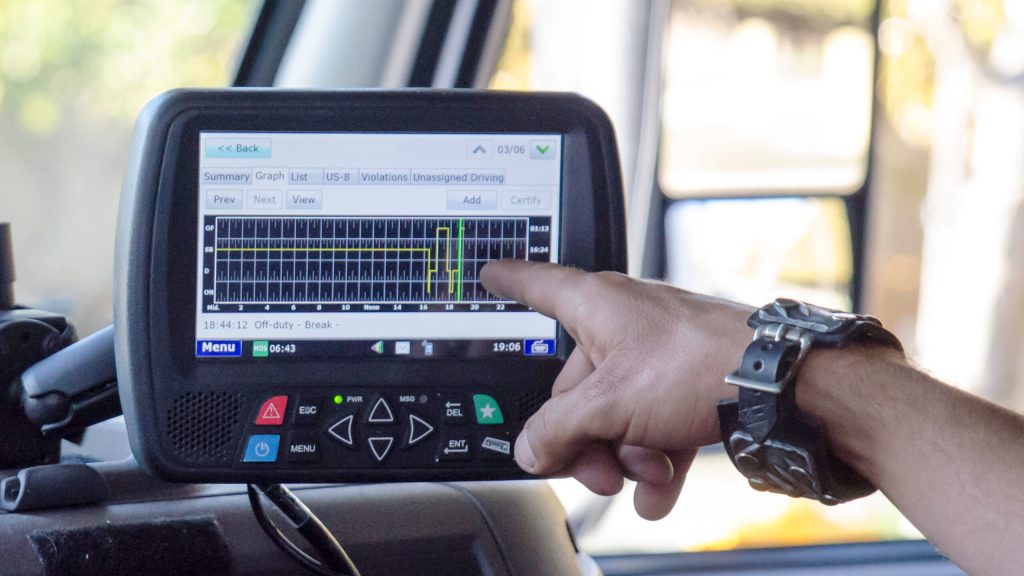
WASHINGTON — FMCSA has declared an emergency due to the deadly flooding in Central Texas that gives truck drivers and trucking companies relief from daily driving time limits.

FMCSA’s declaration, issued on Monday, is in response to a request from the state of Texas for help in restoring essential supplies and services caused by the flood that began on July 3. FMCSA stated that it granted the relief because emergency conditions in the area had not subsided.

The death toll caused by the flood surpassed 100 on Monday as the chances of finding more survivors began to fade, according to news reports.

The emergency order provides relief from Parts 390-399 of FMCSA regulations for commercial trucks that provide direct assistance “incident to the immediate restoration of essential supplies or essential services” in Texas, FMCSA’s declaration states.

“The regulatory relief … applies regardless of the origin of the trip, so long as the carrier or driver is providing direct assistance to the State of Texas.

“Direct assistance does not include transportation related to long-term rehabilitation of damaged physical infrastructure after the initial threat to life and property has passed, nor does it include routine commercial deliveries, including mixed loads with a nominal quantity of qualifying emergency relief added to obtain the benefits of the Declaration.”

Drivers responding to provide direct assistance are exempt from the applicable regulations in all states on their route to the emergency, “even though those states may not be involved in the emergency or stated in the declaration of emergency,” according to FMCSA.

In addition to daily drive-time limits, the relief applies to truck inspections, maintenance, and parking rules. They do not exempt drivers or carriers from requirements relating to CDL, drug and alcohol, hazardous materials, and size and weight limits.

FMCSA noted that the relief provision is not in effect when the driver begins hauling freight that is not in support of emergency relief efforts, or when the motor carrier dispatches a driver or truck to another location for other commercial services.

The emergency declaration expires on August 4.

Click for more FreightWaves articles by John Gallagher.