




Trains.com Staff
Thursday, April 3, 2025
US weekly rail traffic shows strong gains
Weekly U.S. rail carloads surged to the strongest year-on-year improvement in nearly three months.
Railroads continue to play a significant role in North America’s economic infrastructure. According to the U.S. Department of Transportation Federal Railroad Administration, the U.S. rail freight network covers almost 140,000 route miles and is generally considered the largest, safest, and most cost-efficient freight system in the world. In addition, says the FRA, the almost $80 billion rail freight industry creates more than 167,000 jobs across the country.
In essence, rail freight companies charge businesses to carry cargo across their network of rails. Their rates are overseen by the Surface Transportation Board, a federal agency that regulates financial aspects of surface transportation. Major railroads in North America include Union Pacific Railroad, BNSF Railway, CSX, Norfolk Southern, Canadian Pacific Kansas City and Canadian National Railway.
Keep up with the latest news, trends and reports concerning rail freight transport here!
Weekly U.S. rail carloads surged to the strongest year-on-year improvement in nearly three months.
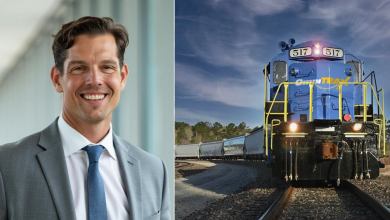
BNSF’s group vice president for industrial products has been named chief executive of shortline rail operator OmniTRAX.

CALGARY, Alberta — Canadian Pacific Kansas City (NYSE: CP) and the Lanco Group/Mi-Jack have sold the Panama Canal Railway to APM Terminals, a global terminal operator and an independent division of A.P. Moller-Maersk (XCSE: MAERSKa). The 47.6-mile railway provides ocean-to-ocean freight and passenger services along the Panama Canal and has been a 50/50 joint venture […]
Railroads in January saw their share of North American transborder trade slip as trucks posted double-digit gains.
With an international intermodal surge winding down, analyst Larry Gross pins his hopes on domestic intermodal share gains.
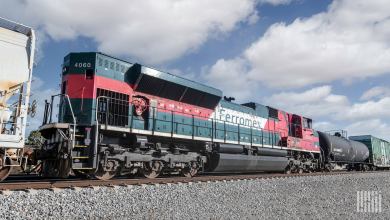
Class 1 railroads saw mixed results in Q4 of 2024, but consultant Oliver Wyman sees a steadier year ahead.

In the March State of Freight webinar, Craig Fuller and Zach Strickland talked about a freight market on the verge of auto tariffs.
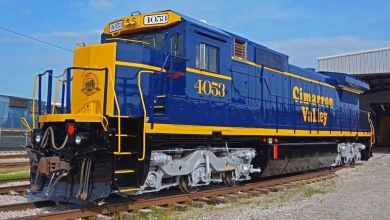
Union Pacific is partnering with Jaguar Transport Holdings to establish a new shortline railroad in Kansas City, Missouri’s West Bottoms industrial district.
For a fourth straight week, U.S. rail traffic has recorded an increase of more than 5% over the same week a year earlier. Statistics from the Association of American Railroads for the week ending March 22 show total traffic was 496,214 carloads and intermodal units, a 5.5% increase over the same week in 2024. That […]
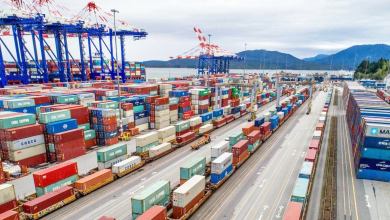
Canada’s largest railroads see mixed progress at the country’s busiest container gateway.
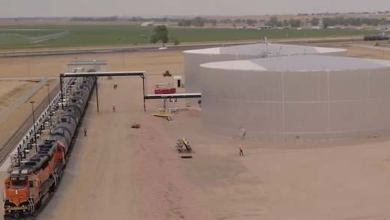
BNSF Railway said customers invested $4.2 billion in industrial projects on its network in 2024.
In the latest episode of the Bring It Home podcast, Norfolk Southern executive Stefan Loeb discussed the role of railroads in America’s reindustrialization.
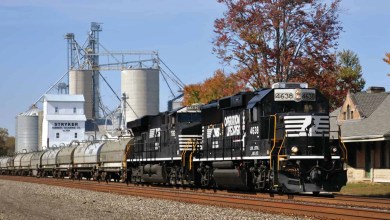
Norfolk Southern has expanded its offerings of certified rail-served properties for industrial site development.
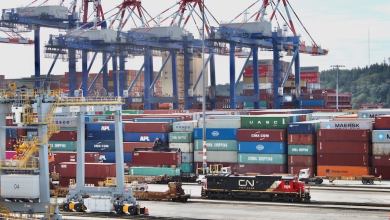
Port fees on Chinese ships are aimed at boosting U.S. shipbuilding but could have follow-on effects for intermodal traffic, too.
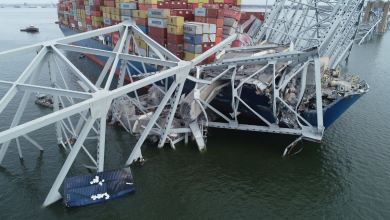
The National Transportation Safety Board said proper risk assessment by the state of Maryland could have averted the collapse of Baltimore’s Key Bridge that killed six road workers in 2024.
More than 8,700 members of the Brotherhood of Maintenance of Way Employes Division of the Teamsters Rail Conference ratified a new contract with the railroads of the National Carriers’ Conference Committee.
Rail traffic in the U.S. is staying ahead of 2024 levels, according to the Association of American Railroads.
Wabtec says it is acquiring Dellner Couplers, a Swedish manufacturer of passenger couplers and equipment, in a $960 million deal.
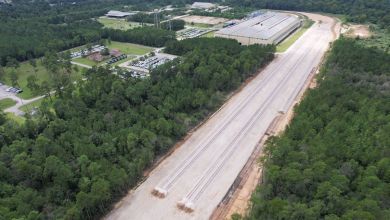
Rail services provider County Line Rail has acquired short line Sabine River & Northern in east Texas.
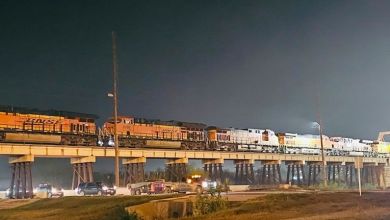
Green Eagle Railroad’s proposed 1.3-mile line would be part of a secure corridor linking Eagle Pass, Texas, and Piedras Negras, Mexico.