ATBS says independent drivers earned a little more in ’24 but drove more as well

Independent truck drivers on average made a bit more money in 2024 than they did in 2023, but they worked harder for those extra dollars.

That’s the conclusion of Todd Amen, the president of ATBS, long one of the leading accounting and financial advisers serving independent owner-operators. With income tax day looming in less than two weeks, Amen by now has processed enough tax returns to have a critical mass of data on how truck drivers did in a market last year that most people were happy to put in the rearview mirror.

The basic figure: The average driver last year served by ATBS made $64,000. That is $1,000 more than in 2023, just under 1.6%. 

But that figure includes part-time drivers as well. For drivers who worked the whole year, the number rises to about $86,000, also up $1,000 for the year. The figure for the top 10% of drivers whose taxes and finances were processed by ATBS was $215,000, Amen said, up from $212,000 in 2023.

But the slightly higher incomes came with a cost, Amen said. The average full-time driver who is a client of ATBS drove 93,000 miles in 2024, up about 4% from the prior year. 

“So on average, they’re working harder,” Amen told FreightWaves in a telephone interview. “They’ve been working harder for two years to make a little bit more money.”

Big money for special uses

The top earners in the ATBS clientele are the ones who “do such unique things that it’s not really about the miles,” Amen said. He cited truck drivers who haul hazardous materials and giant windmill blades as examples.

ATBS describes itself as the largest business management, accounting and tax company in the U.S. providing services to owner-operators.

Amen said that while some of ATBS’ clientele consists of company drivers, the overwhelming majority of customers are independent owner-operators.

That position still has given Amen insight into what drivers have been doing in recent years.

When the double whammy of Russia’s invasion of Ukraine combined with the sharp falloff in spot rates in the first quarter of 2022, “tens of thousands of drivers were like, I can’t make money doing this anymore,” Amen said. “My sense is that half of them went to fleets with their truck because fleets have longer-term contracted rates. And things were still pretty good at the fleets.”

As rates have continued to either fall or languish at low levels, Amen conceded that he didn’t have hard numbers but “certainly some of those independent drivers became company drivers, and some left the industry.”

Diesel helped….a little bit

The gradual fall of diesel prices over the second half of 2024 was a benefit to drivers, Amen said. But it wasn’t enough: His estimate is that diesel prices were down on average about 7 cents per mile, but that rates were down 10 cents per mile, “which means it was still a tough year.”

As Amen noted, rates booked in the spot market without benefit of a fuel surcharge should be set at a level that covers the price of diesel. But with volatility in rates and in diesel at the same time, that’s not always possible.

Falling rates overall do help drivers “from a cash flow perspective,” Amen said. If a fuel surcharge or rate that assumes a higher price is set as the pump price falls, “that definitely helps.”

Amen, as head of ATBS, is in position to see a lot of the steps drivers take to cope with a weak trucking market. His recommendation is a basket of choices to be taken, none of them having any particular magic.

They mostly boil down to keeping the wheels turning.

“Running more miles, generating more revenue, being more productive is fruitful in a time like this, when rates just aren’t paying me enough,” he said.

Responding to the cries on truck driver-focused pages on social media to “stop taking cheap freight,” Amen advised the opposite.

Once fixed costs are accounted for by running miles – defined as truck payments and insurance, as well as the need to compensate the person behind the wheel – drivers need to view their costs beyond that as variable, consisting mostly of fuel and maintenance dollars.

“If they can run hard and work hard and make those fixed costs, all they have to pay the rest of the month is their fuel and maintenance to run,” Amen said. “That’s their contribution margin.” The margin before breakeven is reached might be 40%. But afterward, it can rise to 60% to 65%.

“And so there will always be that economic opportunity for those that want to work harder to make more money,” Amen said. “Maybe I need to take that backhaul load and make 15 cents per mile on my contribution margin.” It isn’t a lot, he said, but thinking of finances that way should lead to a decision: “It should not be just never take a load below $2 per mile. You need to understand your costs and think about your business right.”

The role of B-1 drivers

Amen recently attended the 2025 Truckload Carriers Association annual meeting. In discussing the opening address by Bob Costello, chief economist of the American Trucking Associations, Amen turned a discussion on capacity to an observation by Costello about the role B1 drivers are playing in trucking capacity.

Costello noted that Mexican drivers who are classified as B-1, which means they can move freight between the U.S. and Mexico but not between two U.S. destinations, were impacting capacity and could be the target of a Trump administration crackdown. 

The discussion with Amen turned to how Landstar (NASDAQ: LSTR) capacity data is cited as a barometer of trucking capacity. It has been falling for several years and yet rates continue to languish.

“Landstar takes the best of the best,” Amen said. “They have an extremely difficult qualification process.”

But the B-1 drivers who are providing “cabotage” services, between two destinations in the U.S., “are running in the spot market kind of under the radar,” he said. Even with all the rules regarding freight movement in the U.S., illegal hauling of freight “is obviously happening.” The end result is that “we have got a lot of people hauling freight for wages that we can’t afford in the U.S.”

More articles by John Kingston

Clash on legal status of California transportation waivers highlighted at TCA

Carriers big and small at TCA wait for signs of freight market turnaround

Truck driver triumphs at Supreme Court in case involving marijuana testing

Illinois trucking company with 250 drivers abruptly ceases operation

An Illinois-based trucking and logistics company has notified its 250 drivers that the carrier is ceasing operations immediately.

Truck drivers for LTI Trucking Services said they received a fleetwide message Wednesday stating the company was closing.

“After exhausting all possible options and careful consideration of our circumstances, we have made the difficult decision to close LTI Trucking Services,” read the message sent to drivers. 

LTI Trucking Services did not return a request for comment from FreightWaves.

LTI Trucking Services started in 2005 and is headquartered in Madison, Illinois, just outside St. Louis. The company specializes in temperature-controlled freight and has 300 tractors and 575 trailers.

LTI is a regional carrier hauling goods to 30 states through the Midwest, South and Eastern U.S. Its customers include Walmart, Nestle, Hershey’s, Brach’s, Dr. Pepper and more.

Company officials said they would work with drivers to get them home immediately and get them their last paychecks.

“Any driver that wants to go home immediately, we will work with you that way,” LTI Trucking Services said. “We promise that you will get all funds you are due.”

C.R. England adopts AI-powered driver-facing cameras

C.R. England adopts AI-powered driver-facing cameras

(Photo: Jim Allen/FreightWaves)

Nationwide truckload carrier C.R. England recently announced it has chosen safety and telematics provider Lytx to equip its 3,500-truck fleet with driver-facing cameras. The cameras are part of a larger suite called Lytx Drive Cam Event Recorders, which use AI and computer vision to “identify driving risks, including distracted driving, handheld cell phone use, lack of seat belt use, following too closely, and more.”

This comes as other large truckload carriers including J.B. Hunt and Prime Inc. have tested or adopted camera technology. For J.B. Hunt, Trucking Dive reported that the fleet had completed adopting driver-facing cameras across its entire fleet after having piloted the technology back in 2018.

For large truckload carriers, the legal benefits appear to outweigh the privacy costs. The American Transportation Research Institute (ATRI) wrote in a 2023 report, “According to surveys of legal and insurance experts, DFC [driver-facing camera] footage, when available, exonerates drivers in 52 percent of insurance claims and 49 percent of litigation cases as well as leading to settlements in 86 percent of cases versus proceeding to trial.”

Despite the benefits, road-facing cameras remain the primary camera option for surveyed fleets. The same ATRI report noted that as of 2023, only 32% of survey respondents used DFCs compared to 72% who use RFCs. 

100-year-old federal excise tax on heavy-duty trucks under scrutiny again

(Photo: Jim Allen/FreightWaves)

An over 100-year-old federal excise tax on heavy-duty trucks is again under scrutiny. The U.S. House of Representatives recently reintroduced legislation aimed at removing it. The bipartisan legislation is called The Modern, Clean, and Safe Trucks Act of 2025.

Trucking lobby groups supported the measure. American Trucking Associations President and CEO Chris Spear said in a release, “First implemented over a century ago to help finance America’s effort in World War I, the FET has become the largest excise tax on any product, adding $24,000 to the cost of each new clean-diesel tractor-trailer.” Spear added that keeping the tax on the books would continue to impose enormous hardship especially for small fleets and independent truckers.

The ATA estimates that the federal excise tax, currently at 12%, the highest levied on any product, creates $6 billion in an added annual burden on the trucking industry. The Commercial Carrier Journal reports that during testimony to the House Transportation and Infrastructure Subcommittee, the FET was noted as adding an average of $22,000 to the cost of each vehicle. CCJ adds that similar efforts in recent sessions of Congress have failed.

The exact costs added vary. CDL Life reports that according to Rep. Doug LaMalfa, R-Calif., “it adds $15,000 to $30,000 the cost of new heavy trucks, trailers, semitrailer chassis, and tractors for highway use. LaMalfa also says the FET encourages the sale of used trucks because these vehicles are not subject to the 12% tax.”

Market update: March preliminary Class 8 orders retreat further

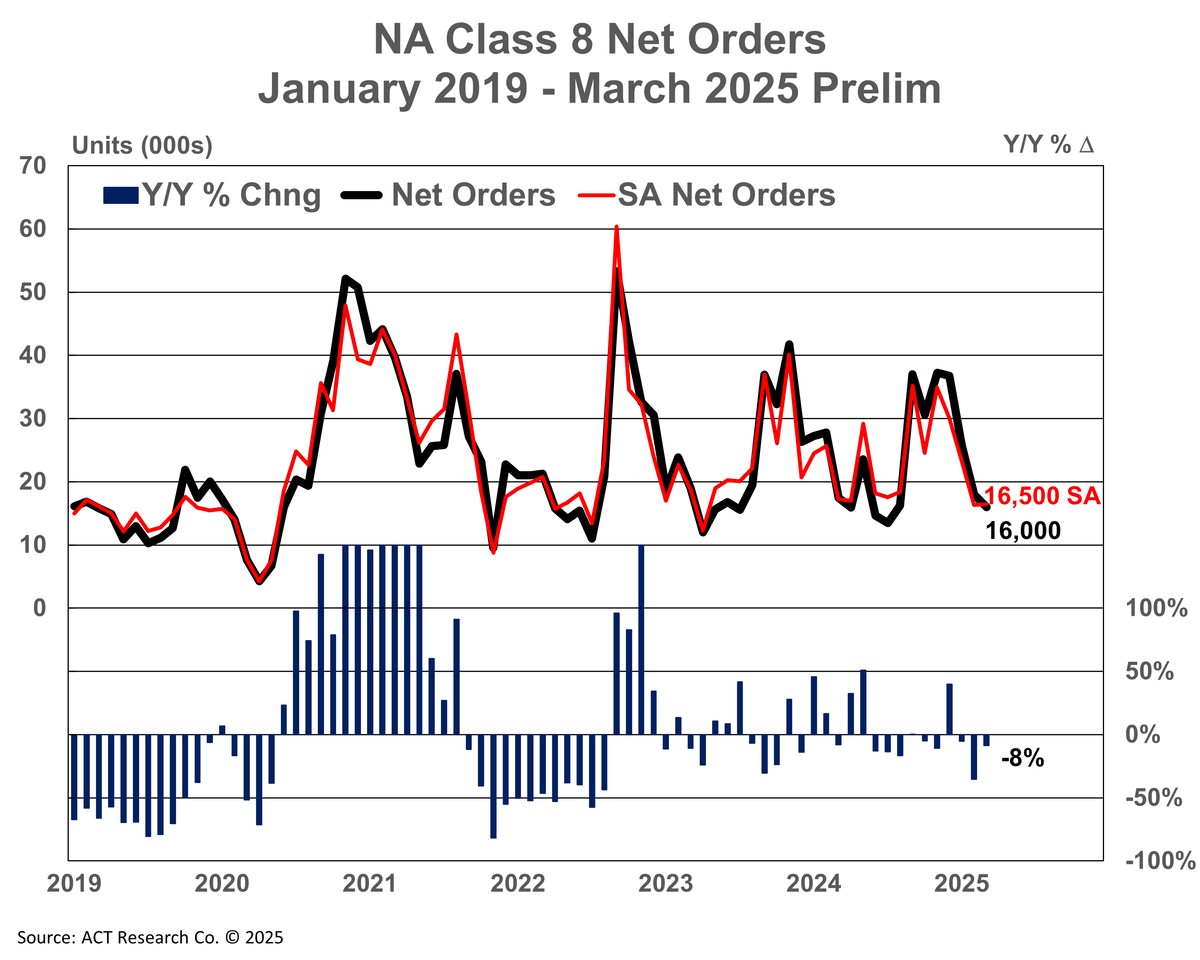
March preliminary Class 8 orders further retreated based on year-over-year comps, according to data released Wednesday by ACT Research. March preliminary North America Class 8 net orders were 16,000 units, down 8.3% y/y. A central theme for March and Q1’s overall performance remains uncertainty.

Carter Vieth, research analyst at ACT Research, wrote, “Whether the slowdown in orders is a result of moderating economic activity, private fleets’ pausing expansion, or a response to trade and policy uncertainty is difficult to surmise and remains an open question.” Vieth adds that while March orders were down 8.3% y/y compared to February, seasonally adjusted Class 8 orders rose 1.1% from February to 16,500 units, with a seasonally adjusted annual rate (SAAR) of 198,000 units, “one of the lowest 1-month SAAR readings in almost three years.”

The impacts of reciprocal tariffs announced by the Trump administration on Wednesday add further uncertainty, due to the extensive supply chain integration between Mexico, Canada and the U.S. when it comes to producing a Class 8 tractor. While the recent tariffs avoid items under the existing United States-Mexico-Canada Agreement, the raw materials such as aluminum and steel used in making the tractors may increase.

Dan Moyer, senior analyst of commercial vehicles at FTR Transportation Intelligence, added in a February release, “Approximately 45% of all Class 8 trucks built for the U.S. and Canadian markets will be subject to the 25% U.S. tariff on all imports from Canada and Mexico and planned Canadian counter tariffs. About 40% of U.S. Class 8 trucks are produced in Mexico, and roughly 65% of Canada’s Class 8 trucks are assembled in the U.S.”

SONAR spotlight: Dry van conditions in holding pattern amid tariff uncertainty

(Source: SONAR)

Summary: For the dry van segment, the beginning of spring brought little change in tender rejection and volume rates, with the past week seeing little movement. On a positive note, compared to the previous year, dry van conditions are more favorable for carriers despite lower dry van tender volumes. Dry van outbound tender rejection rates were flat w/w at 5.48% but are 183 basis points higher than last year’s value of 3.65%. Dry van outbound tender volumes saw slight gains w/w but remain lower compared to y/y comps. VOTVI rose 86.16 points or 1.2% w/w from 7,188.76 points on March 24 to 7,274.92 points. Compared to last year, VOTVI is 359.63 points or 4.71% lower than last year’s value of 7,634.55 points.

Tariffs and their potential impacts remain an important concern for the dry van segment, with manufacturers’ demand planning struggling due to uncertainty. Manufacturing indexes saw dips in their March releases. Chris Williamson, chief business economist at S&P Global Market Intelligence, said, “A key concern among manufacturers is the degree to which heightened uncertainty resulting from government policy changes, notably in relation to tariffs, causes customers to cancel or delay spending, and the extent to which costs are rising and supply chains deteriorating in this environment.”

Less consumer demand means less spending and fewer upstream replenishment orders. For the dry van space, a marked downturn in automotive, retail and other durable goods orders could explain some of the poor performance in dry van tender volumes compared to seasonal expectations.

The $3,500 Divide: Trucker Pay Trails National Average, Impacting Truck Driver Job Satisfaction (FinditParts)

Lawmakers try again to improve truckers’ bathroom access (FreightWaves)

Freight industry: Which regulations should DOT cut? (FreightWaves)

Mullen preps more layoffs, lease terminations (Fleet Owner)

Truck driver triumphs at Supreme Court in case involving marijuana testing (FreightWaves)

FMCSA calls fraud a ‘public safety crisis masquerading as an economic problem’ in tech-focused MATS talk (Overdrive)

Most recent episode

Like the content? Subscribe to the newsletter here.

Cross-border freight gets reprieve from ‘Liberation Day’ tariffs

Canada Mexico Trucks

WASHINGTON — Cross-border freight markets got some positive news out of the slate of reciprocal tariffs announced by President Donald Trump at the White House Wednesday with an important exclusion specific to the United States-Mexico-Canada Agreement.

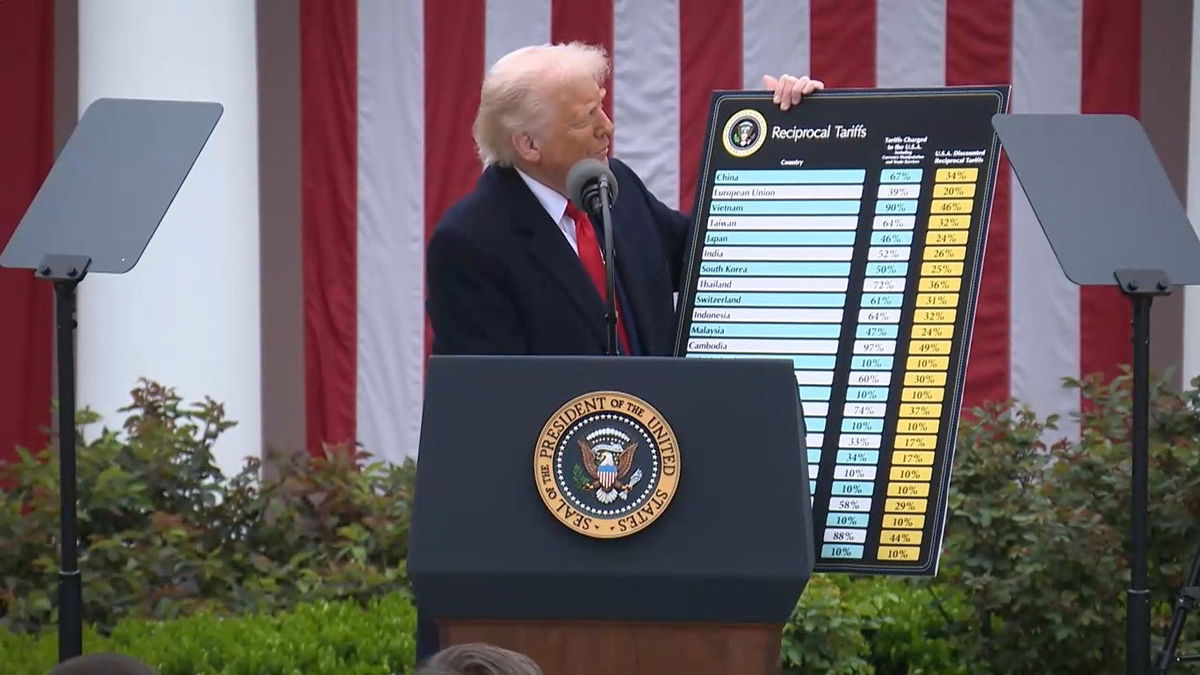
President Trump with tariff scorecard on Wednesday. (Credit: Truth Social)

Trump left the USMCA out of his “Liberation Day” tariff policy that saw a baseline 10% tariff on all U.S. trading partners, with reciprocal tariffs on some countries as high as 49%. In contrast, USMCA-compliant goods – products grown in and/or with content only from Canada, Mexico or the United States – will see no tariff.

The exclusion continues a policy that has been ongoing since early March when a 25% tariff was placed on non-USMCA-compliant goods – products deemed to be made in Canada and Mexico but that do not meet the requirements of the USMCA rules of origin for preferential tariff treatment.

The 25% rate was expected to begin applying on Wednesday to USMCA-covered goods as well, but according to Wednesday’s executive order, USMCA goods will be exempted indefinitely.

“It’s possible we will we see a dip in trade volumes now that we’re on the other side of this reciprocal tariff announcement, and we’re preparing for that, but we’re also heartened that Canada and Mexico did not get the brunt of this announcement,” Garrick Taylor, a spokesman for the Border Trade Alliance (BTA), told FreightWaves.

BTA, which counts executives from the American Trucking Associations, Ryder Supply Chain Solutions and BNSF among its board members, is a nonprofit that advocates for border development and trade in the Americas.

Taylor pointed out that when tariffs on Canada and Mexico were first announced earlier in the year, there was a spike in cross-border traffic as importers rushed to avoid the increase in duty fees.

“We would have preferred an increase in trade volumes generated out of thriving North American freight markets and not because importers were trying to play ‘beat the clock’ with tariffs.”

Auto sector relief?

Trump’s USMCA exclusion means significant portions of freight imports into the U.S. moving via truck and rail – much of which is related to the automotive sector – will continue to flow across the border absent the added costs that will be imposed on imports from overseas via ocean and air.

U.S. trucking companies generated $17.73 billion in revenue from truck transported trade with Canada ($7.86 billion) and Mexico ($9.87 billion) in 2023, according to the ATA.

“With the success of USMCA and the growing trend of nearshoring, the North American supply chain has become highly integrated and supports millions of jobs. Imposing border taxes on our two largest and most important trading partners will undo this progress and raise costs for consumers,” warned ATA President and CEO Chris Spear the day before Trump announced the initial USMCA exemption in March.

“Not only will tariffs reduce cross-border freight, but they will also increase operational costs,” Spear said at the time. “The price tag of a new truck could rise by up to $35,000, amounting to a $2 billion annual tax and putting new equipment out of reach for small carriers. The longer tariffs last, the greater the pain for truckers as well as the families and businesses we serve.”

FreightWaves reached out to ATA for comment on the continuation of the USMCA tariff carve-out.

In 2024, U.S. railroads handled an estimated $203.1 billion in cross-border trade, consisting of $104.8 billion in U.S.-Canada trade (66% imports/34% exports) and $98.3 billion in U.S.-Mexico trade (65% exports/35% imports).

“Railroads play a critical role in connecting American industries, small businesses and farmers to global markets and helping drive economic activity across the nation,” a spokesperson for the Association of American Railroads told FreightWaves in an emailed statement.

Click for more FreightWaves articles by John Gallagher.

Supply chain visibility tops Maersk logistics trends survey; AI finishes last

Supply chain visibility and diversification, and the Internet of Things topped a new survey of most relevant logistics trends, as AI, while broadly hyped, finished at the bottom of the list.

The Logistics Trend Map, developed by Maersk (OTC: AMKBY) in collaboration with Statista, leveraged expert interviews, deep data analysis and insights from over 500 industry leaders to construct a comprehensive guide to the most impactful trends shaping global trade and supply chains.

Chart: Maersk

Maersk in a preface to the study said the trends offer targeted solutions to key industry challenges including geopolitical disruptions, rising energy costs, trade barriers, regulatory complexity and increasing transportation costs. By adopting these trends, Maersk says companies can create new opportunities for cost optimization, improved customer satisfaction and accelerated decision-making.

The degree of trend adoption varies significantly across regions. 

Asia-Pacific led in supply chain visibility and financial resilience initiatives but faces significant trade disruptions and tariffs.

European logistics providers are focusing on digital transformation and last-mile delivery innovation but struggling with labor shortages and geopolitical disruptions.

Latin American firms are prioritizing digital transformation and cybersecurity but grappling with infrastructure gaps and political instability.

The Middle East and Africa are taking a leading role in AI and IoT adoption while dealing with trade restrictions and inefficient transportation.

Companies in North America and Mexico are emphasizing digital solutions and last-mile innovations, the survey found, while navigating complex regulations and trade dependencies.

“In an increasingly complex and challenging world, staying ahead in logistics has never been more critical,” said Karsten Kildahl, chief commercial officer at Maersk, in the preface to the report. “The question is no longer whether companies will face disruption in their supply chains, but how they can constantly and effectively navigate them. Identifying and analyzing trends therefore enables businesses to stay competitive in a dynamic industry.”

The report provides detailed analysis for key industries including retail, fashion and lifestyle, technology, automotive, chemicals, pharmaceutical and health care, fast-moving consumer goods, and perishables. Each sector faces unique challenges and opportunities in implementing logistics trends.

To future-proof their logistics operations, the report advised companies to develop internal competencies and focus on core processes; embrace diversification and develop flexible strategies; and enhance collaboration across the supply chain.

Three emerging trends poised to shape the future of logistics are cold chain optimization, predictive analytics and blockchain, the decentralized digital ledger.

Find more articles by Stuart Chirls here.

Related coverage:

Yellow’s new bankruptcy plan revealed, next steps still uncertain

Truckload earnings estimates cut as Q1 draws to a close

FedEx prepping LTL unit ahead of spinoff

Liberation Day tariff hangover

Welcome to the WHAT THE TRUCK?!? Newsletter presented by Truckstop. In this issue: Liberation Day tariff aftermath and more.

The tariffs are here … now what?

Across the board — As promised, President Donald Trump dropped a bombshell on the shipping world when he announced his initial slate of reciprocal tariffs during Wednesday’s Liberation Day press conference.


White House

“April 2, 2025, will forever be remembered as the day American industry was reborn, the day America’s destiny was reclaimed and the day that we began to make America wealthy again.” – Trump during a Rose Garden event at the White House

FreightWaves reports, “Trump’s plan includes a baseline 10% tariff on trade partners, as well as 25% tariffs on certain imported vehicles and auto parts arriving into the U.S.” In addition, the White House published the new tariff policy, which includes an exemption for products and shipments that comply with the United States-Mexico-Canada Agreement.

But wait, there’s more. Trump says these reciprocal tariffs are only “kind reciprocal.” What he’s talking about is the comparison between the tariffs charged against the U.S. and the U.S. discounted tariff on the list of reciprocal tariffs above.

That image comes with some controversy, especially if you’re in trade and familiar with tariffs. After all, none of the countries on the tariff list actually charge the stated tariff rates across all U.S. imports. So, what is the math behind it?

Shortly after Trump’s Rose Garden event, James Surowiecki thought he had cracked the code to the tariff math. The formula he used was (exports – imports) / imports.

Ryan Petersen’s team at Flexport then mapped out every country on the tariff list using that formula and found that it matched up.

White House Deputy Press Secretary Kash Desai clapped back against the shoddy math allegations by posting the formula they used. … However, when you look at what the values are set to, you’ll see the formula reduces back to what Surowiecki deduced.


X

Some are also wondering if the whole implementation was government by vibe coding as multiple popular large language models gave similar answers to how they’d impose these tariffs.

The inclusion of Heard Island and McDonald Islands, a territory with a population of zero and only inhabited by penguins, has led to questions about how much thought was put into this.

Aftermath – A harder pill to swallow for shippers than the tariffs themselves is the uncertainty around them. Flexport founder and CEO Petersen advised on X, “A cabinet official told me on Friday that the reciprocal duties announced today are the ‘start, not the end’ of the negotiating process.”

Since the tariffs are reciprocal and the prospect exists for nations to renegotiate, shippers are uncertain if they should make the investment to move their sourcing or if they take it on the chin and hope that a better agreement is struck.

Leading up to Liberation Day, Vietnam had been scrambling to appease Trump by “[Cutting] import duties on a range of goods, including cars, liquefied gas and some agricultural products.” Despite that, they were slapped with one of the heaviest tariffs on the board at 46%. The Wall Street Journal reports, “Prime Minister Pham Minh Chinh said Vietnam should establish a rapid-response team to formulate a plan.”

While many of the countries on the list have stated that they’re willing to negotiate and wouldn’t retaliate with countermeasures, the same can’t be said for China, Canada and the nations of the European Union. While none of these countries have specified what those countermeasures would be, they don’t appear to want to escalate the situation at this stage.

Give your freight forwarder a hug; they’re going to need it this week. Although many shippers have been pulling forward freight in anticipation of tariffs, since many of the new ones are higher than expected, this week should see vessel slots fill up lightning fast.

Will trucking win in the trade war? FreightWaves CEO and founder Craig Fuller thinks so. But, with goods potentially costing 10%-50% more, how is the consumer going to generate that much volume when they’re tapped out? He reasons, “For every manufactured product in the Americas it generates 3x more trucking shipments than a seaborne imported good.”

Amazon and e-commerce sellers are about to be walloped by these tariffs. However, they did finally get a big W. Duty-free status for shipments under $800 entering the U.S. under Section 321 has been eliminated for China and Hong Kong … sort of. The catch is they still don’t have a system in place to process duties on those imports.

In 2022, Section 321 shipments made up 83% of total U.S. e-commerce shipments. Two-thirds of those shipments come from China.

X

ShipHero founder Aaron Rubin sees this as a boon for warehouse automation, robotics and software. It isn’t like shippers necessarily want to import out of China, it’s that consumers vote with their wallets so in turn shippers source from the best, cheapest places they can. As labor in the U.S. costs more than in countries we traditionally source from, how are we going to deploy competitive manufactures here? I hope those Optimus bots can sew.

Liberation Day wasn’t the only news that had the internet watching Wednesday. Nintendo also unveiled its latest console, Switch 2, during a Nintendo Direct earlier in the day. The Switch sequel immediately turned off some fans with eyewatering prices of $449 for the base model and $80 for Mario Kart World (the original Switch was $299 and games were $60.)

MoneyControl

Over the past few years, due to growing trade tensions between the U.S. and China, Nintendo shifted production to Vietnam. Vietnam now accounts for 60% of Nintendo’s U.S. shipments. Vietnam was also hit with a 46% tariff Wednesday. 

Kotaku warns that these new tariffs could impact Switch 2 costs, though it is uncertain if the already high price tag for the console already has them baked in. The Switch 2 will retail for $330 in Japan, leading many to believe they have been.

All things considered, was Liberation Day a W or an L? I asked my audience, and you were torn almost right down the middle with 49.2% saying it was a win and 50.8% saying it was a loss. What do you think? Email me.

WTT Friday

Art of truck wraps; automating 36M breakdowns a year; Switch 2 – Friday on WHAT THE TRUCK?!?, I’m catching up with Total Truck Branding’s Stephanie Burueana and Mario Lekovic to talk about the art of truck wraps. Their award winning company is responsible for wrapping some of the best-looking trucks on the road. We’ll find out how the whole process works and what it takes to win a championship.

ABT is looking to automate 36 million breakdowns a year in the multibillion-dollar truck repair space. We’ll meet the father and daughter team of Alan Larsen and Rachel Havron at ABT and find out how they’re advancing maintenance into an AI-led future. 

Plus, Nintendo’s Vietnam bet bites them in the butt; tariff fallout; and more.

Catch new shows live at noon EST Mondays, Wednesdays and Fridays on FreightWaves LinkedIn, Facebook, X or YouTube, or on demand by looking up WHAT THE TRUCK?!? on your favorite podcast player and at 5 p.m. Eastern on SiriusXM’s Road Dog Trucking Channel 146.

WTTGear.com

WTTGear.com

The fit – Head on over to WTTGear.com to get our newest merch! Use code WTTFans for 10% off.

Now on demand

Easter Candy logistics with Bissinger’s; Liberation Day; MasterTech Alyssa Briggs

Iowa ‘driver shortage’ bill backlash; Women in trucking; Science of sales

Registration now open for May Freight Fraud Symposium in Dallas

Be part of the solution that stops freight fraud in its tracks. Let’s cut through the noise and address this issue head-on!

Freight fraud has reached a crisis level, and it impacts everyone in the industry. It’s time for us to come together to address this critical problem and share best practices on how to mitigate it. 

Join us on May 14 in Dallas at the Freight Fraud Symposium, where transportation executives, freight leaders and technology buyers will come together to discuss the issues we all face, share lessons learned, and get insights on the latest technology to help us tackle this problem.Space is limited, so register now to save your spot!

Thanks for reading, and feel free to forward this to a friend. 


Tweet @ Dooner

Email me

Subscribe to the newsletter

Subscribe to the show

Apple Podcasts

Spotify

YouTube

TikTok

Twitter

Or simply look up WHAT THE TRUCK?!? on your favorite podcast player. Or, if you have SiriusXM, tune in to the show Monday, Wednesday and Friday at 5 p.m. Eastern time on Road Dog Trucking Channel 146.

Exit through the gift shop: WTTGear.com 

Don’t be a stranger,

Dooner

Landstar anticipates fraud-related earnings hit

Landstar System Inc. (NASDAQ:LSTR) has found itself at the center of a significant supply chain fraud investigation, leading to a major revision of its first-quarter 2025 earnings guidance. Investors have responded to the revelation, disclosed in a late Wednesday 8-K filing, with Landstar’s stock taking a hit over the past 24 hours.

According to Landstar’s recent update, the company initially anticipated Q1 2025 earnings per share to range between 90 cents and 95 cents, assuming revenue remained at the midpoint of its prior guidance. However, this outlook changed drastically after the company uncovered a supply chain fraud incident during the final fiscal week of the quarter. While the details remain under investigation, the fraud is believed to have resulted in “an impairment of trade accounts receivable recorded on Landstar’s December 28, 2024, balance sheet.” Landstar also noted the event “does not involve the Company’s core North American truckload services.”

Landstar now expects this fraud to negatively impact EPS by an additional 35-50 cents. Before factoring in any potential insurance or other recoveries, this translates to a financial hit of approximately $12.5 million to $17.9 million, based on the company’s 35.7 million outstanding shares. Its earlier guidance for the quarter was $1.05 to $1.25 per share.

Beyond the direct financial impact of the fraud, Landstar is also grappling with highly elevated insurance and claims costs, driven largely by cargo theft and truck accident claims, according to the 8-K. These factors had already placed pressure on the company’s bottom line before the fraud was uncovered.

The remainder of the Landstar statement regarding its finances and the fraud was mixed. It said in the first eight weeks of the quarter, loads hauled by the company were down 4% from the corresponding period of 2024. Its earlier first-quarter guidance was that the company would be down 2% to 7% on loads hauled.

Revenue per load in the first eight weeks of 2025 was approximately equal to a year ago, Landstar said. Loads hauled on what it described as “unsided/platform equipment,” presumably flatbed, had a 4% increase in revenue per load, while van loads had a 2% decrease.

Additionally, Landstar repurchased approximately $60 million worth of shares during Q1 2025, demonstrating confidence in its long-term prospects despite the current turbulence. However, this move has done little to ease investor anxiety in the wake of the fraud disclosure.

Investors responded swiftly. As of Thursday, company shares have dropped 7.87%, falling $11.95 to $139.98. The stock traded as high as $150.89 before plunging to a low of $139.92.

FreightWaves has reached out to Landstar System for comment.

Note: Stock information was pulled at 1:30pm EST on Thursday. 

John Kingston contributed to this report.


The Tennessee beef bandits 🐄

Police say a fraudulent trucking company executed a large-scale cargo theft in Tennessee, stealing 80,000 pounds of beef valued at $350,000 from Southeastern Provisions in Bean Station on March 27.

According to police reports, the theft was uncovered when two customers reported missing shipments. Investigators found that the loads had been subcontracted to a company called “List Trucking Sales,” which has since become unresponsive. The dispatcher, identified as “Ahmed Wengy,” also ceased communication.

Authorities discovered that the driver’s identification was never verified before the shipments were loaded, and the provided company details could not be authenticated. The stolen loads were intended for destinations in Kentucky and Michigan, but their current whereabouts remain unknown.

Learn more about the incident here.


Memphis sees a drop in cargo theft, fraud 📉

Memphis police recently reported a significant decline in business burglaries and cargo thefts in 2025, with commercial thefts down 40% compared to last year. Cargo thefts from train cars have dropped 73%, while thefts from tractor-trailers have fallen 46%.

Police Chief CJ Davis attributes this success to improved communication between businesses and law enforcement. Strategic measures, such as coordinating train schedules to reduce idle time and enhancing surveillance footage sharing, have played a key role.

Learn more in this video about how cargo theft affects the Memphis community.


Registration open for May Freight Fraud Symposium in Dallas 🎉

Be part of the solution that stops freight fraud in its tracks. Let’s cut through the noise and address this issue head-on!

Freight fraud has reached a crisis level, and it impacts everyone in the industry. It’s time for us to come together to address this critical problem and share best practices on how to mitigate it.

Join us on May 14 in Dallas at the Freight Fraud Symposium, where transportation executives, freight leaders and technology buyers will come together to discuss the issues we all face, share lessons learned and get insights on the latest technology to tackle this problem.

Space is limited, so register now to save your spot!


VIDEO: Drivers voice frustrations with FMCSA enforcement

Former Nikola CEO Trevor Milton receives Trump pardon after securities fraud conviction

SFOO Summit: 30 years of carrier improvement and development with Truckstop

Automaker to temporarily lay off 900 US workers due to tariffs

Stellantis said on Thursday it will pause production at assembly plants in Canada and Mexico and temporarily lay off about 900 employees at auto factories in Michigan and Indiana. 

The announcement comes just hours after President Donald Trump’s reciprocal tariff plan went into effect at midnight, including 25% import duties on foreign-made cars.

The pause begins Monday at Stellantis assembly plants in Windsor, Ontario, and Toluca, Mexico. 

Lou Ann Gosselin, Stellantis’ spokeswoman for Canada, said the layoffs and downtime were caused by tariffs levied by the Trump administration on Wednesday.

“Stellantis continues to assess the effects of the recently announced U.S. tariffs on imported vehicles and will continue to engage with the U.S. administration on these policy changes,” Gosselin said in an email to FreightWaves. “Immediate actions we must take include temporarily pausing production at some of our Canadian and Mexican assembly plants, which will have an impact on several of our U.S. powertrain and stamping facilities that support those operations.”

The Windsor plant employs over 3,600 workers and produces the Chrysler Pacifica and Dodge Charger Daytona EV. The Mexico plant, which employs 2,676 workers, produces the Jeep Compass and Jeep Wagoneer EV.

Because of the pause in Canada and Mexico, 900 workers at Stellantis factories in Warren and Sterling, Michigan, and Kokomo, Indiana, will be temporarily laid off.

Stellantis would not disclose if there will be temporary lay offs at the Windsor plant. Auto workers at the Stellantis plant in Toluca will not be laid off and will continue to report to work, the company said.

Officials with Unifor Local 444, the union representing workers at the Windsor facility, posted a letter from Stellantis on Facebook notifying production workers not to report to work over the next two weeks unless directed by a supervisor.

Stellantis’ Windsor plant is scheduled to resume production around April 21, while the Toluca plant will be closed for a month.

Windsor is just across the border from Detroit. Toluca is 684 miles south of the U.S. port of entry in Laredo, Texas.

Trump’s new reciprocal tariffs don’t apply to Mexico and Canada, but the U.S. is maintaining existing tariffs on both counties related to stemming the flow of fentanyl into the country, Trump said.

The U.S. currently has a 25% tariff on all goods from Canada and Mexico, except products that fall under the United States-Mexico-Canada-Agreement.

New US tariffs hit railroad stocks in early trading

Railroad stocks tumbled Thursday in response to the Trump administration’s Wednesday announcement of widespread tariffs on U.S. trading partners.

It was an indication that investors believe the tariffs will raise prices and have a negative impact on consumer spending, which in turn will reduce demand for the raw materials and finished products that railroads carry.

As U.S. stock markets opened on Thursday, the S&P 500 was down nearly 4%. CSX (NASDAQ: CSX) and Union Pacific (NASDAQ: UNP) stock prices slumped by 4%, while Norfolk Southern (NYSE: NSC) was down nearly 5%.

The Canadian railways fared better, perhaps because Canada and Mexico – which were early tariff targets – were exempt from the reciprocal tariffs announced at the White House on Wednesday. Canadian National (NYSE: CNI) stock was up slightly in morning trading, while Canadian Pacific Kansas City (NYSE: CP) was down by 0.7%.

“There is a sense of relief that Canada and Mexico were spared from additional tariffs. As the market starts to worry about the impact of tariffs on economic growth, it may also become relevant that, for Canadian investors, CN and CPKC are viewed as two of a limited number of ‘blue chip’ Canadian industrial stocks,” said Cherilyn Radbourne, a Toronto-based analyst for TD Securities.

For the U.S. railroads, the reciprocal tariffs on China, the European Union, Japan and other Asian nations were higher than anticipated.

“​​Ultimately, Trump’s tariff announcements were less onerous than feared for North American trade partners Canada and Mexico and worse than feared for China and other U.S. trade partners in Asia,” said Bascome Majors, an analyst at Susquehanna Financial Group. “This dynamic is playing out today in rail stocks with Canadian rails CP and CN outperforming and in broader transportation stocks with international trade levered businesses like Expeditors, FedEx, and UPS underperforming.”

Given the often fluid nature of President Donald Trump’s tariff plans this year, independent rail analyst Anthony B. Hatch wondered how the situation might change in the coming weeks and months.

“It appears that Canada and Mexico were spared,” Hatch says. “But spared for how long?”

The United States-Mexico-Canada Agreement trade deal signed during the first Trump administration comes up for renegotiation next year, Hatch notes. And the 25% tariffs imposed on imports of steel and aluminum from Canada and Mexico remain in force.

Yet Hatch says the steep reciprocal tariffs on imports from other countries – like the 24% levy on Japanese products – may help make Canadian and Mexican products more competitive in the U.S.

Stellantis, however, announced Thursday that due to tariffs it would temporarily suspend production of Chrysler minivans at its assembly plant in Windsor, Ontario, and the Jeep Compass at its plant in Toluca, Mexico. It also was laying off employees at plants that make parts for the minivans and Jeep SUV.

Hatch contends that more than half of rail traffic is trade-related in one way or another. It won’t be clear what the tariff impact on rail traffic might be until railroad shippers have time to analyze how tariffs might affect their businesses, Hatch says.

Under the plans outlined Wednesday, the U.S. will impose a 10% tariff on all imports and significantly higher rates for some nations that are deemed bad trade actors. Trump called the plan “Liberation Day” and said the tariffs would reduce trade imbalances and promote U.S. manufacturing.

“Jobs and factories will come roaring back into our country, and you see it happening already,” Trump said. Companies seeking to avoid tariffs, he adds, should build their products in the U.S.

Q&A: Can the industry loosen up its data bottlenecks?

The logistics industry is undergoing its own data revolution, yet many companies still struggle to make data-driven decisions due to outdated processes and institutional bottlenecks. Despite investing in new systems, logistics providers and global agencies often find themselves stuck in manual workflows that hinder them from pulling the true potential from their data.

Ventagium was founded to bridge these technology gaps after its founders saw large nongovernmental organizations struggle to make data-driven decisions. FreightWaves sat down with Ventagium’s founder, Arturo Torres Arpi, to explore barriers preventing companies from embracing data-driven strategies and solutions that can drive operational excellence.

FREIGHTWAVES: You launched Ventagium after seeing significant technology gaps in worldwide agencies’ and logistics providers’ operations. What were these groups missing that stalled them from making data-driven decisions?

TORRES ARPI: We noticed a number of trends.

The first is, the amount of manual work and data sharing through Excel sheets was limiting everyone in these organizations from being able to truly analyze their data. 

Although they may have an enterprise resource planning system or a transportation management system, workers always end up in Excel sheets.


A lot of our work goes into helping these companies find ways to gather all of their information or data in a structured way so that it makes sense for predictive tools. It’s a massive hurdle that affects every organization. We have noticed that the larger the organization, the bigger hurdle it can be to tap into all the data feeds that you need to make accurate decisions.

FREIGHTWAVES: We hear that quite frequently at FreightWaves. Where do you think those data problems stem from?

TORRES ARPI: It comes from the natural institutional bottlenecks within these organizations, including their IT departments, on sharing information throughout the organization.

It makes sense because you have to have data governance and security, but the key to overcoming these challenges is setting up the right processes for data governance at the beginning of your technology evolution so you can move fast throughout the rest of the journey.

We encourage everyone to start off with an analytics workshop where you sit down with IT departments to come up with architecture that they are happy with, and we also sit down with all the business leaders to come up with a road map of potential data-related projects they are looking to implement. This lets you iterate different projects using an already approved architecture.

From there, focus on the data integration, then the data architecture side and third, the information architecture so once you get going on your road map, your CEO has dashboards and tools that work and make sense to them.

Having that full picture can be helpful. For example, over 2024 we were able to integrate one of our U.S. customer’s delivery data across all 50 states and all of their delivery partners to gain a complete understanding of how all their deliveries were being done. With that viewpoint, we were able to help them reduce $1 million of cancellation fees. While that is helpful, we also are now able to see deliveries starting to grow slower across all 50 states, avoiding those costs in the future.

FREIGHTWAVES: Where does third-party data come into play with a company’s analytics journey?

TORRES ARPI: It’s necessary to get a complete picture of how your end-to-end supply chain looks, and that’s how you can start detecting if things are not going as they should.

For example, if we are forecasting demand for a company that sells ice cream, tapping into weather data to enrich your forecast would be an obvious choice.

Other use cases that we have seen are in the procurement department. In order to source properly, they need to know how commodities are going to be priced in the future. They benefit from having those third-party commodity forecasting tools so that their finance departments can budget for price increases or decreases.

FREIGHTWAVES: How can we measure the ROI of data-driven technology investments?

TORRES ARPI: We suggest looking at these outcomes in a few different ways.

Number one is usage; that is our main focus. You have to have a good UX or UI department to make sure that the entire user journey is captured.

You should also measure the metrics that you want to improve with this investment. We call those metric impacts. As you start a project, list all of the potential metrics that you can impact and start tracking them across time.

The third one is the hours automated from having people go from Excel sheets to automated processes. We look at that as a cost savings.

Finally, we look at the revenue you can generate. This can be done through things like cost cancellations like we mentioned before or revenue that is indirectly generated from just improving your supply chain.

FREIGHTWAVES: Your company partners with Microsoft’s Analytics program. What is Microsoft doing to help companies grow their analytics capabilities?

TORRES ARPI: When it comes to analytic platforms, Microsoft is setting up its customers with a full stack solution. It has data engineering, data integration, data visualization, data science and real-time intelligence tools all within the Microsoft ecosystem. It’s part of their Microsoft Fabric offering that puts all of these tools under one single roof. It’s a massive geek playground.


Transfix launches RFP tool, teases upcoming gen AI release

Freight brokers: What your role will look like tomorrow

Intangles maps physics of truck components for predictive maintenance