Mass deportations could disrupt US food supply chain, experts say

As the Trump administration continues its crackdown on illegal immigrants across the U.S., the nation’s food supply chain could face the same challenges the United Kingdom encountered when it left the European Union in January 2020.

Brexit, the U.K.’s withdrawal from the EU, disrupted the country’s labor pool and created instability across the agriculture and food supply chains, according to Barbara Guignard, a principal at Efficio.

“Trump’s plans to crack down on illegal immigration in the U.S. strongly remind me of what happened with Brexit. When the U.K. chose to restrict access to immigrant labor, it created a major crisis in the agricultural sector,” Guignard told FreightWaves in an interview.

Efficio, a global procurement and supply chain consultancy, has offices in the U.S. and Mexico, with its headquarters in London. Guignard, based in London, leads large-scale international procurement transformation projects across multiple sectors, specializing in food, retail, and manufacturing.

In the U.K., Brexit’s impact on the labor market hit quickly, leading to workforce shortages and even empty supermarket shelves in fresh produce aisles, she said.

“Brexit wasn’t about an illegal workforce — it was about restricting access to anyone who wasn’t British,” Guignard said. “Before Brexit, European workers didn’t need a visa to work in the U.K., so many seasonal workers returned each year for the harvest. But with Brexit introducing new visa requirements, many left and didn’t return. This was further exacerbated by COVID-19, which restricted movement across borders and made it even harder for farms to bring in seasonal labor. Romania, for example, had been a major source of agricultural workers, but by the time Brexit was fully enforced, the combination of new immigration rules and pandemic-related disruptions had already created severe labor shortages.”

Guignard warned that a similar loss of immigrant labor in the U.S. could cause major disruptions, particularly in the agriculture and food processing sectors.

“We’re already seeing movement from Trump on illegal immigration, and the impact on harvesting key crops like citrus could be significant. If production drops, it will have a ripple effect across processing, transportation, and the broader economy,” she said. “A reduced harvest means less food for processing, which affects supply chains and logistics. Ultimately, this could push up food prices and impact consumers nationwide.”

President Donald Trump has declared illegal immigration a national emergency since returning to the White House for his second term on Jan. 20. The Trump administration has ramped up its mass deportation efforts, expanding the use of expedited removal across the country.

It’s unclear how many undocumented immigrants have been deported over the past four weeks.

U.S. Immigration and Customs Enforcement, part of the Department of Homeland Security, did not respond to a request for comment from FreightWaves.

DHS agents had arrested 8,768 people as of Feb. 3, the agency posted on X.

Mexican President Claudia Sheinbaum said her country has received 14,470 deportees from the U.S. since the Trump-ordered deportations began.

“Since Jan. 20, 14,470 people have returned, 11,379 Mexicans and 3,091 foreigners,” Sheinbaum said during her daily news conference on Feb. 17.

According to estimates from the Center for Migration Studies, over 8 million illegal immigrants work in the U.S. economy, about 5% of the workforce. Some of the highest totals of undocumented migrants work in construction (1.5 million), restaurants (1 million), agriculture (320,000), landscaping (300,000), and food processing and manufacturing (200,000).

John Walt Boatright, director of government affairs for the American Farm Bureau, said immigrants play an important role in the food supply chain.

“Agriculture, and our economy, rely on foreign workers to put food on the table,” Boatright said in an email to FreightWaves. “It’s widely accepted that the immigration system must be fixed, but solutions should ensure vital industries like farming, processing, distribution and food services are not harmed by unintended consequences. These are solutions that Congress must address, not just a presidential administration.”

Migrant workers are important to Florida’s agriculture industry, said Thomas Kennedy, a spokesman for the Florida Immigrant Coalition, a group whose website states that it engages in “pro-immigrant advocacy, education and community building across the state.”

“There’s a ton of undocumented, unauthorized labor in the state and in the agriculture sector,” Kennedy told FreightWaves in an interview. “Some of the workers are here on work visas, but a lot of them are undocumented. It’s estimated that 37% to 47% of the state’s agricultural workforce are noncitizens, so it’s a huge population.”

According to the Office of Homeland Security Statistics, the highest percentages of undocumented migrants reside in California, the District of Columbia and Texas. 

A nonprofit organization in Detroit that delivered fresh produce and grocery boxes to hundreds of needy families every month reportedly had to shut the program down due to the recent immigration deportations.

Hey Y’all Detroit said the deportations disrupted the Texas farm that supplied the nonprofit with fresh produce and caused the farm to shut down.

“This was a huge blow,” Charmane Neal, the founder of Hey Y’all Detroit, told Detroit Public Radio. “We had to, unfortunately, completely stop the produce delivery program. I mean not only is all of our supply gone now, but we don’t actually have the distribution center to do the logistics, and we also don’t have the vehicles or the manpower to actually run this program on the scale that we were running it on.”

Dante Galeazzi, president and CEO of the Texas International Produce Association (TIPA), said his organization has not heard of any farms in the region being disrupted by immigrant deportations.

TIPA is based in Mission, in the Texas Rio Grande Valley, one of the largest agricultural hubs in the state. Farms in the valley produce grapefruit, oranges, watermelons, onions, grains, cotton and more. 

Undocumented immigrants totaled about 6,200 people in the Rio Grande Valley, accounting for almost 19% of the immigrant population, according to a 2019 study from the American Immigration Council.

“At this time, we have not seen any impact. Further, we have not seen an indication either that U.S. Customs and Border Protection will be targeting the migrant workers present in Texas agriculture,” Galeazzi said in an email to FreightWaves. “That said, the association is taking steps to make Texas producers and industry aware of their rights and to reaffirm compliance with all existing rules.”

After Brexit triggered labor shortages across the U.K.’s agricultural and other sectors, the government attempted to fill the gaps with domestic workers, Guignard said.

“It’s unrealistic to assume that domestic workers will take on these roles instead of immigrants,” she said. “In the U.K., the government launched a campaign called ‘Pick for Britain’ to encourage British workers to do the harvests, but it failed — very few people signed up. The reality is that these jobs are tough, seasonal, and often poorly paid, so they struggle to attract local workers.”

Looking ahead, Guignard advised restaurants, retailers, and businesses reliant on fresh produce to focus on diversifying their supplier base to mitigate risks.

“For supermarkets and food businesses, diversifying sources and building strategic supplier relationships is key,” she said. “It sounds simple, but many businesses only engage with their key suppliers once a year. Maintaining stronger relationships means that when a disruption occurs, you’re more likely to secure priority access to supply compared to competitors.”

US targets China ships, operators with millions of dollars in new port charges

Container ship at Port of Oakland

In a major retaliatory move against China, the United States is proposing expensive charges that could add millions of dollars in costs for ocean container lines and other carriers calling U.S. ports.

The proposal by the office of  the United States Trade Representative (USTR), published Friday in the Federal Register, sets fees as high as $1.5 million per U.S. port call for ships built in China and $500,000 for a vessel operator with even a single Chinese-built ship in its fleet, or on order with a China shipyard.

A charge of $1 million per call would be assessed on China-based vessel operators including Cosco, the world’s fourth-largest container line. 

The plan will send tremors through the maritime supply chain serving the world’s largest market, where major ocean carriers operate in a complex network of cooperation ranging from service routes to berthing arrangements and sharing of vessels. Carriers will likely pass on the expensive new fees to shippers in the form of surcharges and higher rates, who in turn will pass them on as higher prices for imported goods. 

The proposal, which also includes new preference rules calling for U.S. export cargo to be transported by U.S.-flagged and crewed ships, follows the results of a USTR investigation in January that found China is leveraging unfair trade practices to dominate the global ocean shipping and shipbuilding markets.

The decision to implement the charges rests with President Trump. Comments on the plan will be accepted through March 24, when the USTR has scheduled a public hearing.

About 17% of the container vessels calling U.S. ports are Chinese-made, according to analysts Linerlytica. That comes to 1.29 million of the total 28.2 million TEUs (twenty foot equivalent units) imported by the U.S. in 2024.

Find more articles by Stuart Chirls here.

Related coverage:

Tariff fears help Port of Long Beach containers to best start on record

No sure thing? ILA head tells rank and file contract vote an ‘obstacle’ to overcome

While supply chain frets, Port of Los Angeles sees record January volume

Federal Maritime Commission dropping DEI from strategic plan

Borderlands Mexico: Organized crime groups fuel rise of US cargo thefts

Borderlands is a weekly rundown of developments in the world of United States-Mexico cross-border trucking and trade. This week: Organized crime groups fuel rise of US cargo thefts; Imperial Auto opens $21M factory in Mexico; EGO Group launches electronic components plant in central Mexico; and Billor opens logistics hub in Houston.

Organized crime groups fuel rise of US cargo thefts

Supply chain security firm Overhaul said organized criminal gangs were a factor in the soaring number of cargo thefts reported in 2024, with theft across the U.S. increasing 49% year over year to 2,217 cases.

Austin, Texas-based Overhaul recently released its “United States & Canada: Annual Cargo Theft Report 2024” and hosted a webinar discussing trends and statistics affecting the freight industry.

Danny Ramon, Overhaul’s head of intelligence and response, said there were more reports of criminal gang members participating in cargo thefts across the U.S. last year.

“Unfortunately, they are playing a role in U.S. cargo theft,” Ramon said during the webinar on Wednesday. “We know of at least one strategic crew that’s operating in the eastern United States from Mexico all the way up through Canada. They are led by a Russian national who resides in Cincinnati, Ohio.”

Overhaul has received confirmation from law enforcement agencies that have seen known cartel members patrolling warehouses and possibly using fraudulent carrier identities.

“They use almost exclusively strategic theft tactics to steal cargo in the eastern United States,” Ramon said. “I do expect that we will see more transnational crime groups that are completely unrelated to one one another start to perform strategic theft within the United States and Canada within the next three to five years.”

Ramon said Overhaul also received reports of organized crime groups forcing illegal immigrants to work as thieves. 

“We do see the cartels active in strategic theft in the U.S., as well as in pilferage,” Ramon said. “That happens in Arizona and New Mexico in the form of indentured servitude for the migrants that are being smuggled across by cartel coyotes. Once they get them across, they say, “OK, well, you’ve got to steal a certain amount of cargo off of transports before we’re going to release you.”

Overall, cargo theft in the U.S. continued to show higher incidences near freight hubs and large cities.

California (32%) and Texas (19%) were at greatest cargo theft risk during the year, but states such as Arizona also saw more freight-related theft.

California (32%) and Texas (19%) were the top two hot spots for cargo thefts, but states such as Arizona also saw more freight-related crimes. (Photo: Jim Allen/FreightWaves)

“Some of the things that we did see was the emergence of some new geographical hot spots, particularly … Arizona,” Ramon said. “Arizona saw quite an uptick in cargo theft activity, primarily in the form of pilferage from rail, and large scale over-the-road pilferage as well. We’ve also seen Central and Northern California increase in activity to the point where they’re basically hot spots now as well.”

The U.S. averaged 184.8 reported cargo thefts per month, a rate of 6.07 per day in 2024, up from 4.06 per day in 2023.

“One of the things that’s been trending for the last several years … we see thefts where there is intermodal cargo density,” Ramon said. “You will see hot spots along some of the seaports, for example Savannah and Houston, but then you see a much hotter hot spot in the intermodal crossroads that would be Dallas, outside of Houston, Atlanta, outside of Savannah.”

Ramon said intermodal facilities in Arizona are also becoming more frequent targets for thieves. 

“A great example is actually Glendale, Arizona, just outside of Phoenix. There’s reports almost every week about a new distribution center going in in Glendale,” Ramon said. “We’re seeing not just the large-scale pilferage of shipments that are leaving California, but strategic theft and straight theft of over-the-road shipments that are actually originating and departing from the Phoenix area.”

Overhaul did not provide 2024 cargo theft totals for Canada but said 85% of all thefts there took place in Ontario.

Full truckload theft remained criminals’ most popular tactic in 2024, comprising 64% of total thefts in Canada and the U.S. 

Electronics was again the most targeted product type in both countries, making up 24% of all thefts in the U.S. and 31% of those across Canada.

Imperial Auto opens $21M factory in Mexico

Imperial Auto Industries recently opened a fluid transmission components plant in the Mexican city of Ramos Arizpe.

The $21 million facility will generate between 170 to 400 direct jobs and produce fluid transmission components and high-pressure tubes for the automotive and industrial sectors, according to a news release.

Imperial Auto Industries was founded in 1969 and is based in Faridabad, India. The company has more than 50 plants worldwide. 

The facility in Ramos Arizpe is Imperial Auto’s first factory in North America. Ramos Arizpe is in northern Mexico, about 179 miles from Laredo, Texas.

EGO Group launches electronic components plant in central Mexico

Germany-based EGO Group has opened a $20 million electronic components plant in the municipality of Apaseo el Grande, Mexico.

The 193,750-square-foot facility employs 300 workers. The factory produces electronic controls for dishwashers, clothes dryers, ovens, refrigerators and washing machines.

Apaseo el Grande is in central Mexico in the state of Guanajuato. The company also has a factory in the Mexican city of Queretaro.

“Mexico is a strategically important production location for our group,” Bernd Eckl, CEO of Blanc & Fischer Family Holding, the parent company of EGO Group, said in a news release.

The EGO Group has facilities in 19 countries and more than 5,300 employees.

Billor opens logistics hub in Houston

Billor, a FreightTech and fintech platform for truckers, has opened a delivery center and logistics hub in Houston for owner-operators working with the company.

The hub will allow truck drivers to pick up their trucks and bring them in for inspections, according to a news release.

“The opening of Billor’s new Delivery Center in Texas is a critical step in our nationwide expansion strategy,” Vincent Goetten, CEO of Billor, said in a statement. “Texas consistently ranks as the top state for freight tonnage, driven by a strong economy. Houston’s location at the intersection of major interstates makes it a natural choice for growth.”

Billor was founded in 2023 and is headquartered in Orlando, Florida. The company provides services to owner-operators, ranging from cargo management to truck financing and maintenance.

Resilient rejection rates illustrate truckload capacity’s decline

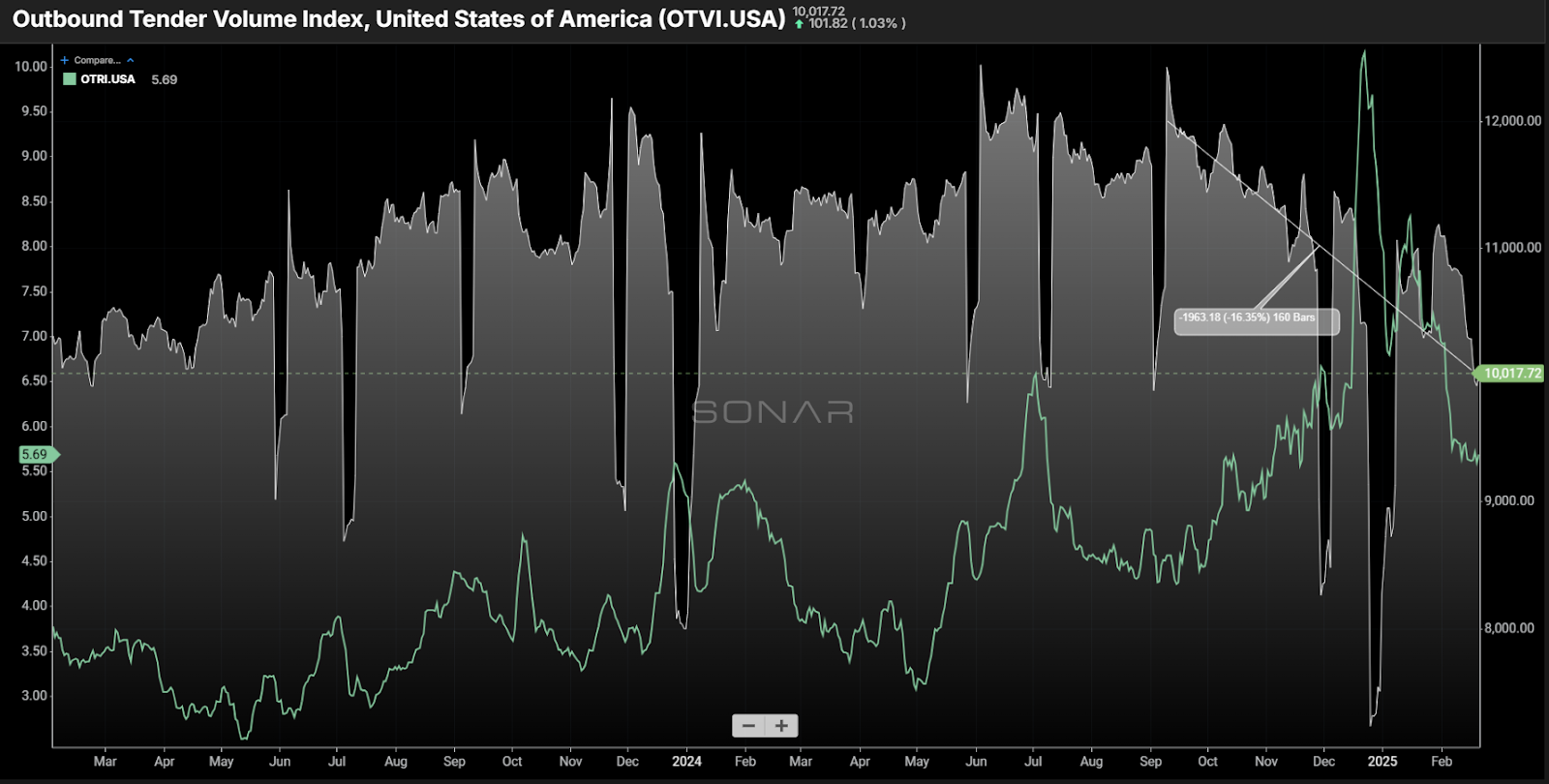
Chart of the Week: Outbound Tender Reject Index, Outbound Tender Volume Index – USA SONAR: OTVI.USA, OTRI.USA

Requests for truckload capacity (OTVI) are down roughly 16% from their peak levels in September of last year. However, carriers are rejecting these requests at a higher rate — national rejection rates reached 5.7% last week, compared to 4.3% in early September. This suggests that the balance between supply (capacity) and demand is the closest it has been to equilibrium in the truckload market since 2022.

The Outbound Tender Reject Index (OTRI) measures the percentage of requests from shippers that truckload carriers turn down. Carriers generally avoid rejecting loads frequently, as doing so means turning away business. For this reason, rejection rates tend to remain relatively low.

The pandemic years of 2020-2021 were among the most challenging periods for securing transportation capacity. Between July 2020 and January 2022, the OTRI averaged above 23%, meaning carriers rejected nearly one out of every four loads due to insufficient availability.

Following this historically high period, the OTRI entered the opposite environment, averaging just 4.3% from July 2022 through last September — equivalent to about one out of every 25 loads being rejected.

Beginning in May 2023, the OTRI showed a slow but steady upward trend, coinciding with the market bottoming out in terms of oversupply. This period marked one of the easiest sourcing environments in recent history. However, last October, the OTRI’s upward movement accelerated. From May 2023 to September 2024, the OTRI rose from approximately 2.9% to 4.4%, averaging an increase of 8.8 basis points per month. Since late September, the OTRI has surged to 5.69%, rising at a rate of 25.5 bps per month — despite January and February typically being the slowest months of the year.

Some argue that the holidays and winter weather have inflated the OTRI, making these comparisons less meaningful. While this point has merit, it is important to note that tender volumes have declined significantly during this same period, which weakens that argument. Most of the holiday influence should have been flushed out at this point. 

Last week’s chart of the week article highlighted the fact that carriers appear to be prioritizing loads coming off the West Coast in lieu of some of the Eastern markets, even in very well publicized markets with strong growth like Laredo, Texas. 

In reality, carriers have consistently prioritized loads that offer the best financial and operational benefits throughout the downturn. However, this trend is now becoming more apparent as capacity tightens.

Large fleets have been parking and selling trucks over the past year. Werner reported a 9% y/y decline in active units in Q4 in its one-way TL segment and a 7% drop in dedicated units.  Marten Transport showed a 3.5% reduction in TL and 15% in dedicated. 

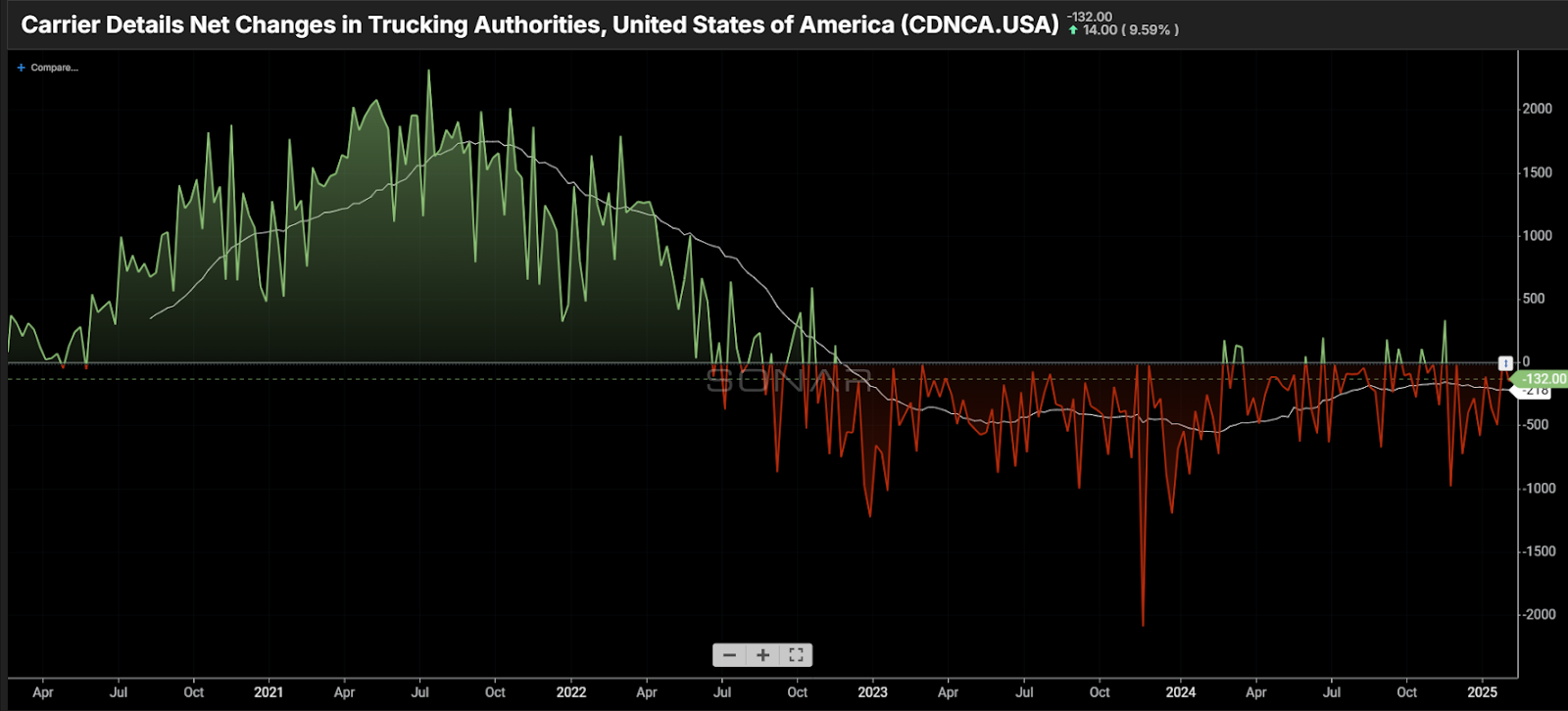
Since late September, the market has experienced a net loss of over 4,500 carriers, according to Carrier Details’ analysis of Federal Motor Carrier Safety Administration data. While most of these losses involve small fleets, this trend has been ongoing since late 2023. As capacity contracts, the underlying weaknesses in the market are becoming more visible — like rocks emerging as the tide recedes.

Over the past week, the OTVI fell by more than 7%, a very strong decline even considering seasonality. The OTRI barely reacted.

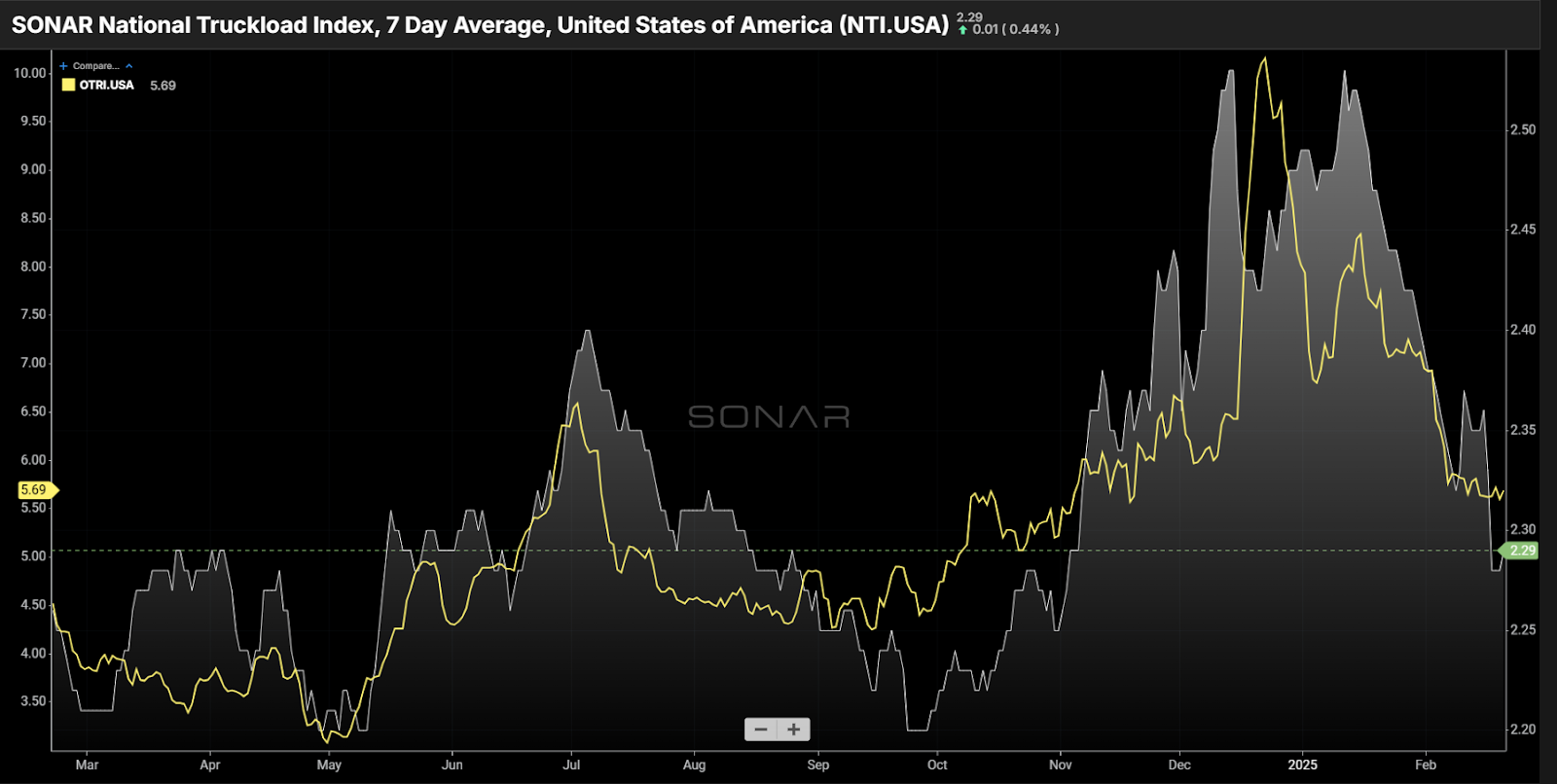
Unlike rejection rates, spot rates have been more volatile, experiencing a steep decline — aside from one brief increase — since mid-January. The takeaway is that a 5.5% rejection rate is still not high enough to drive inflationary spot rate activity. Additionally, rejection rates tend to be a more stable market indicator, as they are not subject to negotiation. In contrast, rapid shifts in market conditions often lead to exaggerated movements in rate negotiations.

The bottom line: The truckload market has tightened significantly in recent months – more than many realize. While slower demand has obscured signs of recovery, the market remains increasingly vulnerable to sharp shifts.

About the Chart of the Week

The FreightWaves Chart of the Week is a chart selection from SONAR that provides an interesting data point to describe the state of the freight markets. A chart is chosen from thousands of potential charts on SONAR to help participants visualize the freight market in real time. Each week a Market Expert will post a chart, along with commentary, live on the front page. After that, the Chart of the Week will be archived on FreightWaves.com for future reference.

SONAR aggregates data from hundreds of sources, presenting the data in charts and maps and providing commentary on what freight market experts want to know about the industry in real time.

The FreightWaves data science and product teams are releasing new datasets each week and enhancing the client experience.

To request a SONAR demo, click here.

Trump says Postal Service transfer to Commerce Department under review

U.S. Postal Service packages sitting on a doorstep.

President Donald Trump on Friday said his next target for government downsizing and restructuring could be the U.S. Postal Service, which Americans rely on for delivery of everything from online purchases and prescription drugs to checks and election ballots.

Speaking to reporters during an event at the White House, the president acknowledged he is considering big changes for the financially strapped Postal Service, including giving the secretary of commerce authority over the independent agency.

“We want to have a post office that works well, that doesn’t lose massive amounts of money. We’re thinking about doing that. It will be a form of a merger,” Trump said in remarks broadcast on CNN.

The Washington Post on Thursday reported that the White House is getting ready to fire the postal board of governors and put the Department of Commerce in charge of the quasigovernmental agency. The union representing postal workers slammed the potential move, while some analysts, without endorsing a White House takeover, said the Postal Service is ripe for reform, as FreightWaves reported.

The White House has already moved to make several independent agencies answer to it as Trump tries to increase executive branch control of the federal government.

Postmaster General Louis DeJoy, who took the job in 2020 with Trump’s backing, gave notice Monday of his intent to resign. His Delivering for America initiative is designed to streamline operations and reduce inefficiencies.

The Postal Service has been unable for years to cover its expenses through revenues generated from the sale of products and services. Expenses have grown faster than revenues in part due to rising compensation and benefits costs combined with continuing declines in volume for First-Class Mail, the agency’s most profitable product.

“The U.S. Postal Service does indeed need meaningful change, and we stand ready to help with efforts to protect mail delivery. Americans are frustrated with the U.S. Postal Service because it’s essential to our daily lives and the only courier able to deliver for all Americans, yet it has become prohibitively expensive and unreliable for businesses and consumers alike,” said Kevin Yoder, executive director of Keep US Posted, in a statement. “Our message to President Trump is to freeze the rates. Americans can’t afford the 11.5% July rate hike the board has been plotting. We also need to modernize the structure of USPS so that it is more efficient and accountable. Now is the time to create a more reliable, affordable Postal Service for all Americans.”

Keep US Posted is an advocacy group of consumers, nonprofits, newspapers, greeting card publishers, magazines, catalogs, forestry and recycling interests, and small businesses that opposes DeJoy’s efforts to slow some mail service and increase postage rates. 

Trump frequently talked in the past about privatizing the Postal Service, and taking away its independent status is seen by some as a possible first step toward making it a for-profit business.

Click here for more FreightWaves stories by Eric Kulisch.

DeJoy announces plan to step down as Postal Service chief

3 ratings agencies weigh in on Patriot Rail’s finances amid debt structure change

Shortline operator Patriot Rail, the business-facing name of NA Rail, is going to the debt markets for refinancing, prompting all three ratings agencies to weigh in on its issue.
Three ratings on the same issue and company at the same issue is unusual. Companies often are satisfied with one or maybe two. But all three were published this week.
The debt issue in question is a $440 million offering to pay down existing debt, pay a dividend to shareholders and cover transaction fees. The ratings agencies also took into account Patriot’s plan to substitute a $40 million senior secured revolving credit facility with a five-year, $50 million senior secured RCF.
Ratings analyses published by Moody’s (NYSE: MCO), Fitch Ratings and S&P Global Ratings (NYSE: SPGI) normally do not include information such as revenue or income for privately owned companies. But the Moody’s report pegged Patriot Rail’s revenue at $198 million in 2024. S&P S&P said it expects Patriot Rail’s revenue to grow 4% to 6% this year.
The agencies’ ratings of NA Rail stretched out over three notches. What S&P calls its Long Term Issuer rating was set at B-, affirming its existing rating. Moody’s was the equivalent of one notch higher at B2 on its Corporate Family Rating – also an affirmation.
Fitch was the highest at B+ for its Issuer Default Rating. That was a first-time rating on Patriot Rail from Fitch.

There was an unusual divergence on the rating of the actual debt issue. Fitch gave a notably higher rating of BB, three notches above the B2 rating from Moody’s and four above the B- from S&P. When a borrower is rated by multiple ratings agencies, the ratings tend to be equivalent or at most one notch apart.
All the ratings are deep in non-investment-grade territory.

Patriot Rail’s website lists 31 individual shortline railroads owned by the company. The bulk of them are in the Midwest. A map of the company’s operations can be found here. 

Moody’s described Patriot Rail’s revenue “scale” as “modest,” featuring some level of concentration in moving packaging and paper. It also said Patriot has less competition with intermodal railroads, so it is less exposed to truckload competition.

In a disclosure about its finances, Moody’s said Patriot has a “strong” operating margin that it expects to remain above 25%.

Fitch said it expects that free cash flow will be in the high-single-digit to low-double-digit range, which equates to about $15 million to $30 million.

Fitch described Patriot’s network as “established” and “geographically diverse.” As well as noting its “limited exposure” to intermodal competition, and by extension trucking, Fitch said Patriot’s traffic is “domestic-focused” and has “moderate customer and end market concentration relative to other operators.” Fitch said Patriot had “operational and cash flow risk profiles to be more consistent with the BB category,” a possible reason why its rating was the highest among the three agencies for the actual debt issue.

“Patriot’s stability is underpinned by its established portfolio of diverse, difficult-to-replicate rail assets,” Fitch wrote. “Short line railroads provide more bespoke services to customers to ensure that rail is an efficient and operationally advantaged option for shippers, further supporting its core role in supply chains and ability to maintain steady pricing levels.”

All three agencies put Patriot Rail’s ratio of debt to earnings before interest, taxes, depreciation and amortization near 5.5X. That is the key metric for agencies that seek to determine the likelihood of a borrower successfully servicing its debt.

Moody’s was right at 5.5X; S&P said it was 5.4X in 2024 with an estimate that it would add 0.5X through the new debt issuance; and Fitch estimated at 5.6X. All of the agencies viewed the trend in coverage as strengthening, “as growth capex projects are completed and increased revenue realized,” Fitch said.

Shareholder will plow money back into Patriot

Patriot Rail’s largest shareholder is Igneo Infrastructure Partners. Although the new debt will in part fund a $42 million dividend payment to shareholders, Moody’s reported that Igneo has committed to put back $25 million into the company for “growth initiatives.”

Despite providing a rating significantly below investment grade, S&P Global Ratings was positive about Patriot Rail’s strategy.

“We view Patriot’s business as stronger than before due to its increased size, reduced customer concentration, and expansion into new industries,” the agency wrote. “Since being acquired by its current sponsor Igneo, Patriot has exited its relatively low-margin port business, doubled its rail freight operations through acquisitions and some organic expansion, and diversified into adjacent markets like warehousing and transloading and excursion railroad operations.”

More articles by John Kingston

State of Freight: Taking stock of the market after a month of Trump

XPO lawsuit against 2 ex-employees gives look into noncompete agreements

Manhattan Associates’ sudden C-suite change not what it seemed, executives say

Atlas Air, DHL terminate Polar Air Cargo joint venture

A Polar cargo plane with blue lettering and a gold DHL tail area sits on the runway.

Atlas Air and DHL Express will disband their Polar Air Cargo joint venture after 18 years. Atlas will continue to provide air transport service for its long-time commercial partner under traditional vendor arrangements, FreightWaves has confirmed.

Atlas Air is the world’s largest operator of Boeing 747 freighter aircraft. The decision to exit the Polar Air Cargo venture is consistent with Atlas Air’s new strategic focus of diversifying its customer base and concentrating on high-margin, long-haul flying. 

“As we considered the evolution of our respective companies, Atlas and DHL have mutually decided that the joint venture no longer aligns with the strategic direction of either shareholder company. This decision is very much a part of our continued transformation and is in full alignment with our One Atlas Strategy,” Atlas Air said in a statement provided to FreightWaves.

Polar Air Cargo is a provider of scheduled express service and Atlas Air operates the aircraft. Most of the space is reserved for DHL, which determines the flight network. Atlas markets the rest of the capacity to freight forwarders. 

New York-based Atlas Air said some operations and staff will transfer to Atlas and the others to DHL. Atlas will continue to hold Polar’s air operating certificate. No timetable for Polar’s shutdown was given, but flight tracking site Flightradar24 and other databases list no aircraft in Polar’s fleet and no recent flight activity.

Atlas Air, which operates or leases 121 Boeing aircraft of various types, will take control of four Boeing 747-8 freighters currently in service for DHL through Polar and redeploy them to other Atlas customers under long-term contracts for dedicated transport service. It will also continue as a contract carrier within DHL Express’ global air network. 

DHL will take back two Boeing 777 cargo jets it contributed to the joint venture, with Atlas providing the crews, maintenance and insurance to fly them.

Last year, Polar Air Cargo had eight freighters in its fleet, according to aviation databases. 

DHL Express provided a similar statement about the break up of Polar Air Cargo and the continuing partnership with Atlas Air. 

Trade publication Cargo Facts broke the news Friday afternoon that Atlas and DHL were folding up their joint venture. 

Change of direction

With new ownership behind it, Atlas Air is changing from an airline hired by other entities that pay a set rate for flight time and for guaranteed cargo space. Instead, it wants to have a direct selling relationship with customers. 

Last summer, Atlas Air and Amazon ended their relationship under which Atlas provided crews for eight Boeing 737-800 narrowbody converted freighters and 17 Boeing 767-300 medium widebodies. Amazon placed the 767s with ABX Air and is in the process of transferring the 737-800s to existing partner Sun Country Airlines.

Atlas Air CEO Michael Steen said in an interview last year that Atlas Air would reallocate resources to intercontinental operations, where the potential for profits is greater.  

The carrier added Chinese e-commerce platforms Shein and Temu as customers in 2024 and has aggressively pursued e-commerce business in the past couple of years.

It’s also possible that Atlas wanted to distance itself from the fraud scandal that recently engulfed Polar Air. Four former executives were sentenced last year to prison for accepting millions of dollars in kickbacks from co-conspirators who owned or operated companies that provided services to Polar Air Cargo or were customers, in exchange for ensuring the airline gave them favorable business deals. 

DHL’s desire to rely on more fuel-efficient 777 freighters as part of its environmental commitment and for reliability reasons, combined with the high operating cost of 747s also played a role in the decision, industry experts familiar with the company said.

On Wednesday, Atlas Air signed a statement of intent to work closely with Worldwide Flight Services, a global airport ground handling agent owned by Singapore-based SATS Ltd., on developing an integrated ground and cargo handling model to address the unique demands of e-commerce and accommodate rising volumes of other high-value shipments. The companies said they will also collaborate on development of digital and automation solutions to provide expanded track-and-trace capability for cargo moving through their networks, as well as reducing carbon emissions.

WFS provides warehouse, freighter ramp and crew transport services for Atlas at eight major U.S. airports. The new agreement expands cooperation in Singapore and Riyadh, Saudi Arabia. 

Click here for more FreightWaves/American Shipper stories by Eric Kulisch.

Atlas Air to end Amazon flights, focus on international customers

Airfreight outlook remains bright to start new year

Cargojet charter demand jumps 60% on e-commerce, supply chain delays

Running on Ice: Last-mile ice cream solutions and Dolly Parton in the freezer

Blue Truck on a sheet of ice over a blue background and Running on Ice Logo

All thawed out

(Photo: Jim Allen/FreightWaves)

Solving last-mile issues in the cold chain is a constant challenge for consumer packaged goods companies. CPG giant Unilever recently shared how it uses AI to enhance last-mile logistics.

Currently, Unilever uses AI to analyze weather data to more accurately forecast and limit waste, and it’s working on implementing AI solutions throughout the entire supply chain, fully integrating technology and visibility from suppliers to consumers.

In a Supply Chain Dive article, Sandeep Desai, EVP and chief product supply chain officer for the company’s ice cream business, said: “If we were transporting diamonds, it’s cheap, the technology is available, it’s there, we can do it. When you’re transporting ice cream, where every mom and pop believes they can make ice cream, too, it’s quite a margin-sensitive game, and so the cost of the technology is what needs to come [down].”

Temperature checks 

(Photo: Jim Allen/FreightWaves)

Making a play to improve its over-the-counter medicine creation is Reckitt, the maker of Mucinex. The company is all in on localizing its supply chain as it develops a manufacturing site in Wilson, North Carolina. The site is expanding access to OTC medicine to help meet the demand for cold and flu medicines.

The $200 million, 310,000-square-foot investment will serve as the company’s U.S. flagship for over-the-counter manufacturing and is expected to be operational in early 2027. 

Quoted in a Supply Chain Dive article is Philip Hampden-Smith, SVP of supply for North America: “Resilience is such a key factor, given all the variables that are in play these days, whether it’s geopolitics, whether it’s material challenges, regulatory environments, etc., but in a nutshell, what I’m really looking to do is ensure that I build a future state, a supply network that can sustainably outperform. It’s all about onshoring, localization and really being much more agile to our consumers.”

Food and drug

(Photo: Instagram)

The queen of Teneessee has expanded her offerings in the grocery store. Continuing the partnership with Conagra Brands, Dolly Parton’s frozen meals have finally reached the shelves. The new collection includes Chicken & Dumplings, Beef Pot Roast, Country Fried Steak and Shrimp & Grits. Some new staples are hitting the baking aisle, but the frozen choices are the biggest development in the partnership.

In a Retail Wire article, Tom McGough, chief operating officer at Conagra Brands, said: “This unprecedented partnership with Dolly Parton gives us an incredible opportunity to further cement Conagra Brands in our established categories, while authentically positioning us for tremendous growth in new ones including Southern cooking and comfort food.”

More and more consumers are shopping the frozen aisle for quick and easy meals in lieu of eating out, as a way to cut down on costs.

Cold chain lanes

SONAR Tickers: ROTVI.LIT, ROTRI.LIT

This week’s market under a microscope is Little Rock, Arkansas. Capacity is tightening in Little Rock as reefer outbound tender rejections climb back up to 32.31%. After a brief reprieve in high OTRI in the middle of the month when tender rejection rates were closer to 22%, reefer demand has risen dramatically as reefer outbound tender volume has fallen. 

Reefer outbound tender volumes are off 29.87%, which signals greater strain on capacity. Reefer spot rates are going to be significantly elevated for outbound loads in Little Rock. Rates should mimic those seen around mid- to late January. 

Is SONAR for you? Check it out with a demo!

Shelf life

Major advocacy groups say mass layoffs at FDA could jeopardize food safety, ‘MAHA’ agenda

Toppoint Holdings expands into new multi-billion-dollar vertical through strategic collaboration with leading refrigerated logistics provider

Reefer haulers among first TCA ‘Elite Fleets’

Wendy’s unveils 2 new Girl Scout-inspired Frosty flavors

NextNRG to fuel Florida Beauty’s reefer fleet

Wanna chat in the cooler? Shoot me an email with comments, questions or story ideas at moconnell@freightwaves.com.

See you on the internet.

Mary

If this newsletter was forwarded to you, you must be pretty chill. Join the coolest community in freight and subscribe for more at freightwaves.com/subscribe.

Rivian expands commercial van sales, ending Amazon exclusivity

Rivian expands commercial van sales, ending Amazon exclusivity

(Photo: Jim Allen/FreightWaves)

Rivian Automotive has announced the expansion of its commercial electric van sales to all U.S. businesses, a shift in the company’s strategy more than a year after Rivian ended its exclusivity deal with Amazon in November 2023. The release notes the electric Rivian Commercial Van has two sizes, the 500 and the 700, with a payload of up to 2,663 pounds and a gross vehicle weight rating of up to 9,500 pounds.

Tom Solomon, Rivian’s senior director of business development, highlighted the success of the existing partnership with Amazon, stating, “Amazon currently has more than 20,000 in its fleet and delivered over a billion packages from its Electric Delivery Vans in 2024 alone. Over the last year we have been focusing our efforts on testing with some larger fleets, and we’re really pleased with how those trials have gone. As a result, we’re excited to now be able to open sales to fleets of all sizes in the US, whether they want 1 van or thousands.”

Tech Crunch reports the timing of this expansion is crucial for Rivian. As the company works to reduce losses ahead of the launch of a more affordable SUV next year, the commercial van business could provide a much-needed boost to its bottom line. Unfortunately for van-life enthusiasts, Tech Crunch adds that while Rivian is opening sales to all businesses, individual consumers hoping to convert these vans for personal use will have to wait. The company has specified that buyers must be registered businesses.

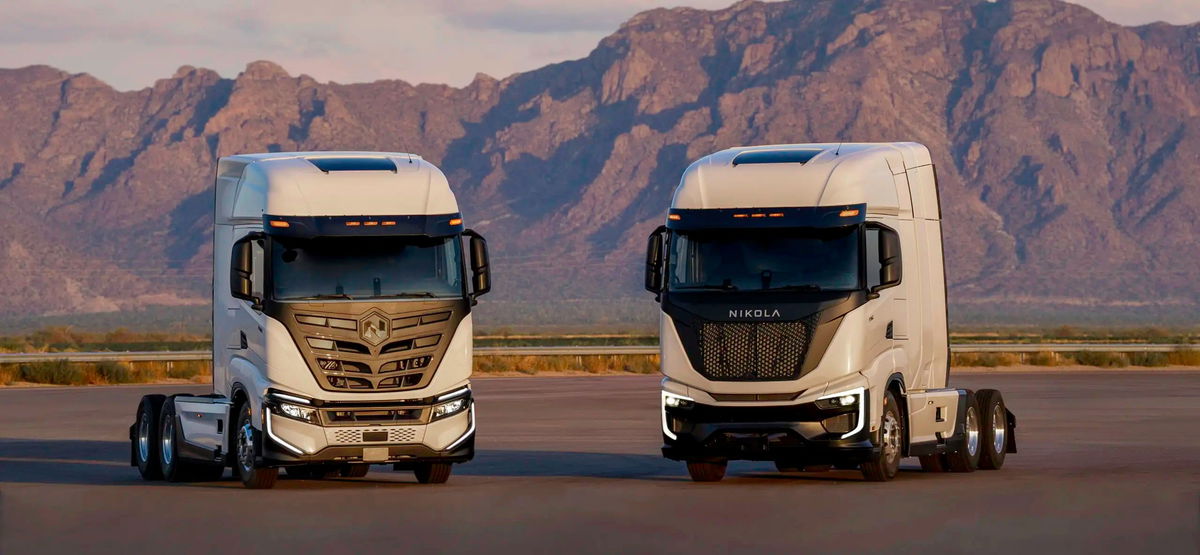
Nikola’s last stand: Electric truck maker seeks buyer in bankruptcy

(Photo: Nikola Corp.)

Battery-electric and zero-emissions truck maker Nikola is racing against time and dwindling cash reserves as it seeks a buyer for its entire business by April, according to statements made by company lawyers during its first bankruptcy hearing in Delaware.

The company, which briefly surpassed Ford Motor Co. in market value in 2020, filed for Chapter 11 bankruptcy protection on Wednesday after failing to secure additional capital or find a buyer in recent months. Nikola now hopes to auction off its assets to satisfy over $1 billion in liabilities.

“We believe it is a melting ice cube,” Joe Barsalona told Tech Crunch, referring to Nikola’s rapidly depleting $47 million cash balance. Barsalona is a lawyer representing shareholders in a class-action lawsuit against the company.

CEO Stephen Girsky said in a sworn declaration that Nikola had been exploring sale options for months prior to the bankruptcy filing. The company worked with Goldman Sachs to approach 22 potential acquirers in the truck manufacturing and transportation logistics sectors. While two international automakers initially expressed interest, both ultimately walked away from potential deals.

“Unfortunately, our very best efforts have not been enough to overcome these significant challenges, and the Board has determined that Chapter 11 represents the best possible path forward under the circumstances for the Company and its stakeholders,” Girsky said in a statement.

Despite the setbacks, Nikola claims to have at least three interested buyers and hopes to solicit additional bids with a submission deadline in late March. If a full sale fails to materialize, the company will pivot to selling assets piecemeal.

As the bankruptcy process unfolds, Nikola plans to continue limited operations, including some service and support for trucks currently in use. The company’s lawyers expect a potential sale hearing in early April.

Briefly noted …

Despite President Donald Trump’s freeze of $5 billion in federal funding for EV charging infrastructure, states are stepping up. Tech Crunch reports EV charging startup Revel recently secured a $60 million loan from New York’s clean energy investment fund NY Green Bank to triple its public fast-charging network in New York City. The funding is expected to build out nine sites across the city and create 267 fast-charging stalls by 2027.

San Diego-based startup Self Inspection recently raised $3 million for its AI-powered vehicle inspections. The company, founded in 2021, has taken a much different path from UVEye, which recently raised $191 million for its AI-powered drive-through inspection technology, according to Tech Crunch. The platform works with a smartphone camera but can also pull data from a car’s OBD2 port.
A joint electric truck battery manufacturing venture by Cummins, Daimler and Paccar continues despite a shift in U.S. EV policies under the Trump administration. Trucking Dive reports the statements came from Paccar CEO Preston Feight on a Jan. 28 earnings call, with Paccar still planning to invest between $600 million and $900 million. “If I could remake the decision now, knowing what I know, I’d make the same decision,” Feight said. “It’s a long-term, strategic objective for our company to be able to offer our customers a full portfolio of powertrain choices.”

Most recent episode

Subscribe to the Truck Tech newsletter here.

NTSB: Wrong valve led to fatal container ship fire

The installation of an incorrect valve in a diesel fuel system led to a fire that killed two crew and injured another aboard a container ship docked at Port Houston in 2024.

The National Transportation Safety Board on Thursday said its investigation found that six weeks before the Jan. 8, 2024, fire that broke out aboard the 600-foot vessel Stride during fueling at the Barbours Cut Marine Terminal, a replacement valve was installed that was different from the one specified for the ship’s fuel system.

Left to right: Circled area identifying the open section of fuel vent piping and cut-out placed
back in position after the fire. (Photo: NTSB)

When the ship’s port fuel tank was filled during fueling, the one-way valve directed diesel fuel up a common vent pipe where it broke through a cutout patched with sealant and tape. Diesel fuel poured through the cutout and into the engine room, where it was ignited by operating machinery.

The fire self-extinguished after crew members shut down all ventilation to the engine room. But two crew members died and one was seriously injured in the smoky blaze. The vessel was declared a loss and scrapped.

Find more articles by Stuart Chirls here.

Related coverage:

Tariff fears help Port of Long Beach containers to best start on record

No sure thing? ILA head tells rank and file contract vote an ‘obstacle’ to overcome

While supply chain frets, Port of Los Angeles sees record January volume

Federal Maritime Commission dropping DEI from strategic plan