Carroll Fulmer Logistics, a Florida-based trucking company that has operated for more than 70 years, is shutting down.
The carrier had 400 trucks and 1,700 trailers. Some 600 employees will be laid off as operations cease. The company plans to offer them 60 days’ severance pay as it winds down.
According to the Clermont Sun, which broke the story, Carroll Fulmer attributes its financial woes to a surge in lawsuits and the challenges of the Great Freight Recession—the deepest downturn in the history of the freight market—which began in March 2022.
The news may come as a shock; on May 15th the asset lender Gordon Brothers provided a $27m line of credit to Carroll Fulmer for asset financing and working capital.
Carroll Fulmer is the latest victim of the freight downturn, but many more carriers will probably follow.
I bet we have a major truckload carrier file bankruptcy in the next few months.
If the public trucking companies are struggling as much as the reports suggest, many of the private ones are likely in far worse shape.
According to channel checks by FreightWaves, many large private truckload carriers are running operating ratios above 100, meaning they are unprofitable and unable to service their debts. The same applies to some of the largest public ones. Heartland Express, one of trucking’s stalwarts, reported a 106 operating ratio in the second quarter, while PAM Transport’s trucking division had a 112.5 OR.
Landstar reports trucking revenue growth for first time in nearly 3 years
Freight broker Landstar System reported a year-over-year increase in trucking revenue during the second quarter, marking the first such increase in 11 quarters. The company also noted a flattening of attrition among its core carriers and the highest gross additions in that group in seven quarters.
Landstar (NASDAQ: LSTR) reported second-quarter earnings per share of $1.20 on Tuesday after the market closed. The result was 3 cents ahead of the consensus estimate but 28 cents lower y/y.
Table: Landstar’s key performance indicators
Q2 delivers some good, some bad
Truck transportation revenue increased 1.1% y/y to $1.12 billion as a 1.5% y/y decline in total truck loads was offset by a 2.6% increase in revenue per load. Flatbed and power-only revenue trends were more pronounced across Landstar’s platform, up 5% y/y and 30% y/y, respectively.
Compared to the first quarter, truck transportation revenue was 6.5% higher, with loads and revenue per load increasing equally.
Loads hauled by business capacity owners (BCOs) – owner-operators who haul almost exclusively for Landstar – declined 4.5% y/y but revenue per load increased 3.8%.
(Landstar management views BCO revenue per mile as a more telling metric for TL pricing as it excludes fluctuations in diesel fuel prices.)
Dry van revenue per mile among BCOs stepped slightly higher throughout quarter, up 3% y/y for the entire period. Revenue per mile on flatbed loads hauled by BCOs increased 14% y/y. The flatbed comparisons were positively impacted by a mix shift to higher-priced, heavy-haul freight.
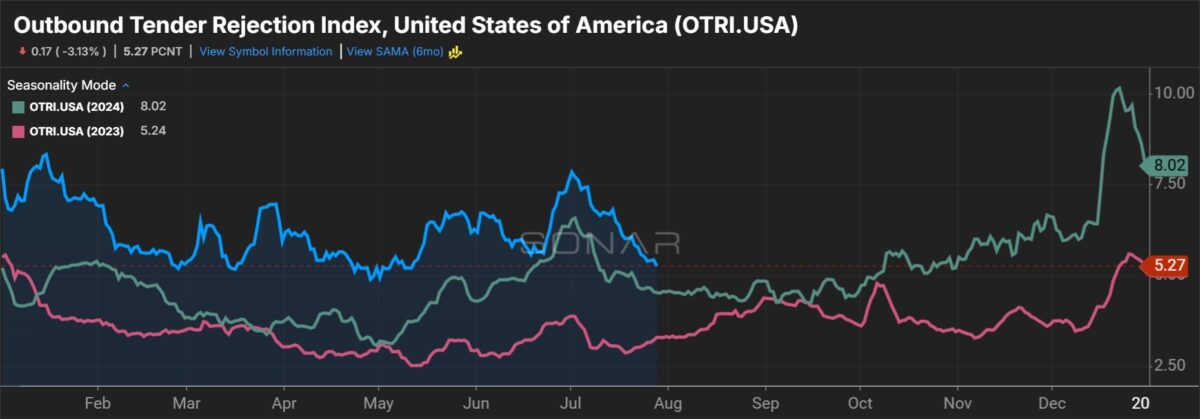
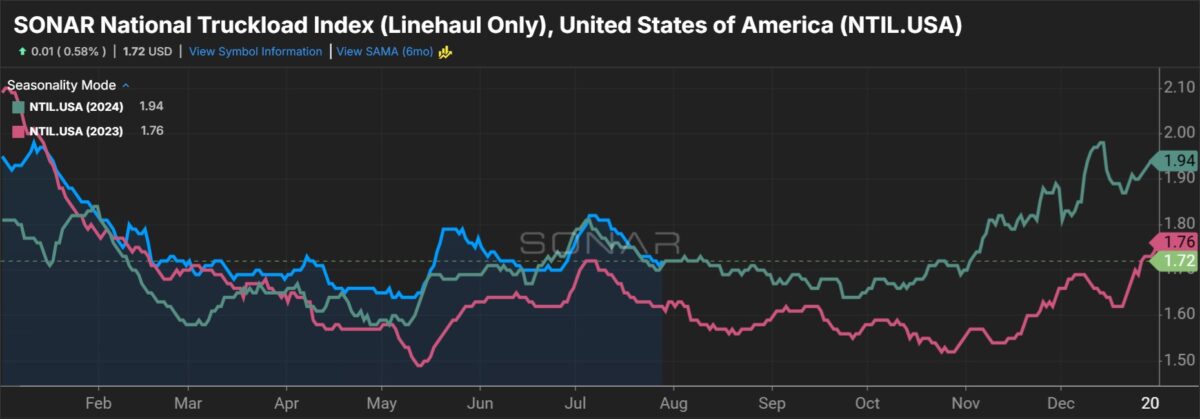
SONAR: Outbound Tender Reject Index for 2025 (blue shaded area), 2024 (green line) and 2023 (pink line). A proxy for truck capacity, the Outbound Tender Reject Index shows the number of loads being rejected by carriers.Current tender rejections are outperforming prior-year levels but still not signaling a recovery.To learn more about SONAR, click here.SONAR: National Truckload Index (linehaul only – NTIL) for 2025 (blue shaded area), 2024 (green line) and 2023 (pink line). The NTIL is based on an average of booked spot dry van loads from 250,000 lanes. The NTIL is a seven-day moving average of linehaul spot rates excluding fuel. Spot rates are flat on a y/y comparison.
BCO equipment utilization improved 2% y/y in the quarter and attrition among the group appears to have bottomed.
Net trucks provided by BCOs declined 6.2% y/y to 8,611. But that was just 9 units fewer than in the first quarter and a sign that the market is stabilizing, Landstar management told analysts on a Tuesday evening call. Further, gross BCO additions were the highest in seven quarters, up 12.5% y/y and 9.5% sequentially.
Trucks provided by BCOs declined sequentially by just 23 units on a net basis during July.
Total truck capacity on the Landstar platform was off 2.3% y/y in the second quarter.
The company tempered the positive anecdotes, noting the market is still loose. Revenue from loads brokered to Landstar by other truck transportation companies was 19% lower y/y, “a clear indicator that capacity is readily accessible to the marketplace,” management said.
Variable contribution margin, or net revenue margin, was down 20 basis points y/y to 14.1%. (The metric measures revenue remaining after purchased transportation expenses and agent commissions are paid.)
A 33% operating margin (as a percentage of variable contribution) was 580 bps lower y/y. Insurance and claims expenses (as a percentage of BCO revenue) increased 80 bps y/y to 6.6%.
The third quarter is expected to see some sequential cost relief. The second quarter included $4.8 million in charges tied to supply chain fraud. Landstar is hosting a convention in the third quarter but the expenses associated with the event are expected to be $1.5 million less than the cost of a second-quarter convention.
The company called out a potential charge in the third quarter. An independent motor carrier brokered through Landstar subsidiary, Landstar Ranger, was involved in a “tragic vehicular accident” in 2021. A trial regarding the matter is expected to conclude during the quarter.
No Q3 guidance
Given the uncertainty around global trade as well as overall demand choppiness, the company didn’t provide formal guidance for the third quarter. However, it said it normally sees no change in revenue between the second and third quarter, as a slight sequential decline in loads is typically offset by an increase in revenue per load.
If normal seasonal trends hold in the third quarter, revenue for the period would be about 2% light of the $1.24 billion consensus estimate at the time of the print, but roughly flat y/y.
July trends showed truck volumes were up 1% y/y while revenue per load was down 3% y/y. The company said it had a super-seasonal June but July had a tough comp to July 2024.
CEOs say Union Pacific-Norfolk Southern merger will reverse rail freight decline
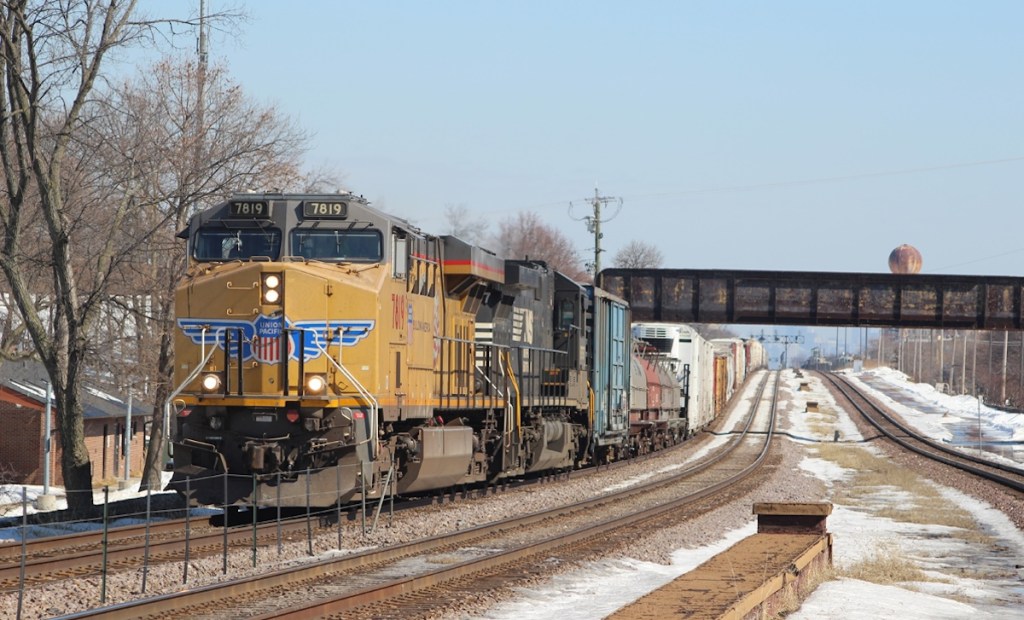
Union Pacific and Norfolk Southern executives touted their proposed merger as a way to return to volume growth after losing market share to trucks since rail traffic peaked in 2006.
“We can only go so far independently. And let’s face it, this industry has faced contraction over the last couple decades in terms of volume growth,” NS Chief Executive Mark George told investors and analysts on a conference call this morning. “We’ve been losing share to truck — and this is one way to reverse that trend.”
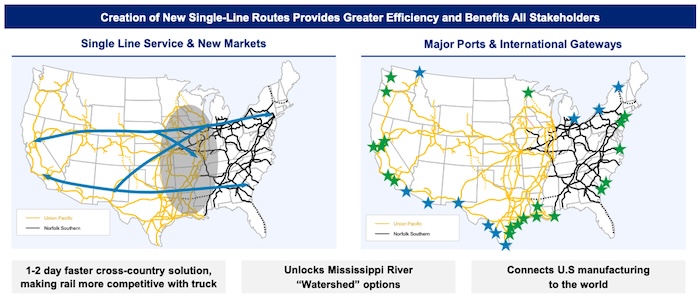
The historic combination — which would create the first transcontinental railroad in the U.S. — would unleash growth by eliminating problematic interchanges, speeding and simplifying service, and enabling the railroad to tap the so-called watershed markets along the Mississippi River. UP and NS envision reeling in $1.75 billion in growth-related revenue by the third year of their merger.
UP (NYSE: UNP) and NS (NYSE: NSC) currently exchange about 1 million shipments per year and are each other’s largest interchange partners. Single-line service will reduce strain on gateways such as Chicago and Memphis, end inefficient crosstown rubber-tire intermodal interchanges, and allow customers to receive rate quotes and bills from one railroad rather than two.
“In the future, those million carloads will immediately see a 24- to 48-hour improvement in their transit time,” Vena said. “That combination of faster service and greater market reach is powerful, making our transcontinental railroad an attractive choice for both current and future customers.”
The transcontinental system’s traffic opportunities include providing seamless service from coast to coast — and most places in between — for intermodal, finished vehicles, food and beverage, chemicals, and steel shipments.
Intermodal traffic will make up 49% of the business for the combined railroads. (Chart: Union Pacific/Norfolk Southern)
For intermodal and carload, the merger would open up service in the nation’s midsection that’s currently not well-served by rail due to the short hauls for the eastern or western carrier, or both.
“With our interchange with UP today, 95% of our interchange is over 2,000 miles, meaning only 5% is under 2,000 miles. We see an enormous opportunity to grow in lanes where we would be in that 1,000-mile or 1,500-mile range,” George said of intermodal. “So that’s just one example, and that kind of touches upon the entire watershed story.”
Railroads are not competitive on short-haul moves in the watershed, an underserved area that stretches from Wisconsin and Minnesota to eastern Texas, Louisiana, and Mississippi.
“When you’re going from west of it to east, or east to west, rail is never even contemplated because it’s just too much hassle, too much extended time, and frankly, too much cost,” George said. “So these are the areas where we see tremendous growth.”
Single-line service through the watershed on a combined UP-NS system would enable the railroad to compete for traffic moving between Houston and Charlotte, N.C., and Dallas and Columbus, Ohio, for example.
“There’s an awful lot of opportunity here where there’s virtually no rail moves. It’s all truck moves, and those are big markets,” George said, adding that revenue growth from truck conversion likely would exceed the railroads’ $1.75 billion estimate.
The merger will open up new traffic in the country’s “watershed” midsection, the railroads say. (Maps: Union Pacific/Norfolk Southern)
A merger also would allow the railroads to eliminate intermediate handlings for carloads.
“We will remove touch points, and every time there’s a touch point, you add 24 to 36 hours, even at the best, while you’re switching the rail car. That’s gone,” Vena said. “On top of that, at the interchange points, where we used to stop and hand off, those are removed. So every customer that today, when we are finally approved … we’re going to cut a day or two off of every transit time.”
And that, he says, will reduce costs for customers, who can reduce the size of their car fleets due to faster cycle times. It also will mean a more fluid railroad.
For new through trains, Chicago will become just another crew change point on the map. But Vena says it’s unlikely that there will be massive swings of volume away from Chicago, a chronic chokepoint where 25% of rail traffic originates, terminates, or passes through.
“We don’t see a huge amount of business changing from Chicago to go to Memphis or go to New Orleans because the out of route miles just don’t add up,” Vena said.
The transcontinental UP also will be able to repatriate international intermodal traffic that Canadian ports, particularly at Vancouver and Prince Rupert, British Columbia, have lured away from U.S. ports over the past two decades, Vena said.
The approval process
Executives also expressed confidence that their deal could gain regulatory approval. The UP-NS combination will be the first judged under the Surface Transportation Board’s 2001 merger review rules. The rules require a merger of Class I railroads to enhance competition — not merely preserve it — and to be in the public interest.
Vena said that if the STB systematically reviews the deal while asking if a transcontinental railroad is better for customers and the country, they will approve it. “We’re very confident of that, or we wouldn’t have taken the step,” he said.
Only 20 customers are currently jointly served by UP and NS where their networks overlap in the Midwest. “We intend to provide a competitive alternative,” Vena said, noting that specifics will be included in the merger application.
The railroads also structured their deal without the use of a voting trust. Rail mergers have typically involved placing the railroad being acquired into a voting trust in order to maintain the railroad’s independence and to allow its stockholders to cash out while the merger is under regulatory review.
The STB in 2021 rejected Canadian National’s (NYSE: CNI) request to put Kansas City Southern in a voting trust, saying it wasn’t in the public interest. The decision scuttled the proposed CN-KCS merger and led to the Canadian Pacific (NYSE: CP)-KCS combination, which was judged under the less restrictive old merger review rules due to an exemption granted to KCS, by far the smallest of the Class I railroads.
UP and NS are not taking that chance.
“We actually believe that a voting trust would complicate and potentially delay the transaction,” UP Chief Financial Officer Jennifer Hamann said. “So we want to go to the STB with a fully developed merger application that allows us to really lay out the fundamentals of this merger and provide all the necessary details that supports our position that this will not only enhance competition, but is absolutely in the public interest.”
Plus, without a voting trust UP won’t have to fund the deal until it gains STB approval, which is estimated for 2027 based on the STB’s statutory guidelines.
Promises of smooth integration
Railroad mergers in the modern era have had one thing in common: Service problems that occur while meshing operations and information technology systems.
UP’s operational decisions in Houston after the 1996 acquisition of Southern Pacific created a massive traffic jam in 1997 and 1998. On the heels of that, information technology problems led to immediate service problems on Norfolk Southern after the 1999 split of Conrail with CSX (NASDAQ: CSX), which later stumbled with its own service issues.
“A transaction of this size and scope won’t be easy to execute. We understand that,” Vena said.
The railroad will maintain adequate reserves of locomotives, train crews, and other resources in order to be able to better respond and recover to service issues, he said.
“We’re very aware of what led to the merger moratorium back in the 2000, 2001 time frame, and it was just a bunch of bad integrations,” George said. “And we are committed to make sure that doesn’t happen in this case.”
The two-year review process will allow sufficient time for planning, George said, particularly on information technology systems.
CPKC’s problematic computer cutover this past May in former KCS territory in the U.S. produced congestion, missed switches, and delays that CPKC has now mostly mopped up.
Last year UP had a smooth cutover to its new cloud-based NetControl computer system, which processes everything from rail car inventory and scheduling to waybill processing and train, locomotive, and terminal management. “It was a non-event,” Vena said. “It was like nobody knew it actually happened.”
Much of the $2 billion the railroads have earmarked for increased capital spending will go toward information technology investments.
Merger synergies of $2.75 billion
Assuming shareholders approve the deal, UP will acquire NS in a stock and cash transaction that values NS at $320 per share, a 25% premium. The combined company would have an enterprise value of more than $250 billion. The railroads said the merger would create $2.75 billion in annual synergies, split between $1.75 billion in revenue growth and $1 billion in cost and productivity savings.
UP will finance $20 billion of the deal through a combination of cash on hand and new debt. Both railroads will stop their share buyback programs through 2028 but will maintain dividend payments.
Shipper and labor opposition
The railroads pledged to preserve union jobs, which are the vast majority of the combined system’s 52,000-strong workforce.
“All of our union employees who have a job today will have jobs tomorrow in our merged company,” Vena said. “And a company that is growing its business and spurring economic development creates even more jobs.”
Nonetheless, the SMART-TD union that represents conductors said it would oppose the merger.
Yesterday shipper associations told Trains that they would oppose further consolidation in the rail industry.
How will the railroads handle objections from shippers and rail labor?
“We’ll handle them one by one, but I think as people start to come to understand what we’re putting forward, they’re going to see the benefits,” George said.
That especially applies to labor because the company would add jobs as it gains new traffic, he said.
WASHINGTON — Trucking has welcomed FMCSA’s effort to strip away regulatory red tape aimed at easing compliance burdens for motor carriers based on comments filed with the agency.
Among a slate of 18 deregulatory actions taken by FMCSA in May were several that had the potential to be particularly helpful for carriers – without compromising safety – including a proposed rule to rescind a requirement that a truck driver’s electronic logging device (ELD) operator’s manual be kept inside the truck.
“There is no readily apparent benefit to continuing to require that the users’ manual be in the [truck]” FMCSA stated in the proposal, and most of those commenting on it agreed.
“Removing the manual-carry requirement reduces clutter in the vehicle cab, simplifies compliance audits, and allows fuel marketers to focus training efforts on ensuring their drivers are proficient in using ELDs – not in maintaining duplicative documentation,” commented Rob Underwood, president of the Energy Marketers of America (EMA), whose members operate tank trucks that transport much of the country’s retail motor and heating fuel products.
“This proposal exemplifies a practical approach to regulatory reform that retains core safety objectives while reducing paperwork burdens for small businesses.”
Veolia North America, an environmental services company that hauls hazardous materials, believes that while it is a priority to ensure that drivers are trained in how to use their ELD system, “training programs should already emphasize driver proficiency with the ELD system and access to its support resources,” wrote Jennifer Fletcher, the company’s transportation compliance director, in comments to the agency.
“We believe this change will reduce regulatory burden without compromising safety and improve the efficiency of operations and inspections.”
Most commenters agreed. No one should receive an FMCSA violation “because they don’t have an instruction manual for a device that they should know how to use and that also has a digital manual on it,” said one.
Another thought the rule should be left in place. “There are so many systems out there and they are all different. What’s the big deal about keeping an operating manual on hand?”
FMCSA has also proposed revising a requirement that motor carriers and intermodal equipment providers sign and return completed roadside inspection forms to the state agency that issued it within 15 days, certifying that all necessary repairs have been made.
The problem with the federal regulation is that not all state agencies require that the forms be returned, and such a regulation requiring carriers to return them to states that don’t require or request them creates an unnecessary burden, according to FMCSA.
The solution: remove the requirement that roadside inspection forms be returned to the issuing agency unless the agency requires it.
The change was prompted by a petition filed by the Commercial Vehicle Safety Alliance (CVSA) in 2024.
“This provides regulatory relief for industry while still allowing jurisdictions the flexibility to require the forms be returned, should they see a safety benefit to doing so,” CVSA commented to FMCSA in recognizing its petition, which would “remove an unnecessary burden on industry without negatively impacting safety.”
EMA agreed, commenting that the regulation “has outlived its utility in an era of electronic records and digital inspection processes.
“For the energy marketing industry, this targeted deregulatory step would free up resources to support the safe and timely delivery of fuels.”
“Medical treatment” accident reporting
Modifying the definition of “medical treatment” for the purpose of accident reporting by motor carriers, based on guidelines already in place, will clarify for the trucking industry what constitutes an accident, FMCSA has asserted in another proposed rule.
The agency proposes adding to the regulations a paragraph stating that medical treatment does not include x-rays or other imaging, such as CT scans, and a person who does not receive treatment for diagnosed injuries or other medical intervention directly related to the accident has not received “medical treatment.”
The American Trucking Associations commented that while the change is welcome, the rulemaking should go further.
“Obtaining medical information regarding a third-party involved in a CMV [commercial motor vehicle] crash can be incredibly difficult, and at times, unfeasible,” wrote ATA Chief Operating Officer Dan Horvath.
“Motor carriers who have done their due diligence yet failed to obtain this information for reasons beyond their control should not be found in violation for omissions of medical information. We encourage the agency to consider this as it finalizes its rulemaking.”
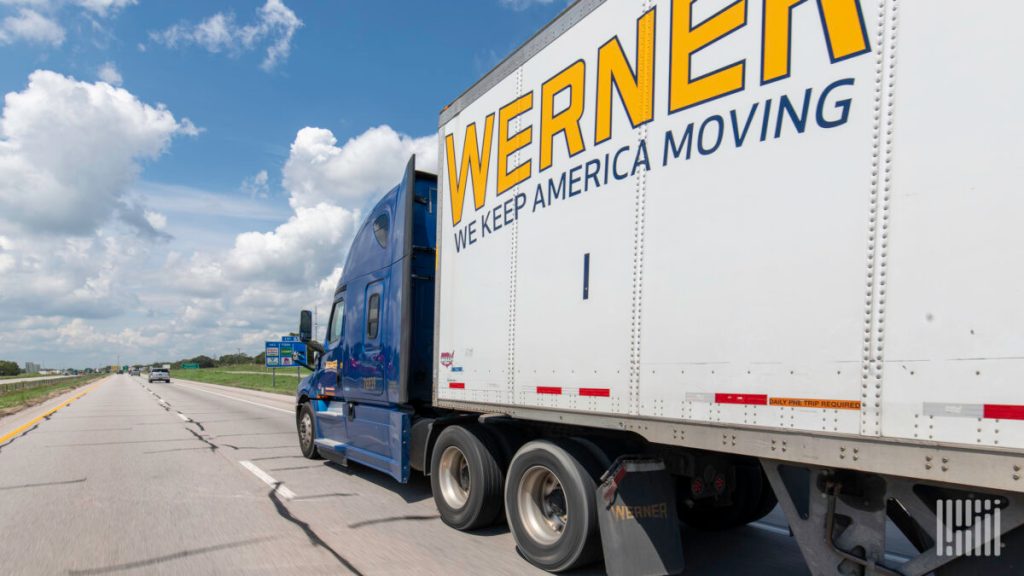
First Look: Werner’s quarterly report impacted by its nuclear verdict victory; stock rises
What looks like a huge increase in operating income at Werner Enterprises (NASDAQ: WERN) was impacted by reversal of liabilities that came out of its victory at the Texas Supreme Court in the long-running nuclear verdict. The size of that verdict had grown to more than $100 million with interest charges since it was first handed down in 2018. But the reversal hit Werner’s operating income for a benefit of $45.7 million. There was also a $7.9 million liability reversed related to the October 2022 acquisition of Baylor Trucking.
First indications are that investors liked the earnings report. At approximately 4:50 p.m. EDT, Werner’s stock was up 70 cts/share from the close, a gain of 2.52%.
Revenues, which are unaffected by the various charges the company took in the quarter, were down 1% year on year. But sequentially, revenues were up 5.8% from the first quarter. According to SeekingAlpha, revenues of $753.1 million exceeded the Wall Street forecast by $18.8 million.
The charges made several key indicators look strong. For example, Werner’s overall operating ratio (OR) for the quarter was 87.6%, which would have made it the most efficient truckload operator this quarter. More realistic is an adjusted corporate-wide OR of 97.5% compared to 95.7% a year ago. But that was an improvement over the 99.6% recorded in the first quarter. The Werner OR net of fuel in the quarter was 97.2%.
The one significant change Werner made in its guidance was a reduction in its net capital expenditures forecast for the year. At the end of the first quarter, that was projected to be in the $185 million to $235 million range. It’s now down to $145 million to $185 million.
There were other signs of improvement. In the Truckload Transportation Services segment, which includes both Werner’s One-Way Truckload segment and its Dedicated segment, average revenues per truck per week rose to $4,632 from $4,493 in the first quarter. That number was also slightly higher than the year-ago figure.
The fleet at Werner is slightly higher sequentially as well. It stood at 7,545 in the second quarter, compared to 7,440 in the first quarter.
Cash flow improved sequentially to $46 million from $29.4 million in the first quarter. But it was down 58% from the $109.1 million a year earlier.
Werner’s stock price is down about 29.2% in the last year. In the last three months, it has managed to eke out a small gain.
Rising cargo theft and fraud necessitate proactive shipping risk management
(The views expressed here are solely those of the author and do not necessarily represent the views of FreightWaves or its affiliates.)
Allianz Commercial recently released its annual Safety and Shipping Review, discussing trends and risks impacting the global shipping sector. Analyzing loss activity over the past year, the report found that cargo theft is increasing – in frequency, scope, and sophistication.
With high inflation and a cost-of-living crisis affecting many countries in recent years, theft has been on the rise. According to Verisk CargoNet, cargo theft activity in North America reached unprecedented levels in 2024: a total of US$455mn worth of goods were stolen in the region, with 3,625 reported incidents, a 27% increase from 2023. In Europe, Middle East and Africa (EMEA), an average of €1.2mn of goods are stolen from supply chains every 24 hours, according to data from the Transported Asset Protection Association (TAPA). Almost €37mn of goods were stolen in December alone, the second highest monthly total of 2024 after the €40mn recorded in November, and these numbers are likely to be only the tip of the iceberg.
Food and household goods remain the top targeted type of commodity for theft, although thieves are also going after cosmetics, vitamins and supplements, consumer electronics, copper products and cryptocurrency mining hardware. Theft is the standout trend for cargo claims.
Attractive goods such as mobile phones and luxury items like perfume have always been targeted by criminals, but now the sector is seeing a much wider range of goods being stolen. Increased cost-of-living expenses create an incentive to steal everyday items. High value goods like pharmaceuticals are more difficult to sell on the black market, but food and attractive consumer goods are far easier to move on.
For shippers with cargo insurance, the rise in the frequency of theft claims is driving higher loss ratios amid large, repeated thefts of attractive goods. And with shipment values of up to $1mn, repeated thefts lead to high attritional losses and a deterioration in loss ratios.
Additionally, the criminals behind cargo theft are increasingly sophisticated and well organized, committing “smarter theft.” The methods to create fraudulent documentation and false identity-related claims, in particular to access higher value cargo, are also becoming more advanced. Insurers are seeing a significant increase in such claims, often leading to the loss of an entire shipment. In the past, cargo theft was more opportunistic, but criminal organizations are now using better intelligence and specifically targeting certain industries and shipments.
Costly cargo theft claims often have a common root cause: lax adherence to security and risk management controls. In many cases, the insured’s own risk management policies have not been adhered to. For example, unauthorized stops and overnight stays, or cargo values per transport that exceed the sum insured and company policy. It is a key first step that companies develop risk management policies and procedures, but they also need to make sure they are implemented and complied with.
To keep up with thieves becoming more sophisticated, shippers should continuously carry out cargo theft analysis to understand the causes and take effective steps to prevent losses. The selection of logistics providers and security need to be tailored to be effective to protect cargo from being targeted. This can be supported by GPS trackers for the most vulnerable products or routes.
Targeted loss prevention measures taken by shippers and insurers have been successful in the past. Five years ago, there was a spike in temperature-related claims for pharmaceutical shipments. Such claims are no longer an issue with improved loss prevention and enhancements to underwriting strategies. A proactive approach to understanding and addressing cargo theft is crucial to safeguarding shipments, and enlisting the help of experienced insurers can help shippers be prepared.
To read global insurer Allianz Commercial’s 2025 Safety & Shipping Review, please visit: Safety and Shipping Review
UPS package volume and earnings declined in the second quarter as the phased contraction in Amazon business gained momentum. Results were also impacted by the escalation in international tariffs, cautious consumer sentiment and missed savings targets from streamlining network operations.
Average daily domestic package volume at UPS (NYSE: UPS) during the second quarter fell 7.3%, primarily due to the move away from low-margin business, like Amazon delivery, which helped drag down revenue 2.7% to $21.2 billion, the company announced on Tuesday.
Adjusted operating income of $1.9 billion was down 9.1% year over year, with adjusted earnings per share of $1.55 down 13.4%. Revenue and earnings per share came in roughly on par with Wall Street expectations, but the stock was down 10% in late-afternoon trading in apparent reaction to a cloudy future after UPS pulled financial guidance and had difficulty achieving bottom-line benefits from its restructuring.
A better business mix, partly helped by the planned 50% glide down in Amazon deliveries, helped offset the volume impact, with domestic revenue down just 0.8%.
Total air average daily volume was down 11.6%, but was up 1.4% when excluding Amazon shipments on the strength of healthcare and high-tech customers. Average ground daily volume was down 6.6% and within ground, Ground Saver volume declined 23.3% as UPS raised prices on the new basic economy product for U.S.-based e-commerce companies to encourage use of premium products. Delivery expenses were $85 million higher because UPS was unable to cut as many delivery stops as projected to optimize density, which offset a 5.5% increase in revenue per piece and weighed on profitability.
Ground Saver was rebranded this year after UPS insourced its SurePost final-mile delivery product from the U.S. Postal Service.
“We are laser focused on improving revenue quality and the changes we are making are beginning to show up in our results,” said Chief Financial Officer Brian Dykes.
Demand from small-and-medium businesses, which represent nearly a third of total U.S. volume, was flat. Average daily volume for enterprise customers, excluding Amazon, was down 10.4%, because of the effort to improve the customer mix and the soft market. Among those customers, B2B volume declined 2.3% while B2C demand was down nearly 11%.
UPS’s average daily package volume in the U.S. was down 3.5% in the first quarter.
Trade trends
International package volume increased 3.9%, helping to boost international revenue by 2.6%. The operating margin dipped more than one point due to the change in geographic mix and lower demand-related surcharges. UPS’s international parcel business is about a fifth the size of the domestic operation by volume.
But the impact of the Trump administration’s 30% tariffs on Chinese-made goods and the elimination of the tariff-free exemption for low-value goods from China caused average daily volumes on the China-U.S. trade lane — the company’s most profitable shipping route — to tumble 35% during May and June, Tomé said during an earnings briefing with analysts. Higher U.S. tariffs made trade to other countries more attractive, with UPS exports from China to the rest of the world up 22.4%.
UPS adjusted its network accordingly. During the second quarter, it added or canceled more than 100 flights in Asia, Europe and U.S. international lanes as customers shifted orders in response to changing tariffs. The integrated logistics company nearly doubled capacity between India and Europe to meet growing export demand between those regions.
The U.S. crackdown on Chinese imports also hurt the Supply Chain Solutions business, where global freight forwarding revenue dropped 44% to $132 million. Overall, revenue for the Supply Chain unit declined 18.3%, primarily due to the impact from last year’s divestiture of Coyote Logistics.
Tomé said UPS’s effort to acquire Mexican express delivery company Estafeta, announced a year ago, has taken longer than expected to clear regulatory and pre-closing conditions. But UPS remains confident about the expansion opportunity in Mexico, especially as businesses increasingly look to migrate production from China to minimize geopolitical and tariff impacts from U.S.-China tensions. So far this year, UPS has conducted more than 600 supply chain mapping assessments to help customers evaluate reshoring options, the CEO said.
Network downsizing
Through the first half, UPS has closed 74 package distribution centers (one more than the company estimated in its first-quarter results) as part of a five-year initiative to consolidate activity in fewer buildings with automated sortation capabilities while maintaining its delivery footprint. More closures, including in New Orleans, are planned in the second half. Each building has a closing checklist of more than 1,000 steps.
UPS in April announced plans to shed 20,000 jobs and 25 million work hours because fewer workers will be required to operate the right-sized network and support diminished Amazon volumes. The attrition rate in the second quarter was lower than anticipated as workers balk at taking exit packages, which kept expenses higher than planned. Fewer than 10% of workers depart in the first month after a facility closes, with the departure rate rising to 25% by the third month. Management expressed confidence that more part-time workers will quit in the near future instead of relocating, but is uncertain how full-time workers will respond. So far, 9,500 positions have been eliminated out of 490,000 total employees at the start of the year. Under the Teamsters contract, employees have a right to follow their work to a new location, although their hours could decline.
About 85% of UPS drivers are at the top end of the pay scale. Those who have 25 to 40 years of service would be the most likely candidates to accept the buyout package, said Nando Cesarone, president of the U.S. region and UPS Airlines.
The network optimization along with a new initiative to redesign more efficient processes are expected to save the company $3.5 billion this year, the company has said. During the second quarter, UPS implemented a global digital payment system that centralizes how it makes and receives payments.
The effort to reduce Amazon volume is contributing to those savings. In the first half, Amazon’s average daily volume declined 13%, but management expects the volume decline to accelerate to 30% year over year in both the third and fourth quarters. UPS is working closely with Amazon to ensure an orderly transition for UPS and Amazon customers, which will result in a sequential drawdown of 500,000 parcels in the third quarter. In the first half, UPS filtered 1 million Amazon packages from its system. Dykes said it is important to reduce costs associated with abandoned buildings as Amazon’s volumes go down.
“In the second quarter, 64% of our volume went through automated facilities, up from 60% in the second quarter of last year,” Dykes said. “And those automated facilities give us more flexibility to add sorts, be more dynamic with how we manage the volume, and ultimately, will help us scale more efficiently for peak [season]and drive better cost structure as we reset the network.”
UPS abstained from providing revenue or profit guidance for the rest of the year, citing uncertainty surrounding the macroeconomic environment, the Ground Saver price changes and the driver buyouts. July volumes were good, Tomé said, but it is difficult to determine if that is a byproduct of one-off events such as Amazon Prime Days and similar promotions from other retailers, as well as shippers rushing to pre-purchase overseas inventories before the Aug. 1 and Aug. 12 U.S. deadlines for raising tariffs on countries that haven’t reached a negotiated trade deal. Small businesses, in particular, may hold back on orders if their tariff risk rises.
Gatik unveils Arena, a next generation simulation platform for autonomous trucks
Gatik announced Wednesday its next-generation simulation platform called Gatik Arena. The platform is designed to help the autonomous truck technology maker accelerate the development and validation of its autonomous vehicle systems.
The platform is built in-house and produces photorealistic, structured synthetic data to address the limitations of traditional real-world testing methods.
“As the AV industry pushes toward scaled deployments, the bottleneck isn’t just better algorithms—it’s better, smarter data,” said Gautam Narang, Gatik’s CEO and co-founder, in a press release. “Arena allows us to simulate the edge cases, rare events, and high-risk scenarios that matter most, with photorealism and fidelity that match the complexities of the real world.”
The platform integrates with Nvidia Cosmos, a world foundation model that expands Arena’s capabilities by enabling data synthesis across diverse environments. This integration allows Gatik to transform limited real-world data into millions of testing miles with variations in weather, location, and agent behavior.
“One of the things that the industry has struggled with for a while is that there have been novel approaches that came about a few years ago that allowed re-creation or more photorealistic synthesis of data or synthesis of sensors,” said Apeksha Kumavat, co-founder and chief engineer at Gatik, in an interview with FreightWaves. “However, the grounding in physics or the physics-inspired way of doing these things was lacking, which caused skepticism in terms of using this for real safety validations.”
(Photo: Gatik)
Traditional simulation methods relied on game engine physics that produced unrealistic sensor data, limiting their usefulness to small segments of the autonomous vehicle stack. Arena overcomes these limitations by providing end-to-end stack simulation with physically accurate sensor data.
The integration with Nvidia’s Cosmos world foundation model significantly expands Arena’s capabilities. While Gatik’s proprietary tools handle 3D reconstruction and scenario generation, Cosmos enables the translation of scenarios to different environments. One example is creating an environment in Europe compared to the U.S. Other possibilities include regional variations, like types of buildings, infrastructure and intersections.
This technology allows Gatik to test trucks in conditions they might rarely encounter physically, such as snow in Texas. Other examples include adverse weather conditions, unpredictable road users, and complex urban interactions.
“What Cosmos essentially provides is a physics-grounded, more generative AI style that allows large-scale simulation volumes,” Kumavat said. “As we collect the data, we collect a few miles on those networks, and as we plug that into the pipeline of Arena, we are able to turn those few miles to a few thousand and millions of miles.”
In the past, these were situations that would be too expensive, time-consuming, or unsafe to test in the real world.
For autonomous vehicle companies, the addition of these virtual environments is critical, as it would take years and millions of miles before some of the edge cases would be found using traditional testing.
Ocean container rates becalmed as shippers, carriers try to be calm
Ocean container rates on U.S. trade lanes are drifting with the tides as shippers and carriers sweat chaotic trade negotiations and a looming tariff deadline that could again change the calculus of the supply chain.
In the past week a series of agreements were forged between the United States and several key trading partners, specifically the European Union and Japan, notes shipping analyst Freightos. These deals set a new standard with a 15% baseline U.S. tariff on most EU and Japanese exports. The U.S.-EU agreement maintains this tariff on automotive exports, which have been subjected to 25% duties since earlier this year. However, agreements reached offer some respite with a reduction from previously threatened higher tariffs.
From a freight perspective, these changing dynamics have had notable implications. Trans-Atlantic ocean freight volumes were steady with 2024 levels through April, but the subsequent implementation of automotive tariffs led to a 7% year-on-year decline in monthly volumes. Trans-Atlantic container rates have been level at about $1,900 per forty foot equivalent unit (FEU) since May.
A significant tariff reduction on Chinese goods from 145% to 30% in mid-May prompted an early peak season surge, as Asia-U.S. West Coast rates spiked to $6,000 per FEU by mid-June. This surge was short-lived as rates fell back to pre-rise levels of approximately $2,300 per FEU by mid-July, stabilizing thereafter as carriers adjusted capacity in response to lower demand levels.
Freightos alluded to additional agreements under negotiation with other key U.S. trading nations such as Vietnam, Indonesia, and the Philippines. These preliminary pacts, involving tariffs between 19% and 20%, reflect the Trump administration’s broader strategy of anchoring tariffs within the 15% to 20% range. Such moves could both stabilize and blur traditional freight demand cycles as shippers adjust strategies to leverage tariff fluctuations.
An extended pause in China retaliatory tariffs serve as a harbinger for potential continuity of peak season demand. An additional 90-day extension of the 30% baseline tariff through the end of the peak season could encourage certain importers to resume bookings, albeit with the overarching uncertainty possibly impacting volume predictions, Freightos said.
Price stabilization is evident in Asia-Northern Europe shipping routes, albeit with reported price dips aligned to generalized peak season demand dynamics and ongoing congestion at major European ports. Current rates have leveled out around $3,419 per FEU, reflecting the cumulative impact of both demand spikes and subsequent vessel overcapacity.
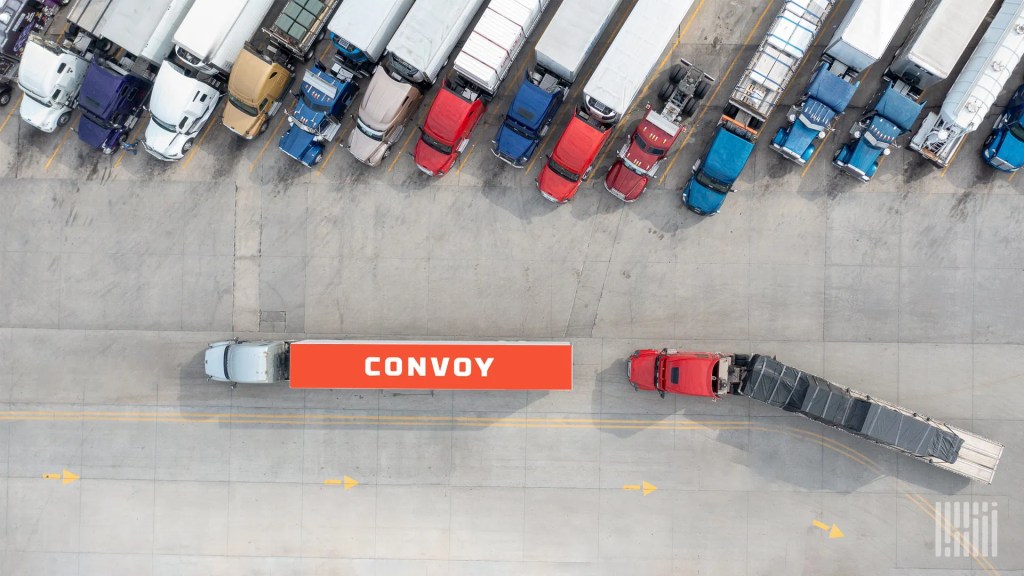
In a striking move, digital freight forwarder Flexport has sold the core Convoy technology platform it acquired in late 2023 to DAT Freight & Analytics for approximately $250 million, less than two years after buying it for roughly $16 million . The transaction marks a dramatic return on a modest investment and highlights shifting strategic priorities within the logistics sector.
When Flexport originally acquired Convoy’s assets following the Seattle‑based brokerage’s collapse, the goal was preservation: to rescue the underlying technology and relaunch it as a neutral digital execution layer for shippers, brokers, and carriers . Over the subsequent 18 months, the platform was rebuilt, onboarding tens of thousands of carriers, reengaging brokers, and demonstrating its value as a broadly accessible freight execution infrastructure.
John Kingston wrote in his FreightWaves article, “What we realized is that a neutral platform is not neutral,” Ryan Petersen, CEO of Flexport said. “We have a brokerage. We’re a massive freight forwarding company.” The combination, he said, raised questions in the industry about whether the Convoy platform truly could be seen as neutral.
For DAT, the acquisition expands its offerings beyond its signature load board. It will join DAT’s recent acquisitions, including visibility provider Trucker Tools and payment startup Outgo, to give users an expanded suite of tools. DAT is offering the Convoy platform with zero upfront cost; users pay only transactional fees, lowering barriers to adoption and likely prompting demand to outpace onboarding capacity
Flexport, for its part, will continue to operate its residual digital brokerage business, which processes roughly 100,000 loads annually (98% mechanically executed). It remains DAT’s largest customer on the platform from day one, underpinning a continued commercial link between the two firms.
Want the full edition of Check Call? Subscribe to the newsletter below