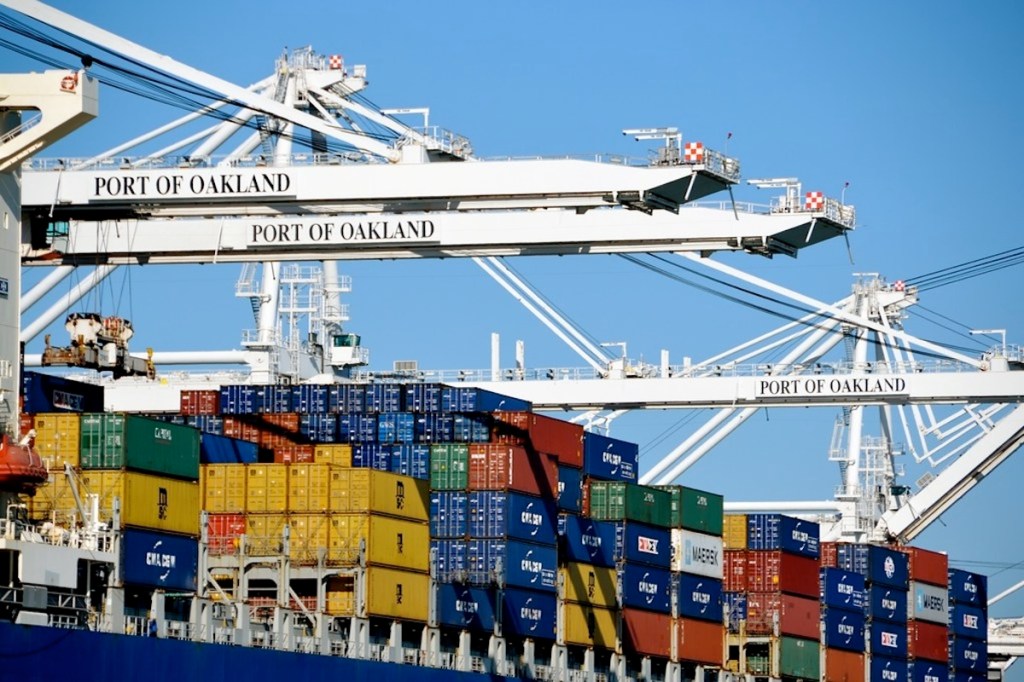
Port of Oakland containers off 10% as ‘recalibration’ hits ocean supply chain

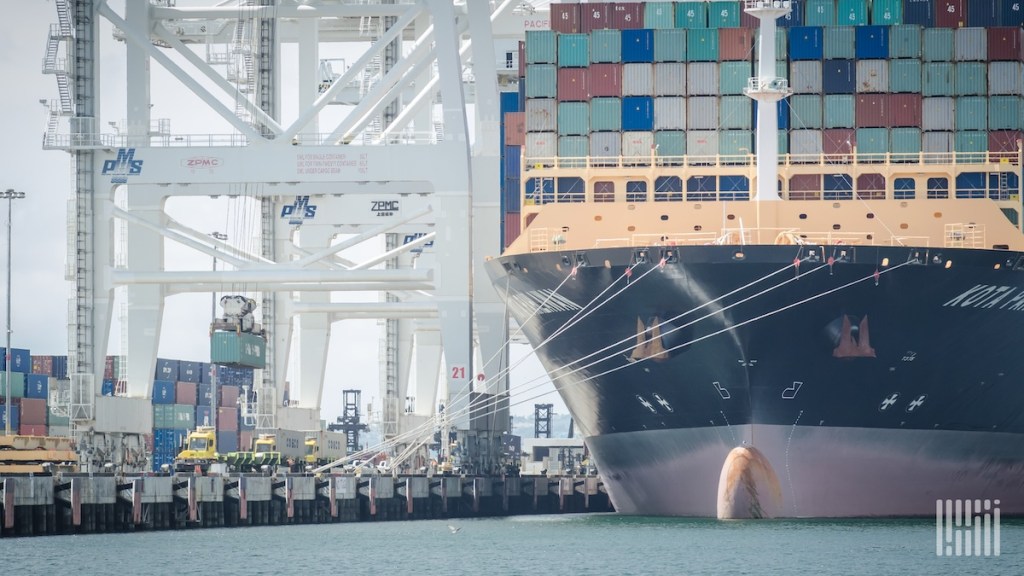
The Port of Oakland experienced a notable downturn in container traffic in June on shifting global trade dynamics and reduced demand.

Total volume dropped 10.1% compared to May’s figures, to 168,460 twenty foot equivalent units (TEUs). Year-on-year comparisons showed a 12.8% decline, from 193,158 TEUs in June 2024.

“This is not a seasonal dip, but a market recalibration,” said Port of Oakland Maritime Director Bryan Brandes, in a release. “Importers and exporters are adjusting their supply chain timing and routing decisions in response to evolving conditions.”

Cumulative container volume for the year remains resilient, up 0.6% y/y, to 1.14 million TEUs. This marginal rise, however, masks underlying shifts within specific categories. Loaded imports, accounting for 70,334 TEUs, saw a significant decrease of 11.3% compared to May and 16.3% from the prior-year period. Importers appear to be grappling with fluctuating trade policies and a downturn in consumer demand.

Loaded exports have not fared much better, recording a 1.3% year-over-year decline at 59,593 TEUs – a 10.3% dip from June 2024. This trend underscores the ongoing fragility in global markets, which continues to exert pressure on export activities.

Empty imports rose by 0.6%, suggesting that while inbound trade is sluggish, preparation for potential goods movement remains stable. Empty exports fell by 13.1%, a reflection of decreased outbound shipments.

A decline in June vessel calls further illustrates this trade shift, to 77 ship visits versus 87 in May and 86 in June 2024. However, a 1.6% increase in average TEUs per vessel highlights carriers’ adaptation through consolidation of freight, leading to fewer yet fuller voyages. This adjustment in service schedules demonstrates a strategic approach to optimizing efficiency against broader trade uncertainties.

In related news, on July 10 the Board of Port Commissioners certified the Environmental Impact Report for the proposed Oakland Harbor Turning Basins Widening Project. The project will enable Oakland to accommodate larger container vessels.

Find more articles by Stuart Chirls here.

Related coverage:

China could block sale of port terminals: Report 

Amid uncertainty, sliding Asia-US container rates are a sure thing

Report: White House maritime chief leaving

Ports back bill to limit Customs charging for inspection services

FedEx and UPS cease parcel discounts, ‘weaponize’ fuel surcharges: report

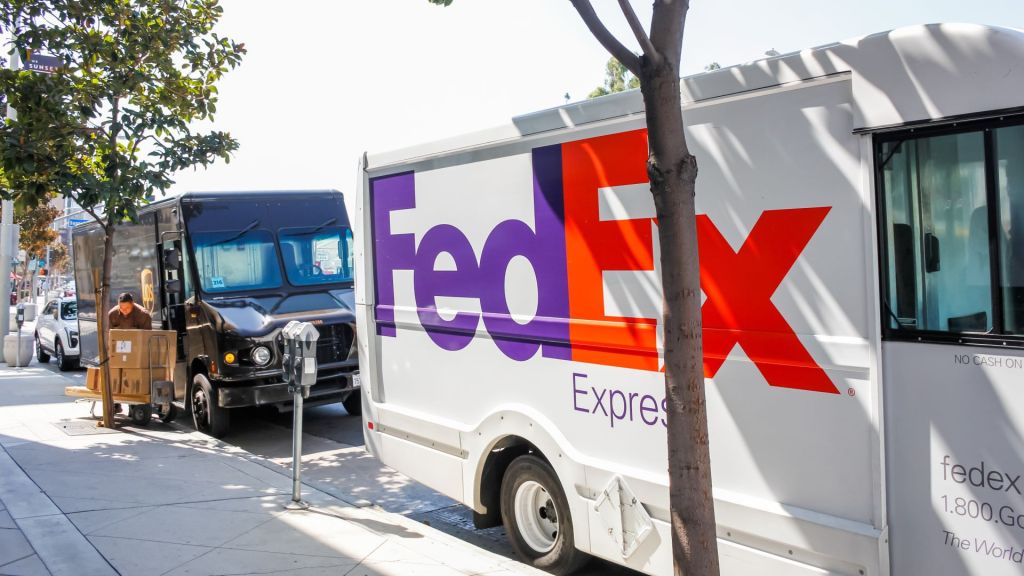
A brown UPS truck and white FedEx truck with blue and orange lettering parked along a curb.

Legacy parcel carriers FedEx and UPS have begun to discontinue commercial discounts, previously offered in response to increased market competition, prioritizing instead high-yield shipments and profitability to better meet Wall Street expectations, according to the TD Cowen/AFS Freight Index published this week.

Businesses are paying more per package shipped with FedEx (NYSE: FDX) and UPS (NYSE: UPS) as the couriers’ ground networks lose volume at the bottom end and replace some of that with express volume as customers trade down in service levels. The shift of cost-conscious shippers to alternative providers with slower, cheaper services is reflected in the ground parcel cost per package reaching a record high of 32% above the index’s 2018 baseline during the second quarter.

The loss of lightweight volume resulted in a higher average billed weight per package that in turn drove up the cost per package, the report from AFS Logistics and financial services firm TD Cowen said.

Parcel volumes for the two delivery powers soared during the pandemic, but began declining in 2023 as e-commerce sales normalized, Amazon expanded and new couriers entered the market. FedEx and UPS engaged in a pricing war with startup delivery companies and retailers like Walmart for about 18 months. Management at both companies has signaled to investors this year that the focus is now on profitable parcel freight.

UPS’s decision in January to give up half of its business with Amazon over the next two years underscores the interest in boosting profitability.

“They both are almost conceding they can’t be a major player in the B2C space,” said Satish Jindel, president of parcel management and consulting firm ShipMatrix, in an interview.

In recent earnings presentations, executives at both companies have concentrated discussion on the B2B market segment.

Data analytics and consulting firm LJM echoed the index’s findings in an investor briefing this week, saying that parcel pricing is more stable today than it was in 2023-24, but is not back to pre-pandemic predictability, according to a readout of the call from Susquehanna Investment Group. It said many clients are making the shift to use the U.S. Postal Service because of Ground Advantage, a product introduced two years ago as a low-cost option for packages up to 70 pounds with transit times of two to five business days.

“The challenge for smaller and mid-sized shippers is that saving $3 to $5 per package by shifting some of their business to USPS or a regional carrier from FedEx or UPS must be weighed against the loss in savings from FedEx/UPS’s volume-driven pricing structure when some of that volume is shifted away. This can effectively trap small and/mid-sized shippers with limited volume in a sole-sourcing parcel strategy with one of the legacy national providers,” Susquehanna equity analyst Bascome Majors wrote.

The parcel giants have also been busy tacking on service fees to their base shipping rates, usually matching any surcharge imposed by their rival.  

Memphis, Tennessee-based FedEx earlier this month notified U.S. customers of peak season surcharges that are higher than those imposed last year. The extra fees begin phasing in on Sept. 29, based on the handling needs or service levels, and run through Jan. 18. FedEx also imposed similar handling, oversize and unauthorized package surcharges on July 14 for international packages.

UPS has been the most aggressive of the two in overhauling its rating model and rolling out new surcharges, according to the TD Cowen/AFS Freight Index.

The manipulation of surcharges by the integrated network carriers is most notable with fuel. Fuel surcharges, based on opaque formulas pegged to the price of fuel, have long been considered a way for carriers to pad profits beyond simply being a cost-recovery mechanism, but FedEx and UPS have “weaponized fuel surcharge as a revenue tool,” the authors said. 

During the past year, domestic ground shippers have experienced a cumulative increase in fuel surcharges of 30% when compared to a constant diesel fuel price level, indicating that the fees are because of carrier actions rather than fuel price fluctuations, according to TD Cowen and AFS data.

Express shippers saw a modest 0.6% increase due to carrier adjustments even though the U.S. Gulf Coast jet-fuel index fell 10.3% in the second quarter. 

Fuel surcharges at FedEx and UPS have climbed steadily over the past 12 months while diesel prices were flat down slightly. (Source: TD Cowen/AFS Freight Index)

“Low demand and competition from other players have pushed both FedEx and UPS to focus on right-sizing networks to hold onto the volumes they can profitably serve,” said Mingshu Bates, AFS Logistics’ chief analytics officer and president of parcel, in the report. 

FedEx has recently accelerated the consolidation of its separate Ground and Express networks. UPS is also closing terminals and moving activity into larger, automated sortation centers to reduce overhead and improve efficiency. 

The TD Cowen/AFS Ground Parcel Freight Index is expected to reach 29.2% in the third quarter, representing a 7% year-over-year increase and a 2.2% decrease from the second quarter.

AFS Logistics provides managed transportation, freight audit and cost management services to freight buyers. It has visibility into more than $39 billion in annual freight spending.

Click here for more FreightWaves/American Shipper stories by Eric Kulisch.

Write to Eric Kulisch at ekulisch@freightwaves.com.

LTL pricing index to hit record high in Q3

FedEx, UPS lose market share to big retailers, small couriers

US parcel market to grow 36% by 2039, Pitney Bowes says

Oregon ties itself closer to California’s Advanced Clean Trucks rule, even though it may have no future

Recent action taken by a key Oregon regulatory agency tightened the state’s ties to California’s battered Advanced Clean Trucks (ACT) rule, though it comes just two months after Oregon had put most enforcement of its own version of ACT on hold. 

It’s yet another step in the fallout from the Congressional and Presidential actions earlier this year to revoke the Environmental Protection Agency waivers that had given a green light for California to implement the ACT, which mandated a growing percentage of truck sales be zero emission vehicles (ZEVs) and the Omnibus NOx rule, which limits emissions of nitrogen oxide from heavy-duty vehicles. 

But even Jana Jarvis, the president of the Oregon Trucking Association, said the vote last week by the Oregon Department of Environmental Quality left her “confused.”

“By the time the meeting was over, I heard from other press saying, why did they do that?” Jarvis said in a phone interview with FreightWaves. 

The actual rule posted by DEQ that was voted on last week–a state spokeswoman referred to it as a state agency rule–has references to numerous sections in the Oregon rule and their tie to a corresponding California rule, along with the date when the California regulation took effect. It substitutes “Oregon” for “California” in the regulations copied by the former from the latter, and swaps out the name of California’s regulatory bodies for those of the Beaver State. 

“The adopted amendments harmonize the already existing rules, originally adopted in 2021, with recent amendments made by California,” an Oregon spokeswoman said in an email to FreightWaves. “This action maintains rules that are identical to California.”

Court challenge to the CRA action

The vote continues the tie between Oregon and California. But it does so in the wake of the Congress’ action under the Congressional Review Act to withdraw the ACT and NOx waiver, an action California and other states already are challenging in court. 

In the meantime, there is no enforcement mechanism available to California. And that means there effectively is no enforcement mechanism available to the 16 states that have taken steps to follow California’s lead in the adoption of environmental rules.

The delay of ACT enforcement Oregon put in place came in May. 

Leah Feldon, the director of the DEP, published a memo May 15 spelling out the “limited enforcement discretion” and “no penalty justification” for OEMs not complying with the state’s ACT for sales of trucks in the 2025 and 2026 model years.

When the memo came down, the Congressional action and Presidential approval had not fully gone through the process but was well underway. 

Dealers were pulling back

More pressing, Feldon’s memo came not long after a brewing squeeze on supplies of new trucks that found Oregon as ground zero but with the prospect of it spreading to other states that had adopted California’s ACT guidelines. It got bad enough that Daimler Truck North America, which coincidentally is based in Portland, Oregon, formally halted sales of new trucks into the state. It lifted the ban quickly

“While manufacturers were involved in developing the ACT framework, they now indicate that ACT requirements are too difficult to meet,” Feldon said in the May memo. “Some manufacturers are limiting new internal combustion engine truck sales as a means to ensure compliance with ACT sales requirements, thereby reducing overall new truck availability to a wide range of users.”

She also cited the “significant uncertainty” surrounding a wide range of supporting infrastructure likely needed to allow the ACT to succeed, including ZEV incentives, investments into charging facilities and the impact of tariffs. 

But another significant problem was that the series of credits and debits that were designed to spur compliance with the ACT. The program generates deficits from sales of internal combustion engine vehicles and credits when zero emission vehicles are sold. 

The ACT’s requirement for OEMs to sell a rising percentage of ZEVs of medium to heavy duty trucks into a state was paired with the Advanced Clean Fleets (ACF) rule, which put a companion mandate on fleets to buy them. 

But with the ACF rule–which Oregon and other states also agreed to adopt–being effectively withdrawn just before the Trump administration took office, OEMs worried that they would not find a market for the ZEVs they were required to sell into states that adopted the ACT, which was either dead or at least put on the shelf while waiting for a court decision. Meanwhile, sales of ICE trucks would be generating deficits that could be difficult to overcome if the ACT rule ever came back in the state.

Or as Feldon put it in her May memo: “The new truck market dynamics in Oregon are not functioning property. In particular, the preferred compliance strategy of manufacturers not delivering internal combustion engine trucks to Oregon’s market to avoid accruing any deficits is failing to meet the needs of dealers and fleets.”

The “current lack of available vehicles,” combined with what was going on at the time with the federal government, was “creating more urgency than the current rulemaking timeline can accommodate,” Feldon wrote.

Several pro-ACT states have put it on hold

Oregon’s actions in May mimicked those of several other states. Maryland Governor Wes Moore signed a similar non-enforcement executive order in early April. So did Massachusetts. Vermont’s non-enforcement executive order came down in May, like that of Oregon. 

Despite the no enforcement memo, Oregon’s DEQ still sees itself as implementing the rule as it can. “Oregon DEQ will continue to implement the Advanced Clean Trucks Rule throughout the duration of enforcement discretion for model years 2025 and 2026,” she said in an email to FreightWaves. “The intent of this enforcement discretion directive is to provide temporary relief to manufacturers facing challenges in meeting zero-emission vehicle (ZEV) sales targets.”

The earlier decision by OEMs to restrict sales into the state is not ongoing, she said: “Initial reports to DEQ indicate that this artificial restriction on truck sales in Oregon is over.”

Jarvis said she also sees sales returning to normal. “I have a handful of members that have placed some orders and are anticipating receiving delivery of them this fall,” she said.

Looming in the background for the states that have chosen to follow California’s lead are its lawsuit against the Congressional action reversing the EPA waiver that allowed the ACT and the Nox rule to go into effect, and the question of the Clean Truck Partnership that theoretically tied the hands of OEMs to adopt California NOx rule, which no longer has a waiver to allow it to proceed.

Jarvis, in discussing the uncertainty surrounding the ACT (which now gets a break for probably 18 months), raised a criticism that has heard often: the rule for now could be having a negative environmental impact. 

“It’s better to replace the older dirty diesel trucks with new clean diesel,” she said. But if sales of new vehicles are slowing because of a lack of clarity with the ACT, Jarvis added, “I don’t think we were accomplishing our objectives with this particular strategy.”

More articles by John Kingston

At a conference of mostly green investors, AlFleet pushes marriage of AI and trucking

Another broker liability case knocks at Supreme Court door, this one involving C.H. Robinson 

A smaller Marten turns in a second quarter of 2025 much like a year earlier

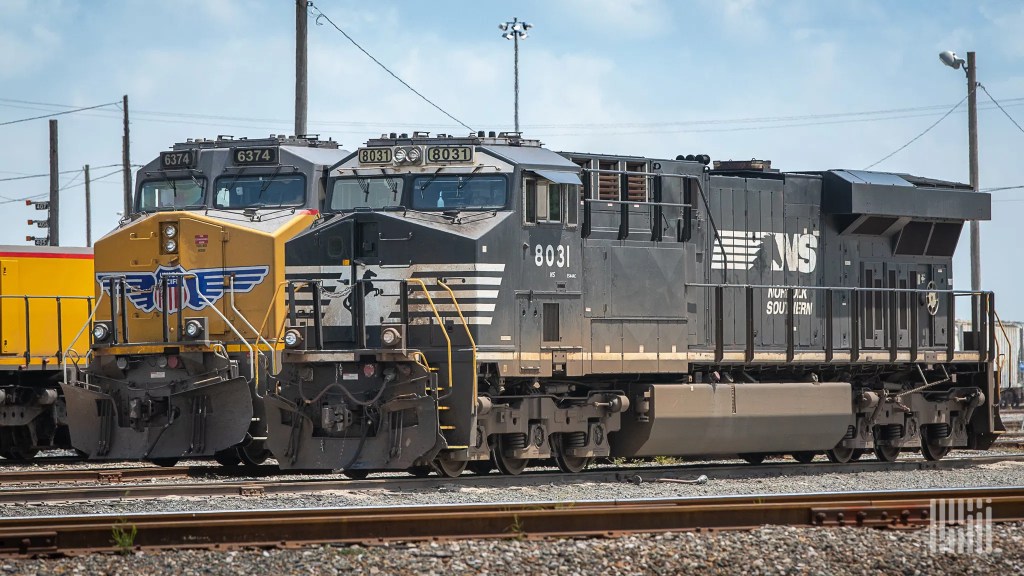
Union Pacific, Norfolk Southern in merger talks: WSJ

In a move that could signal the final round of railroad mega-mergers, Union Pacific is in discussions to acquire Norfolk Southern, its smaller eastern rival, according to a published report.

The talks are in the early stages, the Wall Street Journal reported late Thursday after the close of markets, quoting anonymous sources. 

Shares of Atlanta-based NS (NYSE: NSC) were up 3.65% during the day, but were up 2.55% post-market. Union Pacific (NYSE: UNP) was off 1.6% on the day, and  another 0.71% following the merger news. NS rival CSX (NASDAQ: CSX) rose 3.73% during the day, but was down 1.16% after the close.

If successful, a merger would create a transcontinental colossus.

Union Pacific, headquartered in Omaha, is the largest publicly-held U.S. railroad with a market capitalization of $135.92 billion. It has 32,000 employees operating over 32,000 miles of track in 23 mostly western states.

Norfolk Southern has a market cap of $60.27 billion, with approximately 30,000 employees and a network of 36,000 track-miles in 22 states.

A spokeswoman for Union Pacific said the company would not comment on rumor or speculation. Norfolk Southern did not immediately return messages for reaction.

The last merger among Class I railroads was Canadian Pacific (NYSE: CP) and Kansas City Southern, which was completed in 2023. The previous all-U.S. merger dates to 1999, when NS and CSX divided up Conrail. Union Pacific acquired western carrier Southern Pacific in 1996.

Talk of mergers has increased after Donald Trump was re-elected in 2024, on pledges of a looser regulatory, pro-business administration.

Union Pacific Chief Executive Jim Vena has been vocal in his support of mergers, although other Class I executives have publicly said that tougher rules adopted in 2001 by the Surface Transportation Board (STB) could hinder potential tie-ups. Analysts expect the STB, with four members split event along party lines, to fill its vacant fifth seat with a Republican appointee in 2026.

A number of investment firms have recently jumped into the fray, insisting a carefully-structured proposal with sufficient political support could prove successful.

Activist investor Ancora Holdings tried to wrest control of NS following the disastrous 2023 derailment in East Palestine, Ohio. It failed but did gain several seats on the board, which led to the ouster in 2024 of CEO Alan Shaw.

Subscribe to FreightWaves’ Rail e-newsletter and get the latest insights on rail freight right in your inbox.

Find more articles by Stuart Chirls here.

Related coverage:

Report: Investment firm advising Union Pacific on potential rail merger

BNSF, UP settle dispute over Salt Lake City intermodal service

Washington rail short lines on Jaguar buy list

BNSF launches new expedited LA-Houston intermodal service

Federal support paving way for millions in truck parking expansion

DOT Secretary Sean Duffy

WASHINGTON — Years of trucking-industry pressure on Congress to pass legislation dedicating big money for expanding truck parking may finally pay off now that the U.S. Department of Transportation is elevating it for inclusion in the next surface transportation reauthorization bill.

“We want to fund truck parking for our truckers in this country – a critical need for safety in the United States,” said DOT Deputy Secretary Steve Bradbury, speaking at a surface transportation reauthorization kickoff meeting with state transportation officials at DOT headquarters on Thursday.

Truck parking was one of a number of priorities Bradbury outlined at the meeting, along with finalizing a regulatory framework for autonomous vehicles and streamlining infrastructure project permitting.

“We have a president who actually cares about our work,” Transportation Secretary Sean Duffy told meeting attendees. “He wants to see real progress on big, beautiful projects over the next three-and-a-half years. To have that kind of support from the executive branch is a great opportunity.”

Duffy signs MOU accompanied by U.S. Sen. Ted Cruz, R, Texas (L) and Texas DOT Executive Director Marc Williams. Credit: DOT.

The current surface transportation funding law, signed by President Biden in 2021, expires in September 2026. The House Transportation and Infrastructure Committee is aiming to complete a reauthorization package before the end of the year.

George O’Connor, spokesman for the Owner-Operator Independent Drivers Association, anticipates language from the Truck Parking Safety Improvement Act, reintroduced earlier this year, to serve as the baseline for inclusion in next year’s reauthorization. It authorizes $755 million over three years for truck parking expansion.

“The fact there’s so much energy and enthusiasm around it as an issue, it’s come a long way in just a few years,” said O’Connor, who attended the DOT event. “And it’s now being seen not just as a trucker issue, but a highway safety issue, something everyone can relate to and is a priority with the administration.”

In officially kicking off the administration’s effort in the reauthorization process, DOT plans to “function as something of a clearinghouse” for ideas not only from state DOTs but from the general public as well, Bradbury said.

As part of that process, DOT will be issuing a formal Request for Information that will be open to the public for any project ideas for surface transportation funding, Bradbury said. He provided parameters around the administration’s “back to basics” approach to project funding.

“That means we really want to fund those projects that are important for our nation and for our economy that have national importance. We don’t want to see distracting social justice requirements in there, we don’t want to use infrastructure funding and programs to try to force an artificial energy transition that is going to ruin the U.S. economy. And there will be an emphasis on safety, which means driving down highway fatality numbers.

“It’s ultimately up to the President of the United States – President Trump will decide what legislative proposals and what the specifics are, and what the administration wants to put forward to Congress. And of course ultimately it’s going to be Congress that will decide what the funding levels are for these programs.”

Outside DOT headquarters, Duffy held a signing ceremony for a memorandum of understanding between DOT and the Texas Department of Transportation that empowers the state to manage their own projects with limited federal oversight while cutting down on unnecessary delays and costs.

“We want this historic agreement to serve as an example for the rest of our states to move infrastructure projects faster and more cost effectively,” Duffy said.

Click for more FreightWaves articles by John Gallagher.

RK Logistics appoints new head of semiconductor engineering

RK Logistics Group, a specialized logistics provider based in Fremont, California, has appointed Brian Saucier as director of semiconductor engineering and campus support services.

Saucier brings more than 30 years of experience in complex supply chain operations and business development. His appointment aligns with RK Logistics’ strategic expansion into cost-effective third-party solutions tailored for the semiconductor industry.

In his new role, Saucier will advocate for the benefits of strategically outsourcing engineering and campus support operations to Silicon Valley companies, aiming to help reduce operational costs by 25–35%.

“Brian’s appointment represents our strengthened commitment to delivering transformational economic value to the semiconductor engineering community,” said Joe MacLean, CEO of RK Logistics Group, in a news release emailed to FreightWaves. “Outsourcing isn’t just about cost savings—it’s about converting fixed costs into variable ones, accessing specialized expertise, and elevating operational performance in ways that would be cost-prohibitive to achieve internally.”

Saucier has held senior roles at leading logistics firms, including vice president of business development at XPO Logistics and logistics lead at AECOM.

“The semiconductor and technology sectors require a level of operational excellence that surpasses conventional approaches,” Saucier said. “RK Logistics’ 40-plus years of experience serving Silicon Valley, coupled with our Six Sigma+ performance standards, offers a unique value proposition for companies looking to streamline operations, expand their footprint, and achieve significant cost savings.”

According to RK Logistics, its strategic shift toward outsourced engineering and campus support services can reduce labor costs by 30–50% and cut facilities and administrative overhead by 15–25%.

“The economic case for outsourcing has never been stronger,” MacLean added. “Our clients typically realize total operational cost reductions of 25–35% within the first year, while also improving service quality and operational performance. This is about doing things smarter—not just cheaper.”

China could block sale of port terminals: Report 

The sale of global port facilities to U.S.-based investor BlackRock and Mediterranean Shipping Company by Hong Kong’s CK Hutchison could be blocked by China, unless shipping company Cosco is included, according to a Wall Street Journal report citing anonymous sources.

Hutchison said in March it planned to sell its 80% share of port terminals through subsidiary Hutchison Port Holdings at 43 ports in 23 countries for $22.8 billion.

The company is controlled by billionaire Li Ka-shing.

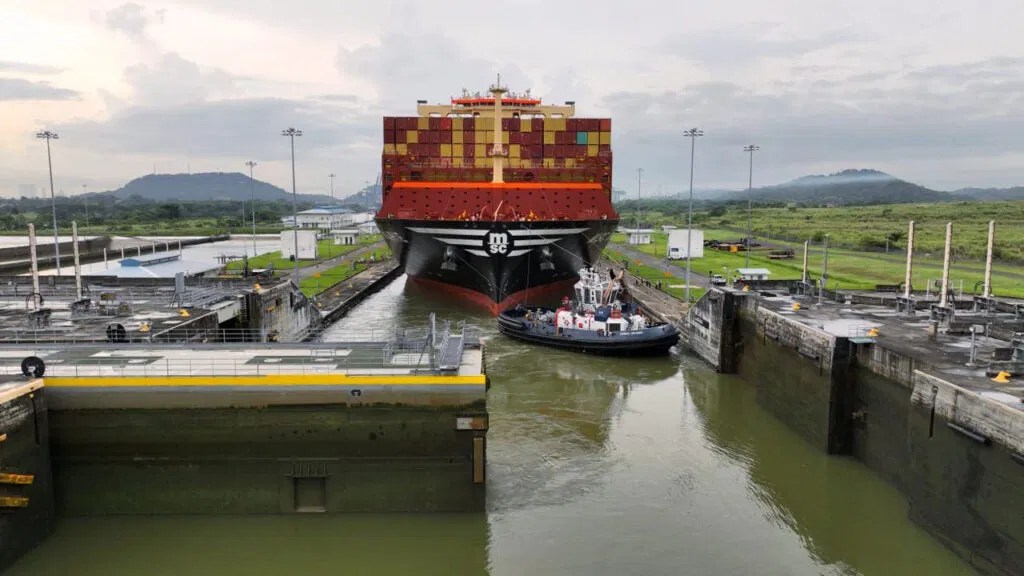
The prospective sale would include terminals near the Panama Canal, the waterway President Donald Trump said is a strategic priority for the United States.

Based in Geneva, MSC is the world’s largest container shipping line, with more than 800 ships and capacity of 5.6 million twenty foot equivalent units (TEUs). 

The newspaper reported that BlackRock, MSC and Hutchison are amenable to a Cosco stake.

Hutchison, BlackRock, and MSC did not immediately respond to requests for comment. Messages left for the White House and Chinese media office were not immediately returned.

The report added an agreement is not expected before a July 27 deadline for exclusive talks among BlackRock, MSC and Hutchison, the report added.

Find more articles by Stuart Chirls here.

Related coverage:

Amid uncertainty, sliding Asia-US container rates are a sure thing

Report: White House maritime chief leaving

Ports back bill to limit Customs charging for inspection services

FMC investigating Port Houston pacts with container carriers

Amid uncertainty, sliding Asia-US container rates are a sure thing

Weakening import demand and the global tariff war stoked by President Donald Trump continue to push down on container rates on critical Asia-U.S. trade lanes.

Tariffs have resurfaced as a significant influence on consumer prices and freight costs, said analyst Freightos in an update, with inflation in the U.S. ticking up by 2.7% in June as the effects of import tariffs are beginning to manifest more significantly.

Importers, who previously managed to mitigate these impacts through strategic frontloading in response to various global disruptions, including the pandemic and trade conflicts, are now facing the expiration of such buffers. Concurrently, the European Union is preparing to impose retaliatory tariffs on $84 billion worth of U.S. goods as Washington threatens 30% tariffs as of August 1. But Brussels has said it will delay those levies in hopes of striking a deal with the Trump administration.

On the cost front, the freight rates are experiencing a distinctive trend. Despite disruptions like those in the Suez Canal, the reduced demand has kept ocean rates under pressure. The typical peak season has not spared the industry, as evidenced by a 24% reduction in Asia–U.S. West Coast rates to $2,369 per forty foot equivalent unit, while Asia–U.S. East Coast prices slipped by 5% to $4,888 per FEU. Moreover, Asia–Mediterranean freight prices fell by 4% to $3,802 per FEU.

Asia–Northern Europe routes have defied this decreasing trend, with rates climbing by 4% to $3,509 per FEU as Asian manufacturers likely find new business outside the American market. 

The shipping industry has been quick to adapt, with carriers aggressively cutting trans-Pacific capacity by almost a quarter. This measure aims to align the supply with the diminished demand and stabilize the business, which has been reeling under the dual pressures of logistical barriers and price volatility.

In regions beyond the immediate economic tussle, strategic investments and partnerships are forecasted to revitalize trade infrastructures. For instance, signs of economic reconstruction are visible in Syria, which has embarked on an $800 million partnership with UAE-based port terminal operator DP World to enhance its Tartous facilities. This development mirrors global logistics players seeking to capitalize on eased sanctions and potential new trade routes to establish footholds in burgeoning markets.

Find more articles by Stuart Chirls here.

Related coverage:

Report: White House maritime chief leaving

Ports back bill to limit Customs charging for inspection services

FMC investigating Port Houston pacts with container carriers

June box record for Port of Los Angeles 

Vote on Canada Post labor contract begins Monday as losses mount

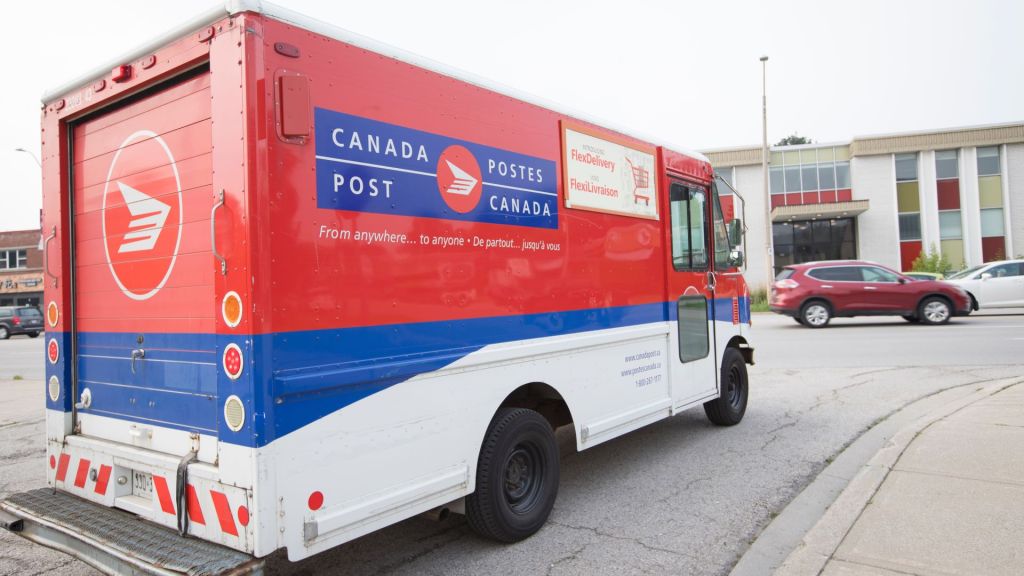
A red-blue-and-white Canada Post delivery vehicle, seen close up from the side rear on a roadway.

The government of Canada on Monday will begin voting for 53,000 Canada Post employees, against the wishes of union leadership, on whether to ratify the state-owned company’s final contract offer.

An affirmative result would end 19 months of bitter negotiations, which included a 32-day strike during the winter holidays, and delivery delays caused by mail carriers refusing to work overtime since late May. The strike and overtime ban have hurt Canada Post’s parcel business as shippers, especially online retailers, look for more reliable alternatives. 

In June, Canada Post saw losses from operations increase to approximately $7.3 million a day – more than double the daily average losses in June 2024.

The Canada Industrial Relations Board will administer the confidential vote, which will take place online or by phone through Aug. 1, Canada Post announced. Voting is open to all employees in the Canadian Union of Postal Workers’ (CUPW) urban and rural/suburban bargaining units. If a majority of members in a bargaining unit accept the offer, it will become the new collective agreement for the unit. 

The Minister of Jobs and Families in mid-June imposed the ratification process at the request of Canada Post, which said it wasn’t confident in CUPW leadership’s accurate representation of proposals to rank-and-file workers or workers’ alleged opposition to the latest deal. Canada Post presented its best and final offer on May 28.

The CUPW has urged members to reject the company’s proposal.

“The employer is showing us that it would rather deal with individual employees instead of facing the Union as a whole. The employer knows it is easier to divide workers when dealing with them as individuals — and that it also weakens our union. We are stronger and have the most bargaining power when we stand together with our co-workers and our union,” the CUPW said in a July 4 message to members. It also complains that Canada Post is adding memoranda calling for the withdrawal of union grievances that aren’t part of the contractual language under consideration

Canada Post seeks a four-year contract allowing it to change delivery operations and work conditions to help it compete in the parcel market and return to financial stability as mail and parcel volumes shrink.

Since 2018, the company has recorded more than $2.8 billion in losses before tax. In 2024, it posted an operating loss of nearly $948 million.

Canada Post’s mail volumes have plummeted 70% over 20 years due to digital communications, while the number of addresses served has increased by 3.3 million. At the same time, its market share in parcels has been cut in half in a few short years. Parcel revenue declined by 20.3% in 2024 as volumes fell by 56 million pieces, or 20%, compared to 2023, according to Canada Post’s annual report. 

Workers would receive a 13.6% wage increase and a $730 signing bonus, with no changes to benefits. Canada Post says it intends to create new part-time positions with predictable hours and benefits that would help it provide weekend parcel delivery and optimize delivery during the week.  The CUPW opposes the idea because it says the proposal would essentially eliminate overtime for full-time mail carriers.

The carrier also wants to phase in dynamic routing, which involves regularly optimizing delivery routes based on volumes, delivery addresses and pickup requests instead of operating static routes. It also plans to give supervisors the ability to level loads for mail carriers so that work is more evenly distributed and mail gets delivered faster. The union says the proposed language doesn’t have any limits on how much or how frequently work can be reassigned. 

Click here for more FreightWaves/American Shipper stories by Eric Kulisch.

Canadian government to force union vote on Canada Post contract offer

Canada Post, mail carriers remain far apart as contract talks resume

USPS hikes parcel rates and stamps by 7%

Australia Post rolls out parcel-only post offices

A look under the hood: Breaking down two real Shared Truckloads

Shippers often face a false choice between the speed and security of truckload and the lower cost of LTL. Shared Truckload (STL) offers a third option, and it is gaining traction as shippers look for ways to reduce costs without sacrificing reliability.

Flock Freight’s FlockDirect® service enables STL at scale by pooling multiple shipments from different companies onto one truck—without terminal stops or transloading. With Shared Truckload, shippers pay only for the space they need and carriers avoid running partially empty. This naturally leads to fewer trucks on the road and fewer carbon emissions. It’s a clear alignment of operational efficiency, financial gain and environmental benefit.

Flock has staked its claim as the largest Shared Truckload brokerage in the U.S. by building the technology that makes this model work at scale. Its approach centers on automating the complex process of matching shipments into efficient Shared Truckloads. What used to be a manual, messy effort now happens in seconds.

Rethinking capacity: supply-side optimization

For carriers, the value of STL isn’t just in the initial route, it’s in how remaining trailer space is managed across the haul. Flock’s STL AddOnsTM product enables carriers to easily top off trucks with compatible freight during a Flock route, turning underutilized space into revenue.

This shift in capacity strategy—moving from spot-matching to in-transit optimization—is where STL’s potential really opens up. STL AddOns isn’t just about efficiency, it also reduces friction. Carriers get clear instructions, smooth transfers and fewer service disruptions for multi-stop loads, making the STL experience more predictable and profitable.

Scaling STL with AI

What enables this level of optimization is Flock’s AI-powered pooling engine. It doesn’t just match loads, it evaluates trillions of possible combinations based on origin, destination, timing, equipment, service levels and more. The result is a living, growing network that gets more efficient with every new shipment.

In contrast, manual STL efforts often involve matching in spreadsheets and with limited freight density, making service less consistent and savings hard to count on. With slow quoting, unpredictable ETAs and too many touchpoints, it’s clear why 96% of shippers say they’re unhappy with their current multi-stop solutions.

Flock’s tech-enabled model solves these challenges by automating what human brokers can’t reasonably scale, especially when precision and timing are critical.

STL in action: Two route examples

Let’s break down two real STL routes to see how this works on the ground.

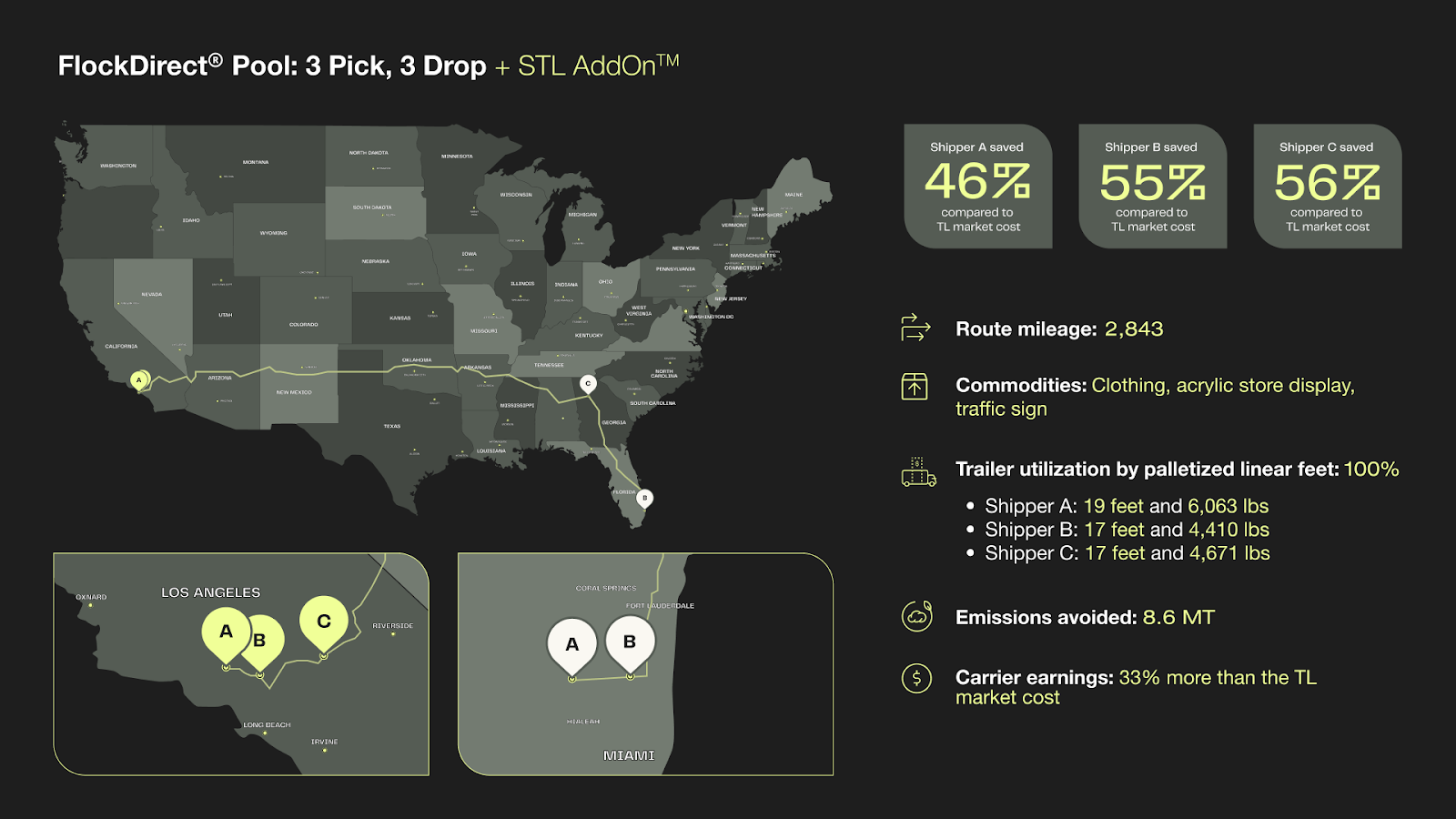
Pool Example 1: Southern California → Georgia → Florida

Three Flock shippers—each operating independently—were pooled into a single, optimized Shared Truckload. The carrier initially booked the SoCal-to-Georgia leg, then received alerts about two AddOn load opportunities that aligned with the route and delivery windows. By combining all three shipments:

  • The trailer ran at 100% capacity
  • All shippers saved over 45% compared to the truckload rate
  • The carrier earned 33.6% more than the truckload rate

Because FlockDirect® shipments are load-to-ride, each shipment was loaded in a first-in, last-out sequence. Freight stayed on the truck from pickup to delivery, receiving truckload-level service.

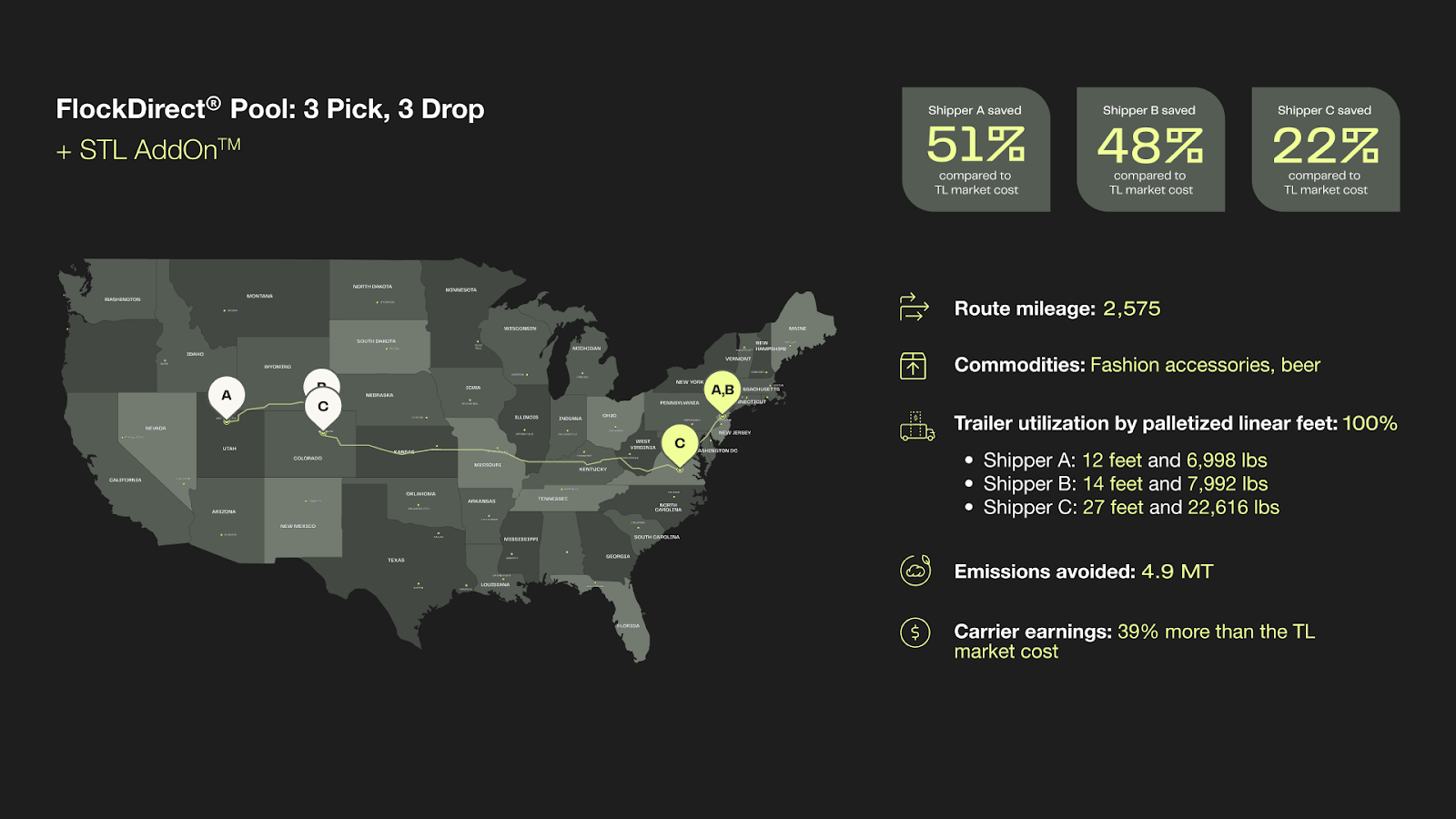
Pool Example 2: New Jersey → Virginia → Colorado → Utah

This load began with two shipments pooled into a Shared Truckload. When a third compatible shipment was booked by another Flock shipper, STL AddOns technology notified the carrier in real time, adding a third shipment to the STL.

The STL AddOn significantly increased carrier earnings while every shipper still saved on costs.

By combining these three shipments:

  • The trailer ran 100% utilized
  • Carrier earnings rose 39.4% above TL rates
  • Shippers still saw 20–50% cost savings

What made this example stand out: All three deliveries had appointment windows, which the AI accounted for during optimization. The result was a time-sensitive route delivered on schedule—without sacrificing efficiency or profitability.

Shared Truckload’s growing role in freight strategy

More shippers are rethinking traditional multi-stop and partial-load strategies. They want better service, simpler planning, and lower emissions.

Tech-enabled STL offers a middle ground that’s increasingly hard to ignore. Shippers avoid the unpredictability of LTL while still controlling costs. Carriers gain access to a new, unique way to maximize revenue per mile. The planet wins too, as fewer trucks run more fully and efficiently.

Shared Truckload is becoming a key lever in modern freight planning—especially when it’s powered by tech that enables the model to rapidly scale. As the industry continues to chase smarter, leaner logistics, mode options like STL will move from innovative to indispensable.

Click here to learn more about Flock Freight.