Truck transportation jobs: 12 months of overall stability
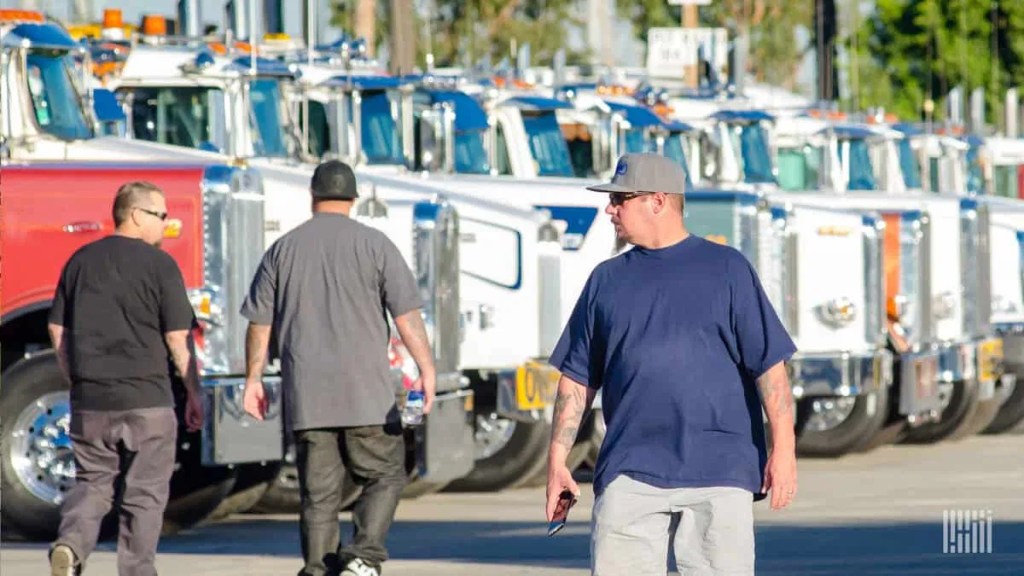
Truck transportation jobs declined in June by a relatively small amount, and the 12-month cycle of changes shows an industry that is employing about the same number of people it did a year ago.
With the ups and downs of the past year, the end result is that according to the monthly employment report released Friday by the Bureau of Labor Statistics, there were still 2,700 more jobs in truck transportation in June 2025 than there were a year ago, which is an increase of just 0.17%.
That number–2,700–also was the size of the decline in jobs between a revised figure for May and June’s level of employment.
The May revision was 1,800 jobs lower than originally reported a month ago. The April report–which is now final until being subject to annual revision in the BLS model that will be released in February–was 1,000 jobs fewer than it was in last month’s report.
The monthly totals on truck transportation jobs in the latest report: April’s number was 1,525,300 jobs, 1,523,600 in May and 1,520,900 in June.
Starting with the July 2024 jobs report, the month-to-month changes have featured separate non-sequential increases of 3,300, 8,000 and 1,200 jobs, and declines of 1,600, 200, 600, 1,300, 1,000, 3,000, 1,700, wrapping up with the June decline of 2,700 jobs.
Big revisions in warehouses
Warehousing and storage jobs in June, which have been volatile of late, ticked slightly higher on a month-to-month basis. But revisions from the prior two months reflected strong gains in hiring.
Warehousing and storage jobs gained 2,300 to 1,836,700 jobs in May.
It was what the BLS said about May and April that was more notable. The May figure had a strong upward revision by 7,300 jobs, rising to 1,834,300 jobs. That came after an April revision that brought the final April number to 1,837,000, up from 1,832,100 jobs, a gain of 4,900 jobs.
Employment in that sector is still less than a year ago. Warehouse employment in June 2024 was 1,851,900 jobs.
Mazen Danaf, an economist with Uber Freight, dove into the subsector numbers that are on a one-month lag. He said they reveal a “surprising counter-trend”: long-distance truckload employment was up by 3,700 jobs.
“This increase was unexpected given the ongoing soft market and likely indicates carriers’ early, though ultimately unrealized, optimism for tightening conditions,” Danaf said in an email to FreightWaves. “It remains to be seen if this headcount increase will last, especially as spot rates have recently turned negative year-over-year for the first time in months.”
Terrazas on the overall numbers
Aaron Terrazas, an independent economist, described the lost number of jobs in trucking as “nothing beyond the range of normal monthly volatility.”
Terrazas also looked at the broader report that beat consensus on total hiring (up 147,000 jobs versus 110,000 jobs), a stable unemployment rate and “backward revisions…all to the upside this month.”
“We are digesting higher interest rates, we are digesting tariffs,” Terrazas said in an email to FreightWaves. “If that’s the case and we’re seeing another round of apocalypse averted rather than apocalypse delayed, noise earlier this week about the prospect for lower interest rates from the Federal Reserve appears premature.”
In other highlights from the report:
Pay keeps rising. The average hourly wage for production and nonsupervisory employees in the truck transportation sector reached $31.11 in May. That data is always on a one-month lag. It’s the first time it has ever been more than $31/hour. It has now risen four consecutive months, and is now up almost 3.9% in the last year. By contrast, production and nonsupervisory wages in the warehouse sector are up 3.3% in the last year.
There are a lot more jobs as couriers than there were a year ago. June employment in that sector was 1,148,300 jobs. A year ago it was 1,097,900 jobs, for a gain of 4.6%.
Despite all the signs of strong rail markets, employment is down from a year ago. Jobs in rail in June 2024 were 156,600 jobs; in June 2025 they were 153,900 jobs, up 100 jobs from a month ago. They are down 1,000 jobs since the end of 2024.
US container import tariffs averaging 21%, says Maersk
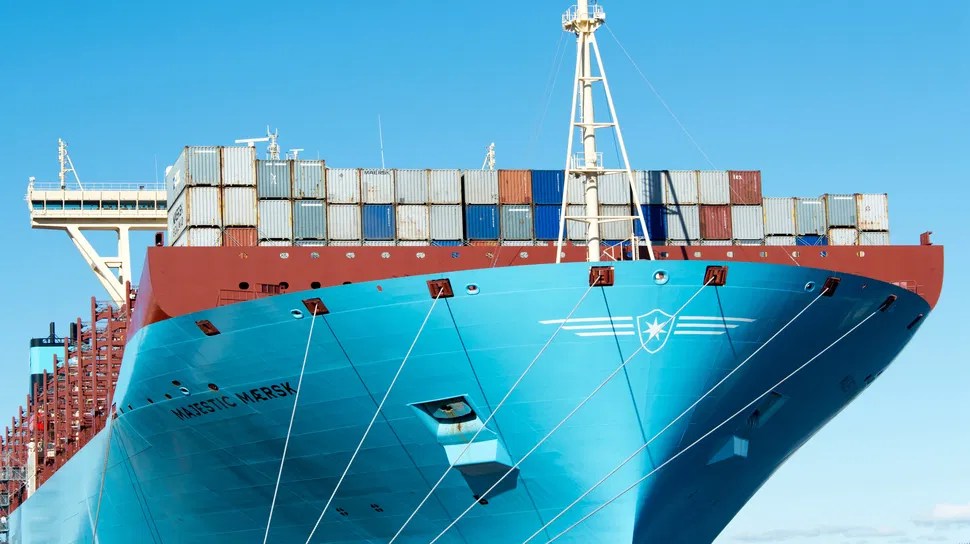
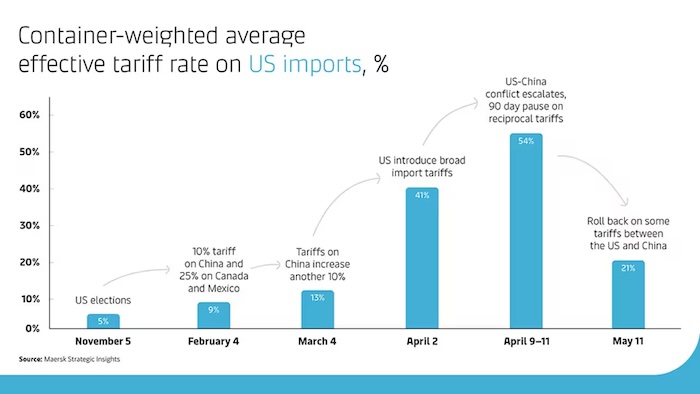
Importers are paying an effective 21% tariff on all containerized imports entering the United States, the world’s second-largest ocean line said.
That’s less than half the rate of the peak average earlier this year, Maersk said Wednesday in a market update.
“On average, companies are currently paying an effective average tariff rate of approximately 21% relative to container load on all U.S. imports, according to Maersk’s container-weighted effective average tariff rate metric,” the company said. “At its peak, shortly after April 2, the average effective rate was 54%.”
China and the U.S. announced a 90-day pause in their escalating tariff fight April 9. That pause ends July 9, and some extend to next month, but it’s unclear how many new trade agreements Washington will complete by then, or whether tariffs will return to previous levels.
Washington has come to basic terms on trade deals with China, Vietnam, and Great Britain.
“Visibility has worsened and trade barriers have increased since the U.S. formally announced its tariff package to the world on April 2,” Denmark-based Maersk (OTC: AMKBY) said. “For now, most country-specific import tariffs are paused while long-term deals are being negotiated, with deadlines coming up in July and August. However, there are still trade tariffs impacting how companies move their cargo, particularly between the U.S. and China.”
Ocean container rates from China to U.S. West Coast ports have fallen sharply in recent weeks on weaker demand following an initial surge as liner operators rushed to restore vessel capacity during the tariff pause.
At the same time, the SONAR Inbound Ocean TEU Volume Index as of July 3 was 2307.46, compared to a high mark of 2693.35 in June, 2021.
Some U.S. companies in apparel and fashion have shifted their sourcing, and have reached “single-digit” dependency on Chinese manufacturing, said Maersk Chief Commercial Officer Karsten Kildahl, in the update.
“[O]ther commodities like home improvements have a significantly higher level of Chinese manufacturing due to the nature of the goods. This is not just a short-term tactical reaction to escalating geopolitical tensions, but rather a long-term strategic move to future-proof supply chains and remain resilient.”
Global container demand grew 6.1% in the first quarter, comparable to previous quarters. Maersk said preliminary second quarter figures will reveal a high degree of volatility triggered by tariff announcements.
The company in May said global container demand would be within a wide range of –1% to 4% for all of 2025.
The company added that tensions in the Middle East continue to make the Red Sea-Suez Canal an elevated security risk.
Maersk said its Gemini services with Hapag-Lloyd (OTC: HLAGF) had a 90.9% schedule reliability in May, above its 90% forecast.
Outlook for rail freight rife with turbulent undercurrents
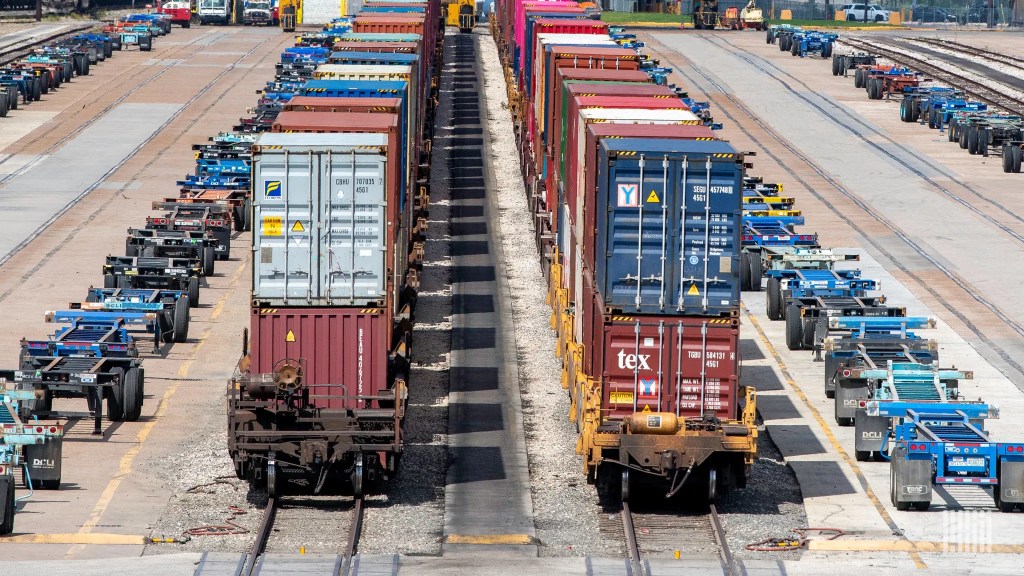
A new report says the uncertain economic climate continues to weigh on intermodal and carload traffic in different ways.
The latest analysis by the Association of American Railroads finds that the U.S. economy is caught between signs of strength and pervasive uncertainty, influenced by a range of variables including consumer spending patterns, global supply chain challenges, and fluctuating interest rates.
Intermodal traffic experienced a notable decline, with a 2.9% drop in originations in June 2025 compared to the same month in the previous year. This decrease is attributed to ongoing global supply chain disruptions and reduced international shipments, as worldwide trade tensions and logistic bottlenecks persisted. Despite this setback, the second quarter of 2025 showed a 2% increase in intermodal traffic year-over-year, indicating a potential resilience amidst prevailing challenges.
Conversely, carload traffic — excluding intermodal — saw a 2.1% increase in June 2025 on a year-over-year basis. This marked the fourth consecutive month of gains, underscoring a steady, albeit fluctuating, demand within the industrial economy. The second quarter of 2025 particularly stood out with a 4.8% rise in carloads compared to Q2 2024, representing the largest quarterly gain since the third quarter of 2021.
Coal staged a modest recovery, with a 2.4% increase in carloads in June 2025, marking four consecutive year-over-year gains. This uptick reflects improved performance compared to previous periods of decline, as the coal industry adjusts and rebounds from historical lows.
The chemicals sector, however, faced slight contraction, with a 0.6% decrease in carloads from June 2024 to June 2025. This decline is noteworthy as it breaks a streak of consistent growth over the past 22 months. Nonetheless, year-to-date figures reveal a 1.6% increase in chemical carloads, driven by sustained manufacturing activity despite higher natural gas prices that could potentially hinder production.
Grain carloads presented a more optimistic picture, increasing by 11.3% in June 2025 compared to the previous year. This growth is attributed to a rise in U.S. exports, bolstered by substantial gains in corn despite declines in soybeans and sorghum. Such export-driven demand has significantly contributed to the sector’s performance, maintaining upward momentum.
Industrial products, which encompasses a broad range of goods including chemicals, autos, and steel, a marginal 0.4% growth was noted in June 2025. However, year-to-date carloads for this category showed a slight decline of 0.3%, reflecting the sporadic nature of industrial output over the past 18 months. These fluctuations point to a broader sluggishness that typifies the U.S. industrial economy during this period.
Various economic indicators further illustrate the environment within which the rail industry operates. The labor market, for instance, has shown mixed signals. Preliminary data indicate net job gains of 147,000 in June, contributing to consumer spending momentum. Yet, the unemployment rate’s slight decline to 4.1% and the fluctuating job openings suggest potential vulnerabilities. The consistent job growth has sustained consumer-driven freight demand, crucial for the rail industry, but signs of a cooling labor market warrant cautious optimism.
Consumer spending, which accounts for approximately 70% of U.S. GDP, presents another critical factor. May 2025 saw a preliminary 2.2% increase in total inflation-adjusted consumer spending year-over-year, marking the smallest gain in over a year. On a monthly basis, spending actually fell in May, hinting at a slowdown that, if prolonged, could damp rail volumes, particularly intermodal traffic.
The manufacturing sector continues to contract, with the ISM Manufacturing PMI remaining below 50%, indicating a lack of expansion. This ongoing contraction poses challenges for the rail freight industry, especially given the significant share of rail carloads linked to manufacturing outputs. Meanwhile, the services sector, a dominant component of the U.S. economy, is teetering on the brink of contraction, with its PMI hovering just above the 50% threshold. A downturn in services could further impact job growth and consumer demand, cascading into reduced intermodal flows.
Inflation remains relatively stable, with the price index for personal consumption expenditures up 2.3% year-over-year in May 2025. This aligns closely with the Federal Reserve’s long-term inflation target, but continuous monitoring is essential as the Fed assesses future interest rate adjustments. Inflation trends, coupled with other economic data, will play a crucial role in shaping fiscal policies that impact the rail industry.
Looking ahead, AAR said the second half of 2025 appears unlikely to provide definitive clarity, as freight volumes are expected to continue responding to a complex blend of supportive and restraining forces.
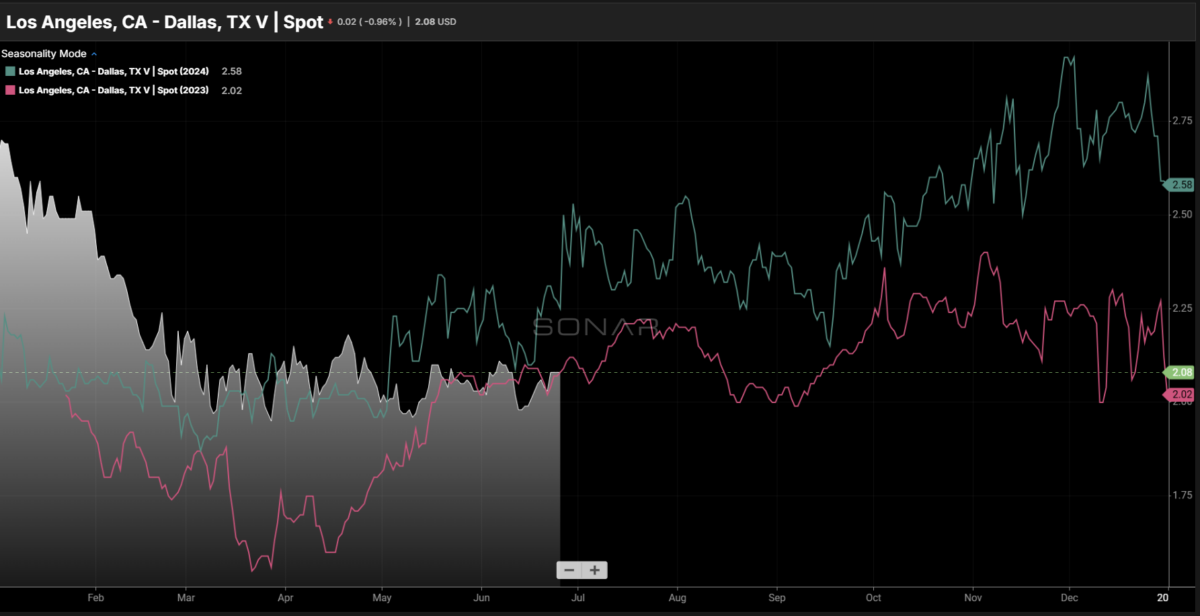
SONAR has launched a new capability allowing users to search and visualize spot rates at the lane level and compare year-over-year seasonality directly within its charts. This enhancement to the high-frequency freight market intelligence platform aims to provide shippers, carriers, and brokers with critical insights for navigating the volatile transportation market.
The ability to track spot rates on specific lanes and analyze their seasonality offers several key advantages. Businesses can gain a clearer understanding of current market conditions, such as whether rates on a lane like Chicago to Dallas are spiking due to tight capacity or dropping due to oversupply. This visibility supports better negotiation with carriers and helps avoid overpaying. By comparing these rates year over year, users can identify seasonal patterns, such as predictable surges during peak holiday shipping in Q4 or lulls in early Q1, enabling more accurate budgeting and the ability to adjust shipping schedules to avoid costly periods.
This new feature strengthens procurement and negotiation strategies by helping users understand when rates are likely to dip or spike, allowing for more effective timing of negotiations with carriers. For instance, securing capacity before a known high-demand season can lock in lower rates. Carriers can also benefit by identifying high-demand lanes and seasons to strategically position assets or adjust pricing.
Furthermore, tracking spot rates on specific lanes provides a real-time pulse on market changes, enabling businesses to respond proactively to disruptions like port congestion or driver shortages. Year-over-year seasonality analysis adds a layer of risk mitigation by helping identify recurring patterns, such as rate spikes during hurricane season in certain regions, so businesses can plan contingencies.
These data-driven insights are crucial for enhancing forecasting and long-term strategic planning. A retailer, for example, can use historical rate data to estimate transportation costs for an expected surge in holiday demand. This capability also supports scenario planning, improving resilience and adaptability by allowing analysis of how spot rates responded to past events. Ultimately, companies that leverage such granular lane-level data and seasonality trends can make faster, smarter decisions, gaining a competitive edge.
SONAR is the high-frequency freight market intelligence platform dedicated to powering businesses in the supply chain. It provides users with exclusive, near real-time trucking, railroad, ocean, and air freight transportation data and actionable intelligence. SONAR’s price, demand, and capacity data spans across all modes, allowing logistics leaders to benchmark, analyze, monitor, and forecast the global physical economy, helping businesses understand and navigate the global supply chain for better decision-making and performance.
Amazon robots are on course to outnumber its human workers
E-commerce conglomerate Amazon is celebrating the deployment of its one-millionth robot as the company continues to advance its automation efforts.
On Monday, Amazon published a news release stating that the robot was delivered to a fulfillment center in Japan as part of the company’s global network of over 300 facilities.
The one million robot milestone shows a growing trend in robotics and AI use by the company for fully autonomous work and assistance with tasks. Amazon stated that it is introducing a new generative AI foundation model called “DeepFleet” designed to boost the efficiency of its robotics fleet by 10%.
Labor impact
Increasing investments by the company in automation and AI has robots on track to outnumber Amazon’s total number of human employees at the company. According to Amazon’s most recent Q1 2025 earnings report, the company currently employs 1.56 million people – a three percent increase year-over-year from Q1 2024.
According to Amazon’s news release, the company has “upskilled” a little under half its employees with training focusing on working with advanced technologies.
“These robots work alongside our employees, handling heavy lifting and repetitive tasks while creating new opportunities for our front-line operators to develop technical skills,” stated Scott Dresser, vice president at Amazon Robotics, in the release. “I’m particularly proud that since 2019, we’ve helped upskill more than 700,000 employees through various training initiatives, many focused on working with advanced technologies.”
Dresser added that the company’s 12th-generation fulfillment center in Shreveport, Louisiana, requires 30% more employees in reliability, maintenance and engineering roles for upkeep of its advanced robotics.
Tye Brady, chief technologist for Amazon Robotics, told the Wall Street Journal in an interview that the new robots are not meant to displace worker jobs, but make them easier.
Another Amazon Robotics scientist told WSJ that the demand for robot technicians has created “completely new jobs” for warehouse workers to be trained for robotics apprenticeships.
Amazon’s growing robotics program, particularly in the warehouse space, appears to be in line with recent industry trends. In May, German logistics giant DHL Group announced a partnership with Boston Dynamics to purchase over 1,000 more package-handling robots.
DOT Advisory Board to meet at the White House
WASHINGTON — The first meeting of a new federal advisory board created to overhaul the nation’s freight and passenger transportation infrastructure has been set for July 16 at the White House.
The meeting is scheduled to 2:00 p.m. EDT and the public will be able to attend virtually, according to an agenda published this week.
Members of the 10-member board have yet to be announced. DOT received over 50 nominations in its initial call for nominees, including officials from the American Trucking Associations, the Association of American Railroads and the Intermodal Association of North America, and Amazon.
After extending the deadline the department received approximately 30 more nominations, including officials from C.H. Robinson, UPS, and Tucker Company Worldwide.
“The purpose of the U.S. DOT Advisory Board is to provide strategic vision and high-level guidance to modernize and enhance the United States transportation systems,” according to DOT, which announced the creation of the board in May.
According to DOT, board members will be tasked with providing guidance on:
Developing strategic recommendations for infrastructure modernization and expansion.
Identifying key investment opportunities in transportation technology and innovation.
Providing insights into regulatory and policy improvements to enhance efficiency and reduce bureaucratic obstacles.
Advising on public-private partnerships to maximize funding and impact.
Members of the public can access the livestream accessible here. Thepublic can submit written materials, questions, and comments to the committee in advance of the meeting no later than July 9.
Why you should attend FreightWaves’ pioneering Supply Chain AI Symposium in Washington, DC
In a rapidly evolving logistics landscape, embracing cutting-edge technology is no longer optional—it’s essential. FreightWaves is excited to announce its upcoming Supply Chain AI Symposium, set to take place at the International Spy Museum in Washington, DC, on July 30, 2025. This landmark event promises to be a confluence of industry leaders, innovators, and AI enthusiasts who are spearheading transformations within the freight industry.
The Supply Chain AI Symposium will provide a platform for participants to engage with groundbreaking developments in AI, from predictive analytics and autonomous logistics to demand forecasting innovations. As the industry steadily shifts towards more integrated digital solutions, this event offers a unique opportunity for professionals to explore how AI is being leveraged to enhance efficiency, visibility, and sustainability in supply chain operations.
Celebrate Innovation with the AI Excellence in Supply Chain Award
A highlight of the event will be the presentation of the new AI Excellence in Supply Chain Award. This accolade is tailored to acknowledge FreightTech, logistics, and transportation companies that have successfully utilized AI to drive substantial changes within the industry. Nominees will be evaluated based on innovation, effectiveness, and overall impact on the supply chain, with the winners being announced during the symposium.
The award serves as an exceptional opportunity for companies to gain recognition for pioneering AI-driven solutions that are reshaping the sector. From real-time visibility tools to route optimization systems, eligible solutions must demonstrate a capability to make the supply chain smarter and more resilient.
Why Attend the Supply Chain AI Symposium?
For those invested in the logistics and supply chain sectors, the symposium provides several compelling reasons to attend:
Networking: This premier event offers unparalleled networking opportunities with industry leaders and AI pioneers.
Insights: Gain valuable insights into the future of AI in logistics through panel discussions, case studies, and keynote speeches.
Innovation Showcase: Witness firsthand the technologies redefining supply chain management.
Call to Action: Register Today
As we stand on the brink of a new era in supply chain management, your participation at the Supply Chain AI Symposium is crucial. Whether you’re an industry veteran or an aspiring innovator, the event aims to equip you with the knowledge and connections to harness AI effectively within your operations.
Don’t miss this chance to engage with the trailblazers who are driving the future of freight. Registration is now open, and participants are encouraged to secure their spot promptly to ensure access to all the event has to offer. Visit the Supply Chain AI Symposium Page today to register and become part of a transformative journey in logistics innovation.
Mark your calendars for July 30, 2025, and join us in Washington, DC, for an enlightening exploration of AI’s potential in the supply chain industry. Celebrate AI excellence and discover how your organization can thrive in this fast-paced digital age.
Inside the Gaps – What the FMCSA Isn’t Catching in Trucking Safety
If you’ve ever wondered how a company with trucks falling apart and drivers dodging scales can stay in business—don’t blame the carrier. Blame the system that let them in and never bothered to check if they belonged.
The FMCSA (Federal Motor Carrier Safety Administration) is supposed to be the gatekeeper of safety in our industry. Their job is to make sure only qualified drivers and carriers are on the road. But what’s happening in reality tells a different story—one that’s hard to ignore once you see the numbers.
Let’s get into it.
(Source: 2023 Pocket Guide to Large Truck and Bus Statistics.)
94% of Interstate Carriers Have No Safety Rating—And That’s Not a Typo
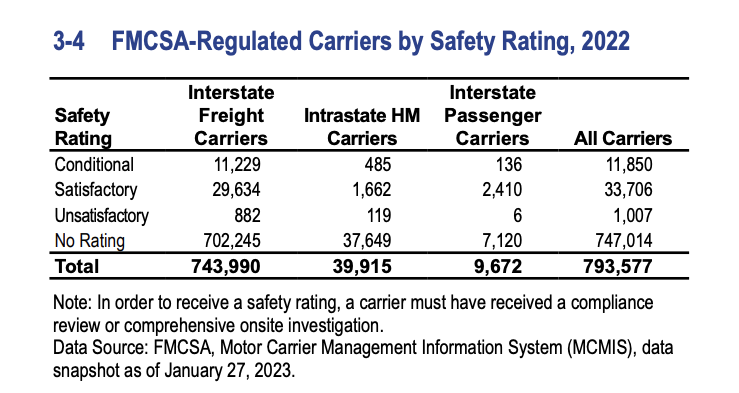
According to FMCSA data from 2021, there were 690,091 interstate freight carriers in the system. Out of that number, 646,777 had no safety rating at all. That’s over 94% of carriers operating with zero verified safety audit, zero on-site inspection, and zero accountability beyond what’s self-reported. 2022 data, the numbers only increased.
What does that actually mean? It means you can start a trucking company, put equipment on the road, hire drivers with questionable training—and the government might never even glance in your direction.
It also means brokers, shippers, and even insurance companies are making decisions based on an illusion of compliance. A lot of these carriers aren’t flying under the radar—they were never even on it to begin with.
$926 Million to Inspect Just 6% of Carriers? Where Is That Money Going?
Let’s follow the money. The largest grant handed out by FMCSA in 2024 was the Motor Carrier Safety Assistance Program (MCSAP). According to the agency, this grant helps fund state-level enforcement, roadside inspections, crash reduction strategies, and regulatory compliance.
But here’s the catch: despite the size of this grant, only 6% of interstate carriers actually undergo a compliance review or on-site investigation.
Let that sink in.
With that kind of funding, you’d expect a much more aggressive audit program—especially in an industry where fraud, misclassification, and negligence can get people killed. Instead, we’re staring at a system that’s reactive instead of proactive. And in trucking, reactive is deadly.
Unqualified drivers shouldn’t be on the road and shady operators shouldn’t be in business. That’s why President Trump and I are taking action to make our roads safer and protect the hardworking American truckers that make our country run. @USDOT has found several warning signs… https://t.co/ouGHm8UJdW
(Source: Twitter/X. Secretary Sean Duffy emphasizes the importance of keeping unqualified drivers and bad operators off the road, citing recent concerns uncovered by USDOT and ongoing investigations by NTSB into safety lapses across the industry.)
Non-Domicile CDLs: The New Face of Unsafe Operations
Let’s shift gears for a moment.
Years ago, I ran teams. One of my co-drivers got his CDL through a now-shut-down training program at a major fleet’s Tennessee location. The feds eventually shut it down for cheating the system—cutting corners, passing unqualified students, and pushing them out with a license in hand.
When that shutdown happened, drivers who came through that program got letters. Their CDLs were invalid unless they retested at the DMV. It didn’t matter if they’d been driving for years—they were told, flat out, “Prove your CDL is valid, or lose it.”
That’s what should be happening with non-domicile CDLs right now.
What’s a non-domicile CDL? It’s a CDL issued by a state to an individual who is not a resident of that state or who is domiciled in a foreign country with the exception of Canada and Mexico. These CDLs have become a loophole for fraud. We’ve seen pop-up CDL mills in certain states churning out drivers who can barely pass a road test—because no one’s watching.
Non-domicile CDLs have to be addressed. If a CDL mill gets exposed for fraud, every license issued through that program should be retested. No exceptions.
“No Safety Rating Available” Isn’t Just a Technicality—It’s a Red Flag
You’ve seen it on the FMCSA portal: “No Safety Rating Available.”
What does that mean?
It doesn’t mean they’re safe. It doesn’t mean they’re new. It means no one from the FMCSA has actually reviewed them. They haven’t had an audit. No one verified their logs. No one checked their training program. They exist in the system, unchecked.
There are only four safety ratings:
Satisfactory – You’ve passed the review.
Conditional – You didn’t pass, but you’re not bad enough to be shut down.
Unsatisfactory – Shut it down. You’re a safety risk.
Not Rated – We haven’t looked yet.
So when you see “Not Rated,” don’t assume the carrier’s clean. Assume no one’s looked under the hood—literally or figuratively.
The Data Doesn’t Lie—But the System Ignores It Anyway
You don’t have to look far to see the fallout.
Take a look at these numbers from just one recent FMCSA snapshot of an active motor carrier today:
HOS Compliance: 31.8%
Controlled Substances: 7.6%
These aren’t cherry-picked stats. They’re part of publicly accessible inspection data. And they show what happens when enforcement is loose, training is inconsistent, and loopholes get exploited.
We have drivers failing drug tests. Logs that don’t match up. Brokers who keep using the same unsafe carriers because they’re cheap. And we have a government agency that’s barely showing up to do the job.
It's all business until that cheap broker books a cheap truck and kills a family on the highway and you have a lawsuit on your desk. pic.twitter.com/JQGuTLMzzF
(Source: Twitter @StephenRuhe. This interaction is more than a tweet but an eye opener to what the bigger picture may look like)
Brokers Are Exploiting the Loopholes Too
Let’s not pretend this problem stops at carriers.
There are brokers who actively avoid compliance-ready fleets because they don’t want to pay market rates. They look for bottom-barrel carriers who will haul anything, anytime, with zero questions asked.
And they’re not checking safety ratings. Why? Because 94% of carriers don’t have one—and legally, you can still use them.
This kind of behavior rewards bad actors and punishes the fleets trying to do things the right way. It sends a clear message: Compliance is optional if you’re cheap enough.
Insurance Fraud, Shell Companies, and the Broker Scam Loop
A lot of the fraud in this industry comes from the gray area between FMCSA oversight and business practice.
Here’s what’s happening behind the curtain:
Someone gets authority under a fake company name.
They run up insurance claims, broker freight to ghost trucks, or commit double-brokering.
They burn that MC number and open a new one next month.
No audit. No background check. No consequences.
Meanwhile, that same outfit might show “Not Rated” on the FMCSA site, with all zeros on inspection reports, because they’ve never actually hauled a load under their own name. It’s a shell.
This scam loop keeps spinning because the FMCSA isn’t structured to stop it.
So What Can Be Done?
We can point fingers all day, but what matters is solutions. Here’s what the FMCSA can be doing immediately if they’re serious about cleaning up trucking:
Close the Non-Domicile CDL Loophole
Require in-state residency for CDL testing and retest any driver tied to a shut-down or flagged training program.
Tie Authority Activation to Safety Audits
Don’t issue permanent operating authority without a passing on-site review within 90 days of activation.
Require Safety Ratings Within 6 Months
Ensure every active carrier to undergo a full compliance review in their 6 months—or suspend authority.
Restrict Broker Access to Carriers with No Safety Rating
Create minimum compliance thresholds for brokers booking freight, just like insurance underwriters have.
Publicly Track Training Origins on CDLIS Reporting
Make CDL origin and issuing school visible to carriers, brokers, and insurers for every licensed driver.
Fund Technology to Identify Fraud Loops
Use AI and machine learning to detect shell companies, repeated address usage, and pattern-based fraud indicators.
Final Word: We’re Building a House Without Inspectors
Right now, the FMCSA is like a housing inspector that only checks 1 out of every 20 homes being built—and doesn’t even follow up if someone complains.
That’s not regulation. That’s neglect.
And in an industry where lives are on the line every day, neglect isn’t just dangerous. It’s deadly.
Trucking doesn’t need more rules—we need smarter, more consistent enforcement of the rules we already have. We need real audits. We need real accountability. And we need to close the loopholes that let bad actors slip through.
Because while we’re out here trying to run legit businesses, grow fleets, and keep the roads safe, too many others are gaming a system that’s asleep at the wheel.
It’s time for that to change.
DHL appoints new chiefs for Americas divisions
German parcel and logistics giant DHL has revamped its Americas region leadership team overseeing the Global Forwarding, Supply Chain and eCommerce divisions.
On Wednesday, DHL Global Forwarding notified customers that Michael Young will assume the role of CEO for the United States, effective Aug. 1. He will replace Robert Reiter, who is preparing to leave the company to move abroad and explore other professional opportunities.
Young currently serves as CEO of Global Forwarding for the United Kingdom and Ireland, and president of Global Motorsports. He has more than 30 years of experience within DHL Global Forwarding, having held senior commercial and leadership roles across the organization at the country, regional, and global levels.
During his tenure as CEO for the UK and Ireland he guided the organization through major macroeconomic challenges, including the Brexit transition. In his concurrent role as head of Global Motorsports, he has been instrumental in strengthening DHL’s long-standing partnership with Formula 1, according to the company.
The company separately announced this week that Scott Ashbaugh has been promoted from chief commercial officer to CEO for DHL eCommerce Americas, in response to the scheduled retirement of Lee Spratt at the end of the year. He will be based at Americas headquarters in Weston, Florida.
Ashbaugh has held various leadership roles during his 16 years at DHL. Before transitioning to the revenue side as chief commercial officer, he spent more than decade overseeing operations across both the domestic and international networks. He has extensive knowledge of DHL’s delivery systems and the e-commerce environment, DHL said.
“I’m very pleased to have Scott at the helm of our Americas operations, a market of strategic importance for our customers and the growing e-commerce sector,” said Pablo Ciano, CEO of DHL eCommerce, in a news release. “Scott has been a vital contributor to our success, and I am confident he will effectively lead our division’s growth strategy while empowering our talented leaders and employees to deliver reliable, affordable and sustainable services to our customers.”
On June 20, DHL Group announced the immediate promotion of Mark Kunar to CEO of DHL Supply Chain North America to replace Patrick Kelleher, who resigned. Keller only held the job for one year. Kunar previously was CFO and chief strategy officer for the regional business unit.
“Mark’s broad supply chain and management expertise, paired with his proven commercial acumen and his balanced leadership style makes him the ideal candidate to take our business into the future in this key market. His leadership will be instrumental in guiding DHL Supply Chain North America as we continue to focus on excellence and innovation in our operations,” said Oscar de Bok, CEO of DHL Supply Chain.
Kunar is responsible for managing the business across the United States and Canada, leading a workforce of 52,000 associates. He said his immediate focus is to smoothly integrate newly acquired businesses, such as Inmar Supply Chain Solutions, IDS Fulfillment and Tennessee-based CryoPDP, a specialty courier serving the pharmaceutical industry.
Kunar joined DHL Supply Chain in 1996 as a financial analyst and has since held various operational, finance, commercial and functional management positions. He became CFO and chief strategy officer in 2024.
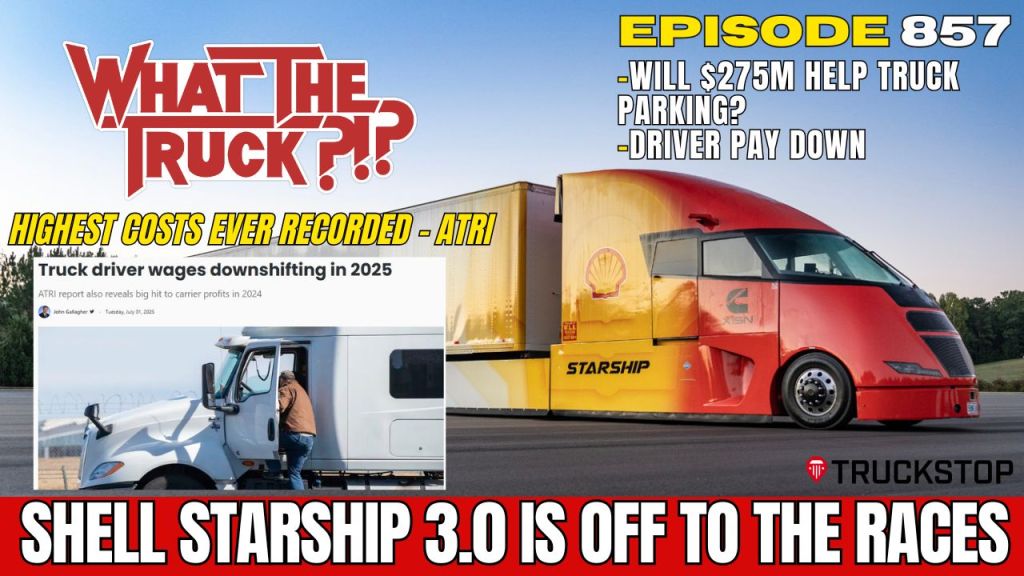
Shell Starship 3.0 joins racing series; $275M for truck parking; driver pay down | WHAT THE TRUCK?!?
On episode 857 of WHAT THE TRUCK?!? Dooner is talking about a big draw down in driver wages and earnings. ATRI calls it, “The highest costs ever recorded by ATRI for non-fuel operating costs.” Is it going to be a summer of struggle for truckers and fleets?
Shell’s Supertruck 3.0 is off to the races. Shell’s Scott Burian tells us all about the truck and its role on the race circuit pulling the Pennzoil Tech Inspection Trailer for the rest of the 2025 season.
Secretary Duffy joined the show last week to break news about $275 million going towards truck parking. Truck Parking Club’s Reed Loustalot drops by the studio to talk about how it will help drivers park safely. We’ll also learn about his move to Chattanooga and how they’re putting the club in Truck Parking Club.
Catch new shows live at noon EDT Mondays, Wednesdays and Fridays on FreightWaves LinkedIn, Facebook, X or YouTube, or on demand by looking up WHAT THE TRUCK?!? on your favorite podcast player and at 6 p.m. Eastern on SiriusXM’s Road Dog Trucking Channel 146.