SONAR Sightings for June 15: Ontario, California, to Dallas, Japan to US, more
Tender rejections out of Ontario are at their lowest point since 2020, and import volume from Japan has increased 90% in the last year.
America’s peak cargo importing season will start early this year, by the end of this month, says the Port of Los Angeles boss.
Bulk commodity shipping stocks held up well before this month. Now they’re falling alongside container shipping stocks.
Inventory growth has forced companies to change their ordering strategy to a more flexible model.
May was one of the busiest months in history for the container ports of Long Beach and Charleston.
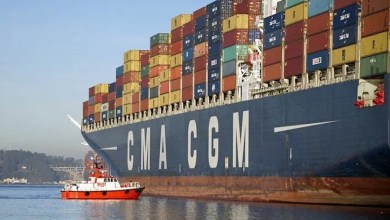
CMA CGM, the world’s third largest liner company, froze spot rates in September-January, yet its revenue per container kept rising.
It took longer than expected, but the IMO 2020 investment pitch — save on ship fuel by installing scrubbers — is paying off big time.
An expert reveals what’s wrong with ocean shipping giants. Consumers are footing the bill for their massive profits.
The Freightos Baltic Index (FBX) is the world’s leading—and most accurate—index of market rates for 40′ containers.
The number of container ships waiting off Los Angeles/Long Beach recently sank to 25, the lowest tally since July 2021.
Freightos, a backed by FedEx, is raising capital through a special purpose acquisition company and IPO.
Without sanctions, tankers will keep loading Russian oil. ‘We’re not taking a moral high ground,’ says Frontline’s CEO.
Safety stats show resilience despite aging ships, cut corners on maintenance and rising pressure on seafarers.
It has been a terrible year for the stock market, a great one (so far) for product tanker and dry bulk shipping stocks.
Megaships are helping cause our current supply chain chaos. Big container boats have hampered competition and clogged up ports.
Zim continues to outpace growth rates of rival container shipping lines, but investor demand fears are on the rise.
Container shipping spot rates are easing, at least temporarily, and far fewer ships are stuck waiting off U.S. ports.
The Freightos Baltic Index (FBX) is the world’s leading—and most accurate—index of market rates for 40′ containers.
Ocean carrier Hapag-Lloyd sees consumer demand and spot rates slipping, with market highs in the rearview mirror.
First came a pause in cargo bookings to Russia. Now, ocean carriers have halted almost all of their Russian port calls.
Shares of ocean shipping companies have given back much of their 2022 gains after another big sell-off.
‘Right now, we don’t see a huge buildup of volumes because of the closedown in Shanghai,’ reports Maersk CEO Soren Skou.
New container prices, new production, lease rates, lease durations and used container prices are all down.
The Freightos Baltic Index (FBX) is the world’s leading—and most accurate—index of market rates for 40′ containers.
Container-ship transits of the Panama Canal are up as liners favor the East Coast. LNG transits are down as U.S. gas heads to Europe.
Craig Fuller explains the impact of higher diesel prices on the U.S. economy and consumers.
Gulf Coast ports got a boost in March from imports of steel and plywood, and exports of petroleum and crude oil.
New reports from Maersk, Kuehne+Nagel and Drewry point to an ongoing boom for container shipping lines.
Container ship freed from Chesapeake Bay more than a month after it ran aground
Retail stock pickers seem increasingly nervous about shipping. Shares of dry bulk, tanker, container and mixed-fleet owners all fell.
The Shanghai lockdown isn’t following the same supply chain script as the big Chinese disruptions of 2020 and 2021.
The trans-Pacific container trade is vastly different than pre-pandemic, with more ships, more competition, and a new leader: Maersk.
Russian imports via ocean, truck, rail and air are now being simultaneously squeezed. Shipping data shows growing pressure.
The Freightos Baltic Index (FBX) is the world’s leading—and most accurate—index of market rates for 40′ containers.
A torrent of backlogged cargo in China is expected to overwhelm global ports once Chinese authorities end widespread COVID lockdowns.
Tanker, bulker and LNG shipping stocks rise as domestic freight and container stocks face pressure.
STG Logistics has made nearly a dozen acquisitions over the last five-plus years. However, its latest deal for XPO’s intermodal unit is its most transformative yet.
As part of FreightWaves’ The Future of Supply Chain event, QuickLoadz will demonstrate the way it can change how we move shipping containers.
The future of global supply chains is in flux. The pandemic was a game changer. Then came the war.
America’s largest container port, Los Angeles, just posted the best March and best first quarter in its history.
The debate heats up on whether this is the beginning of the end of container shipping’s bull run.
The Freightos Baltic Index (FBX) is the world’s leading—and most accurate—index of market rates for 40′ containers.
Georgia governor hails project to ‘provide the infrastructure our economy needs to thrive’
RH confirms sharp drop in demand since Russia-Ukraine war and sees no supply chain relief.
The ports of Corpus Christi, Galveston and Brownsville will receive federal funding to complete ship channel improvement projects aimed at increasing cargo capacity.
Charter rates hold steady at their peak as the seemingly neverending container shipping boom continues.
Gulf Coast port volumes rose in February, boosted by imports of steel and breakbulk cargo, along with exports of petroleum and crude oil.
Some shipping shares are rising because of war tailwinds. Others are rising despite war headwinds.
The Port of Vancouver handled a record volume of containers in 2021, but the biggest driver was the export of empties headed back to Asia.
Federal regulators will begin to assess how container lines are serving U.S. exporters.
Congestion could go from bad to worse as liners steer a record number of container ships toward East Coast ports.
Racing a car at 223 mph is insane and so is the logistics that makes it possible. Get ready for the F1 season.
California ports make progress on bottlenecks, but Chinese lockdowns could spur “hockey stick” import rise.
The Freightos Baltic Index (FBX) is the world’s leading—and most accurate—index of market rates for 40′ containers.
AskWaves looks at the rankings of the world’s top container ports
COVID lockdowns haven’t closed Chinese ports yet. If they do, U.S. importers face “shockwave” of higher rates and delays.
The Alabama State Port Authority will receive $265 million from the 2022 federal spending bill and a $38 million grant from the U.S. Department of Transportation.
COVID has been great for container shipping, terrible for cruising. What does this mean to MSC, which is big in both?
Liner company Zim expects to rake in a billion dollars more this year than in record-setting 2021.
Longshoremen along the U.S. West Coast say they won’t touch any shipments for Russia.
Invasion and price spikes could destroy demand, weaken consumer confidence and curb cargo volumes, warns BIMCO.
The cost of the fuel consumed by the world’s commercial ships has skyrocketed — and it’s still rising.
Kuehne + Nagel is the biggest air and ocean logistics provider and it’s pushing the right buttons for fast growth.
Tanker stocks favored by retail traders post big gains, while most container and dry bulk stocks hold steady.
The Freightos Baltic Index (FBX) is the world’s leading—and most accurate—index of market rates for 40′ containers.
Pandemic gridlock, the Ever Given, COVID outbreaks, container shortages, flooding, Ukraine. The next shoe to drop: a labor dispute.
Container lines and tanker owners rapidly and preemptively suspend business with Russia.
Container lines, shipowners and shippers have a new way to navigate the market chaos: cleared freight futures.
The container port business is booming and the big are getting bigger, particularly in China.
Break bulk cargo with commodities of plywood, steel and rubber boosted volumes at U.S. Gulf Coast ports in January.
The Biden administration has outlined 62 policy initiatives affecting trucking, rail, and maritime in a one-year vulnerability assessment.
There are now more container ships waiting off East and Gulf Coast ports than there are off Los Angeles/Long Beach.
Several trade and transport groups claim ocean carriers should lose special antitrust privileges and face stricter regulatory enforcement of shipping laws.
Tanker and dry bulk trades could be disrupted; container shipping faces heightened risk of cyberattacks.
Port Houston’s steel cargo exports recorded a 1,874% year-over-year increase.
The more ocean shipping is in the news, the more attention it gets from tech founders and investors.
The Freightos Baltic Index (FBX) is the world’s leading—and most accurate—index of market rates for 40′ containers.
After last year’s historic run-up, factories are producing fewer containers and pricing of new boxes is down.
A one-on-one talk with the head of maritime operations for the Port of New York/New Jersey.
Jefferies analyst Randy Giveans maintains that container shipping stocks still have a lot more room to run.
Xeneta CEO Patrik Berglund explains how carrier negotiating power has changed the annual contracting equation.
Long-term contract rates are at record highs. Shipping lines hold all the cards at the negotiating table.
COVID container boom continues: Maersk may earn even more this year than in record-trouncing 2021.
The number of ships waiting off Los Angeles/Long Beach fell 23% over the past week.
The cost of ship fuel looks like it’s about to topple records set in 2012 and 2008.
Bipartisan legislation introduced in the U.S. Senate would give maritime regulators power to shift the carrier-shipper balance.
Accusations fly as shipping lines rake in billions, but the numbers imply more carrier competition, not less.
Barring an economic downturn, U.S. demand could still be squeezing ports a year from now.
The Freightos Baltic Index (FBX) is the world’s leading—and most accurate—index of market rates for 40′ containers.
Carrier profits are reaching previously unimaginable heights as supply chain disruptions supercharge gains.
Legislation affecting the world’s largest gantry crane manufacturer brings supply chain risks along with it, according to a port security expert.
SoCal imports suffering multimonth slide, not because of falling demand, but because of supply chain bottlenecks.
An attack on Ukraine could hike costs for shipowners and cargo shippers across the globe.
Shippers are “fed up” with the West Coast logjam and “happy” to pay extra for East Coast destinations.
Family comes first for Lionel van der Walt, who has left PayCargo.
Could container shipping and tanker stocks end 2022 very differently than they began it?
For bulk commodity shipping, a rough start to the year. For container shipping, the profit bonanza continues.
The Freightos Baltic Index (FBX) is the world’s leading—and most accurate—index of market rates for 40′ containers.
FedEx Logistics is the latest company to find an alternative to big-port congestion by taking freight business to the Port of Hueneme in California.
No letup yet: It’s taking even longer for Asian exports to get across Pacific to American buyers.