




Contributed Content
Thursday, March 19, 2026
FMCSA Final Rule and ‘Dalilah’s Law’ target CDL eligibility: What trucking needs to know
How the feds are tackling non-dom CDLs and English language proficiency.
How the feds are tackling non-dom CDLs and English language proficiency.

Discover the MC number market and learn about the FMCSA’s efforts to curb illegal trades in this underground industry.
The favorite argument from those supporting the ATA’s teen trucker push is “if they can go to war at 18, they can drive a truck at 18.” Military service transforms young people into disciplined, responsible adults who understand that their decisions affect others. That’s why military-trained drivers have 42% fewer accidents. The solution isn’t younger drivers; it’s requiring the standards that make military drivers safer. We’ve lost something fundamental in how we raise our young people, and the highway data proves it.

Inspectors are monitoring the progress of DOT organizations in implementing prior recommendations.
A class-action lawsuit filed in Alameda County seeks to block California’s Jan. 5 cancellation of nearly 20,000 commercial driver’s licenses. The plaintiffs argue the DMV is punishing immigrant drivers for the agency’s own administrative failures while refusing to let them reapply for corrected credentials, violating state law and due process.

One owner who hired an unqualified driver got 60 days. Other owner offered no time plea deal. The driver who killed seven was acquitted. The system that enabled them both remains largely unchanged.
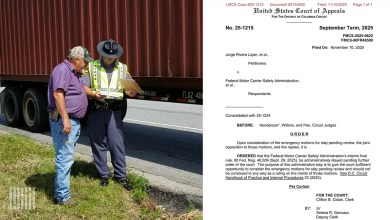
The U.S. Court of Appeals for the District of Columbia Circuit found FMCSA likely violated federal law when it attempted to eliminate approximately 200,000 commercial driver licenses without following standard procedures. The November 13 emergency stay revealed failures that leave 200,000 drivers in legal limbo while courts define the boundaries of administrative power during claimed emergencies.

The U.S. trucking industry is facing a crisis of overcapacity, safety lapses and national security risks, exacerbated by decades of deregulation and lax enforcement. Since March 2018, the number of active for-hire carriers has nearly doubled from 138,000 to 212,000 today, a 54% increase. According to SONAR’s OTVI index, freight volumes are only 1.2% higher […]
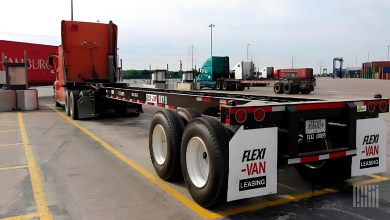
For the first time in decades, the federal government is shifting its attention from policy roundtables to the actual drivers and fleets keeping the country moving.

The DOT is expediting infrastructure projects in North Carolina and Tennessee.

U.S. Transportation Secretary Sean Duffy on Tuesday signed an order to again require strict enforcement of English language proficiency rules for commercial truck drivers.
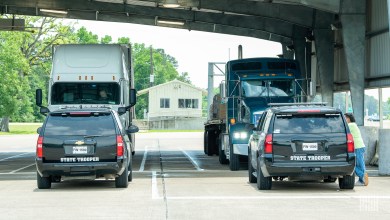
Facing a DOT audit in 2025 doesn’t have to be a nightmare. Learn how fleets can stay ready year-round, avoid common audit pitfalls and keep their trucks rolling smoothly without regulatory worries.

Two new executive orders refocus attention on English language requirements for truck drivers, reviving enforcement protocols that have existed since 1937. Industry voices say training, licensing and real-world risk management are essential priorities beyond language rules.
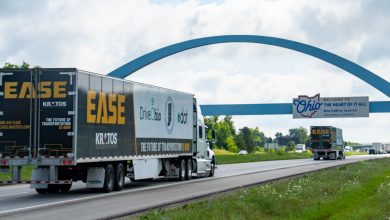
The U.S. Department of Transportation is partially funding an $8.8 million project promoting adoption of autonomous truck platooning technology in the Midwest.
This week the industry gets advice on cybersecurity strategies for 2025.

To view more FreightWaves infographics, click here
FreightTech hasn’t solved freight fraud, and regulators can’t figure out who is regulating it. Is there a solution?

To view more FreightWaves infographics, click here

The U.S. Department of Transportation has provided a detailed framework surrounding driver drug and alcohol violations – including return to work procedures.

To view more FreightWaves infographics, click here