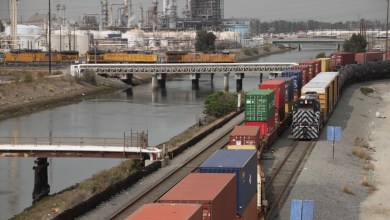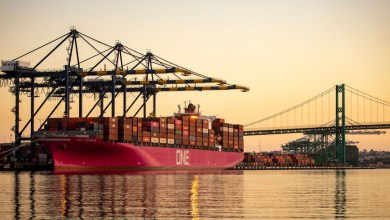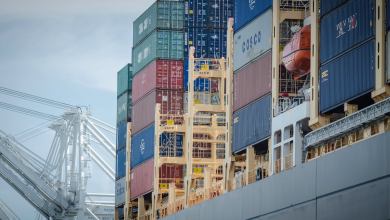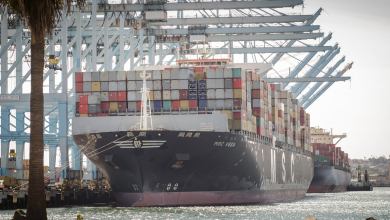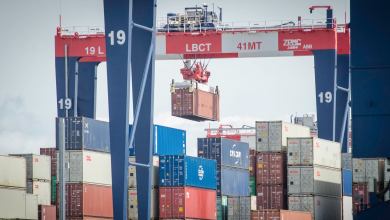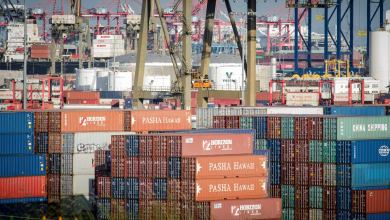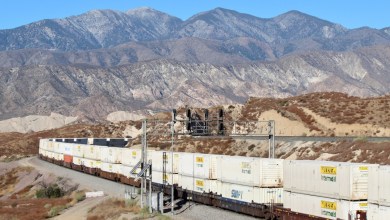
$25B worth of cargo stuck on 80 container ships off California
California port congestion is as bad as ever. Some imports have been stranded offshore for over a month.
The Biden administration is pushing industry to take immediate and long-term steps to get ports and intermodal transport working smoothly.
As freight congestion weakens transportation links, AskWaves looks at potential federal funding options for supporting a move to 24/7 operations.
A top Biden administration official believes securing data among supply chain competitors will be the key to rolling out a nationwide 24/7 strategy.
Every facet of the supply chain must be participating in an equal fashion in order to successfully complete the 90-day sprint.
Collaboraion is the future of 3pls, U.S. waterways widely under utilized, Seroka wants retailers to come pick up their shipments.
Big-box retailers, FedEx and UPS have detailed plans to speed up container processing at the ports of Los Angeles and Long Beach.
Ahead of talks with President Biden, the ILWU is calling out foreign carriers’ focus on profits as a hurdle to solving supply chain disruptions.
Pullback in trans-Pacific shipping rates: beginning of the end or brief reprieve with end still not in sight?
Yes, despite the headaches, the ocean carriers are making boatloads of money.
Shipping Asia-U.S. via regular ocean service and rail? “I would bet your goods will not arrive in time for Christmas,” says Flexport’s Nerijus Poskus.
Los Angeles is at the front line of the port congestion crisis. Its executive director outlines his strategy to clear anchorages.
How will public view ships anchored off Los Angeles/Long Beach if one of them is tied to Huntington Beach spill?
With no end in sight for global supply chain crisis, importers warned to brace for high costs throughout next year.
With disruptions likely to linger well into 2022, intermodal equipment provider DCLI sees the labor shortfall as the biggest hurdle in the supply chain.
Trans-Pacific traffic snarl is bicoastal: More container ships waiting off Shanghai and Ningbo than Southern California.
Southern California ports would need two weeks with zero vessel arrivals to clear logjam — but the ships keep coming.
Supply chain crisis deepens as more imports snared in historic ship queue off Los Angeles/Long Beach.
Ocean carrier detention and demurrage practices will be the target of an upcoming proposed rule from the Federal Maritime Commission.
Port of Los Angeles Executive Director Gene Seroka has been named the 2021 recipient of the Containerization & Intermodal Institute’s top honor.
More container ships are stuck at anchor off California than ever before. The gridlock is about to get even worse.
As stimulus-fueled demand overwhelms trans-Pacific capacity, a widening freight spread leaves small shippers behind.
As this year’s peak season gets underway, dislocations in the supply chain are increasing. However, this is really nothing new as the industry has been in peak mode for a year.
Port of Los Angeles boss warns: ‘Anchorage and dwell times are trending in the wrong direction.’
Queue of container ships off U.S. ports keeps building, with months’ worth of peak-season cargo still to unload.
Los Angeles’ port boss speaks to American Shipper about congestion challenges — and potential release valves.
Almost no container ships were stuck at anchor when 2020 peak season began. This peak season, terminals are pre-clogged.
Two groups announced this month their separate efforts to increase supply chain visibility. One technology tool focuses on locating railcars and another aims to forecast volumes at the Port of Los Angeles.
Supply chain bottlenecks are raising red flags for inflation down the road.
Container ships in the congestion-plagued trans-Pacific trade have stepped on the gas, with some vessels now topping 20 knots.
Wave of cargo delayed by COVID outbreak in Yantian, China, is starting to hit California’s already strained terminals.
California offshore traffic jam, Ever Given, Yantian closure, skyrocketing rates and volumes … what’s next for container shipping?
May was the busiest month in the 114-year history of America’s busiest port.
Container spot rates spiked again, with new records set. For importers, the worst is yet to come.
“With our sustained focus on supply chain digitization, infrastructure investments and strong business relationships, we have the opportunity to build on this historic milestone,” says Executive Director Gene Seroka.
Retailers at increasing risk of not getting goods from Asia on shelves as ocean transport system hits limit.
Rather than awaiting national-level solutions to trade imbalance and demand surges, shippers and carriers should act now to modernize operations across the supply chain.
Ships at anchor are unlikely to clear by peak season. Congestion is forcing wide-scale voyage cancellations.
There have been no reported injuries, pollution or cargo losses aboard the vessel deployed on a ONE Atlantic service.
“This was by far the busiest April in the port’s 114-year history, outpacing the previous record set just back in 2019 by a hefty 29%.”
Importers are scrambling as demand sails past ocean transport supply. The numbers paint an ominous picture for cargo shippers.
Trans-Pacific container crunch is about to become even more severe, warns Flexport, with May sailings now effectively sold out.
Prologis launched a new LEED program, Blume Global says it will be carbon-neutral very soon, and bays are seeing ecological recovery.
U.S. importers will be paying a lot more for annual ocean contracts this year, but pricing inflation has eased.
“The container shipping industry is currently seeing unprecedented demand, which has led to a shortage of containers all over the world,” says CEO Rolf Habben Jansen.
The container ship now is expected to anchor in San Pedro Bay on May 1.
U.S. ports just booked their largest import hikes in memory, according to The McCown Report.
Imports into Los Angeles at not slowing down. Can the backlog be cleared before the peak-season swell begins?
Container shipping spot rates haven’t budged from COVID-fueled peaks. Cargo shippers’ hopes for a rate pullback are fading.
Pearl service customers’ imports likely will be delayed arriving from Asia.
Bad timing: Still-rising cargo demand is coinciding with container-shipping constraints in the wake of the Suez Canal crisis.
Daniel Maffei becomes chairman at a time of massive disruption in the world of trade.
Add Nike (NYSE: NKE) to the growing list of retailers being severely hampered by port congestion and supply chain bottlenecks. The congestion at West Coast ports in particular strained Nike’s supply chain and negatively impacted revenue, which declined 11% yoy in the quarter ending Feb. 28.
California’s container-ship traffic jam is slightly less jammed but import pressure remains high. One analyst warns the worst may be yet to come.
The Port of LA will use tax funds for repairs needed to address its booming business.
The world’s largest shipping line says it has changed its ways and is no longer playing the spot market, instead going steady with long-term partners.
Fireworks could be stuck at sea by the time the Fourth of July rolls around. Blame massive port congestion and overloaded freight networks. The fireworks industry is asking the Biden administration to provide a fix, but what can it do?
“Today we are in the seventh month of a historic import surge driven by unprecedented demand by American consumers,” says Gene Seroka.
Anchorages are filling up with ships off multiple ports — not just California’s. Yet the reasons behind the traffic jams are not always the same.
The lack of Lunar New Year shutdowns contributes to the busiest February on record.
How does California congestion rank versus 2015 logjam caused by tensions with dockworkers union? It’s not even close: 2021 wins by a long shot.
“As we continue to recover from the COVID-19 pandemic, now is the time to accelerate our throughput and growth,” says Pennsylvania Gov. Tom Wolf.
“Ocean Insights has dominated the container-tracking space, and we look forward to providing the industry not only the best ocean capabilities but also the most comprehensive end-to-end visibility platform,” says project44 CEO Jett McCandless.
Northwest Seaport Alliance reports January exports dropped 13.4% year-over-year.
“American customers will be able to choose to transport their goods using LNG, a new technology that helps to preserve air quality by eliminating almost all atmospheric pollutants,” said CMA CGM CEO Rodolphe Saadé.
Amazon may get the headlines for promising fast deliveries, but if it can’t get the product from overseas, the efficiency of trucks and delivery vans won’t make a difference.
The ocean carrier has not said when customers can expect to receive damaged or intact cargo.
AgTC’s Peter Friedmann said Hapag-Lloyd’s Rolf Habben Jansen failed to mention in a press conference that the container shipping lines are enjoying record profits “while pushing their customers into real financial trouble, some towards bankruptcy.”
It’s not just small and midsized importers that face massive contract rate hikes. Even the biggest shippers will feel the pain.
The Maersk Eindhoven, which lost 260 containers overboard, is slated to berth for repairs in Japan on Thursday.
More than 2,900 containers have gone overboard just since the end of November.
“We have really a perfect storm of demand that’s surging like there’s no tomorrow, everybody needing to get the boxes back, COVID-related restrictions,” says Hapag-Lloyd CEO Rolf Habben Jansen.
Using domestic reloads and street turns are among Blume Global’s strategies to reduce empty miles and emissions.
Peloton is riding a wave for the history books right now. It has grown revenues by triple digits year-over-year for three consecutive quarters while building one of the most recognizable brands in not just fitness, but all consumer segments. If it should continue this meteoric rise, it must sort its supply chain issues before either the vaccines or competition prematurely puts out its flame.
“If we do nothing, we will still have vessels at anchor come midsummer,” says Port of LA Executive Director Gene Seroka.
The Federal Maritime Commission is stepping up oversight of charges imposed on trucking companies and U.S. exporters by containership companies.
Here’s a helicopter view courtesy of U.S. Coast Guard of container-ship armada off Los Angeles and Long Beach (WITH VIDEO).
Thanks to COVID, there are no seasonal highs and lows for international shipping. There is so much demand for goods that the peak season never seems to end — and ports, railroads, truckers and warehouses are reaching the breaking point.
Due to shipping snarl and container congestions, delays in retail inventories will be felt from Christmas through Easter.
Demand for its products skyrocketed, but port congestion and freight capacity constraints have prevented their delivery, and now Peloton is spending $100 million to try and fix its supply chain.
“ZEBOX will assist innovative startups in developing new technologies in transportation, logistics, mobilities and industry 4.0,” says CMA CGM CEO Rodolphe Saadé.
The discharging of damaged containers continues nearly two months after the storm-battered ONE Apus arrived in Japan.
Port of Long Beach Executive Director Mario Cordero delivers a melodious annual report.
The twin ports of Los Angeles and Long Beach have been infected with COVID-19 — with at least 700 positive test results from port employees.
California calls on feds to protect exporters. Shipping groups claim California export cure will worsen congestion — including for importers.
FMC commissioners appeal to President Joe Biden to immediately vaccinate the maritime workforce.
Two FreightWaves SONAR charts illustrate Union Pacific’s views of the West Coast intermodal spot market.
“Not only are we at the height of the Christmas season, but we’re at the height of the Y2K concern as well. Importers and major trading houses are trying to move their goods now to beat any chance of problems with the changeover to the new millennium.”
Nearly 700 dockworkers in California have COVID. Hundreds more are out due to quarantines. Pleas for fast-track vaccinations intensify.
FreightWaves identifies importers who use the Asia-West Coast service.
The past 12 to 18 months have been nothing short of spectacular for Peloton. It has cemented itself as a prominent fitness brand with a base of fiercely loyal customers while growing revenues 233% yoy in Q3. But the company has outkicked its coverage and capped potential growth due to its supply chain constraints and lack of visibility.
“These best practices are needed now more than ever to relieve pressure on the supply chain due to the ongoing surge,” Port of LA Executive Director Gene Seroka says.
CIEM’s Pioneer Chassis is gearing up to play a key role in squelching port bottlenecks and filling the chassis shortage gap.
“The way we responded to the challenges, kept commerce moving and preserved jobs is a story that we will all remember for a long time to come,” says Port of Los Angeles Executive Director Gene Seroka during his State of the Port address.
There are more container ships stuck off California than at any time since 2004. What’s behind the pileup? When can it be cleared?
Like clockwork, liner operators sharply reduce their sailings each year during the Chinese New Year holiday. Not in 2021.
Cranes arrive, environmental prizes are awarded and cruise ships are welcomed.
Asia-U.S. container rates had held firm at a record high since September. Now they’re on the move again — and headed even higher.
The World Shipping Council responds to assertions from FMC commissioners of potential Shipping Act violations.
Ocean carrier Maersk says it is “working closely with the Agriculture Transportation Coalition and local trucking associations to address their concerns of equipment availability and detention and demurrage issues.”